Philosophers’ Corner

  • The Staying Power of Poetry

    I was delighted when Louise Glück, one of the great poets of our age, won the Nobel Prize in Literature. I wrote about one of my all-time favorite poems, “Ithaca,” for this week’s episode, “Why Poetry Matters,” with Louise as guest!

  • Mourning a Lost Culture

    When we are grieving, is it a good idea or a bad idea to engage with art that takes grief to be its subject? Does this help us to cope, or does it rip out whatever stitches we have managed to sew in while we try to bear an unbearable loss?

  • Tackling Sexual Violence

    How do we achieve justice for victims of sexual assault? Can we change the legal system to make it more effective? Or should we turn to social media instead? This week, we’re thinking about the #MeToo movement and the criminal justice system.

  • The Value of Anger

    Shouldn’t we get angry at injustice? Don’t some things deserve our rage? Or will rage just beget more rage? These are some of the questions we’re thinking about on this week’s show, “Righteous Rage.”

  • Who Wants to Be a Stoic?

    What can we learn from the Stoics about living a good life? Should we all try to become indifferent to pain, suffering, and death? This week we’re thinking about the Stoic philosophy of Roman emperor Marcus Aurelius.

  • Digital Persons?

    Could robots ever have feelings that we could hurt? Should we hold them responsible for their actions? Or would that just be a way to let humans off the hook? This week, we’re asking “Could Robots Be Persons?”

  • 2021: The Year in Sound

    Every once in a while I like to step out from behind the mixing board to give a behind-the-scenes look at some aspect of the program. For our annual end-of-year special, we tried something a bit different, though not unprecedented.

  • Virtual Reality, Real Feelings

    Can virtual reality make people more empathetic, train students in the scientific method, and help people overcome their fears? This week’s episode asks whether VR is a force for good, a force for ill, or not much of a force at all.

  • Age, Ageism, and Equality

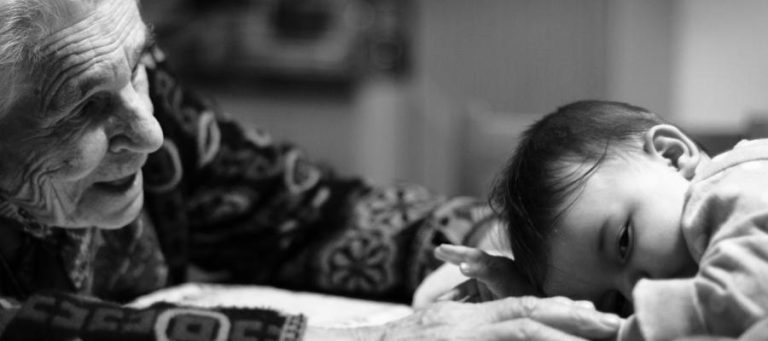
    Is age discrimination always wrong? Or it is fair to treat different ages differently? How do we take people’s age into account without being ageist? These are the questions we’re asking this week, in an episode called “Should All Ages Be Equal?”

  • Socially Intelligent Robots

    Would you like a robot to assist you with tasks around the home? What kinds of jobs would you be comfortable leaving a robot to do? Would you trust one to take care of your child or an elderly parent? This week’s show is “The Social Lives of Robots.”

  • A Question of Frege

    Frege believed that math is analytic, meaning that the definitions of mathematical terms like “2” and “4” guarantee the truth of sentences like “2+2=4”. Frege’s theory explains how we know about math; as long as we can understand what we mean by mathematical terms, and can reason logically, our mathematical knowledge is guaranteed. But in order to work, the theory has to rely on Frege’s definition of a number.

  • Persons, Community, and the Akan

    Is your inner life what makes you, you? Or is your identity about connecting to your community? How can West African philosophy help us think about the self? This week, we’ll be thinking about Akan Philosophy, specifically its conception of personhood.

  • Why Is Math So Useful?

    Math is obviously good for many things: we use it for everything from building bridges to designing lasers to predicting the motions of planets to explaining why snowflakes have that odd six-pointed shape. But why is it good for so many things?

  • On Awesomeness

    Is “awesome” just an overused word for things we like? Or does it refer to a particular kind of excellence? Would the world be a better place if we all tried to be more awesome and less sucky? This week, we’re thinking about awesomeness.

  • Microaggressions and Intention

    Can subtle slights cause serious harm? Does it matter if no harm was intended? Are microaggressions in the eye of the beholder? Or are they a way to keep certain groups in their place? This week we’re thinking about Microaggressions.