Philosophers’ Corner
-
-
Gods, Psychology, and Occam’s Razor
What makes people believe in God? The relatively new research field cognitive science of religion…
-
The Problem of Other Minds
The philosophical problem of other minds goes like this. I know that I have a mind, that is, feelings, sensations, thoughts and the like, in a very direct way. I am directly aware of what goes on in my own mind. But how do I know that something like this goes on in other people?
-
Being Human is Like Being Here
In my last blog posting, I explained that “human” is a folk-category that doesn’t map…
-
The Reality of Time
Nothing seems more basic or real than time. Yet many philosophers, like Zeno of Elea, find it deeply puzzling. Some, like McTaggart, even claim time is unreal. Of course, philosophers often find reasons to doubt the existence of things we take for granted. But with time, it’s not just philosophers. It’s physicists, too. Like Stephen Hawking, to name just one.
-
The Metaphysics of Color
This week we’re seeing red — asking about the metaphysics of color. Is color in the eye of the beholder? Or is color objectively real? Would colors still exist in the world, even if no one was around to see them?
-
Risk and Rationality
The world is a risky place where all sorts of nasty things could happen. So, how do we decide what to do when there are risks at every turn? Luckily, there’s a widely accepted theory that tells me when it’s rational to take a risk. It says that a rational person is someone who maximizes expected utility. The basic idea is that an agent does something and, depending on circumstances, it may have several outcomes we can rationally assess.
-
Is Being Human More Like Being a Weed than Like Being Water?
You are human, and so am I. We can both agree on that. But what…
-
What’s on your summer reading list for 2014?
Every year, we do a special program called the Summer Reading List. As we’re preparing for…
-
Conspiracy Theories
What’s your first association with the title of this week’s show? Do you think of conspiracy theories as the kind of theories that paranoid nutjobs relentlessly like to spout? Considering some of the wild theories out there—like a secret group of elites (which may or may not be Jews, Freemasons, and/or shape-shifting lizard aliens) control and manipulate the global economy—you’d be forgiven for that association. But before you judge all conspiracy theories in a single stroke, you should consider that there are conspiracy theories that you probably believe. And with good reason.
-
Weapons of Mass Destruction
This week we’re thinking about the ethics of Weapons of Mass Destruction — a…
-
Acting Together
The great English philosopher Thomas Hobbes famously said that in the state of nature, life is solitary, brutish and short — as if nature designed people to act alone, rather than together. But acting together, this week’s topic, is one of the most natural things in the world. If we never acted together, there would be no families, no teams, no countries. But what exactly is it to act together?
-
Science and Gender
Science used to be seen as a thing for boys only. Back in the 1980’s when students were asked to draw what a scientist looks like… forty eight percent drew a scientist with facial hair; twenty-five percent gave their scientist a pencil protector. Only eight percent drew a woman. Of course, back then the perception that science was a boy thing, pretty much matched the reality.
-
Inspiration for Evil
David Livingstone Smith presents on the philosophical topic of dehumanization and sheds light as to…
-
The Legacy of Freud
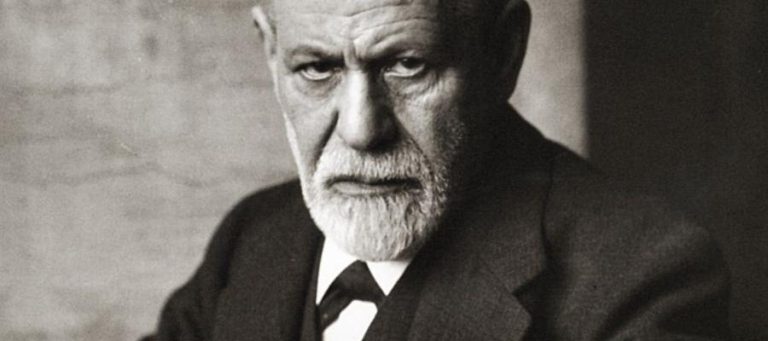
Freud wasn’t the first to think about the idea of unconscious beliefs and desires. That idea goes back over two thousand years ago to Epicurus. Unlike Epicurus, Freud developed detailed, putatively scientific hypotheses about the exact workings of the unconscious mind. And those theories basically ruled the roost for several decades more or less unchallenged.
-
Memory and the Self
There is a long tradition in philosophy of thinking that memory and the self are intimately connected. Locke claims, for example, that what makes me today the very same person as I was yesterday, is, basically, the fact that I can now remember what I did or experienced yesterday. So memory, for Locke, is what actually determines who I am.