Is Anarchy Possible?
Before we can say whether an anarchist future is possible, we should start by saying…

Before we can say whether an anarchist future is possible, we should start by saying…

Having just listened to the recent Philosophy Talk show with David Livingstone Smith, I find…

What’s Next? After death, that is. Here’s one answer: nothingness. How can I be so sure there’s no afterlife? After all, people have believed in the afterlife, since … well, since there were people. Who’m I to say they’re wrong?

Why Be Moral – what kind of question is that? Morality is a good thing. Immorality is a bad thing. A person should always do good things and never do bad things. Doesn’t everybody agree? Well, judging by people’s behavior, not necessarily. But we also have to be careful not confuse ‘ought’ and ‘is’. People do behave immorally. But they shouldn’t. Everybody knows that – at least in their heart of hearts.

We have two positions. One holds that prostitution is inherently degrading and of necessity involves objectionable objectification, and so is wrong, even if conducted in a way that is safe for and non-exploitative of the prostitute. The other position holds that if conducted in this way, prostitution could be a fair commercial transaction that preserves the dignity of both seller and purchases of sexual favors.

This week we’re thinking about Humanity Violated — the tendency of some people to think of other people as less than fully human. Humans do that to each other way too often. Nazis despised their Jewish victims as little better than diseased rats that deserved to be eliminated for the public good. Slave-owners saw their slaves as little better than pack animals.

Sometimes we make decisions that we think long and hard about, but often we make decisions simply because it feels right. Call it a hunch, an intuition, or an instinct—what they all have in common is that we don’t know why we feel the way we do, yet the feeling can be so compelling, it moves us to act. The question is, when should we listen to our gut feelings and make decisions based on something we can’t explain? And when should we stop to think?

I thought Philosophy Talk listeners might enjoy Hume’s last thoughts on immortality, as recorded by James Boswell, who visited Hume hoping for a deathbed conversion.
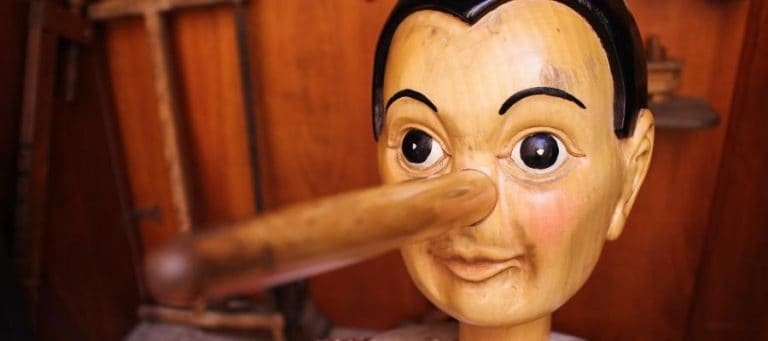
There’s certainly a lot of hypocrisy around, especially in politics. But how bad is it? Is it a simply necessary evil for an effective politician? Or is it really one of the worst kinds of vices? I suppose we ought to start by trying to get clear on what exactly hypocrisy is. The word ‘hypocrisy’ comes from a Greek word meaning “playing a theatrical role”. So, we might start with: A hypocrite is someone who pretends to be something he’s not. That definition probably fits a lot of cases, but I don’t think it’s quite right.
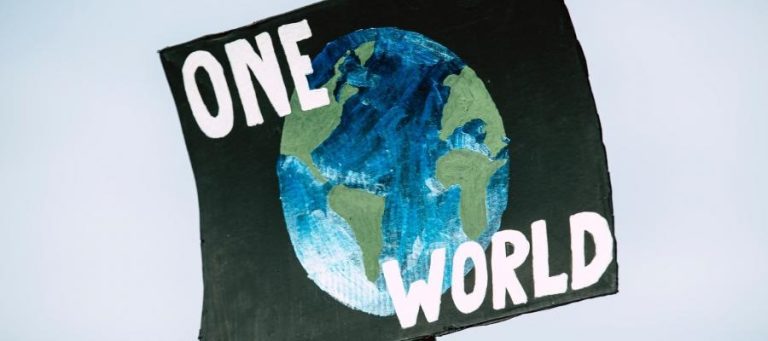
The topic of climate change is timely and important, but it’s also one that’s difficult to talk about. We’re making such a mess of this planet—chopping down forests and burning carbon-based fossil fuels, polluting our air, soil, and water, causing polar ice caps to melt and sea levels to rise. We’re already beginning to see the devastating effects of climate change around the globe, and it’s only going to get worse—especially if we pass the 2 degrees celsius tipping point, which seems inevitable at this point.
Some events in a person’s life are so powerful, so life-altering, that there’s a sense in which he or she may not be the same person before and after the event. Now I’m not talking about winning a mega-lottery, for example. Doing that would, of course, change my life. I could buy more stuff. Maybe I would work less. Certainly, I would travel more. Those kinds of changes aren’t really what we have in mind, though. Those are just changes in the external circumstances of my life.

In this week’s show, we’re thinking about the role place and culture play in…
A skeleton walks into a bar. It says, “Give me a beer and a…

This week our topic is what we’re calling fairness “fixation.” The choice of the word ‘fixation’ is a little bit tongue in cheek. But it is meant to convey the serious thought that maybe, just maybe, we are too concerned with fairness. There are definitely those – especially, I think, on the right, but perhaps not only them – who seem to think that we definitely are.

A debate rages in philosophy about whether intuitions can help us know the truth. The…

A lot of philosophers I know need therapy. I can’t think of too many I know…