Philosophers’ Corner

  • Introducing: Francis on Film

    Philosophy Talk is delighted to announce a new column on our blog called “Francis on…

  • R.I.P. Derek Parfit

    The eminent British philosopher Derek Parfit passed away earlier this week. Although he had never joined…

  • Against Santa

    Around this time of year, many parents—God only knows how many—lie to their children about Santa Claus. But aren’t we always trying to teach our children that lying is wrong? So shouldn’t we stop lying about Santa?

  • The Examined Year 2016: Triumph and Defeat

    As we approach the end of 2016, we are gearing up for our annual year in review show, “The Examined Year.” In this special show, which broadcasts live from our home station, KALW, we depart from our usual long-form conversation format with a single guest and instead have three different guests on three different segments. The theme we’ve chosen for our philosophical review of 2016 is “Triumph and Defeat.”

  • Is Donald Trump Lying or Bullshitting?

    You might think that Trump is an inveterate liar, whose lies disguise the truth in a way that causes favor among gullible constituents. But here’s an alternative hypothesis: Trump is bullshitting.

  • The Mystery of the Multiverse

    Throughout human history, every time we think we know what the universe is, it turns out that there is not just one of those things, but a lot of them. First we thought the universe was Earth, a sun and a moon, and a sky with a lot of mysterious points of lights. Then there turned out to be a number of planets with their own moons. Then a lot of suns, with their own planets: a lot of solar systems.

  • The Dark Side of the Cosmos

    What a weird and wonderful cosmos we live in! Here’s an astounding fact. If you take all of the ordinary objects you can see, from tables and chairs to all the stars and planets in the universe, you will have accounted for less than 5% of the universe’s total mass-energy. The other 95%? That’s invisible stuff like dark matter and dark energy.

  • Trust and Mistrust

    Trust is one pattern of reliance, where the trusting person, or trustor, can’t control what the trusted person, or trustee, does, and may not even know what the trustee does at the time he does it, but plans on the trustee doing one thing rather than another. This pattern of reliance is no doubt essential to social life. But is it rational? Does trust really amount to being stupid, or helpless, or both?

  • Dewey’s Democracy

    Dewey was probably the most important American philosopher of the twentieth century. He died in 1952, in his nineties. He influenced not only abstract philosophical issues – he was a pragmatist – but psychology and education and political philosophy. He was a public intellectual, but also a practical intellectual, who worked tirelessly, especially to transform education.

  • Magical Thinking

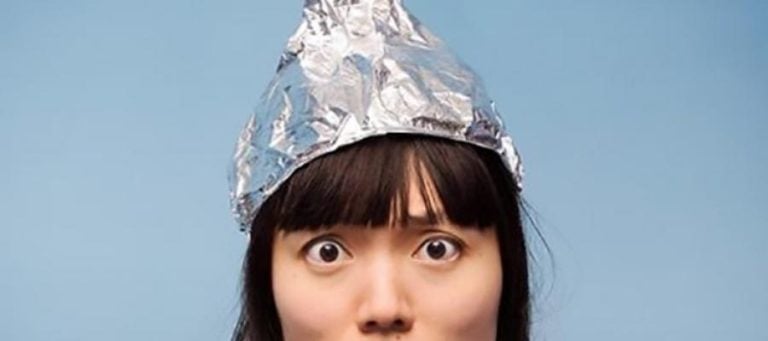
    Magical thinking happens when you have, say, firmly held beliefs based on scanty or even non-existent evidence or when you make plans in which ends and means are radically out of synch. Think of the belief that doing a certain dance can cause it to rain or that wearing a baseball cap inside out can lead to a rally. But, of course, magical thinking doesn’t show up just in outmoded superstitions or harmless rituals at sporting events. It is actually all around us.

  • Do Religions Deserve Special Status?

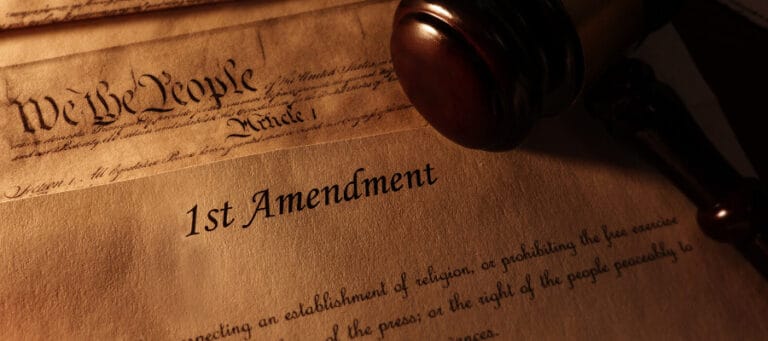
    The First Amendment to the US Constitution protects our right to say and publish whatever we think, but doesn’t in general guarantee the right to do any more than that. I can believe that people shouldn’t wear fedoras, and I can publish my view. But I can’t go around knocking fedoras off the heads of those that wear them, and I may get in trouble if I fire employees for wearing fedoras. But it seems to go further with respect to religion. In addition to ruling out the establishment of a state religion, it also guarantees “the right to the free exercise of [religion].” You cannot only preach what you believe, you can practice what you preach. But just what does this mean? Do we really treat religion in a special way? Should we?

  • Election Special 2016 – Uncut

    Happy Labor Day from your friendly neighboorhood producer. This weekend we present our first Election Special, a pre-produced…

  • Dangerous Demographics

    In many countries around the world, people are living longer. At the same time birth rates are declining—sometimes rapidly. The result? More old people, fewer young people. Combine that with the world’s highest average life expectancy, and the result is a population that’s rapidly shrinking and rapidly aging. Now that’s dangerous demographics.

  • Neuroaesthetics – Your Brain on Art

    Research in neuroaesthetics involves measuring brain activity, using technology like fMRI machines, when subjects look at works of art. It also involves looking at people with different brain disorders and seeing how this affects their ability to appreciate or create art. You might wonder how looking at someone’s brain can ever answer the big questions of aesthetics—like, what is beauty? Or, what is aesthetic taste? Isn’t neuroaesthetics just another attempt on the part of science to encroach on philosophy’s turf?

  • A Big Bang Blog

    They say that the Big Bang gave birth to the entire universe. So you might think that the Big Bang must have been one hell of an explosion. But technically speaking, the Big Bang wasn’t actually an explosion at all. It couldn’t have been.

  • The Philosophy of Puns

    A Philosophy Talk show on puns can’t just consist of making puns, even if they…