Author: Kenneth Taylor

  • Remixing Reality: Art and Literature for the 21st Century

    Remix is all the rage, these days. Some people claim that absolutely everything is a remix. Of course, if that were literally true, it would imply that nothing new is being created anymore. But in one sense, a remix is a new thing.


  • Tainted by the Sins of Our Fathers?

    This week, we’re discussing moral taint and collective responsibility. We’re asking the question, “Can we be tainted by the sins of our Fathers?” You might think that the answer is that we certainly can. Adam and Eve ate that darned apple and tainted all humankind with Original Sin. Now I know that that’s the biblical theory… but, frankly, I don’t get it. I have never gotten it. They ate the apple. Not us. Why would a loving God hold us – their descendants – responsible for what they did? What kind of divine justice is that??

  • The Metaphysics of Color

    This week we’re seeing red — asking about the metaphysics of color. Is color in the eye of the beholder? Or is color objectively real? Would colors still exist in the world, even if no one was around to see them?

  • Science and Gender

    Science used to be seen as a thing for boys only. Back in the 1980’s when students were asked to draw what a scientist looks like… forty eight percent drew a scientist with facial hair; twenty-five percent gave their scientist a pencil protector. Only eight percent drew a woman. Of course, back then the perception that science was a boy thing, pretty much matched the reality.

  • The Legacy of Freud

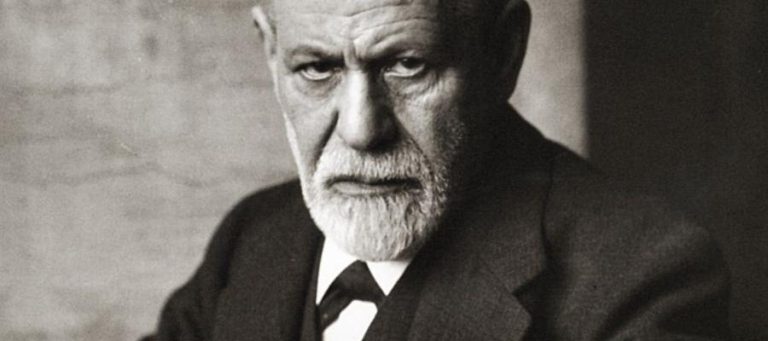
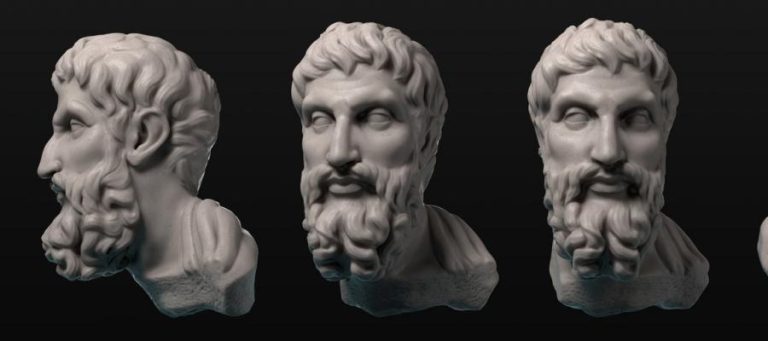
    Freud wasn’t the first to think about the idea of unconscious beliefs and desires. That idea goes back over two thousand years ago to Epicurus. Unlike Epicurus, Freud developed detailed, putatively scientific hypotheses about the exact workings of the unconscious mind. And those theories basically ruled the roost for several decades more or less unchallenged.

  • Memory and the Self

    There is a long tradition in philosophy of thinking that memory and the self are intimately connected. Locke claims, for example, that what makes me today the very same person as I was yesterday, is, basically, the fact that I can now remember what I did or experienced yesterday. So memory, for Locke, is what actually determines who I am.

  • The Dark Side of Science

    This week we’re stepping over to the Dark Side of Science. Of course a skeptic might ask, what dark side? Without modern science, we’d still be bleeding the sick, travelling by horseback, and using carrier pigeons for long distance communication. But there are no unmixed blessings.

  • Latin-American Philosophy

      It’s National Hispanic Heritage Month, and this week on the program we’ll be tackling…

  • The Psychology of Partisan Politics

    To appreciate how divided Americans are about politics, we might start with god, guns, and sex. Some Americans view gun ownership as a non-negotiable, an almost sacred right, and view homosexuality as an unholy abomination. Other Americans see guns as one of our greatest social ills and see differences in sexual orientation as no more significant than differences in eye color. But, of course, those are intrinsically emotionally charged issues, so you might expect deep divisions in such domains.

  • What Are Leaders Made of?

    What do Girl Scout leaders, Army generals, corporate honchos, and Philosophy Department heads all have in common? Not much, I’d say. For example: whether you’re talking Girl Scout troops or Army troops — an effective leader still has to have the ability to communicate and motivate. But motivating a troop of pre-teen girls to work hard and earn their badges is a lot different from motivating a troop of soldiers in the face of battle. It’s easy to see how someone could be really good at the one, and bad at the other.

  • Epicurus and the Good Life

      This week’s conversation is about Epicurus and the Good Life.  Now in common parlance…

  • Black Solidarity

      February is Black History Month.  So we thought it might be a good time…

  • The Examined Year: 2011

    This week, we do something special. We take a look back at the past year, though the lens of Philosophy. We call the episode — The Examined Year: 2011. But this is not your typical year in review show — not by a long shot. We take our inspiration, from Socrates who said that the unexamined life is not worth living. For us, that implies that that the unexamined year is not worth living through. Fortunately for us all, though, 2011 was a year well worth living through and well worth examining. It was best of times and the worst of times — a year in equal parts inspiring and troubling.

  • To Forgive and Forget

      This week’s episode is about “Forgetting and Forgiving.”   Frankly, though,  the ‘forgetting’ part is…