Author: Kenneth Taylor

  • Science and Politics: Friends or Foes?

    This week, we’re thinking about the relationship between science and politics. Are they friends or foes? I can get myself in a cynical frame of mind in which I think to myself that whether they are friends or foes depends on where the money is. I’m kidding – sort of.


  • Why Propaganda Matters

    This week, we’re thinking about Propaganda – how it works, why it matters. I feel about propaganda sort of the way I feel about pornography — I’m not exactly sure how to define it, but I definitely know it when I see it.

  • Unconditional Love

    I should start out by admitting that unconditional love is rare and difficult thing. Parents may profess to love their children unconditionally. But how often do children test the limits of parental love? Couples in the first blush of new love may make dewy-eyed promises to love each other for better or for worse. But how often do such promises give way to betrayal and recrimination? Still, it’s an amazing gift when it does happen. And it’s one that we all want. We all want someone who will love us forever, through thick and thin, no matter what we do or become.

  • Forbidden Words

      This week our topic is Forbidden Words!  Now when we say forbidden, we don’t…

  • Regulating Bodies

      Our topic this week is Regulating Bodies.   My first gut instinct is to say…

  • Is There Life (or Anything) After Death?

    What’s Next? After death, that is. Here’s one answer: nothingness. How can I be so sure there’s no afterlife? After all, people have believed in the afterlife, since … well, since there were people. Who’m I to say they’re wrong?

  • Why Be Moral?

    Why Be Moral – what kind of question is that? Morality is a good thing. Immorality is a bad thing. A person should always do good things and never do bad things. Doesn’t everybody agree? Well, judging by people’s behavior, not necessarily. But we also have to be careful not confuse ‘ought’ and ‘is’. People do behave immorally. But they shouldn’t. Everybody knows that – at least in their heart of hearts.

  • Transformative Experiences

    Some events in a person’s life are so powerful, so life-altering, that there’s a sense in which he or she may not be the same person before and after the event. Now I’m not talking about winning a mega-lottery, for example. Doing that would, of course, change my life. I could buy more stuff. Maybe I would work less. Certainly, I would travel more. Those kinds of changes aren’t really what we have in mind, though. Those are just changes in the external circumstances of my life.

  • The Fairness Fixation

    This week our topic is what we’re calling fairness “fixation.” The choice of the word ‘fixation’ is a little bit tongue in cheek. But it is meant to convey the serious thought that maybe, just maybe, we are too concerned with fairness. There are definitely those – especially, I think, on the right, but perhaps not only them – who seem to think that we definitely are.

  • Freedom, Blame, and Resentment

    We blame people when they do bad things. Blame often leads to or is accompanied by resentment, especially when we are directly and personally harmed by another person. For example, some reckless jerk is darting in and out of traffic. He cuts me off, causing my car to spin out of control. Everybody is likely to blame him for being so reckless. Blame isn’t necessarily a personal thing. But as the directly harmed party, I am also liable to feel something more personal — an intense and visceral resentment toward him.

  • Second-Guessing Ourselves

    Some people avoid second-guessing themselves on principle. It’s like Ser Alliser says in Game of Thrones: “Leadership is all about getting second-guessed by every clever little twat with a mouth. But if a leader starts second-guessing [himself], that’s it. That’s the end.” But even leaders sometimes make rash judgments and uninformed choices. It’s not hard to argue that we would have all been better off if Bush and company had done a little second-guessing of themselves when it came to the decision to invade Iraq.

  • Babies and the Birth of Morality

    One of the many questions on the subject is whether morality is innate or learned. If you want to answer that question, what better place to begin than with babies? Well, you might be skeptical that newborns, of all people, have something to teach us about the nature of morality. It’s not like newborns face a lot of deep moral dilemmas — “Should I laugh at the big guy making the silly faces at me or should I cry?”

  • Neuroscience and the Law

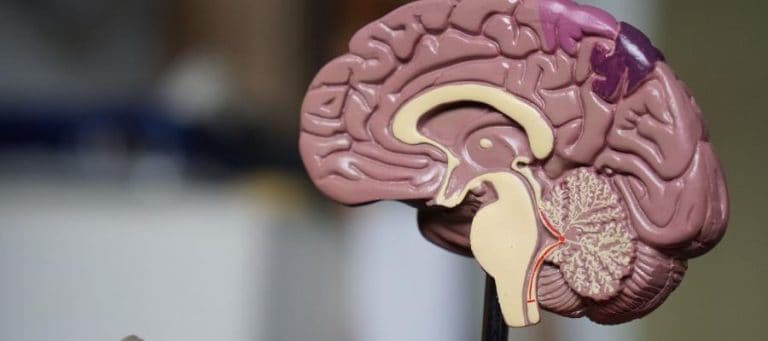
    Neuroscience is revolutionizing our understanding of how the brain works. In the process it is challenging ago-old ways of thinking about crime and punishment. Some neuroscientists even say that it’s time to completely rethink our judicial system in light of their discoveries. That’s because our current legal system presupposes a certain picture of how the mind works that many neuroscientist now believe is almost entirely wrong.

  • What Might Have Been!

    Many things that did not happen, might have happened. For example, if John hadn’t been such a procrastinator, he might have written more in his career. Of course, since John has really had a highly distinguished and productive career, that’s sort of a frightening thought. Similarly, many things that did happen, might not have. I went to Notre Dame, for example. But I might not have. I might have gone to MIT or Case Western Reserve, where I was also accepted, instead.