Memes and the Evolution of Culture
I bet that when most people hear the word ‘meme’ they think of the…


I bet that when most people hear the word ‘meme’ they think of the…

Sunday we consider whether ancient wisdom — namely that of the Greeks — can be…

We usually think of the Bill of Rights as recognizing and guaranteeing to Americans…

International Debt, the debts that nations, often quite poor, owe to other nations and…

Religion offers us a comforting and inspiring vision of human existence. In the Abrahamic religions, Judaism, Islam and Christianity, a just but loving and merciful God created the universe. He’s in charge. And he’s got a plan — not just for the universe as a whole, but for each of us. Seems like it would be nice to wake up in the morning as a part of all that.
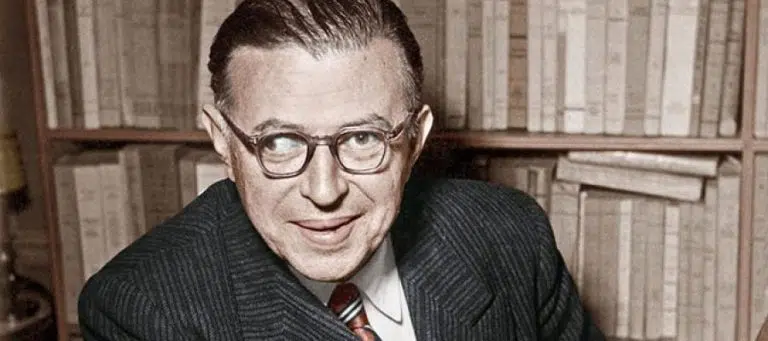
Jean-Paul Sartre was one of my favorites when I was an undergraduate. I enjoyed his novels and plays, and his great essay “Existentialism as Humanism. “ And I once even read a good bit of “Being and Nothingness,” his 700 page magnum opus. So what did Sartre mean by saying that we are radically free, and that we are condemned to be free? And what is existentialism?

Some people think Aristotle basically had it right when he said, “To say of what is that it is, and of what is not that it is not, is true”. I take it he meant that, for example, if I say this apple is red, what I say is true if this apple actually has the property of being red. If I say this apple is not red, what I say is true if this apple does not have the property of being red. What more is there to say?
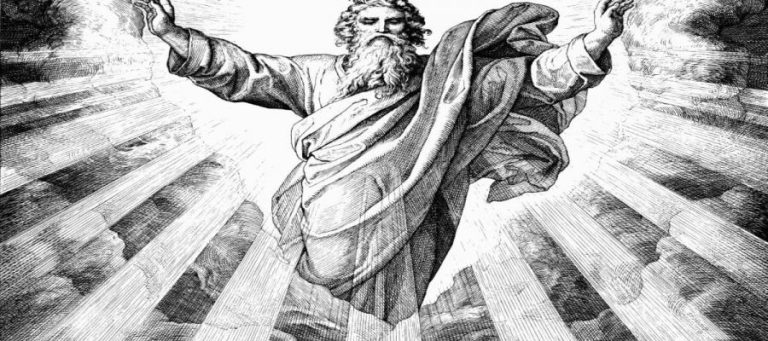
The question is: if God knows all, is all-powerful, and is benevolent, why did He create a world with suffering, evil and injustice in it? That’s what philosophers call “The Problem of Evil”. It is a problem for religions, like orthodox Christianity, that posit a perfect God. Such a God should be all-powerful or “omnipotent,” and all-knowing or “omniscient”. And he should be benevolent, since being mean and uncaring is an imperfection. But as the quote from Epicurus shows, the problem predates Christian philosophy and theology.

Lao-Tse, the founder of Taoism, said “Those who know do not speak, and those who speak do not know” So, by that criterion, I can say a something about Taoism, since I know very little.

When you do the moral thing, you’re doing the right thing. Violating morality is doing the wrong thing. It’s good to do the right thing; bad to do the wrong thing. You will always do better and live better when you do the moral thing. But imagine the following scenario. Suppose you live in a country full of tax cheats, but you’re honest to the bone and you dutifully pay your taxes. What does that make you — a saint among sinners, or a sucker? How does doing the right thing improve your life?
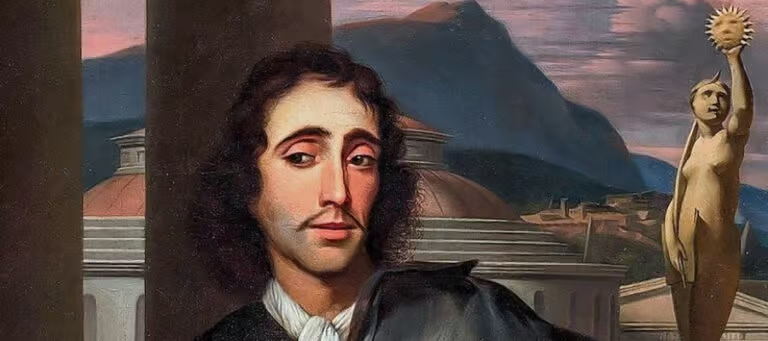
Baruch Spinoza is sometimes called “the father of modernity.” Spinoza, along with Descartes and Leibniz, is considered one of the great rationalists of the 16th and 17th centuries. Of the three of them, Spinoza was philosophically the most radical.

This week we’re thinking about the Logic of Regret. Regret is a feeling of…

Designer babies are a common specter when people think about genetics and bioethics. Sounds pretty benign if you’re just envisioning parents who choose to have kids with defect-free genetic endowments. But it’s frightening to think of that power and knowledge in the hands of a latter-day Hitler.
Immortality, of the desirable kind, usually brings Heaven to mind. A great place to live, if the details are a bit obscure. But, as far as I have been told, the only technology involved is doing what God wants you to do, and then dying. So has Apple or Microsoft come up with a better way of getting to Heaven?

The “Culture Wars”. Not just Liberal versus Conservative and Democrat versus Republican; but Secular…

Leibniz was a very practical philosopher. One could argue that he has as much or more practical impact on Silicon Valley as any philosopher. He invented binary arithmetic; without that, no computer science! Plus a lot of other ideas along the same lines.