What Is Addiction?
March 15, 2026
Listen


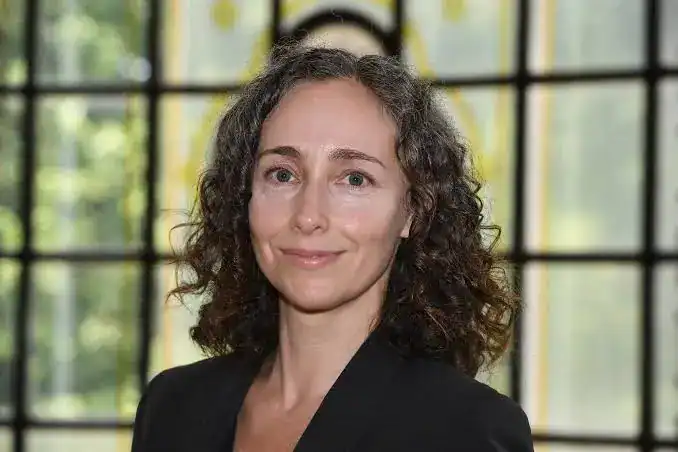
People who are addicted to substances display a puzzling behavior: they keep using even when it causes harm and distress to them and the people in their lives. Why would someone do this? Is it the result of a brain disease? Can we explain it in psychological terms without victim-blaming? What if everyone is irrational, whether or not they’re addicted to substances? Josh and Ray can’t quit talking to Hanna Pickard from Johns Hopkins University, author of What Would You Do Alone in a Cage with Nothing but Cocaine? A Philosophy of Addiction.
Ray Briggs
Is addiction a brain disease or a problem of character?
Josh Landy
When drugs make our lives worse, why is it so hard for us to quit them?
Ray Briggs
If someone in your life is addicted, what’s the best way to help?
Josh Landy
Welcome to Philosophy Talk a program that questions everything…
Ray Briggs
…except your intelligence. I’m Ray Briggs.
Josh Landy
And I’m Josh Landy. We’re coming to you via the studios of KALW San Francisco Bay Area.
Ray Briggs
Continuing conversations that begin at Philosophers Corner on the Stanford campus, where Josh teaches philosophy.
Josh Landy
And at the University of Chicago, where Ray teaches philosophy.
Ray Briggs
Today, we’re asking: what is addiction?
Josh Landy
What is addiction? I feel like it’s obvious, right, Ray? It’s a brain disease that forces people to use drugs even when the drugs in question are bad for them. Yeah, I don’t think that’s true. What you’re saying, the drugs are not bad for them.
Ray Briggs
No, no. I agree about that. Addiction is bad for people, but it’s not a brain disease. People who are addicted to drugs are choosing to use.
Josh Landy
I feel like a bunch of neuroscientists would disagree with you there. They might say, look, addiction changes the way the brain’s dopamine system functions. Plus there, there are medications for some addictions, and if those medications work, doesn’t that mean addiction must be a disease.
Ray Briggs
You’re ignoring the fact that people are still making a choice. So imagine an alcoholic sitting in a bar, and then someone comes along and pours poison in their drink right in front of their face. You think they’re really going to drink it?
Josh Landy
No, but I still don’t get the point.
Ray Briggs
Well, it shows that they’re not some mindless automaton. They have willpower. If addiction were really just a disease making us totally powerless to resist that person’s hand would reach out and grab that gin and tonic and pour it right into their mouth.
Josh Landy
Alright, so your alcoholic manages to resist that particular gin and tonic, but, but aren’t they just going to order another non poisoned one?
Ray Briggs
They are because they want another one.
Josh Landy
Do they, though? I mean, the person I have in mind is feeling really bad about the life they’re leading. They they really, really don’t want to have another drink, but they find themselves craving one. Their whole body is screaming at them to do something they’d actually prefer not to do. And That sure sounds like a medical issue to me.
Ray Briggs
Well, I agree that the cravings are a medical problem, but the cravings themselves aren’t enough to guarantee that someone is addicted. It’s giving into those cravings that makes the difference. Remember the existentialist Josh Sartre says you can always choose against your feelings, motivations and past choices.
Josh Landy
I like Sartre a lot, but I have to say that formulation sounds a bit heartless. I mean, if someone comes to you lamenting that they they really want to give up their addiction, but they can’t, and it’s causing them real suffering. Are you really going to tell them it’s all their fault? Are you going to say to their face that addiction is a character flaw?
Ray Briggs
Well, it is a character flaw. People who are addicted to drugs don’t only hurt themselves Josh they often hurt the people around them. They might drive under the influence, they might neglect their relationships. They might even lie and steal to fund their addiction. These are not good ways to behave.
Josh Landy
Well, I agree with that, but I still don’t see why you blame addicts rather than their neurochemistry. Well, look, I’m not blaming them. You’re not you just said they have a character flaw,
Ray Briggs
yeah, but it’s not their fault that they have it. Okay? Now I’m really confused. Well, your character is formed by all kinds of factors outside your control, how your parents treat you, what resources society gave you, and yes, even your brain chemistry and your DNA, but once you’ve got that character, you’re still responsible for what you do with it. If you’re addicted to drugs, it’s partly because society owed you something better. But that doesn’t mean you can just blame it all on your brain.
Josh Landy
Okay, so let me see if I understand you. You’re saying addicts do have a character flaw, but it isn’t their fault, and we shouldn’t blame them for it, right?
Ray Briggs
Right, I think blame is really counterproductive.
Josh Landy
I’m still not sure I understand but, but I bet our guest will help me figure it all out. It’s Hanna Pickard from Johns Hopkins University, who’s got a new book on the topic.
Ray Briggs
But meanwhile, we wanted to know how addicts describe their own experience. We sent our Roving Philosophical Reporter, Sarah Lai Stirland, to find out. She files this report.
Sarah Lai Stirland
Whatever David Manheim is up to these days. He can’t seem to shake Instagram from the back of his mind. He says he feels addicted.
David Manheim
I find social media to be, you know, not—I don’t know if it’s physically addictive, but it’s, it’s certainly got me by the hooks. You know what I mean? Like I check Instagram like I used to smoke cigarettes.
Sarah Lai Stirland
Addiction is everywhere in the news right now, from social media apps that keep you scrolling to a more serious fentanyl crisis. Manheim is all too familiar with compulsive, self-soothing, and other ultimately self-defeating behavior. He struggled with addictions to heroin, methadone, benzos and prescription opioids for more than two decades.
David Manheim
Hello and welcome to Dopey, the podcast on drugs, addiction and dumb shit. And my name is Dave.
Sarah Lai Stirland
These days he’s sober. He finds community and purpose by hosting his popular recovery show. It features all kinds of people, folks who struggled with drug addiction, as teens, successful musicians, a cop, a former Disney child star, even the veteran actress Jamie Lee Curtis has appeared on the show. Most of the guests explain how they started using drugs and then how they lost control.
Damon West
It took about 18 months before I gave everything away.
Sarah Lai Stirland
Damon West, a former University of North Texas quarterback and stock broker, told Manheim how he let his addiction completely take over his life.
Damon West
My job, my home, my car, my savings account, my family, my tethering to God. In 18 months, I go from working on Wall Street to living on the streets.
Sarah Lai Stirland
His crystal meth habit drove him to orchestrate elaborate burglaries in Dallas for money. West used drugs early in his career because he couldn’t bear the idea of not being an athlete. He had to quit football after a major injury.
Damon West
I wrapped my identity up into being a football player, Dave, and you can’t do that right, because anything you attach to can be taken away from you at any time. I gave up all my goals to meet my behaviors. I could not live life on life’s terms—the hallmark of being an addict, right?
Sarah Lai Stirland
He ended up with a life sentence in prison, but he beat his addiction, got out on parole and became a motivational speaker. Dave Manheim says we should be wary of stereotyping addicts, though. His original co-host on Dopey, for example, seemed to have kicked his drug habit, but he died of an overdose a couple of years after they created the podcast.
David Manheim
Everybody’s low point is totally subjective, which I think is why it’s so hard to treat addiction.
Owen Flanagan
My becoming addicted had a lot to do with the kind of person I wanted to end up being—at first. I didn’t want to go over the top.
Sarah Lai Stirland
Owen Flanagan is a philosopher of mind and the author of “What is it like to be an addict?” He argues that it’s only people struggling with addiction themselves who can really lay out everything that made them become addicts. Flanagan was an alcoholic. He says he drank to ease his anxiety, and growing up casual and routine, alcohol use was an integral part of his family’s rituals.
Owen Flanagan
I wanted to, like, walk right up to that bar where I could stay and be, you know, charming storytelling Irishman, growing older and older, being around other good souls, or having cocktail hour for myself.
Sarah Lai Stirland
But Flanagan’s habit then grew into a compulsion.
Owen Flanagan
It would come up sometimes in relationships, romantic relationships, for example. Things would be going well, and then there might be attention call to my drinking, at which point I’d exit the relationship and keep drinking.
Sarah Lai Stirland
It even led to divorce. He stopped talking to friends after a few successful efforts and relapses. He only changed his lifestyle when the constant drinking made him feel so sick he thought he would die.
Owen Flanagan
One of the plausible things that differentiates the addict from a person who’s just physically dependent is that the addict starts to use in situations where she promised herself not to use she will choose the drug of choice over other things that are important to her, like work and family.
Sarah Lai Stirland
The stories on the Dopey podcast show that addicts end up hooked for all kinds of reasons, in all kinds of ways, and with a constantly changing kaleidoscope of factors at play in their lives. Flanagan also saw this as he attended Alcoholics Anonymous meetings.
Owen Flanagan
There’s just not one thing addiction is. I mean, sure, at a certain level of abstraction, there’s one thing it is. It means a pattern of use of the drug that gets in the way of your own flourishing. But how and why people get in there is very complicated, and if we’re ever going to get out of it, we have to engage in our recovery.
Sarah Lai Stirland
The structure and community of Alcoholics Anonymous helped both Owen Flanagan and dopies Dave Mannheim get and stay sober, but they both swear that AA is not necessarily the only path for everyone.
David Manheim
Hobbies, relationships, family—anything that you can throw yourself into to supplant the obsession with the thing.
Sarah Lai Stirland
For now, he says, his current obsession with Instagram hasn’t yet matched his addiction to drugs.
David Manheim
I’ve never felt any kind of social media withdrawal.
Sarah Lai Stirland
For Philosophy Talk. I’m Sarah Lai Stirland.
Josh Landy
Thanks for that great report, Sarah, that’s a super interesting range of perspectives. I’m Josh Landy. With me is my fellow philosopher, Ray Briggs, and today we’re asking, what is addiction?
Ray Briggs
We’re joined now by Hanna Pickard. She’s professor of philosophy at Johns Hopkins University. University and author of “What Would You Do alone in a cage with nothing but cocaine? A philosophy of addiction.” Hannah, welcome to Philosophy Talk.
Hanna Pickard
Thanks so much for having me.
Josh Landy
So Hana you’ve been thinking about the topic of addiction for some time now. What first got you interested in it?
Hanna Pickard
Well, unusually for a philosopher, I spent 10 years working part time clinically in an NHS specialist service for people with personality disorders and complex needs. And before that, like many of us, there were people in my life who struggled with addiction, but I’d never thought seriously about what it is. I just sort of assumed, I think, again, like many of us that it’s a brain disease that causes compulsive drug use, but then actually working with people who struggled with the condition, and seeing what helped showed me that this understanding just made no sense. It was completely irreconcilable with what I saw in the clinic, so I was kind of philosophically hooked on the question of what addiction is.
Ray Briggs
So Hanna, if addiction isn’t a brain disease, how would you define it?
Hanna Pickard
So I think we need to begin by thinking of addiction as drug use. That means it’s a kind of behavior, and part of what the brain disease model has done is really taken our focus away from behavior and onto one possible explanation, namely the brain. So the way I think of addiction is that I’m going to put it really pithily to begin, it’s drug use that’s gone wrong, and in the book I give a more substantive explication of it, I say that it is a pattern of drug use that persists despite evident and severe costs, such that it counts profoundly against a person’s own good. So that’s a bit of a mouthful, but we can unpick any of those components that you want to.
Josh Landy
Why couldn’t I have that definition? Which is, it’s drug use gone awry. It’s harming the person, and still have the brain disease model. You know, I started out having a couple of glasses of wine every now and again, but at a certain point, something went awry in the brain, and now I’m in a situation where I kind of have to have it, and it’s really harming my life. So why couldn’t the brain disease model be compatible with the model that you propose, where it’s something that it’s a kind of use that’s harmful to me, to the user.
Hanna Pickard
So the first answer to that question may sound like a philosophical and pedantic point, but it really isn’t. You can’t have the explanation that brain disease is what causes addiction. If we define addiction as brain disease, right? Because we’ve, in effect, said what it is by appeal to brain disease, which means that we can’t then advert to brain disease as a possible explanation of what addiction is. So the first reason right is just that if you think addiction is a brain disease, then you have addiction if and only if there’s brain pathology, right? And that’s a very different claim than the claim that addiction is explained by brain pathology. In particular, it focuses us exclusively on the brain as the place to look to understand addiction and the place where we might intervene to treat it, so it really sidelines all these other factors that otherwise we might be interested in thinking about.
Ray Briggs
That’s a very philosophical answer. You also said the brain disease model wasn’t practical when you were trying to use it in a clinical setting? Why wasn’t it practical?
Hanna Pickard
Well, it’s not practical for a couple of reasons. One is that in a clinical setting, you’re trying to engage with patients to help them make changes in their lives that are meaningful and that does not involve fixing their brain. That involves talking to them, understanding them, supporting them to do things differently, right? So part of why it’s not practical in a clinical setting is that we actually don’t have ways of intervening and fixing someone’s brain. We have ways of engaging them as a person, right, as someone you’re in a relationship with. So that’s the first reason it wasn’t practical. But it also just wasn’t practical because it was a really bad guide to how you might intervene to try to help someone. I mean, the brain disease model has three different components, the idea that addiction is brain pathology, the idea that that brain pathology is what causes drug use, and the idea that that drug use is compulsive, right? It’s really compelled. What you see in the clinic is that drug use is not compulsive or compelled.
Josh Landy
You’re listening to Philosophy Talk today. We’re asking, what is addiction? With Hannah Pickard from Johns Hopkins University,
Ray Briggs
When does drug use become a problem? Why do people persist? Once it has is there anything morally wrong with self destructive behavior,
Josh Landy
Willpower problems and the paradox of addiction—along with your comments and questions, when Philosophy Talk continues.
Car Seat Headrest
Drugs are better, drugs are better with friends are better, friends are better with…
Josh Landy
Some people call addicts all kinds of names, but what if some of them are just teens of style? I’m Josh Landy, and this is Philosophy Talk the program that questions everything…
Ray Briggs
…except your intelligence. I’m Ray Briggs, and we’re asking what is addiction with Hanna Pickard from Johns Hopkins University, author of “What Would You Do alone in a cage with nothing but cocaine?”
Josh Landy
Got a question you just can’t quit? Email us at comments@philosophytalk.org. Or you can comment on our website. And while you’re there, you can subscribe to our podcast and get hooked on our library of more than 600 episodes. Everything in the archive is now completely free.
Ray Briggs
So Hanna, before the break, you were saying that addiction is drug use gone wrong. And going wrong is basically when people keep doing things that are obviously bad for them. But why would somebody keep doing something that was obviously bad for them?
Hanna Pickard
So the first thing to say is that in general, we need to think about what drugs do for a person, what they do that’s good, alongside what they do that’s bad, and also as addiction continues. I think for humans, that question becomes, what do drugs mean for a person? So those are the two general pieces, but then we can dig deep into the kinds of explanations that might be true of different people.
Josh Landy
So that’s great. Let’s dig deep, because it seems like there’s going to be a lot of variation, right? People are going to do it for all kinds of reasons. I really like this theory that Roy Baumeister had that for some people, you know, drinking is a way to escape the prison of the self, right? Stop being who you are. What’s one or two of the biggest reasons that you think motivate people to go down this path?
Hanna Pickard
Yeah, I think that’s one of the really important reasons that never gets talked about enough, right? So, so let’s just compare two different reasons. One is drinking to escape the problems of life, and the other is drinking to escape the problems of the self. I think we’re more familiar with the idea that drinking is to escape the problems of life. We know that addiction is associated with backgrounds of really severe adversity, limited socio economic opportunities, and also additional mental health problems. So the idea that people self medicate, as it tends to be called, in order to manage the suffering that they live with because of their life circumstances, is something we’re really familiar with. But also there’s this other thing, which is using drinking or other forms of drugs to escape a sense of self as empty, as bad as something you can’t bear to face when you look within that’s very different. But if you listen to what people with addiction say, it also can be really part of what’s driving them to use
Ray Briggs
So we’ve got a question from Anuba on LinkedIn that I think connects to this idea. So anupa writes, do uncaged people not get addicted? After all, if addiction is obsessive and compulsive attachment to an object or thought, wouldn’t the ostensibly free people be more vulnerable to addiction? What do you think about that?
Hanna Pickard
Well, I think it’s certainly true that, quote, unquote, uncaged people can become addicted, and part of the point in the book is to really make sure that we pay attention to all the different people and correspondingly, all the different ways in which we can find addiction and explain it. Okay, so it’s not just limited to the idea that you’re trying to escape the cage, right? You’re trying to escape a hard life. But I also don’t think that we should see addiction so narrowly, simply as obsessing and feeling compelled to use or be attached to a particular object. It’s much more complicated what it means for different people. So that’s also not quite the way I would describe it or render it in the book.
Josh Landy
So when you say it’s complicated the way addiction, what the addiction means to different people, are you talking about the this, you know, a common distinction that’s made between willing, unwilling and unresigned addicts, right? Some people are willing. You know, this is what my life is. Great, I have a problem. Great, unwilling. Well, I don’t like what I’m doing. I really want to change. And resigned where it’s Yeah, I would like to change, but I can’t. Is that the kind of distinction you have in mind, or are you thinking more broadly about the the meaning of addiction in a given person’s life?
Hanna Pickard
Well, I do. Think that those categories track some ways we might divide things up, except I would take issue with the idea that some people are willing in the way, in the sense that they just think, hey, my life is great. This is exactly how I wanted it to go, right? So I think thinking about what it is to identify as an addict can be a really important thing to do, and we’re trying to understand what keeps some people stuck. But it’s kind of illusory to think that the way to understand that identity is the way you might understand your identity as a, you know, an amazing sports player or a successful professor or something like that, right? That’s that’s just not what it’s like, but, but I guess I also think that there are other dimensions of meaning. One of the things about what you said makes all of the ways in which a person might connect to their addiction a question of their will. And the notion of what something means to us has has resonance in our emotions, in our identity, in our beliefs. So it’s not just about the will.
Josh Landy
So the identity question is a really interesting one, because in the book, you list a variety of different reasons why different people end up going down this path, which, as you say in your really incredibly helpful definition, leads to that point where you’re doing something that’s harmful to yourself by your own standards. So you know, self medication, self harm, in some cases, self punishment, impulse denial and identity. So I want to ask you to say a little bit more about identity. What is this idea that for some folks, there’s a certain kind of comfort, or something like that, in feeling like that? You know, this is the person I am. This is the life that I have. It would be, it would be unsettling to embrace a different kind of life that seems slightly counterintuitive to me, or at least I’m not quite fully grasping it. Can you say a little more how identity factors in to some people continuing to use
Hanna Pickard
Sure so all of us have a range of identities that mean something to us. Sometimes those identities bring communities. Sometimes they bring structure to our lives. Sometimes they kind of give us a sense of who we really are deep down. And if you imagine, for any of us taking away such an identity, it’s really destabilizing. So you know, Josh, I’m going to guess that you know your identity as a philosophy professor is something that’s meaningful to you and gives you value. We’ve only just met, but you may also have an identity as a father or as an expat from England or any of a number of things. And if all of a sudden I say, hey, that’s gone, there’s going to be something really existentially threatening about that for you. So the thought about identity and addiction is that for some people, especially if they’ve lived with addiction for a really, really, really long time, that identity as an addict is woven into their sense of self and the meaning they get from living their life in just the way that for you, the identity as a professor or a father or an expat might be.
Josh Landy
Don’t take away my old gray tea!
Ray Briggs
So Zachary asks a question that seems kind of skeptical of identity. Zachary writes, I’m wary of labels for this type of behavior, like saying an alcoholic. He writes, society wants to pounce on what they don’t like. Addiction is a theoretical term, not a social label that makes someone outside an outsider. If a community uses drugs a lot, it’s because they’ve been economically oppressed. Hannah, what do you think of that?
Hanna Pickard
Well, there’s a lot I agree in it, and also some things that I want to disagree with, right? So the explanation I just gave of identities role in addiction is really from within a first person perspective, right? How someone might think about themselves and how that might affect why they keep using. And I don’t want us to throw out the label for whatever reason and thereby fail to appreciate that fact about a person’s own perspective on their addiction, right? Because if we do that, we’ve just potentially lost something that we actually need to address, to help that person. We need to support them, to construct a different identity, right? And we don’t want to lose track of that need. But what’s right about the question is that historically, we really have used those labels to stigmatize and other people with addiction, and that is something that as a society, we have to stop doing.
Josh Landy
You’re listening to Philosophy Talk today. We’re thinking about the philosophy of addiction with Hannah Pickard from Johns Hopkins University. So Hannah, that was super interesting. What you were just saying. In response to Zach’s question, because my understanding from hearing about Alcoholics Anonymous and Narcotics Anonymous is that we’re called upon to identify as an addict essentially indefinitely, right? So it’s something that doesn’t really go away. You can obviously get yourself to a much better place, but you’re taking one day at a time, and you know that there’s sort of something in you, and things could go awry, and you shouldn’t be too overconfident. Your view seems a little different from that. Your view, if I understand correctly, seems to be no actually, at a certain point, it’s more healthy to say, I’m not an addict. I’m no longer an addict, is that, right? And if so, why? Why? Why are you taking this difference from AA,
Hanna Pickard
Yeah, so let me start by just saying it is an entailment of the explication I gave you that at some point the pattern of drug use has ended and a person is no longer addicted, right? So I want to own up to that entailment. It doesn’t mean that someone who has a history of addiction shouldn’t be cautious precisely because of that history and because they know that they might be at increased risk. There’s like a disposition to addiction potentially that they have that someone else doesn’t have but that’s very different than saying they are an addict 1020 years after they haven’t used anymore. So that’s the philosophical entailment. But then there’s question about what is or isn’t good for people to think about themselves or to say in a group. And I’ve always been really curious about the role that standing up and saying, I’m so and so, I’m Hannah and I’m an addict has in AA groups. I mean, there is something ritualistic and also signaling both your belonging to the group and your commitment to not using, which seems really important, but I’ve always wondered what would happen if we kind of ran an experiment where we had two identical groups, one, as it normally is for AA, but in the other people stood up and said, I’m so and so. I’m Hannah, and I’m a person with a history of addiction, and whether actually that might be more therapeutically productive.
Ray Briggs
So I have a question about sort of identity and addiction, and it’s about the example of Keith Richards, who you talk about in your book, Rockstar who used a lot of drugs and was really happy using a lot of drugs, and seemed to think in his biography that this was a great thing about his life, that he got to do this. So it sounds like you’d say he wasn’t addicted, because it wasn’t a problem for him that he used a lot of drugs. Is that a possibility that people can sort of use as many drugs as an addict would use, but not be addicted?
Hanna Pickard
It’s absolutely a possibility. There’s empirical work about how quantity of use is not cleanly associated with rates of addiction, but if we just go to Keith Richards, because that’s such an illustrative case. So here’s what we know about Keith Richards, that he was a daily poly drug user for much of his life, perhaps still is. And he also says in his memoir that there were periods in his life when he was dependent on heroin, but there’s this really important distinction between dependence, physical dependence, and addiction. So think of physical dependence as a condition where people go into physical withdrawal upon sudden abstinence or dose reduction. And with that idea, you can immediately see that physical dependence is neither necessary nor sufficient for addiction. So do you want me to say a little bit about each of those?
Josh Landy
Well, actually, we have a question from Lu in San Francisco. It’s right on this topic. So let me ask this, and then, you know, respond however you think best. So Lou says, without having to suppose that the mind is something non physical or ghostly, is there a clear cut distinction between physical and psychological addictions?
Hanna Pickard
Well, we were just talking about dependence, so maybe I can answer that in the first instance, in relation to dependence, there is a clear cut distinction between physical dependence and psychological dependence, right? So physical dependence really is a physiological condition where a range of physical symptoms occur if you drop dose or you stop using psychological dependence is incredibly important, but it’s much more inchoate and gray, right? It’s about how you feel when you imagine not using drugs, and what life will be like for you if you begin to undergo a period where you stop using a. And find yourself craving, unhappy, scared, perhaps obsessively thinking about them. So it’s a really different set of symptoms if you want to use that word that define physical versus psychological dependence.
Ray Briggs
And it sounds like neither of these is addiction, because neither of these maybe determines whether something is a problem. What does determine whether somebody’s drug use is a problem?
Hanna Pickard
So somebody’s drug use is a problem when it really profoundly undermines their own good, right? So then the key is, what’s their own good, right? But let’s just stop for a moment and think about what a different idea of addiction that is from where we started, where addictions are brain disease, right? This is actually a robust, evaluative human idea of addiction, right? It’s drug use that profoundly undermines a person’s own good.
Josh Landy
So that makes it a little feel a little subjective, right? It’s my good according to me. So it seems like there are two false worries here. One is, I might be just wrong. I might be in denial, right? In fact, it is harming my values, but I just don’t realize it. Like, let’s come up with Schmidt Schmidt shirts, who’s also in a band, also doing a lot of drugs, but doesn’t have a great career, and things are, in many ways going badly, but Schmitt thinks he’s doing great. So that’d be a kind of denial case. Another case might be that, you know, we might look at someone and say, Well, gee, it sure seems like things aren’t going great, like your health is in terrible shape, and health is just a good thing. And the person might say, I don’t care about my health. So are there, is there nothing objective in this domain where we, you know, the person says, Look, my values do not involve staying healthy, is staying alive. And we just have to say, I guess you’re not addicted. Or are there any objective criteria that play here?
Hanna Pickard
So I think we do have an objective idea of what is and isn’t good for a person, but part of what the complications you raise brings out is that for creatures like us, creatures who are self conscious and self reflective and have our own conception of the good life, it is not possible to Give a full account of what is and isn’t good for someone without taking account of their conception of their good. So we’re in this tricky space where we need, on the one hand, to hang on to that objectivity, because people can be in denial, because people can make a mistake, right? The very fact that they can make a mistake shows that we have an objective notion, but yet we can’t say in any real way what is good for a person without thinking about their conception of what they want from their life. And so really importantly for addiction, this means that we can’t make decisions about whether someone is or isn’t addicted without talking to them and talking to them in real and serious ways, about what they want from their life and how they see their drug use.
Josh Landy
You’re listening to Philosophy Talk today. We’re thinking about the philosophy of addiction with Hannah Pickard from Johns Hopkins University, author of “What Would You Do alone in a cage with nothing but cocaine? A philosophy of addiction.”
Ray Briggs
If someone in your life shows signs of addiction, how should you respond? What if society treated addicts with care and compassion instead of punishment and blame? How can science help us understand what’s really going on?
Josh Landy
Science, society, and solutions to struggles—plus commentary from Ian Shoales the Sixty-Second Philosopher when Philosophy Talk continues
Velvet Underground
And I guess that I just don’t know.
Josh Landy
How can we solve the problem of addiction? I guess we just don’t know. I’m Josh Landy, and this is Philosophy Talk, the program that questions everything…
Ray Briggs
…except your intelligence. I’m Ray Briggs. Our guest is Hanna Pickard from Johns Hopkins University, and we’re asking, what is addiction?
Josh Landy
So Hannah, I think you do know how we solve the problem of addiction, and we’re going to make you czar of harm reduction in the domain of addiction. What’s the first thing you’ll do? A czar of harm reduction to make people’s lives better?
Hanna Pickard
So the first thing I’m going to do is say we have to stop thinking there’s only one thing we can do, right? If addiction is as complicated and heterogeneous as I argue it is in the book, we have to do lots of different things in lots of different places for lots of different people. But that said, I will give you an answer, and in a sentence, the answer is, we need to get people out of the cage. So the first thing I would. Do as Tsar of addiction is address the life circumstances we know to be associated with addiction and which are themselves, issues of social injustice.
Ray Briggs
So just make a more just world. As for doing that, I’ve got some other questions. Yeah, that’s a big ask. I’m in favor. But as we’re doing that, what do you think about say legalization? Is that a good idea, a bad idea?
Hanna Pickard
So legalization is not always well defined. My own view is that we ought to decriminalize drugs for a range of reasons, but in doing so, we must regulate substantively and seriously, and legalization doesn’t tell you whether you need to regulate. The answer is, you do regulate.
Ray Briggs
So what is the range of reasons for decriminalization?
Hanna Pickard
Okay, so some of them have to do with the way in which the criminalization of drug use just entrenches stigma, and it makes it extremely hard to offer harm reduction, which we know is effective at helping many people, because people are shy of coming forward and acknowledging that they use illegal drugs. Of course, not all drugs are illegal. Alcohol is a drug. We don’t have that problem with alcohol, but for those drugs which are criminalized, it really creates a problem for treatment. So that’s the first practical reason. But I also think there’s a philosophical reason, which is that I’m quite unconvinced that drug possession is the kind of thing that ever ought to have been criminalized in the first place, right? There’s a deep question about what kind of conduct a liberal state legitimately criminalizes and prohibits in its members. Why think drug possession would count as that kind of thing?
Ray Briggs
So I can imagine an objector saying, Look, drugs are bad. We ought to criminalize bad things. Why not criminalize drugs?
Josh Landy
Not just bad for you, I would say, but bad for other people, right? So that’s, I think the worry that I would have with decriminalization, freedom is good. People should have the freedom to smoke cigarettes, even though they’re bad for you and so on, right? But the worry about alcohol and other drugs is that in certain contexts, they can lead to car crashes and fights and overburdened healthcare systems and so on. So that’s the worry I would have, that if you decriminalize, you reduce the deterrence, potentially reduce social stigma, you get more use, and with use, you get more problems, the burden of which gets carried by all of us. What do you think about that?
Hanna Pickard
Well, I think the criminal law is a very discreet and coercive mechanism. The state has to regulate its citizens behavior. And it’s interesting that you just chose alcohol, which, of course, is not criminalized, and we tried that well, and which many of us use regularly. We have a glass of wine dinner. We have a cocktail before dinner, without thinking that we’re doing anything morally wrong or which harms other people. So the principles by which behavior ought to be criminalized or complicated and contested. But here’s a really straightforward one. We do criminalize drunk driving as we should, but that’s very different from criminalizing having a glass of wine at home in your house and so in general, across the board, I think we can have much more selective criminalization, where I think it’s really important to begin to break down some of the invidious stigmatization around certain classes of drugs and certain users, when drugs which are very, very pharmacologically identical, are used without condemnation by other people In other contexts.
Josh Landy
Okay, we’ve just been talking about what society should do, what governments should do. I want to ask you a little bit about what individuals can do, because I think one of the most inspiring things about your approach is this idea of empowering individuals, right? Rather than saying, encouraging people to think I have a kind of disease which has its merits, you suggest, no you are actually you do have control. So and you know, and that’s that empowers people to take charge of their life and make changes. So how much freedom? I mean, is freedom a kind of all or nothing, or is it a sliding scale? And if so, you know, how much control would you want to say someone who’s really in the grips of an addiction, as you define it, that is something that’s harming their own life by their own standards. How much control does that person have?
Hanna Pickard
So I don’t love the word control, although I completely agree it’s a sliding scale, because I think it wraps together a whole bunch of different things, right? One of the questions. That we ought to ask is, what are drugs doing for this person, and do they genuinely have other options for fulfilling that need? Okay? So if we go back to the way in which drugs relieve suffering, if we take those drugs away, are there other ways for people to relieve suffering and feel better about themselves or their life, right? So that’s a very different question from how much willpower does this person actually have, which I tend to think of as a philosophically problematic but also practically unhelpful question. You know that said, the capacity to regulate our emotions, the capacity to believe we can make changes in our lives that we want to make, does come in degrees, and those kinds of things are really important to bolster when people are trying to stop using right they need to believe they can, and sometimes they may well need to work on self regulation of emotion across a range of contexts.
Ray Briggs
So to make this a bit more concrete, what should somebody do if they’re worried that they might have a problem with drugs and drug use okay?
Hanna Pickard
So the first thing I want to say is that if you’re genuinely worried, take that seriously. It doesn’t mean that you have a problem, but it means you should give it some thought, right? And it might well be that there are ways in which you want to adjust your relationship with drugs, even if you don’t count as addicted, right? So listen to yourself and give yourself some space to actually like think about that question. There are a whole bunch of self assessment questionnaires now this is a step up, because if you do one of these online, you could end up being told you do have a problem, and so you need to sort of feel ready to hear that. But a self assessment questionnaire that I really like is the National Council on Alcoholism and Drug Dependence, and they have one for alcohol, one for drugs, and also one for teens, which I think is really useful. That’s one thing people can do a second, is talk to someone about it, but there you really need to make sure that it’s someone you trust to have your back and be there for you, as opposed to feel like they’re going to blame you or be angry with you, because it’s a hard thing to start to think about yourself, and you’ll need that support from someone else.
Josh Landy
So I find it really compelling this idea that we need outside help, right? So in this case, someone to talk to, maybe a group. Sometimes, of course, people self outwit by putting things out of reach and so on. Does this suggest a certain model of the human mind, that indirect self control is the most effective form of self control. We need other people. We need a community. We need these strategies. What does it suggest about the human mind?
Hanna Pickard
Well, it certainly suggests that we’re social animals, as as Aristotle said a couple of millennia ago, and that’s absolutely important for understanding addiction, right? It is associated with social isolation, and it is ameliorated by social connection. So I think that social dimension of our mind is crucial for all of us, but especially for people with addiction.
Ray Briggs
So Hanna, what if somebody in your life comes to you and says that they’re concerned about their own drug use? What’s the best response to that?
Hanna Pickard
You have to take it seriously. And I just spoke about how reaching out to another person is an act of trust. So if you are that person who’s been reached out to, you need to make yourself trustworthy and be there for them in a way that is non blaming and non stigmatizing and presuming you’re not a professional. The second step is to support them, to get help.
Josh Landy
Well, Hanna, on that note, I want to thank you so much for joining us today. It’s been an incredibly enlightening conversation.
Hanna Pickard
Thank you so much for having me. I’ve really enjoyed the conversation with you both.
Josh Landy
Our guest has been Hanna Pickard, professor of philosophy at Johns Hopkins University, and author of “What Would You Do alone in a cage with nothing but cocaine? A philosophy of addiction.” So Ray, what are you thinking now?
Ray Briggs
I’ve really enjoyed how non moralizing this conversation with Hannah has been. I think that’s often a problem with conversations about drugs that I’ve seen. And I want to add one non moralizing suggestion that’s just about drug use whether or not you’re addicted to the drug, which is test your drugs for adulterants, because it can be really dangerous if the thing that you’re taking is not what you think it is. There are companies that sell test strips. Dance Safe is a good one. And so if you’re going to use drugs, take care of yourself and be as safe as possible.
Josh Landy
I totally agree that. I mean, one of it’s one of the things I love about not just this conversation, but also Hannah’s book that well, she’s absolutely clear that some forms of behavior are morally wrong, like, if you you know if your use. Affects your ability to care for your children or something like that. You know, let’s not go too far. And that blame ultimately, is counterproductive, and it’s just going to, you know, drive a lot of people away from getting the help they need. So totally agree with both of you on that. We’re going to put links to everything we’ve mentioned today on our website, philosophy talk.org, and while you’re there, you can subscribe to our podcast and question everything in our library of more than 600 episodes, our entire archive is now completely free.
Ray Briggs
Now, a man who will never kick his habit for speed—it’s Ian Shoales the Sixty-Second Philosopher.
Ian Shoales
Ian Shoales… One of the strangest things about addiction as a cultural phenomenon is how popular it is as a trope, if you will. It often manifests as a tragic flaw in a hero or heroine or something to be overcome or succumbed to by a protagonist in a black and white movie, or even among, let’s be honest, real life jazz or rock and roll musicians. Eric Clapton comes to mind. Trumpet player Chet Baker, former addicts are called survivors and write best sellers or songs about their experiences. Unless you’re check Baker, then you don’t survive at all. There’s a glam element as well. David boy in the 70s, pretty sure he was using and he was cool. One of the funny things about addiction, funny, peculiar, not funny, haha. Traditional addiction. I mean, you know, robbing gas stations to support your habit, shooting up in a hovel with your low life companions is how much it mirrors the straight life addiction is like having a job that’s rewarding, but you have to meet a quote every day, otherwise you go into withdrawal, which is unpleasant. Also, you can’t work too much, or you’ll overdose and die. So as a profession, it’s quite challenging. On the bright side, you can end each day shooting up in a hovel with your fellow addicts and then having orgy with your painfully thin fellow addicts, unless you’re too strung out for sex, or you could also be a sex addict. That’s the other thing. The realm of addiction has expanded to include all kinds of things, sex, chocolate addicts, adrenaline junkies, endorphins. We use addiction as a metaphor for all kinds of behavior. Macbeth was addicted to ambition, which led to his downfall. Robert Palmer was Addicted to Love. We have gambling addictions, overeaters, anonymous. Aa, those not covered by 12 step programs consider themselves addictions. By some turn to obsessive compulsive disorders or sermon diagnoses as a reason for behavior. The thing about hardcore addiction, though, is that as long as you get that to which you are addicted, you’re fine. Cigarettes, pent and Ill doesn’t matter. People don’t even need to know about it. Somehow, though we always do. Addicts stuck out of meetings. They spend too much time in the bathroom. They nod out standing up. I can quit anytime they say, or in the larger world of compulsion, habit, fashion, convention, obsession, routine we say, That’s my bag, baby, just my thing, just the way I am. It’s in my blood. I’m hardwired that way. There are also inherent dispositions in all of us. And historical faz Native Americans seem to be especially susceptible to alcohol. Fenton illness eclipsed heroin as an opioid to beat and England gin was the crack cocaine of the 18th century. Never ending. Desires are everywhere. Non stop. I want my MTV. I want my BB back ribs. I want my $2 not to mention OxyContin and prescription drugs among some briefly psychedelic were considered essential for the character development of young boomers. It’s been proven difficult to become addicted to psychedelics. Fortunately, creativity was mostly heightened or accessed or simply recognized through the judicious application of cannabis. I may have agreed at one point, but I think pot has been eclipsed by caffeine. Creativity wise, I gotta have my coffee in the morning, but if I can’t remember what I’m supposed to be creative about, well, that’s probably because I smoked too much pot back in the day, and now coffee is split off into dozens of offshoots, some of which do not contain coffee at all, just non dairy chai and the tears of underpairist some live for that as well. Capitalism itself is addictive, or at least as hard to quit as Heath Ledger and Brokeback Mountain. Capitalism has released all sorts of stimulants and depressants into our central nervous system. It’s given us Tesla and unpleasant billionaires, many of whom hold our fate in their hands, or I think they do, if they seem to be addicted to some form of oligarchy, I seem to find myself sneering uncontrollably. I guess we just can’t help it. Elon, I’m on a 12 step program to quit you, baby.
Nick Lowe
I’m on a 12-step program to quit you, baby.
Ian Shoales
I gotta go.
Josh Landy
Philosophy Talk is a presentation of KALW San Francisco Bay area and the trustees of Leland Stanford Junior University, copyright 2026
Ray Briggs
Our executive producer is James Kass. The senior producer is Devon Strolovitch. Special thanks to Merle Kessler, Angela Johnston, Karen Adjluni, Steve Choy, and Linda Fagan.
Josh Landy
Thanks also to Emma Lozman Plum, Michael Aparicio, Tom Lockhart, Matt Porta, John Lehman, Nancy Smith, Robert Smith, Andrew Rutkowski and Elizabeth Reitmeyer.
Ray Briggs
Support for Philosophy Talk comes from various groups at Stanford University and from the members of KALW local public radio San Francisco, where our program originates.
Josh Landy
The views expressed (or mis-expressed) on this program do not necessarily represent the opinions of Stanford University or of our other funders.
Ray Briggs
Not even when they’re true and reasonable. The conversation continues at our website, philosophytalk.org where you can become a subscriber and question everything in our library of more than 600 episodes. I’m Ray Briggs.
Josh Landy
And I’m Josh Landy. Thank you for listening.
Ray Briggs
And thank you for thinking.
Brokeback Mountain
I wish I knew how to quit you.
Nick Lowe
Say, I can’t stop, no!
-
Daniel
If one assumes that the use of addictive substances is a choice while at the same time bearing choice-independent predicates such as chemical dependency, the question arises as to whether or not the tension between optionality and compulsion can be alleviated for diagnostic purposes, or considered as just a bundle of related symptoms each with separate groups of causes. And further, if one assumes that desire for an anticipated effect can not be extracted from the bundle but rather constitutes a common property which helps tie it together, a tension appears between desire for an effect, divisible into anticipation of pleasure and avoidance of discomfort, and preference for a cause, divisible in turn into formal, as the idea of an effect, and material, as the substance absorbed into the biological system. Indeed both of these tensions seem closely related to the fact that the epistemology of formal and material causation is constituted by ascending and descending series with respect to the ability to trace effects to their causes.
So if one admits both kinds of causes of the condition of addiction and nevertheless claim that it’s treatable, how on the one hand can the question of choice be disentangled from that of blame (if treatment is not to consist of merely physical or social coercion), and on the other establish any connection between preference for the use of a substance and a lack of desire for it negative effects traceable to its material ingestion?
-
Shahnawaz Karim
We Know that Alcoholism runs in families , or that certain medication used for Parkinson’s disease can lead to compulsive gambling or that people taking new weight loss medicines ( Glp ) also have a less desire to smoke or drink alcohol. Doesn’t this suggest that addiction is essentially a chemical imbalance ?
-
Daniel
Not essentially. In order to identify a chemical cause of addiction-phenomena it is first necessary to assume a specific chemical combination which determines the range of normal functioning. This can only be done however by observing organic functioning where those phenomena are absent, which is unstable on account of the fact that any list of these observations can increase, decrease, and change over time. Rather than beginning with a presupposition of normal functioning in organic systems, described in terms of chemistry or otherwise, I suggest a more productive route begins with the observation of malfunction in such systems for which no prior ontological commitment is required. Predispositions to these malfunctions can then be identified for the purpose of masking them in environments of proximate stimulus conditions. A predisposition to smoking for example, independent from its ostensive chemical cause in nicotine intake, (which may in turn be determined to have a prior genetic predisposition, as you suggest in relation to alcohol), can be masked by staying away from cigarettes, prohibiting tobacco advertisements in public venues, etc.; in the alcohol case, by staying out of bars, and so on. This has the advantage of classifying addictions as diseases described as specific dispositions to stimulus conditions, which then indicate how best to interrupt their processes of acquisition. The element of choice strongly associated with them is therefore describable simply as another stimulus-sensitive condition, to which adequate treatments need not be committed.
Does this sound about right?
-
Guest
Related Blogs
-
March 15, 2026
Related Resources
Books
- Pickard, Hanna. What Would You Do Alone in a Cage with Nothing but Cocaine? A Philosophy of Addiction
- Flanagan, Owen. What Is It Like to Be an Addict?
-
Ditlevsen, Tove. The Copenhagen Trilogy
- Knapp, Caroline. Drinking: A Love Story
Online Resources
- DanceSafe Testing
- The Dopey Podcast
- NCADD Self-Assessment Tools
Get Philosophy Talk

Leave a Reply
You must be logged in to post a comment.