The Examined Year: 2025
December 28, 2025
Listen


What happened over the past year that challenged our assumptions and made us think about things in new ways? Josh and Ray talk to philosophers and others about the events and ideas that shaped the last twelve months.
- The Year in Shamelessness with Olúfẹ́mi O. Táíwò from Georgetown University, author of “How Can We Live Together?”
- The Year in A.I. Hype with Arvind Narayanan from Princeton University, co-author of AI Snake Oil: What Artificial Intelligence Can Do, What It Can’t, and How to Tell the Difference
- The Year in Philosophy (Bowls) with Eli Yetter-Bowman, Founder of Ethereal Films and Director of The Bowl
Tell us what events of 2025 you think have stood out—and why—by filling out our brief survey.
- AI
- |
- Ethics
- |
- Shame
- |
- year in review
Ray Briggs
Are prospects for democracy hopeless, or is there light around the corner?
Josh Landy
Have we all been living in an age of shamelessness?
Ray Briggs
Does AI have you excited—or worried—about what it means to be human?
Josh Landy
Welcome to Philosophy Talk, the program that questions everything…
Ray Briggs
…except your intelligence. I’m Ray Briggs.
Josh Landy
And I’m Josh Landy. We’re coming to you via the studios of KALW San Francisco Bay Area.
Ray Briggs
Continuing conversations that begin at Philosophers Corner on the Stanford campus, where Josh teaches philosophy.
Josh Landy
And at the University of Chicago where Ray teaches philosophy.
Ray Briggs
Today, it’s The Examined Year: 2025—our annual look back at the ideas and events that shaped the last 12 months.
Josh Landy
…because the unexamined year is not worth reviewing!
Ray Briggs
Maybe this year we should make an exception.
Josh Landy
Yeah, I kind of see what you mean, Ray. It has been a pretty unedifying past 12 months later in the program, we’ll be talking about the epidemic of shamelessness in public life, and what if anything can be done about it.
Ray Briggs
I’m not sure whether AIs will ever be able to feel shame, but in 2025 the place they occupy in our lives, continued growing. So we’ll also be talking about things AIS can do, things they can’t do, and things they really shouldn’t do.
Josh Landy
But first, the Year in Philosophy… Bowls!
The Bowl
Ethics Bowl, is a club at our school that’s a part of a national organization which hosts competitions for students to discuss ethical and moral issues. A lot of times we start with our gut instinct and like we feel this way. But why do we feel this way? And a lot of times it goes back to like, normal societal expectations and like rules. And we have to go even deeper than that, though. Why does this exist? Why is this seen as immoral? That further step has really contributed to how I look at problems outside of Ethics Bowl.
Josh Landy
That’s a clip from a documentary that came out this past year the bowl. It’s about a team of six North Carolina students going to the National High School Ethics Bowl competition in 2023
Ray Briggs
Oh yeah, I remember those when I lived in Australia, I used to volunteer for ethics bowls in Sydney. They were fantastic.
Josh Landy
That is so lovely to hear Ray. I got to admit, I’d never actually heard about ethics bowls until this year, but I found that documentary really eye opening.
Ray Briggs
So we decided to talk to its director, Eli Yetter Bowman. We started by asking Eli what makes an Ethics Bowl different from, say, a debate club.
Eli Yetter-Bowman
To me, the key difference with Ethics Bowl is really in how the purpose is finding whether a student can articulate all sides of a particular issue, or, in many cases, examine multiple arguments for a given topic, as opposed to just having really strong rhetorician skills or just the ability to convey a specific point.
Josh Landy
It’s pretty clear, Eli that this Ethics Bowl is doing great things for the kids who participate in it. What’s one of the things that you think makes it such a great thing for kids to do?
Eli Yetter-Bowman
High school Ethics Bowl, especially what it provides, as someone who went through the public education system is something that is often missing from public education. Like to go further, I’d say diversions from multiple choice answers and more of a reflection of real world problem solving in that often the answer to a problem that we encounter is complicated and it’s messy and it’s nuanced. To me, the value that Ethics Bowl really provides is it’s showing these students firsthand. Even as adults, we have a really hard time actually trying to understand things, and sometimes it’s more about learning, and like going through that process of examining the different layers. That is what life is actually going to be like for them later on.
The Bowl
Yeah, everyone sees things differently, but it’s definitely not about like, whoa. They have a different opinion than us, and it’s like, totally bad and totally wrong. It’s not really about that. It’s just about like, I don’t know, looking at why we see things differently, which I guess is really the spirit of Ethics Bowl is just exploring different ways that people view the world.
Ray Briggs
So what would be some examples of questions that you have them discuss in the Ethics Bowl?
Eli Yetter-Bowman
It’s a large list of volunteers, often grad students, who are coming up with these questions. They’re always contemporary. They’re always related to things that are actually happening in the world. So I think what I appreciate is that they don’t pull punches. They’ll ask questions like, Should AI actually be allowed for high school students when they are applying to colleges? Things that are relevant to the students, even things that perhaps for some of the parents might be construed as pretty mature? You know, questions around sexual education in schools, questions around drug policies or the prison system.
The Bowl
We don’t know what psychedelics will do to us long term. We don’t know about a lot of the effects, and it’s largely unstudied. So by that criteria, wouldn’t this fall into something that you all would say is morally impermissible, I think with some of the drugs that pose a high. Higher potential for addiction. The issue is that that risk is an immediate risk, not just to you, but also to everyone around you. I think that that, like risk of just damage, only to really yourself, has less moral weight.
Eli Yetter-Bowman
I think what’s cool about ethics pool is that it honors the mature intellectualism that high school students have and are capable of.
Josh Landy
And it really calls on everyone to be their their best self, be their most mature, eloquent, articulate and thoughtful self. And you can see this coming out in the answers that these kids provide, some of which, as you’re suggesting they’re on controversial topics, and even some of the positions they end up in can be slightly interesting, and, you know, bold, bold positions, but they are expressing them in reasoned ways. Do you think that very fact itself, that this sort of effort to give reasons for the positions that people hold is valuable, is sort of conducive to to the flexing of certain mental muscles.
Eli Yetter-Bowman
I mean, you might be really pulling out the like core benefit of any type of Ethics Bowl program, right? It’s it creates an opportunity for self reflection of our own like biases and our own understandings of the universe, and when it’s done sort of at the top level, for a student, you know, they take that full circle of it’s not just that I’m given these theoretical questions. That’s part of whether they’re relevant to what’s actually happening in the world. And the more that they can make those connections, the more they say, Well, wait a minute, I have a feeling around this topic, I have a feeling around drug policies. How did I come to this feeling? Why do I hold those values, that sort of self interrogation process is like the most exciting thing as a mentor, to get to witness students doing that.
The Bowl
Philosophy is so abstract, and it seems so difficult, and like, I think I sort of felt that, like that I couldn’t do that. There wasn’t a place for me. There is like value for everyone to participate in in this kind of discussion and like philosophy, and then it has value for everybody. Believe it or not, we were not paid to say that.
Ray Briggs
So we’ve asked you, what is valuable about having an Ethics Bowl? And you’ve given us some really good answers. What do you hope to achieve by making a movie about ethics bowls, like, what’s valuable about that?
Eli Yetter-Bowman
You know, really, I was just a little sad to know that there wasn’t a lot of coverage on the topic. I mean, there’s a lot of schools that participate in ethics. School. I was once a student at Carolina, and so I got to volunteer for a year with the program, and I fell in love, and to me, especially being a documentary filmmaker, I thought there’s such an opportunity here in how beneficial this is to students, and sometimes it’s just a matter of you know, philosophers who, many of whom help run this program, can do great things, but they’re not always good at selling how valuable those things are. And so a documentary was always an exciting opportunity, because we were hoping, can we capture the value of what this experience can be like for people actually doing it, and we got incredibly lucky just being able to work with a team that just so happened to be one of those special groups of students where they actually gained all of those values that we were just talking about. They were reflecting on their own worldviews. They were growing together as individuals, but also as almost a cohesive family.
The Bowl
Most of us didn’t know each other, except for having seen each other in a few other classes before this. And then we go to being so comfortable with each other’s ideas. If you’re gonna dissect someone’s like basic moral principles, you’re gonna get to know them a bit.
Eli Yetter-Bowman
We developed a really a kinship with these students, because seeing this type of personal intellectual growth with a group of students at such a formative age is like, it’s incredibly special. It is so rare, and so I feel very privileged that I had the opportunity to work with an incredible team, incredible group of students, but also their their mentor from high school was spectacular in his approach.
The Bowl
We view success as participating well, not in whether we win, not in whether we lose. Our goal is that we just kind of abide by, like the mission statement, the Ethics Bowl, and that we literally just do it the right way, and that we grow through the process.
Josh Landy
I liked what you were saying also about these students coming together as a family that really came through in the film. And it made me think, you know, there’s people often talk about American football at high schools in this way, you know, yeah, yeah, yeah. Occasionally people get concussions and what have you, but it’s really bonding. It’s a great experience. And I think, yeah, that’s fine, but it’s great that there’s an alternative, right, that you. Don’t, you don’t have to be on the football team to get this experience of, you know, profound experience of community in high school. So thank you for being part of this effort. It’s really, it’s really magical. I want to ask you a separate question, which is about the ethics of this film, right? Because it’s a film about ethics. And there’s also a nice little moment where one of the students, you know, is thinking and worrying about the way in which they’re going to be portrayed in the film. Were there things that struck you as ethical questions around how to make this you know, there are things you wanted to do, things you wanted to avoid, ways you thought it should and shouldn’t be done.
Eli Yetter-Bowman
Yes, it was something I felt very sensitive around working with a group of minors. These were all minors in this case, and so there were a lot of dialogs that I had to have with the director of the program in terms of, we need to develop a relationship. We need to get clear consent. We need to ensure that they understand at any point we could back out, that they could change their mind, and that ultimately, anything that we filmed that had to be stopped. So I tried my best to articulate that as a fan of the program and also as a I think a filmmaker who tries to be responsible, I will do the best that I can, but I just want to be honest and practical. Because I said, if I make them nervous, if any of these cameras make them uncomfortable, then we’re affecting their performance. And that’s unfair. That’s not reasonable. Fortunately, we had enough time to develop a rapport where they they actually felt like we were we were just blending into the background. In some cases, it was actually uplifting to get to see us, because it’s like, hey, we can have our little soap box again.
The Bowl
We can get into some good documentary with shaky camera running after us.
Ray Briggs
So Eli, what are some of your favorite moments that made it into the film?
Eli Yetter-Bowman
There’s a couple of little sweet side moments, just to give some breath, to give some levity, just to put us in the shoes of the students. One of my favorite is when they’re sitting around eating lunch and are explaining the term Riz, this quaint little term to their teacher, which I find so endearing because he seems so genuinely puzzled by what is this word that you’re saying, and the amount of excitement and elation that they have went, oh my god, we can teach Mr. Campbell something.
The Bowl
They had ultimate riz. So I guess it hurt, really. What is riz? From charisma. It’s very high school boy. High school boy talks to a girl other high school boy goes, you got riz!
Eli Yetter-Bowman
I just love that. And I love the sort of role reversal moment of it, you know, working a documentary, you know, being honest, I was never expecting that just being stuck with a random team, a random high school team was going to translate into anything that might be enjoyable media. I mean, that’s just not, you know, truthfully, what it’s like in nonfiction. You you film. And you know, folks might have great ideas, but they might get camera shy, or they may not be charismatic. In this case, I think, you know, these students were so above and beyond expectation and how articulate they are and how caring they are, creative, sweet, you know, you name it. So, yeah, I still just feel so touched and just privileged to have had this opportunity.
Josh Landy
Well, those are some great kids. It’s a great program and made for a wonderful movie. Thank you for making that film, and thank you for joining us today.
Eli Yetter-Bowman
Thank you so much for having me.
Ray Briggs
Eli Yetter-Bowman, founder of Ethereal Films, and director of the 2025 film, “The Bowl.” You’re listening to Philosophy Talk, and we’re taking a look back at events and ideas that shaped the last 12 months. It’s The Examined Year: 2025.
Josh Landy
Coming up: Can you believe what we’ve been seeing from powerful people this year? All the lying, all the bigotry, all the corruption. Shouldn’t they feel ashamed of themselves?
Ray Briggs
It’s the year in shamelessness, when Philosophy Talk continues.
Josh Landy
Welcome back to Philosophy Talk. It’s The Examined Year: 2025. I’m Josh Landy.
Ray Briggs
And I’m Ray Briggs. We’re taking a philosophical look back at some of the big ideas and events of the past 12 months.
Josh Landy
…because the unexamined year is not worth reviewing!
Ray Briggs
Josh, it’s hard to look back on 2025 without feeling a sense of shame.
Josh Landy
Yeah I mean, some might even say it’s been a year of shamelessness: the brazen lying, the naked bigotry, the Godzilla-scale corruption. How can we turn the tide?
Ray Briggs
Well, the only way to fix shamelessness is through shame.
Josh Landy
What do you mean?
Ray Briggs
Well, these shameless liars and corruption merchants you mention, they get away with a lot, but they also get booed at sporting events, mocked on TV. Or just not invited to their local cookout. And maybe that’s the way it should be. If you do something really egregious, maybe you should be hearing about it from the people around you. Heck, maybe you should even feel a little bad about it.
Josh Landy
Yeah, and this has actually been a conversation on both sides of the aisle. This year, many Republicans called for a prominent pundit to be given less airtime within the party after he praised Hitler and denied the Holocaust, they clearly felt that language like that is shameful.
Ray Briggs
And I know at least one philosopher who’s come out in favor of keeping shame alive. It’s Olúfẹ́mi Táíwò from Georgetown University. In September he published an article in The Boston review titled “How can we live together?” and he explained why he thinks we should bring back shame.
Olúfẹ́mi Táíwò
The thing I think is most important about shame is that it is kind of an informal norm enforcement mechanism, like we have laws, we have rules, we have regulations, but if we want them to be effective, people have to think that they’re important. People have to be disposed to take personal risks on the basis of them and how we react to people, what we expect of people has a lot to do with what rules we are or are not willing to stick our necks out to enforce.
Josh Landy
So can you give me an example of that? What’s an area of life where shame is really what’s called for.
Olúfẹ́mi Táíwò
It would be very difficult not to bring up politics, right? You know, if you’re an elected official and you get caught accepting an untoward gift or bribe or something, I think obviously there are laws against this, but you also might be reluctant to do it, if you thought it was embarrassing, or if you thought that it would be used against you, right, if you expected to be shamed for it. And one thing I think I should make clear about this is, you know, the end result, maybe the most effective version of this, is the version where the person being shamed also feels shame, right? Shame is an emotion or something that can be experienced and is not reducible to acts of shaming, right? We can succeed or fail to try to shame someone, but there are all sorts of social consequences to shaming and effective shaming that don’t go by way of what the target of shaming feels.
Josh Landy
Right, because we are, you know, some people would think that we’re living in the age of shamelessness, and so many of the targets of potential shame don’t feel it. But you’re saying it doesn’t always matter entirely. There are some good effects that can be achieved even if the target of the shame doesn’t feel it. Is that right?
Olúfẹ́mi Táíwò
I think that’s right, and I think it’s a sort of chicken and egg situation, right, where I think precisely the fact that we live in an era of shamelessness is in part, explained by the fact that we are so reticent to and ineffective in shaming people, right? If you think about our social environment as a kind of socialization space, right, people are looking around and seeing what other people can get away with and have gotten away with, and modeling what emotions they’re going to cultivate or fail to cultivate in themselves, right? I think it’s no surprise that if people get away with open corruption and bribery and bigotry, that you’re going to not only promote people who are already shameless, but also create and engender shamelessness in people who might have gone a different direction if they had seen different consequences for people.
Ray Briggs
I want to ask a bit about, like, the open bigotry, because I think that also my opinions about this have changed in the past couple of years. It seems like it’s really bad for a person to have to live in an environment where others are openly and loudly bigoted against them, like it just seems damaging to a person’s psychology, and I think open bigotry has also, sadly become like more socially acceptable in the past couple of years. And I kind of used to think that performative like non bigotry was a bit silly, so if somebody is secretly a misogynist or a racist, but they’re kind of civil to those around them, like there’s something that is less good than them actually respecting those around them, but I think I didn’t appreciate how much better it is than them being open rather than embarrassed.
Josh Landy
The French philosopher La Rochefoucauld said hypocrisy is the homage that Vice pays to virtue. He had a point, right? I mean, I’ll take hypocrisy over outright, just vehement bigotry.
Olúfẹ́mi Táíwò
I definitely agree with that. And I think, you know, one of the things I talked about in this Boston review article was, you know, growing up in, uh. A very conservative part of the country, where there were certainly no shortage of very fair minded, decent people around who were genuinely respectful of other people. But there were also a lot of people who were not fair minded and who were genuinely disrespectful of other people, openly so. And then there was a group of people in between, right? The sort of people that were performatively non bigoted, as you put it. Ray and I, I was very aware from a very early age that there were these three groups of people, and I was very glad to see the performative non bigotry for for exactly the reasons we’re saying here, right? Not just because it prevents that person from expressing open bigotry, but because it signals to the sort of people that were explicitly bigots, who were very much around, who were, I were not at all hypothetical people, right? Who were very, you know, who I could identify and pick out. It signaled to those people who were on team, explicit open bigotry, that that was not the rules of the game in this particular interaction, right, that that was unacceptable, that people were going to look at too funny, and there would be social consequences, maybe mild social consequences, maybe serious ones, but you were taking a risk of some kind if you openly expressed bigotry that made life very livable for myself and for other people. And I think we should bring that back. Bring back shame. Bring back shame.
Josh Landy
One other thing that occurs to me is there’s this kind of protection of freedom for us as citizens that, you know, I think of these situations where, you know, you gave the example of some politician enriching themselves, or, you know, we could think about oligarchs enriching themselves and at the same time making life worse for many of the rest of us. And what’s fascinating to me is that it’s not enough for them that they have an incredible percentage of the money or an incredible percentage of the power. They want our adulation. They really want us to tell them how great they are and what a great job they’re doing. And there’s a certain kind of dignity that we preserve our own freedom in saying to them, you will not have my approval. You can, you know, you can tyrannize my life, but you can’t invade my soul. Is that something that strikes you also family as a as a reason for, you know, preserving shame or bringing back shame.
Olúfẹ́mi Táíwò
That strikes me as important, and I might even say it more directly, right? You know, what would it be to reject shame? Well, it would be to say, in that same kind of scenario, with that same kind of ethos, no matter how the person in front of me treats me or treats our neighbors or treats our friends, I’m expected to pretend as though I don’t feel contempt for bigotry, right? I’m expected to pretend as though I don’t have the values that I have, or don’t think that they, you know, require any kind of behavior or expectations for the people around me, and so the people acting as though, you know, shaming is some kind of impingement on freedom. I think owe us an answer as to why the negation of that right, why refraining from shaming is compatible with freedom.
Josh Landy
You’re listening to Philosophy Talk. It’s The Examined Year: 2025, and we’re talking to Olufemi Taiwo from Georgetown University, author of “How can we live together?”
Ray Briggs
So Femi, I like this picture, but I do have a question about, like, how to prevent shame from going too far. So when it’s a powerful politician, I’m not super worried. But shame is also a thing that people kind of use to attack others, especially kind of particularly socially vulnerable members of their communities. Joe Freeman has this really old essay on trashing in feminist communities, and it’s just the same thing that still happened. And this is from decades and decades ago, and it’s kind of, I don’t know, it was illuminating to me to see that this was a really old problem in the feminist movement. How do you stop shame from overreach among kind of ordinary, equal people?
Olúfẹ́mi Táíwò
More shame.
Ray Briggs
Yeah, how does that work?
Olúfẹ́mi Táíwò
If, if I remember correctly, Joe Freeman, she The subtitle of that article is the dark side of sisterhood, yes, yes, yeah. And what I take her to be saying is, you know, this is a maybe not necessary, but non accidental component of a thing that is inherently good. It right, we do still, at the end of the day, have to be fighting for the right values, and that’s a question that the tactics with which we fight for the right values won’t answer. And so maybe one of the things Joe Freeman was up to in that article was trying to say people who are relating to political disagreement in this way are violating something violating what sisterhood should be a way of building, you know, unity and solidarity in the fight against patriarchy. And if you’re relating to political disagreement in this trashing way, you’re getting something wrong, and maybe you should feel bad about that. Maybe the fact that you’re getting that wrong should redirect you to better ways of dealing with disagreement, better ways of treating your sisters.
Josh Landy
One of the things, one of the arguments against using shame as a tactic for social change that’s often made these days is that it backfires, because, right? So, you know, one group of people tries to make another group of people feel bad, and you know, that’s supposed to motivate them to change their behavior. Instead, it just makes them mad, and the other group just doubles down and they, you know, polarization increases. And so the argument on on that side of things is, stop shaming people. Start being nice to them. Sit and listen to them. You know, you catch more flies with honey than with vinegar and all of that stuff. What do you say to that objection? The objection that shame just isn’t it doesn’t work right? On the other, you know, on the contrary, kindness and listening and camaraderie is going to be more persuasive.
Olúfẹ́mi Táíwò
Yeah, I think that’s adorable. You know, I would love to see the empirical case for that. You know, the examples that come to mind may be because of my biases, but the examples that come to mind of large scale social change were not, you know, reaching out to the hearts of bigots. But were there political defeats, whether in military campaigns like the Civil War, or whether in differently military campaigns like the Civil Rights Movement, which has has been analogized to a military movement against Jim Crow and against racist laws and structures right the US and actors in the US were reputationally vulnerable, not because they inherently cared whether or not people protested against civil rights injustices, but because they were fighting the Cold War and needed to convince people that they were the side worth joining, and so that created a reputational vulnerability that civil rights activists very thoughtfully and strategically exploited. So if the target of a shaming campaign is, you know, needs their reputation to do something else that they want to do, then shame can work, right? You can get out of some kinds of social harms by just being sufficiently shameless. But in a lot of cases, you know, we’re social animals. We live in a social world, and none of us can do all these things by ourselves. Our ability to secure cooperation from other people is a source of vulnerability for most of us, and so I think shame, more often than not, is going to be effective.
Josh Landy
Let me run one last objection by you, another consequentialist objection, other objection on the basis of what the consequences of shaming are likely to be. So you’ll often hear, look, we’re living through a fever dream right now, but the fever is going to break, and when the fever breaks, we’re all going to have to live together again. And since we’re going to have to live together, we shouldn’t burn bridges with our neighbors and our friends and family or even even strangers that live in the same town or something like that. You know, we should sort of put some goodwill coins in the bank to save up for a time when everyone’s calmed down again. That seems wrong to me, in part because, you know, you can look to history for different models of how societal repair took place after really bad things. I mean, Germany is one model. South Africa, with its truth and reconciliation commission, is another model. Rwanda, I think, is kind of a model on the side of this objection, right that people just decided, okay, look, we just have to put the past behind us. But what do you say to that, Femi, what do you say to people who say, Look, we need to, we need to avoid shaming each other because we’re, you know, we have to live with our neighbors. We have to get along in some way or other. And. But you know, ultimately, when all when a fever breaks, the best thing we can do is just turn the page.
Olúfẹ́mi Táíwò
Yeah, that’s that’s a tough example. And I think the example that maybe shows you know that’s most intermediate between these extremes might be Germany. And what this points me to is a skill that we have to have in the deployment of shame, right? Deploying it as a tactic rather than as a strategy, right? I think the way that you deploy shame implies permanence, right? Implies that there’s no route back from having been shamed once to regaining good standing in the community. Then I think that deployment strategy of shame does risk what the objection is worried about, right? But I think, you know, there’s a way of deploying shame that works in the exact opposite direction, right? You know, what you’ve done is shameful, and I communicate that to you because I expect better from you. So it’s what you do, precisely who you are, exactly right? And I will be here waiting when you reconsider this particular thing you’ve done. And you know, amends can be made, all, all that sort of thing. I think that’s compatible with seeing shame as important, and I think that would be a better use of shame.
Andor
They have no shame, do they? They don’t even bother to lie badly anymore. I suppose that’s the final humiliation.
Ray Briggs
Femi, thank you so much for taking the time to talk to us today. It’s been a delight.
Olúfẹ́mi Táíwò
Thank you, thanks for having me.
Josh Landy
Olúfẹ́mi Táíwò from Georgetown University, helping us think about the year in shamelessness. You’re listening to Philosophy Talk. It’s the examined year 2025 our annual look at events and ideas that shape the last 12 months
Ray Briggs
Coming up: AI can be effective and good. It can also be effective and bad, if not downright evil. But sometimes, despite all the promises, it just doesn’t work.
Josh Landy
It’s the year in AI Snake Oil, when Philosophy Talk continues.
Ray Briggs
Welcome back. I’m Ray Briggs, and this is Philosophy Talk the program that questions everything…
Josh Landy
…except your intelligence. I’m Josh Landy, and we’re taking a philosophical look at the past 12 months. It’s The Examined Year: 2025.
Ray Briggs
It’d be hard to talk about 2025 without mentioning AI.
Josh Landy
Right. This year, for example, Waymo issued its safety report and good news, self driving taxis are doing really well, way better than the average human driver.
Ray Briggs
Yeah, but we also got a report about all the damage being done by chatbots. Every year, we hear more and more about intimate, deep fakes and incidents of chatbots advising self harm.
Josh Landy
And a report from MIT showed that 95% of AI pilot projects at companies aren’t actually working.
Ray Briggs
So we talked to Arvind Narayanan, Professor of Computer Science at Princeton University. He’s the co author of “AI Snake Oil: What Artificial Intelligence Can Do, What It Can’t, and How to Tell the Difference.”
Josh Landy
We asked Arvind about the technology that first put him on the trail of that AI snake oil.
Arvind Narayanan
This was hiring automation companies that would go to HR departments and say, Look, you’re getting hundreds of applications, maybe 1000 for each open position. There’s no way you can possibly manually review all of them. So use our software. And what the software does is the company that wants to hire will ask candidates to upload a video of themselves talking for just like 30 seconds, not even about their job qualifications, but about their hobbies or whatever. And the software will supposedly use body language, facial expressions, things like that, to analyze the candidate’s personality and who’s going to be a good fit for the job. Who’s going to do well at the job? And, you know, I looked at that as a computer scientist, and I mean, it just, first of all, felt like an affront to common sense, right? But, but also, as an AI researcher, I knew of no way by which that could possibly work. To this day. That remains a good example. Some of those companies have cut back on some of the crazy claims that they make, but this is very much a flourishing kind of industry, and I don’t think there’s anything going on there beyond being an elaborate random number generator.
Ray Briggs
You distinguish between predictive and generative AI, and you have very different views of how useful those are. Could you tell us a little more about that distinction?
Arvind Narayanan
Sure, when we talk about AI today, we’re generally talking about generative AI. This is not just chat bots, image generators. It’s also you have AI that can create music or at least a simulation of it, various other kinds of generative AI and. But what people often forget is that when it comes to what kind of AI is widely deployed behind the scenes and has incredibly consequential decision making ability, that’s a predictive AI. And so the hiring automation that I talked about is one example, but it’s also used in the education system in healthcare, perhaps most importantly, in criminal justice. And the idea is that in the majority of jurisdictions in the US today, when someone is arrested, the judge has to decide, you know, until their trial, should that person be free to go, or should they be detained? And these algorithms, you can call them AI statistical algorithms, are being used in order to make those determinations, is this person too dangerous? So this is predicting that this person might or might not commit another crime in the future, again, based on statistical similarities with past defendants who have or have not gone on to commit crimes. And you know these algorithms, they’re a little better than a coin toss. They’re able to pick up crude statistical patterns, but the morality of using that to deny someone their freedom, that seems incredibly dubious to us. So we’re pretty skeptical about various forms of prediction that are being used to decide people’s life opportunities.
Josh Landy
So predictive, AI, is in most or all cases, snake oil. It’s not, it’s not going to live up to the hype, but you have worries even about generative AI, like this idea that there’s just going, we’re just going to be deluged by misinformation, plus the fact that it’s going to be harder and harder to tell the difference between accurate and accurate information. Think about the deep fakes, right? Think about the ability to create videos that make it seem like some famous person has said some horrible thing, or whatever this is. You know, things are bad enough already, because you have powerful people asking us to doubt reliable sources. I mean, it’s kind of the perfect storm. What’s the number one worry for you? What’s, what’s the biggest danger that you think is posed by the widespread adoption of generative AI today?
Arvind Narayanan
You know, to me, the crazy thing about this is not so much the technology aspect of it that’s certainly very concerning, but rather how slow the response has been to this. The ability to create deep fakes is not new. Maybe the cost has come down a little bit because of AI, but we’ve always had Photoshop, and the way in which US law regulates lies is pretty minimal. For the most part, it’s not illegal to lie. And I’ve worked with some folks at the knight First Amendment Institute, and they have a great collection of essays on this, and a big part of that is the first amendment. And I don’t think those constraints are going to change, at least not in the foreseeable future. And I do not think you can tackle this problem by making it impossible for models to generate misinformation. What constitutes misinformation gets into deep epistemological questions, and I don’t think the government can or should draw a line saying this is misinformation and this is not and this is what models can and cannot do. I think instead, regulation really has to focus on what are the roles of social media platforms in how they design their algorithms, and when does the design of an algorithm and the guardrails that are put into it so lacking that it can kind of be seen as a defective product? So approaching it as a product regulation question, as opposed to a speech regulation question, speech regulation is again very legally and morally fraught. I would say the root of the crisis is that our institutions of journalism are kind of collapsing, and the approach that we’ve had in the United States, in the absence of strong laws regulating speech because of the First Amendment, is always to ensure that the press is healthy, so that we have ways of getting to reliable, trusted information. And to me, the change in that factor is the bigger cause of our problems at this moment than the increase in AI capabilities. So we should be thinking about how to shore up journalism. We should be thinking about how to encourage social media platforms to more actively adopt things like watermarking content providence and throwing some technical terms here, but these are basically ways in which consumers of social media content can have a better understanding of where the content came from. So the critical difference between the approaches that I’m advocating and, you know, quote, unquote, deep fake regulation is that it’s not about preventing some harmful thing, but about making it easier to get to more reliable sources.
Ray Briggs
Yeah, yeah. So I like your point about deep fakes not really being a new phenomenon. I think sometimes about those, like faked photographs of girls with fairies in the 1920s where you don’t need much technology at all. You don’t need Photoshop. But this. This kind of raises, for me a question about audience literacy. So if you know that fairies don’t exist and you know that it’s possible to fake a photograph, maybe you’ll be a little bit less liable to be taken in by this in the first place. So how would you recommend that our listeners look out for AI snake oil and recognize these claims as false.
Arvind Narayanan
I think we have to start early. I think there is an important role for the K through 12 education system, and I’m talking about elementary school. I think, you know, let me share some of my own experiences on this. As as a parent, we have two little kids, so we were thinking about what is the best approach to protect our kids from these and other harms that are going to come up in the future that we don’t even know about now, and for what it’s worth, and I’m not giving parenting advice, but in just sharing my own experiences, we decided to embrace the approach of giving them digital skills early. My kids are little, but they have their own iPads. They’re not allowed to use them on their own. We’re around and we expose them to these technologies. When we have the chance to have many conversations about whether something they’re reading or hearing online is true or not, how to tell the fact that answers they can get from chat bots can be unreliable, the fact that a lot of content on social media can be addicting. What to do about that? How to tell the difference, how to have healthy online behaviors. And look, I mean, this is something again, even before AI, I think, you know, there’s, there’s a huge diversity of digital literacy skills, both among kids and adults. And these are gaps, existing gaps we’ve had in our society that we should be working on fixing. I think these are important problems. The thing I’m pushing back on are is, are these new AI problems that we should treat as technological and look for technological fixes, or should we be treating them as deep societal issues that that we should be carefully addressing,
Josh Landy
And maybe, in some cases, a bit of both? I mean, I want to see if I can persuade you about something because I agree with you know, I found myself reading your book and being Yes, yes and triple Yes. You know, many pages of the book, the only place where I found myself departing from you is around the essay. You know, Ray and I assign essays and, you know, it’s, it’s been, for a very long time, a staple of education and philosophy and other humanistic subjects that people go off and think for a couple of weeks and write and write and rewrite and oftentimes Write a draft and get feedback and write another draft. This kind of writing, A is incredibly important for burnishing mental skills, skills that allow us to hold a multitude of complex ideas in our head at once, or hold in our head the chain of a long argument. And B cannot be done in the classroom, right? You can’t simulate a research paper by asking students to sit down for half an hour and just just free write you at one point, compare AI to the calculator. I want to, I want to try to talk you out of that. I think, you know, I’m a math guy. I you know, I was, I thought I was going to become a mathematician. I just wasn’t good enough. I love math. Calculators will do a little bit of a problem for you. They won’t do the whole problem. They won’t do the interesting part of the problem. Chat. GPT, by contrast, will write a whole paper for you. It seems to me that we’re in a whole different ballpark when it comes to these generative AIS around education, in philosophy, English and so on. Do you think I can talk you into that position?
Speaker 2
I mean, maybe I didn’t communicate my point. Well, I don’t think we disagree at all. Oh, good, yeah. I think writing as a way of thinking, which I think is what you’re getting at that is something I very much believe in to my core, and, you know, my own experiences as as a scholar. I mean, the writing process is so integral to it, so I don’t know how you can train scholars without writing being really at the core of it.
Josh Landy
Well, let me back up. Let me back up and just say where, where I’m sort of starting from, which is that in an essay, you say, AI is no threat to education any more than the introduction of the calculator was, and you talk about encouraging students to use AI. So that’s sort of where I was getting this from, but, but maybe your positions evolved, you know, over the years.
Speaker 2
Not as a replacement for writing. That is not something I have recommended at all. I think, yeah, teaching writing is incredibly important. I do think, you know, the way we assess those writing skills needs to vary a little bit. So a lot of folks are turn. To AI detection software, and I don’t have much confidence in them, so I don’t think we’re going to sustain our current way of giving students writing assignments that you know, that AI could conceivably do, and then either rely on students voluntarily complying with policies or using AI detection software. I think instead, we’re going to have to be creative. So one thing I do in my own teaching is the writing assignments are generally focused around producing original work, and that is something that’s much harder for AI to do, even given rapidly advancing models and capabilities compared to, you know, writing an essay on a topic that’s been endlessly discussed in the past scholarly literature. And they’re very it’s very often the case, especially in graduate courses, that if they’re going to use AI, they’re going to, you know, get B range grades. And if they’re okay with that, I’m okay with that. But at least at my institution, most students want to actually gain the learning benefits from the course, and so I haven’t had too much of a problem with students trying to bypass writing assignments using AI.
Ray Briggs
Arvind, thank you so much for joining us today.
Arvind Narayanan
Thank you. This has been wonderful.
Josh Landy
Arvind Narayanan from Princeton University, co author of “AI Snake Oil: What Artificial Intelligence Can Do, What It Can’t, and How to Tell the Difference.”
Ray Briggs
Now, faster than a speeding chatbot. It’s Ian Shoales, the Sixty-Second Philosopher.
Ian Shaoles
Ian Shoales… When the President started tearing down the east wing, it caught me off guard. John. Don’t quite know what he’s up to, some kind of meeting center with room to throw Happy Meals or chicken platters at hundreds of potential donors. Potential donors in exchange for their promise to always be Maga by giving money to Donald J Trump. Well, if the economy tanks, maybe there’s other ways to monetize that space. Junior Colleges have multipurpose rooms that function as a lecture hall, a gym, a basketball court. Maybe put a pool under the floor. Maybe build a sphere like the one they have in Las Vegas, only a little smaller, and sign you too, to be the house band, lasers, community events, not lip sync, though, that leads to drag. And you know where that leads. Trump is already having arguments with the architect. Apparently, arguing with architects always makes Donald Trump happy. In the meantime, he’s been putting gold leaf and sconces and whatnot all around the oval office looks like Home Depot, in my opinion, which would be okay if President Trump seemed like a DIY kind of guy, tape measure on his belt, a dremel tool, Carpenter’s pants. Does that sound like Trump? It’s always something with that guy, though. I made a joke a while back about Donald Trump lobbying to have his head added to Mount Rushmore. Now it seems like that could have happened. How would we know the media are either being muzzled or muscled out? All we have left are YouTube and toxic social platforms. Tourists are too scared to travel. There’s an extra headed to Mount Rushmore and ICE agents are everywhere. Stay home. The news is out there, but it’s muffled like a crazy person screaming in another room. It’s all potentially alarming, but how would we know? Besides, it’s only alarming to residents of Greenland, Canada, and is it called the Gulf of Mexico or not? Were they sailors in the Caribbean or drug dealers? Or maybe they were pirates? If yes, why blow them up? Just reboot the series with Keanu taking the place of Johnny Depp. But wait, that would make Donald Trump mad, too. If there’s a reboot, give it to Kevin Sorbo or wait, the guy that played Jesus, Jim Caviezel, Kirk Cameron, everybody’s a bit long in the tooth now, except for Timothy Chalamet. We’re getting tired of that guy. I know showbiz is on Trump’s mind because he gave a reboot to the Kennedy Center and also took over duties as MC for the Kennedy Center tribute to the stars evening. That’s what made me think Trump has finally done it. Not only is he on Mount Rushmore, but he bought the whole mountain sculpture and put it up on stilts. Why? I don’t know. He got mad at South Dakota the way he does. Maybe because Christine Nome turned out to be kind of embarrassing for Homeland Security. So Trump has been told, so South Dakota has got to go down. But I heard is Trump put Mount Rushmore on stilts and he’s ready to export the whole damn thing to a state that appreciates giant heads and knows how to bribe a Trump. Looks to me like, Make America Great means buy something from the Trump store. But Maga seems to think that Trump is trying to land us all back to a heyday, a heyday of what is the question sometimes it’s bring back plantations. Why not be like 1858 or something, heyday for slave owners, I guess then there’s the 1950s Of course, highways, refrigeration, hunting trips, no abortions, cocktails, heavy smoking. I predict pinups will be making a comeback. Also, penthouse magazines, skimpy women with enormous breasts lying around in white fur, making America great again, which I guess means looking for Hey days past to duplicate. So maybe he’s not going to haul Rushmore to idle. Maybe he’s going to make a space for it in his own backyard. Tear down that conference hall. Build a sphere, a giant sphere big enough to contain not only Mount Rushmore and, of course, you too, but the added giant heads of Trump and Bono and a giant laser, I suppose, AI generated Mormon Tabernacle Choir, whatever, not my money, I gotta go.
Ray Briggs
Philosophy Talk is a presentation of KALW San Francisco Bay area and the trustees of Leland Stanford Junior University, copyright 2025.
Josh Landy
Our Executive Producer is James Kass. The Senior Producer is Devon Strolovitch. Laura Maguire is the Director of Research and Advancement.
Ray Briggs
Thanks also to Merle Kessler, Angela Johnston, Karen Ajluni, Steve Choy and Linda Fagan.
Josh Landy
Special thanks to Emma Lozman-,Plum, Michael Aparicio, Tom Lockhard, Matt Porta, John Lehman, Nancy Smith, Robert Smith, Andrew Rutkowski and Elizabeth Reitmyer.
Ray Briggs
Support for Philosophy Talk comes from various groups at Stanford University, and from the members of KALW local public radio San Francisco, where our program originates.
Josh Landy
The views expressed (or mis-expressed) on this program do not necessarily represent the opinions of Stanford University or of our other funders.
Ray Briggs
Not even when they’re true and reasonable. The conversation continues on our website, philosophy talk.org, where you can become a subscriber and question everything in our library of more than 600 episodes. I’m Ray Briggs.
Josh Landy
And I’m Josh Landy. Thank you for listening.
Ray Briggs
And thank you for thinking.
-
Devon
ICYMI PBS North Carolina announced that they will air and distribute “The Bowl”: https://www.pbsnc.org/blogs/pressroom/pbs-north-carolina-spotlights-local-storytelling-with-new-slate-of-documentaries-this-fall/
Guest
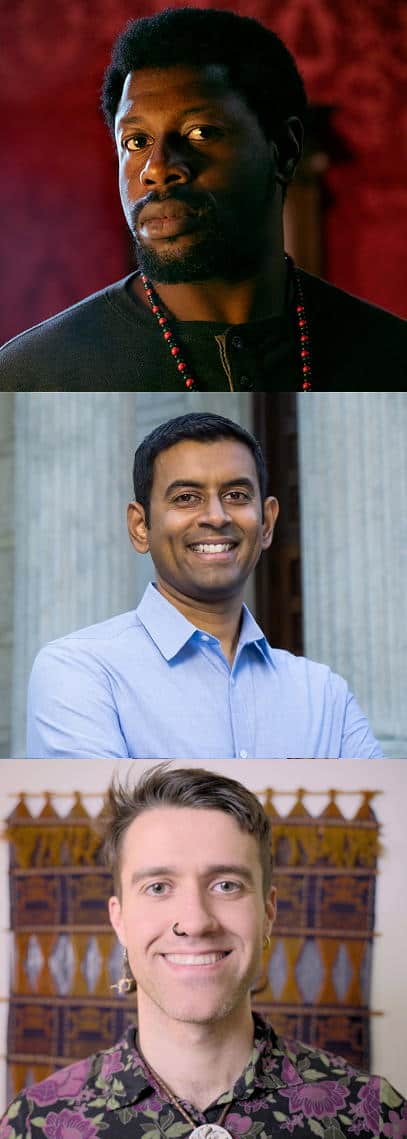
Arvind Narayanan, Professor of Computer Science, Princeton University
Eli Yetter-Bowman, Founder, Ethereral Films
Related Blogs
-
December 24, 2025
Get Philosophy Talk

Leave a Reply
You must be logged in to post a comment.