The Internet of Things
February 16, 2020
First Aired: October 15, 2017
Listen


Smart TVs, refrigerators, cars, and entire houses—the internet of things refers to the networking of all the devices in our lives, as they gather data and interact with one another, apparently to make our lives easier and more convenient. As we add more and more smart devices to our network, how will this augmented connectivity affect the way we live? Will these developments transform our world in ways that enrich our lives? Or will they just create more opportunities for hackers, corporations, and governments to pry into every aspect of our lives? Josh and Ken get smart with renowned computer scientist Carl Hewitt, editor of Inconsistency Robustness (Studies in Logic).
- Computers
- |
- Data
- |
- Privacy
- |
- Technology
Ken Taylor
What will life be like when every world you travel, every device you own, every building you enter is connected to the internet?
Josh Landy
Will it transform our world and allow us to lead a richer lives?
Ken Taylor
Or are we just give governments and hackers and corporations more chances to spy on us?
Josh Landy
Welcome to Philosophy Talk, the program that questions everything…
Ken Taylor
…except your intelligence. I’m Ken Taylor.
Josh Landy
And I’m Josh Landy, we are here at the studios of KALW San Francisco.
Ken Taylor
We’re continuing conversations that began at philosophers corner on the Stanford campus where I teach philosophy and Josh directs the philosophy and literature initiative. And this week, a conversation is about the Internet of Things.
Josh Landy
So what’s the big deal about this internet of things? I mean, it’s just a bunch of appliances and devices and other stuff hooked up to the internet, right? I mean, I mean, the internet’s been around for decades. Well, true.
Ken Taylor
But we’re talking about a sea change. In the digital landscape, Josh, I mean, start with a vast number and variety of things that are going to be involved in the Internet of Things. It goes way beyond the usual subjects of, you know, phones, computers and watches, we’re talking cars, refrigerators, actually, every system or appliance in every building around the world. And it’s not just buildings, this is surfaces, roads, bridges, train tracks, and then monitors like heart monitor, sleep monitors, even baby monitor, you name it, it’ll be connected to the internet.
Josh Landy
You see, I’m pretty excited about what I see. I saw shorts, that’s a great thing. I think
Ken Taylor
it’s an amazing thing. Come on billions of smart devices, collecting and analyzing reams and reams of data, autonomously sharing it all. without any human intervention or Decision making involves
Josh Landy
I don’t know, that sounds like a dystopia to me. I mean, you really want to build a world like that. Well,
Ken Taylor
you think about it, think about America’s crumbling infrastructure. Our bridges are terrible, right? You know that right? Well, so imagine smart bridges that constantly monitor their own state, and then automatically alerted the transportation department when they need repair. And they can reroute shut down the bridge reroute traffic by signaling all the internet enabled cars to go different way? Well, while they’re waiting to be worked on, that’s really cool.
Josh Landy
Yeah. All right. That is cool. Look, I’m a Luddite. I’m just saying if every device I own or even device like don’t don’t, I’m just interacting with all those devices are collecting and sharing data on me all the time. Automatically. I don’t know.
Ken Taylor
You sound a little worried. Worried about your privacy? I bet. Yeah.
Josh Landy
It’s privacy. Sure. And security too. I mean, this Internet of Things of yours sounds like a hackers parent. Well,
Ken Taylor
not if you encrypt everything. Okay, sure.
Josh Landy
But like anything that can be encrypted can be decrypt? Well, yeah.
Ken Taylor
Only if you know the encryption key and the way they do encryption these days, people assure me We live in a hack proof world or we could live in a hack. Okay, if you
Josh Landy
say so. But look, I mean, even if you could encrypt all that data in a hack proof way, governments governments are gonna want a backdoor into all this. Those governments love their backdoor. Yeah, no,
Ken Taylor
no, no, no doubt they do. But you know what the thing about government, Josh, ultimately, governments are answerable to us, the citizens. And if we don’t accept backdoors, well, they can’t have their backdoors no matter what they want.
Josh Landy
I feel like you’re being a little overconfident. In powers, citizens can plus plus, look, it’s not just the American government. governments all over the world are going to want backdoors
Ken Taylor
Well, let them want them. We’ll fight back. I mean, it part of the Internet of Things will have to be a worldwide campaign for consumer rights. Yeah, we can just get right to it. Okay,
Josh Landy
let me get this straight. You’re imagining spanning the globe with a network of things that collect, store, analyze, and share information on just about everything you and I do just about everything anyone is doing? Right. And you think governments and bad guys aren’t gonna figure out ways to get their grubby little hands on all those data dream? Ah,
Ken Taylor
well, look, look, come on. I admit there’s a challenge there. But you can’t throw out the baby with the bathwater. I mean, surely, you you want some of this data to be collected and shared. I wear a fitness tracking device everywhere I go. I want medical researchers to have access to the data generated. I mean, at least if it’s depersonalized and aggregated with other people’s data, I think that’s a good thing.
Josh Landy
That’s a good thing. But what about your insurance company? You want those guys to have access to that information? Oh,
Ken Taylor
gosh, Josh. Okay, I grant you that’s a little bit different. That’s a different calculus.
Josh Landy
Okay. So okay. Ask yourself this, who’s going to own and control all of the information? I don’t think it’s going to be you and me the individual consumers. I think it’s going to be the private corporation.
Ken Taylor
But But Josh, I hate to tell you this. We’ve already crossed that Rubicon are huge corporations already tracking just about every click you make in the undercard internet.
Josh Landy
Right and that’s why a bunch of people have abandoned the internet for the dark web, you know that troubling territory beyond the reach of the the prying eyes I feel like if we push the internet, beyond cyberspace and out into physical space, we’re just gonna drive more and more people underground.
Ken Taylor
Well, that’s pretty hard to deny. I grant you that. But look, I just don’t see much hope of completely stopping as you seem to want the growth of either the Internet of Things or of the dark web, but the day is coming, Judge.
Josh Landy
You may be right. All I’m saying is, let’s, let’s slow down a little. Let’s take a moment. Step back and think about where all this might be headed before we take the plunge.
Ken Taylor
Okay, that’s a good idea. We agree. And to help us get started, we sent a roving philosophical reporter, Liza veal to find out why some people are so excited about the upside potential of the internet of things. She files this report.
Liza Veale
Me, Jeremy, my housemate who loves to be woken up for interviews. Jeremy has chronic and often debilitating, painful Lyme disease. So he has a lot of prescriptions. How many pills are we talking about?
Jeremy
I don’t know, hundreds a week,
Liza Veale
when his symptoms were really bad. Every week, he had to sort these hundreds of pills into to organizers,
Jeremy
or how to kind of create a whole station of all the different medicines and then kind of like an assembly line. And it was very difficult. Because my neck was messed up and using my arms and the dexterity required in order to place pills into little boxes for 30 minutes, made things much more difficult.
Liza Veale
What would end up happening? Like, would you do this every week?
Jeremy
No, I ended up not doing it.
Liza Veale
Or you had asked me.
Jeremy
I would ask my housemate or my mom to come do it for me. But then that made me feel bad because it was such a hassle for them to do.
Liza Veale
So your options were like continue to impose on other people injure your neck more, or not take the pills, and potentially make the problem worse in unanticipated ways in the future.
Jeremy
Yes.
Liza Veale
Now imagine an internet enabled medicine organizer that could do all of this for my housemate. Keep inventory sort and dispense medicine daily, even record symptoms and side effects as they changed. At this point. It’s just a fantasy. But so was a watch that counts the calories you burn on your run. An alarm clock that starts your coffeemaker, you can voice activate a song to play from speakers in any room in your house, Alexa, play my dance mix, and you can hit up your thermostat using your phone as you drive home from work, to seven to 10 degrees. All of these innovations are part of the Internet of Things. It’s like a charm that casts statues to life, or things are going online. But they still have a lot of growing up to do. They’re held back by the artificial intelligence technology inside them. The industry calls this machine learning
Mark Jaffe
machine learning is a pretty mature technology.
Liza Veale
This is Mark Jaffe, a technologist and CEO of a company called alert securities.
Mark Jaffe
It’s used today to help us finish our search strings when we’re in our browser every day, and it’s recommending what I might be looking for, or it’s recommending on Spotify, the next song I want to listen to, or it’s helping me to understand that an equipment in my company needs some preventative maintenance.
Liza Veale
But he says putting sensors and computers in objects is only helpful if the objects can make sense of the information they collect. For example, those traffic prediction signs you see on the freeway, you know, 49 minutes to the bridge, they use some simple machine learning. But soon they’ll do more predict where road maintenance is needed before an emergency repair becomes necessary. And eventually, customized traffic lights in real time.
Mark Jaffe
These sensors create enormous volumes of data, massive volumes of data that machine learning is really required to enable those insights because the the volume of data is just daunting, and overwhelming volumes for human analysis.
Liza Veale
IoT, as they say, is growing from smart homes to smart cities to help urban systems run better than mere humans can design them.
Mark Jaffe
So I think there’s lots of great advances that will get in our lives with IoT, but only with the application of some of the machine learning technology that’s already been applied in other areas.
Liza Veale
Of course, there is a flip side, the more our world depends on self governing technology that knows us better than we know ourselves. The more we’re at the mercy of those who control that technology. For Philosophy Talk, I’m Liza veal.
Ken Taylor
Thanks for that. A beat look at the Internet of Things. Liza. I’m Ken Taylor, with me as my Stanford colleague Josh Landy and today we’re thinking about the Internet of Things.
Josh Landy
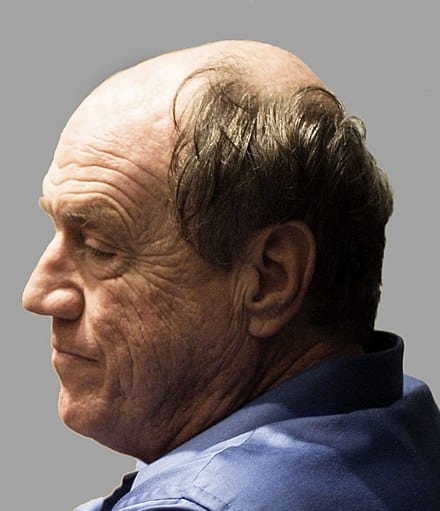
We’re joined now by Carl Hewitt. He Professor Emeritus of electrical engineering and computer science at MIT and CO editor of inconsistency robustness studies in logic, Carl, welcome Philosophy Talk.
Carl Hewitt
Thank you very much.
Ken Taylor
So far, I know you’ve spent a lot of time thinking about the Internet of Things, both the upside and its downside. But tell me, before we dig in, let’s first piqued your interest in this in this kind of topic.
Carl Hewitt
Well, Ken, when I was a young professor at MIT, I got to know JCR Licklider. And he was an amazing person, because when he was BBN, N, he got to use a personal computer all by himself, but it cost a million dollars. So we went to work for the Defense Department and got the funding for MIT, Stanford, and Sri and Carnegie that built the technology for the personal computer, so everybody could have one.
Josh Landy
Fantastic. And now here we are on the verge of an internet of things. And you know, we were talking earlier about worries that we might have I know you have some of your own but but let’s start from the upside. Give us an example of something cool and beneficial that that you’re excited about, it’s gonna come out of the Internet of Things.
Carl Hewitt
Well, right now, we had this huge problem with elderly people falling and breaking their hips. In the future, we’re going to have prosthetics which dynamically adjust. And we’ll be able to prevent a large number of these falls by the elderly, just by dynamically monitoring what’s going on and preventing them from falling. So
Ken Taylor
wait a minute, these are attached to their bodies, re r&d. So the internet of things we talked about the vast variety of things hooked up to the internet, the VAs one of the things that can be hooked up to the internet is like us bodies, right? Our bodies are going to be part of the Internet of Things.
Carl Hewitt
That’s right already, we have insulin pumps and heart makers, and soon we’re gonna have whole glasses, what is the whole glass, a whole glass is going to be the replacement for our cell phone, only a word on your eyes, everything you can currently do with your cell phone, you’ll be able to do more easily with your eyes really
Ken Taylor
advantage number like with just by looking well, no, no.
Carl Hewitt
Well, actually, it’s a lot of this, the exact technology by which this is going to happen is one of the most closely guarded secrets in the valley, right? Because whoever gets that interface, right will win.
Josh Landy
We won’t tell anybody.
Carl Hewitt
But everything you currently do with your cell phone, you will be able to do with greater functionality with these hollow glasses. Only I won’t have to be in you look down at my phone anymore, I’ll be able to look at you while I’m doing it. So
Josh Landy
that sounds like an excellent convenience as saving of time and energy and so, but the the prosthetics that sounds like an actual life saving device.
Carl Hewitt
But in industry, these whole glasses will be necessary for your work, you will not be able to perform your factory work, you will not be able to drive your truck without your holiday glasses.
Ken Taylor
So both of both of these things. They extend my body to the internet. I mean, they’re they I wear them. And there’s an interface between I’ve heard about neural prosthetics. Do you know about implanting brain? Yeah,
Carl Hewitt
that is something that will happen. But that’s more like the completely computer driven car 30 minutes 30 years away. The whole eyeglasses are within 10 years,
Ken Taylor
well, 30 years, I mean, some young person, but what Tell me about it, what what kind of brain implant really briefly,
Carl Hewitt
really briefly, currently, what you can do with blank brain implants is you can do things like you know, in a very limited way, play a computer game, right? Or you can bring two robots together and lift a box. But they are way way far away. You can’t do anything significant with brain implants.
Ken Taylor
Okay, but the day is coming, and you’re listening to Philosophy Talk. Today, we’re thinking about the Internet of Things with computer scientists, Carl Hewitt.
Josh Landy
In our next segment, we’re going to talk about privacy and security in the age of the Internet of Things. Well, the Internet of Things create a hackers paradise. And what does privacy mean when every device you own or operate is collecting data on your every movement,
Ken Taylor
privacy, security and the Internet of Things, plus your calls and emails when Philosophy Talk continues.
What happens to privacy when every thing in your house is watching you? I’m Ken Taylor. This is Philosophy Talk, the program that questions everything
Josh Landy
except your intelligence. I’m Josh Landy and we’re thinking about the Internet of Things. Our guest is Carl Hewitt, professor emeritus of electrical engineering and computer science at MIT.
Ken Taylor
So, in the opening, Carl, Josh worried a lot about security and privacy. A lot of people are worried about these things. Let’s take security first. How do we stop this Internet of Things from becoming just to hackers paradise? How are we going to do that? Actually, I’m
Carl Hewitt
not so much worried about the hackers by comparison of the government’s because we can protect our devices. And if we can protect the devices encryption means the communications between the devices are meaningless. So the question boils down to protecting our devices. Okay,
Ken Taylor
so down. So we’ve got the devices, we’ve got the transmission of the dead data between devices, the devices, we got storage of the data on the cloud, right? In data centers. I mean, you sound so sanguine,
Carl Hewitt
but again, if you use signal, there’s nothing stored in the cloud. There’s nothing stored in the data centers, your device, and my device had their own public key private key pair. And the communication is completely safe unless they break into your device.
Ken Taylor
So okay, you think the focus should be on the devices? Does that mean in the Internet of Things, there won’t be this massive collection and pooling of data
Carl Hewitt
in the data centers that will be completely massive pulling in collection, which will be available, hopefully, under a subpoena to any government in the data centers?
Josh Landy
That’s our 30 predictor. Now,
Carl Hewitt
the question is, can we do a grand bargain and protect our devices so we can keep our most sensitive information on our devices, protected against self incrimination in the United States by the Fifth Amendment?
Ken Taylor
Josh, are you satisfied with it? Oh, you were the one worried about? Yeah, he says, I remain
Josh Landy
worried. So I mean, even leaving aside the data, that’s the data centers, which we’ll come back to that, but but I think about our devices. I mean, you know, the FDA recently recalled a half a million pacemakers because they they were deemed to be susceptible to hacking. Imagine if somebody hacked your pacemaker, I, you know, somebody deceived a hacker or figured out how to hack his way into a hearing aid and put voices into somebody’s head. Like, I feel like yeah, maybe we could encrypt these devices. But look at what happened with Equifax, I mean, are people actually going to encrypt them in the real world such that they won’t be hackable, because if they are terrible, things couldn’t,
Carl Hewitt
Equifax was was was in the dataset. That’s what we’re talking about. We’re talking about the devices, the devices are relatively simple. And computer scientists now have the technology using tag memory, architecture, and encryption on the device so that we will be able to protect the devices, except that Senator burrs and Feinstein know that we’re going to be able to protect their devices. So they propose legislation that the companies will have to provide backdoors.
Ken Taylor
So you right, so you’re okay, you’re not worried about hackers, you are worried about backdoors? The reason you’re not worried about hackers is because you’re focused on the devices. Right? But of course, we live in a world now. I mean, Das has already mentioned some famous actually, it was the Yahoo hack. We just had an election. That was in some ways hack. Well, I mean, if what you say is true, why is there so much hacking going and successful and extensive hacking going on now? Right,
Josh Landy
attack us the Yeah. So where does
Carl Hewitt
it come from the data centers are incredibly complicated, and we computer scientists are going to have a very hard time securing those data centers it but but our devices are relatively simple. And those things we can secure, except that the government has a mandatory backdoor. Think about it for your Hollywood glasses, they will be able to see and hear everything you do see and hear if they have a backdoor
Ken Taylor
who owns let me ask you another question that Joshua has in the opening who owns the device, the information under and around the world and different regions, I take it that I own the information on my cell phone,
Carl Hewitt
that that is correct and withheld kit with health kit, you can store it on your phone and never put it in an apple data center.
Ken Taylor
Right. But how Apple when I agree to all that stuff that they agree, tell me to agree to that I never read? What rights do they have with respect to this information, because they’re sharing all
Carl Hewitt
their data centers, they have rights to it, and that’s why you take it off. But if you just keep it using healthcare on your device, then as in the case of San Bernardino, they will try to protect you and they will succeed until burr Feinstein passes
Ken Taylor
the thing I don’t get a just a logic of what you’re saying. I don’t get what’s in it for the producer of these devices. Because what it’s one thing for all this this device to generate lots of information and not share it. But what is the what is the producer of this device after not just your buying and using this device, but he the producer of this device, the capitalist is after this information that’s right after analyzing this information, and using this information to make more products and to sell you more things and and connect this to that man. So the logic, the capitalist logic of what you’re saying doesn’t make any sense.
Carl Hewitt
You’re absolutely right, Ken, and the way they make their money is on the device. It’s got all your information. Google only has a piece Yahoo, they has it all. And they can serve advertising. They can connect you with a merchant on the device and never put it in the data set and do a better job and make money the old fashioned way by connecting you with the merchant.
Josh Landy
Okay, so I’m not totally convinced yet that my phone isn’t going to be hackable. But, but let’s say it is
Ken Taylor
what about heart monitor on your house?
Josh Landy
Not hearing aid, all these things that have been hacked before, right. But let’s say let’s say we can arrive at that age. What about all the other elements, the internet of things that don’t belong to me.
Carl Hewitt
It’s just your personal things, your the TV, in your bedroom that’s currently connected to a data center in China. Your home router, your refrigerator, your personal devices must be protected by the Fifth Amendment against self incrimination. That’s just like you’re thinking
Ken Taylor
this is in the future you’re talking about in the future. No, Bert Feinstein,
Carl Hewitt
Burr Feinstein hasn’t passed yet. Yeah,
Ken Taylor
but no court has weighed in on this. Whether the your personal devices count as an extension of yourself, that was backaches, I want to say a Supreme Court is considering it, I want I’m gonna step back for a second. Because here’s what it seems to me that’s happening. the built environment, right? The built physical, social environment, right? The cyberspace is being merged with the built social, physical environment. And not only is cyberspace being merged with that the built physical social bar environment is becoming a, quote, smart environment, which is data collecting and analyzing and we are kind of interlopers or something I’m not quite sure how to think of us in relationship to this new built environment, right? We look like data generators for the people who building the drill this built environment is Am I being too alarmist?
Carl Hewitt
No, I think you’re being exactly right in the sense that your personal devices are basically part of your person. They’re an integral part of you, you store things there, you interact with them on a personal basis. So your self just got bigger, slightly bigger. It’s now your your personal internet of things.
Ken Taylor
You’re listening to Philosophy Talk, we’re talking about the Internet of Things. We’d love to have you join this conversation. And Robert from Berkeley’s on the line. Welcome to Philosophy Talk, Robert. Yeah, I’d
Speaker 1
like to point out two good books, recent books on this one by for fo e are called World Without mind. The second one is Yuval Harare, homo Deus. Okay. And Harare, in particular, feels that we’re giving up our individuality to a new religion based on data. And this new god, homo, Deus is going to have a profound effect. It just read one sentence from the end of his book, allow Google and Facebook to read all your emails, recall, record all your clicks, and lights do all that, then the great algorithms of the internet of all things will tell you whom to marry, which career to pursue, and whether to start a war.
Ken Taylor
Thanks for that intervention. There were jobs. I think you want to react to this.
Josh Landy
Yeah. That’s one of my worries, too. Want to see what call thinks about this as well. But, you know, obviously, we have worries about privacy. But going along with that, you might think there’s also worries about autonomy and authenticity, right? Because, yeah, if the data are telling you what to do, where where’s your autonomy, you know, one of the things that could happen is that you set or detect a certain set of preferences that you have, right, your smart fridge knows the kind of wine you like. So it encourages you to buy the same wine again, and you might get locked into a certain kind of patent of behavior and preferences, that maybe aren’t really you anymore, wouldn’t be you anymore. So are there sort of more subtle downstream consequences of this in terms of the way in which we think about ourselves getting Yeah, locked into, as the caller was saying, Robert was saying, you know, you’re going to do things based on what the data tell you rather than what you actually currently believe.
Carl Hewitt
The question is, who are your personal devices working for you? Are they traitorous devices that are that are acting against you? Or are the things that you own that are working for you, if they’re your personal devices that are working for you, and with you, then you become a greater person? It’s like you got a calculator. That didn’t mean the end of people being able to do arithmetic, it just meant,
Ken Taylor
yeah, but I think that’s not a I don’t think that’s the exhaustive dichotomy there. an exhaustive disjunction, because here’s how I think a good capitalist works. This may sound bad, but I think it’s actually good. I mean, where did the iPhone come from? It did not come from a consumer saying, Well, I want an iPhone. It came from Steve Jobs and his cohorts saying, I want you to inhabit that consumers world more, more deeply than that consumer. I want you to design something special. When it’s in that consumers hands, that consumer says, Wow, I want an iPhone. And then I want you to make them want more iPhone and more iPhones, right? And this kind of technology has the power to take demand creating capitalism to the nth level, right? Because I am going to totally inhabit your world. I’m going to totally study your habits. I’m going to be able to use the imagination of my really cool designers to say, make them want this. Right. And I think that can be a good thing because you know, human desires aren’t always articulated. To help them articulate them, but I can also impose things. So I think,
Carl Hewitt
to be successful, they’re going to need consumers to buy billions of hollow glasses. That’s the next big thing for the valley. Right, that will produce the revenue for Apple and these other device makers.
Ken Taylor
But I just think Josh’s worry married to the logic of capitalism is an interesting stew. I don’t know, do believe me?
Josh Landy
I agree. I mean, I think sorry, I absolutely think that there’s a worry coming from the side of marketing, right that, to some extent, people are going to be doing things for the benefit of the consumer, but obviously, to some extent, it’s going to be for their own benefit. And those two, those two preferences may not always align.
Ken Taylor
Right. But I mean, look, I don’t want to deny that there are some like smart cities, what they call smart cities, and smart roads, and all that and smart cars. Those are good things that will help us solve real problems. But I don’t think they’re merely good things that will merely help us solve real problems. They’ll give us a whole new relationship to the world. And I’m not quite sure how we manage that relationship to the world. I mean, you’re a computer scientist, you’re more focused on the technology and prevent, but I mean, as a computer scientist, let me actually let me Okay, put on your computer scientists hat. Do you ever think as a computer scientist about, oh, we’re going too fast with this technology? Or is that just like, left to politics and philosophers? I mean, as you as a computer scientist, do you ever feel like we ought to slow down with this?
Carl Hewitt
No, we shouldn’t slow down, but we have to guide it, we have to guide it away from ways we have to guided away so that we don’t have an Internet of traitorous devices. But at the same time, as a computer science, we know we have to make make a case for a business model for what we do. There’s a definite need to connect consumers with merchants. Right now we do it for the data centers. But in the future, we can do it through our devices, and make the business model that way.
Ken Taylor
We’ve got another caller on the line. Welcome to Philosophy Talk. Michael, what’s your comment or question?
Speaker 1
Yes, yes, the, we are aware that large data centers and and other organizations that may have populations of servers and so forth and so on, are acutely aware that there there are capabilities to detect in those environments. Vulnerabilities such as unpatched software and and middleware and operating systems and so forth and so on. But that they are only as good as human intervention in terms of deterrence in mind in the in the effort to correct those vulnerabilities. And so my question is, are there no hot capabilities for automated detection of a situation where an A or an organization or device be transmitting data to another organization’s let’s say, Equifax, and then then detecting that this organization is not patched current or this organization has vulnerabilities, or they do not have the encryption that I require, as part of my agreement to send them data or receive data from them? And and then shut down that service until the vulnerabilities are addressed?
Ken Taylor
Good question, Michael, thanks for the call. What do you what do you think? Oh,
Carl Hewitt
this is a very good question. And it’s one of our very, most enormous problems. Our data centers are so complicated, that we have no way to audit them, we can’t tell that an intelligence agency is not stealing enormous amounts of data out of our data centers in detectably. And that’s actually happened to Yahoo and Google. Okay, and so
Ken Taylor
what do we need to be saying?
Carl Hewitt
That goes into the data centers, the government can get it, your only protection is what is on your devices. So
Ken Taylor
I once read something or heard something about the theory of encryption and all that and how we’re entering an age in which encryption is basically essentially unbreakable and all this stuff, right. But the theory is one thing. The practice is another theory and practice in real life where because this is related to Michael’s question, in real life, where you have human beings making decisions, corporations, looking at the bottom line, real cost curves that may, you know, say, Oh, gee, if we invest that much in making these things secure, the price is going to be so high. So I mean, how do you make Theory and Practice, like dovetail?
Carl Hewitt
We trust our nuclear command and control system to encryption. We generate the public key private key pair in a Faraday cage. The private key never leaves the Faraday cage software never sees it cannot be stolen.
Ken Taylor
This is the kind of talk I heard about how how foolproof encryption is these days,
Carl Hewitt
not foolproof, but we trust our nuclear command and control system to it. So we have high confidence, yes,
Ken Taylor
but we’re willing to invest whatever it takes there. But I’m talking about private industry that has a real cost benefit curve. And
Carl Hewitt
right now data centers are vulnerable, but our device Using the same trick of putting the generated public key private key pair in your device in a Faraday cage can protect them too.
Ken Taylor
So as long as we keep it all on the devices, right, as long as we don’t share with the data center, are you happy, John?
Josh Landy
Sorry? Not yet. So here’s the here’s a thought. I’m wearing my What did you call her glasses? Color glasses? Yeah, I get I keep my information. But look, you’re looking at me with your hollow glasses. So a lot of data about me is actually being transmitted to the data center through only
Carl Hewitt
I transmit it to the database. I’m not transmitting the data center, either. We’re shaking hands on it right, right here.
Josh Landy
Okay. You’ve got to deal.
Ken Taylor
Yes, but I just don’t believe this is going to happen. I think you’re dreaming car. I really do. I think there’s too much structure that the people who create these things want this data transmitted to the data center, and they’re going to find a way to get it transmitted to the datacenter because it’s much more useful to them affiliate. But we’ll take up some more of this after a short break. You’re listening to philosophy to hug we’re thinking about the Internet of Things with computer scientists, Carl Hewitt.
Josh Landy
In our final segment, we’re going to ask what if anything we can do as consumers to protect ourselves from those prying eyes of government corporations in the internet equivalent of the peeping tom
Ken Taylor
suppressing surveillance when philosophy tuck into news.
your romantic partner may hear your nighttime secrets, but soon your toaster and washing machine will be listening to. I’m Ken Taylor, this is Philosophy Talk, the program that questions everything
Josh Landy
except your intelligence. I’m Josh Landy, our guest is Carl Hewitt from MIT. And we’re thinking about the Internet of Things.
Ken Taylor
And we’ve got a caller wants to join this conversation, Charles in San Francisco. Welcome to Philosophy Talk Shows. Thank you.
Speaker 1
My question is about storing all of our personal data on our personal devices. What happens when our devices are lost or stolen? What we lose all our personal data?
Ken Taylor
What about that?
Carl Hewitt
That’s an excellent question. I actually have an article on this in the Social Science Research Network that you can get online for free? And the answer is that you can backup your information on your devices up in the cloud, provided it’s encrypted with your public key, so you’re the only one who can decrypt it. So your devices will be continuously backing these this stuff up in the cloud in a way that only you can get it back. So
Ken Taylor
let me ask you quit. Thanks for the call. Charles. I want to build on Charles thing go, because I know that the guy that terrorist in San Bernardino, right, he had an iPhone and the apple wouldn’t help the government. But the government hacked his iPhone, right? They bought a hack they they What do you mean, they
Carl Hewitt
there was a purchase? Yeah, there are people out there that that cell hacks.
Ken Taylor
Okay, so I take it. So that wasn’t it. That wasn’t hack proof. The iPhone that he had was that because it was an old iPhone or something like
Carl Hewitt
it was an old iPhone, the new iPhones are better, and they’re getting better and better, they’re getting better. And they’re getting so good that that’s why Senator Byrd and Feinstein are demanding this new legislation so that they can force the installation of backdoors in all IoT, right,
Ken Taylor
what I’m wondering about is legacy technology. Right? And, you know, I’ve, I have friends who are older friends who have really old iPhones and what my, what I would think those aren’t very secure at all compared to the iPhone 10, or whatever just came up. Right? So what do we do about that fact? And, and is the Internet of Things gonna have to be such that you’re constantly replacing your devices, and I mean, how’s that gonna work?
Carl Hewitt
People really need to be really secure, like lawyers and reporters already use the most secure phone that they have at any given time. And so it really depends on how much you violet value, the information that you have, and what the threat is against you. But the defenses are going to become very, very good. And without the absent the burr Feinstein legislation. That’s going to become almost impossible to break in.
Ken Taylor
Okay, so So okay, so we should just go gung ho to the Internet of Things. It sounds like there’s no downside to this thing? Is that what you’re telling me?
Carl Hewitt
If they have the burr Feinstein legislation and the backdoors in your whole glasses, it will be big brother sees and hears everything everybody sees, hears and says. So it’s either a huge upside or a huge so we
Ken Taylor
should only go forward with this if we can trust governments. You don’t seem very worried about corporations if we can, because you it seems as though you think the business interests of the corporation kind of aligns with the consumer. Am I right about that?
Carl Hewitt
No, it doesn’t. But if you have your Personal information on your own devices, then you’re on a fair footing with the corporation if you have the information in their data centers they want. So what’s
Ken Taylor
going to make it to be the case? That the information because again, it seems to me the information much more useful to the corporation. And their incentives are to get that in their data center to get it pooled data. I mean, these things are collecting all this data. I mean, they’re just, they’re just doing it. But the
Carl Hewitt
government is the corporation is also incredibly vulnerable if they have your sensitive information in the data centers, because then the government wants it from them. And then they want to go and implant their spies in the government data centers, right. So the corporation’s also don’t want to have your private information. I think they just want to have the aggregate, I
Ken Taylor
think we should call this the halt to this and think this through much more. I don’t know what you think. Yeah.
Josh Landy
I mean, look, I mean, the way I’m thinking about it, maybe you could do it for your phone and things like that. But what about smart meters? I mean, you know, we had smart meters installed, we had no choice in the matter. Those meters send data out to the data centers, whether we want it or not. So maybe we could exert some control if we’re lucky, right? You’re powerful over our cell phones, but I don’t know if we can exert it over everything.
Ken Taylor
Because you’re excessively focused, it seems on personal devices, right. But the Internet of Things is not going to just be about personal devices, it’s going to be about the entire built environment. Right?
Carl Hewitt
That’s true. And the and hopefully, they’ll be enough information available out there in the data centers to do law enforcement, because we are in favor of law enforcement. The question is, can we have a ground bar Grand Bargain so that some of our information on our personal devices, like our heart, heart monitors, etc, which is protected by the Fifth Amendment binds against self incrimination? And they can’t get
Ken Taylor
right we’ve got another caller on the line, George from San Francisco. Welcome to philosophy. Talk to us about your comment or question.
Speaker 2
Thank you, you know, this question comes up to the Internet of Things be protective of humans. But then doesn’t this also invoke Isaac Asimov’s rules for robots? In what way does? Doesn’t the rule, the three rules for robots apply to the universe of things?
Ken Taylor
Remind me of those three rules. I read that a long time ago, but remind me of those? Well,
Speaker 2
there is a rule that says that no robot shall do anything which brings harm to a human. There are two other rules. And I can’t summon it at the moment. And we wanted to make this call. So we’re counting on you to have the other rules and?
Ken Taylor
Well, I mean, the thrust of the question I take it is how do we make sure that these things serve us, rather than us surfing it because again, the built environment, by extending cyberspace and an element of artificial intelligence into the built environment, we’re making an environment that that senses us that senses everything we do that analyzes us that decides, makes decisions on the basis of its analysis, so acts on us and perhaps for our benefit, but not necessarily. So how do we make sure that this new, made smart, pervasive built environment that senses and monitors and analyzes that it actually serves us? How do we do that?
Carl Hewitt
I think that we have to preserve our personal devices as our allies that are working for us and then we do not have the internet of traitorous thing. Okay, right? And then if they’re working for us, then we can right buy products that work for us, it becomes a market. If it works better for us, we’ll buy that one as opposed to one that doesn’t work as well.
Ken Taylor
Do you think that if we take care of the personal that personal devices serve us Yep. Rather than the manufacturers of those personal devices than the other devices? Because it’s not again, it’s not just going to be personal devices, right? A traffic monitoring system and bridge monitoring system, a airplane. I was listening to think about airplane self monitoring airplane engines, right, that can keep track of the various stresses and all that and right, those devices, they’re not designed to serve me, they’re designed. So you think that if we can take care of the personal devices, we don’t really have to worry about these other devices that are part of the built world?
Carl Hewitt
Well, we’d like to still have the courts involved in the subpoenas. We don’t want the FBI or other law enforcement rummaging through everything willy nilly. But we do have to give enough information that’s available by subpoena to do law enforcement.
Josh Landy
Right? It just still worries me that there are that, you know, a good proportion of the Internet of Things is going to be devices that are collecting data on us whether we like it or not, they’re not personal. These are not personal devices over which we’re going to have control. Right. See, the thing
Ken Taylor
is, you kind of become your life becomes a collection of data points, right? I mean, you can say that Now, but they’re just there. I mean, you can tell because every time you drive down the road, some traffic cop could be out there counting the cars, right? But the data’s with a subpoena, right? Definitely. But the data generation becomes ubiquitous and your movement in the physical world because the built environment is a is a monitoring, analyzing sensing environment, you become.
Josh Landy
Yeah, I’m a little worried. I mean, maybe this is, maybe this is a more rarefied world. But I’m a little worried about the shrinking of the private sphere. Exactly. Right. I mean, don’t we need spaces just to become ourselves? We need spaces where nobody we know nobody’s looking. Right. That’s
Ken Taylor
what I that’s what I see that what I think I what I worry is that the notion of privacy as we understood it, is an 18th century notion. It doesn’t really fit in the 21st century, because private where can I go? And prying eyes as it were can’t follow me. Right? Well, I can go into my house. But wait a minute, my whole house is wired, I can go into my personal internet, it’s still but it’s still wired. It’s still wired. It’s still monitoring and sensing me I can’t, unless I could just turn it off. Right. But I’d have to like just connect right? knows if my life disconnecting from the electrical grid like it’s the equivalent to disconnect if it’s
Carl Hewitt
working, if it’s working for you know, trade it if it’s not a trader, I’m going
Ken Taylor
to try and get one last color. And if you if you promise to be brief out from Berkeley, be brief in what you’ll be the last call be
Speaker 1
very brief. I’m concerned about the harmful effects, the negative effects on our own health, our own body and our own natural algorithms that this technology is overlooking. They’ve been wonderful books written about this, I suggest anything written by Sherry Turkle. But MIT has studied this for almost half a century now, very little thought is given to us in the same way that eight off diesel the internal combustion engine would be a Paul was it to know that his invention was used up by petrochemical energies rather than vegetable, natural fruits and vegetable energy FDA reported?
Ken Taylor
Right? Thanks a lot for the cloud, briefly, like he’s worried about the radiation effects and stuff like that.
Carl Hewitt
The Internet of Things is going to be tremendous for our health. already. We have insulin pumps, we have heart. pacemakers, right? We’re gonna have pill counters have we said, it’s going to be fantastic for us, provided that they’re working for us and not somebody
Ken Taylor
else. So they’re, that’s the, that’s your mantra, we’ve got to make sure that these devices work for us. So last question, less thought, how do we guarantee what’s structures in our economy and our politics and our social life, and our economy guarantees that these devices work for us?
Carl Hewitt
That there’ll be no mandatory backdoors? Because otherwise, the market will solve it for us because we’ll divide by devices that are working for ourselves. If they’re mandatory backdoors then we’re toast.
Ken Taylor
So stopping the back door is that’s the key. Okay, on that note card. I’m gonna thank you for joining us. I was gonna say it’s been a thrilling conversation, but I’m still a little. Thank you. Anyway,
Carl Hewitt
thank you very much.
Ken Taylor
I guess it’s been Carl Hewitt. He’s a professor emeritus of electrical engineering and computer science from MIT, and CO editor of inconsistency robust studies in logic. So Josh, are you are you worried stilled? Well,
Josh Landy
I wouldn’t say that. I mean, I’m, I’m excited and concerned, I have a mix of feelings, right? Because look, definitely sign me up for an exoskeleton in 30 years. I mean, I think there’s there gonna be some great benefits on the horizon. Convenience, health benefits. I’m really persuaded by call about that. environmental benefits, I think there’s gonna be a lot of great things on the horizon. But at the same time, I think there’s gonna be huge costs in privacy, autonomy, authenticity, I’m not convinced at all that it’s going to be hack proof.
Ken Taylor
Yeah. And I think and I think, Carlos computer scientists and you know, that’s his he’s, he’s a gung on computer scientist. But I think philosophers, social scientists, people like us to think more about what what does it actually mean to be a human and live a human life, you know, built environment. That is a constantly monitoring you constantly analyzing you, filled with distributed intelligence, making decisions that might have been left to human beings and responsible governments. I just think that’s a huge sea change, and we need to think about it.
Josh Landy
I agree. I look for now I’m hanging on to my dumb fridge. There you go.
Ken Taylor
This conversation continues at philosophers corner at our online community of thinkers where our motto is Coda toe Ergo Blago, I think, therefore, I blog. And if you have a question that wasn’t addressed in today’s show, I mean, we got to a lot, but there are probably a lot more out there. We’d love to hear from you. Send your questions to us at comments at philosophy talked or G and we might just feature it on the blog.
Josh Landy
You can also become a partner in the community by visit Our Website Philosophy Talk or G. Now here’s a guy talking faster than the smartest device out there. It’s in shows the 62nd
Ian Shoales
philosopher in shows when you read wired or an online magazine, listen to NPR that would sooner or later be this oh my gosh, gee whiz. What are they think of next story about tech? Imagine a television no larger than a postage stamp. Wired is still around, but NPR is slowly succumbing to podcasts podcast. Wow. Imagine a world where you can listen to radio programs, not in the radio, of course who does that? And the magazines have vanished into the ether replaced by Internet clickbait factories. This is from one called Pop Sugar quote, imagine getting a tattoo that can measure your heart rate, or sleeping in a bed will automatically elevate your head to stop any snoring. Maybe you’d rather put your makeup on with a mirror that analyzes your skin unquote. When I was a kid with my dad will homework tomorrow exhibit at the New York World’s Fair. It was a ranch style home only completely underground like a high class fallout shelter. It had a patio overlooking a backyard there was a desert landscape and you could adjust the lighting from dawn to high noon to dusk tonight, complete with a tape of crickets. Chris, there’s just a diagram of a desert. If you walked out into nature, you’d bonk your head on concrete. That was another place another time the hopeful prototype meant to show that even if it came to a nuclear showdown with Russia, life would go on with fake crickets and the great books, cans of beans, and 16 millimeter copies of Hollywood movies to keep us occupied until the all clear sounds a couple 100 years down the road. Now, we seem to be leaping into the dystopian role of tomorrow, again, only this time, but all of it not out of self preservation. The Internet of Things Hair was at the subatomic microchips that can cut itself. Imagine a world where your car stops if you’re too drunk to drive. Imagine a blender that knows you hate papayas now a coffee maker that drinks the coffee for you gluten removed at a whisper command your milk is going bad and your refrigerator knows it. It’s just one robot talking to another but before you know it you’re knee deep and healthy butter substitutes. Smart cement build bridges to alert you want to say Stover warming automatically to melt snow to warn puddles stoplights respond to traffic low. But wait, are we even going to be driving in the future? If it’s all robots? Why do we need traffic lights? Why do we need to go home just stay in the car had the robot make us a sandwich and the 3d printer? Why drive anywhere every place looks exactly the same robots robots robots, you’ve ordered an exotic environment just put on the Holo glasses don’t even need to program them. The algorithms compute what you want to see, based on your data usage history. We’re supposed to worry about backdoors in the internet of things the government will sneak in there know our secrets, what secrets we talked about at Google and Facebook in 2005. Now here’s the funny thing. The Internet of Things is supposed to free us from boring tasks. So we can write novels and poetry, paint dance act and plays catch up on movies, so we’re not going to do any of those things. We can barely read a tweet much less a novel much less right one, the only movies we will watch in the future will be the ones that are better than our eyelids. Now here write this down while you still can tattoo it on the back of your hand. The smartphone is not your friend. The oven does not know you, your car will never love you. That’s just the algorithms talking this Chinatown Jake just walk away. Oh, and just walking Be sure to track your activity on your Fitbit. I gotta go.
John Perry
Philosophy Talk is a presentation of K L W local public radio San Francisco and the trustees of Leland Stanford Junior University. Copyright 2017.
Ken Taylor
Our executive producers are David Demarest and Matt Martin,
John Perry
our senior producer is Devin Stoller. vich. Laura McGuire is our Director of Research. Cindy Prince Baum is our Director of Marketing.
Ken Taylor
Thanks also to Laurel Kessler, Audrey dilling and Collin Peterson.
John Perry
Support for Philosophy Talk comes from various groups at Stanford University, and from the partners at our online community of thinkers.
Ken Taylor
The views expressed or mis expressed in this program do not necessarily represent the opinions of Stanford University or of our other funders, not even when they’re true and reasonable.
John Perry
The conversation continues on our website, Philosophy Talk dot o RG where you too, can become a partner in our community of thinkers. I’m John Perry. And I’m Ken Taylor. Thank you for listening and thank you for thinking outlet. Rest assured, get your outlet SmartSoft today.
-
sarah jone
That’s such an interesting point 👀. On one hand, IoT definitely has the potential to make life smoother—like automating chores or improving energy efficiency. But on the flip side, every new connected device feels like another door left open for hackers or surveillance. I guess the real question is whether security and privacy measures will be able to keep up with the speed of innovation. Otherwise, the convenience might come at too high a cost.
Guest
Related Blogs
-
October 16, 2017
Get Philosophy Talk

Leave a Reply
You must be logged in to post a comment.