Extreme Altruism
December 9, 2018
First Aired: April 3, 2016
Listen


We can all agree that helping others is great, a deed worth doing. But devoting too much to helping others – too much time, too many resources – may get you labelled an oddity, a freak. How much can morality demand of us? Is it good to live as moral a life as possible, or do we lose something – devotion to one’s family, for example – by adhering to extreme moral principles? Can somebody be both fully rational and also a saintly type? John and Ken lend a hand to New Yorker writer Larissa MacFarquhar, author of Strangers Drowning: Grappling with Impossible Idealism, Drastic Choices, and the Overpowering Urge to Help.
- Action
- |
- Altruism
- |
- botany
- |
- Dewey
- |
- Examination
- |
- geometry
- |
- Heroes
- |
- Illness
- |
- Morality
- |
- Pain
- |
- Philosopher
- |
- Relationships
- |
- Saints
- |
- Virtue
Tin Cup Serenade
Holding hands at midnight ‘neath the starry skies, nice work if you can get it and you can get it if you try.
Ken Taylor
This is Philosophy Talk, the program that questions everything…
John Perry
…except your intelligence. I’m John Perry.
Ken Taylor
And I’m Ken Taylor. We’re coming to you for the Marsh Theatre in Berkeley, California.
John Perry
Our thinking originates across the bay on the Stanford University campus. That’s where Ken here teaches philosophy and I did for 40 years. Although now I’ve seen the light I’m teaching at Berkeley.
Ken Taylor
You turncoat. We still kick your butt, though. Welcome, everyone, to Philosophy Talk.
Ken Taylor
Today, we’re thinking about extreme altruism.
John Perry
Altruists are people willing to do good things for others at a cost of their own happiness and wellbeing.
Ken Taylor
Now, you know, John, some people think that humans are, by nature, completely self-interested. And you know, of course, self-interest is the very opposite of altruism. But in fact, most of us have at least a touch of altruism in us.
John Perry
Think of the parent who sacrifices her own well being for the sake of her child. Some soldiers give up the comforts of home and hearth to fight in some distant desert. Some of them are surely driven by altruism, not by naked self-interest or their own happiness.
Ken Taylor
Indeed, you know, John, some evolutionary psychologists and biologists even argue that a tendency toward altruism, especially what’s called in group altruism, that’s altruism toward kith and kin, is built into human being from the very beginning by natural selection.
John Perry
And it’s not just the built-in results of biology and psychology that cause to some degree of altruism. Morality and religion clearly do so as well.
Ken Taylor
You know, clearly altruism is a good thing. Well, not necessarily for the individuals who practice it, but at least for the groups to which those individuals belong. But here’s the question: is it possible to take altruism too far? That’s our question for today.
John Perry
Well, I think it is. Think of someone who adopts as many needy children as they possibly can. And then it’s filled with regret that they can’t do more.
Ken Taylor
I don’t know, John. I mean, people like that seem to me, kind of saintly, and we admire saints, don’t we?
John Perry
Well, maybe, but I wouldn’t want to live with one.
Ken Taylor
Saints inspire us. They help us to honor the better angels of our nature. Why would you want to live with a saint?
John Perry
Well, can’t imagine what it would be like to be the child of a couple who felt an insatiable, saintly need to go on and save more children, every distressed children, everyone they can possibly find Well, well, at some point, you might be tempted to say, Hey, Mom and Dad, can I have your attention for just a minute? Can we stop and be a normal family now so that we can have more things and do more thing?
Ken Taylor
Oh, yeah, but you but when you draw the line, if you start thinking like that, what line does line between self indulgence and duty? Look, I’m going to grant you it’s not okay to let your own children just stars so that you can feed other hungry children around the world. That’s not okay.
John Perry
Well, I’m glad you’ll admit that.
Ken Taylor
But isn’t it just as wrong? I mean, really, just as wrong, maybe more wrong to overindulge your own children while entirely ignoring the needs of less fortunate strangers. Or what do you mean by overindulgence? Well, come on, I’ll give you an example. How can I justify buying my kids the latest hot toy, which they don’t really need, when I can use that same money to buy food and clothes for doesn’t I mean, dozens of meeting children in some rural Third World Village don’t have an obligation.
John Perry
Well, I hate to get personal Ken but think of all the money you spent on helping your wonderful son become a better baseball player that was expensive. All the good times you and he had together traveling to games to tournaments to showcases. Should you have given all that up so that you could have helped lots of children around the world.
Ken Taylor
I wouldn’t trade those experiences with my son for the world. I wouldn’t trade them for anything.
John Perry
And so what does that make you a selfish schmuck? Or just a father who loves and cherishes his own son?
Ken Taylor
Geez, John, I guess I really do. I admire these Extreme Ultra I really do. I don’t think I have what it takes to be one myself.
John Perry
Well, me neither, but there are people who do have what it takes. And to get a feel for what they’re like, we sent our Roving Philosophical Reporter, Shuka Kalantari, to find people who live in extreme devotion to the well being of strangers. She files this report.
Shuka Kalantari
Sue Badeau is a social worker from Philadelphia. Sue has 22 children, 37 grandchildren, and nine great-grandchildren. 20 of Sue’s kids are adopted, something she’s always wanted to do.
Sue Badeau
I was about 11 or 12. And I read a book called The Family nobody wanted. This was about a family who had adopted children who were not babies who are older children who were from many different racial and ethnic backgrounds who had disabilities. I just immediately fell in love with that whole family and said, That’s the family I want to have.
Shuka Kalantari
After Sue gave birth to her first daughter, Chelsea, in 1980, she and her husband adopted a young boy who was abandoned during the war in El Salvador. After that, she gave birth to Isaac per second and last biological child. Then she and her husband adopted their son Raj from India
Sue Badeau
Sort of our original overall game plan before we started, even with any of them was, oh, you know, we’ll have to and we’ll adopt to that was our life plan at the age of 20.
Shuka Kalantari
But things don’t always go according to plan. In 1985, the family hopped into their car and took a road trip to an adoption agency in Albuquerque.
Sue Badeau
We adopted two sibling groups of children from New Mexico in the next few years after that trip.
Shuka Kalantari
Three decades later, Sue’s first adopted son, Jose from El Salvador, now lives in Switzerland doing work in computer technology. He just had his first baby. But not all of Sue’s kids have had great lives.
Sue Badeau
We did adopt three children with terminal illnesses and they have passed away. And that is, even when you know that’s what you’re getting into ahead of time. It’s extremely difficult.
Shuka Kalantari
Another child is in prison. And there are many teen pregnancies. A lot of the time she was discouraged, depressed, overwhelmed.
Sue Badeau
But when I look over the whole timeframe with each child has joined our family, they all have made astounding progress. We know we had a daughter, we were told would never walk and she became a dancer. And we had a son that we were told would never learn to read or write his name and he graduated college.
Shuka Kalantari
Sue Badeau doesn’t see anything extreme and her altruism, to her. Adopting pointing kids is perfectly normal.
Sue Badeau
Someone who decides to climb Mount Everest and kind of sacrifice so much to do that. What in the world would you do that for? That’s not something I would ever do. But we all have our passions. And if you follow your passion, and you really live it, it may seem like it’s extreme to others. And it may be normal to you.
Shuka Kalantari
Massachusetts resident Julia Wise agrees. She and her husband Jeff live off just 6% of their combined income, so they can give the rest away to charity. It all started when Jeff bought Julia a candy apple at the fair one day,
Julia Wise
And I realized that this sort of $3 or $4 that I had spent on you know, something just fun for me was going to be money out of the hands of someone who really needed it a lot more than I did. I remember crying and you know, Jeff, getting pretty upset too, and sort of wondering, how are we gonna make this work? How are we going to have any kind of life if every minor decision, you know, is this big moral dilemma.
Shuka Kalantari
That was the beginning of a plan to give a set part of their income away to charity. Julia says that way, she didn’t have to have a moral dilemma. Every time she bought a candy apple or went to the grocery store.
Julia Wise
Everybody matters. You know, I matter and other people matter and where we live in the world, or whether we know each other doesn’t affect how much people matter.
Shuka Kalantari
Julia and Jeff make a decent amount of money. In 2013. Their combined income was about $245,000. That year, they lived off a little over 15,000 Julia says a lot of people including her parents think her altruism is rather extreme. But to her it’s normal. It’s life.
Julia Wise
Extremity is sort of in the eye of the beholder. And at this point, I don’t see our lifestyle as extreme because it’s working really well for us.
Shuka Kalantari
Sue Badeau adopted 20 children. Julia wise gives away most of her income to charity. Is this your typical run of the mill altruism? Not in the slightest. Is it extreme altruism? Not if you ask them for Philosophy Talk, I’m Shuka Kalantari.
John Perry
Thanks, Shuka, for for letting us meet those extremely interesting and not very usual people. I’m John Perry. I’m here along with my fellow philosopher at Stanford, Ken Taylor. We’re coming to you from the Marsh Theatre in Berkeley, California.
Ken Taylor
Our guest today is a staff writer at The New Yorker. She’s author of the very fine book, “Strangers Drowning: Grappling with Impossible Idealism, Drastic Choices and the Overpowering Urge to Help.” And I’ll give you an overpowering recommendation to read this book. Please welcome to the Philosophy Talk stage Larissa MacFarquhar.
John Perry
Larissa, you’re a journalist by trade, very successful one writing for probably the greatest magazine in the world. Not a professional philosopher. Many would call that a wise decision. But your book tackles a problem that that has exercised a lot of philosophers. And it does. So if I may say so in a rich and nuanced way. So how did a self respecting journalist get so involved in such a philosophical mare’s nest?
Larissa MacFarquhar
Well, you know, I’ve always admired a saintly people, extreme altruists, I thought their lives were extraordinary. But I have been puzzled why we don’t read more about them or hear more about them. And I think one of the reasons is that there’s this misconception out there, which really irritates me, which is the idea that that somehow, while evil, and evil people are fascinating and complex, that good people are simple and boring. And I had confirmation of this. I talked to a novelist. At one point, when I was writing my book, I said, Why don’t you novelists write more about these people? And he gave me this look of total contempt, as though I’d asked him, why don’t you write a nice book about bunnies and butterflies? And I thought, This is what I have to come back.
John Perry
So you wrote a nice book, but nevertheless made it very interesting. No bunnies. So philosophers tend to make up examples, a noble art, or use the same hackneyed ones over and over again, maybe not so noble, but one of the refreshing things about your book is the real life stories of real people whose lives are actually and night hypothetically devoted to extreme altruism. So So when, from your real experiences with with these real people? What are they like and what drives them to live like that?
Larissa MacFarquhar
Well, you know, they’re, I hate to tell you, because I would love to be able to say they are unlike us completely. And therefore, you know, you don’t need to worry about it. They’re, they’re another species, and it’s not incumbent upon us to be saintly ourselves. Unfortunately, that’s not true. They’re just ordinary people with an extraordinary drive, as you heard from Sue, you know, while someone else might have drive to climb Mount Everest, which the rest of us might find a little puzzling. They find the incidence in themselves a drive to be as moral as possible, but not for its own sake, because they just think it’s what a decent human being does. So just as you wouldn’t pat yourself on the back for going into a store and emerging without stealing a single thing. So they don’t they don’t think that what they’re doing is special, they think, Well, you know, if I give away a lot to charity, for instance, as we heard from Julia, she just thinks, Well, I’m deciding that I’m not worth 1000s and 1000s of times more than somebody who is.
Ken Taylor
Wait a minute, though. I mean, I don’t know what they think about the rest of us. But I bet you if you took a survey of most people, the rest, most people would find what they do. I don’t know why I’ll call it odd, but not something most of us are moved to do. So I mean, their psychology is different from ours in some way. I mean, they may not be another species, but they’re not us ordinary smocks.
Larissa MacFarquhar
Right, you know, it’s I think it’s more of an extreme version of what many of us feel Anyhow, it’s not completely different, cuz there’s very few people who feel that they owe nothing to strangers that they owe nothing to other people. And so it’s just a matter of degree. So for instance, Sue and Hector adopting 20 special needs kids, that’s a lot, but they added them one after another after another. They didn’t start out with a plan to adopt so many. And for them, it was just, they each one of these kids was their children, and so it didn’t seem abnormal to them.
Ken Taylor
This is Philosophy Talk coming to you for the Marsh theater. Our guest is New Yorker writer, Larissa MacFarquhar, and we’re thinking about extreme altruism.
John Perry
Extreme altruists are admirable people who do great good in the world. But what about those of us or those of you who are not similarly inclined? Does that make us self centered schmucks free riding on the righteousness of our moral superiors? Or is it morally okay to limit our altruism?
Ken Taylor
Extreme altruism and the demands of morality—along with questions from what I hope is a highly moral audience, when Philosophy Talk continues.
Tin Cup Serenade
Why not take all of me!
John Perry
Thanks to our musical guests, Tin Cup Serenade This is Philosophy Talk. I’m John Perry.
Ken Taylor
And I’m Ken Taylor. We’re thinking about extreme altruism. And our guest is Larissa MacFarquhar, author of “Strangers Drowning.”
John Perry
How much altruism is the right amount? Surely there can be too little altruism too much focus on the self and not enough on others. But Can there be too much altruism, too much focus on others and too little on oneself? Join the discussion by stepping up to the microphone in front of the stage.
Ken Taylor
So okay, Larissa morality, clearly demands some degree of altruism of us, of all of us, we can’t just thumb our nose at the needs of others and still be morally decent. But don’t you think there is a limit to the amount of self self sacrifice demanded of us by morality?
Larissa MacFarquhar
You know, there is an even if there weren’t the people I read about are successful do gooders, I’m sure there are some who don’t manage to work out a life of commitment, but they’ve succeeded. And the reason they have is that they found limits to preserve their sanity, because if they gave away everything, there’ll be nothing left.
Ken Taylor
Right, but you said to me, see, I’m not sure what to make of these people. I mean, I think of them as living really far above and beyond the call of duty. It sounds like they don’t think of themselves that way. So here’s my question. Are they, I think, morally deranged, because they don’t realize they’re living above the above and beyond the call of duty, or just more morally pure than I mean, I mean, I’m not asking how they think of it, how should we think of them as morally better than us? Because living above and beyond the duty, but going way beyond what we required, are morally deranged, because they think that’s what duty demands?
Larissa MacFarquhar
Well, you know, I’m sure there are some morally deranged people for evil. I know what you mean. But um, you know, I think we can do a lot more than we think we can. So take the family that adopted 20. special needs kids, that sounds like crazy, huge family, right? But the husband of that family grew up in a family of 16. biological kids. Now, you may also think that’s crazy. But assuming it’s not, you would never question the mother or father of 16. biological kids, can you love all those kids? Are you capable of it? But somehow, because they’re adopted? We think we can’t do that. But I think they can, you know, this is not an orphanage, they’re running.
Ken Taylor
Okay. But again, it sounds like so the philosophers have this category. Some philosophers believe not all, but some philosophers believe in this category of the supererogatory. That morally good, but not morally required, the morally required is your duty. And there are other things beyond your duty that are morally good, but they’re not morally required. These people seem to think you guys who think the morally required let you off the hook here? No, the morally required requires all this. I mean, that’s how they think of it right. But the stuff that they do is not just morally good and morally permissible, but morally required.
Larissa MacFarquhar
They do. And you know, it seems to us now, I think that to make any sense to us a moral theory and what it demands, has to allow that certain percentage of us some percentage of us are decent people living decent lives, if a moral theory is so demanding that it makes all of us look like depraved sinners and psychopaths. It can’t be right. But that’s just us. Now. I mean, in medieval times, a theory that made all of us look like depraved sinners, sinners was perfectly normal. We were all assumed to be dreadful people living very, very sinful lives. Now, that seems crazy to us. But it didn’t always and I’m not sure it is.
John Perry
Let me ask a question here. Maybe a little technical, but it seems we’re going to talk about altruism, there’s kind of two different patterns. The people who adopted a lot of children, they end up with a huge family, a much bigger family than usual, a much bigger family than the normal course of biology would have given them. And we think of that as very altruistic. But there’s another kind of altruism that says there’s no difference between know myself and those that are close to me, and the rest of the world. Are those are those two different kinds of psychological profiles. In other words, theoretical utilitarians like we find in philosophy, sometimes can be taken to suggest that No, it doesn’t differ. I mean, you don’t owe any more to your own child than you did anybody else’s job. So one thing is say, Well, I include more people as my children. Maybe I include all the kids in California as my children like Senator and Mrs. Stanford did. But still, they thought they owed more to the children to California than they owe to the children of, say, Massachusetts. So are those two different kinds of people and two different kinds of altruism?
Larissa MacFarquhar
You know, I think it’s a matter of degree because I don’t, I think it would be pretty rare person to feel that he owed nothing to anyone other than his immediate nuclear family. And indeed, you know, as you know, the whole idea of the nuclear family being the core of your duty is pretty new. I mean, it used to be a larger group, post of aunts, and cousins and uncles, and you know, what have you, and perhaps your village and perhaps your, you know, the people who are of the same religion as you or your same community? And I think it doesn’t seem to me as though there are two fundamentally different types. Because, you know, take that picture that everyone in the world saw of that poor toddler drowning off the coast of Greece, right. For that moment, most of us need visual aids for that moment, when you saw that photograph, many people had the same reaction. He seemed that little toddler like someone who mattered to us, not as much as our own children, obviously. But as much as like a child drowning over there nearby, because we could see him he because of technology now, I think what would have been totally removed strangers in other parts of the world, can seem to us if only temporarily, like people in our community, so I don’t think it’s quite as strange as it used to be to feel strongly about this. Right.
Ken Taylor
But okay, I’m gonna I want to speak on the so utilitarians think I count those near and dear count, but they those near and dear count, no more no less than those at a distance, right, the distance doesn’t really matter to how much they count morally. And the utilitarian says, you should always try to be doing the greatest good for the greatest number. Don’t lavish goods on yourself, or this person when you could do much greater I mean, for the Peter Singer loves to say, for that $75 bottle of wine, you have a dinner, right? You saved that up over the over a year even you could bring a portable wall or water to a village serving 5000 in Africa. So do that.
John Perry
Or you could have seven bottles of $10wine.
Ken Taylor
. Well, what’s very important? Yeah, okay, I get the point, I get the argument. But here’s the thing, I don’t care. I think you’re extremely altruists See, I think the particular people who are close to me who are near and dear to me, they do matter in a special way. And I think human beings are made to want to matter to one one another and what I call it up close and personal way if I have a kid, it’s not just one person among others, he or she is my responsibility. Because focus, parental love and nurturing lets that knows the ins and outs of your life and can help you manage that life and grow into a moral agent and an autonomous self governing person. That’s really important. And human beings aren’t just abstract on some utilitarian calculus there was, I mean, what would your extreme elders say about that?
Larissa MacFarquhar
They would completely agree with you. It’s just a matter of degree. So you know, as you know, I mean, even most utilitarians don’t really believe that one child of mine is worth exactly this, I should consider him exactly the same as a child on the other side of the Earth. So how much more should I consider my child, you might say, I should spend 50% of my time with that child, you wouldn’t say I should spend 100% of my time with that child, because you even you have other things that you want to do with your time. I mean, I’m sorry, I’m sure you’re really charming. But I imagine that sometimes you want to leave and just go read this off in college. Nothing. Oh, okay. There you go. So you’re evading the question. But you know, you might feel that you owe him a good education, you might feel that you owe them a certain percentage of your time. But you feel that you should spend every cent of your money on his on indulging his every whim of course, I’m not a monster. Well, exactly. Wouldn’t it be good for him? So I think we all agree that you owe something to your family and something to strangers. And the question is figuring out the proportions and obviously the people I have been writing about meeting, think the proportions are rather different.
Ken Taylor
So you see, so you I know you read, one of the things got started on you. And this was Susan Wolf’s article was called Moral saints. Yeah. And she argues that these people are really not us. They’re theirs. They’re human, but they’re not really the kind of humans we all strive to be and that trying to be one would undermine self all kinds of things. And there’s much more to life than morality. And these people are like Monaco. niacl about morality. And she doesn’t seem to admire that. You think that’s the right it sounds like you would you actually admire these moral saints? And want there to be more of them? And not like Susan wolf thing? Yeah. I’m quite a young to them. But she she kind of did.
Larissa MacFarquhar
Yeah, I think you know, she made such a choice. It was such a challenge to and that’s part of what I wanted to do in this book is to meet that challenge because she said, you know, morally perfect person would be so unpleasant, we wouldn’t want to be with that person at all.
Ken Taylor
Unbearable to be around.
Larissa MacFarquhar
Unbearable—no sense of humor, no interests other than helping, helping, helping, helping constantly, it would be it would be a real drag to be around that person. But I thought, Okay, this is a philosophical abstraction. What are real people like? And are they really that bad? And it turns out, no surprise, I don’t think so. So for instance, even these fairly consistent utilitarians that I write about Jeff and Julia, whom you heard about earlier, you know, it’s pretty lucky for Jeff and Julia that they the things that they love to do in life, they do have lots of loves in life other than helping others. They just happen to be really cheap. So you know, they don’t love to go on like world cruises or $75 dollar bottles of wine, they don’t even really like to drink. What they really like is Julia loves to make a choice for her baby. She has a baby out of little old scraps or she likes to make hats for herself out of scraps she finds in the garbage and like, you know, she she’s kind of, um, she’s a little bit like a pioneer woman.
John Perry
So Jeff is her husband? Andhe was the one who was really annoyed because she didn’t want the candy apple?
Ken Taylor
No, he bought it for her.
Larissa MacFarquhar
He bought it. Jeff is even more, more psychologically equipped for this life, because he never spends money on anything at all.
John Perry
Before you told me that, I was gonna say he’s the one that sounds like a saint.
Larissa MacFarquhar
But she chose—
John Perry
You know, putting up with someone whose hobby is making hats out of garbage?
Larissa MacFarquhar
No, they’re beautiful hats. You should go and applaud their great hearts. They have these beautiful Easter bonnets, you can make a lot with garbage. Yeah. And the key, obviously, as you perceived is that if you’re going to be a do gooder, it’s really important who you marry.
Ken Taylor
You’re listening to Philosophy Talk, we’re talking about extreme altruism in front of a live audience at the Marsh theater. And we’ve got a question from that audience. Welcome to Philosophy Talk.
Greg
Thank you. My name is Greg, and I’m from Berkeley, I guess my question has to do with what constitutes self sacrifice. And in the example of the couple that adopted many, many children, it seemed to me and I think she even expressed it, that this was something that she believed in and as being important for a very long time. And so I would say that in her case, she led a very authentic life, in a sense that it that what she did express the values that she had. And so in that sense, the sacrifice to her wasn’t that great, because it still was expressive of the things that she valued. On the other hand, if you consider someone whose values are very, very different than this woman’s, and who nonetheless, thought that, you know, I had to adopt many, many children, I had to do all these things, and have to give up all these other aspirations and dreams that that I have, let’s say, as an aspiring artist, in that case, I have to give up what is socially valuable, sorry, deeply meaningful to me. And that would constitute, I think, a sell a certain kind of self sacrifice that is quite considerable, in my would say, probably morality, wouldn’t demand that kind of behavior.
Ken Taylor
Right. That means, I think that’s an excellent question. This life of extreme altruism, what we think of as extreme truism is a self chosen life is a self generated life from values that I hold. I mean, if you happen to value, the well being of others, to this degree that you will devote your life to it. That’s not like morality demanding of you, that’s your choosing. So they’re kind of under the illusion that this is mandatory, rather than discretionary. That’s their problem. Well, I mean, following on that question, it wouldn’t be mandatory for the artist.
John Perry
You’re saying. That’s what the problem of the irritating altruist, right, yeah. But there may be lots of Ultras who think that what they’re doing is supererogatory are perfectly fine. Exactly. So we’re talking about the irritating altruist,
Ken Taylor
That person wouldn’t be holding it over the rest of us as a club wouldn’t be saying this is what everybody ought to be doing.
John Perry
Or the ones that are the ones that irritate you. No one really irritates me.
Ken Taylor
So I’m just wondering.
Larissa MacFarquhar
Well, you know, it’s true that the people who I’ve met have are not living miserable, bleak lives. They’re living happy lives, because, you know, while they do give up the $75 bottle of wine, first of all, it’s true. They are on the whole people who aren’t that interested in $75 bottles, wine, but also they have something so much more pleasurable than that. They feel that they’re living their lives the way they ought to, which is something that Very few of us, certainly not me can can feel and say and that that gets you past a lot of given up meals out in restaurants, I think.
John Perry
So just a short question because we’re gonna have to take a break. What percentage of the extreme altruist you got to know and interviewed? Was this based on some kind of religious or transcendental principle, as opposed to just what came naturally to them, or at least came from the inside, so to speak?
Larissa MacFarquhar
Of the ones I spoke to, it was about 50-50. But I don’t think that’s necessarily true of the population at large. I mean, it’s at small I should say, because there are very few of these people. But there is a difference, not in degree of commitment, but you know, the people who are religious feel most of them that ultimately, the well being of the world is God’s business and it’s up to him. And the out the atheists feel, you know, we’re alone here. There’s no god that’s going to come fix things. If we don’t do it, no one’s going to.
Ken Taylor
You’re listening to Philosophy Talk. We’re thinking about extreme altruism with Larissa MacFarquhar author of “Strangers Drowning.”
John Perry
In our final segment, we’ll ask what it would be like to live with an extreme altruist.
Ken Taylor
We’re coming to you from the Marsh Theatre in Berkeley. We’ll take more questions from our highly altruistic audience, when Philosophy Talk continues
Tin Cup Serenade
Lord, I want to be in that number, when the saints go marching in.
John Perry
Thanks to our live musical guests, Tin Cup serenade. I’m John Perry. I think you were clapping for Tin Cup Serenade, so I’ll repeat. I’m John Perry. This is Philosophy Talk, the program that questions everything…
Ken Taylor
…except your intelligence. I’m Ken Taylor. We’re thinking about extreme altruism with author and New Yorker staff writer Larissa MacFarquhar, we got a question from our audience. Welcome to Philosophy Talk.
Chris
Hi, I’m Chris from Oakland. I read your book and I had a question about your conception of Effective Altruism. You say that effective altruists keep running up against the problem of people’s irrationality that it’s very easy to get people to give more money if they’re moved emotionally. But it’s very hard to get them to committed philanthropists to give money to causes that they’re not as invested in. But at the same time, the point of all of Effective Altruism is that it’s to do the most good for the most people for the least money. And it’s not important who’s doing the helping. So I was wondering if you thought Effective Altruism might be more effective by getting at ultimately more effective as a group by getting more people to give more money by being more accommodating and yielding to the concerns of potential givers. Because as I was reading your book, I got the sense that Effective Altruism was as much about championing rationalism as it seemed to be about helping others.
Larissa MacFarquhar
You know, that’s a really good point. And actually, Julia, whom we’ve been talking about, thinks about this a great deal because she does feel that the effective altruists, movements, such as it is, is is pretty dominated by young, technically minded men who do tend to speak in a somewhat alienating rational fashion, that doesn’t really get to the reason that most people give money, which is a sense of empathy, a sense of compassion. And she, she wants to figure out how best to appeal to empathy, but without leaving things the way they are. I mean, there’s a there’s a interesting psychologist at Yale, Paul Bloom, who’s working on a book called against empathy. And that’s, you know, it’s a little tongue in cheek, he’s not against all empathy. But what he wants to communicate. And this is something that effective altruists want to communicate to is sometimes empathy, which we think of is just this unadulterated Lee lovely, sweet, good thing can be just the warm and fuzzy face of bigotry, because we feel empathy towards people who are like us.
Ken Taylor
Tell our listeners what what do you mean by effective altruism? That’s a little different from extreme altruism. It’s related.
Larissa MacFarquhar
Yeah, effective, altruists are basically utilitarians of the Peter Singer stripe, the effective part is that they think we should stop giving for sentimental reasons. And we should do a lot of research to figure out which charities as you said, Sit relieve the most suffering for the least money. And the altruism part is they all think it’s incumbent upon us to give much more than we do, I think to join certain branches of the movement, you have to commit to giving 10% of your income for the rest of your life. But many of them give much more than that.
Ken Taylor
So I want to put a challenge to you. Suppose you were one of these extreme altruist either the effective altruist type or some other type. I said to you, you know what? You just being a sucker. The world is morally imperfect. The world is radically morally imperfect. Suppose everybody about you was a lying cheating son of a gun. Right? And morality says to you don’t lie. Don’t cheat. Don’t be a son of a gun. About Us are lying cheating son of a gun. The ball reality saying to you be a sucker. That’s called non ideal circumstances, right? Some people think that in, in non ideal circumstances, morality kind of go silent because it doesn’t really provide you guidance and you can’t on your own perfect the world and any steps you take might just be wasted. When if I said that to either an effective altruist or, or, or, or extreme altruists, you’re just being a sucker and I’m gonna be a sucker if everybody were to chip in and do their part. Yeah, but I’m not gonna take on the rest of the world’s noncomplying part.
Larissa MacFarquhar
Well, you know, if you said it to a biologist, what they might say is, you know, we basically do assume that humans are cheating, lying, son of a guns, and how therefore do we explain these few people who aren’t? And it doesn’t make any sense. And they, they do look like suckers on first glance, they would explain it as well you are, if you’re that kind of person, a lying cheater is going to look at you and say, I’m going to work with that person, right? Because they’re going to help me out.
Ken Taylor
Well, if they were a biologist, they’d say, Look, if you only had one shot, right, or game theorists, if you only had one shot with that person, well, then you never that lying cheater is gonna win every time. But if it’s an iterated game, and you can play it, right, yeah. And life is an iterated game. So, you know, some of the teachers sometimes get weeded out, but still, the world is radically morally imperfect. And if the moral command is perfect the world, I can’t do that.
Larissa MacFarquhar
But that’s not the moral command. I mean, at least with the people, you know, this is why maybe I’m a journalist and not a philosopher is because the people I’m writing about are not, they don’t think about perfection, they don’t think about purity. They don’t think in theoretical terms much at all. They think about relieving suffering. And that’s a business of a little bit at a time. They do what they can, and they know that they’re not going to change the world. And I think, you know, one of the ways we get ourselves off the hook, the rest of us, decadent, deprived people like myself, they say, well, we can’t possibly fix the world. It’s futile, it’s hopeless. So I’m not even going to bother. That’s the step that they don’t take. They say, you know, I can’t fix the world. I’m just one person, but I can do a little bit. And if I’m not so pompous as to think that’s not good enough for me, I’m going to do that.
John Perry
I just want this seems to be a big difference between what you’re calling effective altruists and what we might call emotional or affective altruist. There’s people like imagine these, this couple have adopted so many kids to be who just find, you know, nowadays, it’s common to just have one, two or three children are obviously capable of dealing with a great many more. And for some people, when you see a child that’s not yours. That’s needy. It’s just natural. If you got the time and you I’m sure, can Winnie Kosha son’s baseball team found that Yeah, it’s fine to spend a lot of time coaching my son, but these are, you’re just naturally drawn to help these other kids. And so constantly, some kind of Ultras are just following their natural instincts, and realizing that the main thing interesting about them is what they can do for others, then this idea of, you know, saving the world, making the world perfect. Going at it with these rational techniques, and figuring out you know, which little town in the world and which group is the best one for me to donate to them may make a lot of sense, too. But to me, that’s a completely different instinct.
Larissa MacFarquhar
Do you know what I think this actually, I think you’ve pinpointed a way in which at least the people I spoke to are different from us, because I came to feel that they had an almost aesthetic quality that was different. They have a vividness of imagination that most of us don’t. So most of us require that visual stimulus like the photograph, we were talking about him, the toddler drowning, or the sight of someone in front of you the sight of another kid on your son’s baseball team who needs help, and you go out to help him because you see him and you see his need. These people don’t need that visual stimulus. They know as we all know, in theory, that there are people out there who need our help, but they can feel it. They can feel it vividly and urgently in the way that we do if we see it ourselves. And so one one guy I wrote about, said, You know, nobody would buy a soda, if there were a starving child standing next to the vending machine. Well, for me, there always is a starving child standing next to the vending machine. He can almost see that child. It’s a power of imagination that most of us don’t have in our glad we don’t have, because it’s like difficult.
Ken Taylor
It’s like that movie, The Sixth Sense. That little kid says I see dead people everywhere. It’s like, I see really dying people. Yeah, I see needy people everywhere. Welcome to Philosophy Talk. What’s your comment?
Rebecca
Thank you. My name is Rebecca. I’m from El Sobrante. And my question has to do with society’s role in developing an altruistic person. And is this something that we see much more greed in our society? Because it’s very revered, we see politicians and it’s we see it everywhere, this level of greed, and it’s looked up to in a way. Or if we saw the altruistic person more reflected in the media, or if we saw our neighbors doing altruistic things, and revered that at a high place, if people would be influenced by that, and I wondered, in your case studies, if these people’s communities or friends were repelled by what they were doing, or if they were inspired by it. And if in your studies, if you’ve seen how people are affected by the seeing the deeds of others that are close to them, rather than having it be Mother Teresa, but their their neighbor or their friend or their family.
Larissa MacFarquhar
Yeah, I mean, certainly the people I’ve written about have encountered a lot of, at best skepticism and at worst hostility from the people around them. They people think they’re very weird. People don’t understand what they’re doing. And some people think what they’re doing is actively pernicious. I mean, to take, for example, Sue and Hector widow who adopted the 20 kids, many people feel that that was the wrong thing to do that, who do they think they are that they can imagine? They could be parents to so many, and I think they did an extraordinary job. And fortunately for those children, they decided to ignore those people. But they had a lot pushback.
Ken Taylor
So Susan Wolf, she gets most of our reaction to these moral saints. Right? But you think, not that you think everybody should be a moral thing, but you think it’s really good, that there are these moral saints among us? But they’re not really I mean, why don’t we take them as exemplars?
Larissa MacFarquhar
You know, I think some of it is petty stuff, like, you know, we don’t like it’s irritating to be made to feel guilty. It’s irritating to feel that someone, even if only implicitly is telling us that we’re living our lives the wrong way. But also, I think there’s something deeper and that’s what we were talking about earlier, which is, many people are genuinely unsure whether it’s the right thing to care so much for strangers that they don’t give everything they want to, to their children and their family. I mean, for most people, they want to give everything they possibly can to the people they love. And not only did they they want to do that they think that’s the right thing to do. So to say, We ought to be more moral, we ought to devote ourselves to caring for strangers far more than we do conflicts with something very, very deep. That is not petty at all.
Ken Taylor
So this is complicated stuff. I wish we are just scratching the surface. We could talk about this for hours. But unfortunately, we don’t have hours on the radio. And I’m gonna have to thank you for joining us.
Larissa MacFarquhar
Thank you so much.
Ken Taylor
Our guest has been Larissa MacFarquhar, she’s a staff writer with The New Yorker, she’s author of “Strangers Drowning: Grappling with Impossible Idealism, Drastic Choices and the Overpowering Urge to Help.” And I gotta say, this is one of the most fascinating books I have read. It’s it, the storytelling is amazing. The philosophy is deep. I just, I cannot think of another book that brings all these things together like this. So you really should read this book.
John Perry
And buy it too, cuz she’s probably sending all her royalities to—
Ken Taylor
Well, right. We didn’t ask her about that. Yeah. So John, what’s your—you want to go out and save the world?
John Perry
I’ve always wanted to, but…
Ken Taylor
You are actually a very altruistic problem.
John Perry
So the problem, I mean, take singer and and the drowning child. And there’s a bit I don’t know if it’s a paradox. But if you’re convinced somebody come, Peter singers, I’m making a lot of it. She said, What do you think Elyse is worth your time and your suit and so forth that save that drowning child, then if you’re consistent, that you’re logically consistent, you’ll be willing to put just endless increments of time into saving other kids around? Or if he convinces you of that if then statement, then you can do the contrast and say, well, actually, it’s pretty clear to me that it makes no sense for me to invest any time at all in saving kids, you know, in India and Africa and for that matter, conscious beings in Alpha Centauri if I could, therefore, Thanks, Peter. It really doesn’t make much sense for me to stop and say this kid either. So there’s our thing you might think it’s my think our national morality is kind of…
Ken Taylor
Yeah, but he starts from the given-ness, the indisputability that you should leave that child, so I don’t know. I don’t think morality requires you to perfect the world all on your own. I think it calls on us jointly. And if everybody else isn’t doing their part, I don’t know what follows for you. But you know what this conversation continues as philosophers corner at our online community of thinkers where our motto is koja toe elbow Blago. I think, therefore I blog, and you too can become a partner in that community just by visiting our website, philosophytalk.org
John Perry
Now let’s hear from a man who altruistically devotes his life to speed—it’s Ian Shoales the Sixty-Second Philosopher.
Ian Shoales
Ian Shoales… In the US giving unto others is seen as a sucker’s game. There is a Christian element to our giving vein, but it is tempered by a gut feeling that the poor might be getting away with something. We talk of the “deserving poor.” We put constant constraints on welfare recipients. “You aren’t on drugs are you? Take this test. You can get these things with your food stamps, but not these. Stand in that special line to use your food stamps so we other customers, who have credit cards, don’t have to be stuck behind you, and can cluck our tongues at your poverty which is probably your own fault.” My favorite story of this way-judge-y element to our giving came from the Washington Post. It has a feature called INSPIRED LIFE, what we used to call, back when Paul Harvey walked the earth, human interest stories. The twin pillars of journalism are human interest stories and scandals. If you can combine the two, you have the holy grail of clickbait. INSPIRED LIFE has had stories about a good Samaritan who helped dig out snowbound motorists, a girl named Isis who defended herself from classmates who thought she was a terrorist, and a story last Christmas about UP TV, a startup channel devoted to uplifting stories. It was a feel good story about feel good stories. Like a snake devouring its tail, in a nice way. UP TV did a show about low-income children. UP TV asked the kids what they wanted for Christmas, and what their parents wanted. Then they brought out the cornucopia of dream gifts, xBoxes and Barbie Dream Houses for the kids, a ring a watch for the parents. Then the kids were told they could only pick one, their gift or the parents’. How heartwarming is that! Well, the kids picked the gift for the parents, see. The kindly folks at UP TV, touched by the selflessness displayed in their creepy social experiment, let them keep both. Someday of course, the poor may take the NRA to heart, pick up guns and grab it all before it’s even offered. In a more recent incident of armed altruism, Robert Finicum, the now deceased spokesman for the Oregon militia – the ones occupying the bird sanctuary in the name of freedom – told Oregon Public Broadcasting in January that the four foster children living on his ranch in Arizona had been taken away by the feds. Finicum told the OPB. “That was my main source of income. My ranch, well, the cows just cover the costs of the ranch. ….” According to a 2010 tax filing, Catholic Charities had paid Finicum just over $115,000 to foster children in 2009. If you can’t keep your ranch going by grazing on federal lands and harboring orphans what is the world coming to? Recent events in Flint Michigan may have some bearing on altruism as well. As I understand it, Flint water became poisoned because elected officials were replaced with emergency managers who decided, basically, that the city just did not have the money to pay for clean drinking water. Potability doesn’t grown on trees, people. But why were the poor whining so much about it? Do they even deserve lead free water? How thirsty can they be if they don’t even have jobs to work up a thirst? Shirkers. Maybe we should pay militia ranchers to adopt Flint for a couple months. Make the poor saddle Old Paint at gunpoint. Until then, let them eat cake. Or drink bottled water. I gotta go.
John Perry
Philosophy Talk is a presentation of Ben Manilla productions and the trustees of Leland Stanford Junior University, copyright 2016
Ken Taylor
Our executive producer is David Demarest. Special thanks to Stephanie Wiseman, Nicole Peañ, Or Gozal, Dan, Brandon and Crystal Nickerson.
John Perry
Thanks also to our musical guests, Rolf Wilkinson, Safa Shokrai, and Larry Leight—Tin Cup Serenade.
Ken Taylor
The program is produced by Devon Strolovitch. Laura Maguire is our Director of Research. Our marketing director is Dave Millar.
John Perry
Support for Philosophy Talk comes from various groups at Stanford University, and from the partners at our online community of thinkers.
Ken Taylor
And from the numbers of K LW Local Public Radio, San Francisco, where our program originates,
John Perry
The views expressed (or mis-expressed) on this program do not necessarily represent the opinions of Stanford University or of our other funders.
Ken Taylor
Not even when they’re true and reasonable. The conversation continues on our website, philosophytalk.org, where you too can become a partner in our community of thinkers.
John Perry
I’m John Perry.
Ken Taylor
And I’m Ken Taylor. Thank you for listening.
John Perry
And thank you for thinking.
Guest
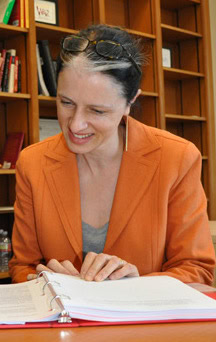
Larissa MacFarquhar, Staff Writer at The New Yorker magazine
Related Blogs
-
April 4, 2016
Related Resources
Web Resources
MacFarquhar, Larissa. “The Psychology of Extreme Altruism”
Wolf, Susan. “Moral Saints.”
Singer, Peter. “The why and how of effective altruism.”
Thompson, Derek. “The Greatest Good.”
Books
MacFarquhar, Larissa. Strangers Drowning: Grappling with Impossible Idealism, Drastic Choices, and the Overpowering Urge to Help.
Get Philosophy Talk

Leave a Reply
You must be logged in to post a comment.