Different Cultures, Different Selves

January 23, 2011

First Aired: February 22, 2009

Listen

Philosophy Talk podcast logo: "The program that questions everything...
Philosophy Talk
Different Cultures, Different Selves
Loading
/

Why do we do what we do? To please others? To live up to what culture expects? Or for our own reasons –- as “autonomous agents”? Americans tend to admire (at least in theory) the autonomous individual, the person who knows what he wants, and sets out to get it, no matter what the world might think. Is this true of all cultures? John and Ken are joined by Stanford Psychologist Hazel Markus to explore differences in motivation and action across cultures.


“Know thyself.” “To thine own self be true.” “You can go your own way.” From the ancient Greeks to Shakespeare to Fleetwood Mac, there’s a long tradition in Western civilization of seeing each person as separate from every other. Often times this goes hand in hand with the permission, or even imperative, to ignore others’ expectations and “follow your heart.” Raised in this culture, this seems like a perfectly natural view of selfhood. But what if there were other ways of thinking about the self?

Our show begins with John disputing the idea that people in different cultures have fundamentally different notions of the self: After all, we all believe that we possess the power of rational thought, bodies we control, and senses we use to explore the environment around us, don’t we?

Hazel Markus, professor in Behavioral Sciences at Stanford University, offers a response based on evidence she’s gleaned from studying Japanese society. According to Markus, Japanese culture holds a fundamentally different notion of the self from mainstream American culture, which views the self as completely autonomous. From the Japanese point of view, the most important information about a person is all the relationships he or she is born into, extending back many generations. Markus offers empirical evidence to show that this view of the self affects how children behave.

In the final section, we consider what the effects might be of realizing that there are multiple conceptions of the self. Can we choose to adopt another culture’s concept or is our own just too far ingrained in our minds? Ken pushes Hazel on the question of cultural relativism. Doesn’t the Western concept of the autonomous self have important benefits, like valuing individual freedoms? Hazel agrees but pushes back, encouraging Ken to question his view of others’ expectations as onerous burdens. The show ends with a few thoughts on how we might offer children a choice among different ideas of the self.    

  • Roving Philosophical Report: Nancy Mullane examines the link between an autonomous notion of the self and altruistic behavior.  She talks to Dacher Keltner, professor of psychology at Berkeley, about how evolution has given us brains that reward altruistic behavior, and about how we should value compassion more in our culture.  
  • 60-Second philosopher: Ian Shoales reveals that Americans are the most self-conscious people on earth. Consider our inventions: self-help books, motivational speakers, fitness centers. And think about the terms of our therapy: personal growth (good), co-dependence (bad). Is self-obsession really the only way to go?

Leave a Reply

Guest

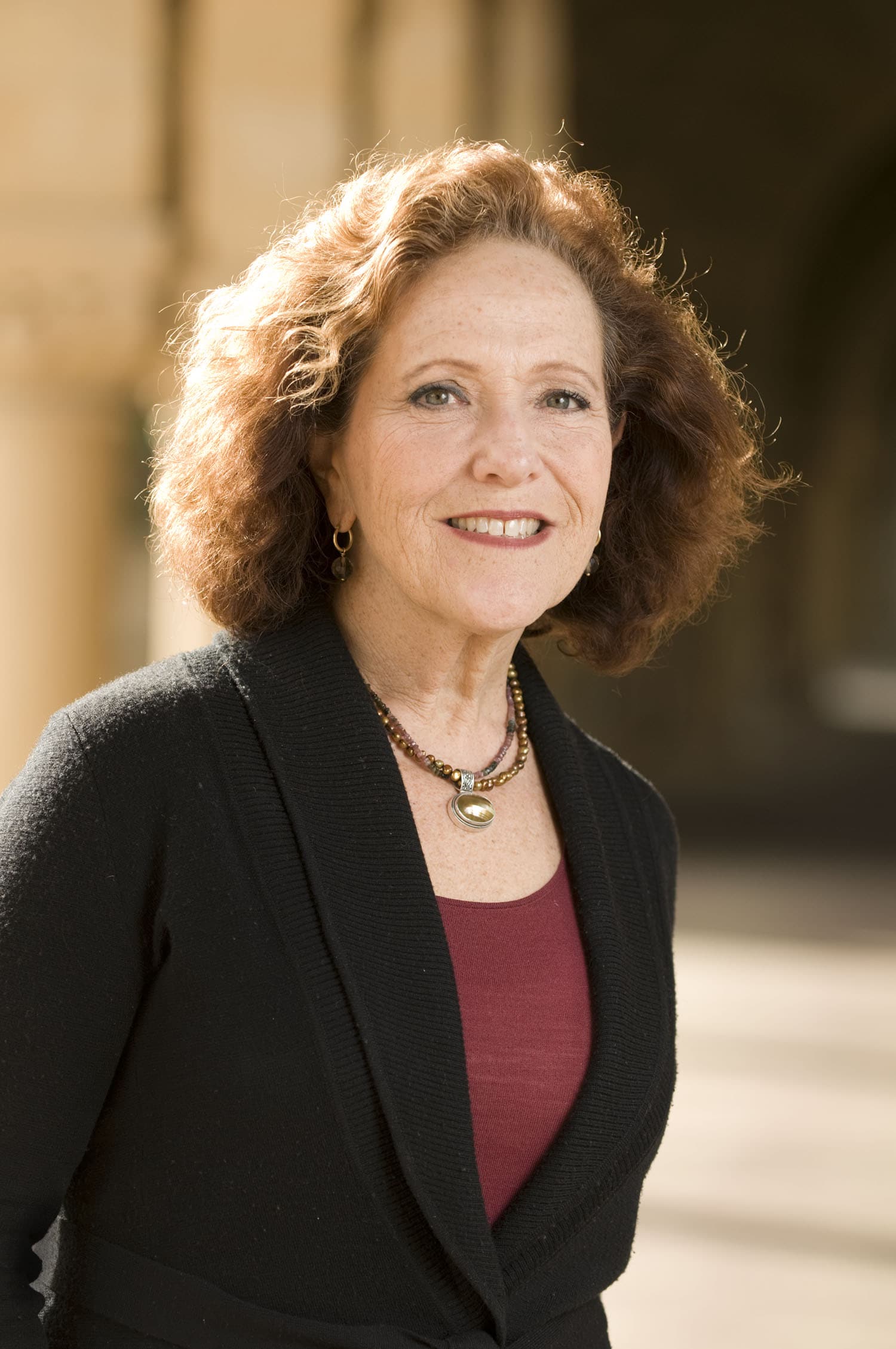
Portrait of a woman with auburn hair, wearing a black cardigan and maroon top.

Hazel Markus, Professor in the Behavioral Sciences and Director of the Center for Comparative Studies in Race and Ethnicity, Stanford University

Related Blogs

  • Different Cultures, Different Selves

    January 22, 2011

Related Resources

Books

Elliot, Anthony (2007). Concepts of the Self.

Kitayama, Shinobu and Markus, Hazel (1994). Emotion and Culture: Empirical Studies and Mutual Influences.

Rosenberg, Nancy, Ed. (1994). Japanese Sense of Self.

Seelye, H. & Wasilewski, J. (1996). Between Cultures: Developing Self-Identity in a World of Diversity.

Online Resources

Brooks, David. (May 30, 2011). “It’s Not about You.” The New York Times.

Lang, Susan. (June 28, 2001). “Contrast of U.S./Chinese memories shows impact of culture on ‘self-concept’” Cornell Chronicle.

Meyers, Diana (2010). “Feminist Perspectives on the Self“, The Stanford Encyclopedia of Philosophy (Spring 2010 Edition).

Buss, Sarah (2008). “Personal Autonomy.” The Stanford Encyclopedia of Philosophy .


Get Philosophy Talk

Radio

Sunday at 11am (Pacific) on KALW 91.7 FM, San Francisco, and rebroadcast on many other stations nationwide

Podcast