Crisis and Creativity in Mayan Mythology
July 12, 2026
First Aired: December 15, 2024
Listen


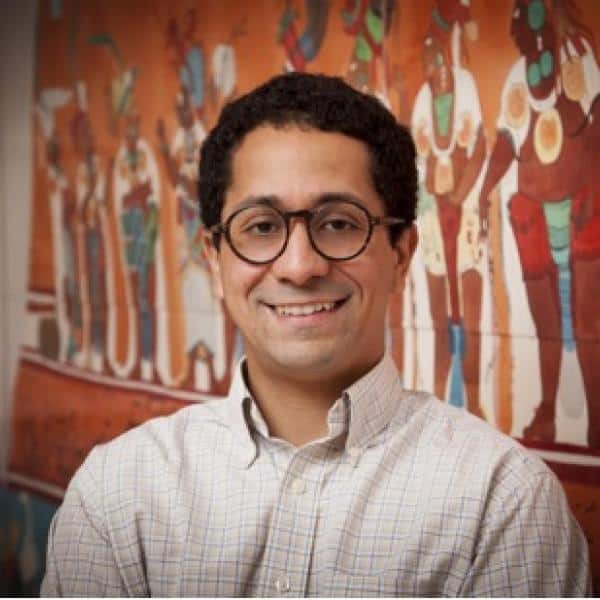
The Popol Vuh, written in 1702, was based on a Mayan oral tradition encompassing creation myths, history, and cosmology. These stories were written in a time of crisis: European colonialism had decimated the Mayan population and destroyed much of their cultural knowledge. How do stories help a society survive and thrive? Can they console us in times of crisis? How much of a culture can historians save in times of devastation? Josh and Ray rewrite history with Edgar Garcia from the University of Chicago, author of Emergency: Reading the Popol Vuh in a Time of Crisis.
This episode was generously sponsored by the Stanford Humanities Center.
- Colonialism
- |
- Culture
- |
- Literature
- |
- maya
- |
- mexico
- |
- Stories
Ray Briggs
Can creativity save us from an impending crisis?
Josh Landy
How did the Maya respond to the disaster of colonialism?
Ray Briggs
What kinds of stories help a culture survive and thrive?
Josh Landy
Welcome to Philosophy Talk, a program that questions everything…
Ray Briggs
…except your intelligence. I’m Ray Briggs.
Josh Landy
And I’m Josh Landy. We’re coming to you from the Stanford Humanities Center, which has generously sponsored today’s event.
Ray Briggs
We’re continuing conversations that begin at philosophers corner on the Stanford campus, where Josh teaches philosophy.
Josh Landy
And the University of Chicago where Ray teaches philosophy.
Ray Briggs
Welcome everyone to Philosophy Talk.
Ray Briggs
Today we’re thinking about crisis and creativity in Mayan mythology.
Josh Landy
So it’s a little tricky to talk precisely about Mayan mythology, because a lot of that way of life and its associated oral traditions got wiped out by European invaders in the 16th century.
Ray Briggs
Yeah, but there are still Maya people today, and we also have a few written sources, like the Popol Vuh.
Josh Landy
That’s right. I mean, Christian missionaries taught the Latin alphabet to the Maya people, and some of them used that alphabet to write down stories in their own language. And that’s lucky for us, because now we have records of those stories to preserve and hopefully to learn from.
Ray Briggs
Yeah, here’s one of those stories. So once upon a time, there was a committee of gods who wanted to create human beings who would worship them. First, they tried getting the animals to praise them, but that wasn’t very successful. All they got was just a bunch of hoots and squawks.
Josh Landy
Yeah, not entirely satisfactory. So then they tried making a person better idea, but they made him out of mud, and he just crumbled into dust.
Ray Briggs
Yeah. And then they tried making people out of wood, and that worked a lot better, and they were able to build a whole civilization that way, but those people had no inner lives.
Josh Landy
But finally they cracked it. They made human beings out of maze, fourth time lucky, and now they’re off and running and ready to receive our praise and sacrifices.
Ray Briggs
Yeah, Josh, that’s such a great story, but what am I supposed to learn from it?
Josh Landy
Well, when it comes to myth, obviously everything’s going to be a matter of interpretation, but here’s one way to look at it, the gods are in a bit of a crisis. What do they do? They use their creativity to dig themselves out. Sometimes you’re faced with a really tough problem, and you need to run through a bunch of different things before you get it right.
Ray Briggs
Oh yeah, that reminds me of another story in the Popol Vuh. So one day, there are these twins, and they’re playing a ball game, and they’re making a bunch of noise, and they’re so loud that they even bother the gods of Xibalba, the underworld. So then the gods summon the twins to explain themselves, and now these two boys are in a little bit of a pickle.
Josh Landy
Yeah, they got some explaining to do. I mean, don’t forget, Ray their dad got killed by exactly the same gods for exactly the same crime, right?
Ray Briggs
So what does the Popol Vuh tell us to do when we’re in such a pickle? Well, here’s what the boys did. They used their ingenuity to trick the gods of death. And not only did they escape with their lives, they even got those gods to stop killing quite so many people.
Josh Landy
I love the way that Popol Vuh puts it, Ray: “Such was the defeat of the rulers of Xibalba. The boys accomplished it only through wonders, only through self transformation.” I think that’s really great. If we use our ingenuity, if we’re willing to change, we can work wonders, even in a situation of danger and crisis.
Ray Briggs
Yeah, that’s also true of the book itself. The people who wrote it were in the biggest crisis imaginable. European colonizers were decimating their populations and systematically destroying their culture to replace it with Christianity. So what did the Mayas do? Well, they wrote down their stories using the very Latin alphabet that was intended to wipe them out.
Josh Landy
I mean, that is a very fortunate thing for all of the rest of us today. It’s a great thing. It’s an admirable thing. But there’s also. Something deeply tragic about what we read in the Popol Vuh. I mean, here’s a particularly chilling line. It’s about the Mayan leaders of the 16th century: “And they were ruling when Tonatiuh arrived, they were tortured by the Castilian people.” And Tonatiuh here means Pedro de Alvarado, who was the conquistador. So, so yes, the writers the Popol Vuh were telling their own history, but it’s a story with a very sad ending.
Ray Briggs
Yeah, but I think even if your circumstances are deeply tragic, there’s a kind of value in responding to them with creativity. People wrote poetry and concentration camps, people wrote songs, even when they were enslaved and sang songs. Storytelling is a way of preserving your history and your dignity and your writing becomes a seed. Who knows when in the future, it will sprout
Josh Landy
That is really beautiful, Ray, and our guest today has written about exactly that. It’s Edgar Garcia, author of “Emergency: Reading the Popol Vuh in a Time of Crisis.”
Ray Briggs
But first, we sent our Roving Philosophical Reporter, Holly J. McDede, to hear from Maya community members and leaders and artists fighting to preserve their culture. She files this report.
Holly McDede
The film Wakanda forever features the fictional people of Talokan.
Black Panther: Wakanda Forever
I brought this song to my people. I know you wished me to spare the life of the scientist, but now you see what I have to protect
Holly McDede
In the 2022 Marvel blockbuster, The Talokan are descendants of an ancient Maya civilization who were forced to seek refuge in the ocean. The title of the piece you’re hearing from the Wakanda forever soundtrack translates in English to “We Are Still Here.”
Holly McDede
Jesus Cristobal Pat Chablé is a rapper who sings in the Mayan language, and he collaborated on the piece,
Pat Boy
Me pongo el nombre Pat que significa darle forma a algo o crear algo nuevo—’Pat Boy’.
Holly McDede
Chablé goes by the name Pat Boy because Pat refers the act of shaping or creating something new. Pat Boy is from a small Mexican village in the Yucatan Peninsula. About 200 people live there. He grew up speaking only mine until he started primary school, he started making music with his friends in high school.
Pat Boy
Comenzamos a hacer como improvisaciones, entre otros, y poco a poco fuimos aprendiendo un poco más sobre el hip hop, sobre el rap, las historias. Vimos películas, escuchamos artistas, y entre todos fuimos conociendo más sobre el género musical.
Holly McDede
He says he started with improvisations, and little by little, learned more about hip hop, about rap and about stories. He and his friends watched movies, listened to artists, and together learned more about the music genre. Since then, Pat Boy has released multiple albums. One of his hit songs is called “Sangre Maya” or “Maya Blood.”
Holly McDede
Now he’s among several of Mexico’s indigenous musicians using rap to share their culture and traditions with a new generation.
Pat Boy
Para que ellos sepan de dónde venimos y quiénes somos los Mayas, y seguimos vivos en la península y en todos lados. Porque mucha mayoría dice que los Mayas ya no existen, pero existimos, solo que usamos gorras, playeras, y ya no andamos en taparrabos.
Holly McDede
It’s important to him so that people know where Maya people come from and who they are, that the Maya are still alive in the peninsula and everywhere. Many people, he says, believe that the Maya no longer exist, but they do exist. They just dress casually and modern and no longer wear ancient attire. So Pat Boy and others are using music to spread that message.
Holly McDede
Here in the Bay Area, 1000s of Mayan Guatemalans speak a language called Mam.
Crecencio Ramirez
When I walk down the street on Fruitvale district, there’s a lot of Mayan people. You know, they carrying the baby. They’re wearing their traditional clothing. It seems like Oakland is their home. You know, we’re not going anywhere.
Holly McDede
That’s Crecencio Ramirez, the founder of Radio B’alam, a community led internet radio station serving Mam speakers in Oakland. This music video was posted and shared by Radio B’alam. Crecencio came to the United States in 2005 and said he fled his life in Guatemala because of domestic violence. He’s dealt with his share of mental health struggles, but he’s in a good place now and focused on giving back to his community.
Crecencio Ramirez
I said, you know, life is so beautiful when you wake up, you heard the birds. Singing, you see the sun, you see everything. It’s just that you have to have friends or you have to know people to get help.
Holly McDede
He decided to start the online radio station in 2019 it became a key resource during the pandemic when he saw mum, speakers weren’t getting the information they needed to stay safe. The station plays music and delivers local news and informs people where they can access mental health resources, free food and vaccines. Listeners throughout the country call in to ask for support or express gratitude.
Crecencio Ramirez
We want them to pay attention to us like we’re valuable because like we were the first people got here, and I think we deserve a little bit attention.
Holly McDede
Crecencio wants Radio B’alam to get its own frequency one day. Facebook and Tiktok make it hard to play music, and they want to play more marimba, the music of home. For Philosophy Talk. I’m Holly. Tim McDade,
Ray Briggs
Thanks for that uplifting report, Holly. I’m Ray Briggs, along with my fellow philosopher, Josh Landy, we’re at the Stanford Humanities Center, which has generously sponsored today’s event.
Speaker 1
Our guest today is a professor of English at the University of Chicago, and He’s author of “Emergency: Reading the Popol Vuh in a time of crisis.” Please welcome to the Philosophy Talk stage, Edgar Garcia.
Edgar Garcia
Thank you so much for having me.
Ray Briggs
So Edgar, you’ve written a lot about the Popol Vuh. How has it affected the way you live your life?
Edgar Garcia
I feel that it has been a text that has been with me since my childhood, insofar as I am a person born out of Central America, so in so many ways, even before I knew what the Popol Vuh was, the Popol Vuh was abiding with me, and it was only quite late in life that I realized how much this text had shaped me, formed me, made me and that’s actually when I wrote the book about the Popol Vuh.
Josh Landy
So we’re going to talk a lot about the popovu tonight, but before we get into that, it’s only one piece of a broader puzzle, right? Broader picture of Mayan culture seems like the popu falls at the end of three different historical periods that scholars talk about. Can you quickly tell us what those periods are?
Edgar Garcia
It’s the classical, the colonial and the contemporary. The classical is the ancient Maya world before the arrival of the Europeans. The colonial is, you know, at the point of arrival of the Europeans and the contemporaries now. And I think actually what Holly said was great for contextualizing this, because the migration patterns from Latin America have fundamentally changed from the time that my parents migrated here from Central America. It used to be urban to urban. San Salvador to Chicago, Guatemala City to La now, because of climate change, because of ecological catastrophe, you have rural to urban, right, abundant indigenous migrations to the United States, such that three Mayan languages are in the top 10 languages spoken in US immigration courts. Mam, kachukel and kanco Ball. Mam is spoken more in US immigration courts than French. So we have a fundamental change in what is happening to the United States right now that incorporates and insists upon an understanding of Mayan culture and heritage.
Josh Landy
How much continuity is there between contemporary Mayan culture and what we see in the Popol Vuh?
Edgar Garcia
Well, I think the Popol Vuh speaks for itself. I think the Popol Vuh tells us that it is a timeless work, that it is built to outlast, and that it’s an instrument for interpretation. It tells us that it is an instrument for interpretation in a way that we might think of any work of philosophy doing.
Ray Briggs
Yeah, so I want to ask a little bit more about the text itself. Because, like, what we have written down, like I understand is, like a bunch of stories that were told for much longer than they were written. But like the records we have are kind of produced in a context where, like colonial priests are, like encouraging them to be written down and preserved. How do you think that shapes like what we see?
Edgar Garcia
That is the question, because, as I think you’re suggesting the Popol Vuh that we have the text that abides at the Newberry library in Chicago is a work of colonial literature. It was put to paper because of the instructions of a friar Francisco Jimenez in 1702 who told his indigenous. Mayan interlocutors, to put it to paper, and they understood the context of power. They themselves said, This is what is to me, really powerful, mysterious, beautiful, complicated about Popol Vuh. They understood this. And they themselves said, This is not a creation story that begins in cosmic darkness. This is a creation story that begins in colonial darkness here in the times of the teachings of Christ, we will bring light out of the eastern sky. We will bring the sun into existence.
Josh Landy
You’re listening to Philosophy Talk today, we’re thinking about crisis and creativity in Mayan mythology with Edgar Garcia from the University of Chicago.
Ray Briggs
Are there creation myths from your culture that help you understand the world? Does the gender of your god or gods make a difference? What about the number of your gods?
Josh Landy
Myth, meaning and metaphysics—along with questions from our live audience, when Philosophy Talk continues.
Sara Curruchich
Pa qak′aslem, pa qachïk Junam, junam.
Josh Landy
Music of protest and resistance from Sara Curruchich, a Guatemalan artist of Kaqchikel/Mayan descent. I’m Josh Landy, and this is Philosophy Talk the program that questions everything…
Ray Briggs
…except your intelligence. I’m Ray Briggs, and we’re thinking about crisis and creativity in Mayan mythology with Edgar Garcia from the University of Chicago. Special, thanks to the Stanford Humanities Center for sponsoring today’s episode.
Josh Landy
Got a critical question or a creative comment, join the discussion by raising your hand, and Laura here is going to put you on the list and bring the microphone around to you as soon as it’s your turn, and there you go. Excellent.
Ray Briggs
So Edgar, I’m going to start this off. You said before the break that the Popol Vuh is a myth of light coming out of colonial darkness. Can you tell us a little bit more about that?
Edgar Garcia
To emphasize the context of the Popol Vuh, I have to take us back to about three years ago, when we all were living through a deep darkness of COVID, and it felt like the worst possible thing. It felt like the world was falling apart. There was not only the epidemiological crisis, there was also like a political crisis, a social crisis. The world was falling apart. But to put that into perspective, there was 1% of human population loss at that time, like 1% of human population died. At the time of the writing of the Popol Vuh, there had been 90% population loss. Think about that for a second, 90% of population loss. Imagine if nine out of the 10 people you know die, and in an oral culture, what that entails is the loss of knowledge about science, knowledge of history, knowledge of poetry, knowledge of medicine, like all this stuff, and though it is a horrendously devastated situation, authors of this text still say we will bring light out of the eastern sky. We will bring sun into existence. That is extremely powerful to me, the idea that amidst so much loss human creativity can still happen, right? Like the persistence of humanity can still be.
Josh Landy
I mean, it’s an extraordinarily hopeful document, yes, in spite of it being framed by the invasion of these Christians who get mentioned at the beginning and the end nonetheless. I mean, do you connect this spirit of hopefulness to these repetitions and variations? So you have two, you know, you have two people going down the underworld because they made too much noise in a ball game. They get killed. Two more people go down. They do brilliantly. They reduce the amount of death in the world. You’ve got the attempt at creation, another attempt at creation, another attempt to create, another attempt to creation, a successful attempt. Do you feel like those, those stories of kind of repetitions, but with a twist, go along with the sense, you know, things aren’t written in stone. Things don’t have to be the way they are, things can go better.
Edgar Garcia
Well, I couldn’t agree with you more. I think that the Popol Vuh, one of its philosophical takeaways is that creation is always a recreation, and that enables a lot of creative possibility. The Gods Themselves don’t get it right. They don’t get it right multiple times. And when you have a story of creation that is not like Fiat looks like, you know, like, but quo moto looks. Yes, in what way should we make stuff? In what way should light be? You have a lot of enablement for what creation can be such that the gods screw it up the first time, screwed up the second time, they screw up the third time, they kind of screwed up the fourth time. And it’s up to humans to figure it out. That’s a very different story of creation than you know, as much as I love the book of Genesis, than what we get in the Christian Bible.
Ray Briggs
One of the things that strikes me about the story we were talking about earlier with the two twins going down to chivalba, is that they kind of get killed, and then they just like reconstitute themselves trickly. And I love this idea of death not being a permanent thing. And I also like find it very hard to reconcile with the belief that when my body is dead, like that’s it for me. So how can death be not a permanent thing? And yet my experience of it is so different.
Edgar Garcia
That’s a great question about time and how time works in this work of literature. And it brings me to talk about the title of the book itself, the Popol Vuh. What is the Popov? The Popov literally translates as the book of the mat, the ceremonial mat on which the elders sat to deliver advice. But it is also a philosophical idea that the structure of time, the shape of time, is itself a mat. It’s a woven structure, a woven thing that interweaves the time of the gods, the time of the animals and the time of the humans. Right, like criss cross warp and weft, such that any movement on the mat, any activity, will affect all other activity. So human actions affect the time of the gods. The actions of the gods affect the time of the humans. We don’t exist in chronology. We don’t exist in dialectic. We don’t exist in like movement forward one thing shaping. We exist in a in a collage, in a framework of constant repetition. We’re always at the ready of recreation, repetition, reconstitution of what the world is.
Speaker 1
And time is really central. I’ve even read one approach, according to which being is time in my own philosophy. Does that seem right to you? I know it’s only one position among men being is time?
Edgar Garcia
Yeah, I believe actually time is being. There is no other way really to understand what is happening in the Popol Vuh without an understanding of time repeating itself. I think very frustrating thing for new readers of this work is that it kind of repeats itself and it jumps around and it jumps around and it keeps repeating itself. But what you have to understand is that every one of those moments of repetition distinguishes this work from like the Greek epic, right, where a single action will forever affect everything that happens in the future. If a hero does a thing or messes a thing up, it will forever affect an action forever in the future, the Popol Vuh does not work that way. It’s always coming back to these moments of possible action, always enabling a new recreation of what your world is. And though that may be frustrating to read, it is actually quite enabling to think out.
Ray Briggs
So we’ve got a question from our live audience. Tell us your first name, where you’re from, and your question or comment, please.
Jackie
Hi, my name is Jackie, and I’m from Nashville. My question is, is since the colonial period, you know, a lot of people, or, like, you know, the majority of people in Latin America, converted to Christianity. I guess it was mostly Catholicism, though. I guess I heard that evangelicalism is on the rise in Latin America. Do you what do you happen to know? How you know maybe Mayan today reconciled their religious beliefs with their maybe their cultural beliefs in these folk tales. Thank you.
Edgar Garcia
I think that’s a great question. And for me, what is really animating about is the pope of who already understands, acknowledges and interprets and processes that it begins from colonialism and situates itself in a colonial world. It creates this creation out of colonialism, but to like really put the M. To this and really respond to your question, I wouldn’t just go to evangelism. I would talk about Mormonism and the ways in which, like Mormonism, has tried to absorb Mayan culture. Because just to tell you, really quickly in Mormon thought, like all the tribes of Israel come to Maya world, they understand the Mayas to be like the lost tribes of Israel. But what the Mayas do contemporary Mayas today, Mayas today, right? They say that if it is the case that we are the lost tribes of Israel, then that must mean that the Book of Mormon is a secondary text to the Popol Vuh. That this is true, which is, you know, like that philosophical flip that Mayan intellectual thought is always ready to do, not to be interpolated or absorbed by the other, but to absorb, interpolate and bring the other into its own world.
Josh Landy
You’re listening to Philosophy Talk today. We’re at the Stanford Humanities Center thinking about Mayan mythology. Our guest is Edgar Garcia, author of “Emergency reading the Popol Vu in a time of crisis.” Edgar, a little moment ago, you were saying something delightful about the gods in the Popol Vuh. They’re fallible. They keep messing up the creation. This is a very different picture of creation than the one that you find, for example, in the Judeo Christian and I find it really congenial. I like this idea that we’re we’re dealing with Gods. I mean, the story of the twins is a story in which you can defeat the gods, you can go down to the underworld and defeat them and get them to stop killing quite so many human beings, right? They agree. We’ll only kill the weak one. There were people who were kind of sickly. We’ll leave the other ones. This is amazing. So what does this do for the for the overall worldview of an average person thinking about a world populated with divinities, but they’re not omniscient, they’re not necessarily omnipotent. You could maybe best them. They’re not infallible. What does that do for for us, in terms of our relationship to the world?
Edgar Garcia
That’s a great question. I think it’s a question I’ve abided with for many years, and my answer to it is that it enables relation to creativity the gods, who are fallible creators, come to look like us, right, as fallible creators, the gods stop being creators with a capital C and become creators with a lowercase c. And in fact, if you read the first three pages of the Popol Vuh, you will see that it’s very hard to tell the difference between the speakers, the tellers of the tale, and the gods of the tale. That is to say, between the creators with a lowercase c of this text and the creators with an uppercase C of the world. And there’s a generative, productive, amazing possibility there for the work of artists, the work of poets, the work of philosophers, in their ability to make worlds, to not just metaphorically, figurative makers, but to truly make worlds. And of course, we screw it up all the time, but we’re no better than the gods. But we’re no better than the gods.
Ray Briggs
Yeah, it seems like the Europeans who came in, like, really, were not able to see some of the realities of, like, the culture they were observing. They were like, Well, I’m gonna filter this all through the lens of a Christianity where, like, this is the devil. If there was a thing like you could pick first to elevate that they missed, what would you pick?
Edgar Garcia
I actually disagree. Oh, I think they did see and I think they were scared. I think that they were actually quite terrified by the powers that they encountered. So if you want me to pick a moment to highlight.
Ray Briggs
Yes, please.
Edgar Garcia
There is in the text of the Popov Vu, you know, like, if you go to the Newberry library and you look at the actual manuscript, it’s, it’s, you know, pretty well transcribed, right? There’s, it’s, it’s on the left side, the kitchen Mayan and on the right side, the Spanish. And they basically work together right now. This is the original transcription of this story. There is one moment where this all doesn’t happen. It all fractures. And it’s the moment where there’s an underworld God that comes out of hell, according to the Christians right, and the transcriber, right, Jimenez, probably like puts in in Latin, the demon speaks. Here, the demon speak chemists, chemists, this bat God comes out of the underworld, and the transcriber puts it. Demonium locums, right? The demon speaks here, and he didn’t have to put that in there’s like so many moments of other gods, but he puts that in there. And why does he put that in there? I think because he feels the power of the demon. He feels the power of the other gods. He wouldn’t have to put that in there if he did not feel the anxiety of the possibility of other gods. So I don’t think that they didn’t believe it or feel it, or if anything, I think they felt it too much, and they were quite terrified of it.
Josh Landy
And it’s the power of multiple other gods. Of course, some are male, some are female. Gods shell, for example, the two original gods, Bucha, male and female. Does that make a difference, too? The fact that there are divinities of more than one gender?
Edgar Garcia
Yeah, gender is very complicated. In the Popol Vuh, it’s very mutable, very hard to pin down, and one thing that complicates it is that the Popol Vuh isn’t just one book, it’s a collection of oral stories that got put to text in one moment. So these oral stories had been circulating for 1000 plus years, and they continued to circulate for 300 more years, such that there are other variants of the Popol Vuh, where, for example, the hero twins are not a boy and a boy, it sometimes is a boy and a girl, the sun and the moon, and the moon is feminine in Mayan philosophy. And so it really blurs the line between the drama, the plot and the actors of the popu, complicates our sense of the bodies in that world in what I think is a very generative way.
Ray Briggs
So we have a question from our live audience.
Michael
Hi, my name is Michael. I’m from Mountain View, and you talked a little bit about a different concept of time in the popula. And I’m wondering if there’s any other different concepts of the laws of the universe that the Mayans had that you wish that scientists would consider as scientists try to explain the universe, modern Western scientists try to explain the universe around them.
Edgar Garcia
Yeah. So I think that one way in which the philosophy of science has had a bit of a shortcoming is in its Apocalypticism end times thinking, which, to me, is a very Christian concept, and a recursively Christian concept that we’re living in the end times, that it’s always end. Times that, you know, we’re living in the time of apocalypse, which, as I read, the Popol Vuh is like non present, right? We’re always at the beginning of time in the Popol Vuh, at the possibility for change, at the emergence of a horizon of new worlds. That is, you know, a little bit weird for our own philosophical thinking, but to me, is deeply enabling.
Josh Landy
You’re listening to Philosophy Talk today. We’re thinking about crisis and creativity in Mayan mythology with Edgar Garcia from the University of Chicago.
Ray Briggs
Do you look to tradition to help you live a good life? Whose tradition do you choose? Or do you use creativity to find your own answers?
Josh Landy
We’re coming to you from the Stanford Humanities Center, which has generously sponsored today’s event. We’ll take more questions from our live audience, when Philosophy Talk continues.
Alux Nahual
Dejennos en paz, tomen el oro y vuelvan al mar.
Speaker 1
music from the Guatemalan band Alux Nahual, whose name is a Mayan-Quiche phrase referring to a goblin or a sprite. I am the sprite Josh Landy, and this is Philosophy Talk, the program that questions everything…
Ray Briggs
…except your intelligence. I’m the goblin Ray Briggs. Our guest is Edgar Garcia from the University of Chicago, and we’re at the Stanford Humanities Center thinking about Mayan mythology.
Josh Landy
So we have another question from our live audience. Welcome to Philosophy Talk.
Guy
Hi. My name is Guy, Santa Cruz Mountains, and I’d like to get back to the topic of time. It’s really interesting, wondering whether you contextualize that a little bit for what happened in different civilizations at that time in humanity. Was it really that unusual? You know, even in Christian terms, there are higher times lower times. All time was gathered into an instant, I guess, in sort of Augustinian terms. So what was it in the Mayan culture or situation that led them to feel that way.
Edgar Garcia
So in the Mayan creation story, the popuv there are world ages. There had been beings that had existed before. The beings that we are existed such that I think it produced a mortality salience at the level of the species, right? This feeling that we could all screw this up and disappear, and they had evidence of this. When Cortez, Conquistador Cortez hernand Cortes, arrived to the Americas, he was looking for the evidence of the Nephilim, the ancient non existent giants. And you know what the indigenous people of the Americas had that evidence, because they also believed in an ancient race of beings that had been conquered and destroyed, and they presented to Cortes. This is true. This is fact. They presented a Cortez mammoth bones, right? And they were like, these are the femurs of the giants. And so they they mutually entered, like this circle of mortality salience at the level of the species. Like we, those beings died, those beings were conquered. We could also die. We could also be conquered. And so they looked at each other, right, these indigenous people and these Castilians, and they saw like, well, who’s going to be conquered? Like, what is the species that’s going to die? That’s what the pop of who is talking about when it talks about the possibility of total annihilation, the reality of total annihilation.
Josh Landy
So there’s a really interesting question here about if annihilation happens, is it merited? There’s that story, the twins go down to the underworld. They secure a promise from the gods of death, we will kill people who are not in a good way or the violent. You know, we will be just. This sounds like a picture of a just world, where, you know, it’s the violent people who get taken down to the underworld, but then at the same time, you know, the time in which the pop up was being written down this invasion, can that have felt just? So what is the picture of the is it a picture of the universe in which there’s a kind of a cosmic justice, or is there? Is it more of a picture where sometimes bad stuff happens?
Edgar Garcia
I think it’s not a moral world. It’s an ethical world. And I think the pop of Vu is very aware of this distinction between the moral and the ethical. It has a very like nuanced philosophical distinction of those two things, because there will always be bad agents, and the bad agents don’t get punished in the Popol Vuh.
Ray Briggs
So I see that makes it not moral. What makes it ethical? Or what’s the ethical vision there?
Edgar Garcia
It’s recursivity. It’s opportunity for change. The always coming back to the scene of creation, of action, of engagement that lets you try, as we often have to do, to do the right thing.
Ray Briggs
So are there like, I don’t know if it’s too reductive to ask this, are there lessons in the Popol Vuh about how we should be living?
Edgar Garcia
There are. One has to know that it’s composite text, so it’s multiple stories put together. It’s not that big. It’s not the Ramayana. It’s not that big. But there are, you know, it’s a composite text. And a few takeaways are that humans are fallible, just like the gods. Animals are important. Take care of them, even the most small ones, even the ones that bug you and annoy you, rodents and mosquitoes are deeply important, and that’s a philosophical takeaway, but also the gods, the gods like mosquitos and rodents are sometimes annoying, and you have to just accept it. You have to look like families, yeah, it’s, it’s, it’s a text of and about abiding, abiding together with all our fallibilities, right?
Ray Briggs
And there’s a story in there about, like, mosquitoes being really good informants, right?
Edgar Garcia
Yeah, yeah.
Ray Briggs
Would you tell that one?
Edgar Garcia
Well, the mosquitoes suck the blood of one character, hero in the text to communicate knowledge to another hero in the text, such that when I think the message there is that when we think the world is bugging us, right, like it may be giving us messages.
Josh Landy
Yeah, you’ve got this—This is one of the things I love the most about your reading of the Popov Vu that you have a louse and you have a mosquito, yeah, and you have a rat, yes, all of them are now. This is the creation of the human species, yeah, yeah. So be grateful, yeah.
Edgar Garcia
And I think importantly, this is something, this is a very new realization for me, way after I wrote this book, is that the Popol Vuh is not a book of signs. It’s not interested in signs. It’s interested in messages, and messages are different from signs. Right? Signs are inert. They’re neutral, they’re abstract. Messages have spirit. They have the trace of the sender to the sent. They have the body. So the Popol Vuh is a book of messages, not of signs.
Ray Briggs
Who are the messages for? Or are they for somebody in specific, or are they for the world or for somebody who might understand?
Edgar Garcia
I think that’s, I think that’s the question. I think that’s the question. I think the Popol Vuh doesn’t let us be self secure in our understanding of us as the center of the universe, right? Oh, the messages are for me, I’m the receiver of everything that is. No, the popuvu does not let us feel that comfort. So actually, that’s the question. Who are the messages for that’s the question of the Popol Vuh.
Josh Landy
OK, so we have a kind of ethical, if not moral, framework. We’ve got a framework in which change is possible, light is possible, even in the darkness, but you have to be willing to try and maybe even to change, to sacrifice something about yourself. We got an invocation to be humble, not like that seven McCall figure who thought he was the son. We’ve got an invocation to love even the little guy, the lice and the mosquitoes. Yeah, the lice. But how far should we go? I mean, I think there are sort of twin dangers when one culture looks at another culture, right? One danger is just dismissing, rejecting, being condescending. The other danger is kind of romanticizing, exoticizing, the whole Russo, noble, savage thing, you know, Orientalism. So where should we fall in that when folks who are not part of the Mayan culture look at Mayan culture?
Edgar Garcia
The Popol Vuh within the text itself calls itself in the kitchen Mayan il Baal. And what that translates to is instrument for seeing il ba al saqq, instrument for seeing clearly, which to me is an invitation to think with it, to think with it as we would think with any work of philosophy or theory. And fundamentally, what I think it is asking us to think with is this sense of recreation as a possibility for the kinds of lives we should lead. Not so much a story of how the world was made, but a story of how we can remake the world. And it is insisting in so many moments. It tells us this. It’s asking us this. It’s insisting upon itself as a way to shape the worlds we want to be in ilba. All ilba also an instrument for seeing it couldn’t announce itself more clearly as a work of philosophy.
Ray Briggs
So one kind of really interesting thing about the Popol Vuh is that it’s sort of from the point of view of somebody who is now the powerless party. But like in the classical period, you also had these, like, extremely powerful kings who were propped up by the myth. So I’m not like, I’m not sure there’s like, a story like in general, that the myth is on the side of the little guy.
Edgar Garcia
So I think there is a way to read the Popol Vuh in a pre colonial context where all its critique of empire, maybe it’s not just talking about the Spanish. Try to understand that it’s maybe talking about itself, its own internal Mayan world, its critique of ball games. It’s critique of pageantry, it’s critique of largess and it’s fundamental fixation Spanish to one side, Mayan empire to the other. It’s fundamental emphasis on the importance of maize, of sustenance, of the crop that gives life to people.
Josh Landy
Okay, that part makes sense to me, but I’m very curious about the ball games. I’m a fan of Liverpool Football Club.
Edgar Garcia
Of course you are.
Josh Landy
Managers once said, some people say football is a matter of life and death. I’m very disappointed and execute. It’s much more important now in in the Popol Vuh, ball games are a matter of life and death. They are why? Why is it so central?
Edgar Garcia
Well, I don’t know. There’s a whole other way to read the Popol Vuh, which is as like a sports film. The sons are trying to revenge the wrongs of their Fauci. Others failures in the in the football game. You know, it is a celebration of sport, but it’s also kind of a critique of sport and an over emphasis, I’m sorry, I think it is a critique of an over emphasis on sport in its last instance.
Josh Landy
Okay, in spite of that thing about sport, this has been an absolutely wonderful and illuminating conversation. Thank you so much for joining us.
Edgar Garcia
Thank you both. Thank you. That was awesome.
Josh Landy
Our guest has been Edgar Garcia, professor of English at the University of Chicago, and author of “Emergency: Reading the Popol Vuh in a Time of Crisis.”
Ray Briggs
And we’ll put links to everything we’ve mentioned today in our on our website, Philosophy talk.org where you can also become a subscriber and address your crisis in our library of more than 600 episodes.
Josh Landy
Now, his speed is positively mythical: It’s Ian Shoales, the Sixty-Second Philosopher.
Ian Shoales
Ian Shoales… In the 18th Century, a Dominican priest wrote out the Popol Vuh, in Kiche Mayan and Spanish, creating the only copy in the world. After various adventures, it ended up eventually at the Newberry Library, not far from the University of Chicago, where Edgar Garcia thought about it during the Covid lockdown. He noted that he was studying on it during an emergency, and it was created, that is, written down, during an emergency, that is, the downfall of Mayan culture via the miracle of colonialism. So humans began, according to this relic from a dwindled civilization, when the gods who make things got bored with all the animals. So they tried clay, wood, and finally after eons of no time, or whatever we used to mark durations before we needed to be somewhere, and there was somewhere to be, they made humans out of maize, making a corn paste they shaped into humans. Maize could be considered a metaphor for DNA I suppose, and subatomic physics, which of course, make us all as one, gods, monsters, tortillas, chowder, syrup, fritters, and other corn based life forms, we’re all just mini-specks and flashes bound together by forces we don’t fully understand. Corn is easier to think about it. Corn is also a key ingredient in whisky, in turn often a key ingredient in thinking. The first humans were both male and female. The gods were pleased, but then grew worried that human knowledge might rival theirs. So they made the humans mortal, dumber, and with bad eyesight. And separated them into men and women–women intended to be a comfort to men for being stupid. Don’t know who the women were meant to turn to. Cats, I guess. In Judeo Christian myth, Adam is made from dust, and Eve from Adam’s rib. Also, she’s a lot more intelligent than Adam, or at least more open-minded. To persuasion. From serpents. Creation and origin myths do get a little fuzzy. The Garden of Eden, for example. What was it? Did it have mangoes? What about tomatoes? Could you grow corn? There’s that fruit you weren’t supposed to eat, what was it? Do we still have it? Do you know where I can get some? I have money. They get thrown out of the garden, evicted. Like they were caught doing meth, and kicked out of the trailer park. Which always made some kind of sense to me, as far as patterns of consciousness go. We get smarter and smarter and then too smart for our britches, and the girlfriend gives you the heave ho. Thus with tribes, cultures, civilizations, rock bands, comedy teams, they fall apart, movie stars land a series. That’s your damn evolution and entropy in one package that we like to call human history. This is good stuff, this Popol Vuh. The priest who wrote it down could have made it up for all I know, like some kind of proto fascist evil racist genius, who gave the Mayans culture and history and artifacts, so when you wipe them out with smallpox there will be value in the leavings. Souvenirs! Western civ can declare that heathen glory pales next to the glory of God, but you can still monetize it! Strange that the saga of this culture only exists through the efforts of a culture bent on erasing it. But the Popul Vuh is about that too! Message in a bottle, in a way. Everything changes. In the meantime, our very own American culture, our big goofy culture, our shenanigans based culture, seems to be on the brink of dwindling itself. But, remember, humans haven’t been around that long, in the scheme of things. Maybe the gods and God aren’t done with us. Maybe Mayan avatars and saviors are hidden, waiting for the time to unleash their inner eschatology and engulf this world of shadows with a new light, hitherto only seen in Guatamala. Are there any monks, right now in Nebraska and beyond, turning heretical texts into unreadable AI transcriptions? We don’t have Latin any more, so the idea of making books, or even mocking books, seems like time better spent texting. Maybe we’re still in the planning stages. A third sex. Fourth and fifth. After all, today, Eve in the Garden would not be considered a woman at all, she hadn’t had a kid, and that’s the number one gender criterion nowadays. On a brighter note, maybe we could merge all the creation myths together! Hero Twins, and dragons, and turtles all the way down, Adam and Eve, pregnancy from spitting on a hand, pregnancy from talking into an ear, floods, fires, and maybe all the world will make their way through Popul Vuh, and all the civilizations will become one civilization, and Hortons and Whos, lost worlds and fairylands, all lie down in a big jumble, with corn dogs for everybody, except where forbidden, or the taboo still holds. That’s cannibalism you know. Don’t know what else to call it. I gotta go.
Josh Landy
Philosophy Talk is a presentation of KALW San Francisco Bay Area and the trustees of Leland Stanford Junior University, copyright 2024.
Ray Briggs
Our executive producer is James Kass. The Senior Producer is Devon Strolovich. Laura Mauire is our Director of Research. Dan Brandon is our technical director.
Josh Landy
Special thanks to Merle Kessler, Becky Barron, Pedro Jimenez, Karen Adjluni, and Linda Fagan.
Ray Briggs
Thanks also to Roland Green, Eric Ortiz, Rebecca Agin, Bob Cable, Maria Rose More, and the staff here at the Stanford Humanities Center, which has generously sponsored tonight’s event.
Josh Landy
Support for Philosophy Talk comes from various groups at Stanford University and from subscribers to our online community of thinkers.
Ray Briggs
And from the members of KALW local public radio San Francisco, where our program originates.
Josh Landy
The views expressed (or mis-expressed) on this program do not necessarily represent the opinions of Stanford University or of our other funders.
Ray Briggs
Not even when they’re true and reasonable.
Josh Landy
The conversation continues on our website, Philosophy talk.org where you too can become a subscriber and question everything in our library of more than 600 episodes. I’m Josh Landy
Ray Briggs
And I’m Ray Briggs. Thank you for listening.
Josh Landy
And thank you for thinking.
Guest
Related Blogs
-
December 12, 2024
Related Resources
Garcia, Edgar (2022). Emergency: Reading the Popol Vuh in a Time of Crisis.
Tedlock, Dennis (1996). Popol Vuh: The Definitive Edition Of The Mayan Book Of The Dawn Of Life And The Glories Of Gods and Kings.
Get Philosophy Talk
