Corporations and the Future of Democracy
October 28, 2012
First Aired: June 24, 2012
Listen


The US prides itself on the strength of its democratic institutions and considers itself a leader in the promotion of democratic values around the globe. But can we consistently maintain this self-image in the face of the growing power of corporations? Are capitalism and globalization subverting the interests of democracy at home and abroad? If so, does the problem stem from fundamental inconsistencies between global capitalism and national democracy? Can regulations provide a solution, and if so, who has the authority to create and enforce these regulations? John and Ken welcome former US Senator Russell Feingold, Distinguished Visitor at the Haas Center for Public Service and author of While America Sleeps: A Wake-up Call for the Post-9/11 Era.
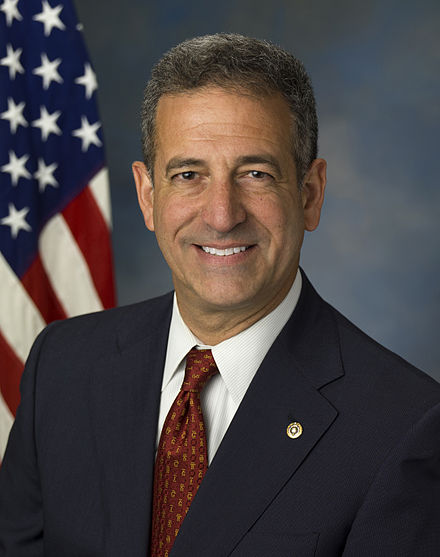
In this week’s show Ken and John don their black suits, roll-up their tinted windows, and get down to business. Their agenda? Corporations. The stakes? Democracy. Joining them is former US Senator and author of While America Sleeps: A Wake-up Call for the Post-9/11 Era, Russell Feingold. Together they seek to find out just what implications the modern corporation has for democracy.
So what are corporations? Ken and John assert that they are bodies predicated on something called “limited liability”—a system that allows its members to bear fewer responsibilities for their actions on behalf of the corporation, enabling them to take greater risks. This would be a satisfactory system, they argue, if it were not for the fact that under US law corporations are considered to be persons. For it means that, if corporations are ‘people,’ they are very irresponsible people, as limited liability mandates that they have significantly fewer legal and social obligations.
For former Senator Russell Feingold, this is just the tip of the iceberg. Alluding to the Citizens United decision of 2010, in which the McCain-Feingold Campaign Finance Reform Bill was controversially struck down, he warns us of the dangers corporations pose to our democracy. People, he says, should be the only ones who can affect the political process. Corporations skew politics and give an inordinate amount of power to an entity that neither feels for people nor is capable of doing so. Whilst not advocating a complete removal of the corporate form, Feingold stresses the need to reexamine it in detail in order to preserve our democracy.
Is he right? Will corporations destroy our democracy? Have they already? Find out this and more, including two original songs by our own Sixty-Second Philosopher, in this week’s exciting show.
- Roving Philosophical Report: Caitlin explores the dirty world of global oil and the murky and morally dubious past of Royal Dutch Petroleum in Nigeria. If corporations are persons, she asks, should they not share the same level of civic responsibility as the rest of us? She is joined by Peter Weiss, a prominent human rights lawyer, who believes that they should.
- Sixty Second Philosopher: Putting his mouth where his money is, our intrepid philosopher-on-the-go takes on the Cato institute, English Liberalism, and the dreaded “Kochtopus.” Will he survive?
Russ Feingold
Corporations saw the face of democracy in 2008, and they were terrified.
John Perry
Coming up on Philosophy Talk: Corporations and the Future of Democracy
Ken Taylor
Our guest is three-term U.S. senator Russ Feingold.
Russ Feingold
The First Amendment is incredibly important—but it’s not the only thing that’s important. What precedes the First Amendment is the creation of our democracy. Somebody created this Constitution—and it was not a corporation. If corporations become part of that group that’s deciding what the rules should be, there will be no rules.
John Perry
Recorded live at Cubberley Auditorium on the Stanford campus.
Russ Feingold
For the first time in any of our lifetimes, if you buy toothpaste or detergent, that money can now be used immediately for a political candidate that you would never support. That is what is allowed by Citizens United, and so basically they get the benefit of limited liability but they don’t get the responsibility and the limitations that other people have to live by.
Ken Taylor
Corporations and the Future of Democracy—coming up on Philosophy Talk.
Ken Taylor
This is Philosophy Talk, the program that questions everything…
John Perry
…except your intelligence. I’m John Perry.
Ken Taylor
And I’m Ken Taylor. We’re coming to you from Cubberley auditorium at the School of Education on the Stanford campus.
John Perry
Our thinking originates not very far from here at philosophers corner where Ken and I teach philosophy.
Ken Taylor
Welcome, everyone to Philosophy Talk.
Our topic today: corporations and the future of democracy.
John Perry
Well Ken, that title suggests that corporations are perhaps a potential threat to democracy. So maybe we should get clear at the outset about exactly what a corporation is?
Ken Taylor
Well, John, you know, there are lots of ways that corporations might and I think do threaten democracy. But all of these threats are rooted in one basic concept, the concept that’s actually key to the nature of a corporation, that’s the idea of limited liability.
John Perry
Limited liability is the idea that the individuals behind the corporations, the ones that started, the ones that put up their money for its activities, can shield themselves from full financial responsibility for the risks that the corporation takes. The thinking is that people can protect themselves from full liability, they’ll be willing to take greater risks and try new things. Limited Liability encourages the kind of creativity and innovation that our country and Silicon Valley are built upon.
Ken Taylor
And limited liability in that sense is a great thing. But you know, it’s a double edged sword, there are no unmixed blessings in life. Because limited liability also enables corporations to do things like well pollute and destroy the natural environment without having to take full responsibility. For example, suppose the corporation has a million doubt causes a million dollars worth of environmental damage atrophy, that’s kind of peanuts, but it’s a really small corporation that only has $1,000 in assets. Basically, the corporation can go bankrupt, walk away from the damage at cost, and leave the rest of us stuck with the bill.
John Perry
Even if it doesn’t do that the mere threat of going bankrupt can be used in negotiation and in litigation. If a lawsuit against a corporation is too successful, ironically, the corporation can just declare bankruptcy. And the plaintiffs won’t get near as much as it sounds.
Ken Taylor
We’ve talked about a small corporation, but even a huge corporation with major assets can leverage the threat of bankruptcy to avoid liability for damages that occur. Remember, the BP oil spill in the Gulf. I mean, the mere possibility of BP going bankrupt meant that they were able to get away with causing all that damage, massive damage, without being held fully responsible for the damage.
John Perry
Today, however, we’re interested in the advantages and disadvantages that are peculiar to corporations, what they offer to democracies, so maybe we ought to now say a little bit by what we mean by a democracy.
Ken Taylor
Well that’s kind of easy, you know, every eligible voter has one vote. And all matters of public policy, ultimately are decided by majority rule. I mean, many democracies, set aside certain things that are beyond majority rule. That’s the point of the Bill of Rights. But basically one man, one vote, not one corporation, one vote, one person, one vote.
John Perry
And many democracies have very undemocratic institutions, right in the heart of things right in the middle of things like the United States Senate, which gives the vote of a person from Delaware or Alaska, or even Wisconsin, about 100 times more weight than the vote from someone like you or I in California, Ken.
Ken Taylor
John, you always go on about this every time we talk about democracy, but look, as imperfect as the US may be in terms of being its democratic institutions. It’s got the basic thing about democracy, right? People who seek power at any level of government, they have to get votes, lots of votes, votes from the people. So we the people have a lot to say about how we’re governed. And that’s the basic idea of democracy. We the people govern, not we the corporations.
John Perry
And you don’t have to have corporations, though, to have a threat of undermining this basic idea. Someone can use their money to buy or otherwise unduly influence the votes of the electorate. So instead of getting the wisdom of the majority, we’re just getting the reflection of money. And in a representative democracy, things can even be done more efficiently. You can go directly to the elected officials and bribe them instead of buying votes. That’s true.
Ken Taylor
That’s true. But you know, corporations raise the ante tremendously because you know, however rich an individual may be. Corporations are bound to be even richer. I mean, think of the huge multinational corporations of today. There’s really no limit to the resources that they can bring to bear on the political process. For example, if we allow them to do that.
John Perry
Ken, isn’t this really just the problem that the Supreme Court Citizens United decision, if it didn’t create, at least it exacerbated terribly, they held that corporations are persons which they seem to have taken very literally. So there are persons that have the right of free speech, and and that speech can take the form of money. So corporations can now spend all the money they want on political campaigns.
Ken Taylor
You know, John, this raises lots of questions. What does it even mean to say that money is speech? Or that a corporation I mean, think of what is a corporation is an entity with no thoughts, feelings, emotions, or intention? What does it mean to say that a person in short, a non grieving creation of the law, that’s what a corporation is a creation of the law have most of the rights but few of the responsibilities of a living, breathing human citizen.
John Perry
We sent our roving philosophical reporter, Caitlin Esch, to learn more about a case where the question of corporate personhood and corporate responsibility was central and crucial. She files this report.
Caitlin Esch
Our story begins in the early 1990s. In Nigeria’s Delta region, home to the native Ogoni people. Around the Delta multinational companies had been extracting crude oil for decades. Back in the 90s, Royal Dutch petroleum had a contract with the brutal military dictatorship.
Peter Weiss
Like most huge companies that go into places like Nigeria to do extracting work. They set about basically wrecking the environment and the culture of the local people.
Caitlin Esch
Peter Weiss is a retired lawyer and vice president of the Center for Constitutional Rights in New York City. He’s an expert on the case against Royal Dutch petroleum that’s making its way through the Supreme Court. To understand the case, it’s important to know what happened to a man named Ken Saro-Wiwa. Here’s a clip from his last interview in 1995.
Ken Saro-Wiwa
To take away the resources of people and refuse to give them anything in return is to subject them to slavery.
Caitlin Esch
In the 19th, Saro Wiwa was a leading Nigerian intellectual. He was a poet and environmental activist, a TV producer, the son of an ogone chieftain. So we went and others started organizing people in the region against the oil companies.
Ken Saro-Wiwa
I accuse the oil companies of encouraging genocide against the ugly people. I accused shell and Chevron, of practicing racism against the only people because they do what they do not do in other parts of the world where they prospect for oil.
Caitlin Esch
Then one day four local leaders were killed. Sarah we were another activists were framed for the murders. They were quickly convicted by a special military tribunal and they were hanged. Attorney Peter Weiss believes Royal Dutch petroleum helps the government get false convictions by promising people jobs at Shell. Here’s a clip from a BBC interview with activist Ben Amunwa.
Ben Amunwa
Shell refuse to listen to peaceful nonviolent organizers like Ken Sarah we were and conspired to silence him and others and in a range of brutal crackdowns against the Ogoni.
Caitlin Esch
Today the company is accused of helping the Nigerian government torture and execute ogone activists. The case before the US Supreme Court is called Kyoko versus Royal Dutch petroleum. It’s being brought on behalf of the relatives of victims like Esther keelboat, whose husband was hanged alongside Ken Saro Wiwa. But why is it part Dutch apart British company on trial in an American courtroom for atrocities committed more than 15 years ago in Nigeria, because of something called the Alien Tort Statute. Again, attorney Peter Weiss.
Peter Weiss
That’s a law I like to think of as the Sleeping Beauty law because it sat there for two centuries without being used. And it says that an alien can sue in federal court for a tort and violation of what was then called the law of nations, which we now call international law.
Caitlin Esch
The law has been used largely unsuccessfully to bring suits against corporations like a Canadian oil company, Coca Cola, and even Yahoo. Then about a year and a half ago in the case of Kyobo, versus Royal Dutch petroleum accord of Appeals ruled the Alien Tort Statute could not be used against corporations. So the plaintiffs appealed to the Supreme Court.
Peter Weiss
So it’s the first case which is raising the question of whether when the Alien Tort Statute says an alien shall have a right of action. That’s what alien includes not only individuals, but also corporations.
Caitlin Esch
In other words, along with the perks, should corporations have the same responsibilities as a person decision is expected in the case in the summer of 2013. For Philosophy Talk, I’m Caitlin Esch.
John Perry
Thanks, Caitlin for bringing us up to date about Royal Dutch Shell and things that Nigeria there’s a connection between that case and events this evening, Kent, Sarah, we will was eventually executed. And that was in spite of the determined efforts of our guest, Russ Feingold. I’m John Perry with me is my fellow Stanford philosopher Ken Taylor. And we’re coming to you from cubberly Auditorium on the Stanford campus.
Ken Taylor
And we’re joined now by Senator Russ Feingold. He’s a former three term US senator from the great state of Wisconsin, here at Stanford. He’s the Mimi and Peter Haas distinguished visitor at our Haas Center for Public Service. He’s author of “While America Sleeps: A Wake-up Call for the Post-9/11 Era.” Senator Feingold, welcome to Philosophy Talk.
Russ Feingold
Great to be here. Thank you.
John Perry
Senator Feingold, it’s a terrific book. It’s a reads almost like a novel except a lot of us lived through it. So we know unfortunately, sadly true. It mainly concerns the political machinations after 911 and their bad effects. More recently, you’ve been focusing on Citizens United. How come?
Russ Feingold
Well, I’ve really focused on the two issues as a when I left the Senate, I thought what do I really want to think about one is the mistakes we made after 911 and started to call the country to think more seriously about being aware of the rest of the world. But an issue that I’ve worked on for throughout my political career was the issue of campaign finance reform. And in 2010, the Supreme Court made a decision that was absolutely incredible, which was the Citizens United decision for the first time in any of our lifetimes. If you buy toothpaste or detergent, that money and a gallon of gas, I might add, that money can now be used immediately for a political candidate that you would never support. It’s the first time that’s ever happened. That’s what that Supreme Court decision did.
John Perry
Well, we all know about McCain Feingold. Matter of fact, in here, you say a lot of your constituents in Wisconsin came to think your first name was McCain.
Russ Feingold
Yeah, that was one of McCain’s many favorite jokes.
John Perry
Now, the basis of Citizens United was the idea that corporations are persons in some limited, strange sense. But whatever that sense was, they had the right of free speech, even though they’re really legal fictions. And then you combine that with the idea that speech is money and you get this mess, we’re in it. I mean, what did the Supreme Court have in mind?
Russ Feingold
Well, it was really a word game to overturn the progress that we’re making in this country on campaign finance reform. The McCain Feingold Bill prevented corporations and unions from doing this, basically running it through the political parties. And we just we banned the soft money on that. But Citizens United also undid the enthusiasm that people have for the internet, people turn to the internet, small contributions. And so what Citizens United said was, well, let’s say corporations or persons, you know, their persons is reverse of suing or being sued. But they made up a fiction that the founders of this country intended, that basically corporations are part of we the people, and that is not the case.
Ken Taylor
But you say they made up a fiction, there’s no theory behind it. There’s no deep thought behind it, you would like to think that the Supreme Court is one of the greatest thinking bodies in the world. And there’s a thought beyond, there’s no thought.
Russ Feingold
Oh, there’s there’s a motive behind it. And the thought is, we got to do something to stop the kind of activism that occurred during the 2008 election. We need corporations to be able to open their treasuries in a way they’ve never been able to do. And the truth is, they could do this prior to 1907. And we that was the Gilded Age. And the country said, Wait a minute, we can’t have the robber barons running the country. So a law was passed in 1907 to prohibit it. And this was the first time since then, that this kind of money.
Ken Taylor
I want—I’m gonna challenge you on this because, you know, I’d like to believe I’m a philosopher, and I like to believe in our democracy, there are deep underlying philosophical principles at work. You could probably convince me that I’m wrong about that. But let’s see after a break, this is Philosophy Talk, coming to you from Stanford University. We’re talking about corporations and the future of democracy with former US Senator Russ Feingold.
John Perry
Corporations are not natural beings. They’re things created by the legal system. What sorts of rights and obligations should our laws give to corporations? If corporations are persons can’t we make them responsible persons instead of psychopaths?
Ken Taylor
Corporations as persons—what kind of persons? Along with questions from our live and lively audience, when Philosophy Talk continues.
The Plāto’nes
Money’s only money if it’s moving around.
John Perry
Thanks to our musical guests, Merle Kessler and Joshua rule Brody, the Plāto’nes. This is Philosophy Talk. I’m John Perry.
Ken Taylor
And I’m Ken Taylor. We’re talking about corporations and the future of democracy with former US Senator Russell Feingold.
John Perry
What do you think we should do with corporations eliminate them because they’re a scourge on mankind humankind, I mean, allow them unbridled freedom, as the crucibles of all that is good about the modern world, or something in between, join the discussion by stepping up to one of the microphones at either side of the stage.
Ken Taylor
So I want to think of where corporations came from and how we got to where we are. I mean, when the kings of England began chartering corporations, they were for some very limited, strictly regulated, regulated purposes. Now we got hold court to people saying, let corporations be let them do, how did we get from there to here?
Russ Feingold
Well, that’s right. And if you actually read the majority opinion, Citizens United, they trace a little bit of this history. And in fact, even at the founding of the country, as I understand it, corporations are only basically by charter, there wasn’t a general law saying you can form a corporation as long as you do XY and Z, your corporation under the law that came later as the country came into formation. So there’s nothing inherent in the Constitution or anything that even allows corporations to exist. They could be a band without any violation of the United States Constitution. So it’s something I think is necessary. I think it’s good for the economy to have the corporate form. But the idea that somehow it has a constitutional status is simply untrue.
John Perry
So let’s make sure we understand exactly what the Citizens United thing did. Now, I’ve done a lot of research by watching the Stephen Colbert show. That’s the best, but but I find I’m still a little bit confused. So with individuals even under under McCain Feingold, you could contribute to candidates unlimited all the money you wanted.
Russ Feingold
Well, prior to the Watergate era, when the first major of campaign finance law was passed, there was kind of an OK Corral environment, I guess. $100 briefcases were brought into the Senate cloakroom. But after that, people said, Wait a minute, this is corrupting. And so they actually limited contributions by individuals. But way back in 1907, the judgment was made the corporations and then in 1947, that union should not use their treasuries for this purpose. So there is a distinction in the law, a long distinction until just recently between individuals, corporations and unions.
John Perry
Now under McCain Feingold and before the Citizens United still, as an individual, if I happen to be a multimillionaire, which I’m not the amount I could give to my favorite politicians campaign was limited, but I could go out and try and buy commercials on my own,
Russ Feingold
which people generally didn’t do. But but one of the things that people were upset about the famous Buckley v Valeo cases, they said, you can limit how much you can give to somebody else. But a person could spend all they wanted on their own campaign, or if they just wanted to run independent ads. But interestingly, people have not wanted to do that. And right now, what you’re seeing is not individual spending their money directly, but hiding behind a corporate show.
Ken Taylor
So in order to do that, let’s slow down a bit though, okay, so I, as an individual can advocate all I want, I could stand on the street corner, as long as I wasn’t violating disturbing the peace and say, bla bla, bla, bla, bla, you know, stop this, do this, do that. Okay, if I had some money, I could buy some TV commercials saying, Do this, don’t do that, do this, I could do that all I want John and I could bond together, we can form a partnership and say, Do this, do that don’t do this, and the government wouldn’t dare stop us the Constitution would prevent them from stopping us. Okay, we form a corporation. It’s still us forming a corporation, what’s the difference between us forming a partnership and saying whatever we want with whatever money we have, and forming a corporation and saying whatever we want with whatever
Russ Feingold
what you said in the introduction, limited liability. partnerships do not have that corporations are protected. People invest in them because of the protection they get. So this is the key basically, what what’s happening here is people know, when they buy products, and it goes into a corporate treasury, they’re not intending to contribute to a political campaign. But that is what is allowed by Citizens United. And so basically, they get the benefit of limited liability, but they don’t get the responsibility in the limitations that other people have to live by.
Ken Taylor
So sort of philosophically the difference between us forming a partnership in which the partnership inherits all the rights of us as individuals and US forming a corporation. The difference is that cooperate. If you call a corporation, a person, and you say it has some of the rights, but it doesn’t have any of the responsibility. It’s kind of a one sided thing. It doesn’t at least have full responsibility. It’s a one sided thing. So it’s a corporation’s if they’re persons there. really odd kind of person? Yeah, rights but no responsibility or fewer responsibilities. And
Russ Feingold
no, they are not corporations did not form this country. They are not the sovereign, the king was a sovereign. And the fiction was created in England because they didn’t have a written constitution of the Queen and parliament, but the United States, somebody created this constitution. And it was not a corporation. It was people at the Constitutional Convention, and then it was ratified by people who had been elected by living human beings, the corporations have no status in that regard.
John Perry
So now you’re an attorney, you’ve been in the Senate. So let me ask you sort of a factual, non philosophical question. Did the Supreme Court realize that saying what seems like kind of a technical thing that on this particular thing, the ability to give not to the campaign, but to this independent thing? Corporations can now do what people could always do and can still do? Did they have any idea who would make the huge difference that it’s making in this campaign now?
Russ Feingold
I think they had to have known that it had was going to have a significant impact. Its might even be greater than they realized. But but the fact is, what had happened was the McCain Feingold Bill Unlimited, the unlimited contributions being put through the parties, they could no longer do that. We stopped that loophole. And the people were turning to the internet. And we had $10 $25 contributions college students for giving money. What I like to say is and believe, is corporations saw the face of democracy in 2008. And they were terrified. And so this decision was engineered to put the genie back in the bottle and let corporations dominate our democracy. And to me, it’s a it’s really a crime against that our democracy that’s been perpetrated. Here,
Ken Taylor
you’re listening to Philosophy Talk, we’re talking about corporations, and the future of democracy in front of a live and lively audience at Stanford University. We’ve got some questions from that live audience over here on this side of the auditorium, welcome to philosophy talks, or tell us your name and where you’re from? And then your question or comment.
Speaker 1
Sure. I’m Kabir. I’m an undergraduate here at Stanford. And my question is, if corporations are taxed and regulated and interact with the government, in many ways, why should they also not be given the right to advocate for their interest using money?
Russ Feingold
Well, obviously everybody who is part of a corporation can advocate just like anyone else. I mean, when I was on Stephen Colbert, and that’s a tough gig, believe me. He said to me, what do you have against corporations? Russ, if you see a corporation when you’re walking down the street do cross the street? He he asked me if I’d let my daughter Data Corporation. I’ve got nothing against corporations. Yes, they should have. But look, the First Amendment is incredibly important. But it’s not the only thing that’s important. What precedes the First Amendment is the creation of our democracy, the fact that we as human beings elect our elected representatives, if their ability to dominate the electoral process destroys the idea of one person, one vote, that is just as important as the issue of free speech. So these things have to be balanced.
Ken Taylor
More questions from our live audience, welcome to philosophy talks. I’ll go back and forth between that.
Speaker 2
Thank you. My name is Bill softkey. I live in the neighborhood. Here’s a different philosophical angle. I haven’t heard you bring up our legal system, every part of it from evidence to presumption to how minds work from Hammurabi, on through common law and now was built for persons human beings with feelings, loyalty, compassion, guilt, repentance, that kinds of thing. But profit making corporations are structured to be not only incapable of but statutorily prohibited from compassion, in what legal or logical universe? Is corporate personhood supposed to work?
Ken Taylor
That’s a really I think that’s an excellent question. A per question, because look, one of the things about one back to the first question, in one hand, you might think, well, corporations are formed by people doing things together, and the rights of the individuals acting should aggregate up you might think, to the, to the entity they create, but here’s the difference. And you really put your finger on it, corporations have a responsibility to one thing and one thing only the bottom line of their shareholders. So if they’re persons they’re persons with who are legally required to have one and only one interest with you, I can appeal to you in all kinds of ways I can can appeal to your compassion, your morality, your shared sense of purpose, your whatever, the corporation, they can’t legally be moved by anything except their own bottom line that makes them if they’re persons really pathological persons.
Russ Feingold
Without a doubt, and and the notion that you can kind of transfer your your personhood into this other entity is sort of odd. I mean, people have a lot of different roles, their presidents of the Rotary Club, they’re a deacon in a church or whatever, but, but when you come back to exercise your rights as a citizen, that is a fundamental right that everybody has and you don’t sort of transferred into another entity. So you get to kick at the cat, you know, I have a limited liability corporation, Russ Feingold. Right? Well, that’s just so I can put checks in and you know, if I make any money on this book, right, I don’t think the LLC should get to vote to in addition to me, corporations can’t vote, and they can’t run for office. So How are they persons in the political sense if they can’t do those things? There’s no logic to the Supreme Court’s argument on that.
John Perry
No, no, I was just going to point out you are a corporation, but you only have one vote. And you’re happy with that. Even even when you’re running for office, yourself,
Russ Feingold
a person can be a corporation create a corporation that they have an involvement in. But there’s only one capacity in which I can exercise the right of being directly involved in giving money and being involved in political process. And that is as an individual, not through the limited liability corporate and
John Perry
when you when you give money. If you were to buy an ad, say for Obama, just to pick out a wild thing, not give to his campaign, but but spend the billions you get from this book.
Russ Feingold
It’s only a 1 billion, 1 billion is over.
John Perry
You’re gonna spend a significant amount of that for Obama. If you did it as a person, that would all be money you’d already paid tat Exactly. If you did as a Taurus. Is he dead? Is a corporation’s right. It could be money that was shielded from that’s
Russ Feingold
what you’re seeing right now. Yeah, with people, you know, what you might think is how come public corporations aren’t doing this so much. It’s a lot of private corporations, privately held corporations, very wealthy people like the Koch brothers who control their corporation, they are the ones who are probably more likely doing this than the public corporations who are a little nervous about
John Perry
it. So when you watch TV, it sounds like there’s this guy in Las Vegas, it’s supporting Gingrich, but it’s really not him. It’s a corporation. Well,
Russ Feingold
of course, the money he directs it, but it is done through a corporate form. He doesn’t run the ads directly. Hi, I’m Mr. ittelson. And I want you to vote for Newt Gingrich. That isn’t how it’s done. It’s done indirectly. And that’s what Citizens United allow.
Ken Taylor
Let’s take more questions for my love and lively audience. Welcome to Philosophy Talk, sir. Thank you. My
Speaker 3
name is Hamid. I work at Stanford. And I was curious, was there any of you’ve heard of benefit corporations, which, unlike normal corporations, in which a CEO may be sued for not making profit, its primary motive? They take social environmental concerns as their prime concern, would that be a future change?
Russ Feingold
Well, you know, I’m concerned here about corporations not invading and destroying the political process. A whole separate topic is whether there should be further restrictions or opportunities created for corporations through changes in the law. Corporations do have certain responsibilities, fiduciary responsibilities, they responsibility their stockholders. But as a matter of public policy, the country can say, look, apart from that you have to do certain things with regard to the environment, that’s up to the people living live people with blood pressure to make that decision. And we can decide that for corporate
Ken Taylor
I mean, the important point about that is is that you think of persons, human persons, as endowed with certain inalienable rights, natural rights, many of us believe that some people don’t but many believe that, but a corporation as an artificial creation of a state that is of a collectivity, it’s up to us to decide how we think should be organized. I mean, the question is not just given. I mean, there are people who think, who are deep believers in free enterprise, and I’m a believer in free enterprise, Madison, one of our great founding fathers. You know, one of the points of the Constitution, he said, was to protect property rights, to protect the rights of the property that from the rebel who would if a rouse sees their property and the Constitution supposed to make that not make that happen? So people think that, well, if you want to protect property rights, it just follows automatically, that corporations should be unregulated free, but I think that’s a non sequitur. It doesn’t
Russ Feingold
make sense. I mean, how is it possible that the founders of the country lived at a time when the only way you could get a corporate charter was directly from the crown? How does this become something that actually has a right to free speech, to the point where it can undercut the very democracy that the people created? It is so illogical and ahistorical that it’s almost mind but well,
John Perry
so maybe the more radical question is, do we really need corporations at all, I mean, you could shield people from certain kinds of liability by direct laws in Nebraska, where I come from, which is thought of as a pretty conservative state these days, but they’ve had some pretty liberal laws, and they did away with corporations as far as owning farmland some time ago. And as far as I can see, it hasn’t heard much of anything that farms aren’t less productive. The cows haven’t gone to being like unhappy Wisconsin cows. They’re still like, happy California cows
Russ Feingold
that always align. And by the way, that state you just described his two senators and they deserve them.
Ken Taylor
But John, but John, I mean, limited liability is a great human invention. It is an engine of amazing wealth creation. So I don’t I wouldn’t want throw the water baby out with the bathwater, but it’s a really delicate balancing act. And I wonder how do we balance the upside of limited liability with a downside if
Russ Feingold
we had it balanced before Citizens United, you know, the people of this country went through the robber baron era. And they said, Wait a minute, just a few people control all the oil, just a few people control all the beef, we’re gonna pass some laws. So they pass some laws that said, actually, there’s a limit to what corporations can do. But we kept the corporate form and I support the corporate form. Why? Why is it an answer just because we need to go back to what worked for 100 years to say, let’s get rid of corporations completely. I do think corporations are a very useful and important way in which people take risk
John Perry
as a turn robber baron is a little sensitive here in that era, I
Russ Feingold
noticed that i didn’t i My apologies to Mr. Stanford.
John Perry
But we used to be the Sanford Indians and one one of our I know one of our presidents did away with that, bless his heart long before it became too big a thing. There was a vote of the students want to call us and the winner was robber barons. But we asked the athletic department wouldn’t go for that do
Ken Taylor
and they were overridden probably by the Board of Trustees, but you’re listening to philosophy dog. We’re talking about corporations and the future of democracy with former US Senator Russell, fine, go,
John Perry
what should we do, ideally about corporations? What can we do practically about them?
Ken Taylor
We’re coming to you from cubberly Auditorium on the Stanford campus. We’ll take more questions from our live in lovely audience when Philosophy Talk continues. I’m the 1% You’re just a sad sack. What have you got? I got a super pac man.
The Plāto’nes
America in America because I got a jack
John Perry
play tones Merle Kessler and Joshua roll. Brody. I’m John Perry. This is Philosophy Talk, the program that questions everything
Ken Taylor
except your intelligence. I’m Ken Taylor. We’re talking about corporations and the future of democracy with Senator Russell Finegold author of While America sleeps, a wake up call for the post 911 era, Senator. So there was a there was an article a while ago, if a few weeks or month or a month or so ago in the New York Times about a beloved Corporation in these parts of the woods, the Apple Corporation, it was about their sort of global network of suppliers in the labor practices that they I know, I don’t want to hammer on their labor practices or anything like that. But it was a quote from an exact Apple executive, which like deeply disturbed me. He said, talking about America’s problems, the the exec said, we don’t have any responsibility to solve America’s problems. Our sole responsibility is to produce the best iPhones and iPads and computers that we can we sell them in over 100 countries, we have no special responsibility to the US. Okay. But look, Supreme Court says you’re a person. You’re a person among us. You’re one person, among others. But you have no particular ties to this polity, that we are this collectivity that we are. That is I find that a deeply disturbing idea, am I
Russ Feingold
right? That’s a perfect illustration. What’s wrong with this decision? You know, that corporation, Apple has a right to defend itself against these charges to run as many advertisements as they want, you know, as BP is doing, for example, to defend what they did you know, we’re cleaning up the Gulf, that is perfectly fine. The difference is, when they take the money you spend on buying an Apple device, out of their corporate treasury and use it in an unlimited way to affect the electoral process. That’s a whole different thing. Because we may need to pass laws to do something about these practices. But we want to pass the Foreign Corrupt Practices Act. So American corporations overseas, can’t bribe. If corporations become part of that group that’s deciding what the rule should be. There will be no rules,
Ken Taylor
especially if it’s really an unsustainable thing to say, well, they’re persons among us, but they have no kind of responsibility to us. I find that an unreasonable thing. But let’s see what
John Perry
that was. But suppose supposedly made you king for a day more powerful than the President more powerful than Mitch McConnell. You actually could just write the legislation and it would be it yet one day, what would you do?
Russ Feingold
Well, I would overturn the decision. And I would create public financing of all American political campaigns, voluntary public finance.
John Perry
good day’s work.
Ken Taylor
Would you repeal limited liability? No.
Russ Feingold
Right? You look, as long as you have a an electoral process where the average person’s vote counts. They can decide what they want to do with limited liability or not, or great social responsibility for corporations. But when you destroy the very integrity of the process that makes that decision. You’ve got nothing. I
Ken Taylor
got two more questions for my live audience on this side of the auditorium. Welcome to Philosophy Talk, sir.
Speaker 4
Tom linebarger with Occupy Redwood City, and you already asked my question, I was gonna ask you how do we take the money out of politics. Obviously, with corporations taking such a big amount of money. My understanding is that Wall Street took 40% of all profits made in the US last year, with them taking that much money. It impoverishes all the rest. So like, the banks that are foreclosing on in Redwood City, 166 homes last month, in Redwood City that is taking away 20 or 30,000, from the city’s Treasury per house, and it’s destroying our system. So we do have to have public financing. And we do have to have a way of taking money out of politics.
Russ Feingold
That’s right. And let me say this, it isn’t just about the election, it isn’t just about the you know, after you figure out maybe your guy won, or your gal won the election doesn’t stop there. What do they do when they get there? Our problem, the 90s that McCain and I tried to deal with was corporate Democrats as well as corporate Republicans, you know, these votes were 90 to 10 for these trade agreements, 90 to 10, to let the media become concentrated and cut out freedom and, and diversity in radio, 90 to 10, to allow Wall Street to go wild and repealed Glass Steagall. So this is why I think the Occupy Movement has been so valuable and effective, because it has raised the issue of the unfairness of the way people have great wealth and interests of great wealth of acted Not that there’s anything wrong inherently with having wealth, you know,
Ken Taylor
corporate largest corporations these days are huge multinational operations. Right. So another thing that’s odd, is that okay, as multinational operate, we call them American corporations, but they’re global entities. Here’s the thing, I think, even if they’re not prisons, here’s the thing, I think is deeply challenging for the 21st century. How can we here locally, right, and our local democratic polity? How can we regulate and moderate these huge entities that span the globe? I mean, some people say 21st century is going to be the century of China, I think it’s going to be the century of the Global International Corporation. What do you think about that?
Russ Feingold
Well, you know, the first step was to make sure that that foreign money doesn’t come through the corporate form and control our democracy, that to me, that’s not just foreign money, but huge corporate money for multinationals is what led to a lot of those votes that he just talked about. It is possible, though, to pass legislation, as the Foreign Corrupt Practices Act, illustrate American corporations have not been able to go overseas and bribe as other countries can have for 2030 years. And some people say, well, that puts our corporations at a disadvantage with some corporate people tell me is it’s a good thing, because they can’t shake it out in these countries, because you say, look, it’s against American law. So we can, through our laws, and of course, their international agreements for corporate responsibility. We can have some control over this, but it’s very, very difficult compared to the parent
Ken Taylor
on this side of the room. Welcome to philosophy talks.
Speaker 5
Thank you. I’m Hysan Nazar. from Menlo Park. Should we ever consider corporations as people? Because people die, corporations don’t?
Ken Taylor
Well, corporations dissolve, they go bankrupt. That’s the kind of death I guess, you know,
John Perry
come on, I mean, person is a is a is a really old natural concept that humans have used and philosophers have developed for centuries. And politicians, whether they’re Supreme Court justices or legislators in these states shouldn’t take me on talking as a philosopher. concepts are what what makes thought and intellect and rules and democracy possible. And you can’t just abuse them by saying all of a sudden something is a person when it’s not. Yeah, I think
Ken Taylor
so. John, objects of corporations, not because of the violence they do to the environment and all that, but to the violence, they do the concepts.
Russ Feingold
Absolutely. I agree.
Ken Taylor
Welcome to philosophy. There.
Speaker 6
My name is Louise Chambal heart of Mountain View, California. So you’ve discussed some of the DIS analogies between corporations and ordinary persons, and particularly with respect to the ideas of for responsibility and limited liability. But of course, we don’t force persons who declare bankruptcy into slavery or indentured servitude. So it seems like persons have limited liability as well. So my question is, what would it even be for a corporation to be fully responsible? Well,
Ken Taylor
liable? But it’s a good question. But think about this. A corporation goes bankrupt. The CEO has in personal assets, a billion dollars, right? The corporate you can’t get the personal assets of the CEO. So it’s not like if I had no more resources and you tried to get more, you’d be squeezing water from a stone. But if you got a billionaire CEO, it was as his personal assets separated from Corporation I don’t think that would be squeezing water from the stone to ask him to bear. Look, if the CEO makes the decisions as an agent in the world and the corporation is the one the thing that bears responsibility For those decisions that that shields cel from the ordinary human responsibility,
Russ Feingold
and I don’t support the full responsibility idea, I think we need corporations, I think we need the corporate form, I think we can do more to ask for responsibility. But if we turn into something that’s of no use, that doesn’t allow and cause people to invest money, that would be a mistake. But we’re frankly, nowhere near that. operations could be asked to do more.
John Perry
I just want to add a little footnote when Mark Twain invested in a typesetting machine that wasn’t the line and type and turned out not to win, invested a lot of money, and his company went bankrupt. And he felt so responsible that he spent 10 years of his life when he was getting old, should have retired, was very famous, giving lectures working night and day to pay off all the debts that he was legally required to bake as he went bankrupt. Now compare that to Donald Trump who’s gone bankrupt maybe 3040 times that is he starts a hotel doesn’t work out, he goes bankrupt, and the people that bought the leases of the condos are screwed. So there’s changing conceptions, whether we’re talking about corporations or about individuals about exactly how much personal responsibility there is. And so the idea of having this special form of business that encourages, it seems to me a little bit dubious.
Ken Taylor
Well, let’s take one last question for this gentleman.
Speaker 7
Hi, I’m Steven Prusa. Car I’m a junior at Westwood High School in Austin, Texas. So as corporations rise with politicians only need to win the support of corporations and not individuals? And if so, would that change our democracy into a plutocracy?
Russ Feingold
That’s the word. That is exactly where we’re heading. I still believe that people will rise up as they did during the Gilded Age. And they’ll say, wait a minute enough of this, that people will realize that they do have the right to vote. And that even though there’s all this money being spent and their voices are getting drowned up, particularly with the internet, I still think there’s a way that in races where too much money’s being spent on one side that possibly they can begin to overturn it. But it requires a powerful populist movement to say we will not have our democracy become a plutocracy.
Ken Taylor
It’s corporations can’t vote and I don’t think we’re ever going to but the money is what is used to mobilize people to inform them or misinformed them. And so if all the money is coming from them, the only voice you hear in deciding who to vote for is the corporate voice and the voice of the individual is drowned out. And that
Russ Feingold
well in drowns out the candidates. And I know that sometimes we get a little skeptical about candidates and their sincerity, but how do you even hear the positions of the actual candidates? If they’re following the law? You know, these super PACs can’t coordinate with the candidate. So if you believe that I get a bridge for you, but but the point is, is that how do you get to decide between candidates, when they what they put into the racist is paltry compared to what is going to dominate television, it really denies people the right to even know the direct words and voices of the candidates who are asking for their vote.
Ken Taylor
Well, Senator, there’s a lot more we could talk about. This is a deep and fascinating conversation on a hard issue. But I thank you for making a contribution to our our discourse. Thank you.
Our guest has been Senator Russell, fine goes a former three term US senator from the state of Wisconsin. He’s the Mimi and Peter Haas distinguished visitor at the Haas Center here for public service He’s author of While America sleeps a wake up call for the post 911 era, John. So John, well, I gotta tell you, I’ve always thought of Senator Feingold as one of the two speakers in public office. And I always thought I want that man to be president. But you know, almost other people. I want to be president and ever become president. So
John Perry
yeah, what do you think it either was, might be the curse of advocacy for? Well, you know, when we plan his program, we had the problem of, well, who’s going to take the corporation side, none of the three of us probably are naturally inclined to do that. I’m not sure we solve that problem. I mean, you gave it a shot, but But anyway, well, I
Ken Taylor
mean, I think it’s obvious. We want something like limited liability. We want these great engines of wealth creation. That’s amazing. That’s amazing. But we’ve got to manage the downside, much, much better than we have. And what we need in office are some wise and thoughtful, philosophically minded politics.
John Perry
When I was growing up in Nebraska, we used to take vacations in Wisconsin, where I had a an uncle Once removed, who had a dairy farm. And from the point of view in Nebraska, Wisconsin was a vacation Wonderland. I mean, it was just part of the mysterious seats. You know, Des Moines, Chicago, Milwaukee, New York, Paris, Budapest, and so I really wanted to move to Wisconsin in spite of all the unhappy cows they have. Now, I want to move to Wisconsin so I can vote for Russ Feingold. Next time he runs for whatever he’s going to run for next.
Ken Taylor
This conversation continues on our blog, the blog dot Philosophy Talk, RG where our motto is CO Giotto Ergo Blago. I think therefore I blog. You can also find out more by visiting our very active Facebook page and following our tweets on Twitter, and now,
John Perry
we form a limited liability corporation for speed. With the fast talking in shows the 62nd philosopher
Ian Shoales
Ian Shoales… The Cato Institute is the beltway Think Tank founded in the 70s, quote, dedicated to the principles of individual liberty, limited government, free markets and peace, unquote. It was named for the CATO letters a series of 18th century essays written by two British writers who signed their essays after Cato the younger, a stoic Roman who didn’t like Caesars so much that he disemboweled himself. Charles Koch was one of the founders now he and his brother David are allegedly planning a hostile takeover of the Cato Institute. At crane, Cato Institute, co founder and president told The Washington Post quote, this is an effort by the cokes to turn the Cato Institute in some sort of auxiliary for the GOP unquote. Of course, crane also told reporter once that, quote, global warming theories give the government more control of the economy, unquote. I suppose that’s true in the same way that giving guns to police gives them more control over criminals. Who knows what the Koch brothers have in mind for the Cato Institute, we do know that they are much hated by the left for putting the money where their mouth is, and not just in politics. David Koch has given millions to ballet at Lincoln Center, the Museum of Natural History and cancer research, but the cokes are in the oil business so they also given millions to undermine climate change research. They help fund the Tea Party. Their organizations include Citizens for a sound economy and spin off group citizens for the environment. Americans for Prosperity and patients United now, which I’ll bet does not like Obamacare. They have so many front groups and political circles they are known as the Koch two plus. They’ve also been sued for sneaky market maneuvers for employee deaths by fire benzene spills, oil spills, Coke industry has been lobbying to prevent the EPA from classifying formaldehyde as a carcinogen. Did I mention that Koch Industries makes formaldehyde David Koch has given more than $40 million to Memorial Sloan Kettering Cancer Center, where he has a research center named for him and his very own Endowed Chair? Whether this chair is hand carved from formaldehyde I do not know. Is this hypocrisy? No. It’s libertarianism, or selfless ideology emerges effortlessly with naked self interest. I don’t know what the Koch brothers have in mind for the Cato Institute. But I do find it ironic that the Institute is resisting the takeover. After all, isn’t this the free market in action? Shouldn’t they just fall on their swords like good soldiers and let the generals Koch have the field. But anyone’s money where one’s mouth is Admiral I suppose but if I put my money where my mouth is, it’d be the equivalent of whispering in a stadium among a crowd cheering for a touchdown. When the Koch brothers put their money where their mouth is they own the stadium, both teams and the copyright in the fight songs. Take that Cesar I gotta go.
John Perry
Philosophy Talk is a presentation of Ben Manilla productions and the trustees of Leland Stanford Junior University, copyright 2012.
Ken Taylor
Our executive producer is David Demarest. Music from Merle Kessler and Joshua Raoul Brody—the Platones.
John Perry
Special thanks to Stanton Lawrence, Lenya Constantino and Wrapped Productions.
Ken Taylor
Thanks also to Dan Brandon, Caitlin Esch, Merle Kessler, Dave Millar, Jimmy Tobin and Corey Goldman.
John Perry
The program is produced by Devon Strolovitch. Laura MaGgire is our Director of Research.
Ken Taylor
Support for Philosophy Talk comes from various many groups here at Stanford University, and also from the friends of Philosophy Talk.
John Perry
And from the members of KALW local Public Radio San Francisco where our program originates.
Ken Taylor
The views expressed (or mis-expressed) on this program do not necessarily represent the opinions of Stanford University or of our other funders—not even when they’re true and reasonable.
John Perry
The conversation continues on our website Philosophy Talk dot O R G. I’m John Perry.
Ken Taylor
And I’m Ken Taylor. Thank you for listening.
John Perry
And thank you for thinking.
Guest
Related Blogs
-
October 10, 2014
Related Resources
General Background:
Friedman, Milton. Capitalism and Freedom – Ralph Raico, New Individualist Review (1961)
Keynes, John Maynard. The End of Laissez-Faire (1926)
Corporations and Democracy:
Feingold, Russell. While America Sleeps: A Wake-up Call for the Post-9/11 Era Crown (2012)
Chomsky, Noam. “The Corporate Takeover of Democracy,” In These Times (Feb 2010)
Ohman, Magnus; Zainulbhai, Hani. Political Finance Regulation: The Global Experience. Washington, DC: International Foundation for Electoral Systems. (2009).
An overview on campaign finance law by the Federal Election Commission (2012)
Get Philosophy Talk

Leave a Reply
You must be logged in to post a comment.