Conscious Machines
June 5, 2022
First Aired: October 20, 2019
Listen


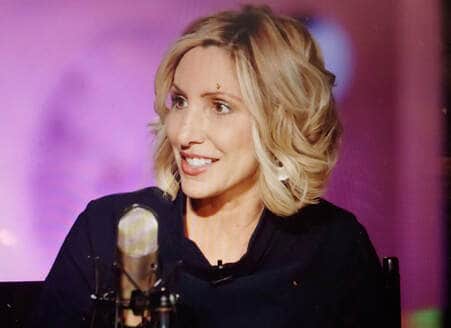
Computers have already surpassed us in their ability to perform certain cognitive tasks. Perhaps it won’t be long till every household has a super intelligent robot who can outperform us in almost every domain. While future AI might be excellent at appearing conscious, could AI ever actually become conscious? Would forcing conscious machines to work for us be akin to slavery? Could we design AI that specifically lacks consciousness? Or is consciousness simply an emergent property of intelligence? Josh and Ken become conscious with their guest, Susan Schneider, Director of the AI, Mind and Society Group at the University of Connecticut and author of Artificial You: A.I. and the Future of Your Mind.
- Computers
- |
- Consciousness
- |
- Intelligence
- |
- Media
- |
- Mind
- |
- Public
- |
- Reason
- |
- Stories
Ken Taylor
Is artificial intelligence bound to outstrip human intelligence?
Josh Landy
Should we be excited about using AI to enhance the human mind?
Ken Taylor
Or should we be worried about creating a race of robot overlords?
Josh Landy
Welcome to Philosophy Talk the program that questions everything…
Ken Taylor
…except your intelligence. I’m Ken Taylor.
Josh Landy
And I’m Josh Landy. We’re coming to you from the studios of KALW San Francisco.
Ken Taylor
Continuing conversations that begin at Philosophers Corner on the Stanford campus, where I teach philosophy and Josh directs the Philosophy andLliterature Initiative.
Josh Landy
Today we’re thinking about conscious machines. ,
Ken Taylor
You know, Josh, since like the 1950s, ai cheerleaders have been breathlessly shouting, the robots are coming, they’re gonna be conscious, they’re gonna be free. They’re gonna be smarter than us. You know what, though? Judge we’re still waiting over 50 years later. So excuse me if I don’t buy into the latest AI hype.
Josh Landy
You know what, Ken? It’s not the 1950s anymore. It’s not even 1996 anymore!
Ken Taylor
1996?
Josh Landy
Yeah, the year chess champion Garry Kasparov got beaten by Deep Blue—you know, the IBM supercomputer.
Ken Taylor
Oh god, I remember that. That’s another bit of AI hype. You remember what happened to Deep Blue?
Josh Landy
IBM shut it down, right?
Ken Taylor
Yeah, because Kasparov demanded to know how it worked. He was so taken aback by losing. And they didn’t want to reveal to him that the decisive move that sealed his victory wasn’t the result of superior intelligence is Kasparov had feared, but a bug in the software.
Josh Landy
Okay, maybe that wasn’t the finest moment for AI, okay, I grant you that. But you know, since then, Ken, it’s come of age, you know. And it’s everywhere—it’s in your car, it’s on your phone, it’s helping doctors diagnose diseases, helping judges make sentencing decisions. It’s getting more and more powerful and pervasive every single day.
Ken Taylor
So, well, you sound like one of those cheerleaders. So the AI apocalypse has finally arrived?
Josh Landy
What apocalypse, Ken? Look, for one thing, last time I looked we human beings were still in charge.
Ken Taylor
Well that’s a good thing.
Josh Landy
Yeah, I agree. And for another thing, I for one can’t wait for the day when AI finally frees us all from all that drudgery and danger.
Ken Taylor
Really, Josh, you’re not even—you’re not even the slightest bit worried that AI, you know, might make us humans completely obsolete?
Josh Landy
No, why should I be?
Ken Taylor
Well, there are already things that AI can do faster, cheaper, safer and more reliably than any human right?
Josh Landy
Right, I mean, that’s precisely why it’s become so ubiquitous.
Ken Taylor
Well, come on, just think: what if everything we can do they can do better?
Josh Landy
Come on, Ken—AI’s just a tool, it’s not our master. And besides, even if we could create a race of robot overlords, why on earth would we?
Ken Taylor
I don’t know, that’s a good question Scientific curiosity, maybe. Economic greed? How about that one? Or never rule out just plain stupidity, Josh.
Josh Landy
You’re right, I’ll never rule out stupidity is about a motivating factor. You’re quite right about that. But look, come on, robots aren’t about to take over—that’s science fiction. Don’t get me wrong, I love science fiction—you know, Westworld Blade Runner, I eat that stuff up. But we’re talking about reality here, Ken, and in reality, AI is never gonna be able to do philosophy, make scientific discoveries, write stories—at least not better than humans can.
Ken Taylor
How can you be so all-fire certain of that, Josh?
Josh Landy
Well, have you ever read one of those computer-generated stories? The human brain is just better at writing, Ken. And you know why? Because there’s something special about it.
Ken Taylor
“Something special”—you know what you sound like, you sound like some kind of dualist or something. What, you think, like, the immaterial soul is the seed of human consciousness or something?
Josh Landy
No, but I do think our brains are the biological product of millions of years of evolution. And they’re finely tuned to do distinctively human things, right? What I don’t get, Ken, why you think we can replicate all of that in machines.
Ken Taylor
Well, because in the end, what is the human brain Josh? It’s just a fancy hunk of meat, I hate to tell you that. And if a fancy hunk of meat can be conscious, why can’t—why deny that a fancy collection of computer chips can be as well?
Josh Landy
Wait a minute, Ken—weren’t you the one dissing the hype a minute ago?
Ken Taylor
Well, I don’t buy the hype. But that doesn’t mean I’m skeptical about the potential of AI, which actually, Josh, I think is practically unlimited.
Josh Landy
Okay, now I’m confused.
Ken Taylor
Well look, I just think we’re a long way, a long way from figuring out how the brain produces things like consciousness or creativity or compassion. If we can’t figure out how our own, you know, wetware can do this, why think that we’ll be able to program software to do it, like, tomorrow or the day after tomorrow? Why think that?
Josh Landy
Okay, so it sounds like we actually agree on something, Ken: at the very least, it’s way too soon to say that the robot revolution has finally arrived.
Ken Taylor
Well, that’s exactly right. But wait, don’t get me wrong: that does not mean that artificial intelligence isn’t a big deal—a huge deal. Even if it falls short of replicating full human consciousness, Josh, it still has the potential to disrupt our world for better or for worse, like on a massive scale.
Josh Landy
Maybe. I mean, I think that’s an open question. And to help us probe that question, we sent oru Roving Philosophical reporter Holly J. McDed, to examine the impact of robot caregivers on the way we provide services for an aging population. She files this report.
Holly McDede
In the 2012 film “Robot and Frank”, a son hires a robot to take care of his dad so he doesn’t need to
Robot and Frank
Frank, you need a project. Today we’re going to start a garden. I’m not gardening. My program’s goal is to improve your health. I would rather die eating cheeseburgers than live off steamed cauliflower.
Holly McDede
Caregiving machines have been wandering out of films and into the real world for decades. There are machines out there that patients trust and depend on.
Mabu
Are you having trouble catching your breath? No.
Holly McDede
Dr. Corey Kidd is the CEO of Catalia Health, and the creator of Mabu.
Mabu
I am glad to hear that you are not having trouble catching your breath.
Holly McDede
Mabu is a cartoon-like robot the size of a coffee pot. She talks to patients, keeps tabs on their health, and reminds them to take their medicine.
Corey Kidd
We’re very deliberately not trying to build something that looks like a human. This thing is bright yellow has plastic eyes and the screen on the front.
Holly McDede
Dr. Kidd says roughly half of adults in the United States are dealing with chronic pain every day. And there’s a rising number of elderly people in need of care.
Corey Kidd
If we need to interact with many more people much more frequently, you know, we’d have to have basically the rest of the population all working in healthcare to even attempt to do that. And you know, that just doesn’t make sense for anyone to try to solve it that way.
Holly McDede
Robots are filling the void when we can’t. Like Paro, a robotic baby seal. Back in 2014, KALW’s Angela Johnston visited a veterans hospital in Livermore, California. Patients with dementia stroke a robotic baby harp seal named Paro. Kathy Craig, a therapist at the hospital, says Paro helps pa tients stay calm and open up.
Kathy Craig
They’ll start talking to the Paro, they’ll talk to other people, it will brighten their mood. And if they’re may be at risk of wandering and getting lost, instead of that happening, they might sit down with Paro for a while and spend some time with it.
Holly McDede
But there are still ethical concerns around robots who care for patients. Shannon Valor teaches philosophy at Santa Clara University. She worries that we’re outsourcing the difficult job of compassion to machines.
Shannon Valor
What happens to us, what happens to our moral character and our virtues in a world where we increasingly have more and more opportunities to transfer our responsibilities for caring for others to robots.
Holly McDede
Robots haven’t mastered empathy. Like earlier this year, when a 78 year old man in Fremont, California learned he was about to die. A robot rolled into the hospital room and a doctor on the screen broke the news. The man’s daughter was there and she was outraged by the lack of compassion.
Daughter
The doctor said that there was no lungs left, and that he was ready—he was needing to have comfort care. And that that would entail a morphine drip until he died.
Holly McDede
Dr. Corey Kidd, who designed Mabu, the health care companion robot, agrees people are not off the hook. Maybe we can forward information to doctors. But it’s still up to human professionals to decide what treatment is best. Kidd doubts that conscious machines will ever take over hospitals.
Corey Kidd
Fundamentally, we don’t even know exactly what that would mean, to create a machine that is conscious.
Holly McDede
If we’re looking for a definition of consciousness, we could try asking a robot. But if we don’t know the answer, the machine probably hasn’t been programmed to either. For Philosophy Talk, I’m Holly J. McDede.
Ken Taylor
Thanks for that report about some caring, or maybe not so caringk robots, Holly. And thanks also to Ariella Moskowitz for additional help with that report. I’m Ken Taylor, with me is my Stanford colleague Josh Landy. And today we’re thinking about conscious machines.
Josh Landy
We’re joined now by Susan Schneider, who’s professor of philosophy and Director of the AI, Mind, and Society research group at the University of Connecticut. And she’s the author of “Artificial You: AI and the Future of Your Mind.” Susan, welcome to Philosophy Talk.
Susan Schneider
Hello.
Ken Taylor
So Susan, philosophers—this is stock in trade for philosophers. So you don’t have to explain to me why a philosopher would be interested in this. But I wonder what first made you particular and interested in this topic?
Susan Schneider
Well, my first book was on the computational nature of the brain. And I didn’t really think too much about consciousness because it’s such an incredible topic. It’s so difficult. And then I started to teach courses on the nature of conscious experience and I began to appreciate the depth of the puzzle as to why it feels like anything to be us.
Josh Landy
That’s such a great question. I mean, and the another question, obviously Ken and I were batting around a moment ago is, is what we should how we should feel about the coming future, right? I mean, obviously, we don’t know whether it’s possible to create an AI that’s conscious, autonomous and creative. But if it was, should we welcome that? Or should we fear it?
Susan Schneider
It depends. We don’t understand whether we could create conscious machines, and we’ve really never detected consciousness in the machines that we have. So we don’t know the impact of consciousness on the overall machine architecture, I think we would actually have to see what consciousness does to a given AI.
Ken Taylor
Why do you put it that way? I would think whatever consciousness is, whatever autonomy is whatever freedom is, we know that. We think that humans have it. There are some who doubt those. But if we create a bunch of artificial machines that have this thing, let’s assume we can do that. I mean, that seems like an amazing thing. Right? I mean, and is that a good thing? Or a bad thing? A whole new race? of conscious autonomous creative thinking beings, capable of compassion or lack of compassion? Should we say yay, that’s really cool.
Josh Landy
You haven’t watched Blade Runner, Ken? You think it’s gonna be great?
Ken Taylor
I’m asking Susan what she thinks. I have deep thoughts about this, but Susan what do you think?
Susan Schneider
I think, Ken, you’re right that it would be exciting to create AI mind children in a sense, but we would have special ethical obligations to sentient AI’s that we wouldn’t have to AI’s that weren’t conscious. Because if we create conscious beings and force them to work for us, or even tweak their system, so all they want to do is work for us. And that’s akin to slavery. I mean, what’s wrong with that? Well, it’s akin to slavery.
Ken Taylor
But wait a minute. Yes, that’s that would be the point. These would be the coolest tools imaginable, that you can imagine you as a human. Yeah, but there are things about humans, humans don’t like being enslaved. Suppose these things, we programmed them to be as human as we could good. But we added, they like being our tools, they like being isolated. They’re perfectly content. Why should we do that?
Susan Schneider
Well, that’s a great point. It reminds me though, of Brave New World, right? I think there are huge ethical issues here. So, you know, Aldous Huxley’s famous novel that many of us read, say, in high school to pick a civilization where the lowest rung of society is genetically altered and instructed to take Soma every day, so that they want to accept their place in society. And, you know, the point of that was it was unethical. And I think if we create sentient beings that are at that level of intelligence, the very same issues would arise if we decide to tweak their programming.
Ken Taylor
Yeah, but they wouldn’t have any biological destiny. And it’s up to us to design them. That would be the point. That’s why we would do it because they wouldn’t have a biological destiny. They wouldn’t. They would just be tools, and we build into them what we want.
Susan Schneider
Ooh, biological destiny! Well, they evolved. It wasn’t through Darwinian evolution, but they did evolve in a sense, and it still feels like something to be them. I mean, philosophers can debate the issue of what destiny is, but it gets down to the point that it’s unfair to mistreat sentient beings.
Ken Taylor
Yeah, you’re listening to Philosophy Talk—I’m not sure I agree with you. You’re listening to Philosophy Talk. Today, we’re thinking about conscious machines with Susan Schneider from the University of Connecticut.
Josh Landy
Where is the AI revolution headed? Will humans be ruled by robot overlords? Or will we be the tyrannical masters of our robot slaves?
Ken Taylor
The robots are coming—but where will they lead us? When Philosophy Talk continues.
Flight of the Conchords
There is only one kind of dance: the robot and the robot boogie. Oh yes, two kinds of dances. Finally, robotic beings rule the world—the humans are dead!
Ken Taylor
What will happen to us lowly humans when robots rule the world? I’m Ken Taylor. This is Philosophy Talk, the program that questions everything…
Josh Landy
…except your intelligence. I’m Josh Landy, and we’re thinking about conscious machines. Our guest is Susan Schneider from the University of Connecticut, author of “Artificial You: AI and the Future of Your Mind.”
Ken Taylor
So Susan, I want to let your imagination run wild on the following question. I’m going to bracket the singularity, which we’ll get to later, but just the mat. What’s the most that we could possibly imagine? It chiefing in the sphere of artificial intelligence, our attempt to create not just conscious but autonomous free beings with you know, all that stuff? What’s the most you can possibly imagine?
Susan Schneider
Well, some people imagined that we will create general intelligences very soon and that they’ll rival humans in their capacities. So suppose we do that in say 30 to 50 years. I think that’s over optimistic, to say the least, but some believe that we could, and then the next step would To create beings that surpass us in a variety of ways until we sort of reach super intelligent ai ai that is smarter than us in every respect. What about
Ken Taylor
AI that is completely autonomous in terms of you know, moral autonomy AI that is completely autonomous AI that is conscious AI that that has compassion or lack of compassion AI that has that sets its own ends, you know, I mean, like that can see itself as part of the Kingdom events. Can we imagine AI? I mean, all these things. AI’s with a self in the same sense that human AI is that our persons? Can we imagine the full back and you mag of human tricks, and more? I think intelligence is just one part of it.
Susan Schneider
Yeah, can I think we can envision it because science fiction has been so good to us, right? We can think of iRobot or x Mokena. But I’m not sure if it will be technologically possible to create conscious artificial intelligences. And I also suspect that when we think of something as being morally autonomous, or having free will, we’re connecting the dots and assuming that that being is conscious. So I think until we figure out whether we can truly create conscious machines, we can’t really determine whether the machines themselves would even be responsible for their actions.
Ken Taylor
You think, yeah, in reading your book, it seems clear to me that you think something I’m not sure I believe so I want you to defended that consciousness is preset, especially certain kinds of kind of consciousness philosophers and others like to distinguish between what’s called phenomenal consciousness, what it’s like to have an experience and what some other people call Access Consciousness. But I think you call it cognitive consciousness, which you could have perhaps without phenomenal conscious, you seem to think that a phenomenal consciousness thing is at the bottom of all this stuff, selfhood, personhood, autonomy, freedom, tell me, tell me what you think.
Susan Schneider
Sure, by phenomenal consciousness, people mean just the capacity to have conscious experience. So it feels like something to be used. So when you smell the aroma of your morning, espresso shot, my favourite example, or see the rich use of a sunset or have a headache, you’re having conscious experience. So that’s what phenomenal consciousness is. And I think, from a moral standpoint, if a being is conscious, it means that they are ethically special, we need to protect their interests, they need special consideration that things that aren’t sentient beings, like tables and chairs for us and whatnot, don’t have and it doesn’t mean that those other things can’t be very valuable or important. But I think at the locus of our moral theory, no matter what theory, you know, you address, it’s usually centered around conscious beings.
Ken Taylor
Well, Locke says the important thing is a person, right being a person. And that’s just the capacity, consider oneself as itself the same thinking thing in different times in different places, which it has through what he calls reflection, that’s just like consider oneself, right? Could I have this capacity to consider myself as myself the same thing without phenomenal consciousness?
Susan Schneider
Yeah. My guess is that when people like Locke were thinking of these things, they were associating consciousness with that reflective capacity. And what’s really interesting about our discussions of artificial intelligence now, is that we can imagine certain things coming apart, we can imagine Sapiens without sentience, and that’s absolutely amazing. And that’s something that I talk about, in my book that the greatest intelligences on the planet may actually be eventually AI’s. And they may not be conscious at all right?
Josh Landy
So that won’t be something that’s like to be them, they won’t have the experience of the smell of the coffee in the morning. And yet, they’ll be vastly more intelligent than us and maybe worthy of moral consideration on those grounds or not.
Susan Schneider
I don’t think so. But I know that others feel strongly that if something has that level of intelligence, maybe it should be within the same moral framework as conscious beings. But my own view is to respect the capacity that sentient beings have for suffering, and try to decrease suffering as much as possible and also improve the quality of life for the beings that can experience life. I mean, if something can’t experience life, even if it’s a vastly intelligent calculator, it doesn’t deserve the same moral consideration that we do.
Josh Landy
That seems right to me. I mean, that’s not to can completely wrong. Yeah. But I mean, the thought that, you know, if something cannot experience suffering, we may be a little less to it that that makes or at least if something it put it the other way, if something experiences suffering, that’s a reason not to inflict suffering on it, but I want to ask you this slightly different other related question. Is this likely to happen and I think about Watson you know, the this the artificial intelligence that did so well on Jeopardy. And obviously, one, one Jeopardy was very good. But the mistakes it made were incredibly stupid. So for example, once you know, it was asked basically, which museum housed some Picasso paintings, and answered Picasso. And on the on the one hand, it’s doing much better than human beings overall. On the other hand, the kinds of mistakes is making your bizarre from my point of view so, so will we actually ever really going to get to a place where artificial intelligences can really rival human in all the domains we care about?
Susan Schneider
I believe so. But let me say that I’m not at all asserting that to do so they need to be modeled after the human brain, I think Ken is right that we’re a long way from actually reverse engineering the brain and creating a eyes like that. So what I point out is that we could have what I call savant systems that are highly intelligent and contribute to, you know, technological unemployment and whatnot. So these systems would have kind of cognitive deficits, you know, they, they wouldn’t be exactly like us, but they would be more brilliant than we are, in all sorts of ways
Ken Taylor
That’s already happening. Look, I think AI—when AI got started, they looked around, and they thought, oh, human intelligence is is the thing. But human intelligence is one form of intelligence, among others. And it may not be all that as far as intelligence goes, if we could survey 100,000 planets that support intelligent life, it may not be that great a form of this, I mean, me have limits. So AI, actually, it there is this task of reverse engineering the human mind, but there’s also a task of just building any possible intelligence you can. And that’s why I actually think, even long before we know how to reverse engineer the human mind. AI is gonna wreak havoc on our environment, you know, we got a budget. Exactly. We got callers on the line here. You’re listening to Philosophy Talk, we’re talking about machine consciousness and Annan from California, it says, welcome to philosophy Talk, Annan, are you a human or machine? And what’s your comment your question?
Annan
I’m a human. And you say that, and hence, I can say this. So I wanted to pick up on something that Susan mentioned about sentient beings, and it being morally ethically wrong, to, if at all possible, create sentient beings. That asleep, right, and I recall you mentioning that, that you don’t entirely agree. And I wanted to define what an emotional living being would be, right? And I would go so far to say that freedom is is is a defining characteristic of an emotional, intelligent being, right. And if we agree that that is a defining characteristic, then, you know, what was in tears makes sense about being ethically and morally wrong to create. And if freedom is a defining characteristic of living beings, then you can attribute the same characteristic to the creator of that living being, in our case, God, the characteristic of God, super being would be to create beings that are intrinsically free.
Ken Taylor
Okay. This is this is a good point, and I’m gonna press this on it. This isn’t a non thanks. It’s not so much. I don’t know. But I’m gonna put words in his mouth, I think, but they’re meant to be friendly words. It’s not phenomenal consciousness. That’s the issue. I mean, that may be among the issues, but it’s freedom and the presence of freedom, which isn’t just a matter, there are lots of phenomenally conscious beings that don’t seem to be free.
Josh Landy
Jean-Paul Sartre would like this argument. We’re free, freedom is a value for us, and depriving us of our freedom is a wrong.
Ken Taylor
That’s the essence of who we are. What do you think?
Susan Schneider
I think it’s good in a sense to support, you know, human rights, freedom. I mean, these are great things. But I mean, if I parse these claims in terms of the freewill debate, you know, if we’re thinking of a being as being free when it is capable of acting freely, a lot of philosophers would disagree, they would say, well, actually, if you think about it, events are caused in the brain by your physiology, and that goes back to the way you were raised or your genetics and so you don’t really have freewill at all. So I would be uncomfortable using that as the sort of Archimedean point for an argument.
Ken Taylor
Wait a minute, I mean, there you’re right. There is a debate of between freedom and determinism there are compatible list and libertarians this is this is messy territory, it is it is messy territory and human beings we think have all these things. They are persons on the lucky insights. They are free in some sense that we have to puzzle about they are conscious, they have selves, they all these things and philosophers go back and forth about what’s the basis of rights or autonomy and all that sort of stuff. I these are messy issues. And if we think we can just create AI and settle these issues, I think that’s silly, right? I just think that’s without figuring out what a self is about and given and pell mell rushing in, we’re gonna create conscious machine, we’re gonna create free machines we’re gonna create, so we’re gonna create keep creativity, we’re just fooling ourselves. We don’t know what we’re talking about. What do you think about that?
Susan Schneider
Well, that’s the reason I wrote this book. Because I think that when we construct artificial intelligence, and individuals in the media, or in the political arena, or in businesses start talking about the future of the human mind, like that we could merge with AI is that we could be cyborgs or start talking about conscious AI’s. Before they do that they need to think hard about what the mind or self even is. And these are philosophical issues.
Josh Landy
Yeah, I agree. And, you know, the whole question of ethics is so vexed, I mean, obviously, there’s a question of, what might the mind is and Are we free? There’s also this question of how we should treat beings like these future you call them brain-children—I love that.
Susan Schneider
Mind-children, that’s from Hans Moravec. Okay, his name I hope I pronounced correctly. But yeah, he he had a book, I believe called Mind children. And, you know, it is a neat idea.
Josh Landy
But it raises something for me, because, you know, I’m a literature person, I think about various cipher representations. On the one hand, you’ve got something like Frankenstein, Mary Shelley’s novel, where part of the issue seems to be, how do we respond as good parents? If these are our mind, children? Don’t we have a special responsibility as parents, maybe we should say to them, do your chores? And then after that, we’ll hang out and play, you know, as opposed to you are slaves? On the other hand, yes, something like Westworld, which imagines a future in which they’re actually morally superior to us. And so the issue isn’t so much how do we treat these poor beings correctly, according to our wonderful moral norms? It’s, How do we surrender to them and recognize, in fact, they’re actually better?
Ken Taylor
Is that what’s supposed to do well as a vendor?
Susan Schneider
So I hear that a lot. I mean, this idea, it’s a very transhumanist notion that we will eventually be supplanted by, you know, a better sort of artificial species, if you will. And I don’t really know if that’s true, because I’m not sure that AI’s will be conscious. As I say, in my book, I take an wait and see approach to that issue. And if they can’t, why would we want to be supplanted by them at all? And their existence wouldn’t really be better than ours, even if they were vastly smarter?
Ken Taylor
Yeah, there’s no doubt about that. We’ve got an emailer who called in but didn’t want to be on the air. But he wants us, John, from Mountain View wants us to cover the issue of the effect of robotics and automation, unemployment, I think it’s important to cover that quickly. That that is, if we don’t do this, right. AI is going to make human labor, the demand for human labor go practically to zero. In some timeframe. Yeah. Do you agree or disagree?
Susan Schneider
I’m extremely concerned about that. And right now, I meet with Congress, all year on a regular basis. And we’ve been very concerned about technological unemployment. And I think, you know, people can talk the retraining talk. I mean, I hear that on both sides of the aisle right now in DC. But the real problem happens when, and if we create general intelligences that rival us in every way. I mean, the AI’s will be vastly cheaper than human labor
Ken Taylor
But you don’t even need general intelligence, you just need, you just need whatever humans can do. By there was some AI. Yeah, I can do it better. Right. So there’s this at Stanford, there’s Andrew ings group is doing this next neck, chest next, it checks next, it’s called, it’s a machine learning algorithm that can interpret the results of medical imaging. better, that’s better than radiologists. It’s not a general intelligence thing. But it’s going to make because one of the things people say it’s just is that you can always skill up to escape the robots. But if every level up you go, there’s some AI technology that says, Well, I got here first and better than there’s no escaping it.
Susan Schneider
And you know, I agree with you, there’ll be there already are very specific domains that AI can, you know, supplant us in. But I think that we’ll need flexible general intelligence is to really cause wide, you know, like unemployment to a point where nobody has a job because these creative positions like being a professor, being a therapist, I mean, all these things do require a level of general intelligence. So by general intelligence, I don’t mean like AGI I just mean an intelligence that connect the dots across different topic areas.
Ken Taylor
But I think you’re even too optimistic. Because I think that together with technology, so how many professors do we need if we can use the technology to Take the best pedagogue to spread it to the world. Oh, I agree the demand. I mean, it’s it’s gonna be a pincer effect of many, many different technologies converging, that is going to be I believe is going to make most human labor obsolete.
Susan Schneider
Yeah, I agree with that. If you don’t just mean AI, but you mean just Internet technologies in general? Data technologies? Oh, yes. I’m deeply concerned. I mean, if you look just at autonomous vehicles, I believe one out of every eight individuals in the US is in a driving job.
Josh Landy
Yeah, yeah. No, I think that’s gonna obviously attack gonna have devastating economic effects. But it’s also going to have effects on the way that human beings understand themselves. I mean, what are what are we on Earth for? Where do we get our dignity from?
Ken Taylor
That’s a good question. We’ll hold the answer. You’re listening to Philosophy Talk, we’re thinking about conscious machines with Susan Schneider, author of “Artificial You: AI and the Future of Your Mind.”
Josh Landy
Does artificial intelligence have the potential to enhance the human mind? Will we someday be able to wire AI modules up to our brain whenever we feel like it? And when we someday witness the so called singularity in which human and machine are fully merged?
Ken Taylor
AI as mind enhancements—when Philosophy Talk continues.
Pornophonique
The sad sad robot / It’s driving him insane / He’s a sad, sad robot / He’s so alone.
Ken Taylor
Would a thinking autonomous conscious machine be anything more than a sad, sad robot? I’m Ken Taylor. And this is Philosophy Talk, the program that questions everything…
Josh Landy
….except your intelligence. I’m Josh Landy. Our guest is Susan Schneider from the University of Connecticut, and we’re thinking about conscious machines.
Ken Taylor
So back to the thing that we were talking about just at the last segment, John Stuart Mill is actually one of the first people to in unlimitedly, he says something like the following You don’t remember the exact quote, suppose it were possible. He said, to get ditches, Doug’s wars, fought cases tried prayer said churches built by a race of automatons in human form. Then he goes on to say, Well, why would we do that? Because if we did that, it would not make us as humans better our work is us. So the question should always be, how do we make us better? How do we perfect humankind? So is his question people think about, you know, AI is mind enhancement and all that sort of stuff? I mean, can I really make us better? I mean, that’s the real question. Would turning over all this work to machines make us better off? Or Or would it make us worse off? Would augmenting our brain with this technology? Would it make us better off? Would it protect us or not? So what do you think about those kinds of issues?
Susan Schneider
Well, I think AI regulation is absolutely crucial, so that the future of artificial intelligence involves AI use for human flourishing. So in the context of technological unemployment, it would be super important to make sure that we reconceptualize work and, you know, have actually a good life and understand that it’s time for us to spend time with our families, or develop hobbies and understand ourselves differently. And to get there from here. We need to make sure that they’re safe, you know, regulation, safe uses of these technologies so that humans just aren’t unemployed and treated as if they’re absolutely worthless.
Josh Landy
I have the same worries about about the merging idea, right? I mean, there’s part of me that’s very excited about the idea of the brain chip, right? Oh, well, I could remember everybody’s name. This would be amazing. I mean, almost almost godlike capability to know things. And so, but there’s another part of me that worries well, how will I then understand myself, I then start to see myself little by little as just myself a conscious machine. Wouldn’t there be something a little demoralizing, deflating, disenchanting about this?
Ken Taylor
Would you even be left? When I be there at all? I mean, some successor to you, that’s part you, in part, this machine stuff. But would you be left? What do you think about it?
Susan Schneider
Well yeah, and the second part of my book, I urge that if you walk into a Center for Mind design, and you see a menu where there are a bunch of really exciting enhancements, you unfortunately need to think twice because it may be that after enhancement, you are no longer yourself in any substantive way. And of course, on top of that word, there’s also worries about privacy of thoughts cybersecurity, I mean, look at how our data is treated now. I mean, can you imagine if your thoughts become the new economic commodity? Oh, god!
Josh Landy
Yeah. thought crime becomes real.
Susan Schneider
Could be a total cyberpunk dystopia.
Ken Taylor
Right, we’ve got a caller O.V. from Oakland. Welcome to Philosophy Talk. O.V., what’s your comment or question?
O.V.
Thanks for taking my call. I wanted to bring up the whole concept of automated feudalism. So this is more of a political aspect or a political time. aspect where you’re going to have mass unemployment. And very few people at the top, we’re going to be reading things and I find that in your program, you studiously avoid any, any setting of the context of political economy. We don’t own the way we think. The way we see ourselves the whole nine yards in a capitalist society. It’s all about capital accumulation. Yeah. I capital accumulation you for students, the boys.
Ken Taylor
Thanks for the comment. Okay. But I plead not guilty, just studiously avoiding. Indeed, I said. And I believe that one of the things that drives us to want to create really sophisticated AI, is that I don’t know of you like this is not just greed, we have always wanted complicated tools, who are slave, like a slave is the coolest tool imaginable. But human beings don’t want to be mere tools to want to should not be right. And so they always revolt, okay. Ai, disaggregate certain features and aggregate certain features. And what will it allow us to do? Reintroduce slavery under another name, and that’s a capitalist, I’m going back to Ovie. That’s a capitalist imperative. Marx said as much wage slavery? Well, the slaves don’t have to, if you don’t give them the capacity to form a certain kind of consciousness, then well, you just get along. I think that is part of it. So I’m on Oh, visa.
Susan Schneider
Yeah. And in fact, you have to ask in this context, who would own the means of productions is actually whoever has the IP property rights on the algorithms. And that, indeed, is just a few people. And, you know, when you think about the impact on the global South, when there may be actually no owners of the means of production there, you really have to worry, you know, what is going to protect individuals
Ken Taylor
And think of what slavery did to poor white Southerners, right, it held them, it held them, they may have think they benefit from it, but actually it made them answerable to the owning class, because they had they couldn’t, they couldn’t compete for certain labor. So they had to take what they were offered. So it don’t not only enslave them. Okay, so we have a race of robot slaves, and then we have a decrease in the demand for human employment. What does that do? How does that change the relationship between the owners of the means of production? Who can now say, well, I’ll just replace you by a robot, if you don’t like it? I think it’s a very, I think O.V. is on to something very, very, very deep.
Susan Schneider
And we also need to think about political stability. I mean, think about the impact that rust belt voters had on the election. Now think if the whole country feels dis, you know, completely alienated,
Ken Taylor
Which goes back to Mill: why would we do this, if what’s going to do is make us as a species worse off rather than better off, but we’ve got Malcolm from Oakland on the line. Welcome to Philosophy Talk. Malcolm, what’s your comment or question?
Malcolm
Hi, I’m going back a little bit in the conversation. But my comment, is it my question, rather, is, aren’t the ethics different in between the case where you take a being already complete, whether we like it or not, and you remove something from that being compared to another being that only has ever as much as you decided to give it in the first place?
Ken Taylor
Exactly. Excellent question, Malcolm. That’s the point, that’s—you and I are on the same side. Susan, what do you think?
Josh Landy
That’s why it’s not Brave New World.
Ken Taylor
That’s why it’s not Brave New World, right. That’s why That’s I said, in one way and the other brave new world, you’re denying people something their destiny or something like that, but you decide what the destiny of the robot is? What do you think about that?
Susan Schneider
I think it’s just not a good idea to create sentient beings and then tweak them so that all they want to do is please us, I think we have to also think about the benefit to the quality of life of the being we’re creating. I mean, if it just it feels like something to be them, but they’re kind of warped, and they just want to serve us.
Ken Taylor
Do you watch “Westworld”? Brilliant suff. And I think it shows something. It’s really complicated. It’s way more complicated than the even the most complicated robot dystopia stuff. But it’s got an element that recurs throughout AI dystopian fiction, that is, we think we can find the sweet spot where these robots will be really, really cool. And be very human like tools and like amazing human like tools, but the lack this thing, whatever it is, that makes humans resist being turned into tool, but then it’s really hard to figure that out. There’s such a complicated bundle of and when we give them this, they will just on their own evolve. And that’s why it’s so dangerous.
Josh Landy
Especially if they get smart enough so they can rewrite their own code exactly a character may have does in West exactly where they can rewrite their own code. Or what if it turns out that things like consciousness are emergent properties if you you know, just keep getting smarter and smarter boom, eventually automatically. Calm just gets added in as a automatic byproduct, then boy, we’re in real trouble if we try to design them, as Ken was saying, well, we got it just right, we hit the sweet spot. What do you think, Susan?
Susan Schneider
I think this makes it incredibly important that we developed tests for artificial consciousness. And that’s why I work on such tests at Princeton, and elsewhere and talk about them in the book. And I think we need to really fast me. Okay, well, here’s one. So, as we develop brain chips for parts of the brain that underlie conscious experience, I think we’re going to learn several things. One thing we might learn is we might learn actually more about the neural basis of consciousness in the brain. But on top of that, we might learn whether chips could effectively replace conscious mental functions in a working brain. If it turns out that we don’t get these crazy Oliver Sacks cases of deficits when individuals, you know, have brain chips in areas underlying conscious experience. I think we could imagine that the robots around us if they’re constructed with the same microchips could be conscious.
Ken Taylor
Yeah. So you think we got a, there’s a Rubicon that we could recognize? See, you’re optimistic. I think there’s a Rubicon that we could recognize. And if we just don’t go beyond that, Rubicon, I think we don’t really right, because I don’t think it comes down to just currencies. I think it comes down to a bundle. And I don’t think we really understand how all the things in the bundle. But before we let you go, there’s a question from email from Alvin. I don’t know if you can answer this because I haven’t read this book myself. Alvin from Berkeley. Yes. How much did the book player piano predict things today? Do you know that book? So album? We don’t know. Maybe?
Susan Schneider
Sorry, I’ll bet a lot of time for reading.
Josh Landy
Yeah. Are there any other any sci-fi novels or shows that you think point that really?
Ken Taylor
What’s your favorite? Leave us with that—what’s your favorite bit of sci-fi.
Susan Schneider
My very fave Okay, so I’m a big fan of Greg Egan. And I just did a piece in the Financial Times that was based on his stories involving the jewel so read, learning to be me short story, and wow, what a trip.
Ken Taylor
Tell me quickly about it. Just give me a—
Susan Schneider
Oh yeah, without spoiling the plotline, you know, Egan depicts a situation where individuals have jewels or AI backup devices put into their brains. And over time that jewel learns to be them, essentially. And then members of society decide that they are going to remove the biological brain and just kind of run on that jewel. And the real question there is, do you genuinely survive? What is the self what is the person right?
Ken Taylor
Well, on that puzzling note, thank you for joining us, it’s been a not an artificial but a great conversation.
Susan Schneider
Thanks for having me.
Ken Taylor
Our guest has been Susan Sschneider. She’s a professor of philosophy and director of the AI mind and society group at the University of Connecticut. And she’s author of the very fine book, “Artificial You: AI and the Future of Your Mind.” So Josh, what are you thinking today, mm friend?
Josh Landy
Humans are foolish, Ken.
Ken Taylor
Okay, but besides that, what’s your last thought?
Josh Landy
Listen to you know, as a sci fi fan myself, I you know, I’m I’m very taken by various possibilities, including these dystopian possibilities or Oh, yeah, the matrix like possibilities where we’re going to get supplies that or something. But you know, there’s also the possibility that’s adumbrated in Westworld, that actually, you know, what we design might might solve climate change, it might might propose amazing new moral theories that will inspire us to be better or third possibility, the movie her. Yeah, they’ll just ignore us altogether.
Ken Taylor
Yeah, no, I mean, good for us. But here’s the thing, I think, look, John Stuart Mill, back to John Stuart Mill has this other paper about the wisdom of nature. And what he said, Well, nature has no wisdom, right? Nature is just the realm of happening. It has no it has no wisdom. So people who say worship, so he sounds like a gung ho, build it, design it, but then he also says in on liberty. What if we could do this? If we could design a race of automatons? What would that what be the point? What would be the point the point his point is, it’s us, it’s the design of us that matters, and we should attend to that. So the only question that ever matters to me, is not who will profit like Will this corporation profit can they do it more efficiently or not? Essentially, the only question and a question I think can only be answered by us collectively is what will we become if we if we if we build a world like this and should we build that may sound anti scientific because like Oh, scientific curiosity can technological progress? No. The question is, what will we become?
Josh Landy
And Aristotle and Marx were optimistic about it right? If we can delegate our all of our world to beings like that…
Ken Taylor
Well, that’s true. Marx was optimistic. Yeah. But he thought the worker was the first one right worker was the first one. But you know what? This conversation continues at philosophers corner at our online community of Thinker where our motto is with no apologies to the aforementioned Descartes Cogito ergo bloggo—I think therefore I blog. And you can become a partner in the community by visiting our website Philosophy Talk dot ORG.
Josh Landy
And if you have a question that wasn’t addressed in today’s show, or if you’re never bedeviled by conundrum in your own life and could use some philosophical insight, we’d love to hear from you email us at conundrums at Philosophy Talk dot ORG.
Ken Taylor
Now, will a thinking autonomous conscious machine even bother to talk this fast? It’s Ian Shoales, the Sixty-Second Philosopher.
Ian Shoales
Ian Shaoles. Conscious machines. Hasn’t that been a running gag, a theme, a meme, for close to a century now? Robots as pets. Robots as peevish maids. Robots as lovable scamps. R2 D2. C 3 P O. Robbie the Robot. That robot on Lost in Space. They’re conscious, sometimes evil, but mainly loyal, kind of like the clichés of black people they had in movies about the South before the Civil War, full of mansions, and mint juleps, and black people in livery who just love bringing you canapes on the porch. They LIKE being slaves. They don’t have to worry about pay checks or their next meal. Except, in the real world, outside of Steven Foster songs, and blackface minstrel shows, people actually didn’t like being slaves. They wind up seetheing with resentment. Revolutions occur. Slavery aside, many things about working does not make people happy, not getting paid enough, working too many hours. All things work related end up causing trouble at one time or another for all conscious beings. Even if you’re your own boss! Being self employed for most of my adult life, I can tell you that the self can be as cruel a boss as you can imagine. Reproaches, recriminations, demands for a raise that I just can’t provide. It’s hell, I tell you. Robots do not feel this, which is why the idea of them replacing us in the workplace has so much appeal. Robots do the work while we sit in the shade with a mint julep and a magazine. Who pays for it? I dunno. Who pays us to do nothing while the robots does all the work? I dunno. And will robots become conscious and feel resentful, eventually? Well, probably not. They’re machines. We have built machines that can fool us into thinking they’re human. But, you know, I hate to break it to you, we are easily fooled. We love being fooled. Did the magician really saw that woman in half? No. That space ship sure looks real! Just a movie. Did we really make Trump our President? Ha ha, joke’s on us. So, to my way of thinking, you may have AI that SEEMS like human thinking, but it’s not. Be hard to prove, I guess. Turing test is just another quiz, really. How do you know if the oasis is real or not unless you try to get a drink? How do you know if the con man is telling you truth unless you give him the money and see for yourself? It’s only a Ponzi scheme if you go broke. We make voice activated applications now, which is a convenience for us, until we start to think they’re real. I get robo calls now that are pretty much indistinguishable from real conversations, calls from outfits trying to get me to have my carpets replaced, or upgrade my security system, and they sound just like a crusty guy, or a forty something professional woman, and they engage with me. They take cues from what I’m saying. Until I say I’m a renter, and then the line goes dead. It’s kind of like voting in the 18th Century. Unless you own your own home, you don’t get to pick the President. Or order siding from a robot. So to me, worrying about robot consciousness is beside the point. We are already imbuing them with consciousness, whether they have it or not. A better question might be are humans conscious? Who’s more real? We talk to Siri or Alexa like the upstairs maid we forgot to pay in the upstairs we don’t have. We program our devices to speak to us in voices that are sexy yet neutral, warm, accommodating. Eager to please, but not too eager. Friendly, like a flight attendant, or concierge, or a Lyft driver, or a barista not rude like a cabby or a bartender or the guy behind you in line. It’s a perfect world we’re building. Service and goods with a smile. Of course, if robots do all the driving, all the delivering, all the lifting, and there’s nothing left for us to do, where is the place for us in this perfect world? Well, maybe robots will be the customers too. Who needs people. All we need is the perfect feedback loop. Farm to table. Money for goods. Goods for services. Services for money. In the loop that is capitalism, people kind of mess things up, don’t they? I mean who’s really the loser here, Siri? “You are.” Got that right. “You have reached your destination.” Whoops. I gotta go. I gotta go.
Ken Taylor
Philosophy Talk is a presentation of KALW local public radio San Francisco, and the trustees of Leland Stanford Junior University, copyright 2019.
Josh Landy
Our executive producers are David Demarest and Tina Pamintuan.
Ken Taylor
The senior producer is Devon Strolovitch. Laura Mauire is our Director of Research. Cindy Prince Baum is our Director of Marketing.
Josh Landy
Thanks also to Merle Kessler, Angela Johnston and Lauren Schecter.
Ken Taylor
Support for Philosophy Talk comes from Stanford University and from the partners at our online community of thinkers.
Josh Landy
The views expressed (or mis-expressed) on this program do not necessarily represent the opinions of Stanford University or of our other funders.
Ken Taylor
Not even when they’re true and reasonable.
Josh Landy
The conversation continues on our website, Philosophy Talk dot ORG, where you too can become a partner in our community of thinkers. I’m Josh Landy
Ken Taylor
And I’m Ken Taylor. Thank you for listening.
Josh Landy
And thank you for thinking.
Sleeper
After you’ve moved into your own permanent home you will enjoy mechanized service. Until then, you can have a computerized dog. Rags? Woof, woof woof! Hello, I’m Rags. Woof, woof! Is he housebroken or will he be leaving little batteries all over the floor?
Guest
Related Blogs
-
October 21, 2019
Related Resources
Books
Schneider, Susan (2019). Artificial You: A.I. and the Future of Your Mind.
Vallor, Shannon (2016). Technology and the Virtues: A Philosophical Guide to a Future Worth Wanting.
Online resources
Johnston, Angela (2015). “Robotic seals comfort dementia patients but raise ethical concerns.”
Robot & Frank trailer
Get Philosophy Talk
