The Changing Face of Antisemitism
June 19, 2022
Listen


Antisemitism is an old problem with roots that reach back to medieval Europe. While earlier forms focused more on religious bigotry, antisemitism in the modern period became increasingly racialized and politicized. So what is the connection between older ideas about Jews and Judaism, and contemporary antisemitic tropes and stereotypes? How are conspiratorial fears about Jewish invisibility and global control related to the emergence of finance capitalism? And what can history teach us about how to confront antisemitism today? Josh and Ray ask historian Francesca Trivellato from the Institute for Advanced Study, editor of Classic Essays on Jews in Early Modern Europe.
This episode was generously sponsored by the Stanford Humanities Center.
- Capitalism
- |
- History
- |
- prejudice
- |
- Religion
- |
- Xenophobia
Ray Briggs
Where did antisemitism come from?
Josh Landy
Is it racism, religious bigotry or something else?
Ray Briggs
And what can history teach us about what’s going on today?
Josh Landy
This is Philosophy Talk, the program that questions everything…
Ray Briggs
…except your intelligence. I’m Ray Briggs.
Josh Landy
And I’m Josh Landy. Today we’re coming to you from the Stanford Humanities Center.
Ray Briggs
…continuing conversations that begin at Philosophers Corner on the Stanford campus, where I teach philosophy and Josh directs the Philosophy and Literature Initiative.
Josh Landy
We’re very grateful to the Stanford Humanities Center for generously sponsoring tonight’s conversation. And we’re pretty excited to be back with a live audience after two and a half years.
Ray Briggs
So welcome, everyone, to Philosophy Talk.
Today, we’re thinking about the changing face of antisemitism.
Josh Landy
You know, antisemitism is a big problem these days and I don’t see it getting any better. I mean, you’ve got both the FBI and the Anti-Defamation League reporting massive increases in incidents over the past several years.
Ray Briggs
Yeah. And not only that, but antisemitism is a really old problem. You know, back in the Middle Ages, Jews were getting banished from their home countries and getting massacred because people blamed them for the Plague.
Josh Landy
Yeah, and don’t forget forced conversions to Christianity, and the murders in the Inquisition. It’s been bad for us Jews for a very long time.
Ray Briggs
And the strange thing is, is that it’s hard to even talk about the problem without people assuming that you’re trying to diminish other people’s suffering, or that you’re trying to advocate for some controversial policy,
Josh Landy
it will the only thing I’m trying to advocate for is people being nice to each other.
Ray Briggs
Amen to that. So Josh, where do you think all this intolerance comes from?
Josh Landy
Well, I mean, I’ve got to think that at least part of it comes from scapegoating. And you mentioned you know, the situation with the the bubonic plague all those years ago, there was a similar, weird conspiracy theory about COVID recently. Bad stuff happens in the world, people want someone to blame for it. So they pick on us Jews.
Ray Briggs
Okay, I get that people want somebody to blame when bad stuff happens. But why blame the Jews specifically?
Josh Landy
Well, you know, we eat different foods, we celebrate holidays at different times, maybe we dress a little differently. That makes it easier for the surrounding population to separate us out, identify us, and point the finger at us when it’s convenient.
Ray Briggs
I don’t know… Like, Jews don’t always eat different foods or dress differently from everybody else. A lot of us just eat Big Macs and wear jeans. That doesn’t protect us from prejudice. Why not?
Josh Landy
Well, maybe you know, wearing jeans and eating Big Macs isn’t enough for some people, right? Look, I’m not talking about everybody. I know plenty of extremely egalitarian Christians.
Ray Briggs
Yeah, some of my best friends are Christian.
Josh Landy
But there are clearly some Christians who you know, would rather prefer the Jews went to church on Sunday and believe the things that they believe and you know, we don’t do that. Maybe that marks us off a little bit as suspect.
Ray Briggs
Yeah, and there is that sort of long standing strand and Christian theology that blames Jews for the death of Christ.
Josh Landy
Absolutely, I mean, you know, think back to the medieval period, when when huge numbers of Jews were being forced to convert to Christianity. In some cases, it was either convert or die, you know. So, well, maybe the problem is really at base about religious intolerance?
Ray Briggs
I don’t know if it can all be religious intolerance. Like think about Germany in the 30s and 40s: you could convert to Christianity, all you wanted, but that still wouldn’t protect you in the slightest. So I don’t think it can just be that.
Josh Landy
Okay, so what is it all about?
Ray Briggs
Well, honestly, I think it’s racism. So look, being Jewish is something that you inherit. It’s something that’s associated with stereotypes about your physical appearance. And a lot of people think it’s not a thing that you can change just by converting or assimilating. You know, this, this kind of essentialist thinking is behind some of the greatest atrocities of the 20th century.
Josh Landy
Right, that’s true for the 20th century. And it may be true still today. But I mean, how far back does that go? I feel like you know, if you look to older stereotypes, they tend to be less about race and more about money, right? So think about Shylock in the Merchant of Venice, right. He’s depicted as heartless grasping moneylender out for his literal pound of flesh. That’s arguably an anti semitic depiction, but it’s not about race. I mean, isn’t that more about people taking their economic anxieties and then projecting them onto the Jews?
Ray Briggs
Well, yeah, people do project their economic anxieties, but that still doesn’t explain why they project them onto the Jews and not to somebody else. And I think the only thing that can possibly explain it is racism.
Josh Landy
I don’t get it, Ray. How can it be about racism when Jewishness isn’t a race? There’s Jews from all over the world—there’s Jews from Eastern Europe, Syria, China, Ethiopia. Plus you can convert to Judiams—I don’t understand how it could possibly be thought of as a race.
Ray Briggs
Yeah, but none of that really matters. So it doesn’t matter that Jews aren’t all from the same place don’t all look alike. It doesn’t even matter whether race is a real thing at all. I think what matters is that Jews are perceived as a race, and that that’s where antisemitism comes from.
Josh Landy
I don’t know, though. I mean, you know, in the grand sweep of human history, talk about race is a relatively recent phenomenon, whereas as we were both saying earlier, antisemitism—that’s age-old, right. I mean, surely a lot of it goes back to the kinds of jobs that Jews were forced to take up in the Middle Ages. They were often siloed off into financial professions, which led to a number of people associating Jews with money, which had all the downstream consequences that we know about.
Ray Briggs
Yeah, but a whole lot of non-Jews also worked in finance, so why not blame them?
Josh Landy
Well, some of them got blamed, too. But you’re right. I think Jews have borne the brunt of it. 6 million of us were murdered in the Holocaust, including some of my own relatives.
Ray Briggs
Yeah, some of mine too.
Josh Landy
So it’s affected you directly, affected me directly, in so many others that continue to affect us today. I think we need to dig deep into the historical roots of these pernicious myths about Jews and Jewishness. How did we end up in a situation we’re in today?
Ray Briggs
Well, fortunately, we’re going to be joined soon by historian Francesca Trivellato. She’s the author of a book about the emergence of finance capitalism, and how that interacts with antisemitism.
Josh Landy
But first, we’re going to think about antisemitism today. Many Jewish leaders and educators blame the problem partly on the lack of basic knowledge about the Holocaust, and about modern day antisemitism.
Ray Briggs
So we sent our Roving Philosophical Reporter Holly J. McDede, to talk to some people who want to change that. She files this report,
Holly McDede
When Michaela Pelta, was in high school in San Francisco, she served as a Jewish student union rep for the West Coast.
Michaela Pelta
I have just seen that if I’m not going to do it, no one else is going to do it.
Holly McDede
Her great-grandmother on one side and grandfather on the other are both Holocaust survivors.
Michaela Pelta
I was so quiet about my Jewish identity for so many years of my life.
Holly McDede
In the summer of 2020, she began hearing from Jewish students that they were seeing antisemitic posts on social media—for example, comparing Jews to apes.
Michaela Pelta
And it made us think that, you know, antisemitism didn’t just form within a month or two—a lot of our peers were harboring these views and kind of waited until they wouldn’t be confronted by us in the hallways or have to, you know, face a Jewish student the next day to then express that.
David Livingstone Smith
A lot of ideas that were so sedimented into the foundations of our culture that they just return and return and return.
Holly McDede
David Livingstone Smith is a Professor of philosophy at the University of New England. He says education around antisemitism isn’t adequate. And there also isn’t nearly enough education around anti-black racism or the genocide of indigenous people.
David Livingstone Smith
You have to understand the ideological and political and social influences that are ginning people up to think of other people as less than human.
Holly McDede
Livingston Smith is the author of “Making Monsters: The Uncanny Power of Dehumanization.” We spoke soon after a white supremacist murdered 10 people at a supermarket in Buffalo. The suspect said he chose Buffalo because it was the city with the highest number of black people nearby. The suspect was also inspired by what’s known as the Great Replacement Theory.
David Livingstone Smith
The Great Replacement Theory is an idea which is current in white supremacist circles, has been promoted on Fox by Tucker Carlson, that there is a kind of plot to replace white people with people of color. And guess who’s the mastermind behind that plot? Jewish people.
Holly McDede
Education is important for helping students recognize anti semitism so that they can call it out. Hashim Davis is a high school teacher in Virginia. He says people asked him a lot about why as an African American man, he’s so focused on teaching about the Holocaust.
Hashim Davis
It’s really about an examination of humanity, or man’s lack of humanity. What will happen in these in these moments?
Holly McDede
Davis grew up in New York and remembers trips to the city’s five & dime store. The owner was a curmudgeon—mean as heck, But years later, after visiting the Virginia Holocaust Museum as an undergrad, he thought again to that man and one particular trip to his store.
Hashim Davis
We go to the store and I want to buy this particular action figure. And he had a short sleeved shirt on and the button collar, but it was short sleeved. And I noticed that he had some writing on his arm. Well, it took me years to realize, oh, he was a survivor. So I just thought it was a moment of serendipity that I would find myself coming back to it.
Holly McDede
Now Davis has dedicated his professional and academic life to studying and teaching about the Holocaust. His students meet with survivors and he tells his students about how the Nazis were influenced by Jim Crow laws in America. And he says they’re gobsmacked. The history of the Holocaust is bleak, but important.
Hashim Davis
Everyone always says, oh, no, if it were me, I would have done this. I would have done that. I would have helped them. Yeah, that sounds cool. But the statistics would say that that didn’t happen. In fact, more people turned away and more people didn’t do anything, then then the opposite.
Holly McDede
As a Holocaust educator, Davis wants students to expand their definition of what anti semitism is to understand it’s a hatred connected to other hatreds. For Philosophy Talk, I’m Holly J. McDede.
Josh Landy
Thanks for that terrific report, Holly. I’m Josh Landy, along with my Stanford colleague, Ray Briggs. And we’re here with a live audience at the Stanford Humanities Center, which has generously sponsored tonight’s conversation.
Ray Briggs
Our guest today is a historian at the Institute for Advanced Study, and the author of “The Promise and Peril of Credit: What a Forgotten Legend about Jews and Finance Tells Us about the Making of European Commercial Society.” Please welcome to the Philosophy Talk stage… Francesca Trivellato.
Josh Landy
So, Francesca, you’re a historian of early modern Europe. What first got you interested in the history of anti semitism?
Francesca Trivellato
So I got to the topic as a historian of European economy and trade before modern capitalism, when trade, European Trade expanded, and that brought people from more diverse backgrounds together on various marketplaces, all over Europe, the Mediterranean and the world. And yet, the ideas and stereotypes that to merchants how to one another, did not necessarily produce a more embracing tolerant ideology.
Ray Briggs
So you’ve written a lot about how financial developments in the period that you study sort of changed how people perceive Jews and how antisemitism works. Can you say what some of those financial developments were?
Francesca Trivellato
Yeah, you all have heard of the Industrial Revolution in England around 1800. But before that, there was the medieval commercial revolution, which did not involve technological change very much as much as organized changes in the organization of trade and banking, and particularly a number of instruments that credit instruments emerge that helped merchants trade across long distances. One of the innovations of the 13th 14th century is modern insurance, what we have today, another is something called bills of exchange, which no longer exists today, they were in terms of material, like paper, slips of paper are smaller than a modern check today. And they were used to transfer money from one location to another. And they had the beauty of simultaneously being a credit instrument, but also involving a currency transaction. So you can you know, transfer dollars from the US to euros in Europe with just one slip of paper.
Josh Landy
That sounds like a great thing, right? And you don’t have to take a huge sack of gold coins on your ship might get, you know, Raided by pirates or sink or something, you just change, what’s not to like.
Francesca Trivellato
So there were a lot of things to like it about this instrument at the same time, particularly during the 16th century, these bills became very complex, very arcane, somewhat like today’s of some of the financial instruments that, you know, are necessary for our private pensions, but also we don’t really know how to control them. So bills of exchange became instruments of financial speculation. There were a few small groups of bankers who bought and sold these pieces of paper and made money on the currency exchanges without really exchanging any goods. And that became suspicious or cane something that regular people didn’t quite understand how it happened. And that brought up the association between bills of exchange and Jews.
Ray Briggs
This is Philosophy Talk, coming to you from the Stanford Humanities Center. Our guest is historian Francesca Trivellato.
Josh Landy
Why were early modern Europeans so anxious about moneylending? What caused them to project their anxiety onto the Jews? And how did some antisemitic stereotypes in general get started?
Ray Briggs
Money, myth, and malice—along with questions from our live studio audience, when Philosophy Talk continues.
Josh Landy
Thanks for our musical guests, the Kolomayka Trio. And thanks also to the Stanford Humanities Center for sponsoring today’s episode. This is Philosophy Talk. I’m Josh Landy.
Ray Briggs
And I’m Ray Briggs. Our guest is Francesca Trivellato from the Institute for Advanced Study. And we’re thinking about the changing face of antisemitism.
Josh Landy
Do you have a question or comment about how history shaped antisemitism? Do you have thoughts about the relationship between antisemitism and the emergence of capitalism? Join the conversation by raising your hand in a moment, we’ll bring the mic around to you.
Ray Briggs
So Francesca, earlier we were talking about some of the new financial developments in early modern Europe. Can you tell us more about how these relate to antisemitism?
Francesca Trivellato
Good question. In the earlier segments, you and Josh, I think were pointing to the fact that anti semitism as all forms of prejudice, persist over time, and yet changes. And Christians have a lot of prejudicial views of the relationship between Jews and money. But they all boil down this prejudice to the notion that Jews were particularly good at money. And yet, instead of using their talents for the common good for the benefit of everyone, they did it to enrich themselves. And that’s where the connection between all the money economy and jewels and antisemitism lies.
Josh Landy
And so these new financial instruments, right, I mean, I take it that part of the issue is that, well, first of all, yes, they’re new. And so they’re hard for people to, you know, get to terms with and maybe they’re a little opaque, right, they’re hard to understand they’re hard to track. And so does it maybe seem to members of the population, that it’s something that unscrupulous agents could manipulate for their own benefit. And so if you have some kind of, you know, other in the population that is going to be considered as lesser, while you’re going to say, better make sure we get that instrument out of the hands of those folks, otherwise, they’re going to use it unscrupulously to their own ends.
Francesca Trivellato
That’s exactly right. The idea that was born somewhere around the middle of the 17th century, the Jews had invented these bills of exchange, which is absolutely not true, was not advocated by those who wanted to eliminate finance, from the everyday life, of which there were plenty, you know, but it was more brought about by those who wanted to try to find this kind of a healthy capitalism and weed out the potentially nefarious aspects. And so the idea that these instruments by have been tainted by a Jewish origin could always be resurrected, you know, in certain moments of crisis.
Ray Briggs
I’m kind of still puzzled because it seems like a lot of these financial instruments have descendants that exist today, and sort of lots of cool Christians use them and lots of Christians used them when they were being developed, and some even use them to cheat each other. And yet somehow, it’s it’s the Jews who were sort of, I guess, blamed for inventing these new ways to cheat each other.
Francesca Trivellato
They were blamed in case things went wrong. Right, that’s the cleverness of Christian anti semitism relating to these financial instruments. There was not an outright opposition to say, all forms of finance, that’s a sort of an old view of the Catholic Church as opposed to all forms of profit. And entrepreneurship is a very Protestant idea, and that scholars have amply debunked that idea. In fact, the Catholic Church tried to create a sort of a good spiritual Christian economy. And since that’s very difficult to define what it is, it was defined in antagonism as the opposite of what Jews do.
Josh Landy
Yeah. I mean, that makes certain kind of sense within a certain kind of dangerous logic, right? I was sort of wondering, based on some of the things you’ve written, like, why is it so easy to pin the bad workings of this financial, this new financial system on Jews mean? Does it have partly to do with existing stereotypes? I’m thinking of a couple, in particular, you’ve talked about, you know, one is this sense, you know, in the wake of Jews converting the sense that, well, you know, Jews are duplicitous. They say they’re Christians, but really, in their hearts, they’re still Jewish, and so we can’t trust them. Right. So that could be one preexisting stereotype that could feed into this. And another might be something like separateness, right that, well, this is a community within a community, they have their own customs or in practices, their own laws. Can we trust them to be working for the greater good? I mean, that sounds like potentially reasons, you know, how you could sell that bit of propaganda. Right? That the, you know, yeah, this is a great economic system. It’s just, you know, some terrible people who are responsible for any ways in which it goes wrong. Are those two factors involved at all?
Francesca Trivellato
Yeah, and the two factors go together, they are the two sides of the same coin. You know, many of you will be familiar with the modern anti semitic stereotype of Jews are disloyal to the nation and only loyal to their own group. And that the, you know, the myth of Jews controlling finance is a version of that. Well, that is a modern version of an previous stereotype associated with conversion. And they’re both associated, this is kind of the paradox with the idea that Jews are invisible. And the very Christian institutions, particularly Catholic institutions, who were adamant about converting Jews, sometimes against their will. They were also those who suspected Jews who actually converted the most. So the Inquisition wanted to baptize Jews. But once Jews had been baptized, the Inquisition did not believe that Jews were good Christians. That fear of the invisible Jews migrates into the modern period when Jews are given citizenship, which is a form of baptism in the modern period, is a way in a baptismal theory makes all Christian the same. And citizenship, in theory makes all of us the same. But once Jews become citizen, they’re not trusted to be loyal citizen. A lot of the association between Jews and international finance have to do with their religious and political presumed a lack of loyalty.
Ray Briggs
This seems like kind of a weird kind of double bind to put people in, because like how much so some of this is just like, clearly just made up and nonsense. And some of it is like, I think if the state tried to kill me and forced me to convert to a different religion, I might not be so loyal to the state. If the state, you know, forced me to practice a different religion against my will, I might not feel like like, I might still sort of feel some loyalty to what I had been forced out of, how do you sort of separate those two strands of like stuff that just is made up versus stuff that is, like, true, but not blameworthy and is being made true by oppression?
Francesca Trivellato
Yeah, that’s a very good question. And I think it’s important to think about, you know, individual variations. I mean, even when Jews are forced to convert as a collective. It’s very hard for historian to find out what their deepest belief where it’s actually, you know, after generations because after generation, you’ve been brought up as a Christian. But there were some Jews who became Apparently, you know, good Christian believers after some generation particularly and others that, as you said, did continue in secrecy, you know, to light candles on Friday night or to change their shirts on Friday night, their notion of Judaism, it became more and more watered down. That’s another story. But the way in which they were persecuted for something that was, you know, their their intimate life, it’s something difficult for us modern to understand there was no differences between the private religion and Public Religion in the past. But there was a lot of individual variation is not that there was a Jewish convert behavior as a collective.
Josh Landy
You’re listening to Philosophy Talk. We’re at the Stanford Humanities Center in front of a live audience. And we have a question from our audience. What’s your name? And what’s your question I’ll commit?
Larry
The name is Larry. First, in terms of the bills of exchange? I’m just curious how that wound up spreading through Europe? And did it also wind up spreading into the Middle East, the more Arabic countries? And were there facets of the Jewish community that became maybe a little more immune to this broad painting brush? That, you know, oh, you’re a Jew, you know, so you’re working for your own interest, instead of, you know, being aboveboard? And how did this mesh, if at all, with, say, Arabic countries where, you know, the idea of credit, you know, that that was not really accepted.
Francesca Trivellato
So let me start from your last point. Religious injunction against usury existed both in Muslims and in Christian countries. And in both regions, or countries, as they were in both regions, there were ways of bypassing those restrictions. In fact, Islam is a religion very much favorable to trade in its origin. It’s amply demonstrated now, bills of exchange existed in different forms. There were some unique features to Europe, in part, because of unique features of European politics and economy. The Muslim world had a much greater monetary unity than Europe. So there were instruments that were called swift Dasha, that were used to transfer money, but they were more like a money order, there was no currency exchange, because over very vast regions, the same currency was in us. Instead, in Europe, there were so many currencies, even in the same city. And so bills of exchange, which, you know, some may think were like some special features of capitalistic mentality, they were just a solution to a problem that did not exist elsewhere. And I think that’s very important as we begin to compare multiple forms of capitalism that exists across the world. First of all, there can be different, you know, solutions to the same problem sometimes, but also some society did not have the same problems. So, you know, it’s often said, Oh, China didn’t have a public debt. So they were financially less advanced. Well, the Chinese Empire was excellent at raising enormous taxes from agriculture, so they didn’t need a public debt. So it’s very important that certain kind that, you know, dislodge a certain kind of ideas that there is one superior European form of capitalism. It certainly had marbleized extraordinary economic power. But a lot of times the instruments that are peculiar to Europe emerge because the problems they were trying to solve were very peculiar and the and the monetary differences across Europe and within small regions were really astounding.
Ray Briggs
So we have another question or comment from the audience.
Shahnawaz
My name is Shahnawaz Kareem. So my comment is a major part of human history is one tribe committing atrocities on a different tribe, be it the Holocaust, Rwandan genocide or the fate the racism that you were talking about? So how do you think about antisemitism in such a broader context? Thanks.
Francesca Trivellato
Well, this is a very difficult but very good question. And I think that the opening segment, made one very important point very clear, that often various forms of racism they go hand in hand. It is difficult to find a racialized mentality or racist mentality, that only two targets one group. So anti semitism has some peculiarities because Jews were in the history of Europe until the 19th century, really the only non Christian minority that was allowed to worship in Europe, there were small pockets in medieval Iberia. And in some parts of Poland, where there were some Muslims who were living next door to Jews and Christians, but that was an exception. And because of Christian theology, because of as was said before, the idea that Jews were the original pillars of Christ. That idea has enormous ramifications. But you cannot study or understand anti semitism apart from other forms of racialized exclusions, because they sadly go hand in hand.
Ray Briggs
So we have more questions from the audience.
Josh Landy
What’s your name? And what’s your comment or question?
David
My name is David You’ve characterized Jews as different but not necessarily advantaged vis a vis Gentiles and with respect to commerce, but Jews actually brought a number of advantages beyond the individual advantages as group advantages, such as having a common language, at least in Europe, Yiddish and Spanish countries, Latino, and Talmudic argumentation and background literacy, fundamental literacy gave Jews as a group distinct advantages. Were those the basis of anti semitism as well, not just the separation of Jews, or the religious differences?
Francesca Trivellato
Well, there were many segments of the Jewish Diaspora. In fact, it’s very difficult to speak of Jews as a unity. Before example, the Jews were expelled from Spain and Portugal. After a couple of generations, they didn’t know Ladino. They didn’t know any Hebrew. They knew Spanish and or Portuguese. And once they emigrated to the very few port cities, in Western Europe, where they could live and where they were welcomed, because of their trading connections, as you said, they learned a local languages, they became very apt at sort of being part of all the there wasn’t a separate to Jewish mercantile culture. You know, for example, I’ve looked for books about trade author by Jews, and they repeat the same things as the other author by Christian, how to manuals. For merchants, I studied a company that was formed by two Sephardic Jewish families, and they write in excellent Portuguese and Italian. And at some point, they start doing business which is what led them to bankruptcy, we then Persian Jew, and they have to hire a translator to communicate with that person. So there is a reality about the intra Jewish networks, in part because as we were saying earlier, religion is not a private matter. So for example, Jews could only marry Jews as the same way in which Protestants would only marry Protestants and Catholics would only marry Catholics, because marriage was not a civil ceremony. But Jews who were involved in trade were really absorbed the local majority culture. So that part of the separateness was projected onto them as a fantasy, there was some reality to it. But the magnitude of that separateness was largely imagined by those who perceive them as competition as unfair competition as a special people. It’s forth.
Josh Landy
You’re listening to Philosophy Talk. Today, we’re talking about the changing face of anti semitism with Francesca Trivellato from the Institute for Advanced Study.
Ray Briggs
What can history teach us about antisemitism today? How can we avoid repeating the mistakes of the past? Can understanding our dark history light the way toward a brighter future?
Josh Landy
We’ll take more questions from our live audience, when Philosophy Talk continues.
Thanks again to our musical guests, Kolomayka Trio, and special thanks to the Stanford Humanities Center for sponsoring today’s episode. I’m Josh Landy and this is Philosophy Talk, the program that questions everything…
Ray Briggs
…except your intelligence. I’m Ray Briggs. We’re thinking today about the changing face of antisemitism with historian Francesca Trivellato.
Josh Landy
So Francesca, what can history tell us about how to confront antisemitism today?
Francesca Trivellato
Well, it’s a billion dollar question. And I think it’s also a particularly bleak moment. So I only have rather bleak things to think about. Some of you may remember something that used to be called the Grand Arches Theory of Conflict Prevention, which was heralded by New York Times journalist, Thomas Friedman in 1999. And it posited that two countries that had a McDonald’s had never gone to war with one another. The book came out as NATO was bombing Malgrat. And sadly, you know, I don’t need to remind anyone of two countries with McDonald’s who are at war in the midst of Europe right now. So think the most, what I take away from what I study is that we certainly cannot delegate to the idea that economic cooperation would necessarily breed some everything that we cannot produce ourselves through, as you said in earlier in the program, education, knowledge, and questioning ourselves. We are not going to combat any form of prejudice and stereotypes through the spread of capitalism, that’s the solution will be a little too simple.
Josh Landy
Right, but I’m wondering whether—okay, so not for the spread of capitalism. But I’m wondering whether we can, I mean, we’re at the university, maybe some education, I was thinking in particular about the sort of the many layers of anti semitism, the things that you talk about, right, that, you know, there’s this sort of pre Christian lair, that something like cultural Semitism, and then there’s the religious anti semitism, and then there’s economic, anti semitism and scapegoating and blood libel. And then later on 19th century, you get racial, anti semitism and nationalist anti semitism. You were talking about a moment ago, the Dreyfus Affair and things like that. And I wonder if, you know, understanding all that history, can help people at least be quicker to identify anti semitism, especially in its more subtle forms, like sometimes we see things like, you know, oh, Q anon at that weird thing about Hillary Clinton drinking baby’s blood, or whatever it was, they said, and maybe, you know, do you think if we are better at getting the word out about the history of anti semitism and all of its various layers, that can at least do some good?
Francesca Trivellato
Absolutely. You know, as you as you were saying, these different facets of the stereotypes, they tend to pile on, you cannot, you know, surgically separate one from the other. So one thing is when we study anti semitism, we see that there isn’t really an arc from a religious to a political or a pseudo racial form. It’s more a piling on different elements. And the other thing is, I do think today, we also need to study anti semitism in comparisons in Europe. More than in the United States, there is a perception that there’s like a rivalry between Islamophobia and anti semitism, which I think it is, first of all, a terrible rivalry if it were true, but it’s not even true, as I was noting before, these prejudiced tend to be held by the same groups, the same individuals, and tend to also those prejudice tend to pile on. So I think there is no distinction between studying the specific aspects that have historically form anti semitism, and comparing them with other prejudice, because the two things in fact that go together.
Ray Briggs
So we have another question or comment from the audience? Can you tell us your name and your question or comment, please?
Stuart
Okay, my name is Stuart. And I’d like antiSemitism to end. So I’m looking towards solutions and, and having to McDonald’s doesn’t seem to work. Education doesn’t seem to work very well. All right. So I’d like to think outside the box and say, you know, maybe not now, but 100 years from now, we can look back and say, oh, yeah, we had this evil thing. And now it’s gone. So can you think of something outrageous something outside the box that would 100 years from now, and antiSemitism Allah, I have one solution. And you can think of others. And that is that we’re simply too small that if, if Hitler would have to contend with 200 million of us, he wouldn’t have thought of eliminating us, right. So we end not proselytizing, but we try to grow out of it. And in 100 years, there may be 75 million of us, maybe even 100 million of us, and our tribe is too big to criticize. So if you have any other ideas, I’m welcome, I’d welcome to hear them.
Josh Landy
Have you been holding back the solution to antisemitism?
Francesca Trivellato
But then, you know, when you become a majority, usually majorities tend to find their own minorities. I’m not gonna go further than that. It is, it’s a complicated relationship between people who perceive the minority groups as a threat, even when, you know, precisely their minority status renders them particularly weak. It’s a very painful paradox.
Ray Briggs
Looks like we have another question or comment from the audience. Can you tell us your name and your question or comment, please?
Ken
Yes, my name is Ken Lorelle. My grandparents came here 100 years ago, as as little children, and they went through the whole gamut of anti semitism through the turn of the century, the 1920s 30s 40s, that our family has pictures of, you know, no dogs or Jews allowed and community gatherings and so forth. But today, we have Joe Biden, who’s a Catholic, we have Bernie Sanders, who’s a Jew, Mitt Romney, who’s a Mormon, all of whom are national level politicians. And I really never heard their religion, disk disgust in any seriously negative way. And no one seems I mean, they tease Bernie Sanders about being Bernie Sanders, but they don’t, there’s no discussion about him being a Jew. So it at least in my mind, there has been a huge amount of progress from the time that my grandparents came here in the 1890s to the present. And maybe Francesca has some comments about that.
Josh Landy
I think, isn’t that interesting? Because, you know, I mean, on the one hand, it is clear that some progress has been made, and you could think glass half full. On the other hand, as we were saying earlier, you know, there’s an increase in anti semitic incidents, it’s something like 60% of all religiously motivated, hate crimes are committed against Jews, and, and you’ve got this crazy, great replacement theory that weaves together and it’s, you know, this heady brew of anti semitism and other forms of racism. And and you’ve got, you know, the previous president saying that George Soros is paying the caravans of immigrants to come to the country. So you know, he’s like, glass half full or half empty? Or is this a kind of precipice moment where things could go very badly, Russia, and so we inching towards a better moment. Well,
Francesca Trivellato
I think that these are just my view as a citizen or rather than as a scholar, but I think that we should always aim at the highest. You know, I think it’s absolutely true that if nothing else are no more legal, this forms of discriminations at least in this country. But when certain kind of stereotypes are pronounced by figures with a lot of perceived authority or real authority, if not power, they becomes very dangerous. And so I think and that’s about George Soros, but you know, certainly about comments of the previous sitting president about the relationship between Asian population and Asian Americans and COVID. So the, there is no real alternative to education in order to combat that, because, you know, you’re not going to police free speech. Although I think that there are, I mean, that’s maybe my European background, you know, that free speech can easily be blurred in to racial hatred and advocacy of racial hatred. So I think that even if things have improved tremendously, the fact that, you know, structural discrimination and profoundly misguided views about Jews and other minorities persist, it certainly should not, you know, it’s not reason for any comfort. It is very, you know, good that we are not where we were in the 20s and 30s, because that was as lethal as Western prejudice has been. And even if we are not living under fascism, it doesn’t mean that we should be content with what we have yet.
Josh Landy
Well, on that semi optimistic note, Francesca, thank you so much for joining us today.
Francesca Trivellato
Thank you for having me, it’s been a really great pleasure.
Josh Landy
Our guest has been Francesca Trivellato from the Institute for Advanced Study and author of “The Promise and Peril of Credit: What a Forgotten Legend about Jews and Finance Tells Us about the Making of European Commercial Society.”
Ray Briggs
And we’ll put links to everything we’ve mentioned today on our website, Philosophy Talk dot o-r-g, where you too can become a subscriber and gain access to our library of more than 500 episodes.
Josh Landy
And if you have a question that wasn’t addressed today, we’d love to hear from you. Email it to us at comments at philosophy, talk dot o-r-g, and we may feature it on our blog.
Ray Briggs
And now to end a serious conversation on a somewhat lighter note, it’s Ian Shoales the Sixty-Second Philosopher.
Ian Shoales
Ian Shoales. The Protocols of the Elders of Zion surfaced in the West in 1906, and has been a great little antisemitic fundraiser ever since. Alleged to be the record of a top secret meeting of a Jewish world domination sub-committee, it was soon revealed to be the plagiarism of a previous hoax which had cited Freemasons, Knights Templar, and the Illuminati. The hidden hands of doom now changed to Jewish, in the Twentieth Century this document caught fire. I got my copy online from the FBI, through the Freedom of Information Act. There was other material included in the .pdf file, including a letter to J. Edgar Hoover from some shopkeeper in Michigan, or whatever, who had been given the Protocols by his son in law, had the FBI heard about it? Yes we have, but Mr. Hoover sent him a nice letter of thanks. The Protocols themselves also contained a disclaimer: “The claim of the Jews that the Protocols are forgeries is in itself an admission of their genuineness…” Well okay, fun, let’s imagine persons who believe this hoo hah. Some people want reasons for their incipient anti-semitism. These look to be fooled, yet these believe they are not easily fooled. So if they are fooled, it proves the truth of what they are reading. Ipso factoid. Also in the disclaimer, “According to the records of secret Jewish Zionism… already, in 929 B.C. [learned Jewish men] thought out a scheme …for a peaceful conquest of the whole universe by Zion.” So they were plotting against the goyim before there even were any, and Zion was but a foolish dream. And all we have to show for this are these 24 lousy protocols, which are not action items from an agenda, no, just minutes from PREVIOUS MEETINGS, with statements that owe more to Machiavelli than the Old Testament, like “Remember the French Revolution … it was wholly the work of our hands. Ever since that time we have been leading the peoples from one disenchantment to another….” So you did the French Revolution? Wow. How did you manage that? You’d need so many org meetings, ROI analysis, Power Point presentations. So many decisions. Do you storm the Bastille, or just stroll past it. Do you develop your own guillotine or contract it out? There’s a remarkable lack of detail in the Protocols. Just things to be credited, without evidence, like Communism, and pre-marital sex. All this has taken and maybe will take centuries. All the more reason to keep an eye on the bottom line. Protocol 22 informs us they have most of the world’s gold in storehouses, further putting goyim at their mercy. Except, hello, what about crypto? Somebody is not thinking ahead. Point being, there’s no planning in these Protocols, just bragging. Jews don’t even believe in Doomsday scenarios. Their messiah is yet to come. So a Goyim Second Coming could conceivably coincide with a Jewish First Coming. Two messiahs in the same room? Awkward! Just in time for the final battle, though, with Freemasons, Mormons, Catholics, Bolsheviks, Fascists, Angels, Demons, and George Soros, indulging in all the eschatologicial revenge fantasies of the western world. At once! You can’t have an event like that without an event planner! So it stands to reason that the alleged author of the Protocols of the Elders of Zion did not know what he was talking about. He wrote that Europe must be laid low by “… a spiritual demoralization and a moral corruption, chiefly with the assistance of Jewish women masquerading as French, Italians, etc.. These are the surest spreaders of licentiousness into the lives of the leading men at the heads of nations.” This is so Eurocentric. Not like today. And we’re supposed to think that Jews thought that French and Italians were so licentious, Jewish women disguised as them could corrupt the West. Might be just me, but that sounds like a premise for incredibly confusing pornography, that requires a therapist to view. So I don’t buy it. How could Doomsday Jews even have known about the very first meeting? In 929 BC apparently 300 attended, but was that really the number, or a quorum? It took a long time to get places back then. How about the ones who didn’t make it, were they bitter about decisions made without them? Protocols don’t say. Think if they’d had Zoom back in the tenth Century BC? Think if they’d had doodle polls, and phone trees, and Salesforce. Even now, with the discounted world domination travel plans firmly in place, you’ve got to factor in administrative costs. Word to the wise. I gotta go.
Ray Briggs
Philosophy Talk is a presentation of KALW, local public radio San Francisco Bay Area, and the trustees of Leland Stanford Junior University copyright 2022.
Josh Landy
Our executive producer is Ben Trefny. Special thanks to Merle Kessler, Holly J. McDede, Matt Martin, Lissett Vega, Lucy Nemeroff, Ellie Wong, Karen Ajluni, and Linda Fagan.
Ray Briggs
Thanks also to Roland Greene, Patricia Terrazas, Bob Cable, Eric Ortiz, and everyone here at the Stanford Humanities Center, which has generously sponsored today’s episode.
Josh Landy
And thanks for our musical guests, Dmitri Gaskin on accordion, Sheldon Brown on clarinet, and Stuart Brotman and upright bass.
Ray Briggs
The senior producer of Philosophy Talk is Devon Strolovitch. Laura Maguire is our Director of Research. Dan, Brandon is our technical director.
Josh Landy
Support for Philosophy Talk comes from Stanford University and the partners that are online community of thinkers.
Ray Briggs
The views expressed or mis-expressed in this program do not necessarily represent the views of Stanford University or of our other funders.
Josh Landy
Not even when they’re true and reasonable!
Ray Briggs
The conversation continues on our website, Philosophy Talk dot o-r-g, where you too can become a partner in our community of thinkers. I’m Ray Briggs.
Josh Landy
And I’m Josh Landy. Thank you for listening…
Ray Briggs
…and thank you for thinking.
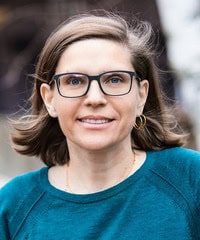
Guest
Related Blogs
-
June 19, 2022
Related Resources
Karp, Jonathan and Francesca Trivellato, eds. (2023). Classic Essays on Jews in Early Modern Europe
Trivellato, Francesca (2012). The Familiarity of Strangers The Sephardic Diaspora, Livorno, and Cross-Cultural Trade in the Early Modern Period.
Trivellato, Francesca (2021). The Promise and Peril of Credit What a Forgotten Legend about Jews and Finance Tells Us about the Making of European Commercial Society.
Get Philosophy Talk
