
Simple, Natural, and Honest
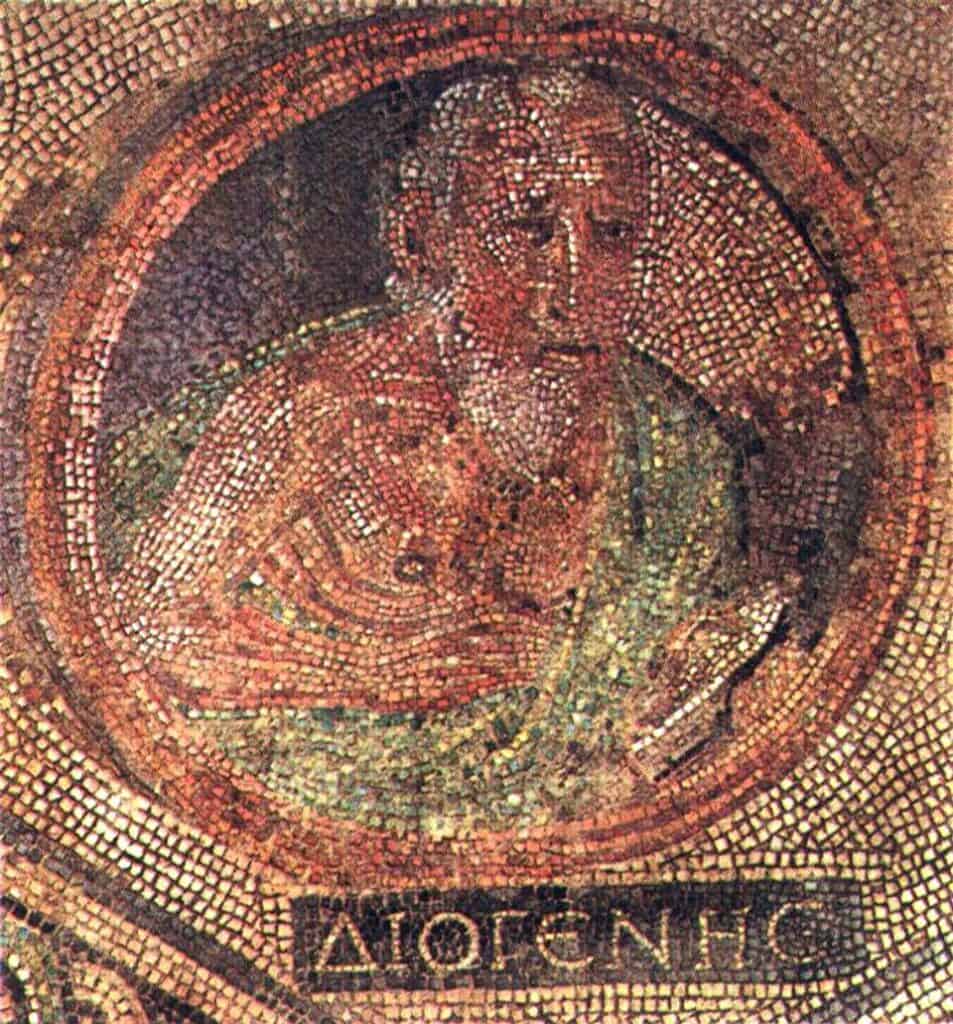
Diogenes of Sinope, the fourth-century-BCE Greek philosopher, invented a philosophical mode of living called Cynicism—not modern cynicism, which is about seeing the worst in everything around you, but ancient Cynicism, which is about living simply and honestly. And he practiced what he preached. Diogenes lived a wine jar on the outskirts of town, had no job, wasn’t beholden to anyone, and pretty much did whatever he wanted—including all his bodily functions out in the open. A later writer describes him as “doing in public the things of Demeter and those of Aphrodite.”
If that sounds mildly nauseating, Diogenes was just pointing out that human beings are animals, and encouraging us to embrace our nature instead of going against it. Of course, going against nature—insofar as it involves having a roof over your head, heat in the winter, and nice meals to eat—can feel rather nice. But Diogenes thought that all of that makes us weak. If you’re the kind of person who can be comfortable out in the open, fending for yourself, nobody can ever tell you what to do. Living the simple life is the road to ultimate independence.
You might reasonably worry that this independence can come at a high cost: maybe you’ll enjoy it for a mere couple of weeks before catching typhus, succumbing to hypothermia, or getting eaten by bears. But Diogenes has an answer to that. If you’re living a truly free life, he says you won’t be afraid of death. After all, once you die you’re not around to experience it, so there’s nothing to be afraid of. (This intriguing argument influenced a number of later philosophers.) And if you want to counter that by saying that all other animals make significant efforts to avoid dying, and Diogenes is telling us to live like the animals we are, he’ll counter by saying that we are a special kind of animal, one that has reason. And reason tells us that death is nothing to fear.
So there you are, sleeping on the icy ground, eating berries, and not caring about the predators and parasites that may send you to an early grave. What are you supposed to care about, according to Diogenes? Well for starters, he believed in honesty. And he was generous with his time and advice, so he must have believed in helping others to live a better life. And on top of that, he was a lot of fun. According to legend, Alexander the Great once came to visit him. “What can I do to help you?” asked Alexander. “Move,” said Diogenes. “You’re blocking my light.”
Diogenes was famous for his clever zingers like that; we could even think of him as doing philosophy through comedy. Whether or not we end up emulating his austere lifestyle, we can all have a lot of fun reading about him, learn a lot from thinking about his thoughts and questions, and being inspired by our guest— Inger Kuin from the University of Virginia, author of the new book, Diogenes: The Rebellious Life and Revolutionary Philosophy of the Original Cynic.