Kjellberg to Guest Blog
We at Philosophy Talk are pleased to announce that Paul Kjellberg who will be our…

We at Philosophy Talk are pleased to announce that Paul Kjellberg who will be our…

I admit to still being puzzled by the question why, when forgiveness is deserved, one can only request forgiveness and aren’t really in a position to demand it. I thought I’d ponder that question just a little bit more in this post. My hunch is that what’s wrong with demanding forgiveness, even when it’s morally deserved, has to do with what I’ll call the dialectical character of the relation between the forgiver and the to be forgiven.

Many thanks to all of you who called during Tuesday’s Philosophy Talk (May 3). We very much appreciated your interest! There are a number of fascinating issues we touched upon, and some we did not. Among the latter is the relationship between interpersonal forgiveness and political forgiveness.

In the movie “The Interpretor” Nicole Kidman stars as Silvia Broome. She grew up among the Ku, in the fictional nation of Matobo. When someone commits murder among the Ku, they are allowed to live for a year. Then they are dumped in a lake with their hands tied. The victim’s family members must decide whether to plunge into the water and save them, or let them drown.
We at Philosophy Talk are pleased to announce that Charles Griswold, our guest for today’s…
Over at the blog Left2Right, the philosopher David Velleman has an interesting post about moral relativism. Prompted…
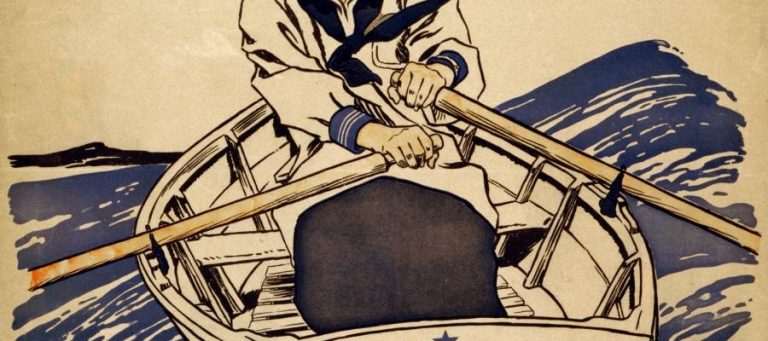
Some people naively associate propaganda with totalitarian regimes. Certainly, the Nazis, the Soviet and Chinese communists, and brutal dictators like Saddam Hussein have made heavy and sometimes brilliantly effective use of propaganda. But totalitarians may not need to be true masters of propaganda, since they often merely bludgeon people into at least apparent belief and acquiescence.
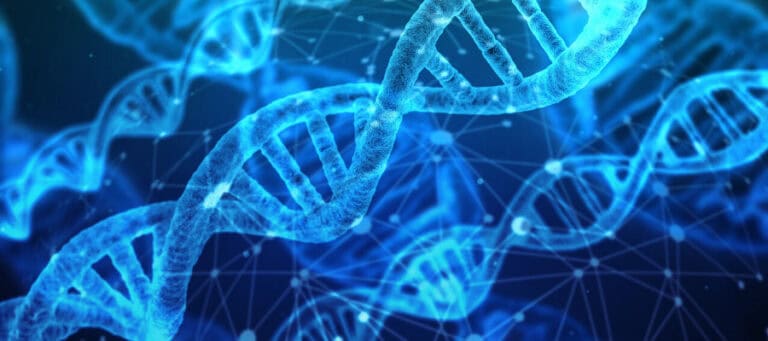
Do genes make the person? If you listen to popular press reports of new genetic discoveries coming out at fairly rapid pace, you certainly might think so. Lung Cancer Gene! Gay Gene! Genius Gene! Little wonder that many people believe — or should I say fear? — that genes somehow directly and invariably determine who we are.
You might want to check out the twelfth edition of the recurring Philosophers’ Carnival, a…

This is a response to Ken’s fascinating blog on naturalism, Schopenhauer and value. I’m amenable to his naturalism. But I’m not sure I see the problem of value as a matter of getting something out of nothing. It seems to me that values come out of valuing, and that valuing starts with an attitude we might call “caring whether.” As we look to the future, many facts seem unresolved.

There is a website called OnHDTV.tv that claims it “provides show reviews and previews, HDTV-specific…

I do not want to distract us from the “heavy” (no pun intended) issues to…

I’m thinking about where values and meaning come from and whether a metaphysics anything like Schopenhauer’s has the resources to make room for value and meaning. I think that the answer is yes. And I suspect that Schopenhauer fails to see this, if he does, because he buys into a commonly held, but I think deeply mistaken criticism of naturalism. I’ll call it the “you can’t get something from nothing” criticism.

Interesting show on Schopenhauer. Here is a way of thinking about our commonsense asymmetric attitudes…

Schopenhauer’s view of life certainly seems bleak and pessimistic. Consider the following description of the life of man (and animals): Willing and striving are its whole essence, and can be fully compared to an unquenchable thirst. The basis of all willing, however, is need, lack, and hence pain, and by its very nature and origin it is therefore destined to pain.

I admit it: I’ve been reading a lot of Schopenhauer, especially his Essays on Pessimism. They are fascinating, and extremely beautifully (and of course provocatively) written. Here’s a cheery and lovely passage: “Could we foresee it, there are times when children might seem like innocent prisoners, condemned, not to death, but to life, and as yet all unconscious of what their sentence means. Nevertheless, every man desires to reach old age; in other words, a state of life of which it may be siad; ‘It is bad to-day, and it will be worse to0morrow; and so on till the worst of all.”