Philosophers’ Corner

  • To ‘Get’ a Piece of Art? Maybe 20 Minutes

    How long do you think one should spend with a piece of visual art to “get” it? And what does it really mean to “get” a piece of art? What is art doing for us? And what explains the feeling of understanding art?

  • [AUDIO] Art and Morality

    It is not unusual for pieces of art, such as literature or cinema, to address moral questions. However, is art not seen as entertainment by most? Does its role as entertainment affect its ability to comment on morality? Does art have something to offer on ethical questions that other fields, such as philosophy, cannot offer?

  • A Country is a Country

    A bizarre, somewhat tongue-in-cheek meditation by Point Maganize’s Michael Kochin on the concept of a…

  • Why Is Analytic Philosophy Dominant?

    How did analytic philosophy come to dominate Anglo-American philosophy departments? If you think it’s because analytic philosophy is just superior, that might be your bias showing. Some seemingly important developments in the history of thought are determined by rather uninspiring and unglamorous contingencies like rivalries or personal idiosyncracies.

  • We Don’t Decide Who We Love

    We often think of a love as something natural and powerful—a mysterious feeling we experience spontaneously, deep in the recesses of our essential selves. But our love, and our capacity to love, may have a lot more to do with our society than we acknowledge.

  • [AUDIO] What is a Woman?

    What does it mean for someone to be a woman? While the answer to this question for much of human history may have seemed obvious, modern feminist thought objects to many longstanding ideas about gender. Is gender just socially constructed? Is anyone whom identifies as a woman, really a woman?

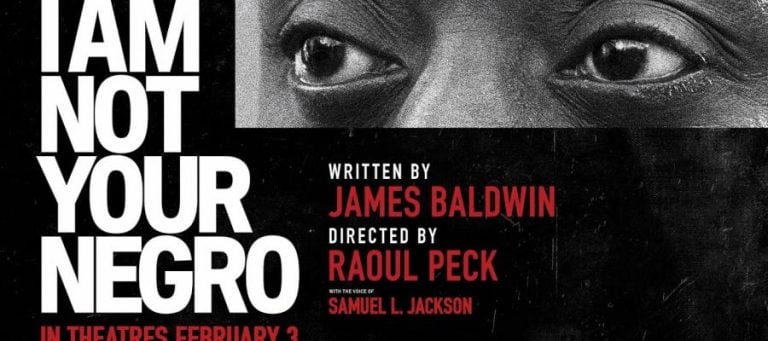
  • #FrancisOnFilm: I Am Not Your Negro

    I Am Not Your Negro, an extraordinary documentary by Raoul Peck, presents the critical relevance of James Baldwin to the violence that engulfs many African Americans today. But is it a movie made more for white liberals than for African-Americans?

  • Is Milo Really a Conservative?

    Although the National Review’s Jonah Goldberg doesn’t frame the aricle this way, I took his…

  • Free Speech on Campus

    When a Stanford student posts a picture of a lynching on a the door of an African-American student with the words “Go Home” scrawled across the bottom, that is a violation of the honor code. If Stanford expels the student, as I believe it should, it has abridged his or her freedom of speech. But it hasn’t violated the First Amendment.

  • Are Self-Help Books Useless?

    Do self-help books rely on a sort of magical thinking about the control we have over our lives? Do they feed into an idiosyncratic, American narcissism that prioritizes furthering our pursuits over helping others? Are they even worth reading in the first place?

  • The Responsibility of Intellectuals

    In these times, in which truth and lies are nearly indistinguishable, do all intellectuals have a responsibility to devote their efforts toward directly speaking truth to power and mobilizing for social justice? Or are some exempt from this responsibility to pursue their interests wholeheartedly, regardless of whether it directly helps the people or not?

  • The Philosophical Dimensions of Reparations

    The historical injustices perpetrated against blacks on American soil span four centuries and would be impossible to quantify. Even if we think reparations are owed, it seems impossible to settle who should pay, and who should receive them. But before we give in to the impulse to throw up our hands, let’s see if we can alleviate our sense of hopelessness by distinguishing components of the challenge injustices pose—the metaphysical, epistemic, and pragmatic dimensions to the question of how to address them.

  • [AUDIO] Why is Free Speech Important? (Ask a Comedian)

    In this podcast of Free Speech Bites, Burmese comedian and filmmaker Zarganar shares his experiences of being silenced for controversial speech and explains why he sees freedom of expression as a significant issue to this day.

  • Arendt on Totalitarianism

    Despite being over forty years old, Roger Errera’s interview of philosopher Hannah Arendt in the…