Philosophers’ Corner

  • On Morally Condemning the Past

    The American Pediatric Association is clear that spanking harms children. In light of this information, it’s fair to say spanking children is immoral and those who spank in this day and age are doing wrong. But here’s a tricky question. How should our moral judgments of the present impact our judgments of what people did in the past?

  • Why Should We Give Foreign Aid?

    Do we have a duty to help developing nations escape poverty? Or does foreign aid do more harm than good? What is the best way to end global poverty? These are some of the questions we’ll be in asking in this week’s show on foreign aid.

  • Subway Spreading and Personal Space (Part II)

    Last month, I provided a story of (man)spreading on the subway. It’s is a simple story about two people on a crowded train with different ‘preferences’ for personal space. But it leads us to a new understanding of the ways that even everyday gestures can trigger structural and systematic inequities.

  • Philosophical Freud

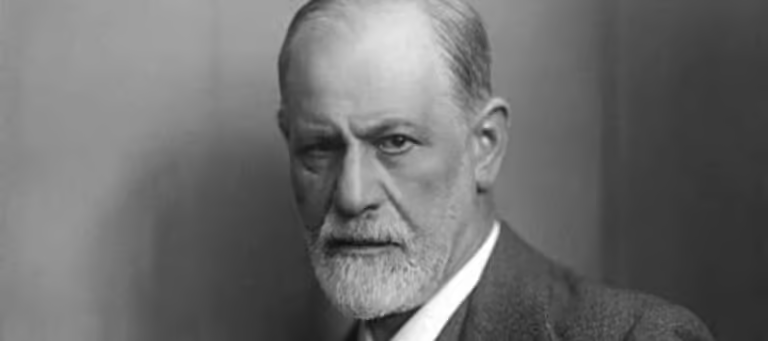
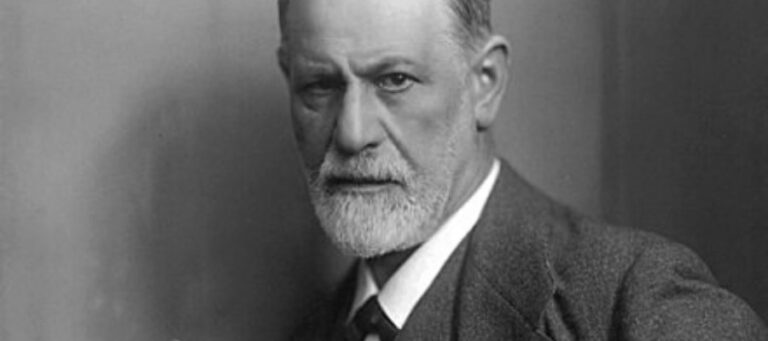
    Most people think of Freud as a psychologist rather than as a philosopher. And worse, they often think of his work as achingly passé and of the man as a pseudo-scientist at best, and a charlatan at worst. But I think that Freud was a great philosopher who still has a lot to teach us about ourselves.

  • Foucault on Power

    Michel Foucault had some truly brilliant and important insights about power, insights that have had an important influence on some of today’s most prominent activist movements, and that arguably should be having more of an influence on others. It’s true that there’s a lot to take issue with in his work, but there’s also a lot to be inspired by.

  • The Creative Life

    Is creativity something you’re born with, or can it be cultivated? Living a live of creativity sounds fantastic – but is it (possible) for everyone? If you think it would be wonderful to be more creative, you could try to do something about it, like take a creative writing class or something. But it’s probably not that easy.

  • Does Reputation Matter?

    How much should we care about our reputation? One can easily imagine a Stoic telling us not to care at all: it’s not something that is under our control, and so our job is simply to learn not to worry about it. But it’s not clear that reputation is something that is entirely out of our control.

  • Subway Spreading and Personal Space (Part I)

    The phenomenon of taking up too much room on the subway has gotten a lot of attention in the last few years under the label “manspreading.” But why does this spreading happen? And what does it have to do with men in particular? The answer starts with preferences for personal space.

  • Anti-Semitism 101

    Many Americans seem have a hard time grasping the idea of Jews as a race because they think of race mainly in terms of the color of a person’s skin. So they tend to frame anti-Semitic violence as attacks on the Jewish faith, rather than racist terror.

  • The Wrong Abortion Question

    Is abortion the murder of an innocent child? Or the exercise of a woman’s right to control her own body? Or maybe we’re focusing on the wrong question.

  • How #MeToo Helps Men

    A backlash to the #MeToo movement suggests if society’s default is to believe women who claim they were sexually assaulted, that will open men up to rampant false accusations, which women will exploit for malicious purposes. But the reality is that #MeToo promotes social habits that make men less likely to be susceptible to false accusations.

  • Can Reason Save Us?

    Is reason our only guide to the true and the good? Or can reasonable people disagree on what is true and good? Is it simply a mistake to fetishize reason? These are some of the questions we tackle as we take on the broader question of whether reason can save us.

  • They’re Only Lobsters

    The Great Chain of Being—the notion that the biosphere is partitioned into ranks, with humans at the top, and every other organism at some inferior position—is a way of thinking that’s incredibly difficult, if not impossible, to dislodge. Most of us have a strong conviction that it’s true, but we don’t have a clue why we think that.

  • The Philosophy of Westworld

    At first glance, Westworld is just another show about robots run amok. If you look a little closer, though, you find all kinds of other philosophical questions in play, and you find them being explored with impressive seriousness and subtlety. At the level of philosophical reflection, this is golden-age television at its very best.

  • Do They Believe in God?

    A question has plagued me since the latest cluster of scandals emerged from the Catholic church. The scandals are both about clergy who sexually abused young people and about the church hierarchy’s cover-ups. The question is this: do the priests who commit such abuses believe in God?

  • The Psychology of Cruelty

    Are people cruel because they lack empathy? Is cruelty always a matter of seeing others as less than human? Or are there some who simply enjoy seeing people suffer? These are some of the questions we’ll be tackling in this week’s show.