Author: Eliane Mitchell

  • An Argument for Regulating Automation

    As automation displaces human labor, a universal basic income plan may seem like the perfect solution. But are we being too fatalistic in accepting that automation will eventually obviate the need for human labor?


  • The Odyssey in Plain English

    The first woman to translate The Odyssey, Emily Wilson, tells the famous story of Odysseus, Homer’s cunning Trojan war hero, in a radically different way. She tells it in plain English. Wilson’s translation is direct, and her effort raises important questions around the translation of classical works.

  • Feminism and Philosophy’s Future

    Male philosophers may think feminist philosophy has nothing to offer them. Yet feminist philosophy has already enriched analytic philosophy and promises to deepen philosophers’ “serious engagement” with continental thinkers, argues Gary Gutting.

  • The Curious Lives of Octopuses

    Octopuses live in a world of paradox. Though colorblind, they change their pigment to match their surrounding area. Though brilliant, they average a lifespan of only 2 to 4 years. Other Minds: The Octopus, The Sea, and The Deep Origins of Consciousness, by Peter Godfrey-Smith, attempts to resolve these paradoxes.

  • Philosophy and Shelley’s Frankenstein

    With its 200th anniversary fast approaching, it might be time to revisit Mary Shelley’s Frankenstein. Check out this audio clip from the Philosopher’s Zone, in which the hosts discuss major themes and the predominant philosophies of the novel’s day.

  • A Moral Case for Meat

    From Peter Singer’s Animal Liberation to arguments offered by the ancient Greeks and Hindus, many philosophers and environmentalists have made convincing cases against the practice of eating meat. But could there be a moral case in favor of it?

  • Harmful Jobs, Net Impact

    Scott Pruit offers you a job at the EPA. His agenda is to roll back regulations that help protect the environment. So what should you do? Take the job and try to change the EPA from the inside? Or would it be more productive to work for an environmental agency whose efforts you support?

  • How does Consciousness Happen?

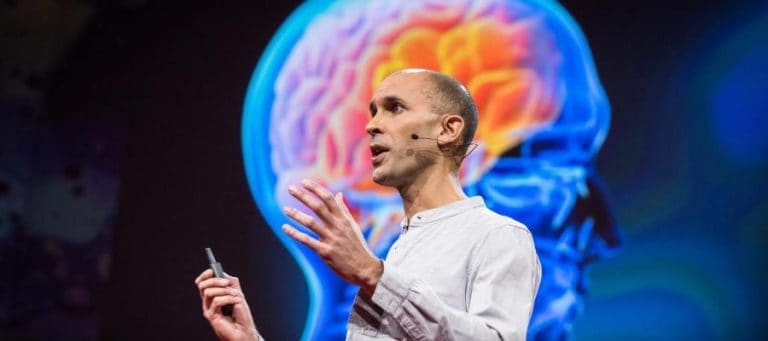
    How exactly does consciousness occur? Neuroscientist Anil Seth argues that it is a controlled hallucination. Having less to do with intelligence than we often think, consciousness depends on how the brain predicts its world to operate.

  • Should Hate Speech be Protected?

    Hate speech: it can exclude, stigmatize, and potentially threaten our progress toward equality. So why is hate speech protected under the First Amendment, and should it actually be protected?

  • Should You Fear AI?

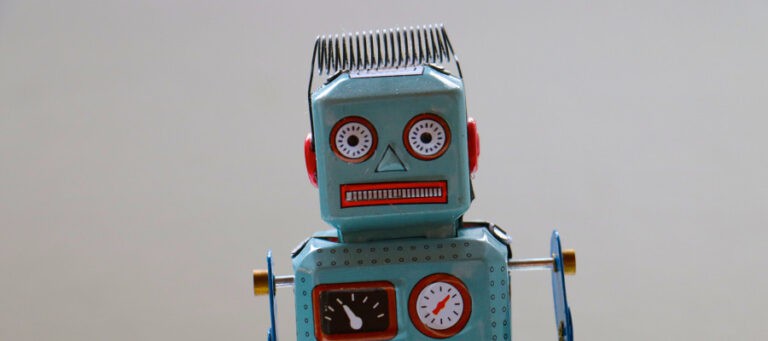
    AI takeover—the hypothetical event wherein computers or robots take over the world and obliterate humankind—is a common trope in science fiction books and apocalyptic movies. But is superintelligent AI really something we should fear?

  • Is Neoliberalism Destroying the Earth?

    Thousands of posters, books, videos, and social media exhort us to take four minute showers, eat vegan, carpool, and recycle in order to slow global warming and save Planet Earth, and yet, we have to ask, do these individual efforts really amount to much?

  • [VIDEO] Are You Living in a Simulation?

    Business magnate Elon Musk believes that it is highly probable that we are living in a simulated reality. With recent and rapid progress in photorealistic, 3D simulations, Musk maintains that the ability for humans to realistically simulate reality is not so far off. In fact, we might already be living in a simulation.

  • Dennett vs. Papineau on Consciousness

    Both David Papineau and Dan Dennett are famed materialists (the doctrine that consciousness can be fully explained by material and neuronal functions), so why did Papineau give Dennett’s book, From Bacteria to Bach and Back, a critical review?

  • Mental Health and Assisted Suicide

    Should people with a mental illness be helped to die if that is what they wish? When thinking about assisted suicide, should we distinguish between severe mental and physical health conditions? Or would expanding assisted suicide to mental health conditions simply provide an “out” to tough situations?

  • Robots and Sexthics

    Robotic yet eerily human-like, sex robots and their proliferation will promise a new revolution in sex. But what are the benefits of this technology and its potential ethical risks? For example, could it mitigate sexual assault? Or might it simply legitimate it?

  • How is the Internet Changing Friendships?

    How is the internet changing the nature of friendships? Does social media strengthen friendships or make them more shallow? And can liking a friend’s status or commenting on their Instagram meaningfully bolster your interactions with them in person?