[VIDEO] Philosophers’ World Cup
Even as we wait in anticipation for Sunday’s World Cup final between France and Croatia, there is at least one other major soccer event that we can watch right now: the “Philosophers’ World Cup” by Monty Python.

Even as we wait in anticipation for Sunday’s World Cup final between France and Croatia, there is at least one other major soccer event that we can watch right now: the “Philosophers’ World Cup” by Monty Python.

The puppets of Sesame Street and The Muppet Show should step aside — a new puppet show is in town. Featuring Noam Chomsky, Elon Musk, Karl Marx, and Ayn Rand as rod puppets, Manufacturing Mischief premiered in April at MIT.

In 2017, more than 67 percent of Americans owned a smartphone, and researchers expect that percentage only to increase over time. But how might this phenomenon, of always having our phones and access to social media at the tips of our fingers, impact the experience of being human?

The Twilight Zone aired its last episode in 1964. The show’s most prevalent themes distill to the following: “‘you are not what you took yourself to be,’ ‘you are not where you thought you were,’ and ‘beneath the façade of mundane American society lurks a cavalcade of monsters, clones, and robots.’”

The idea that consciousness is an illusion may be a familiar one. Thinkers like Daniel Dennett, Brian Farrell, and Richard Rorty espouse this basic notion. But is it, as philosopher Galen Strawson calls it, “the silliest claim ever made”?

Perpetrators of some of the worst atrocities in human history have used rhetoric that labels the group they oppress as animals or objects, like “vermin” or “roaches.” But is this kind of dehumanization required for humans to commit violent atrocities?

Some argue that American universities mainly cater to liberal academics and liberal thought. Is there a case to be made, then, for support of “conservative schools” in higher education? Journalist Rachel Lu holds this view in the affirmative.
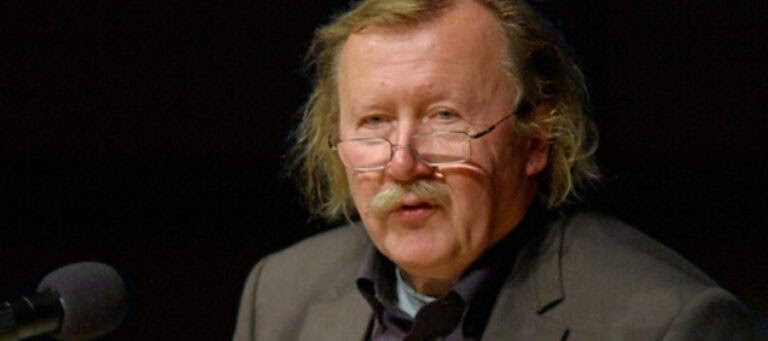
From The New Yorker, this delightful long-form piece, “A Celebrity Philosopher Explains the Populist Insurgency,” discusses Peter Sloterdijk, one of Germany’s most famous and celebrated living philosophers.

Young adult dystopian novels like Divergent and The Hunger Games may have ruled the marketplace in the 2010s, but now there’s a new trend in young adult literature. Stories of teens committing (or ideating) suicide have become the new obsession. But why?

The Good Place, a hit TV show, begins with a woman named Eleanor who wakes up in the afterlife. Eleanor learns that she has landed in “The Good Place,” even though she knows that she should have landed in the other place. Chidi, a professor of moral philosophy whom Eleanor confides in, decides to teach her to be good.

The words “misogyny” and “sexism” are often used interchangeably. But do they really mean the same thing? In an interview with Vox, Cornell philosophy professor Kate Manne draws a distinction between the two.

It might surprise you, but according to philosophy professor William Stephens, “The code of the Jedi is Stoicism 101.” The Stoics taught that “true power is self-mastery.” To live a good life, they also believed that one must live in harmony with nature.

Interested in learning more about 17th-century philosophy, but from a graphic novel? Father-son duo Steven Nadler and Ben Nadler co-authored Heretics!—a graphic novel that explains the history of philosophy during this period.

Often we are told that spending time alone, meditating, taking the Meyers-Briggs test, or traveling…
When is the slippery slope argument fallacious and when is it—if ever—compelling? This video from Wireless Philosophy gives a helpful explanation of the slippery slope argument and how to avoid committing a logical fallacy.

Hint: It’s not about willpower.