Machiavelli
May 3, 2020
First Aired: September 21, 2014
Listen


Niccolò Machiavelli is best known for arguing that people in power should use deception, force, and manipulation if those tactics are necessary to achieve their ends. In an age of unscrupulous politics and ruthless business practice, shouldn’t we be encouraging a move away from Machiavellian thinking? Then again, are we even sure that those “Machiavellian” views were really Machiavelli’s? If not, what did he really think, and what might we learn from him? John and Ken plot and scheme with Maurizio Viroli from Princeton University, author of Redeeming the Prince: The Meaning of Machiavelli’s Masterpiece.
- Government
- |
- Leadership
- |
- Plato
- |
- Politics
- |
- Power
John opens by referring to Machiavelli as a pragmatic visionary and champion of Republican liberty, but Ken sees Machiavelli’s work, The Prince, as a manual for callousness for political ends. John regards this worry as partly a product of myth. After all, the saying that “the ends justify the means” never appears in Machiavelli’s work. Moreover, this idea of political strategy at the price of morals traces back to other thinkers like Plato. John argues that we need cunning and pragmatic leaders, even if that requires lying. But Ken argues that some sort of limit on cunning leaders’ power must be imposed.
John and Ken are joined by Maurizio Viroli, author of Redeeming the Prince: The Meaning of Machiavelli’s Masterpiece. Maurizio argues that politicians should study Machiavelli because of his arguments against power, tyranny, and corruption, and to seek glory instead. Maurizio argues that the book concerns political redemption, written as a manual for rulers to reclaim their politics from foreign invaders. John asks Maurizio whether Machiavelli would have liked Mussolini, and Maurizio argues that Machiavelli would have detested Mussolini for one simple reason: Mussolini was a tyrant who was most interested in himself. Overall, Machiavelli never wrote highly of tyrants contemporary to his time or before. Instead, Maurizio references FDR and Abraham Lincoln as the kinds of leaders that Machiavelli would have supported, especially the latter for lying and providing misinformation to achieve a nobler goal. Furthermore, according to Maurizio, Machiavelli ought not to be considered a philosopher in the sense of how we usually understand the term; rather, Machiavelli was a political writer, playwright, and historian.
- Roving Philosophical Reporter (Seek to 5:44): Natalie Jones takes a look at self-styled Machiavellians, especially Tupac Shakur, who rapped under the moniker “Makaveli” and who studied Machiavelli during his life.
- 60 Second Philosopher (Seek to 44:30): Ian Shoales looks at Machiavelli’s misfortunes in how The Prince was likely not read by the people that he gave it to, was not published until after his death, and how his views have been distorted over time.3
Ken Taylor
Coming up…
Criminal Minds
Niccolò Machiavelli wrote, “If an injury has to be done to a man, it should be so severe that his vengeance need not be feared.”
John Perry
Was Machiavelli an unscrupulous theorist and advisor?
Ken Taylor
Or one of the most widely misunderstood political philosophers ever?
Niccolò Machiavelli
I have no servants here in Rome, my lord. Florence can no longer afford them.
Cesare Borgia
Ah, democracy, Signor Machiavelli.
Niccolò Machiavelli
They say it has its merits.
Tom Petty
It’s good to be kind, just for awhile, to be there in velvet, yeah to give em a smile.
John Perry
People associate Machiavelli with lies, deception, and manipulation. Was that really what he advocated?
Ken Taylor
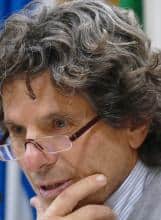
Our guest is Maurizio Varoli, author of “Redeeming the Prince: The Meaning of Machiavelli’s Masterpiece.
John Perry
The Life and Thought of Machiavelli
Ken Taylor
…coming up on Philosophy Talk.
Ken Taylor
Welcome to Philosophy Talk, the program that questions everything…
John Perry
…except your intelligence. I’m John Perry.
Ken Taylor
And I’m Ken Taylor. We’re coming to you from the studios of KALW San Francisco.
John Perry
Continuing conversations to begin at philosophers corner at Stanford University where Ken and I walk around professing philosophy.
Ken Taylor
And today we’re talking about the political philosopher, Niccolo Machiavelli.
John Perry
Machiavelli, Ken, one of the most astute political thinkers ever to have lived a champion of republican liberty, a pragmatic visionary.
Ken Taylor
The guy’s dead, you got to suck up to him a pragmatic visionary. Look, one of the in his book The prince, he championed ruthlessness and deception. He said, political leaders should do whatever it takes to defeat their enemies to stay in power. Pragmatic visionary.
John Perry
Yeah, well, tell me what’s wrong with defeating your enemies and staying in power. That’s a hallmark of a strong leader. What would you prefer a doormat, someone who just gives in runs away at the first sign of a threat?
Ken Taylor
Well, I I’m all for strong leadership. But what the trouble is, with what Machiavelli thought that called for things, a strong leader, is someone who achieves and holds on to power at any cost. Any cause, oh, please
John Perry
can you’re not going to try out that tired old platitude about how he says the ends justify the means. Are you Newsflash, Machiavelli, never even said that, okay? He
Ken Taylor
may not have said those exact words. But you can’t deny that that sums up pretty much Machiavelli’s thinking that lies, deceptions, manipulation, cruelty, even torture, all tools that a Machiavellian, a hungry power leader feels free to use at his own discretion.
John Perry
Look, anyone seeking positions of power can be described as power hungry? What does that mean? Just about every politician and head of state there is or ever has been? Those not interested in power need not apply for the job?
Ken Taylor
Yeah. But John, you’re talking about things I’m talking about the way things should be. I’m talking about the ideal. And that’s why I ended Republic, Plato, one of the great philosophers of all time said that the philosopher king, only philosopher king should rule and they should rule because they don’t want to rule they don’t want power. They’d rather be off doing philosophy, but for the good to the state, they reluctantly willing to rule?
John Perry
Well, yeah, and Plato also thought that philosopher king should lie and manipulate the common people. For God’s sakes, he thought, radical censorship, and even eugenics were all for the greater good of the citizens. I don’t see how you can hold Plato up as some sort of ideal and at the same breath, knock Machiavelli, they both think a good leader is going to deceive and manipulate.
Ken Taylor
Let’s set Plato aside. I don’t want to have to defend Plato to you. But let’s focus on the qualities of a Machiavellian leader. I don’t ask you if that’s really what we would want in a leader.
John Perry
Whether it’s what we would want in the real world can or in some lala land you’ve come up with in your naive little
Ken Taylor
brain? What’s that supposed to mean? Well, look, in the real world, we
John Perry
need cunning, pragmatic leaders willing to manipulate people in situations in order to achieve what’s best for the state. As Machiavelli said, they need to be part lion, part Fox. That’s why we have organizations like the CIA honesty and transparency and state of affairs would lead to unmitigated disaster looks,
Ken Taylor
I grant you sometimes you might have to lie to your enemies are those who would do us harm? That’s one thing but Machiavelli, Machiavelli and politicians goes far beyond that. Take someone like Karl Rove. And you know, there’s a guy who’s known for his win at any cost scorched earth tactics. And there’s a biography about him called Machiavelli’s shadow. And your point being well, if that’s the epitome of Karl Rove is the epitome of a Machiavellian politician, then I tell you, frankly, I think the world would be better off without that kind of leadership.
John Perry
Let me ask you, do you think Karl Rove acted in the best interest of our country?
Ken Taylor
You know, like when he stole that election from Gordon No, I do not.
John Perry
Well, I’m sorry to tell you this, buddy. But he’s not Machiavellian. I mean, if you want to pick a Republican Machiavellian pick Dwight Eisenhower, right? He would he was so good at it. Nobody noticed. Machiavelli said he loved his country more than his own soul. You can’t get that. Just take any ruthless power hungry, when at any cost politician can call a Machiavellian. If their actions are not done in the interest of the state, then they’re just not Machiavellian. Yeah, you
Ken Taylor
know, you may have some kind of subtle scholarship on your side. I don’t know. But I’ve got popular culture on my side. And to prove that point, we sent our roving philosophical reporter Natalie Jones to examine some self styled Machiavellian from popular culture right up close, she files. This report.
Natalie Jones
Niccolo Machiavelli has inspired How To books For business leaders, mafia bosses and parents, he’s inspired a graphic novel and a comic book, and even an MS DOS video game. You can take a psychology test to assess your level of Machiavellianism, how willing you are to use deception and thievery to advance your own cause. But it’s people fascinated by power that really seemed to be captivated by Machiavelli,
Tony Soprano
you know, most of the guys that I know they read Prince much about. Go Mela, go and get the Cliff Notes once you choose Okay.
Natalie Jones
Tony Soprano preferred the Art of War by Sun Tzu, but other mobsters have taken valuable lessons from the prints. In the 1993 movie A Bronx Tale, a mafia boss explains Machiavelli to a protege.
A Bronx Tale
Is it better to be loved or feared? So the question it’s nice to be both, but it’s very difficult. But if I had my choice, I would rather be feared.
Natalie Jones
But what might be the most surprising homage to the philosopher is a posthumous album from the rapper Tupac Shakur called the seven day theory, where Tupac takes on the alter ego Makka Valley
Travis Gosa
Tupac wasn’t just the rapper, but he was also a poet, playwright, actor. And as the character Machiavelli wanted to imagine himself as not just an artist, but also as a philosopher or educator,
Natalie Jones
Travis Gosa teaches African American Studies at Cornell University. He spends a couple of days on Tupac every year in a class he teaches on hip hop, because he says well, Tupac became known for embracing a thug life ethos. He didn’t start out with that message.
Speaker 1
But Brenda’s barely got a break. a damn shame to gherkin Holly spelling. That’s not our problem that’s up to Britain’s family. Well, let me show you how it affects our own commitments
Travis Gosa
while he was born on the East Coast. Once he became a West Coast artists, he found that very few people were interested in his black power, socially conscious lyrics.
Natalie Jones
Tupac was a big reader all his life, but it’s widely believed he studied Machiavelli seriously when he was in prison in 1995, serving time for sexual assault
Travis Gosa
to posits was intelligent to use a book that is not only a classic philosophical Matisse, but a book that many individuals who have been incarcerated may be familiar with.
Natalie Jones
Tupac was released from prison in late 1995 and recorded the seven day theory the next year, he was shot and killed in Las Vegas in September 1996. The album was released after his death and became a big success hitting number one on the Billboard charts. The song that maybe most mirrors Machiavelli’s teachings is called blasphemy.
Travis Gosa
To park on this track, is asking whether or not it’s better to be loved, or feared and how to avoid being hated. And he actually comes up with the ideas that pretty much people are going to hate you no matter what. So don’t be too concerned with being hated.
Natalie Jones
And then there’s advice for being on your guard.
Tupac Shakur
enemies close
Travis Gosa
to pockets painting a very dark and grim image of human nature. He believes in many ways that the downfall of a leader of a ruler will come from within.
Natalie Jones
To this day conspiracy theorists and fans pour over the album and compare notes with Machiavelli’s work for clues about to pox death and signs that he might still be alive. For example, Machiavelli wrote about strategically spreading rumors about the deaths of prominent people, and some made the leap to the idea that Tupac faked his own death. It doesn’t appear that the actual Tupac will be coming back. But Travis gosa says we can take some messages from the album to puncture
Travis Gosa
core in the use of Machiavelli, seem to be trying to signal a rebirth of Tupac and the death of Tupac signaled a rebirth of Tupac that will be focused on trying to use the music to spread something beyond gangster entertainment.
Natalie Jones
For Philosophy Talk, I’m Natalie Jones.
John Perry
Thanks, Natalie. I have to admit, I learned quite a bit about the thought of to POC who thought it was better to be feared than loved and got shot. There’s a lesson there for all of us, I think. I am John Perry with me as my fellow Stanford philosopher Ken Taylor,
Ken Taylor
and today we’re thinking about Machiavelli. We’re joined now by Maurizio Viroli. He’s a emeritus professor of politics from Princeton University. He’s currently teaching part time at the University of Texas at Austin and he has the distinct pleasure of being a professor through a Political Communication at the University of Talion, Switzerland in Lugano, He’s author of redeeming the prints the meaning of Machiavelli’s masterpiece. It comes to us today from Florence in Italy. Meridia Welcome to Philosophy Talk.
Maurizio Viroli
Thank you very much for the invitation. It’s a great pleasure and honor to talk about Nicola as I call him. Since he’s almost now an old friend of mine. We I’ve been studying for about 30 years. It’s an enduring love
John Perry
30 years. That’s a long time and you’re in Florence. I envy you that. Now, as I say, you’ve been studying Machiavelli for a long time. You just wrote a book about him so worried to? I mean, how did you get so interested in Machiavelli? Is he required reading for all Italian philosophy students?
Maurizio Viroli
No, no, no. I got interested in Machiavelli via Rousseau, when I was when I got my PhD at the European University Institute in Florence. I studied Rousseau and it so happened that I’ve noticed that Rousseau was an admirer of Machiavelli. And then in for I went back backward, and I started started starting again in the 80s. And I’m still working on him personally.
John Perry
So you’re not only studying Machiavelli, you, you kind of advocate more people studying Machiavelli. Now. There is no shortage of unscrupulous politicians in the world. So is it really a good idea to be promoting the works of Machiavelli?
Ken Taylor
Did the word said politicians study Machiavelli? We do.
Maurizio Viroli
Yes, politicians should stand in Machiavelli, for one main reason because what Machiavelli tried to teach politicians unsuccessfully, in his own time, was one you must try to emancipate your country from foreign domination. If you are under foreign domination. Second, you must free your Republic from tyranny if you are under the tyrant. Third, you must free your county from political corruption. And fourth, you should not aim at power but at glory. That’s what Machiavelli taught, denies. The next question, what does it take to attain glory? And it takes greatness of soul. magnanimity, it takes virtue, it takes courage, it takes wisdom. And it takes a kind of moral preparedness to be prepared to enter in evil he needs to be.
Ken Taylor
Rachel, your Machiavelli doesn’t sound like much like the Machiavelli of popular imagining. He sounds like a radically different character than what most of us think and we’ll have to dig into whether you’re right or popular, imagined imagining of Makia Valley is right, but we’ll get to that after a break. You’re listening to Philosophy Talk. Today we’re talking about Machiavelli with Murray to vikhroli, author of redeeming the prince, the meaning of Machiavelli’s masterpiece.
John Perry
What did Machiavelli really think? We all want leaders who are devoted to the state? Should they be conniving? Should they be ruthless? Is that what Machiavelli was all about? Or have we misunderstood him all this time?
Ken Taylor
Machiavelli Machiavellian ism and the truth about his great work the prince, plus your calls and emails, when Philosophy Talk continues. To weld around. I want
John Perry
to be one way to achieve world domination is to study the work of Niccolo Machiavelli, particularly his book prints. I’m John Perry. This is Philosophy Talk, the program that questions everything
Ken Taylor
except your intelligence. I’m Ken Taylor. We’re talking about the political philosophy of Niccolo Machiavelli,
John Perry
our guest is merici Overall, a long time professor of politics at Princeton. Now America is the author of redeeming the prince, the meaning of Machiavelli’s masterpiece So
Ken Taylor
Marie to lots of people think that the prince is a kind of how to manual for ruthless leaders. You say that it’s a book about really about political redemption. What makes you think that what do you mean it’s a book about political redemption?
Maurizio Viroli
I mean, that if your country is under political under foreign domination, you need to redeem yourself from foreign domination. That is to say, you must be capable of repealing foreign armies invading you every two years.
Ken Taylor
So okay, but what’s all this stuff about? So, like I said, the common interpretation it’s a how to manual for rulers in power, once that got to do I know Italy at the time was broken up into separate states and not unified and all that but I mean, I don’t see what the manipulative, deceptive and all that stuff has to do with political redemption connect those two themes for me.
Maurizio Viroli
It has because if you are in a war, you might be forced to use fraud or not to keep your words or to change your political alliances unless you want to be defeated. It’s not fun to be defeated in a war.
John Perry
So take Mussolini, do you think and set aside the fact that eventually he was defeated? Apart from that? What would Machiavelli have admired his leadership technique?
Maurizio Viroli
A yearly was ever detested Mussolini for one simple reason that he has explained in the discourse is only the book one chapter 10, namely that tyrants are the worst possible human beings they need to they must be despised and destroyed. Mussolini was a Titan, therefore, Machiavelli will not have loved Mussolini at all. In addition, Mussolini was simply an idiot.
Ken Taylor
What’s the difference? Okay, tell me the difference between a tyrant that Machiavelli would despise, and a prince that Machiavelli would admire what are the one of the characteristics of a prince that make them different from a Mussolini or Putin or a Stalin?
Maurizio Viroli
Its goal. A, for Machiavelli, a great prince is someone who is serving the common good of his country. A tyrant is someone who is serving his own interests and the interests of his protegees. Now, what Machiavelli has written about tyranny is eloquent and clear. There are no doubts about it, he was very well aware of the difference. And he has never written a single line in praise of any tyrant of the past or his own times.
John Perry
So in terms of contemporary, not contemporary, but 20th century political leaders, it sounds like Franklin Roosevelt, who was very, very, very much honey,
Maurizio Viroli
ha says, that’s a leader who Machiavelli would have been my leader in, in our history. I mean, American history, because though I am, I was born in Italy, I am an American citizen, who another American leader whom I clearly would have loved and was the old Abraham Lincoln, who was capable of attaining goals of redemption, and emancipation. And when it was necessary, as he says, for instance, when he tried and when he passed the teen Amendment to the Constitution, he was a very wise at Bing making promising, a little bit of cheating. Now, who is going to blame Lincoln for having promised jobs, money making also a little bit of this information and misinformation to the Congress, if the goal was to add the 13th, Amendment to the Constitution passed so that slavery was abolished in the United States?
John Perry
Well, maybe we should send Obama a copy of the prints, because many of us, like his goals, I think he’s devoted to the state, but we’d like to see a little more cutting and political effectiveness. You’re listening to
Maurizio Viroli
someone like Putin or someone like the terrorists, you really want to keep your promise when you’re discussing or you’re dealing with the leaders of that kind. That’s what Machiavelli says, this course is only the Book Three, chapter 41. Fraud is always detestable, unless you are dealing with enemies who are using fraud. Now, if you are defeated, who is going to praise you? Nobody. That’s simply that’s exactly the Machiavelli’s message is about praise and blame. Just one footnote. I think that Machiavelli was not a philosopher in the proper sense of the term. He was a political writer, a playwright, that historian and above all a point.
Ken Taylor
Thanks, Mauricio, you’re listening to Philosophy Talk, we’re talking about the philosophy of Niccolo Machiavelli. We’d love to have you join this conversation. And Stephen from Columbia, Missouri is on the line. Welcome to Philosophy Talk, Stephen.
Tony Soprano
Hello, sir. I would like to know what pieces from Machiavellian what is the way to peace from Machiavelli. Okay. Thank you very much, sir. Murray to
Ken Taylor
what’s what is peace for Machiavelli? And what’s the way to peace?
Maurizio Viroli
The that’s a marvelous marvelous question, because for Nike, Nike really has a very nice poem in a want it’s called the Golden ask, but it means the animal don’t get me wrong, it because sometimes, you know, I’m, I am afraid to have the wrong accent. So in any case, it’s about an animal, it out biographical poem, he has this wonderful line that God doesn’t love doesn’t want war, that this is the highest blessing. But he may also makes another important, no reference to the theme of peace in the book called The Art of War, that he wrote in 1521. He says, You must, you must love Have peace and be capable of fighting a war because he knew that if you are defenseless, you are likely to be invaded and conquered. And therefore, if you really want to defend not only your peace but your liberty, you need a serious army. That’s the teaching of McKeon, and he was absolutely right.
John Perry
So so Kevin Maritza, we’ve got some email from John and Berkeley. And he says, seems like an interesting question. He says, Machiavelli seems to want religion to be at the service of political and military needs. Yet at the same time, Machiavelli wants full reverence for religious rights. Are his views on religion a bit inconsistent? Can they be reconciled?
Maurizio Viroli
Machiavelli certainly wanted a religion wanted every Legion for free people’s. That’s what he wanted. He was a severe critic of the kind of Christian religion that he was experiencing in Italy, a religion that was he was teaching you morality, that was teaching the principle that this life is not that important, because this is the third life, the life that counts. Materially did not want this type of really want religion that would simply say, as you guys in this course, is Book Two, chapter two, that you must love your country, Davey Amarela, to a par three, and you must be strong in order to defend the ADEA sarafan patella defend. That’s what he writes. And they think that oh, just to close the argument, I think the kind of the Kountry that is closer to your Valley’s idea, in terms of the relationship between political liberty and religion is a country that we know very well is the United States of America.
John Perry
So we’ve got another email from Greg Slater, one of our regular listeners. He says everyone in a position of power agrees that the most disastrous thing a leader can do is level with the people you have power over. I guess that’s Greg’s opinion. Did Machiavelli agree that lying constantly is the most essential thing about good leadership? Did he really believe in lying to the people?
Maurizio Viroli
No, he says exactly the opposite. In the chapter eight to men theory, I cheated the need to be trained citizens to lie all the time gives you my ensure your power, MichaelI writes, but does not give you glory. And as I stated earlier on Machiavelli repeats over and over again, that the mark of a true leader is to aspire not to power per se, but to glory.
Ken Taylor
Yeah. So though, Marissa, I think it is right that people do don’t read the prince closely enough, because it’s, it’s really important for him, that you have a stable state that the state not be subject to constant revolution, and all these things. And you can take these extreme measures, like lying or torture, in extreme circumstances, but he’s very, very, very, very much alive to the cost to the prince of taking these things. And you should always, it seems to me he believes prefer the less extreme measure, right? If you can be loved, be loved. If you have you can’t be loved, be feared, but don’t be hated. And the things that will be make you make you be hated, is seizing them. He says, seizing their property, and especially their women, right? And don’t don’t do that.
Maurizio Viroli
Don’t do that. No, no, is not is risky business and this useless, and it’s counterproductive. The word said Machiavelli uses indicate if you read the text with some attention, how reluctantly, Machiavelli offers the advice that there are some circumstances in which you must be prepared to learn not to be good. That’s what he says not to be good, or entering evil, reluctant. He has never said anything, like, do whatever it takes, and now allow me to make a an observation that refers not to Machiavelli’s texts. But to Machiavelli’s the person the man, like either was an impeccable servant of their public of Florence, the heat, they tried him after he was fired in November 15 12. The regime of the mages and hostile regime regime that put him in prison under the charge of conspiracy, they tried to verify whether or not he had misused the enormous sums of money that he had available when he was second that he, they found they found the committee that he was innocent. He couldn’t really say my horn is my poverty is the proof of my honestly and no one has been able to contradict him, not even his enemies. So we are talking about extremely honest, high rank Officer of their family who has given advices on how to keep alive Barry Barry doesn’t seem to me to be a despicable goal yet. Am I wrong? You’re listening
Ken Taylor
to floss, we were talking about the philosophy of Nicoma Machiavelli, we’d love to have you join this conversation. And Lauren from Berkeley is on the line. Welcome to Philosophy Talk, Laura.
Speaker 2
Much. My question is, is the theory that the prince was written satirically still taken? Seriously?
Ken Taylor
Good question. What’s the answer to that Marie do is that is that no, no,
Maurizio Viroli
no, no, he was a stream you see, is Mikey early. Was it a satire zero to comedy that is really aesthetically Mandragora? I mean, if you read or if you see it, performance is even better. Now. Machiavelli was extremely serious. The idea that the brain says that is a tie, goes back to the work of an Italian jurists migrated to Oxford in the 16th century, and then was refreshed in refinance them by Spinoza. Bale did the whole Andrew so but they wanted with that theory to save Machiavelli from the bad reputation that that the prince, the broker calls to him that so they say the prince is just a set, I didn’t really mean it. Job is the series work is are the discourses only? Well, let’s not let’s discard and discount the praise number mCherry was extremely serious in the prints. And there is no contradiction in my view between the Princeton that his course
Ken Taylor
teeth from San Francisco San Juan, welcome to philosophy, Keith.
Speaker 2
Yes. Good morning. My question is, under what circumstances can an essentially benevolent and effective leader not the Machiavellian to some degree?
Ken Taylor
That’s a good question. I would think I I’m guessing that there’s no circumstances in which under which a benevolent leader can fail to be Machiavelli. I think Machiavelli thinks this is what leadership amounts to, but what do you think?
Maurizio Viroli
I’m not I’m trying. I’m trying to think, What is wrong in Machiavelli’s advice? He and I can forget for a scruples for a good leader. I can tell you this Machiavelli in his advice is in his counsels, in his exhortations. Or as many times wrong, for instance, when he suggested the Pope Clement, the servant to armor, the peoples of Romania, or are there suggestions, some very practical methods that he offered? In the when he was wrong? You know what, in what sense he was wrong, he was wrong because he was aiming too, Too high and too difficult tasks. Just consider this. Can a realist the political theorist or writer suggest in early 16th century Italy to emancipate Italy from foreign domination? That was unrealistic? Or Thurman CPT, Italy from corruption, totally unrealistic? So Machiavelli, as he said, sometimes was more than one time was wrong when he was wrong when he was suggesting political ID. Were too high, at least for the 10 years.
John Perry
So So Machiavelli when he erred erred on the side of being idealistic, just the opposite of the stereotype. So
Maurizio Viroli
he was idealistic. And if you his friends, who are real realists, for instance, then your knowledge, master of political realism, Mr. Francesco Richard, wrote of Machiavelli that he was too keen to have two inventive fantasies imaginative doing imaginative political solutions. That is, that’s why Machiavelli is, to me, so attractive, tried to be a realist, but he had the mind of a poet you’re listening
Ken Taylor
to Philosophy Talk, we’re talking about Machiavelli with Maria Maria Virol, the author of redeeming the prince, the meaning of Machiavelli’s masterpiece
John Perry
and Machiavelli. His ideas are are Machiavelli’s ideas still relevant in the world of politics today, which politicians are Machiavellian in the true sense of the world and which are not
Ken Taylor
from the Prince to the President when Philosophy Talk continues. Often people
John Perry
get the power By using Machiavellian methods, but what does that mean? Exactly? I’m John Perry. This is philosophy talks, a program that questions everything
Ken Taylor
except your intelligence. I’m Ken Taylor, I guess is my Richie over Rowley from Princeton University author of redeeming the prints the meaning of Machiavelli’s masterpiece, and we’ve got a caller on the line. Martin from San Francisco. Welcome to Philosophy Talk, Martin. Hello. Hello, what’s your comment?
Tony Soprano
Okay, I have to get a good answer on a comment, this question, is it? Is it the that the Western style democracy, it’s working, like working western style democracy? I don’t know whether it be there yet or not. But is that the Western style democracy seem to be in direct contradiction or canceling the Machiavellian teachings, you know, our checks and balances, free press and all that stuff. I will make the comment.
Ken Taylor
Okay, that’s an interesting question. What do you think? Yeah.
Maurizio Viroli
I think that Western style democracy and particularly the principle of checks and balance and balances is a principle that can be traced in my galleys works particularly in the discourse is on Levy, where he outlines and explains and recommends as the best form of government what he calls gov MC, Mr. Mix government, in which there are three elements, the monarchical element, the aristocratic element and the Republican element. And each component must check and balance the other components. So the monarchical elements should be restrained by the Great Council and the Senate should be restrained by the president or the lifetime on felonious. We normally associate the theory of the checks and balances in with the 18th century political thought, but in fact, the most remote roots of this idea, which is vital in our democratic politics, can be traced back to Machiavelli, at least to Machiavelli, if not to classical antiquity, in particular, to the works of Polybius. In his sixth book Sumeria, is history spiritual,
Ken Taylor
a lot of people would say, I think wrongly, well, Machiavelli had sort of two political theories, the political theories of the Republic, about the Republic’s and political political theory for princes and monarchies. And they’re kind of inconsistent, and people worry about that. But I was actually struck in rereading the prince in preparation for the show, cuz I was thinking about asking you about that. But there’s a part where he’s telling you about the monarchy in France, and why it’s a good model for a monarch, because one of the things that the prince should not do is get the nobles upset, right? shouldn’t get them upset, but they got to control them. They can’t let them run rampant, but they got to control. And in France, he said they had this parliament and the parliament deals with a nobles, and it kind of intervenes between the people and the nobles. And that’s a really good thing, because the prince doesn’t have to stir up the nobles and doesn’t have to, you know, and I thought, well, that’s really clever. I mean, so I think I think his political thought is much more nuanced than sort of common reception gives it gives it credit for what do you think about that?
Maurizio Viroli
First of all, allow me to clarify the first issue that you have raised. I don’t think that I’ve to Machiavelli’s the Republican, monarchical, because if you read the prints, there is not a single line about the successor how to trance transfer the power of the brains to the successor, how you inherit the political power. It’s not about establishing a monarchy. The brains is about the Redeemer is about a mythical figure capable of emancipating Keaton. But let
Ken Taylor
me just interject one thing, just so you can clarify. When he does talk about all kinds of different ways a prince can come to be a prince, by, you know, by inheriting a state by a prince by crime, a prince who puts down an interaction and becomes the prince, a prince by luck, who’s just given anything’s all these different princes are in different situations and have a different set of problems. So there is at least that write about how you come to be a prince.
Maurizio Viroli
Because Machiavelli explains to you the various types of principalities, about hereditary principalities, he spends one line he doesn’t either discuss them. Now what is interesting is to compare Machiavelli’s prince with a hundreds, or at least a fair number of books on the same subject written in the same period and the were all addressing the problem how to establish the principles of hereditary role, and my theory is silent about that. What I think we should focus on to understand Machiavelli’s message is the last chapter, where he explains this myth of the Redeemer, and he lists who are the heroes are the people that the prince should try to imitate. And there are three one is Moses, the other is the Zales. And the other is Cyrus. These are the examples in my gallery lists. And makaira is working and writing under the assumption that human beings tend to imitate great examples. These are the examples he indicates not of monarchs, who have been in power for a long time. He has also an important discussion on monarchies in the discourses only, in which he explains basically to sum up his point, which, in fact, I’m translating it literally from Eternia is that the government of the people is preferable to the government of princes, Book One chapter 58.
John Perry
So so I’ve got a very timely question that’s come in over the internet, from Laura in San Francisco. What would Machiavelli think about the independence referendum in Scotland is a no vote mean that Scotland is unredeemed or redeemed?
Maurizio Viroli
It’s about this Scottish people to decide they have decided that they don’t feel oppressed or so pressed or so dramatically oppressed under the British and the British in the United Kingdom may have decided to stay within the United Kingdom is that is that simple. My own decision, I would like to say that, for Machiavelli, if you really want to emancipate yourself from foreign domination, you must be serious, namely, you must be prepared to fight for it. I don’t see the Scott’s been willing to put up a fight.
Ken Taylor
I want to, I want to ask you. One last question.
Maurizio Viroli
Did we ski over their
Ken Taylor
marriage? I want to ask you one last question about that comes from the more common reception of Machiavelli, because there is this thing, he talked about Abraham Lincoln and, and, and Franklin Roosevelt and Moses. But here’s the thing that one does get when reading the prince, the Great Leader sometimes cannot be constrained by what he thinks are real considerations of like objective morality. Like if if I’m the leader, and I say, Okay, what morality forbids? I will never do, then that’s that’s the potential for disaster. What morality forbids? I may reluctantly do, but I sometimes have to do with morality for bids. That’s one of the things that that makes it uncomfortable. We don’t want our leaders just to take the interpretation of what morality requires and doesn’t require into their own hands.
Maurizio Viroli
Do you prefer John a leader who is unable to use fraud or to lie or even to perpetrate perpetrated cruelty? A, even if that inability is the eye and to use fraud and to use cruelty costs, independence, the liberty and the peace of your country? Are you prepared to say that?
Ken Taylor
I know that’s a tough thing? That’s and that’s where Machiavelli gets you to write but but suppose the leader merely thinks abrogates unto himself, unchecked that judgment and merely thinks that I have to lie, cheat steal here, right, because that’s what our leaders do all the time. They think they have to do the hard, dirty work that the people don’t have the stomach for. And here’s another thing, Machiavelli the prince is about, although it’s not the text, it’s kind of the subtext, he says an awful lot about human beings and human nature, and what what the mass of people are like, and it’s not a pretty picture. So if the leader thinks, oh, the masses are this the other thing, and I have to, it seems to me that I’m not sure what checks the leader in that in that way of thinking.
Maurizio Viroli
Well, I, I think that is wise to assume that human beings are malignant, or fraud, or selfish, as arrogant or ambitious. They are deceitful. That’s what they are, oh, maybe I am a little bit. I’m able to be affected by the fact that I’ve been leaving many, many years in Italy. But
Ken Taylor
you said that not us.
Maurizio Viroli
I say that then I can say it loudly. Oh, is that Machiavelli? In the discourses on levy has a wonderful line, that he when he writes that because of the church of Rome, we turn yourself become sons or any Jonica TV without religion and wicked. So Machiavelli as this image of his fellow said, Italian citizen, but what I think is the political relevant issue here is Is it? You cannot assume that human beings are good you. It’s highly unwise to do that in politics, human beings are good. Politics brings about the worst part of human beings. And it is extremely unwise to assume that they are no, no, they are not weak. They are not ambitious. If you really want to do great things in politics, and I stress it for Machiavelli, what really gives your glory is a politics of emancipation. That’s what the policy politics of redemption, the word that Redentore, a redeemer is the word that he likes most. If you really want to achieve you must be well, that’s what McKarrick says, to enter it in evil, which means not to stay forever in evil. So Maria clean times, to my Italian political leaders. Don’t get Machiavelli as someone who is allowing you to do whatever you want.
John Perry
So Maria, I have a question for you probably the last one we have here. If Machiavelli could be resuscitated brought to life, and put in, put in the Oval Office to to advise Obama, taking into account that Americans maybe are a bit nicer than Italians, but still needs a strong leader. What advice do you think Machiavelli would have for our beloved prince Barack Obama?
Maurizio Viroli
I think first of all, he’s Nikola could be resuscitated from his grave in Santa Croce where he stopped by every morning to be to begin my day in the right manner. I would love to have dinner with him would be so much fun. I really would love to that’s what is my dream. But in the Oval Office, first, he would shake Barack Obama’s hands. And he would congratulate him on two issues first, because he has been able to pull out from Iraq. That is an absurd war. unjust war. unjustly for no good reason whatsoever. Prepare with useless lies from many American political leaders said that goes these grace and embarrassment for Americans all over the world. That’s not the way to serve your country, but you will also praise our President Barack Obama, because as I remember correctly in the first campaign, 2008, Barack Obama has been able to generate in the American people in the young people. I’ve seen it in Princeton, a sense of hope of civic strength, commitment, integrity, that is exactly what a country like ours needs.
Ken Taylor
So Maritza, on that note, I’m going to thank you for joining us. It’s been a great conversation.
Maurizio Viroli
Thank you. It was great being with you all is a pleasure discussing with people like you.
Ken Taylor
Our guest has been merici Overall, he is a professor of politics from Princeton University joined us today from Florence, Italy. He’s author of redeeming the prince, the meaning of Machiavelli’s masterpiece. This conversation continues at philosophers corner at our online community of thinkers where our motto is Coda toe Ergo Blago, I think, therefore I blog, and you too, can become a partner in that community by visiting our website Philosophy Talk dot O R. G,
John Perry
now conniving and unscrupulous but high minded an idealistic it’s Ian Scholes, The 62nd philosopher,
Ian Shoales
Ian shields Machiavelli’s the prince is part of a literature sub genre called mirrors for princes written for kings starting our histories path, taking the form of moral instructions, etiquette tips, stirring biographies of leaders gone by and so forth. The same year the prince was written 1516, Erasmus put out a more typical model of the genre, the education of a Christian Prince. These things were written to reflect the predicted glory of the king and bring glory to the writer. The prince was written during a period of exile, Machiavelli been unable diplomat for his native foreigners for 14 years, but he was also his own worst enemy too smart for his own good as they say, sending off in temperate literature, the wrong people abrasive and brash. He was also often in the wrong place at the wrong time and 1513 two would be assassins of Giuliana Domenici made list of people they wanted to tell about their plans. And Machiavelli was on a bad luck. He was jailed for three weeks and tortured, but he was able to write funny poems. So what he called the magnificent Giuliano reporting that the license to sell was because butterflies it’s just how you treat poets he asked, hoping to amuse Juliana into letting him go, but Giuliana ignored him, but luckily he became Pope Leo the 10th. The first would he Pope, in the following general amnesty Machiavelli was released but exiled from Florence, he wrote the prince hoping to find favor with the Pope Leo. There’s no evidence to Pope ever read it. Machiavelli dedicated the book to Leo’s nephew Lorena who eventually took charge of Florence? No evidence that he ever edit either the book is not even published until after Machiavelli died. Since then, Machiavellian has become an adjective like Kafka esque, and the essence of the prince is generally summed up by this sentence from it, who neglects what is done for what ought to be done sooner affects his ruin than his preservation if you want to be Prince. In other words, morality is a sucker’s game, but the prince was really writing down the obvious why would an actual Prince need to read it? Italy at that time was run by incredibly ruthless people with very short attention spans, city states at odds with each other run by families also at odds with each other like The Borgias and the muddy cheese. Also, there’s a revolution brewing in the church, thanks to Martin Luther ongoing brief wars with France, Spain, Germany, the Holy Roman Empire, alliances, betrayals, promises lies. In 1527. It came to a head yet another myth he had become Pope which caused a lot of Machiavellian intrigue leading to another damn little war. The Emperor’s army just won a big battle with France. But the Emperor hadn’t paid them angry, starving the mutiny and marched on Rome. The general was killed and then ran amok robbing, raping, murdering for days chaos anarchy and Uriah Prince incite. Good times. Today, Machiavelli is cited either to criticize a ruthless failed leader or praise a ruthless winner. Putin comes to mind I’m not sure if any politicians actually read the prints though. The only books that they can find their names in the index not even then is there relevance after all, we had the WWE JD bracelets. Nobody actually does what Jesus did nobody asked what would Machiavelli do because everybody knows what Machiavelli would do. He’d get a job as Mr. Spock Iago or Karl Rove he’d whisper to the prince, kill them all and blame somebody else. Oh, and when this mess blows over, please give me a job as a lobbyist. Thank you, sir. Thank you. I gotta go.
John Perry
Philosophy Talk is a presentation of Ben Minella productions and the trustees of Leland Stanford Junior University.
Ken Taylor
Copyright 2014. Our executive producer is David Deborah’s.
John Perry
The program is produced by Devin Stoller. Laura McGuire is our director of research. They Molera is our Director of Marketing.
Ken Taylor
Thanks also to Chris Hoff Merle Kessler Corolla. Jimmy Tobin, Jill Covington, and Mark Stone
John Perry
support for Philosophy Talk comes from various groups at Stanford University and partners at our online community of thinkers
Ken Taylor
and from the members of K LW San Francisco, where our program originates.
John Perry
The views expressed or mis expressed on this program do not necessarily represent the opinions of Stanford University, or of our other funders,
Ken Taylor
not even when they’re true and reasonable. The conversation continues on our website, philosophy talked orgy where you too, can become a partner in our community of thinkers are John Perry. And I’m Ken Taylor. Thank you for listening.
John Perry
And thank you for thinking
The Office
Yankee swap is like Machiavelli meets Christmas
Guest
Related Blogs
-
September 20, 2014
Related Resources
Books:
- Maurizio Viroli (2013), Redeeming the Prince: The Meaning of Machiavelli’s Masterpiece
- Maurizio Viroli (2012), Machiavelli’s God
- Maurizio Viroli (2002), Niccolo’s Smile: A Biography of Machiavelli
- Leo Strauss (1995), Thoughts on Machiavelli
- Sheldon Wolin (1960), Politics and Vision: Continuity and Innovation in Western Political Thought
- Niccolò Machiavelli (1532), The Prince
- Niccolò Machiavelli (1531), Discourses on Livy
Web Resources:
- Erica Benner, “Have we got Machiavelli all wrong?” The Guardian
- Michael Ignatieff, “Machiavelli Was Right.” The Atlantic
- Robert Pogue Harrison, “What can you learn from Machiavelli?“ Yale Insights
- Cary Nederman, “Niccolò Machiavelli.” The Stanford Encyclopedia of Philosophy
Get Philosophy Talk

Leave a Reply
You must be logged in to post a comment.