Derrida and Deconstruction
January 16, 2011
Listen


Jacques Derrida was one of the most influential and also one of the most polarizing philosophers of the twentieth century. With his method of “deconstruction,” Derrida provided critiques not only of literary trends and philosophical ideas but also political institutions. He won many followers among humanists, but analytical philosophers tended to be skeptical that Deconstructionism was anything more than a fancy name for a mélange of half-understood ideas. John and Ken take on Derrida and his ideas with Joshua Kates from Indiana University, author of Fielding Derrida: Deconstruction in the Fields of Philosophy, History, and Beyond.
Joshua Kates, Professor of English at Indiana University, joins John and Ken for an exploration of Deconstruction, Jacques Derrida’s most important contribution to philosophy. The conversation begins with some contentions surrounding his work. As Ken points out, Derrida worked in the Continental tradition of philosophy, a style that conflicts with Analytical methodology. Ken notes that since both he and John trained in the latter practice, they feel a predisposition to criticize, and maybe even dismiss, Derrida’s ideas. With this in mind, John reminds us Philosophy Talk exists to challenge prejudice. Therefore, we must set aside our personal biases as we explore this controversial but seminal figure.
With regard to the study of language, Analytic and Continental philosophers have been at odds for quite some time. Analytic philosophers adopt a logocentric approach to the study of language, meaning that they aim to elicit meaning from the elements of the language, such as syntax and context. Additionally, they value speech over the written word. To justify this preference, consider an analogy. Suppose that a pair of individuals fight face to face. When this happens, they establish a direct, interpersonal relationship with each other. Now, consider a similar scenario in which one person throws a rock at another. With the help of a tool (the rock), the thrower is able to act at a distance. Certain interpersonal elements depart from the original relationship such that direct relation is no longer necessary. This example, John states, is analogous to the development of the written word, such that people no longer need to speak directly in order to communicate.
Although the previous example raises interesting questions regarding the effectiveness of written language, Kates replies that Derrida intended to reevaluate not the written word but the entire hierarchy itself. To do this, Derrida proposed deconstructionism, a new technique for literary interpretation. He never questioned the factuality of speech arising before the written word. However, to structure speech and writing hierarchically is to adopt, in Kates’s words, a “narrow teleological approach to language.” Privileging speech over the written word forgets that language can also exist independently of the speaker, thereby neglecting one of language’s essential characteristics.
The question still remains as to deconstructionism’s inner workings. According to Kates, deconstructing a text does not break it down into its constituent parts, but rather constructs a new meaning in the process. Derrida wanted the reader to approach a text not solely from the standpoint of the content, but also from the content that it lacked. If, for instance, an American history text omits information or commentary about the brutality of slavery, the text actually represents that subject but in a different way than if it had included the topic. Ken remains skeptical, reformulating the question of whether the great literature of the western canon still bears relevance after being deconstructed. While we never reach a conclusive answer, Kates provides a example of deconstruction from Derrida’s critique of the United States Constitution. Take, for instance, the first words of the preamble, “We the people…” Kates remarks that Derrida posed questions like “Did ‘the people’ exist before they wrote the text, and if so, who were they?” and “Did a nation exist, or anything else for that matter, before the founding fathers wrote that it did?” For a final word, a regular Philosophy Talk listener, Greg Slater, offers a definition for deconstruction as “identifying the unspoken assumptions on which a text is based.” The explanation seems to satisfy those with a skeptical eye.
- The Roving Philosophical Reporter (seek to 4:55) Angela Kildoff presents a swath of academic opinions about Derrida. Some call him confused while others condone him for expanding Philosophy into other disciplines, particularly the humanities. Regardless of which way Derrida floats your boat, he certainly floats it.
- The Sixty-Second Philosopher (seek to 48:30) Ian Shoales expresses disappointment with a recently produced documentary about Derrida. He sardonically recalls scenes that depict the famous thinker ordering a coffee or peeling an orange, remarking how much exciting it would be to see a philosopher end racism or solve world hunger. In response to such complaints, critics encourage the audience to view the film with a deconstructive eye. Apparently, the documentary aims to expose its own “documentary-ness.” It occurs that philosophers may not be the best subjects for movies, yet quite a few have been made. He proceeds to name a few obscure titles.
John Perry
It’s philosophy Talk.
Jacques Derrida
I’ll try to speak in a jargon-free language.
John Perry
Derrida and Deconstruction
Jacques Derrida
Deconstruction is an ugly and difficult word.
Ken Taylor
What is it to deconstruct a text?
Jacques Derrida
Deconstruction is to analyze all the hidden assumptions implied in the philosophical or the ethical or political use of the concept of subjects.
John Perry
If literary and philosophical texts are full of contradictions and devoid of absolute meaning or truth, why bother even reading them?
Jacques Derrida
When you deconstruct anything, you do not destroy the legitimacy of what you’ve deconstructed.
John Perry
Can we deconstruct deconstructionism?
Ken Taylor
Our guest is Joshua Kates, author of “Fielding Derrida, Philosophy, Literary Criticism History, and the Work of Deconstruction.”
Jacques Derrida
Deconsstruction doesn’t mean dissolution.
John Perry
Derrida and Deconstruction—coming up on Philosophy Talk…
Ken Taylor
…after the news.
Ken Taylor
Welcome to Philosophy Talk, the program that questions everything…
John Perry
…except your intelligence. I’m John Perry.
Ken Taylor
And I’m Ken Taylor. We’re coming to you from the studios of KALW San Francisco.
John Perry
Continuing conversations that begin at Philosophers Corner on the Stanford campus.
Ken Taylor
Today: Derrida and deconstruction.
John Perry
Jacques Derrida was one of the most widely revered and also one of the most widely reviled thinkers of our time.
Ken Taylor
And people in a variety of disciplines, especially literary disciplines view him as an absolutely seminal figure. He’s been called one of the three most important philosophers of the 20th century, right up there in this person’s estimation with Heidegger, and Wittgenstein, John.
John Perry
But many philosophers would strongly disagree with that assessment, especially philosophers like you and me, Ken, who belong to the Anglo American tradition.
Ken Taylor
I’m afraid that in our circles, Derrida is widely regarded as something of a fraud and a charlatan. And people blame him for what they see as the really sorry, state of literary studies.
John Perry
But on this program, can we question everything, even our own prejudices? So we should ask ourselves, whether it’s just those prejudices that keep us from appreciating Derrida?
Ken Taylor
Well, I certainly wouldn’t say that. It’s just prejudice. I mean, for a guy who was deeply concerned about the nature of written language and the interpretation of written language. Derrida is awfully hard to read and interpret.
John Perry
Harder than Kant or Hegel? Neither of those guys is easy to read or interpret. But nobody dismisses them as mere frauds and charlatans.
Ken Taylor
Maybe that’s just the difference between German obscurity and French obscurity. I mean, German obscurity can seem well profound. But French obscurity is frankly just irritating.
John Perry
Well, that’s an insight, but there could be a deeper reason why Anglo American philosophers often find Derrida so off putting and what would that be? Well, his work purports to undermine what we do the foundation of our lives in our profession.
Ken Taylor
Well, I guess you’re talking about what he calls the logo centrism of Western philosophy. We’re also logo centric and Derrida claims to have moved us beyond it beyond philosophy to post-philosophy.
John Perry
Right, we anal-retentive, logo-phallocentric philosophers privileged logos—that is, meaning reasons spirit, and we take speech to be prior in the order of signification to writing and that’s really bad.
Ken Taylor
Yeah, that’s supposed to be really a consequential move because somehow by privileging speech over writing logo Phallocentric philosophy privileges, presence over absence and hankers after transcendental signifies that transcend all signifiers and meanings that transcend all signs.
John Perry
Well, I’m not sure what that means. But it sounds terrible.
Ken Taylor
Yeah. And it’s all connected up to the metaphysics of presence, which is, some people tell me supposed to be oppressive, because it excludes it marginalizes fails to acknowledge what’s absent, what’s different, what’s other. And we think in a concrete way, of all the voices that the Western philosophical Canon has typically excluded the voices of women, blacks, gays, the poor, and on and on by glorifying what’s there. I take it the Western canon is fails to acknowledge what’s not there, what’s absent.
John Perry
Now, that seems like a valid insight. I mean, you know, it is important to look at what’s not there. But how through the innocent act of taking the spoken word to be somehow prior to the written word. I mean, it must have come first. How do we do all that nasty stuff? That seems pretty astounding?
Ken Taylor
That’s a long story about how that works down. But unfortunately, no, there’s a way out, we execute a sort of reversal we privilege text that is writing over speech. And because I take it the point is that unlike speech, the text is constituted as much by what it excludes, as by what it includes by absence as much as presence because look at the text doesn’t speak about women, blacks, or gays, for example. It thereby represents them. So it’s silence on something is a representation of what’s not there. So a text can do that.
John Perry
So and I guess the way we get at absence via the text is by deconstructing it.
Ken Taylor
You mean like ripping it down, tearing it apart, sort of like tearing down a building?
John Perry
Sort of, but not exactly. to deconstruct a text is to expose the contradictions and opposition’s upon which it’s founded, which disguises and refuses to acknowledge, I suppose, make the absences somehow present. to deconstruct the text is to expose it as devoid of fixed meaning as they reduce doubly complex, unstable and even impossible
Ken Taylor
Oh, John. That’s a mouthful, that you just said, I’m going to need some help getting my brain around all that.
John Perry
Well, me too, actually. But help is on the way in the form of our guest Joshua Cates, author of fielding, Derrida philosophy, literary criticism history in the work of deconstruction now, Ken, because we’re on the radio, we’re gonna have to talk to him. Even though that seems to be the source of all these problems.
Ken Taylor
Well, we’ll treat him as a text, we’ll treat him as a text, and we want the help of our unreconstructed audience as well. But first, our roving philosophical reporter, Angela Kilduff, gets an earful of opinions about the controversial legacy See of Derrida. She files this report.
Angela Kilduff
Jacques Derrida is the father of deconstruction and a very divisive thinker. To find out whether he was a fraud or a revolutionary, I asked prominent academics about his significance.
John Searle
My name is John Searle and I teach philosophy at the University of California Berkeley. Some authors are significant not because they solve a philosophical confusions, but because they are examples of the confusion. And there it is interesting to us because he was hopelessly confused as a philosopher, or professional philosophers don’t pay much attention to Derrida, but he has been influential in subjects like literary theory and comparative literature, because he makes very pretentious claims of a quasi philosophical sort, and he has no backing for the claims. But it does impress people who don’t know anything about philosophy.
Ellen Armour
My name is Ellen Armour on the roads and Leona B carpenter professor of feminist Theology at Vanderbilt Divinity School, I think Derrida’s legacy is, obviously remains to be seen in some respects. But I hope that one legacy will be that he has helped us understand just how complicated and interconnected all kinds of issues are. I think part of the difficulty that surrounded Derrida’s initial reception is that his work came in through literary theory and not through philosophy, and, but shaped a certain kind of way of reading his work. A lot of that was really rich and productive, certainly, in those early decades for literary scholars. But it also made him somewhat suspicious in the eyes of philosophers and people who engage philosophy.
Peter Krapp
I really think that the lasting legacy is that he took the language of the history of philosophy into many fields, a field of human rights, and other fields like that. Peter Krapp, and I’m an Associate Professor of Film and Media Studies, visual studies, English Informatics at UC Irvine. He has really, I think, made philosophy, a big thing in fields as different as architecture and planning, art history, anthropology, film studies, literature, sociology, the history of science, men perhaps know or more than the history of technology in his thinking, through the history of philosophy, about communication about misunderstandings about interpretation, and about different technologies of communication.
Ursula Heise
My name is Ursula Heise. I’m a professor of English and director of the modern thought and literature program at Stanford. The general legacy, I would say, mostly consists of a certain mode of inquiry, a particular analytical approach. So your approach concept or particular cultural or political configuration, in terms of what it excludes, or what it talks about only to relegate it outside of itself and say, This is not us. And the Derridean move would consist of showing that this outside this supplement is in fact precisely the foundation of either the concept or of a particular cultural or political condition or configuration. And some people were very putting about the critic stared out, they said, Well, look, I mean, whatever is right in his philosophy has been said before, and then the rest is wrong and express obscurely
Angela Kilduff
For Philosophy Talk, I’m Angela Kilduff.
John Perry
I’m John Perry, and with me is Ken Taylor.
Ken Taylor
And our guest is Joshua Kates. He’s a professor of English at Indiana University. He’s author of fielding Derrida philosophy, literary criticism, history and the work of deconstruction. Joshua, welcome to Philosophy Talk.
Joshua Kates
Thanks so much for having me.
John Perry
So Joshua, as we’ve just heard, dairy does a tad controversial. How did a nice guy like you end up devoting a significant part of his career to the study of a thinker so difficult and controversial is Jacques Derrida.
Joshua Kates
That’s a common question. And an interesting one. I came across his work in the 70s when I was an undergraduate, and I attended one of those so called Great Books, colleges in Annapolis, St. John’s. So I was very familiar with the Western tradition of texts and also texts in the history of math and science and felt a loyalty to those at the same time. I had grown up in New York City in the 60s 70s very tumultuous times, and shared had already had a deep interest in living literature, modernist literature, and that sense that you get from TS Eliot onward, that the whole world has changed that some kind of irreversible break with the past the European past has taken place. I felt that strongly as well. And Danny Don, his thought was really a way to merge those two very different impulses that I found in my
John Perry
soul, you you, you were attracted by the idea idea of having your texts and deconstructing them to exactly so that term deconstruction as really made its way into common usage. I mean, Derrida invented a lot of words, for expressing his ideas, but that’s the one that’s probably really made about what a Derrida I mean by that term. And is that what people tend to mean by it? Who have adopted it?
Joshua Kates
Great question. No, in my experience, my undergraduates all use the word deconstruction to mean destroying something to a very great degree, right? They’re really taking it apart and apart and apart. And I emphasize for them, a hyphenated on deconstruction means to build something new by taking apart something else. And one of the things that I think distance is dairy does work, from the significant kind of philosophy that you can practice is that he was searching for a different kind of conceptual reality. And he believed that the way, one way into that was by taking apart the concepts that had been handed down, but he also believed there was no other way to get to his thoughts, except through that process. And only out of the old did the new emerge. Well, let’s
John Perry
try a simple example. For our listeners, not to mention me, give us a text, say the Declaration of Independence, or Plato’s Republic, or, or Rizzo, whatever you want, give us a text and illustrate this idea of finding the absences in it and deconstructing it seeing its true significance in terms of those absences? If you
Ken Taylor
could do that in one minute. Yes. And if not, we’ll continue it later.
Joshua Kates
No, that’s great. I mean, you know, the classic one, and it came up in your your opening piece, which I enjoyed very much, by the way, was his discussion of the Phaedrus of Plato. And the claim that you find repeatedly in Plato, that speech came before writing that it was there was spoken language before written language. And by the way, Derrida did not doubt that that might be factually accurate. But his question was, How could there be written language? Did it change the essence of language when it appeared? And if not, then by privileging the example of the spoken word, aren’t you taking a narrow teleological view of language as a whole? So the ability of language to function in the absence of its user was intrinsic to what it was, and that the way the problem had been approached? From the first within the tradition had limited the set of possibilities of thinking about language, what language was it what it could do,
Ken Taylor
so that you kind of jumped ahead, because you’re going to help us deconstruct an idea or a text. And you told us about the priority of speech over well, so we’ll come back and try and gather our thoughts a little bit more after break, you’re listening to Philosophy Talk. We’re talking about deconstruction and Derrida with Joshua cage from Indiana University.
John Perry
Have you ever deconstructed a piece of writing? What did you discover by deconstructing it? By finding the absences in the midst of the presences? Some people think that deconstruction undercuts and diminishes the value of reading, especially reading the Western canon, all those works that we want on our shelves and occasionally want our children to read? What do you think? Is the great canon of Western civilization still worth our time? Or should we move beyond it
Ken Taylor
deconstructing the Western canon when Philosophy Talk continues?
Unknown Speaker
Spare your heart. Everything together, sooner or later falls apart is nothing to nothing to. You can cry,
John Perry
Paul Simon receding from prisons into absence, the Western canon was put together by privileging the voices of the powerful. Does everything fall apart when we deconstruct it? I’m John Perry.
Ken Taylor
And I’m Ken Taylor, and this is Philosophy Talk. What can we learn by deconstructing the text? Or do you prefer your text on deconstructed and should we move beyond the canon of Western civilization once it has been thoroughly deconstructed?
John Perry
Our guests is Joshua Cates from Indiana University The author of feeling Derry da, So Josh,
Ken Taylor
I want to get us more deeply into just what deconstruction means. But I want to take off where you were just before the break helped me understand why is it even important issue for Derrida whether speech or writing is prior? And why would anybody care about that issue?
Joshua Kates
Sure, that’s a totally reasonable question. And the standard versions of language, if you go back to even Aristotle, assume that different words of different conventional languages differ. But the thoughts that they express in the things that they speak about are the same for everyone. And in most modern philosophy of language, this has been attacked as a kind of idealist view, of language of view of unchanging meaning and unchanging parts of speech. And Derry da saw that distinction as a crucial way into attacking those problems in the context that he worked, which was a context set up largely by Husserl, Hegel and Kant, and not the Russell Frager. Nexus with which you guys operate daily.
John Perry
Well, let me give you an analogy, though. I mean, I think there’s a lot in what Derrida says about the importance between spoken and written language. And that written language is an example of technology. But compare hitting someone and throwing a rock at them. Swinging a rock at them is technology. It enables us to injure someone who is absent, not 1000s of miles away, but somewhat absence that is led to more and more technology, until we can actually destroy civilizations on the other side of the world. And it makes a difference when you’re fighting someone face to face. You see what happens to them, you’re in a relation to them, you see their pain and suffering. Once you can learn to throw a rock at someone, or shoot a gun at someone, or drop a nuclear bomb on someone, it really changes things. All of that seems to be really important. And it goes over to language texts that you leave can influence people after you’re dead. A letter that you write can influence people far away, and you won’t see what that influences and it won’t may not be what you expect. All of that makes perfectly good sense to me. But why do we have to get into transcending the transcended, transcending transcend of dental gobbledygook and make those simple and profound points? Yeah, sure. But
Joshua Kates
but the very difference you’re talking about, I mean, again, daddy, dad worked out of a different tradition, particularly the husserlian, we can leave that discussion to a different day. But the the main point, John, where you just say there’s a difference between hitting somebody and throwing something in a distance, but it’s that whole schema that dari does questioning, as if there was an innocent moment of contact and presence, and then a fall, which technology and absence introduced? Derry da wanted to say no, that possibility was there from the start, and he wanted to think to arrive at concepts that thought the origin differently
Ken Taylor
Wait, wait a minute, slow down, slow down, you this you get, you’re getting complicated here. So I sorry. So the first first form of communication, I think, profound first form of communication, face to face communication, right? Interact, communication as a kind of action interacting, okay, later forms of communication allows communication at a distance of look, even when we’re communicating face to face, we can communicate about things that are not there. I can tell you about the rock that I saw that you’re not seeing, but the communication is face to face, it can be furred all kinds of things that are not present. Okay, and then writing and there’s this innovation of writing, oh, pictures and painting, cave walls are something which can communicate which I can I can inscribe them and somebody else can later interpret them. Okay, I do think there is a big deal about this, and maybe this is what Derrida has. Because when I’m when when we’re communicating face to face, if you’re puzzled, I can tell you what I mean. I can tell you what I intend, and you aren’t really in a position to say, well, that’s not what you intend. I mean, I say I intend to refer to John, you say no, you don’t intend to refer to John, but with a written text when I’m not present. Well, trying to figure out what I mean is is difficult. I grant that and but Derrida and people who follow him seem to say, think that in the written text, the originators intentions, drops out as having any drops out for any special role. Is that right?
Joshua Kates
Well, yes, we can talk about the originators intention, but and it’s actually full circles back to where you began can because in other words, you the just as I said to John, the whole scheme of later earlier is what dairy does question that first you said yes, we can talk to one another. We’re face to face we refer to things that are absent. But as we all know, we all To speak to one another in a language that we have not given ourselves. So in a sense, there’s already the distance of language even in that face to face communication.
John Perry
Well, that’s a good point. I mean, we employ words that other people, I don’t know if they invented them, but came to use them and invested with meaning, then we can we can continue to use them even though those meanings are, are absent. I mean, I talked about arthritis. I’m not sure what it is Tyler Burgess pointed that out. On the radio, you hear all kinds of things about Republicanism and they don’t know what the term means. There’s emotional values that are attached to terms that remain with them. Long after Glenn Baca started using them in ways that have nothing to do with what they mean. Those are great ideas,
Ken Taylor
though they’re a great idea. And those are common ideas to all kinds of people, as really those ideas really have nothing in particular to do. They’re at the particular heritage of deconstructionism. Although one of the things about that drives philosophers crazy about literary people is they actually don’t know how widespread some of these ideas and philosophy and mostly what they think about philosophy is a caricature of philosophy. And we have a caller on the line. Henry from San Francisco is on the line. Welcome to philosophy.
John Searle
I’m calling to question your intelligence because deer does obituary included a statement that he was giving BS a bad name, meaning America’s pastime is his and his preoccupation is to build up deconstruct whilst reinforcing dogma, social fairy tales in place of the truth.
Ken Taylor
Henry, I don’t know what all that supposed to mean, what is that? What’s that? What’s the point of that speech at you?
John Searle
What’s the point of that state? Well, you know, the point of that speech is I’m a disciple of the self entertainment movement, self entertainment. So I think that there it wasn’t the self entertainment business. And I think he might have given be a bad name. But he’s in the he’s not alone in that, and I think philosophy is passed off or whatever, whatever. Body of Work, somebody wants to get out there who’s willing to listen, okay.
John Perry
That’s a cynical point of view. You know, Kant said, Kant said that carnal self defilement is worse than murder. So I hope by self entertainment, you would have a somewhat broader thing in mind.
Ken Taylor
Okay. Thanks for the call. But But Josh, what are you? I’m not quite sure I just wanted,
Joshua Kates
I just wanted to jump in both to your previous point, Ken, and even even this, I mean, because I, I’ve tried as best I could, to be responsible to both the kind of philosophy you guys do to the technical side of it. And I agree, a lot of people don’t take the time to do that. But at the same time, the other side of the coin is that you there the side, I mean, deadly doll was trained in a specific tradition of philosophy, which was a different tradition. And it had its own demands. And and you need my claim in my work has often been you need to know that vocabulary in the way he did. This fellow with the self entertainment, the the entire cultural sphere. And this is a reason why Derry da was more important to literary critics, or cultural critics is that that you could say, I mean, Danny doll was more his goal as a thinker was more like a Hegel than a Russell, he was more interested in getting a comprehensive picture of a problem. So he really didn’t value writing over speech. He was looking for the, the thing that they both had in common that that difference had left out. But he wasn’t a problem solver. He didn’t have the way you and I respect that word, by the way, but the way other kinds of philosophers sit down, they have a question. They’re gonna solve it in a finite time. He doesn’t. That was not his style. It was more a comprehensive thinking. And that’s why literary critics called about things like technology, the genetic code, how our world may be undergoing a very radical shift of a kind that none of us actually have a total handle.
John Perry
Well, Joshua, I mean, you know, I like reading Russell and Frager. I can read Witherell with great benefit, and I do so fairly often. Sart, I love reading SART Heidegger’s a stretch, but the answer a lot of good insights there. Derry DA is like another level of beyond beyond and I must say your book is is one of the best things in the literature that for understanding it for us as more pedestrian think he’s just
Ken Taylor
saying that because you mentioned him in your book. Let me let me put let me put as actual question and refocus this conversation. I want to understand the reading technique that deconstructing a text is right. I have heard people say all kinds of different things. My colleague Josh Josh Landy who’s a literary literary theorist type person thinks deconstruction has just driven us away from the text. It’s not a reading of a text, it’s imposing all this other stuff. But tell us what actually deconstructing a text? What kind of reading technique? That is?
Joshua Kates
That’s No, no, it’s a perfect question. And unfortunately, too often, it has been taken to be a license for saying anything. But as Derrida fashioned it, it was it was a very careful attention to the text. And he claimed to do two kinds of things. I mean, he wanted, in other words, he wanted to present a reading that was in contact with that was a you know, what, sometimes called the first level interpretation that was responsible to the, the way the text had been received and understood, but then also open up new avenues within it. But because of the way he did that, I mean, they weren’t it, you know, you could say, Well, isn’t that just the new reading of the text? And the deconstruct, I mean, he made, let’s say, Take Husserl, he made a claim about that there that Husserl was, on the one hand, his view of language and how it operated was, on the one hand, had some constituent of contradictions, problems that couldn’t resolve. On the other hand, he claimed those problems, were part of everyone’s view of language. It wasn’t like you could do what Husserl is doing, and get a better version of it. You had a break entirely with the project? I’m gonna,
Ken Taylor
I’m gonna break you away from us row. John, you’re going to put a question to
John Perry
Well, yeah, I want our audience. me it’d be nice if they were able to grasp everything going on with Jerry, but they’re not going to. But I think there’s some some real practical ideas he had that are good that philosophers should understand that that’s part of it. Now I’m going to give you a text. And I want you to deconstruct it in your style, not dairy does. So here’s the first line of the Gettysburg address four score. And seven years ago, our fathers brought forth on this continent, a new nation, conceived in liberty and dedicated to the proposition that all men are created equal. Now tell me and this will be transition into our next segment. So political philosophy, what’s present? What’s absent? And what’s the difference between when Lincoln said it, and when we read it now, as a written text,
Joshua Kates
great questions, let me take the last of them, because you know, that part of what’s different now is that this has entered our political discourse as a kind of Shibboleth, that, you cannot question what, you know, whether or in what way we really believed all men were created equal, when the nation was founded, the conditions under which it was founded, whether it was, it was out of an idealist or other that kind of goal or other reasons it was founded. And that if one were to that the use of history already by Lincoln was a kind of memorializing us that was to legitamate. The present politics of his time, and now that’s become even more of an issue where you could not write if, if we taught this to children, and ask them to think about it to argue with it, we would be you know, some of us would not be allowed
Ken Taylor
to, let me try something on you as a summary of of what you just said, I think maybe I’ve got it wrong. So Lincoln, when he uttered this text, when he produced this text was performing a certain kind of act, locating him self relative to certain other people in certain time construing his political horizons in a certain way, all that doing is not worn on the sleeves of the text, right. But we by reading, deconstructing the text, can get at what he was doing. And that’s not something that we do in consuming that text. That’s something that he was doing, we do something else. So it’s significance for us is one thing. It’s the significance of his doing is in producing this text is another thing. And deconstruction somehow helps us to be clear about all that. Is that the right way to think about
John Perry
it? Why don’t we just Yeah, I think the most striking thing about the first line of the Gettysburg Address is it’s false. Right? I mean, our fathers didn’t bring forth on the continent, a new nation, decayed, conceived in liberty and dedicated to the proposition all men are created equal. They use those words, but they were dedicated to the proposition that’s what some men were created, he put off worrying about the other by
Ken Taylor
by, by by uttering this text with these words with this kind of surface, meaning he’s actually legitimising a certain kind of oppressive order and blah, blah, blah, kind of mythical thing to it, and that’s not one on the on the sleeve. But
John Perry
it’s an it’s a definition.
Joshua Kates
But let me just jump in and say, but that’s why but Danny da, and you, you know, the one that he did do is the opening passage of the Constitution. I mean, Derrida always had a double sided relation to his text. So what you’re saying can mean it includes that, but that would be more like a historicizing or Okay, all of this left out, and I think Derrida thought it was important. But he also thought in some of these texts like I’m trying to remember the beginning of the Constitution, but where they bring themselves into being how do you found a nation? Is there something about a text that’s necessary? Are there a people before we discuss when we say we the people hold these truths to be self evident? Was there a people prior to that moment of announcing itself? What is a political How does a political community found itself he thought those questions needed to be addressed through the play of difference in presence that what he called Tex thema ties,
Ken Taylor
you’re listening to Philosophy Talk, we’re discussing the philosophy of Jacques Derrida with Joshua Cates from Indiana University.
John Perry
deconstruction isn’t just a style of literary analysis. It also has a political dimension, the act of deconstructing a text by helping expose what’s not there can It is thought help us along the path towards liberation,
Ken Taylor
deconstruction and political liberation when Philosophy Talk continues.
John Perry
We’re picking up the pieces of the results of Jacques Derrida’s deconstruction. I’m John Perry. This is Philosophy Talk, the program that questions everything
Ken Taylor
except your intelligence. I’m Ken Taylor, I guess is Joshua Cates from Indiana University. Josh, lots
John Perry
of people associate Derrida and deconstruction with identity politics, the so called politics of difference. Is there any truth to that?
Joshua Kates
It’s very limited truth Derrida, who did not endorse him that to the politics he was he actually was often criticized from certain far left from the 60s Onward. At the same time, he certainly opened the door, particularly at first in feminist theory and other places to questioning about the other about what is you have mentioned what was left out, but but he was his whole thinking did not valorize identity, it was more interested in both difference and, and looking for making difference comprehensive?
Ken Taylor
Well, that’s interesting, a lot. A lot of people casually do think, I guess they just think of Derrida as somehow a postmodern kind of guy and post modernism as associated with identity politics, the politics of difference and all that. And so, you know, kind of relativism, you know, and I think we have a caller on the line who wants to ask a question along this line, Kevin unsent, and Selma, welcome to Philosophy Talk to me.
Speaker 1
Yes, I was just I was in Europe this past summer with a professor of religious studies from wavez College. And he thought that the legacy of post modernism had sort of left not only American culture, but Western civilization, in a rudderless relativism without the sustaining and uplifting benefit of a meta narrative. What’s your feeling about that?
Ken Taylor
And does Derrida have any road? Thanks for the question, Kim, does every there have any role in bringing about that state of affairs? Because lots of people think he does?
Joshua Kates
Yes, you’re right. A lot of people do. Um, I would say two things in you know, in these more narrow circles, we distinguish post modernism from post structuralism put Derrida on the ladder category more to the point is that if you think that a French thinker no matter how widely read could contribute, you know, could contribute to an entire cultural relativism, you put a very high weight on intellectual production. The other way of looking at it is that people like Derrida on his own way, Foucault, Leah Tao saw kind of corrosive nihilism already infecting the culture, and asked, was there a way of thinking that could take that into account, but keep alive, some of the traditions of the light mint in ancient Greece, and but they also felt those transition, those traditions had to be transformed. If they were going to be effective in a in the world that was a borning. That was so much different from where they started out. So
Ken Taylor
let’s probe this. I mean, this is fascinating stuff. I mean, and I don’t really know what I think about any of this. So I’m asking this in a completely open minded kind of way. So look, one of the things that some people think about deconstruction as a kind of style of literary analysis is one of the reasons that it’s so attractive to so many people is that it opens up room to think about what’s been absent. And that’s the marginalized voices and how those texts kind of construe the marginalized voices in a way that has to be exposed. Right. And once you expose these texts and their role in construing, the But the absent then the question is, is there any use for those texts anymore? I mean, doesn’t don’t that doesn’t that now make the Western canon once deconstructed, no longer worth our time? Right, no longer. I mean, what I mean, you got to do this moment of deconstructing it. But once you get deconstructed and see what it’s done, don’t you want to move beyond it? Don’t you want to relegate it to you know, the trash pile of, you know, oppressive?
Joshua Kates
I hear you again. That is, that is not how I don’t you know, you might say, ironically, I don’t think that’s what dari does intentions. And those were not his texts. I mean, they’re I mean, I can, you know, cite Pat, I love and respect Plato, and always read him and he did. But there. But I think in other words, May, I mean, I want to, I would say this to you that Danny da and people like him as I read them. We’re trying to allow for those considerations. Why, for example, and he was, you know, very fascinating on Hegel, the family, the orphan wise, the orphan excluded, why to women of a certain role, but to bring them together with the the leading philosophical themes and to weave right that so you had to keep reading the text, because the stakes of the questions of this other didn’t exist apart from these larger questions. It was it continued the tradition in that way. It was as much a Recovery Act, as it was a jettisoning it was it did both. And it said, Yes, we have to wide content, certain views on who was a human being and who not. But if you thought that was all of Kant, you’d also be missing the point and you and what I said earlier about the word deconstruction, that to, to think a new thought you have to take apart an old one, but part of it is to keep those questions that can’t raise which had to do among other things, as you about Transcendental get ditches. Okay,
John Perry
they want us to just want to interject here that Ken’s question reminded me of a novel that I want to draw to the attention of our readers. And that’s David lodges small world, because one of the key events in there is when an English professor is trying to explain he’s trying to write a paper that explains exactly what can ask why once you’ve deconstructed everything and decided that laundry lists and the Declaration of Independence, as you know, are really not that different. Why should English professors continue teaching the Canon we have quite a bit of email and one of one of our emails is from from a English professor who’s preparing a syllabus on Derrida and other things and wonders if the whole idea of preparing a syllabus isn’t somehow contrary to the content of the syllabus. So anyway, there’s a lot of interesting questions. And I think this novel, I don’t know, if Joshua agrees, really poses some of them quite nicely. Certainly,
Ken Taylor
Joshua, you have to agree that the text look, you went to St. John’s, I was a great Nuki at Notre Dame, I was my major was program of liberals. I was imbued in this great folk traditions. And they tend to have a very reverential attitude toward the Canon as a as a repository of kind of developing truth and ongoing discourse and dialogue that unfolds, developing trues. And you know, it gets refined and all that sort of stuff, but they don’t try to see through it. They don’t try to expose it, they try to, I mean, is it deconstruction about kind of exposing the text is less than what its purpose is more and less than what it purports to be? And once you expose it, it’s exposed?
Joshua Kates
No, I hear you. But I think you know, I think many people have taken it that way. And we could talk about the state of literary studies, but that as Danny practice did, who, who was trained in a very rigorous setting in you know, early 50s, France, it was devoted to the exegesis of the text he wanted it. And part of if you read, for example, Danny does on Hegel and is one of the most insightful commentators or he brought levy nos to the attention of the world because he and by the way, on issues of relativism, he attacked Foucault, in 1962, and Foucault didn’t talk to them to 10 years. And by the way, Searle is siding in that in that little family quarrel, but the point is that Danny da was, was a serious reader from start to finish and he wanted again to land let’s
Ken Taylor
move away from Derrida to let’s call it deconstructionism as it were, so Derrida not as our presence but as part of this whole thing, right? Because we can’t privilege Derrida and his intentions because it’s the text that he gave, you know, the texts, the performances that he gave rise,
John Perry
you’re drinking the lemonade? No,
Ken Taylor
I don’t think one can deny and I do think it’s, I actually think it’s not Teradata and deconstructionism undermines the importance of that. raises this question, why bother with this cannon? Why bother? We
Joshua Kates
just call it radical linguistic relativism certainly does that any, any, whether it was dairy, anybody that says there’s no meanings now, you know, nothing will do that. But But again, do you really? I mean, are you do you know, are you kind of an idealist in the history of thought? Do you really think that then it was it was that belief that led people to be sloppy readers? Or where’s there not a change? You know, in? No, I
Ken Taylor
mean, I think that I think I think that I disagree with Derrida about something very fundamental. I do think that text has a meaning. That’s not on stage. I don’t know that stuff that text is impossible on stable, that’s this. No, he is different. I don’t know why anybody would believe that. That’s just gibberish. And that’s an excuse for putting on interpretations of the text that serve one’s own and political aims or one’s interpretive aims. And if it makes it completely undisciplined. You know,
Joshua Kates
we’re agreeing about that. I’m saying that with anybody who believes you can’t read better or worse that you can have a rational argument about what a text says is going to be in a strange business as an interpreter. But I don’t think dairy. I believe that and, and I don’t think that’s what’s happened to the humanities, in my view, speaks to far greater differences in the shift that we think and live and work and I, you know, you guys are fighting the good fight, to keep your and I and I and but I want you to know, there’s some people out there and literary studies, some even durians, who also are fighting and trying to keep alive a certain respect for thought and for reading. But as I say, this was a sense that to do that, you might have to also question you have to do both. And that was sort of his lesson or the legacy I took for a
Ken Taylor
look, let me let me let me let say one last thing here. And then we have to say goodbye. I think there were there were laudable impulses in Derrida about how to take a text and how to contextualize it and how to see that, you know, it’s about much as what it explicitly says is what it leaves out. I mean, you got to do that. That’s a laudable impulse. But I, I do believe that taking this stuff too far has led to the ruin of the literary humanities. And one of the things I want to see is philosophy and the human take. Derrida calls himself a post philosopher, or deconstruction is talking about post philosophy, we need to return to philosophy not get beyond it. And one of the things that would be really good if all these literary folks actually read the main works of analytic philosophy of the 20th and 21st century and incorporated that in there,
John Perry
you really want those guys deconstructing?
Ken Taylor
I don’t want to, I want them learning from it. But I’m gonna give you a chance to respond to whatever you want. And then we’re gonna have to say goodbye.
Joshua Kates
No, well, thank you. No, I, I myself have tried modestly to read. The major works of 20 and 21st century analytic philosophy have learned a lot from them. But at the same time, I do think there are the two gulfs there are different traditions as you know, a philosophy and there’s ways that think that philosophy has to be more textual, Hegel, Heidegger, but a and b, the other side is that whether, you know, analytic philosophy is a form of research, whether we need a different kind of discourse to go forward is an open question.
Ken Taylor
On that note, I’m gonna thank you for joining us. It’s actually been a constructive conversation.
Joshua Kates
Well, thank you very much for having me. I really enjoyed it and appreciate the opportunity to speak with both of you. Thank you very
Ken Taylor
much. I guess it’s been Joshua Cates, He’s professor of English at Indiana University, author of fielding Derrida philosophy, literary criticism, history and the work of deconstruction John, we don’t have much time for last thought, but you got the last thought,
John Perry
Well, we had a lot we had a lot of good email we didn’t weren’t able to get the most of it. But one of our favorite correspondents Gregory Slater offered a definition of deconstruction, identifying the unspoken assumptions on which a text is based if that’s what it is, I’m all for it. But whenever I see the word transcends whether it’s written by literary critic or philosopher, I just turn off
Ken Taylor
this conversation continues on our blog, the blog that philosophy talked about O RG where our motto is Kojo Ergo blog, I think therefore I blog and you can find out more about our program by visiting a very active Facebook page
John Perry
and you can sign up to get the free that is free no charge whatsoever free weekly podcasts of Philosophy Talk or website Philosophy Talk dot o RG for the final word we turn to the high speed logo centrism of Ian shows the 62nd Deconstructor
Ian Shoales
Ian shows I recently watched the documentary Jerry Dodd I wasn’t bored exactly, but there’s more entertaining reading the various comments about the movie at IMDb, Amazon and Netflix. Most people hated the movie with an inexplicable passion. Those few who liked it suggested that viewers need to watch it with a deconstructive eye that it is a documentary that exposes its own documentary Enos, who gets a haircut, Derrida butters a muffin. And it’s true if you think of the filmmakers as stockers the movie suddenly achieves resonance you keep waiting for Sorry to issue a restraining order precedent better if we see injury to actually doing something ending racism say or engaging in a duel with a critic, the filmmakers the throne zombie or to one of the MCS which is all the rage these days are so dairy driving a wooden stake into the shriveled heart of a logo centric vampire. By golly, we might have had something. It occurs to me that philosophers may not be the best subjects for movies, and yet sometimes they are Cartesian was an Italian movie directed by Roberto Rossellini about Rene Descartes. Those are three television specials he directed the others being about Socrates and Pascal. Previously, he had made a biopic called Augustine of Hippo, the DVD of that is available at the Vatican bookstore. Socrates also makes an appearance and Bill and Ted’s Excellent Adventure, and James Mason played him in a British movie from 1982. Near as I can tell, nobody has seen that movie. British filmmaker Derek Jarman was commissioned by Channel Four to make a movie about Vidkun Stein, I gather that a central point of the movie is that the constrains Great thinking came about because of his repressed guilt about being gay. Down. There is when Nietzsche wept based on a novel by Irv Yalom about a fictional encounter between Nietzsche and a psychoanalyst Armand Asante plays Nietzsche, John Houston made Freud back in 1962. With Montgomery Clift philosophy connection Well, the original screenplay was by John Paul Sartre, but he and Houston did not get along. Also not available on DVD director of Liliana Cavani, who made the rather appalling movie Nate Porter also gave us beyond good and evil in 1974. Within my bourbon after earning Josephson, as Nietzsche, Christopher Plummer played Aristotle and Alexandria with Colin Farrell, this movie contains a memorable line come Macedonians ride ride, though Aristotle does not say it. He also does not say, Come Bucephalus today we write to our destiny. These lines are left to poor Colin Farrell. The last days of Immanuel Kant, based on an essay by Thomas de Quincey is a French movie that can’t be played on American DVD players. That’s about it. And yes, I can tell philosophers and movies are rare and not available in your area except for Alexandria, of course, which is begging you to watch it. Come Bucephalus today we write to our destiny. I gotta go.
Ken Taylor
The wisdom of the ages in a nutshell from Ian Shoals, The 62nd philosopher,
John Perry
Philosophy Talk is a presentation of Ben Minella productions and the trustees of Leland Stanford Junior University. Copyright 2011 Our executive producer David Demarest, our production coordinator is demonstrate all of our directors of research our Daniel L. Stein and Ben Hirsch. Leo Weiss is our webmaster
Ken Taylor
also thanks to Chris Hoff mural. Kessler, Corey Goldman and Mark Stone support for
John Perry
Philosophy Talk comes from various groups at Stanford University and the friends of Philosophy Talk
Ken Taylor
and the members of K LW San Francisco, where our program
John Perry
originates. The views expressed and the ones Miss expressed on this program do not necessarily represent the opinions of Stanford University, or of our other fun.
Ken Taylor
The conversation continues on our website, Philosophy Talk about O RG. I’m John Perry. And I’m Ken Taylor. Thank you for listening
John Perry
and thank you for thinking.
Guest
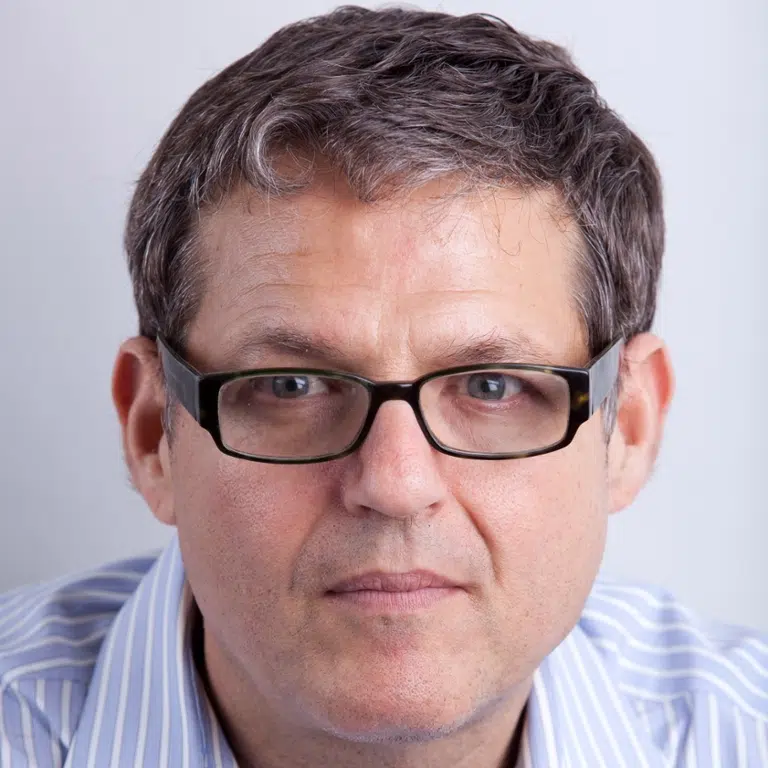
Joshua Kates, Professor of English, Indiana University Bloomington
Related Blogs
-
January 14, 2011
Related Resources
Books
Joshua Kates. Fielding Derrida: Philosophy, Literary Criticism, History, and the Work of Deconstruction (Perspectives in Continental Philosophy), Fordham University Press
Joshua Kates, Essential History: Jacques Derrida and the Development of Deconstruction (Northwestern University Studies in Phenomenology and Existential Philosophy), Northwestern University Press
Mark C. Taylor (ed.), Deconstruction in Context: Philosophy and Literature, University of Chicago Press
Web Resources
Samantha Blackmon “Critical Approaches to Literary Criticism: A Brief Overview”
William Blattner “Some Thoughts About ‘Continental’ and ‘Analytic’ Philosophy”
Leonard Lawlor “Jacques Derrida” Stanford Encyclopedia of Philosophy
The Preamble to the US Constitution. Cornell University Law School
Mark C. Taylor “What Derrida Really Meant”
Get Philosophy Talk

Leave a Reply
You must be logged in to post a comment.