What Is Political Inequality?
December 22, 2024
First Aired: August 14, 2022
Listen


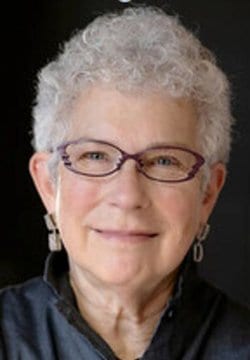
We all know our society is economically unequal: some people have more money and resources than others. But equality isn’t just a matter of who has which things. Political equality involves respect and participation in the political process—but those aren’t resources that can be divided up like pie. So what is political equality in the first place? How do we know when we’ve achieved it? And can we prevent politics from being an elite activity concentrated among the educated and wealthy? Josh and Ray push for equality with Margaret Levi, Director of the Center for Advanced Study in the Behavioral Sciences at Stanford University and co-author of A Moral Political Economy: Present, Past, and Future.
- Economics
- |
- Elite
- |
- Inequality
- |
- Politics
- |
- Representation
Josh Landy
How do we stop politics from being a rich person’s game?
Ray Briggs
Would campaign finance reform be enough?
Josh Landy
How can ordinary citizens get a seat at the table?
Ray Briggs
Welcome to Philosophy Talk, the program that questions everything…
Josh Landy
…except your intelligence. I’m Josh Landy.
Ray Briggs
And I’m Ray Briggs. We’re coming to you via the studios of KALW San Francisco Bay Area.
Josh Landy
…continuing conversations that begin at philosophers corner on the Stanford campus where Ray teaches philosophy, and I direct the Philosophy and Literature Initiative.
Ray Briggs
Today we’re asking: what is political inequality?
Josh Landy
Well, I mean, that’s easy, isn’t it Ray? It’s when some people don’t get an equal voice in society. They’re not represented in government. They’re not allowed to vote or their ballots are just ignored.
Ray Briggs
Yeah, but that’s not all that matters. Like, in fact, I don’t think it’s even the main thing. Political inequality is mostly about rich people abusing the power that money gives them. If you took the money out of politics, you’d solve a huge part of the problem.
Josh Landy
I don’t know. I mean, Politics isn’t just economics. So suppose a measure some kind of scenario, what right where everyone has exactly the same amount of money. But some people don’t get the vote. I mean, that wouldn’t be fair, would it? It wouldn’t be equal.
Ray Briggs
Yeah. But come on. That doesn’t happen in real life. Right now, it’s not illegal for people to vote because of their race or their gender. But a lot of people’s voices still won’t get heard because rich corporations pay for political campaigns, and they exert an unfair amount of influence over the media. Sure, legally, everybody has the right to vote. But money still makes us unequal.
Josh Landy
But actually, not everyone does have a legal right to vote. Take me, for example—I just became a United States citizen last year,
Ray Briggs
Congratu-miseration?
Josh Landy
Thank you? So anyway… I’m a citizen now, so that means I’m allowed to vote. But for years and years and years, I paid taxes, and I couldn’t, right? And in some countries, even citizens can’t vote like, like convicted felon in alot of US states—even after they’ve served their sentences and been reintegrated into society. And women in Saudi Arabia, they didn’t get the vote until 2015.
Ray Briggs
Yeah okay, obviously, all of that stuff is bad, and we should fix it. But I still think you’re too focused on legal rights. Without economic equality, legal rights aren’t even going to make a difference. If you can’t get time off work on election day, or you don’t have a car that you can drive to the polls, why does it matter that you could theoretically go and cast your ballot?
Josh Landy
But the way to fix all of that is through laws, right? I mean, look in South Korea, Election Day is a national holiday. We could do the same here—we should do the same here.
Ray Briggs
Yeah, but what about people who have to work on holidays? it’s disproportionately a problem if you’re poor.
Josh Landy
Alright, so just make voting mandatory, like in Australia. Then employers would have to give people time off.
Ray Briggs
Yeah, good luck with that. Employers aren’t going to want to pay for that kind of thing. Workers are just gonna get in trouble. The label either get in trouble for not voting or for not showing up to work.
Josh Landy
Alright, smarty pants, what’s your big solution?
Ray Briggs
We need to give people not just the ability to vote, but the ability to actually change what’s on the ballot. In a lot of places people are choosing between two rich, middle aged Christian white guys, even if it’s totally easy to vote. How is that supposed to represent everybody’s interests?
Josh Landy
I don’t hear you proposing a solution, Ray. Sounds like you’re just identifying another problem.
Ray Briggs
Okay, fine. I’ll tell you some things I think we can actually do. First of all, we should remove barriers to voting. A felony conviction should not strip you of your rights for your whole life. And also, we should educate people about issues. And another thing we should get the money out of politics. We can start with overturning Citizens United, which said that money is speech.
Josh Landy
I thought you wanted real world solutions—I mean, good luck overturning Citizens United with the current Supreme Court.
Ray Briggs
Okay, what do you propose?
Josh Landy
Well, I think the only way forward Ray is collective action.
Ray Briggs
Yeah, great. How are we going to get that to happen?
Josh Landy
Well, I bet our guests will have some ideas. It’s Margaret Levi, Director of the Center for Advanced Study net Behavioral Sciences here at Stanford. She’s the author of “Political Equality: What Is It and Why Does It Matter.”
Ray Briggs
Well, it certainly mattered in London in 2017. Grenfell Tower is a striking example of class inequality in Britain. It was a low income high rise that caught on fire and killed 72 people. Residents had been complaining about safety there for years, but no one listened.
Josh Landy
So we sent our Roving Philosophical Reporter, Holly J. McDed, to find out where this tragedy fits in with the history of political inequality in the United Kingdom. She files this report.
Reuters
Britain faces its biggest rail strike in 30 years.
Holly McDede
The summer of 2022 has been dubbed the Summer of Discontent in the UK because so many workers are on strike,
Richard Madeley
If you are a Marxist, you’re into revolution and into bringing down capitalism, so are you are aren’t you?
Holly McDede
In this segment of Good Morning Britain Richard Madeley interviewed Mick Lynch, the General Secretary of the National Union of Rail, Maritime and Transport Workers.
Mick Lynch
Richard, you do come up with the most remarkable twaddle sometimes. Now, I’m not a Marxist. I’m an elected official at the RMG. I’m a working class bloke leading a trade union dispute about jobs pay and conditions of service.
Holly McDede
Trade Unions may be striking now, but they aren’t as powerful politically as they used to be. In 1978 and ’79 a series of strikes in the freezing winter was called the Winter of Discontent.
Unknown Speaker
Barack Street Market in central London. This 12 foot high pile is part of two weeks rubbish just from the market. And this is the rest piled outside the local refuse depot. Like others in central London, it’s been closed now for two weeks because of the dustmen’s indefinite strike.
Holly McDede
The unpopularity of those strikes helped bring Margaret Thatcher to power. She went on to break unions, cut social safety nets, and privatize state run industries. Under Thatcher public housing was sold to private companies.
Yvette Williams
We’ve moved from a welfare state that was really celebrated to we don’t-give-a-toss state.
Holly McDede
That’s Yvette Williams, a longtime organizer and co founder of the campaign called justice for Grenfell. She says democracy in the UK is on truthful
Yvette Williams
Money really rules the world and defines who you are and your place in it.
Holly McDede
The current strikes are one example of people trying to change that. The Grenfell fire is an example of what happens when certain people go on heard by political leaders
Yvette Williams
We’re being sold a dud. And they are changes that can easily be made. But people never give power—they never give it up. You need to fight for it. And that fight is usually long, dirty, and plagued with delays. Delay tactics are really useful in keeping people in their place.
Holly McDede
Residents in the Grenfell Tower lived in the borough of Kensington and Chelsea, one of the wealthiest areas in England. But the tower sits in North Kensington, one of the most deprived parts of the country. The fire started inside a kitchen and its combustible cladding acted as fuel. Residents were told to stay inside. Williams lives five minutes away and raced to the building at 1am.
Yvette Williams
We stood outside for absolutely hours. No authority turned up, no government agency made themselves known on the ground apart from the emergency services. You can’t un-see—you can’t un-see, you can’t un-smell, you can’t un-hear what you heard on the night.
Holly McDede
An inquiry into the disaster found that the government had failed to respond to warnings about the risks of the cladding years before the fire. The cladding was meant to help the building look more appealing to people on the outside. The council that own Grenfell tower later apologized for leasing public property for commercial gain—putting profits before people
Yvette Williams
It was predicted that something catastrophic would happen unless people started to listen to where they were. Those residents were deemed as—labeled as troublemakers and agitators. Some people were threatened with eviction if they didn’t keep quiet.
Holly McDede
Residents and community members like Yvette Williams still want accountability and criminal charges. In 2018, iInspired by the film “Three Billboards Outside Ebbing, Missouri,” they paraded billboards that read “And still no arrests?” and “How come?” Organizers held a silent Jubilee street party to mark the Queen’s 70 years on the throne by setting up 72 empty chairs.
Yvette Williams
It’s all very much dependent on political will. And if the political will isn’t there, they will do any and everything to prevent change because change will not benefit them.
Holly McDede
Dozens of building buildings in England still have the same kind of cladding they made the Grenfell Tower so deadly. As for addressing income inequality… A few years ago, a report from the Institute for Fiscal Studies warned that inequality in the U.K. was getting so bad it was starting to catch up to the United States. For Philosophy Talk, I’m Holly J. McDede
Josh Landy
Thanks for that really important report, Holly. I’m Josh Landy with me as my Stanford colleague Ray Briggs, and today we’re thinking about political inequality.
Ray Briggs
We’re joined now by Margaret Levi. She is a professor of political science at Stanford University, and director of the Center for Advanced Study in the Behavioral Sciences. She’s also co-author of “A Moral Political Economy: Present, Past, and Future.” Margaret, welcome back to Philosophy Talk.
Margaret Levi
Thank you glad to be here.
Josh Landy
So Margaret, you’ve written some fantastic books and papers about political inequality. But What first got you interested in the question?
Margaret Levi
Well, I really have been interested my whole life. Since I was a small child in the 50s, my mother started taking my even younger sister and me on civil rights marches. It was hard to ignore the kind of political equality inequality that was ever present in Baltimore in that era.
Ray Briggs
Oh, that sounds like a great introduction to the topic. So Josh and I were debating earlier how to make our political system more equal. And we thought you’d have some ideas about that. So Josh say we need better laws. And I think we need to address economic inequality first. So what are your ideas?
Margaret Levi
Well, I think you’re both right, but incomplete. So the way that we’ve been thinking about my co authors, Tim Besley, Pablo Beramendi, and I have been thinking about this issue was we started by thinking about the economic inequality and how that affects capacity to influence and to have equality of voice in the political system. But that turns out to be only part of the problem. The laws are also part of the problem. Because as was pointed out in your discussion, you could have let’s assume that everybody had relative equal economic influence, whether they do or they don’t, but they won’t necessarily have the right to vote, or they be suppressed in their vote, even if they legally have the right to vote for there’s ineffective representation, as we see in the US Senate, for example, where certain states are highly over represented, and others, like the one we live in, are totally underrepresented. But there’s a third piece of it, which was part of what I’ve been thinking about ever since I was an undergraduate, many, many years ago, which is that people also they’re in interactions with each other, they affect each other. They need to feel empowered to act. And that requires capacities and capabilities. And it requires respecting each other’s voice and dignity, something we see very little love these days in American politics.
Josh Landy
Yeah, here, here. But let’s get back to the first part of that, which was the money part. Right. So I mean, one of the things that many of us worry about is how much say each of us has, like us regular folk, in the decisions that get made, you know, at the highest levels? I mean, it sure seems like the CEO of a major corporation has a voice that’s louder than mine, or yours or Ray’s, right. And I mean, politicians seem to be catering less to voters than to donors. You know, people who are setting the agenda—it’s it’s more like the banks, big businesses, the industry. How do we tackle that issue?
Margaret Levi
Well, I think some of the solutions that you gave, even if they’re not practical at the moment, we have to keep them in mind and keep them as goals, which is we do need serious campaign finance here and everywhere. I think we need a better tax system. So that we’re making sure that there isn’t such extreme variation in wealth, and ultimately, in some variants of power, and where there is some way to ensure that income is also somewhat distributed. But those things would not be enough to achieve political equality? I’d say no. It’s absolutely critical that the economic component be recognized.
Ray Briggs
I think one thing that’s really frustrating about this is that all these things seem to feed into each other—like people who have a lot of money, are able to control the legal system, and then they pass laws that advantage them and enable them to get more money faster.
Margaret Levi
Yes, but there is what we call in political science countervailing power, just not always used well. And that’s one of the things that really has to happen. I mean, I started by talking about the civil rights movement that was, you know, largely for poor people, right? That those were blacks, disenfranchised people in the South who weren’t particularly well off. They had no capacity to use money for influence. But they had—they mobilized, they had collective action, and they had allies. They had allies who were like my mother and and us, and they had allies who were in the government. People we now may not think about in the same way we did then, but people like Lyndon Baines Johnson played an incredibly important role in the Senate and then later as president. So you know, power and influence don’t only come from money, but that money certainly gives a great advantage and it has to be countervailed, it has to be—we have to have something that goes that that stands up to it. So talking about mobilization and collective action is a crucial part of the story here.
Josh Landy
You’re listening to Philosophy Talk. Today we’re thinking about political inequality with Margaret Levi from Stanford University.
Ray Briggs
When it comes to political debates, do you feel like your voice is heard? What would it take for everyone to be really represented? What do you see as the biggest obstacle to achieving political equality?
Josh Landy
Your views, your voice, your vote—along with your comments and questions, when Philosophy Talk continues.
The Coup
That’s when I stepped back some to contemplate what few know Sat down, wrestled with my thoughts like a sumo Ain’t no one player that could beat this lunacy Ain’t no hustler on the street could do a whole community This is how deep it can get It reads macaroni on my birth certificate Poontang is my middle name but I can’t hang I’m getting hustled only knowing half the game
Josh Landy
If Mr. Coke is paying for the election campaign, what chance do the rest of us have? I’m Josh Landy and this is Philosophy Talk the program that questions everything…
Ray Briggs
…except your intelligence. I’m Ray Briggs, and we’re thinking about political inequality with Margaret Levi, professor of political science at Stanford University.
Josh Landy
We’re pre recording this episode, so unfortunately we can’t take your phone calls. But you can always email us at comments, philosophy talk dot o-r-g, or you can comment on our website. and while you’re there, you can become a subscriber and gain access to our library of more than 500 episodes.
Ray Briggs
So Margaret, we’ve been talking about how important it is to achieve political equality for everyone. But what exactly does political equality mean?
Margaret Levi
Well, politically, equality means what you’ve already basically said it means which is that there is equality or relative equality of influence and voice within the political system. And that means not necessarily total equality of formal power. I mean, we have a representative democracy in the US and in many other parts of the world, where we can see some power to people that we elect, or people that are appointed by those that we elect. So it shouldn’t be understood as total equality of power. But it should be understood as relative equality of capacity to influence the outcomes of the selection of who the leaders are, and the focus on particular kinds of policies.
Ray Briggs
So you sometimes hear people say, like, equality isn’t like pie. And it’s not like you divided up and you give a same sized piece of something to everyone. Do you agree with that? And why?
Margaret Levi
Well, I wouldn’t use pie as the analogy that’s more about distribution, then you know, who’s making the pie. So I really like to think about these issues as societal and not just individual so that we want, we really want this to be a collective enterprise in which all the voices and all the perspectives are heard, in creating whatever it is that we want to create. There’s a lot of literature on the importance of diverse voices and diverse perspectives, and how that gives us much better outcomes, a much better pie, if you will. And then there’s another decision about how that pie will be divided. And I’ve never been for equality of the division of the pie in the following sense. You know, there are people who need more than others, this is where money comes back in. I don’t think we should make sure that everybody gets the same in various forms of social insurance, their people can well enough take care of themselves or others who, because of circumstances have far more difficulty. So distributing the pie and making the pie are two very different things.
Josh Landy
That’s a great point. Margaret, we have a an email from Harriet in San Diego. Harriet asks, Should we be concerned about inequality as such? Why should it matter to me what others have as long as I get what I want? More importantly, many Americans seem motivated by an interest in leveling down. I recall one person objecting that since he had to work and pay for housing, the homeless shouldn’t be housed for free without working. So that’s Harriet’s those it has echoes there of the philosophy of novick’s line, right. What is important is not everyone should have the same, but that each should have enough. What’s your view on that, Margaret?
Margaret Levi
Well, again, you’re talking about distribution, as opposed to what I think of political as political equality and political voice that has to do with and that is a that is a decision that has to be made by the polity about who gets what, and how much and whether, I mean, that’s a fight we’re having in countries all over the world right now about how much is the government and the society responsible for and who should be the beneficiaries and who should not and under what conditions, but as I want to keep emphasizing, that’s about the outcomes of politics of as opposed to how we create equal Quality of influence and power relatively, because it will never be perfect on the decision about who will get what and how much.
Ray Briggs
So yes, you’re drawing this distinction between equality of outcomes and equality of influence. And we have heard that sometimes drawn is, look, we don’t want everybody to have exactly the same thing we have, we want everybody to have the same opportunities to get what they need. But that doesn’t entail that they’ll have the same thing. And so I have some worries about distinguishing between my opportunity to get something and my getting it. So I understand that there’s a conceptual distinction. But if you sort of live in a society where some people are routinely ending up with less than others, doesn’t that tell you that they probably had less opportunity? Like, like, why would it be systematic? Why some people have things that others don’t? Unless there was some explanation that had to do with their opportunities to get things?
Margaret Levi
Well, again, I’m gonna I guess this is a conceptual distinction. But it’s really what I want to emphasize here is that I do believe in equality of opportunity and trying to make that happen. Again, I think that is a question that is part of what the polity has to decide about how much they care about that, and how much they’re going to do to ensure that there actually is an equality of opportunity that might lead to a better equality of outcome. But when we’re we’re talking about political influence, it’s what I’m much more concerned about in thinking about that domain, is do people really have the capacities to influence the polity. I mean, if I give a little life history here, one of the things I got very involved in when I was a graduate student, was helping a community or being engaged with a community in in the south end of Boston, fight to be recognized that they actually were full citizens that they even though they were seen as partially homeless, they were moving from apartment to apartment, that they actually their kids went to the same schools, they were really a neighborhood in the community. And they had, they wanted to have some say in what happened to that neighborhood, the Boston City government preferred to raise it. So it could build middle income housing. So what I’m really interested in here is giving all kinds of people those who don’t have advantages, some capacity to influence the outcomes, so that it can equalize the distribution of income and wealth and make sure people have housing etc. And that’s seldom going to happen from the top down for all the reasons that you gave. So people have to be given some voice and some stake in the system. That treat often predates all the economic advantages that the wealthier have. That’s how we get revolutions, for goodness sake.
Josh Landy
You’re listening to Philosophy Talk. Today, we’re thinking about political inequality with Margaret Levi from Stanford University. Margaret, I’m so grateful to you for all these very helpful distinctions. Because you make an excellent point that even those people who material from arterial standpoint, have, you know, enough to, to get by might not be treated equally from a political standpoint, in our society, their voices might just not carry as much weight as you know, Elon Musk’s, or something like that. And you know what I was thinking about this. In preparation for the show, it’s like you, gosh, you go down the checklist of the things you would want, like, you know, it’s easy to vote, my vote gets counted, my vote matters, I get to contribute to the agenda. And, you know, I’m treated with dignity by the powers that be I go down that checklist and you think, gee, we’re pretty far away from that, you know, for for many people in the population. How can we at least make progress on those kinds of inequalities?
Margaret Levi
Well, that that those particular process questions are good to go back to laws and institutions. There’s a big legal fight going on right now about gerrymandering, and redistricting, their big legal fights going on about what constitutes voter suppression. You know, I never thought I’d be following the politics of Georgia so closely. But it’s an interesting case study of an effort to do that. But I want to push us back even before that, I mean, those laws are absolutely crucial. Just as you know, creating more economic equality is absolutely crucial. But there are an awful lot of our public. And it’s not just a US phenomenon, though the US is particularly problematic about this, that aren’t engaged in politics at all. They just don’t think that their voice will matter. Or they don’t even know how to begin to vote for To You know, and the laws are making it harder. You talked about the felons, there are people who are disenfranchised. So we really have to think about processes not only that make it easier to act in what is legally allowed, but also to engage the public to actually mobilize around issues that they care about, but feel like the political process as it’s currently constituted, don’t allow them to express themselves that they nothing they do will enable them to be heard. And if we don’t do that, if we don’t solve that problem, we are going to get some of the terrible outcomes that we’re seeing right now with, with people operating outside the system in incredibly destructive ways, you know, taking over the Capitol and stuff like that.
Ray Briggs
So Margaret, Shipra in San Francisco has a question for you. So Shipra rights philosopher Gayatri Speedmax article can the Subaltern Speak, seems to point out that not everyone is part of the political system equally. For example, South Asian administrators carried out the orders of the British Empire, but they couldn’t give orders. It’s similar to people who can vote but seemingly have no power to influence the system. Beyond that, unlike investors, lobbyists, donors, etc. What do you make of Shipra’s analogy?
Margaret Levi
It’s a really important point. But it’s also again, there are ways we can influence and the case that he gives us one where we see some evidence of that. I mean, India, through collective action, through particular forms of collective action, won its freedom from British colonial rule. That was not because the British because there was a voting process and the British gave it, it’s because they engaged in a form of collective action and demand and mobilized. So there are alternative forms of expressing influence, that often are legal, sometimes are not. You know, and we have to be careful that we’re not facilitating terrorist actions. But certainly there are all kinds of forms of peaceful if militant and aggressive and violating laws, civil disobedience, that can have a huge impact on the polity. And even in my lifetime, which is relatively long, I’m 75. You know, I’ve seen a huge amount of change. And it goes both ways, of course. But if you look at I mean, it is true as, as one of my colleagues of campus, Jen Richardson has argued that there’s a bit of a myth of social, there’s a big myth of social progress of African Americans, but they do legally have the vote. Now, they did not in the south, and even partially in the north when I was a kid. So there are changes and those changes aren’t brought around about they are brought about by popular mobilization.
Josh Landy
So you’ve talked about a number of changes that you’d like to see happen. I’m yeah, we’ve talked about gerrymandering. And we’ve talked about, you know, making it harder for people to overturn elections, and they don’t like the results and the Electoral College and, you know, the apportionment of senators and so on. But what about things like proportional representation, rank choice voting, other ways that people have proposed to sort of even things out and make people’s voices give people’s voices a better chance of counting?
Margaret Levi
There are a huge number of very interesting alternative forms of voting. Quadratic voting is another one. And there are a whole lot of experiments going on of how to mobilize voters, how do we engage people to become voters, their processes that give that our deliberative polling and various things that give people more voice and understanding of each other’s positions so that they can not just fight, but try to reach some kind of consensus or agreement or toleration of each other’s perspectives when they lose. So I think that all those experiments are fabulous, and that we’re stuck right now we act as if what we have is what we have to have and it’s not the US system has evolved over time. If you look at other countries, I mean, what constitution is or the French are now I can’t even keep track. You know, their, their countries that have become democracies that are trying out different kinds of things. I think we have to big go back to not being originalist as some of the Supreme Court seems to want, but being experimentalist which is really what the original idea was all about that this was an experiment In a democracy, and you learn from doing so if we can get that mindset in the public, we can try all these things and see what works and what works better. Some of them we have experimental evidence to show that they work pretty well. But do we really have a lot of experiential evidence? I’d like to see more that.
Ray Briggs
We’ve got a question from Carl that also mentions the Supreme Court. So Carl asks about the proper role of the Supreme Court in deciding controversial cases. And he complains about the court failing to honor settled precedents, or coming down on the side of corporations, thereby eroding the weak and failing democracy left for the rest of us. So Margaret, do you agree with Karl’s criticism?
Margaret Levi
I do. But that is an institutional problem that we have created around the court and how its selected and what its powers are. It’s also a problem of we have in the United States, we have, you know, three branches of government where the other two in the story, Congress should have passed laws on a bunch of things that the court is now deciding about, because there’s no congressional law on the books. So they send it back to the States. And we know how that’s going. So, you know, I think we need to think about how we, how we activate the other branches, in a different way, as well, so that there really is this balance of power among them.
Josh Landy
You’re listening to Philosophy Talk. Today, we’re asking what is political inequality with Margaret Levi from Stanford University.
Ray Briggs
What are you doing to make our political system more equal? Have you taken to the streets or written a ballot initiative? Would you ever consider running for office?
Josh Landy
Equality for the polity—plus commentary from Ian Shoales, the Sixty-Second Philosopher, when Philosophy Talk continues.
UB40
Nobody knows me but I’m always there, a statistical reminder of a world that doesn’t care.
Josh Landy
For those who feel like a number on a list, how do we get the world to care? I’m Josh Landy, and this is Philosophy Talk, the program that questions everything…
Ray Briggs
…except your intelligence. I’m Ray brakes. Our guest is Margaret levi from Stanford University and we’re thinking about political inequality.
Josh Landy
So Margaret, we’re big fans of irony around here. So we’re gonna make use czar of political equality. So in your role as czar of political equality, what’s the first thing you would do?
Margaret Levi
Well, I think the first thing I would do is very consistent with what you two were debating in the beginning, which was I would change some laws that ensure and tax the tax system to ensure a more equitable distribution of wealth and income to try to equalize that, and change some institutional rules about voters that lead to voter suppression or inequality of where your vote really isn’t counted the same way. But the thing I really want to do is create what I colleagues in various publications have called an expanded community of fate. And it’s an idea that’s very linked in some ways to what Martin Luther King talked about and how we’re all embedded in the same destiny, where we really are inter linked with each other. And I’ve seen that happen. I studied some labor unions that achieved that where they got people, the members to act in the interest of others distant others who could never reciprocate. And they did it in a in a situation in unions, a reason people join unions. These weren’t people who self selected in they joined because that was the job that was available. They joined the Union in order to get better wages to get economic improvements. But the some of the leadership of some of these unions acting like momentary czars, but not permanence, ours, helped create constitutions that ensured real participatory democracy that gave them education and socialization about the rest of the world that brought problems not only the leadership, but members could bring problems to the membership to the whole membership that would then lead them to close the ports. These were longshore workers close the ports refuse to load things because somebody was being abused. In some other part of the world, they felt like if it could happen to those other people can happen to us. We have to take a stand here. And the first example of this was when the Chinese community came to the Longshore workers in both Australia and the US on the West Coast, and said that this was in the 1930s The Japanese have invaded Manchuria and they’re killing the peasants and So the Longshore workers refused to load scrap iron, to go to Japan, even though President Roosevelt here, asked them why they were getting involved in national policy. They said, We’re US citizens, people are being hurt somewhere else in the world. And this could lead to war. But this was a result of a set of institutional arrangements, laws, if you will, and rules and norms that got inculcated and part of the DNA of this union that really led them to think about questions where they could have an influence that they never realized that they could, and to begin to be engaged in the world. But it required participatory democracy, socialization, education, information that they could trust and the capacity to challenge each other, and the information that they were receiving and to talk about it collectively and reach a decision.
Ray Briggs
That sounds like an amazing ideal, how do we take the first steps toward getting people to care about each other in a kind of fragmented society? So in Union is nice, because like, everybody has some set of common goals and common membership. But if all you are is like human beings who have to live together, how do you get that motivation?
Margaret Levi
Now? That’s the that’s the big question. We used to say $64 million question. It must be billion dollar question now. But, you know, the question is, how do you scale that? How do you take that, that example? That’s a real world example, and make it possible in lots of other contexts and situations and make it bigger? I think there are ways to do that. You know, I’ve been watching with all the young people who’ve been creating unexpanded community fate around the world around climate change issues, for example, and bringing others into that, and making people realize that they really do have a common fate and destiny around that question. That’s a scalable one. But a lot of this, I think has to be done at the local level. And then federated something the US loves to do, it loves to think about local initiatives, and then Federation, right? We’re an experimenter among local communities among states. And this could be done at churches, it could be done, unions barely exist anymore. But it could be done around a whole bunch of organizations that already exist or could be made to exist. And then linked with others. The internet makes things possible that are terrible. But it also makes things possible that are quite wonderful. So that we can find each other, we can link to each other, we can begin to know each other, something like zoom, which we’re all incredibly tired of these days after two and a half years of living almost totally outside our houses on Zoom. But it’s an incredible capacity to literally see and talk to people who are far distant, and to learn their issues. But it requires it requires organization, it’s not just going to happen. It requires people who are willing to take the time and make the commitment to help people find each other to find their common interest and to work together for common goals that are their own common goals that are more insular, but also for larger societal goals to recognize this intertwinement intertwinement of destiny.
Josh Landy
So it raises an interesting question, because, you know, obviously, one of the driving ideas behind our conversation today has been everyone’s voice should count equally. We should all get an equal say and the the agenda that gets set how things go, does that apply globally? Because you know, so that, you know, the global justice idea. Some people might say, Well, why why stop at the borders of your town of your state of your country? Why not say everyone’s voice from around the world counts equally? Do you think that’s right? Or do you think that sort of inviting kind of opening a Pandora’s box?
Margaret Levi
Well, I think at the moment, it would open a Pandora’s Box, given the state of the world and but even more importantly, we don’t have an institutional arrangement to do that. The reason people focus on countries is because we have set up, they vary among countries. And that gives us some capacity to learn. But we have set up governance arrangements for countries. So with building these expanded communities of faith, it can cross borders, all kinds of borders, like the climate change movement does. But it’s based usually on some, you know, a national or state or local set of organizational arrangements and governance, national government that is this and sometimes international organizations that are the target of the mobilization and of the pressure. These are the we’re talking about how do you have influence not only to not only do you have an equal voice, a relatively equal voice, because you’re gonna lose some things, right? So you’re never gonna have a totally equal voice in that sense if you think you have to always win. But it does mean that there’s some capacity to influence that there’s some capacity to make your point known, even though you’re fighting the big corporations and the big money.
Josh Landy
One way that people think of to make your voice known is through a referendum or ballot initiative for the direct democracy. But we saw with Brexit, that it doesn’t necessarily always go brilliantly. Are you a fan of, of direct democracy in that
Margaret Levi
way? No, I’ve lived too long. I’m not a fan of referenda. I’ve lived too long in the West Coast of the United States, I actually am based in Seattle. But the Washington, Oregon and California have all been played by the referenda, which are usually taken. I mean, it was a it was supposed to be a progressive era reform. But remember who the Progressive Era was run by it was run by elites who wanted to keep the popular voice dampened. And it’s been taken over largely by libertarian and right wing groups who want to reduce our taxes. The part of the problem for California for years was the tax problem that was created by a referenda.
Ray Briggs
I think this is, like very frustrating that you have these reforms that are supposed to make people more equal, but in fact, get co opted. And, you know, I’d really like to bring the focus back to the idea that everyone has equal dignity, and deserves a say, right? Do you think the most promising ways to do that?
Margaret Levi
Well, I do think it is, first of all, making sure to the extent we can that the laws recognize that. But that will not be enough, what we need to do is ensure and this also can be governmental. But it could be, you know, various local organizations that were part of churches used to do this. The education system used to do this, but provide people with the capacities and capabilities following some very famous philosophers, Senator Nussbaum, as well as Danielle Allen and others, really thinking about how to give people the capacities so that they do feel like they can exercise voice that they can recognize in others, what is human about them? What is great about them, that that can lead to dignity and respect. But it will also lead to empowerment.
Josh Landy
But it seems like we’re living in an age where information is the right information isn’t always readily available. Do you have any thoughts about how to fix that?
Margaret Levi
The right, there’s lots of information available? It’s not that the right information isn’t in that mix. It’s there. But going back to my longshore workers case, you know, they would argue about it, somebody would say, See that boat over there, it’s in Australia, they’d say it’s going to Indonesia, to put it it’s a Dutch ship to put down the peasant rebellion. And people would say, really, I didn’t, I didn’t know there was a peasant rebellion, I’d better check on that. And they would argue with each other and get alternative sources, until they came to a common understanding of the information. And it was there was guidance to so that you could undermine some of the conspiracy theory stuff that we now see. So we have to start experimenting, we got to get out of the grids that we’re in, we’ve got to look for alternative ways to give people capacity to challenge what they’re seeing, and to give people a feeling that they are deserving of respect, and that they must give respect to others who are raising different points of view or who has not treated them very well. They found learn to work with each other. And that requires new kinds of institutional arrangements, new kinds of organizations. And we’re just at the cusp of beginning to really develop those for this era.
Josh Landy
Well, that’s a hopeful note on which to end. Thank you so much, Margaret, for joining us today.
Margaret Levi
You are welcome. What a lively discussion. And thank you for giving me new ideas to take into the work going forward.
Josh Landy
Oh, my goodness, thank you. On the contrary, it’s you’ve given us so much to think about our guests is being Margaret Levy, professor of political science at Stanford University, and director of the Center for Advanced Study in the behavioral sciences. So Ray, what are you thinking now?
Ray Briggs
I’m thinking that Margaret is right, that we just need kind of solidarity and grassroots change. And thinking about one of my favorite recent examples of this being the the group of Oakland moms who occupy who didn’t they were homeless, and so they occupied a vacant building one of the many vacant buildings in Oakland and just refused to leave is, I think that’s a great like example of a group of people sticking together and banding together and claiming their voice.
Josh Landy
Yeah. And I want to see the notes, nothing like the Grenfell fire ever happens again, they’d already had a fire in the lakanal building before that, and recommendations had been issued, but they were not paid attention to because, quote, we didn’t have the money, even though they had money for tax cuts. So let’s hope Margaret’s proposals get implemented, we’re going to put links to everything we’ve mentioned today on our website philosophy talked about O RG, where you can also become a subscriber and gain access to our library of more than 500 episodes.
Ray Briggs
And if you have a question that wasn’t addressed in today’s show, we’d love to hear from you. Send it to us at comments at philosophy talked about O RG and we may feature it on the blog.
Josh Landy
Now a man so fast he has no equal, it’s Ian Shoales, the Sexty-Second Philosopher.
Ian Shoales
Ian Shoales. Equality is a thing that, if it exists, only exists in the wild, and there only theoretically, in a world without predators, or weather. In the real world, equality is lumpy, variable and localized. For instance – to get metaphorical – turtles are equal in their shell-like resistance to being devoured, while minnows are equal in vulnerability to devouring. On the other hand, all fish are equal on land. They’re dead. Death is the great equalizer. But they would still not be equal in our eyes. Swordfish, for instance, would have higher value than goldfish, at least among chefs. Other things besides redfish can be blackened, all things being equal, but what an insult to Cajun cookery that would be! So equality can be insulting. If you wear the blue shirt, your Mom wonders why you hate the green one. Also equality can lead to “separate” but equal. Or claims that equality has been achieved, evidenced by Barack Obama, Clarence Thomas, and Caitlyn Jenner. So quit complaining, wokester snowflakes, sneer the Proud Boys. Black Lives Matter? All lives matter. You don’t own a red shirt because you hate white people. Ipso facto. It’s also complicated. If equality means the ability to show up and be counted, and you don’t have a car, can you show up? And if you have a house with a garage, doesn’t that give you an unequal advantage over apartment dwellers? There’s a Zeitgeist spreadsheet, somewhere, that lays out all the equality differentiators, height, skin color, i.q. talents, the whole schmeer- giving us a mean, meaning some people are more equal than others. And it all depends on who’s making the equality spread sheet! And who’s looking at it. What are they looking for? Somebody to buy something, to vote for something? I bet Mormons have more of a voice in Salt Lake City politics than non. Is that fair? Also, people like to complain that North Dakota has equal sway, Senator-wise, with California. Is THAT fair? Well yes, because we’re not a nation of people, we’re a nation of states, each of which has equal presence. They all have state birds and flowers. Sure Texas and California have more professional sports teams, but North Dakota has gophers and wind chill factors, so it all works out. But internally it gets weird. Movie stars are just regular folks in San Fernando. Yet code monkeys are movie stars in Cupertino. And that’s just California! On a political level, it seems, concerns about equality in society have been replaced by concerns about equity, which is not equality with dollar signs. It is the middle element in the now-famous formula DEI, diversity, equity, inclusion. Equity here means ownership, not as in possession, but as in fairness and impartiality in participation. It doesn’t mean that you own a thing, as in HAVE it, because that just leads to lawsuits, but you OWN it, as in, wow you really good doing that. It boils down to this. Making money is less important than looking important. Hence the rise of influencers. And confusion. Trump wears ridiculously big suits, it’s eccentric, a sure sign of extreme wealth. And there’s a picture of him with Elon Musk, wearing a suit that’s too small for him, also eccentric, a sure sign of extreme wealth. What is a good look? The media notes the ownership, but downplays the wealth. We know that Elon is the richest man in the world, but that’s in pre-Twitter dollars, and we like him more OWNING Twitter than actually owning it, which would just lead to trouble. To maintain status without sacrificing equality, it is much better for Elon to tweet about taking us to Mars than to actually take us there. He owns the meme, you might say, and we are the ones being owned. O brave new world that has such people in it. Or int, as Shakespeare put it. He really had it going on. In our world of equals he would be labeled a creative. And he would so own that. It would be a good look for him. His corpus of plays is still being produced! Maybe we should start calling his body of work a franchise? Don’t want to sound elitist, do we? I gotta go.
Josh Landy
Philosophy Talk is a presentation of KALW San Francisco Bay area and the trustees of Leland Stanford Junior University, copyright 2022.
Ray Briggs
Our Executive Producer is Ben Trefny. The Senior Producer is Devin Strolovitch. Laura McGuire is our Director of Research
Josh Landy
Thanks also to Merle Kessler and Angela Johnston.
Ray Briggs
Support for Philosophy Talk comes from various groups at Stanford University, and from subscribers to our online community of thinkers.
Josh Landy
The views expressed or mis expressed on this program do not necessarily represent the opinions of Stanford University, or of our other funders.
Ray Briggs
…not even when they’re true and reasonable.
Josh Landy
The conversation continues on our website, Philosophy Talk dot ORG, where you can become a subscriber and get access to our library of more than 500 episodes. I’m Josh Landy.
Ray Briggs
And I’m Ray Briggs. Thank you for listening.
Josh Landy
And thank you for thinking.
SNL
I think if this election is about anything, it’s about… stuff.
Guest
Related Blogs
-
August 13, 2022
Get Philosophy Talk
