What Can Virtual Reality (Actually) Do?
March 17, 2024
First Aired: December 12, 2021
Listen


VR transports users into all kinds of different realities, some modeled on the real world, others completely invented. Though still in its infancy, the technology has become so sophisticated, it can trick the brain into treating the virtual experience as real and unmediated. So what is the most prudent way to employ this cutting edge technology going forward? Could VR help solve real world problems, like implicit bias or the climate crisis? And as the technology becomes more widely available, are there potential dangers we ought to be seriously thinking about? Josh and Ray strap on their goggles with Jeremy Bailenson, Director of the Virtual Human Interaction Lab at Stanford.
Part of our series The Human and the Machine, generously supported by the Stanford Institute for Human-Centered Artificial Intelligence.
- Computers
- |
- Experience
- |
- Reality
- |
- Reason
- |
- VR
Is virtual reality more than just an avenue for fun? Can it help us become more empathetic people? Ray believes that VR offers opportunities to experience things that would be too dangerous or impossible in the real world, which can help increase our capacity for empathy. Josh, however, is skeptical that virtual worlds have advantages over reality, and that such VR experiences designed to increase empathy only work for those already seeking them out.
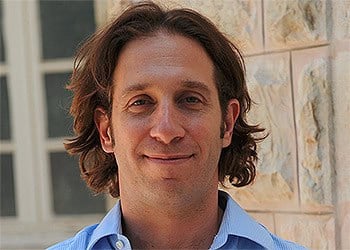
The philosophers are joined by Jeremy Bailenson, Professor of Communication and Director of the Virtual Human Interaction Lab at Stanford University. Jeremy discusses his lab’s work in providing experiences that would help people rethink their perspectives and increase empathy, possibly leading to long-term behavior change. He goes on to describe his class taught using VR as well as the importance of bringing in domain experts when using the technology to combat prejudice and racism. In response to Ray’s worry about social media companies monopolizing VR technology, Jeremy voices concerns about privacy, addiction, and the blurring of reality. Ultimately, he believes VR isn’t for everything.
In the last segment of the show, Ray, Josh, and Jeremy discuss the possibilities for full body VR technology and its application in sports medicine. They transition to the concept of augmented reality (AR), which has been used in creating AR companion animals and artistic overlays in film festivals. To conclude, Jeremy offers insights on the current social norms and stigma surrounding the use of VR and AR technology.
Roving Philosophical Report (Seek to 4:43) → Shereen Adel tries out an augmented reality experience designed to bring ocean science directly to the people and spark a concern for climate change.
Sixty-Second Philosopher (Seek to 45:03) → Ian Shoales explains why we need alternative realities over virtual realities.
Josh Landy
Can Virtual Reality solve real world problems?
Ray Briggs
Will it make us more empathetic?
Josh Landy
Could VR even help us tackle the climate crisis?
Ray Briggs
Welcome to Philosophy Talk, the program that questions everything…
Josh Landy
…except your intelligence. I’m Josh Landy.
Ray Briggs
And I’m Ray Briggs. We’re coming to you via the studios of KALW San Francisco Bay Area,
Josh Landy
continuing conversations that begin at Philosophers Corner on the Stanford campus where Ray teaches philosophy, and I direct the Philosophy and Literature initiative.
Ray Briggs
Today, it’s the next episode in our series, the Human and the Machine, generously sponsored by H.A.I., the Stanford Institute for Human Centered Artificial Intelligence. And we’re asking, What can virtual reality actually do?
Josh Landy
Well, I don’t know, Ray? I think virtual reality is really fun. And you put on a headset and you’re suddenly transported to a magical world. You can swim with dolphins, you can spar with Darth Vader, you can pretend to be James Bond.
Ray Briggs
Landy, Josh Landy. License to philosophize.
Josh Landy
I love it. I’m definitely using that. But I don’t know all of that. It’s fun, right? But is it anything more than fun though? I feel like it’s basically a glorified 3D video game. Is there anything more to it than that?
Ray Briggs
I mean, yeah, you can exercise in VR, you can have meetings that are way better than in Zoom, you can teach kids cool things about science. You can even get therapy for phobias and PTSD.
Josh Landy
But I can get all of that in the real world. Isn’t it better to have a living, breathing teacher or therapist?
Ray Briggs
Yeah, but there are some things you can’t do in the real world. Like you couldn’t stand inside a real volcano. And you wouldn’t want to be in a war zone. VR lets you experience things like that. Things that are dangerous or even impossible in the real world.
Josh Landy
Okay, but why is that important?
Ray Briggs
I mean, if you can feel like what it’s like to be in a war zone, you can start to really empathize with victims of conflict. There’s actually this really cool VR experience called Clouds Over Sidra, that takes you around a refugee camp in Jordan. It’s very moving.
Josh Landy
Well, I agree. I’ve actually done that one. It really is fantastic. But the thing I wonder is, like, if the point is to develop empathy, is VR really better than novels?
Ray Briggs
You and your literature, always stuck in the 19th century. Anything a novel can do, VR can do better. It’s fully immersive. It tricks the brain into thinking it’s really having the experience. I mean, you don’t get that from reading “Madame Bovary” or whatever.
Josh Landy
Bovary or whatever! I’m not sure that I’m entirely as sanguine as you about VR. I mean, every time I use my VR, you know whether the signal drops out, I feel that heavy helmet jabbing into my head, my hands look weird. It’s not fooling me.
Ray Briggs
Okay, but how do you explain the fact that people are constantly injuring themselves in virtual reality? I mean, it’s even got a name: VR to ER.
Josh Landy
Oh, no. What’s happening to those poor people?
Ray Briggs
Well, they think they’re like being chased by a zombie. So they run into the living room wall to get away from it.
Josh Landy
Oh, that’s highly unfortunate. But, what’s your point?
Ray Briggs
Oh, the point is that VR is the most powerful technology ever invented for creating imaginary experiences that feel really real. And because they feel so real, they have impacts that are pretty similar to real world events. If you see someone suffering in VR, your heart will bleed for them.
Josh Landy
Okay, my heart will bleed for them. I mean, it definitely did in Clouds Over Sidra. But what about people who love, like, running over grannies while playing Grand Theft Auto? I mean, are those people suddenly going to develop empathy just from doing something in VR?
Ray Briggs
Okay, Josh, like, of course, not every VR is going to build empathy. But if you do a good job, as a designer, you can really help people develop their emotional skills.
Josh Landy
Maybe, but I think that assumes that people choose the good experiences. I mean, if you’re not already an empathetic type, would you even be interested in something like Clouds Over Sidra in the first place?
Ray Briggs
Hmm, that’s a good question. And I can’t wait to ask our guest all about it. It’s Jeremy Bailenson from Stanford.
Josh Landy
Oh yeah, he directs the virtual reality lab where I once went and fell down an imaginary hole.
Ray Briggs
Ooh, I hope you didn’t hurt yourself.
Josh Landy
Just my pride.
Ray Briggs
I still think VR has a lot of potential, like using it for projects that teach people more about the world by taking them there. We sent our Roving Philosophical Reporter Shireen Adel to explore the ocean from the comfort of her own home. She files this report.
Shereen Adel
So the other day I downloaded this app on my phone. Hmm, there’s like a window.
Unknown Speaker
…small animals that live together in an ancient symbiotic relationship with tiny plant like algae.
Shereen Adel
It may sound like I’m just watching a video. But when I open the app, my camera turns on. And when I move my phone around my room, videos and graphics start to pop up. This is augmented reality, it allows you to see graphics within your surroundings.
Unknown Speaker
Because so much sea life lives in coral reef habitats. They are known as the rainforest of the ocean.
Shereen Adel
So now above my desk, there’s this picture frame, with the ocean in it. And outside the frame, there are all these buttons. I click on one, and through my phone, it looks like my room is overrun with coral reefs. And there’s a guide who tells me all about what I’m seeing.
Unknown Speaker
Coral reefs are vanishing at an alarming rate.
Shereen Adel
The corals I’m looking at aren’t like the brightly colored ones you see in photos luring you to some tropical island vacation. They’re white and pale because they’re dead. Looking at them, it seems obvious. But apparently spotting dead coral in the ocean isn’t that easy if you don’t know what to look for. That’s actually one of the things that made Erica Woolsey want to create these virtual experiences.
Erika Woolsey
I remember diving on a degraded reef being brought to tears, crying inside my dive mask, and coming back up to the surface. And a lot of the crew, the dive team were talking about how they saw the [unintelligible] fish, you know, focusing on the positives, but I realized they didn’t even notice that the reef was degraded.
Shereen Adel
Woolsey is a marine scientist and a visiting scholar at Stanford’s Virtual Human Interaction Lab. She’s also the co-founder and CEO of The Hydrous, a nonprofit whose mission is to literally bring ocean science to the people.
Erika Woolsey
I noticed that even in the less-than-a-decade amount of time I was studying these places, they would change dramatically.
Shereen Adel
And she realized that with advances in technology, she could replicate the experience of feeling like you’re actually in the water, not just looking at it on a screen.
Erika Woolsey
Virtual immersive reality gives you the superpowers of time travel, teleportation, and shapeshifting. So how would you use these powers to solve a problem? And what if that problem was global climate change?
Shereen Adel
So Woolsey, and her team designed lots of different experiences that kind of make it feel like you have a superpower. Remember the augmented reality experience I tried out? Well, Hydrous also has completely immersive virtual experiences, like stepping into your own personal documentary.
Erika Woolsey
you look around, and you’re underwater in Palau, for instance, and you see manta rays, and you see a coral reef, and I’m there as your dive guide. And you might hear some narration as well. And if you turn your head, the world turns with you.
Shereen Adel
And you don’t need a fancy headset to be there with her. At the beginning, she was just using a $15 cardboard viewer and a smartphone to give people a 360 degree view of an underwater world.
Erika Woolsey
I had never had that level of interest, and curiosity, which is I think, how you spark a scientific mind. But also how do you spark that care and that desire to protect something?
Shereen Adel
The first step is getting that feeling of complete awe and wonder. With virtual and augmented experiences, seeing is believing, which can lead to a much deeper understanding of what’s at stake as the climate and our oceans change. For Philosophy Talk, I’m Shereen Adel.
Josh Landy
Thanks for that great report Shereen. I’m Josh Landy, and with me is my Stanford colleague, Ray Briggs. Today, we’re thinking about what virtual reality can actually do.
Ray Briggs
We’re joined now by Jeremy Bailenson. He’s a Professor of Communication at Stanford University, where he’s also the founding director of the Virtual Human Interaction Lab. And he’s the author of “Experience on Demand: What Virtual Reality Is, How It Works, and What It Can Do.” Jeremy, welcome back to Philosophy Talk.
Jeremy Bailenson
Thank you so much for having me! What a great segment thus far. I’ve got to listen to and, and yay.
Josh Landy
Well, yay, to have you on the show. Jeremy, you started your career writing articles on things like reasoning and proof. How did you end up creating a super cool VR Lab at Stanford?
Jeremy Bailenson
Yeah, so in my fifth year at Northwestern University, my PhD was in cognitive science. And I was running experiments to see how the brain works, how people formed categories, made arguments, understood arguments. And the truth is, in the late 90s, CogSci was a very saturated field, lots of brilliant people doing it. And frankly, I wasn’t that great at it. I wasn’t as good as a lot of other folks were about conceptualizing low level processes, how the mind works, and, you know, I was also — as many people that got their PhD — it’s kind of a dark fifth year of grad school trying to figure out what you want to do, and I read this novel called “Neuromancer.” And in “Neuromancer,” remember, I’m in a place where I’m trying to build AI. And that’s really hard back in the 90s. But “Neuromancer” is a novel where William Gibson, he envisions this world where you can just have consciousness be streamed in avatars, and agents, and anyone can be him all over the planet. It’s an incredible, rich novel, where you think about all the social implications. And I made the call there that I was going to try to do something like VR, and I was lucky enough to find a postdoc at UC Santa Barbara, in 1999, to learn how to build VR, from a hardware standpoint, to do the coding to create the software, and at the same time moved from less questions that are just about the structure of the brain, and larger questions about communication, education, training, and how VR affects society.
Ray Briggs
That’s really cool, that cyberpunk got you into VR. So you’re telling us about the things that VR can do. And earlier, Josh, and I were talking about whether it can help us cultivate empathy, I was wondering if you could tell us about an experience that you’ve designed that kind of goes in that direction.
Jeremy Bailenson
Virtual reality is a tool in which you can, as you pointed out earlier, become immersed. And one of the early applications that people thought about is, can you give someone an experience where they walk a mile in someone else’s shoes, and they learn firsthand, quote, unquote, “firsthand,” what it’s like to be that other person. And, you know, in my lab, since about 2003, we’ve been building simulations where you walk up to a virtual mirror, and you start out, you move your body in the physical world, and you see your mirror image move, and you start out looking like yourself, same gender, same race, same age, same body shape, and then we can hit a button, and your avatar changes to something else. It could be a different skin color, or it could be a different size or shape. And we study how embodying that avatar changes the way you think of a category. And I want to make very clear here, virtual reality is not a magic pill that solves all prejudice, what virtual reality is, it’s a tool to give you an experience that you wouldn’t have otherwise in the world that helps you rethink some views and helps you, you know, encode new information in a way where you had a different perspective.
Josh Landy
And what have the results been like from these experiences?
Jeremy Bailenson
We’ve now run about 30 to 40 experiments. In general, what our data show is that when you embody an avatar, and you become someone else, and I’ll give a very specific example in a moment. Across all those studies, typically what we find is that VR induces behavior change, more frequently say, than reading a novel, or as you pointed out, or watching a video that this VR experience in general tends to produce more pro social behavior than the other media. Now, not every single time. And, you know, we’re not claiming that VR is ultimately better than all other media. To give you an example — one of our experiences that you can download free from our website is called “Becoming Homeless.” And “Becoming Homeless” is based on the research of Lee Ross. Lee Ross, a former Stanford professor, coined the term the fundamental attribution error. And what that states is that when something bad happens to us, we blame the situation. When something bad happens to someone else, we tend to blame their character. All people do this all the time. And it’s a well known psychological phenomenon. In “Becoming Homeless,” you put on the goggles, and you become a homeless person. And how you become as you start out having an apartment, and you lose your job and you’re trying to make rent and you’re walking around, viscerally in your apartment trying to sell items so you can make rent. You don’t make rent, then you’re evicted from your apartment, your landlord pounds on the door, you hear that really loudly in your ears, you try to live in your car, you can’t live in your car, because it’s illegal in this part of California, and the officers rouse you from your car, then you’re trying to live on a bus where you can get a couple hours sleep. And while you’re trying to sleep on this bus, there’s a man who’s trying to steal your stuff, another person who’s aggressively coming up to you. And it’s a really intense experience, where the point of it is to show you in a first person way that not all homelessness is caused by internal factors, situations can also cause it. Now you asked about the experiment, our findings in a number of studies is that when you look at someone who’s done “Becoming Homeless,” inside the goggles, and compare that to watching a video, or doing typical role playing where you imagine that this happened, there is long term behavior change. So Fernando Herrera has run an amazing study that’s been published in 2019. That shows that even when you look two months later that the effects of VR is stronger than the other media. For example, we asked you to sign a petition a real petition that says “I’m willing to have my personal income tax increased in order to support affordable housing matters.” So we always try to look at real pro social behaviors.
Josh Landy
You’re listening to Philosophy Talk. Today we’re thinking about what virtual reality can actually do with Jeremy Bailenson from Stanford University.
Ray Briggs
Have you ever tried VR? Did it change your values or teach you new skills or make you more empathetic? Or does it makes you scared, angry and bruised?
Josh Landy
Virtual vices, virtual virtues, along with your comments and questions when Philosophy Talk continues.
If Virtual Reality catches on, will we all be fated to pretend? I’m Josh Landy. And this is Philosophy Talk, the program that questions everything
Ray Briggs
except your intelligence. I’m Ray Briggs, and we’re thinking about what virtual reality can actually do with Jeremy Bailenson, author of “Experience on Demand,” it’s part of our series, the Human and the Machine, sponsored by HAI, the Stanford Institute for Human Centered Artificial Intelligence.
Josh Landy
We’re pre recording this episode, and unfortunately, can’t take your phone calls. But you can always email us at comments@philosophytalk.org. Or you can comment on our website where you can also become a subscriber and gain access to our library of more than 500 episodes.
Ray Briggs
So Jeremy, we’ve been talking about VR experiences that cultivate empathy. But what other exciting things can VR do?
Jeremy Bailenson
I’ve been studying VR since the late 1990s. And one of the transformational things for me is we can now do work at scale. In other words, the goggles that I use 10 years ago cost more than my automobile. I drive a Ford C max. So perhaps that doesn’t say too much. But they used to cost $40,000 to buy goggles, you can now buy them for $300. And they’re much higher quality than the ones we had before. Why that’s important, is I can now teach in VR. We just finished a 10 week class here at Stanford, where we have 175 students all of whom have got their own VR headsets at home. They put the headsets on, and we beam together and we meet as a class in cyberspace, in the metaverse, and one of the weeks of the class, we talked about medical VR. And for the medical VR week, we went to a place called Evolve VR. It’s a meditation group run by the Reverend Jeremy Nickel and Caitlin Krause, who actually teaches well-being here at Stanford. The two of them, took my class through a paced breathing meditation exercise. And we did the exercise from outer space, we all have these platforms where we’re sitting in outer space, and we were looking down at the Earth, like the overview effects. And I was in the room with 170 of my students, and we did paced breathing. And I’ll say two things about this compared to the real world. Number one, if you were to ask me, Jeremy, would you do meditation in the middle of Cubberley Hall with all of your students, I would be mortified, there’s no way I’d be willing to do that. That just sounds bonkers. But in VR, that kind of level of separation by avatar made it okay. Number two, is I’m kind of a hyper person, you know, getting learning how to meditate and do things like paced breathing has been on my list for quite some time. I’m not very good at it. And probably the most success I’ve ever had was when I was in VR, in this amazing spot, you know, surrounded by other people who motivated me. That social presence was important, and guided by a good teacher, the Reverend Jeremy Nickel, and Caitlin, and I actually did it. And that’s something that you wouldn’t have, for me, would not have worked in the real world.
Josh Landy
It sure sounds like an improvement over a Zoom class. But I guess, my thought about what I’d love to see, in such a class would be rather than having avatars, I’d prefer it which I know, we can’t really do yet, to have avatars that look like the actual people and that, you know, replicate people’s actual facial expressions. So you can get that, that sort of synergy, that vibe that you get from actual human beings being co-present in a room, not to mention comfortable headsets. How close are we to that?
Jeremy Bailenson
Well, so I agree with everything you’re saying there. Number one, we had a 30 minute rule. So VR, for me is not something you do for 10 hours a day. And my class, you know, VR is a medium that not everything needs to be there. So the class, we had some asynchronous stuff, we had one Zoom meeting, and then we had two VR meetings each week. So VR is good for some things, not for others. And to your point on comfort, 30 minutes, take off the goggles after that, touch a wall, drink some water, say hello to human being, and perhaps then go back in. On the avatar side, so we’ve taught this class twice now, 263 Stanford students, which as you guys know is, you know, it’s a couple percentage points of the entire university or a small university here. So a lot of Stanford students. 200,000 shared minutes inside VR together. So this is the largest use case of the metaverse in an educational context, you know, by a magnitude of order ever. And one of the things that we did is we studied the avatar. So for some students and some classes, they were avatars that you can tailor to look like you. We used the platform called Engage and Engage actually allows you to tailor your avatar not to look perfectly like you, but somewhat like you. In other situations, we had people wear what I call the team face. We made a single avatar that was largely stripped of cues about gender and race and everybody wore identical avatars. So in discussion section, you’d look around and you’d still get the nonverbal movements, the hand movements, the gestures, the head movements, but you’d lost identity from it. And the the notion there is we’re studying something called synchrony, this kind of togetherness and unity that you can get the same reason why, for example, people wear uniforms in different contexts.
Ray Briggs
That actually makes me wonder, you know, why not like, if you’re going to have an individual avatar, why be bound by your own physical appearance, gender, race, age? Like, do you know that any experiments with swapping?
Jeremy Bailenson
Yeah, so the research on avatar identity can largely be attributed to someone named Nick Yee, who is the first PhD student that ever came through my lab at Stanford, he was amazing. He coined the term the Proteus effect. And what the Proteus effect states is that when you do identity playing avatars, for example, if you have an avatar that’s taller than you, in the real world, you will negotiate more aggressively. If you have an avatar that’s more attractive than you than the real world, then you’ll speak more personably and socially. And Nick’s got dozens of studies that show that you do conform to your avatar when you’re in VR, but then also later on that kind of self perception, those processes that occur in VR, you can see the effects of them when somebody leaves in the real world. Now, I can’t sit here on the radio show and say that VR is so strong that it can change, you know, people’s perception about prejudice, and increase pro-social behavior, without acknowledging that the opposite can happen. And you know, we haven’t studied the negative consequences in the lab. And part of that is simply because, you know, my graduate students were doing the work. I want them building, you know, amazing scenes that they enjoy spending 3000 hours on the coding and the 3D modeling, as opposed to building, you know, intense, hyper-violent propaganda. That being said, it needs to be studied. And there’s no theoretical or psychological reason to believe that people that want to do bad with it will not get the same effects as what we’re trying to do on a pro-social side.
Ray Briggs
I also wonder if there are dangers that aren’t about over the top propaganda that’s really violent, but just about the kind of more innocent errors that you can make representing something. So if I try to imagine myself into the experience of somebody who’s homeless, or somebody of a different race or gender, ideally, I do it correctly, and I imagine accurately, but what if I imagine wrong, and I try to empathize but fail?
Josh Landy
You, Jeremy, you in your book, you give the example of imagining being blind, and how that can be misleading, right? That those of us who are sighted can often have a sort of dangerously, misinformed sense of how it is for someone to lose their sight.
Jeremy Bailenson
Yeah, so these are great points. And I think the answer to them is about process. So we produce something that’s also free to download from our website called “1000 Cut Journey, and “1000 Cut Journey,” is the genius of Courtney Cogburn, a professor at Columbia, where she studies race and health. In “1000 Cut Journey,” you become Michael Sterling. Michael Sterling is a Black male, you start out in an elementary school class, and you experience differential treatment from the other students and the teacher, you then as a teenager, are treated differently by police officers, then your white friend on the way to a basketball game. And then in the final scene, you go for an interview, and the interviewer doesn’t even look at you, doesn’t even acknowledge your presence. And the point of this experience is to show the the systemic aspects of racism and it’s something that we worked on for — I’m not exaggerating — it took us three years before we were finished. And when I say process, it begins with collaborating with someone who studies race. So this was Courtney’s genius, and all the research that really went into thinking about it. And we spent 2x amount of time on the storyboard than we did on the coding. And we spent a lot of time on the coding. And we focus groups with all sorts of different types of groups, aspects of the storyboard, and we worked really, really hard to focus on what we were saying, on the narrative, and on the assumptions. And then, of course, you know, made sure we instantiated those properly. But I, I think an answer to your question is that it’s tempting to run in there without any expertise and say, “I’m going to build a simulation about x,” and x can be any hard problem you want to solve. But the key is to start from the very earliest beginning, start working with domain experts, in this case, someone who’s an expert in race, and to make sure that’s present throughout the entire process. i There’s no way to solve the problems that you bring up. But I will say, if you’re asking someone to do traditional role playing, which is you close your eyes and you imagine that you have some type of an issue, or that you have some type of a disability or some type of your different identity. You have no basis for creating an experience. But if you put someone in VR, that at least some of the obvious wrong tropes have been eliminated because you can put the narrative there to focus on things that are important.
Josh Landy
You’re listening to Philosophy Talk. Today we’re thinking about virtual reality with Jeremy Bailenson, Director of Stanford’s Virtual Human Interaction Lab, and we have an email from James in Los Angeles. James wonders basically whether researchers could develop a full body VR that gives feedback to your arms, legs, torso, and so on. And he thinks that this could be used to train people in things like martial arts, other sports, maybe to do physical therapy. And he suggests it might even be better than real life because he says, training partners are not always available on top of that, they’re certainly not very available to correct nuances in your form, or strategy. So what do you think Jeremy, could VR be used in that kind of way?
Jeremy Bailenson
So we do a lot of work in sports training. We work with the Stanford football team, a number of NFL teams, where we put the goggles on them, and they do mental decision making. So an NFL quarterback’s gotta go to the line of scrimmage. He’s got to look around, recognize a defenser trying to trick him, and he’s got to make a decision. Do I change the play at the line of scrimmage? Or do I keep the original? Does he kill, kill kill? Or does he let it roll? And we’ve worked with hundreds and hundreds of football players and at all levels and showing this as a really effective tool, as well as Olympic skiers. The German national soccer team who won the World Cup that year, NBA free throw shooters, this visualization aspect of VR is very powerful. On the full body tracking, there are a number of different gadgets you can put around your ankles or computer vision, cameras that can get a sense of your body. And I will say with all the recent energy of the quote unquote, “Facebook Metaverse,” or, or the Meta Metaverse, excuse me. You’re starting to see a lot more energy on people to try to solve that full body tracking problem in a less clunky way.
Ray Briggs
Yeah actually, this makes me wonder about the Facebook Metaverse and whether you’ve got an opinion on it and what it’s supposed to be.
Jeremy Bailenson
Well, I have no inside information as to what it’s supposed to be. My opinion is, it was an incredible public event. The announcement where now everyone is talking about it, but I don’t think much has functionally changed. People might not realize that before this big announcement, 20% of all Facebook employees were working on VR before that. So I think that’s number is probably closer to 30 or 40% now. But I will say that those of us who are VR, you know, early VR folks like myself, if you would have asked us 10 years ago, who are going to be the biggest players in VR, it turns out that of the standalone headsets, the ones that are portable and cheap and that people use, there were two companies, Oculus and Pico, both have been bought by social media companies — Facebook on Oculus, and Tik Tok picked up Pico. So it’s really strange to think that this thing that used to only be hardware for us is now tied to something called social media.
Ray Briggs
I worry a little bit about social media companies having a monopoly on sort of whole varieties of things, maybe including virtual reality hardware and virtual reality software and social networks. Do you worry about this? Like how should we think about that?
Jeremy Bailenson
I am intensely worried about how tech companies are going to uptake VR. The problem with VR is that it tracks everything you do. It tracks your body movement, it tracks your eyes, your pupil, how large your pupil is on on some models. And what we’ve shown in the lab is that the way your body moves, it can tell a lot about you it can tell your mental state if you’re confused, or if you have cognitive load, it can tell your age, it can tell your gender, it can actually pick you out of a pile of 500 people with over 95% accuracy. So we know that VR is more identifying from kind of a biometric standpoint than other media. The other thing to think about with VR goggles is that a lot of them have cameras that face outward in order to track the room. What makes VR special is that when you walk in your physical room, you walk one meter, the NVR, wherever you are, you also move there correspondingly, in order to do that they have to track your movement in the room. And that tends to be done with computer vision via cameras, when you read the privacy agreements of most of these companies, some of them own the rights to your video stream. So think about that. You’re in your house. And in addition to giving away your own body movements, you’re actually giving away film of other people in your home.
Josh Landy
What about the danger of folks getting more confused about the difference between reality and fantasy? Or the danger perhaps of making the real world look dull by contrast, that kind of visual porn, right? What if people fall so in love with VR that the real world looks sort of sad and drab? Do you worry about these kinds of things, too?
Jeremy Bailenson
Yeah, so I try to focus on things that I can study and your worry, we talk about reality blurring and we talk about addiction, and I think they’re slightly different. We have some data on reality blurring. So Catherine Segovia has run some studies where she has young children that go into VR and see themselves swimming with whales or doing other things. And when you bring them back a week later, you know, there’s a small sample study about 40 kids. But she showed that when you brought these kids back, the ones that have been in VR swimming with whales, were more likely to actually have thought they’d gone to SeaWorld and swam with whales compared to control conditions. So there is some preliminary, again, small sample study there, data on reality, blurring. On addiction, you know, there’s starting to be a robust literature on being addicted to video games. One of the reasons I’ve got a 30 minute rule that we adhere to in the lab is because I think it’s important to keep these experiences short. You know, I’ve coined the dice acronym, the dice acronym is “use VR when the thing you were going to do in VR, if it were in the real world, it would be dangerous, impossible, counterproductive or expensive.” Dangerous: you’re training firefighters, impossible: changing your age or skin color and experiencing an empathy demo. Counterproductive: we run studies where we ask you to chop down a tree in VR to show you that using non recycled paper causes deforestation. It would be a terrible way to teach that by going in the real world and cutting down trees, and then expensive with the Stanford football team. It’s expensive to give the quarterback lots and lots of extra practice time. And that’s where VR can come in to make that more economical. So I don’t think VR is for everything. I often say, if in three years, you are using VR to read your email, then we have failed miserably on the show. You know, we’re trying to pretend you’re not for that.
Josh Landy
You’re listening to Philosophy Talk. Today we’re thinking about what virtual reality can actually do with Jeremy Bailenson, from Stanford University, author of “Experience on Demand.”
Ray Briggs
What if you could wear special glasses that tell you the name of every tree you encounter? Would that be a good thing? Or is it fodder for a dystopia?
Josh Landy
Virtual reality, augmented reality or real reality? Plus commentary from Ian Shoales the Sixty-Second Philosopher when Philosophy Talk continues.
If you’re tired of living in the material world, why not go virtual? I’m Josh Landy, and this is Philosophy Talk, the program that questions everything
Ray Briggs
except your intelligence. I’m Ray Briggs, our guest is Jeremy Bailenson, director of the Stanford Virtual Human Interaction Lab. And we’re asking, what can VR actually do? As part of our series, the Human and the Machine, sponsored by HAI, the Stanford Institute for Human Centered Artificial Intelligence, Learn more about HAI at their website, hai.stanford.edu.
Josh Landy
So Jeremy, we’ve been talking so far about virtual reality, but what about augmented reality? What’s possible with that?
Jeremy Bailenson
So augmented reality allows you to see light from the physical world. Virtual reality blocks, everything, it’s complete mental transportation, AR is you still get to see and hear things from the real world. But there’s an overlay where you can have a digital layer. For example, you can have an arrow pointing to where to go if you’re navigating, etc. And, you know, from a cognitive standpoint, we think about VR, we think about presence is transportation. With AR I think of it more as a multitasking type of a psychological process. And for me, I was at a panel with the CEO of Niantic and Niantic is the maker of Pokemon GO and they’re all in the metaverse. They just got a huge round of funding, and they want people all over the world, you know, daily for hours at a time putting on goggles and accessing the metaverse daily. And you know, he kind of pejoratively talked about VR as a niche thing and, and, you know, I’m comfortable with small scale VR use, I don’t think VR is for everything. With augmented reality, one of the things that we study in my lab is, if you think about you’re at a cocktail party, you’re wearing air goggles, you get to beam in a real time human being, it could be a representation of Siri or Alexa, we call the invited agent, or it could be an avatar of your best friend. But depending on who’s wearing AR goggles and the cocktail party, and depending on the networking settings, maybe I’m the only one seeing that person in that room. And in this instance, you’re seeing ghosts. And we’ve written a paper, Mark Miller and Huntsville June, about how in a world in which you’re seeing ghosts walking around, how does it change everything? So think about this, at a cocktail party, you’ve got a choice, you can actually walk through the avatar of another person who’s been been, totally violate their personal space, or you get half as close as you normally would to a real person and kind of violate their personal space. And we’re running studies now to see and showing that AR humans they drastically change the way you talk in a room, the way you gesture and these kind of conversational norms.
Ray Briggs
So the idea that different people in a conversation could have like completely different information is pretty usual as me, but the idea that they could have completely different perceptions of the scene around them is a little scary. Like, it seems like it might give some power asymmetries and some advantages to the person wearing the AR goggles. Is that true?
Jeremy Bailenson
I’m sure there’ll be asymmetries and power issues. But where I worry is utter chaos, right? I mean, you’re literally seeing ghosts, they’re walking around all over the place, why wouldn’t you? That’s how we do other types of social media, except in this instance, they’re registered in your room, meaning that their feet are on the floor, and they’re aware of you and looking at you and, and there’s this notion, everyone know, when they think about AR, they think about, you know, I’m gonna have an arrow that shows me how to fix a sink. And what I found thus far is that, you know, things like, real time video conference or YouTube video works pretty well for that, to me, the one time my jaws dropped when I saw AR, was when we beamed another human in the room. So I believe the killer app of augmented reality is going to be people. When you think about different people in the room for different physical people. It’s a confusing sentence, I know. This notion from Stanford psychologist Herbert Clark, that we have common ground. When we think about common ground, we think about assumptions. I’m talking about the number of people in the room as a varying factor. It’s a very strange world.
Josh Landy
That’s wild. The one thing I read about that I thought was rather charming was the idea of having a virtual pet. Right, so your AR glasses could put a pet in your house, you know, cut down costs on feeding. But yeah, that’s a sort of a, you know, unreformed romantic and fan of Proust. I had this thought, I wonder if we could do this with augmented reality? Could you construct an augmented reality software that would allow you to see the world through somebody else’s eyes, not in the sense that what you’d see in front of you would change, the facts would still be the same, but that certain things would be salient to you? Right? Because we all come to the world with our conceptual schemes, our perspectives, the things that matter to us, the things that we notice. And you know, what if that could be another way of walking a mile in somebody else’s shoes, that all of a sudden, you know, this would suddenly be interesting to us? And that would suddenly be scary to us or something like that? What do you think about that?
Jeremy Bailenson
Yeah, so two things. First, the augmented reality companion animal, this is by Nahal Narouzi from University of Central Florida that we collaborate with her and it’s just incredible to just put on those goggles and have your dog in the room with you. It’s a really nice app. And despite what I said about you know, the loss of common ground, I like that one. It’s a really neat one. On your point about the AR seeing someone else’s viewpoint, it reminds me of a self deprecating joke I say, which is everything I’ve ever thought of has been written either by Philip K Dick or by William Gibson, and Gibson defines this as he calls it “Stimson.” And this is the notion that you’re just a part of somebody’s visual field and you absorb what they’re seeing and what they’re hearing. And we’ve tinkered with that in the lab. The challenge there is to really, how do you avoid simulator sickness because that person is moving away or not. And that sounds like a small issue, but it’s been one we haven’t been able to fix yet.
Ray Briggs
So one use of AR that I have seen and kind of really enjoyed is an artistic use. So I remember going to an exhibit where you could actually use your phone to do a kind of like simple AR where you had like QR codes on models of tree stumps. And if you looked at them, they would create these like phone images of fantastical fungus overlaid over the QR code. And I’m thinking like, this would be really great for maybe like a historical tour of a city where you could just overlay information. What do you see is like, potential for art for VR and AR?
Jeremy Bailenson
So I think, when we talk about where VR is winning, and I don’t think it should win everywhere, I think it’s a medium that should be used and reserved. The film festival scene is one where you know, Tribeca Film Festival has Jane Rosenthal, who has put together an amazing, every year, there’s a fantastic VR arcade. And I’ve seen some incredible AR art there and VR art, and I think one place where AR is thriving, goggle based AR. Because you know, AR goggles still cost 5000 bucks, they’re fairly unwieldly. On the interface side, it’s kind of hard to use and to pinch your fingers. Where I’m seeing really nice stuff is at film festivals.
Josh Landy
I want to get back, if it’s okay, to virtual reality. And I wanted to ask you a question of you as a psychologist. I’m really curious about why it’s so different, why it’s so powerful. It’s so effective. I mean, one of the things I notice in VR is there’s a lot of experiences I avoid, the the scary games where people are shooting at you and I don’t necessarily avoid those, you know, as a video game. And so I’m really curious, does this tell us something about the way our minds work? Is it something to do with embodied cognition? Like, why are these experiences so much more powerful than novels, movies, video games?
Jeremy Bailenson
So psychologists and neuroscientists, you know, we still haven’t figured out the exact mechanism at play here. So take what I’m about to say with a grain of salt. But when your body moves, and a scene updates, there is a low levelness to this, this kind of back brain lizard type response in the sense that if there’s an object looming towards us, from a reflexive standpoint, when there’s a ball that’s coming towards our face, we duck and what VR does is it activates enough of the motor sensory cortex, because you actually are moving, and you are turning your head and you are getting visual stimuli that’s similar to what you’d get in the real world, that you’re responding in a way that’s not conscious, you know, you’d mentioned earlier that you’d come to the lab and, and you couldn’t walk over that plank. You know, when you come to my lab, and we hit a button, and the floor shakes and your feet get some haptic feedback, and there’s that rickety plank, and we asked you to take a step onto the plank, and it’s a 10 meter drop, if you step off, you know, the front of your brain can be saying, it’s not real, it’s not real. The back of your brain, though, can’t overcome that illusion. And this is the notion of presence, which is, in one sense, overstudied, there’s hundreds and hundreds of academic papers on it. On the other hand, it’s understudied in the sense that we still don’t really know what it is and why it occurs.
Ray Briggs
So I have a question about the distribution of VR and AR goggles. So I think that one reason Google Glass didn’t take off was because if you went around wearing those glasses, you looked not just like kind of a wanker, but like kind of a rich wanker. So I wonder if, like, do you think that this technology will be like cell phones where it’s cheap enough that like, in some areas, just everybody has one is it just gonna be kind of an exclusive thing for a while?
Jeremy Bailenson
So lots to say here, first of all, Google Glass, there just wasn’t anything to do on it. In other words, there was not much to see, it was very small in your visual field, there’s no way to kind of manipulate that. So the reason Google Glass didn’t take off simply, they were early, it was a brilliant feat of optics, but there was nothing to do. Right. So that’s the reason it didn’t take off. On the backlash side, you know, think back to early cell phones. Somebody pulled out a phone in a restaurant, you know, you wanted to throw your food at that person early on, and cell phones ended up enduring the stigma, because they provided a lot of value eventually. And so, you know, I’m, I fail every day as a futurist, and I don’t know, when AR is gonna, you know, have enough value such that we’re, you know, we’re willing to take the, you know, those early pioneers are the ones that are willing to take the abuse on that one. But, I think Glass is not a good example of this, because there just wasn’t anything to do in there. That real fun challenge is going to be to watch when these things do offer value. When they’re all sorts of amazing artistic and other functional experiences that they provide, you know, when is it going to be okay to sit across the table from your spouse, and be staring in their direction, but not looking at them? Because you’re actually seeing something that only you can see an AR right?
Josh Landy
Never, I hope?
Ray Briggs
AR to make them more more beautiful!
Josh Landy
Oh, there you go.
Jeremy Bailenson
Well, I, you know, when I pay attention, I’m a professor of media, I taught the effects of mass media at Stanford for 15 years, you know, every month, I see, it’s more acceptable to be pulling out your phone in the middle of the conversation and, and to be, you know, not looking at someone while it’s just the two of you. It’s the norms are changing, and it’ll be fun to see how AR, you know, maybe it’s, it’s the thing that turns things around, who knows.
Josh Landy
Jeremy, we’ve reached the end of our time, but it’s been such a wonderful conversation. It’s been real. Thanks so much for joining us today.
Jeremy Bailenson
It’s been awesome. Thanks for the great questions, and just such a thrill to be back on the show.
Josh Landy
Our guest today has been Jeremy Bailenson, Professor of Communication at Stanford University, director of the Virtual Human Interaction Lab and author of “Experience on Demand: What Virtual Reality Is, How It Works, and What It Can Do.” So Ray, what are you thinking now?
Ray Briggs
I just want to have as many weird virtual reality experiences as I can now. I want to walk over that pit in Jeremy’s lab. I want to be somebody else; I want to be in my favorite science fiction novel ,and I want to like explore the the inside of an atom, all of it.
Josh Landy
Absolutely. You know, anyone who can go to the lab, do. It’s an extraordinary thing. We’re going to put links to everything we’ve mentioned today on our website, philosophytalk.org, where you can also become a subscriber and gain access to our library of more than 500 episodes.
Ray Briggs
You can also listen and learn more about the episodes in the Human and the Machine at the series homepage philosophytalk.org/human- and-machine.
Josh Landy
Now, so fast he defies reality. It’s Ian Shoales, the Sixty-Second Philosopher.
Ian Shoales
Ian Shaoles. Everybody knows that virtual reality is that it doesn’t entirely exist. People are supposed to be both thrilled and yet afraid of it yet the fear part never quite caught on. Afraid of what? The helmet will get stuck or look like Batman forever? It’s just another ride, you know. Come to think of it, the thrill part never caught on either. People love the big 3D movies, and the immersive experiences, the walk through Van Gogh, the real world Pokemon hunts, virtual roller coasters that never move, even the recent flash mob shoplifting sprees, which married criminal impulses to Instagram. But none of this gave VR the boost it needs where we literally be inside a movie, and eventually come out of the theater stumbling around disoriented. We don’t really want to go that far. Also, 3D glasses are hard enough to keep track of. A VR helmet would be impossible. And if you lost it in virtual world, you’d have to buy another helmet to find it. Outside of treating applications, I doubt a VR will ever catch on, but we still like movies about virtual reality where somebody goes in and robs a bank or something, learning a valuable lesson about the limits of special effects. Movies like The Matrix where which reality is which is kind of up to you. See, here’s the rub. Our culture offers more alternative reality type movies than virtual reality type movies. Set in a different dimension, a different planet in the multiverse. A Rick and Morty earth like ours, only reptiles, just like ours only, nobody has ever seen James Bond movie. The very purveyors of mass culture are themselves members of different universes. The DC Universe for example, the Marvel Cinematic Universe, I think maybe this is kind of what Mark Zuckerberg is aiming for, but this new Meta brand, a universe that’s uniform and mysterious powers that includes you, and Zuckerberg of course, though I noticed in the promotional video for it is Meta MMetaverse. The avatar I chose from [unintelligible] sounds exactly like he really does. He did not float around the conference room. He stayed focused on the TED talk just like Steve Jobs or Elizabeth Holmes would have, all in the same regulation black turtleneck and trousers. Well, let’s take a look at some of these alternative worlds, the DC universe. It’s got Superman, Batman, and Aqua Man if you can guarantee hydration. Wonderwoman, Flash, Green Arrow, Green Lantern. What is the story there? He’s an earthling with a magic ring that emits green rays and become part of a team of intergalactic crime fighters, whatever. Now look at the Marvel Cinematic Universe which took a bunch of second string comic book heroes, Iron Man Thor, Ant Man, and wait, a guy who’s kind of like Green Arrow but isn’t. Turn that into a franchise, which I think is what Zuckerberg is really dreaming about here. Marvel nearly has the Marvel Cinematic Universe. It also has the X Men, which keeps putting new mutants like snakeheads and the Hydra and Spider Man, which is supposedly about a high school student with superpowers, but it’s mainly about the Spiderverse these days. Alternative realities for Spider Man as a person of color, a cartoon pig, a middle aged guy who just can’t sling that web anymore. There’s also a rich array of villains, many evil versions of Spiderman himself. All of which has just made a reality that can only be captured in ratty old comic books or multimillion dollar movies. Creating his own reality would have a great appeal for Zuckerberg. Remember when he wanted to make his own money, like Subway tokens or poker chips, I guess? We need to be creating not a virtual reality but an alternative reality like Sesame Street, Bizarro World or Whoville, a world where Bitcoin means something. Also, the virtual reality is an imagined place designed to seem real. Alternative realities are just like here, only you’re not there. Or maybe you are, but you’re shorter and you smoke. [unintelligible] trouble. Remember, none of this matters if it’s a franchise. If it’s not a franchise, then it isn’t real. Of course, if it’s not real, it can certainly become a franchise. Nothing holding us back but fear. I keep thinking of Mister Mxyzptlk from the Superman world, whatever his name is, Mxy for short. Mister Mxyzptlk was in the fifth dimension, so he’s given Superman and lately Supergirl a hard time. If you get him to say his name backwards, he disappears back into his own dimension. Something to keep in mind if you’re trapped in virtual reality with Mark Zuckerberg. Grebrekcuz Kram. Nevermind, I gotta go.
Josh Landy
Philosophy Talk is a presentation of KALW San Francisco Bay area and the Trustees of Leland Stanford Junior University. Copyright 2021.
Ray Briggs
Our executive producer is Tina Pamintuan. The senior producer is Devon Strolovitch. Laura Maguire is our Director of Research.
Josh Landy
Thanks also to Merle Kessler and Angela Johnston.
Ray Briggs
Support for Philosophy Talk comes from various groups at Stanford University and from subscribers to our online community of thinkers. Support for this episode comes from the Stanford Institute for Human Centered AI.
Josh Landy
The views expressed or misexpressed on this program do not necessarily represent the opinions of Stanford University or of our other funders.
Ray Briggs
Not even when they’re true and reasonable.
Josh Landy
The conversation continues on our website, philosophytalk.org, where you can become a subscriber and gain access to our library of over 500 episodes. I’m Josh Landy.
Ray Briggs
And I’m Ray Briggs. Thank you for listening.
Josh Landy
And thank you for thinking.
Guest
Related Blogs
-
December 15, 2021
Related Resources
Books
Bailenson, Jeremy (2018). Experience on Demand: What Virtual Reality Is, How It Works, and What It Can Do.
Gibson, William (1984). Neuromancer.
Web Resources
“Becoming Homeless,” YouTube.
“Clouds Over Sidra,” Within.
“1,000 Cut Journey,” Virtual Human Interaction Lab.
Get Philosophy Talk
