Should All Ages Be Equal?
March 3, 2024
First Aired: November 28, 2021
Listen


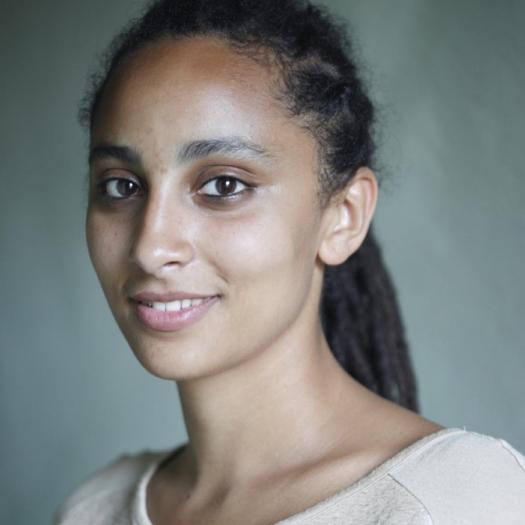
Age determines a lot about your position in society—what activities you can do, what benefits you can access, and what rights and responsibilities you have. While it seems appropriate to treat people at different stages of life differently, we also consider certain kinds of unequal treatment unjust. So when should we treat people of different ages differently? And when does it become ageism or age discrimination? When does a disadvantage for an age group turn into injustice against a generation? Josh and Ray act their age with Juliana Bidadanure from Stanford University, author of Justice Across Ages: Treating Young and Old as Equals.
Should society treat everyone the same way? Is it possible to prevent age discrimination while still taking age into account? While Josh believes that restrictions for purchasing alcohol and child labor laws are important, he’s a little less sure about the importance of age for voting restrictions and equal pay. In contrast, Ray thinks the rules we have now may be arbitrary but apply equally to everyone.
The hosts welcome Juliana Bidananure, Professor of Philosophy and Political Science at Stanford University, to the show. Her research is driven by the question of why some inequalities between age groups are acceptable, while others are not. Ray asks why the existing system needs to be changed at all, to which Juliana responds that we should scrutinize our current intuitions and differential treatments more carefully in order to show equal concern for all stages of life. Josh brings up the Brexit vote and the possibility of lowering the voting age, which prompts Juliana to discuss the importance of having young adults in parliaments. She thinks that political representatives should look like the citizens they represent, and younger age groups in particular need a larger space to voice their concerns.
In the last segment of the show, Josh, Ray, and Juliana discuss the implications of maximum voting ages and mandatory retirement ages. Juliana worries about inequalities that increase generational inequality, and she explains why she would create a basic income for all ages if she had the power to create a society that is fair for all generations. Since future generations will have new challenges to overcome, Juliana believes we should want them to be better off and not suffer from the same difficulties that previous generations had.
Roving Philosophical Report (Seek to 3:47) → Holly J. McDede investigates why some people are campaigning to lower the voting age.
Sixty-Second Philosopher (Seek to 45:55) → Ian Shoales reminisces about coming of age and considers how the Internet combats ageism.
Josh Landy
Is age discrimination always wrong?
Ray Briggs
Would we really want to let a 13 year old drive?
Josh Landy
How do we take age into account without being ageist?
Ray Briggs
Welcome to Philosophy Talk the program that questions everything…
Josh Landy
…except your intelligence. I’m Josh Landy.
Ray Briggs
And I’m Ray Briggs. We’re coming to you via the studios of KALW, San Francisco Bay Area
Josh Landy
…continuing conversations that begin at Philosophers Corner on the Stanford campus where Ray teaches philosophy, and I direct the philosophy and literature initiative.
Ray Briggs
Today, we’re asking should all ages be equal?
Josh Landy
That’s a cool question, Ray. I mean, should society treat everyone exactly the same? Regardless of how old they are?
Ray Briggs
Well, that’s clearly ridiculous. I wouldn’t want a 15 year old to be able to buy a bottle of whiskey or a 40 year old competing against kids in a spelling bee.
Josh Landy
Okay, well, those are extreme examples, right? I think in general, there are too many age restrictions, like how come some 25 year old who knows nothing about politics gets to vote, but a smart 17 year old who’s super plugged in, doesn’t have a say in the future of their country?
Ray Briggs
Well, that might be unfair to 17 year olds for now. But all they have to do is wait a year, and then they can go vote their hearts out. So the system is totally fair. Everyone eventually gets their turn.
Josh Landy
How is that fair? I mean, just because we discriminate against all 17 year olds, that’s supposed to make it fair.
Ray Briggs
Well, what are you proposing?
Josh Landy
I don’t know, figure out who’s qualified to vote, give them a civics test.
Ray Briggs
Oh, like that’s gone well, in the past!
Josh Landy
Okay. Fair enough. But okay, how about equal pay?
Ray Briggs
Yeah. What about it?
Josh Landy
Well, fast food restaurants will give you next to nothing if you’re a teenager. You can earn less than minimum wage for doing exactly the same job as somebody else, just because you’re a bit younger.
Ray Briggs
Well, yeah, Josh, that’s because kids don’t need as much money. They’re basically taken care of by their parents.
Josh Landy
So what? If it’s the same work, it should have the same reward. But what if some 25 year old moves back in with their parents? Are you gonna dock that person’s pay as well?
Ray Briggs
Look, even if we pay everyone the same, there’s still going to be differences based on age. I mean, you don’t want eight year olds working as chimney sweeps do you? I mean, I know you’re a Brit and all, but really?
Josh Landy
Guilty as charged, govna’. Now, okay. Fair enough, about chimney sweeps, child labor laws are definitely essential. All I’m saying is, you know, once you’re old enough to work, you should get paid the same as everyone else.
Ray Briggs
Oh, come on, Josh, a 15 year old just isn’t going to be as good as an 18 year old. You know, their prefrontal cortex isn’t as developed, they’re going to be less reliable, less mature, less resourceful. So of course, you’re going to pay them less.
Josh Landy
You make it sound like all 18 year olds are super reliable. I don’t know about you, Ray, but I know some pretty flaky 18 year olds, so you want to pay them more than a really responsible 15 year old?
Ray Briggs
How are you going to make that work? The rules we have might be arbitrary, but there’s just no good alternative. You need to draw the line somewhere. And the cool thing about those lines is that after you draw them, they apply equally to everybody. You’re the same age, great, you get treated the same,
Josh Landy
But it’s not enough just to treat people the same. What if we treated all 50 year olds the same by refusing to hire them? That wouldn’t be fair, even if something applies equally to all 50 year olds? It can still be wrong.
Ray Briggs
You’re just scared I’m gonna have you fired from this show for being past your prime.
Josh Landy
Guilty as charged again, Governor,
Ray Briggs
But seriously, there has got to be a way to prevent age discrimination, while also taking age into consideration when it makes sense.
Josh Landy
I don’t know how to do that, but I bet our guest does. It’s Juliana Bidadanure from Stanford University. She’s just published a book on the subject called “Justice Across Ages.”
Ray Briggs
In the meantime, we sent our Roving Philosophical Reporter, Holly J. McDede, to take a look at why some people are campaigning to lower the voting age. She files this report.
Unknown Speaker
We will not comply! We will not consent!
Holly McDede
Since the pandemic lockdown, school boards across the country have become political battlegrounds over mask mandates, vaccines and reopening guidelines.
Unknown Speaker
These are our kids, not yours! Where are yours? You don’t control us!
Holly McDede
In San Francisco, the fights have had a unique twist. The school board there had voted to rename 44 schools whose names they said were tied to historical injustices. A lot of people were unhappy this was happening during the pandemic, while schools were still closed.
Unknown Speaker
As far as we can tell, they didn’t open any, you know, biographies on any of these people, and you know, there are famous historical figures that they literally only considered for a few seconds.
Holly McDede
And it doesn’t stop there. In early 2021, people were outraged after tweets made by Alison Collins, a Board of Education Commissioner, were shared widely. In those tweets Collins said Asian Americans use white supremacist thinking to get ahead, and there was a backlash. The mayor and many local leaders called for her to step down. Amy Chang was a high school senior at the time.
Amy Chang
If you do not want racist tweets to be used against you for political reasons, then do not make racist tweets!
Holly McDede
Now three members of that school board are facing a recall vote. But many of the students in the district won’t get a say—they can’t vote. And that’s something young people in San Francisco tried to change.
Unknown Speaker
We are fighting back against crises at a scale no other generation has ever seen. And we need the power of the vote to make our voices count now.
Ellie Lerner
My generation simply does not have the privilege not to be politically engaged.
Holly McDede
In 2020, Ellie Lerner campaigned for a proposition to extend voting rights to 16 and 17 year olds in San Francisco. The measure would apply to local candidates and ballot measures.
Ellie Lerner
I think that kids are so incredibly involved, and especially during the pandemic, have realized the failures of the education system and are demanding greater action and greater voice.
Holly McDede
Ellie has been politically engaged since middle school when she began to feel the direct effects of climate change.
Unknown Speaker
This is the Kmart shopping center. This is Kmart burning up.
Holly McDede
In 2017, the Tubbs Fire swept through cities like Santa Rosa where her grandmother lived.
Unknown Speaker
Luckily, she was able to get out in time, but the area around her house completely burned down in Santa Rosa, and we had several other family and friends have to come and stay with us.
Unknown Speaker
House burning looks like on the north side of the road.
Holly McDede
At the time, it was the most destructive wildfire in California history.
Ellie Lerner
Just seeing the devastation across the state, and I also have asthma. So, struggling to breathe for several days and realizing that this was only going to continue.
Holly McDede
She saw how the decisions politicians were making directly impacted her future. And that pushed her to demand a greater voice in the political system. But not everyone agreed with her. In fact, in 2016, San Francisco voters rejected the measure to lower the voting age. Ellie campaigned for it again in 2020, and it was rejected again.
Ellie Lerner
I actually talked to a few adults who did vote against it. Their main concern was that kids do not have to pay property taxes. And so you know, we’re not as invested or wouldn’t really be educated enough to vote on topics concerning property taxes, particularly.
Holly McDede
But then not everyone owns a home in San Francisco.
Ellie Lerner
There are plenty of people that don’t and we still grant them the right to vote.
Holly McDede
On another level. Ellie says adults are afraid of a fundamental shift that the status quo would be disrupted if kids could vote. She voted in her first national election in 2020.
Unknown Speaker
Young Americans are energized and highly engaged in this election. More than 1 million voters aged 18 to 21 have cast their ballots early.
Holly McDede
People often assume young voters are apathetic. But according to an analysis from the website 538, the core of the issue is feeling disenfranchised from politics. Young people are much more likely to report barriers to voting than older people.
Unknown Speaker
Like people on social media, they’ll post pictures of them and their ballot.
Holly McDede
According to research from Tufts University, the 2020 election featured one of the highest rates of youth voting since the voting age was lowered to 18 in 1971.
President Richard Nixon
We are certifying the 26th Amendment to the Constitution of the United States. That amendment, as you know, provides for the right to vote. All of our young people between 18 and 21, 11 million new voters as a result of this amendment.
Holly McDede
That was during the Vietnam War, when young people were old enough to fight but not old enough to vote. Now, decades later, the efforts to lower the voting age are local. Youth in San Francisco pushed to lower before, and there are no signs they won’t try again. For Philosophy Talk, I’m HollyJ. McDede.
Josh Landy
Thanks for that report. Holly. I have to say I’m increasingly persuaded by the idea of a youth vote. I’m Josh Landy, with me as my Stanford colleague Ray Briggs, and today we’re asking, should all ages be equal?
Ray Briggs
We’re joined now by Juliana Bidananure. She’s a professor of philosophy and political science at Stanford University, and the author of “Justice Across Ages: Treating Young and Old as Equals.” Juliana, welcome back to Philosophy Talk.
Juliana Bidadanure
Thank you so much for having me.
Josh Landy
So Juliana, last time you were on the show, we talked about a world without work. How did you end up moving into this cool new direction?
Juliana Bidadanure
Well, the two topics are tightly connected, at least in my head. I started working on on this in 2008, just after the financial crisis, and I was living between France and the UK at the time, and the disproportionate impact the crisis had on youth unemployment throughout Europe. And at the time, it was typical for the young to be three to four times more likely to be unemployed than older age groups. And youth unemployment even peaked at 60%. in the UK. And yet, what I was witnessing was a critical lack of support for the young in spite of these effects. So in France, for instance, we have an income support scheme that gives you 500 euros a month if you have no other rrsources, but that excluded young adults below the age of 25. And that age based inequalities can be really unjust to me. But on the other hand, you know, there are plenty of inequalities between age groups that seem fine, like driving restrictions for the younger and those are [unintelligible] a puzzle there. I was like, “Why do we feel that some inequalities between age groups are fine, and others not?” So I embarked on this project to answer those questions.
Ray Briggs
So Juliana, I can imagine a position that says, “Look, our restrictions are basically sensible, like, when you can drive when you can vote, when you can drink, those are all restricted based on age.” But that makes sense. And we also have labor laws against age discrimination, which are really good. So why aren’t things just good the way they are? Why do we have to change something?
Juliana Bidadanure
Oh, I actually think that we do not scrutinize age based inequalities as much as we should. And as you know, as your little introduction, as shown, age inequalities are everywhere. And that is because you know, age deeply structures our lives, and it shapes social institutions, roles, relationships, and how you assign obligations and entitlements. And so, you know, each stage of life brings characteristic opportunities and vulnerabilities. So they are going to be age qualities everywhere. They’re also going to be multidimensional and multidirectional. So ageist discrimination laws in the workplace and labor market are really helpful. But they only help avoid, you know, the worst cases of ageism, typically against older workers. All sorts of other differential treatments and distributive imbalances that are introduced by policies in the domains of healthcare, political institutions, the environment, and to me, these need to be scrutinized very carefully. And this is what I tried to do in the book.
Ray Briggs
One thing I might think about, like all these age inequalities, that kind of came up when Josh and I were talking is, “Look as long as- like, it’s fine if I’m badly off when I’m 15 as long as I get to be well off, when I’m 21. Who cares? I will get to have the bad time in my life and the good time in my life the same as everybody else.” Like why should this kind of inequality be worrisome to us?
Juliana Bidadanure
That’s a really good question. And I think that’s kind of this comment that, you know, we all age, and so we can expect to have been treated equally over time, even if we are treated very unequally at any given time. I think that’s the starting intuition. That means that philosophers and people in general, everybody questions as much as they have questioned inequalities on other suspicious grounds, like, you know, race or gender. And I think there is definitely something really powerful to that intuition, you’ll get your chance to do something or to get a benefit, because you will get there at some point in your life. But I think that that’s just not enough. It’s a helpful starting point. And maybe it helps us see that some inequalities are not going to turn out to be problematic. But there are still some limits that should be set to those kinds of inequalities just because they are chronic inequalities that don’t turn into that chronic inequalities. It doesn’t mean that those are desirable in any sense of the world.
Josh Landy
You’re listening to Philosophy Talk. Today we’re thinking about justice across ages with Juliana Bidadanure from Stanford University.
Ray Briggs
Should you have to be older to own a gun? Should we let younger people vote? His age just a number? Or does maturity actually matter?
Josh Landy
Age, equality and injustice, along with your comments and questions when Philosophy Talk continues.
Should everyone be expected to act their age whatever age that happens to be? I’m Josh Landy, and this is Philosophy Talk, the program that questions everything
Ray Briggs
except your intelligence. I’m Ray Briggs and we’re asking, should all ages be equal? With Juliana Bidadanure from Stanford University, author of “Justice Across Ages.”
Josh Landy
We’re pre-recording this episode and unfortunately, we can’t take your phone calls but you can always email us at comments@philosophytalk.org. Or you can comment on our website where you can also become a subscriber and gain access to our library of more than 500 episodes.
Ray Briggs
So Juliana, it seems like it’s sometimes okay to take age into account and sometimes not. How do we tell the difference?
Juliana Bidadanure
Yeah, that’s the really important question. Okay, so, yes, you’re right, clearly, sometimes it’s okay to take age into account. In fact, that is often okay, I would say to take age into account, since we want policies that are adapted to actual needs, and those needs are often going to be age specific. So I would say differential treatment that is there to ensure that we have enough at different life stages to be well and do well are okay. And obviously, it does not take all kinds of resources to get the same [unintelligible] the functioning at different stages of life. So the age differential spending that he’s there to address, this is not problematic, in my view, it is just what adapted treatment and in fact, [unintelligible]. Now, it gets a little more complex than that. At times, we are not trying to bring everyone to the same level, we are trying to enable opportunities that are themselves age specific, like going to college, retiring in dignity, and financial security for another age group, or playing long hours each day for young kids. So then this is going to take different types of interventions, different kinds of opportunities, and the inequalities or the seeming differential there absolutely not problematic. I think the key is for these differential treatments to show equal concern for all stages of life.
Ray Briggs
It sounds like built into that is kind of an idea of what shape a human life normally would take, or ought to take. And so I’m curious about like whether that really is informing what you just said, and where I would get my ideas about that?
Juliana Bidadanure
Yeah, I mean, that’s true. I think that there is a sense in which what we understand in our society as legitimate or reasonable aspirations of members of different age groups. But of course, we need to be very critical of that. And I think one way of being critical of that is to make sure that we ask, we have sufficient deliberative procedures to ensure that people at different stages of their lives are involved in the conversation on what it means to do well and be well and want particular aspirations at different stages of life. So as for what kinds of inequalities are actually problematic, we can actually have policies that are age biased in that they don’t necessarily show equal concern for different life stages. And that can happen when some age groups are excluded from deliberations.
Josh Landy
So that takes us back to the Roving Philosophical Report and this issue with, you know, getting more young people involved, maybe lowering the voting age, maybe having, you know, representatives of younger generations. On the legislature, I think a lot about the Brexit vote since I’m a Brit myself, at least in part. And, you know, there was a fair amount of resentment on the remain side that this was a vote heavily decided by folks from the older generation, in a situation where, you know, the younger folks are going to be dealing with the consequences, presumably for a longer time. So you might think the biggest stakeholders are those with more of their life ahead of them. How do we, how do we increase the say that the younger generation has in politics?
Juliana Bidadanure
Oh, that’s a tough question and a very important one. I mean, lowering the voting age makes total sense to me. And I think that we can’t quite treat teenagers in a way that makes it seem as if they have nothing to do. Saying this is not their domain, and then expect suddenly that at 18, they will be completely politically involved. I think we need to think about this far more inclusively early on. Now, lowering the voting ages is a proposal that makes sense and is discussed, but I think one that is also very important is thinking about political representation as well. And that’s what I talked about in the book a bit more than the voting age. So, you know, only 2% of global parliamentarians are [unintelligible]. And that, to me is quite striking. I think, you know, it’s very important to make sure that parliaments look like the populations they are representing. And, you know, there are lots of arguments for this, but I think some of the most powerful ones are about, you know, making sure that we attest to a political community that people in a certain group are actually political agents. And I think if we send that message to young adults that can make a difference. And also, obviously for substantive reasons. So if we don’t have any young adults in Parliament affecting the policies, those that come out of those deliberations are not going to reflect accurately the interests and the concerns of that age group. And more importantly for me, how do we expect that the challenge, sorry, the misrepresentations, the stereotypes, are going to be challenged? Right? If there aren’t any young adults to actually stand up and confront those stereotypes?
Ray Briggs
So this actually raises a question for me. So I agree that 30 is definitely much older than you need to be to be a good deliberative citizen. But there is some kind of question about like, the deliberative capacities of teenagers or maybe children, like, it seems like you sort of, you start life as a baby and you don’t yet have the ability to participate in democracy. And then at some point, you gain it, like how do I figure out where that point is, and respect differences in capacities, while also respecting that, like, I want young people to have a voice in society and to grow to be like better and better citizens?
Juliana Bidadanure
Yeah, I mean, that’s a tricky question, but I think that the approach I take in my book, at least, is to say, “Well, look, we have so much work to do to integrate the age group of young adults, while basically between the age of 16 years old and [unintelligible], and there’s so much work to ensure that they are better integrated in our political institutions, and that they are not marginalized from, you know, the political sphere, and to ensure that they are included also in the other sphere I talked about, which is the labor, so much work to be done here, to improve the situation of those younger.” And I think, to me, focusing on, you know, 18 to 30 even, when it comes to parliamentary representation, would actually already do a lot to increase, or have those younger and to reduce some of the issues discussed earlier, around, you know, Brexit and what happens when the policies that are enacted, do not represent the interests of those who are younger. I think that lowering the voting age is a way of rethinking the way we introduce children to politics in schools so that they do feel concerned and involved very early on, is probably a way to ensure that this issue doesn’t happen, you know, when young people do actually have the right to vote. There are many things we can do to make it easier for people to vote, even if they change address, often, as happens with the young generations because they are actually barriers to voting for people who don’t have a stable [unintelligible] of other age groups that could be alleviated pretty easily… without about what to do with toddlers, right?
Ray Briggs
You’re listening to Philosophy Talk. Today, we’re thinking about treating people of different ages differently with Juliana Bidadanure from Stanford University. So we’ve got a comment from Steve in Oakland, who writes: “The movement for age equality may be primarily composed of people who are simply afraid to take the responsibility of being accountable as adults, which seems a little odd because Juliana, you’ve been talking about people wanting to be more accountable as adults and have a greater political voice.” We’ve also got a question from Devon in San Francisco, who writes, “Could your guest please comment on the idea of a maximum voting age?” Devon writes, “We have a practical problem of actual voters being disproportionately composed of older people will not have to live as long with the consequences of their electoral decisions.” So what do you think Juliana? Should there be a maximum voting age the way that there’s currently a minimum voting age?
Juliana Bidadanure
No, I don’t think so. My answer is definitely no. I worry about anyone being excluded from this, and I think we need to have extremely good reasons to exclude people, and I think we do have those reasons for toddlers and small children. I don’t think we do have those good reasons very often for teenagers, but I don’t think the answer to, you know, making sure those younger and future generations are better represented is to disenfranchise people over certain age. I think we should just do everything we can to increase political power for those younger but we shouldn’t really need to consider disenfranchising anyone in order to ensure that our policies are more fair intergenerationally and that they are more long term-ist.
Josh Landy
I have a related question for you, Juliana. As you know, in France, there’s a mandatory retirement age and this is something that terrifies me. I would hate for myself, but I think I would hate for my society. But you know, but I wanted to know what you think about. I mean, you could see the argument for it as well. If there’s a mandatory retirement age, then you open up opportunities for the younger generation. And, you know, so how, you know, how do we balance the needs of the young and the needs of the older generation? So people who enjoy their work and want to keep going and find meaning and purpose in that. So what do you think about that?
Juliana Bidadanure
Yeah, oh, that’s a good case. So, you know, the problem with that case is that there are often two rationales for mandatory retirement that are, kind of, they are very hard to- one of them is very dangerous. But it’s difficult to know when it’s hidden behind the other rationale. So there is one, which is simply that, you know, if jobs are scarce, and if we are serious and being fair and distributing those gifts, then one of the fairest way of distributing them is to ensure that everyone has access to them at one point in their lives, right? We could do that for other goods, we could, well, everyone should have a sabbatical year in their lives where they get paid by the government to do what it is that they want. The first way to do that would clearly be to say everyone gets to have that good at one point in their life. So that rationale makes sense. Unfortunately, the best empirical evidence suggests that it doesn’t work that way. The economy isn’t actually working in such a way that you suddenly, magically create more space for younger workers. Now, there’s another rationale that is really ageist. It’s really the idea that people after a certain age become lesser contributors. And when they are, they’re, you know, in the workplace, they can’t contribute as much, they are slower. All of those things are really stereotypes about people after a certain age, and those are damaging stereotypes, and this is a form of ageism. And in many places, it’s actually against the law. Well, that way. So I think, you know, that rationale, that ageist rationale, is very problematic. But sometimes behind the first rationale, which in the abstract might be fine, there is actually the ageist stereotypes, even behind it. So we have to be really really careful.
Ray Briggs
Something that’s coming out for me here, that also kind of makes me wonder about the youth jobs guarantee idea, is like what is the place of work, like in a life? Because you can think of like some different things that like older people or younger people could be doing if they weren’t working like younger people could be getting a sponsored education where they didn’t have to worry about working. And older people could be like getting their livelihood paid for. But there’s also like this idea of like, being a full participant in society requiring. Which of which of those ways of thinking about work should I be leaning on more heavily?
Juliana Bidadanure
Okay, that’s a good question, too. So I think that one of the things in this space was really this frustration, with the idea that was becoming quite widespread around the financial crisis, that it was not a good response to give cash to young adults. Adults need to be told the right values, they shouldn’t be given something for nothing. And if we are going to do anything to help them out, it should be encouraging them to go back to work. And the best way to do that is probably [unintelligible] their parents, and to not enable it is their financial independence. And I think because this view is really connected with what we think about youth in particular, and what’s appropriate for that age, of course now, we are talking about the intersection between age and class. The kind of youth that were finding themselves unemployed, especially those were finding themselves unemployed for long stretches of time, you know, didn’t necessarily have access to a lot of other opportunities, including educational opportunities. And so we were just telling them, “You have to accept work. Any work really.” I don’t think that that’s the right way to think of our life, I think that there are ways to build economic security for all stages of life so that at any point you can actually decide job opportunities that are open to you are the right ones for you. And I think we understand that for later stages in life, even though I think we in general have those views about every age group. But I think when it comes to young adults, we’re really, really worried about them not working. And I think we should, you know, I think job guarantees for young people, retraining, educational opportunities are essential. But I think we should also trust young adults with cash when clearly one thing is, in fact, the cash poverty and the lack of economic security.
Josh Landy
Yeah. And that brings up a kind of intergenerational justice where, you know, you were mentioning earlier about the, you know, there’s a certain picture we have in our minds that well, everyone gets their turn, right, it’s okay that you can’t vote at 17, because like everybody else, you get to voted at 18. But what if, in some cases, it’s like a Ponzi scheme, right? Where everyone else got their turn to have a economically better life than the previous generation, perhaps or probably, to enjoy an unspoiled earth, to live in a relatively functional democracy. But at a certain point, you know, the pyramid scheme sort of gives out and the current young generation is facing a very different environment. How do we- what does the philosopher have to say about the justice of that kind of situation?
Juliana Bidadanure
Yeah, I’m so glad you asked that question. Because this is actually a way for me to get at, like, when are inequalities by age actually wrong? Which I, you know, I haven’t really got. So I think one type of inequalities between age groups that we should really worry about is the one that will in fact, generate generational inequality. So that’s exactly what you just said. So in the case of the young adults after the financial crisis, as you say, you know, a lot of people reacted by saying, “It’s okay, young adults are always more likely to be unemployed than older age groups. It’s okay that, you know, they catch up later on. It’s just a transition from education to work can be a bit tricky. But it will be fine.” Now we know that’s not true. Right? They are things called scattering effects. That means that young people who are socialized in a context of extreme job scarcity, are far more likely to remain in a relative disadvantage position later in life, their wages, and they are more likely to be unemployed, again in the future. So that’s what pushed some people, for example, in the UK or in France, to start out throughout Europe, we need to start describing a jilted or disadvantaged generation. That’s one way in which inequalities when, in fact, they turn into long term, enduring generational inequalities. And I think there are two more ways in which age inequalities can be wrong, so bear with me. One is when inequalities, age groups, like equal concern for different life stages, I touched on that a little bit earlier. And I think it’s just that sometimes all decisions can be age biased, in that they deny particular ages opportunities that are reasonable for them to want without, you know, it makes sense to think that when you’re old enough to work, and so to be unemployed, you should also have access to the system of social protection that’s put in place for people that need it. And then the very last thing I would say about inequalities that are, when they undermine our social standing, they are wrong. It doesn’t matter if we age out of it. You know, we shouldn’t want to live in societies where people are infantilized, let’s say, you know, exploited, are demonized, grounders, and age can affect all social standing very often, you know, older adults are sometimes infantilized in care homes. Young adults are not taken seriously as political agents or are negatively portrayed as lazy. So those kinds of negatives, I think we should avoid in general, it doesn’t matter that we actually going to go through all stages, we should have a society that’s free of those kinds of [unintelligible] and modes of relating.
Josh Landy
You’re listening to Philosophy Talk. Today we’re thinking about age and discrimination with Juliana Bidadanure from Stanford, author of “Justice Across Ages.”
Ray Briggs
Should any of our age limits be raised or lowered? Could we let younger people have a say in how their schools are run? Should there be a mandatory retirement age?
Josh Landy
Aiming for intergenerational justice plus commentary from Ian Shoales, the Sixty-Second Philosopher, when Philosophy Talk continues.
If the older generation treats the younger generation like pawns, what kind of justice is that? I’m Josh Landy. And this is Philosophy Talk, the program that questions everything
Ray Briggs
except your intelligence. I’m Ray Briggs. Our guest is Juliana Bidadanure from Stanford University. And we’re asking, should all ages be equal?
Josh Landy
So Juliana, with the powers vested in us by public radio, we’re gonna make you czar of age equality today. What’s the first thing you’re going to do to create a society that’s fair for all generations?
Juliana Bidadanure
Well, if I’m Czar, and I have a lot of power…So I think the first one would be a basic income for all ages, actually. So I’m very much in favor of the policy in general, but I think that my commitment to age equality is kind of reinforced my commitment and I want individuals to be able to experience some robust economic security, and to be in a position to plan from that position of security at all stages of life. And I think for me the way to design a generous system of social protection that way, and I think the second policy is introducing youth quotas in parliaments and I think we talked about this already. But as I said, only 2% of the world’s parliamentarians are 30 or younger, we need to do better than that, if parliaments really represent the interest of all age groups without age bias. And if we want our policies to be long term, this is the right way, I think. I think this is probably one of the things we should do, among many others.
Ray Briggs
So it’s interesting, because your first proposal was actually not age differential at all. So how much of age or generational injustice like actually requires age specific solutions, rather than just uplifting everybody, regardless of age?
Juliana Bidadanure
So I don’t put it exactly in those terms, because they have so many spheres where they are age inequalities of one form or another. So it’s going to be tricky to say, like, how often should it be the same? And how often should we be different? You know, I think it’s really a case-by-case situation. But I would say that, you know, for basic income, it comes to me as of use that we need to ensure that for all ages of life, there’s at least a minimum that’s insured and secure. You know, there’s almost like a threshold that you need to ensure at any point in life, because we know that even though our plans and aspirations change as we age, there are some basic things that we need, you know, to be secure, to be healthy, to be fed. So I think just ensuring that people don’t have to worry about that. And it’s based on that, I think, is what we want for all ages. Now, you know, it’s interesting, because actually, in this idea of basic income for all ages, is built like a baby bond for children. And so it’s kind of age specific, because you might ask, so do we give a basic income? I think we do give us kind of a basic income to kid in the form of child benefits to parents. But I think part of that basic income for the kids could be born and put into an account like a baby bond, that is a kind of a savings account, and then when you actually retrieve the cash, and so you have a little basic capital to start from, as you start your adult life. So you know, this is kind of responsive to age specific needs and aspirations. But without being entirely age differentiated, because there are things that we need that at every stage.
Josh Landy
These seem like good proposals. You know, I also think of some other things, for example, you people talk about in the United States, reducing the cost of college, maybe even eliminating the cost of college. But you often meet with a kind of psychological block, which may be more than psychological, maybe it comes to a question of justice, because I think some people think, “I had to pay for college. Wouldn’t justice require that everyone pay for college?” Of course, I think the exact opposite. I think it would be fantastic if we were able to make college affordable, maybe even free. But how do we convince other people that this would actually be, you know, the right thing, a positive thing, something everyone could get behind?
Juliana Bidadanure
I agree, I think this reaction is very, it’s very widespread, actually, Like, I had to struggle for this. Like, why should the person that comes next not have to struggle for the same thing? I think that’s just so problematic, though, because some form of social progress, and we should want the next generation to be better off and to not have to suffer from the thing we suffer from. And it turns out, in this particular case, younger generations are gonna have to face so many terrible things that the older didn’t have to face, and so you know, thinking that there are ways to, you know, including like through a basic income, that we could make it easier for them to confront the really disastrous consequences of which we don’t know yet exactly what they are going to be for economies, but also the future of work, which is really complicated and messy, and a lot of jobs are going to be automated, you know, like they have some challenges that future generations are going to have to face and ensuring a guaranteed floor, you know, to be able to adapt to those challenges that we have never faced before, to me seems just like a better way of equipping the next generation than just doing what we’ve done so far and hoping that things go well.
Josh Landy
I wonder if I can broaden out to a general confusion I have about this. I’ve had it for a long time. Why are age limits so various? It’s like you can drive at 16, you could serve in the military at 17, you can vote at 18, you get to drink at 21. Is there any logic? That means, of course, in many states, you can own a gun, as long as it’s a long gun at a very young age? Is it all just arbitrary? Or is there, you know, in your research, have you found any kind of logic behind these very different standards that we set for different things?
Juliana Bidadanure
Yeah, I mean, I think the key is consistency. I mean, a lot of the examples you’ve just given — yes. And yeah, don’t get me started on those, you know, gun restrictions. It’s just, I’m French. So I’m completely— I think everything about it, it’s so difficult for me to grapple with. But, you know, I think if you just look at how different countries do things, how much arbitrariness there is into it, you know, because we don’t allow people to drink exactly at the same age, we don’t allow them to drive at the same age. But of course, we try to use age as proxies for a variety of things, including if you’re in the context of politics, you know, you might think of political competency and what does that mean, you know, political expertise, or also, you know, just the capacity to deliberate in particular ways, the capacity to understand, to be responsible. So I think, you know, we try to use age as a proxy for that, and I think it’s never quite perfect. But I think obviously, there is something important that needs to be preserved here, often what we try to do is just protect the interests of those young people as we much as we can, and we just need to be willing to reconsider, when we are being inconsistent across spheres, like enabling people to go to war, but not letting them, you know, have a drink, you know, when to be consistent in the way we do it. We do it across spheres, plus I think we need to be inclusive in the way we make those decisions. And that’s tricky if we’ve made the decision right from the beginning that young adults and teenagers are not really competent enough to join the conversation.
Ray Briggs
So this makes me kind of have a big question about paternalism, because of the restriction, like age restrictions, on things like drinking are kind of paternalistic. And it seems like one major goal of how we should treat each other and civil society is to respect each other’s autonomy. But I think both at the beginning of life and at the end of life, you have people sort of losing capacities or not yet gaining capacities to make decisions for themselves. How do I sort of think about treating people with dignity when they’re in those situations?
Juliana Bidadanure
That’s key, because obviously, we want well being of people at all stages of life, and sometimes that means accepting that we are going to overstep and that we are going to make decisions for others. And there’s something that it’s almost like a predicament, it’s something necessary we have to do, but it’s normal about it. You know, I think that we need to be open to the idea of doing things differently. I think, you know, it’s not exactly answering your question about paternalism. But I’ve worked a bit on infantilization. And I think there is a way we relate to people older, and we relate also to people while younger, young adults, there’s just not compatible with at least what I see is the goal of a society where we respect each other. I think, as a young adult myself, like I experience, countless instances of infantalization, you know, even in institutions like health care, or you know, when you go see a doctor, when you go and try to get your driver’s license, I feel all those kinds of contexts where you can really be treated with far more degrading ways that that you just because you’re younger, just because you’re older, we shouldn’t be victims of that. Now, of course, one thing we haven’t talked about, but you know, eventually what I care about is inequalities in general. And so people who are going to be infantilized or were going to be marginalized and… age are also going to be so by virtue of other features of their identity. So it’s essential to be critical about infantilization, you know, of older people and infantilization of young adults, also because those mechanisms are the same ones that will be mine or degrade women and people in racial minorities, and sometimes it will be actually the same people that will be at the receiving end of those infantilizing treatments.
Josh Landy
Well Juliana this has been a fascinating and indeed rejuvenating conversation. Thank you so much for joining us today.
Juliana Bidadanure
Thank you so much for your questions. So it’s great to be here.
Josh Landy
Our guest has been Juliana Bidadanure, professor of philosophy and political science at Stanford University, and author of “Justice Across Ages: Treating Young and Old as Equals.” So Ray, what are you thinking now?
Ray Briggs
I really like how Juliana’s project is motivated for respect for people at all ages. I find this really challenging especially in kind of like intergenerational activist conversations where you have kind of often generational disagreements. And the older people are kind of tempted to say the younger people just don’t understand how the world works. And the younger people are kind of tempted to say the older people don’t understand how the world should work. I’d love for those conversations to be sort of respectful and caring, and I sometimes find that a challenge.
Josh Landy
I love the way Juliana talks about in her writing, if making spaces where people relate as equals. I think that’s a wonderful thing to strive for. We’re going to put links to everything we’ve mentioned today on our website, philosophytalk.org, where you can also become a subscriber and gain access to our library of more than 500 episodes.
Ray Briggs
And if you have a question that wasn’t addressed in today’s show, we’d love to hear from you. Send it to us at comments@philosophytalk.org and we may feature it on the blog. Now. Okay, Boomer, it’s Ian Shoales, the Sixty-Second Philosopher.
Ian Shoales
Ian Shoales. Coming of age used to be a thing was the stuff of myth. That was the stuff of many a primitive ritual involving fire and scarification, was the start of a fairy tale, young man going off to find his fortune, leaving the old parents even wicked stepmom such there be in the dust. He may have been a teen but he was not a teenager. The teenager was invented in the 1940s; it was an American invention coming about the same time schools stopped teaching Latin, and Frank Sinatra started recruiting and then came drive-in movies, jukeboxes, double feature saw cops, and television of course until the next generation of teens — mine — kicked Sinatra off his perch and replaced him with four mop tops from Britain, their name, the Beatles. Culture is said to privilege one age over another leading to ageism, but the cruel truth is that it’s all just hokum. I’m a senior myself and you know I’ve never had it so good: discounts a discount store, shouts up “Step it up, old timer!” in the Safeway parking lot, when informed I don’t have this or that app in my smartphone, cries of “Okay, Boomer!” fill the air. It’s weird and wonderful. When we were young, we were on top of everything from sex to movies to music, and now we can’t even go to the internet, allegedly, without browning out Pittsburgh or electing Trump. We’re starting to kick the bucket yet boomers still command most of the media attention. We are the forever teens, but don’t feel bad Gen X or millennial or Y or today’s teen or preteen or soccer mom or Karen or dad bod dad or precocious kindergartener, your time will come. Cliches and long form articles of what you really want will be issued free of charge unless you’re a baby or otherwise mentally unable to process a sales pitch; you are first and foremost a member of your demographic. If you don’t do what you’re supposed to do, according to peer pressure, algorithms, history, propaganda, sales pitches and other forces known only to the sociologists of tomorrow. Okay influencers, YouTube, and Instagram, okay, we almost buy what our age group demands or the economy will collapse. So we have all sorts of ideal citizens out there — fit looking gray haired men ruffling the head of a dog or a slim smiling silver haired woman on a treadmill, for instance, are the target consumers portrayed in the endless TV ads for unpronounceable new drugs that didn’t even exist 20 years ago. How old are they? 50? 70? Who knows? There are gaggles of laughing young people doing various activities from ordering drinks to skipping stones in a creek to getting out of a car in a mountain and smiling wistfully. What is being sold? I don’t know — beer, insurance, shampoo, and how old are those kids? Could be 19, could be 30. So seems to be the ageism is losing some of its force as we all move more and more online. We’re all pretty much all the same. Either clueless trapeze or affectless lib tardes. And age itself only matters if you want to buy a cocktail. And even there seems a little weird these days that traditionally you aren’t supposed to be able to smoke or drink or heavy pet or at least we’re at least 18, yet we’re pretty cavalier, at least according to media hysteria, and allowing hormones and puberty blockers to be administered to our anxious children. Everybody’s more worried about transgender actors taking over sports than they are about whether pre menopausal women have the same rights as 20-something unwed mothers. What does that tell you? What does it tell me? It tells me “Okay, Boomer, take out your teeth and take your [unintelligible] and it’s almost time for the James Bond marathon on TBS.” Is that still a thing? It’s still not sure exactly what LinkedIn does. I posted my resume with him 30 years ago. Am I still a member? What’s my password? I gotta go.
Josh Landy
Philosophy Talk is a presentation of KALW local public radio San Francisco and the trustees of Leland Stanford Junior University. Copyright 2021.
Ray Briggs
Our executive producer is Tina Pamintuan.
Josh Landy
The senior producer is Devin Strolovitch. Laura Maguire is our Director of Research. Cindy Prince Baum is our Director of Marketing.
Ray Briggs
Thanks also to Merle Kessler and Angela Johnston.
Josh Landy
Support for Philosophy Talk comes from various groups at Stanford University and from the partners at our online community of thinkers.
Ray Briggs
The views expressed or misexpressed on this program do not necessarily represent the opinions of Stanford University or of our other funders,
Josh Landy
not even when they’re true and reasonable. The conversation continues on our website philosophytalk.org, where you could become a subscriber and get access to our library of more than 500 episodes. I’m Josh Landy
Ray Briggs
and I’m Ray Briggs. Thank you for listening
Josh Landy
And thank you for thinking.
Guest
Related Blogs
-
December 2, 2021
Related Resources
Books
Bidananure, Juliana (2021). Justice Across Ages: Treating Young and Old as Equals.
Web Resources
Lerner, Ellie (2018). “New generation leads crusade for Bay Area climate activism.” The Urban Legend.
Get Philosophy Talk
