The 2025 Dionysus Awards
July 20, 2025
First Aired: March 2, 2025
Listen


What movies of the past year challenged your assumptions and made you think about things in new ways? Josh and guest co-host Jeremy Sabol present our annual Dionysus Awards for the most thought-provoking movies of the last twelve months, including:
- Best Movie About Religious People Who Aren’t Entirely What They Seem
- Most Moving Meditation on Fierce Female Friendship
- Best Film in Which Character Change Is Not All It’s Cracked Up To Be
- Fiction
- |
- Film
- |
- Friendship
- |
- Identity
- |
- Movies
- |
- Religion
- |
- Storytelling
- |
- Women
Josh Landy
Is it better to be resilient or to feel your feelings?
Jeremy Sabol
What makes a strong friendship hard truths or soft lies? Should
Josh Landy
people change who they are, or should they stay the same?
Jeremy Sabol
Welcome to Philosophy Talk the program that questions everything except your intelligence. I’m Josh Landy.
And I’m Jeremy Sabol, sitting in for Ray Briggs. We’re coming to you from the studios of KALW San Francisco Bay Area.
Josh Landy
Continuing conversations that begin at philosophers corner on the Stanford campus, where I teach philosophy.
Jeremy Sabol
And where I teach in the structured liberal education program.
Josh Landy
Jeremy is joining me once again for our annual celebration of our favorite, most philosophically compelling movies of the past year: It’s the DionysusAawards!
Jeremy Sabol
Josh, there were quite a few movies I enjoyed this year, like “Mad Max: Furiosa.”
Mad Max: Furiosa
Ladies and gentlemen… Start your engines.
Jeremy Sabol
Or “Juror #2,” which presents a fascinating ethical conundrum.
Juror #2
I got called for jury duty… the Kendall McCarter case.
Josh Landy
How about “Emelia Pérez,” that somehow manages to be a musical about drug cartels and gender. Or that beautiful documentary , “Will & Harper.”
Will & Harper
You recognize this guy? This is a big Hollywood movie star.Tthat’s okay, roll up the window.
Jeremy Sabol
Are you deliberately trying to annoy our Dylan-loving producer Devon?
Josh Landy
Alright, I’ll mention it: “A Complete Unknown.”
Jeremy Sabol
I really liked it!
Josh Landy
Me too—but I have to say, I think our nominees are even better. Later, we’ll give the award for best film in which character change is not all it’s cracked up to be.
Jeremy Sabol
And also for most meaningful meditation on fierce female friendship.
Josh Landy
And of course, we’ll take nominations from listeners like you, who’ve written to us about other thought provoking, Dionysus-worthy films.
Jeremy Sabol
But first: best movie about religious people who aren’t entirely as they seem.
Josh Landy
So we’ve got two contenders here, each with a one-word title: “Heretic” and “Conclave.”
Jeremy Sabol
“Conclave” was so great. It was all about the election of a new pope and everything that goes on in the Vatican Council.
Josh Landy
You had me at council. And Pope. And election.
Jeremy Sabol
Ok I get it, but it’s actually gripping. You get colorful characters, complicated conflicts, backstabbing baddies and a ton of twists and turns.
Conclave
Dean Lawrence—an issue. Oh, dear God, one of them has died. I’m sorry? Have we lost a Cardinal? No, Your Eminence, we seem to have acquired one. I mean it literally, another Cardinal has just turned up.
Josh Landy
What’s cool about Conclave is that it shows us a battle not just for the papacy, but for the soul of the church, with two very different visions duking it out.
Jeremy Sabol
Exactly. you’ve got Cardinal Tedesco, who’s played by Sergio Castellito. He’s this massive conservative. And then you’ve got Cardinal Bellini, who’s played by Stanley Tucci. He’s a hardcore liberal. He thinks maybe birth control isn’t all bad, maybe same sex love is okay, and maybe even women can serve in the church.
Conclave
Let’s not mention women. Why? Brother, I have no intention of concealing my views or pretending to be anything other than I am, in order to sway any of our number who are undecided. So if you want a canvas on my behalf, then make sure that my message is clear. I stand for everything that Tedesco does not.
Josh Landy
I mean, we do see one or two women in this movie, but they tend to be pretty much relegated to the background.
Jeremy Sabol
Yeah, even Isabella Rossellini.
Josh Landy
Yes, even Isabella Rossellini! It’s such a clever move on the part of the filmmakers. They put this gigantic star in the movie only to give her, like, two lines. It gives you a really powerful feeling of just how skewed this world is from a gender standpoint.
Conclave
Well, good afternoon, sister. I would like to speak to the nun who dropped her tray just she’s safe with me. I’m dealing with the situation. I’m sure you are sister Agnes, but I must see her myself. I hardly think a dropped tray should concern the Dean of the College of Cardinals, even so, the welfare of the sister is my responsibility, and this conclave is mine.
Jeremy Sabol
So that’s part of the drama—which vision of the church will win out: a more inclusive, forward-looking vision, or one where women and gay people are sidelined. But there’s another divide here too.
Josh Landy
Is that the divide between certainty and uncertainty?
Jeremy Sabol
Exactly while the liberal and conservative cardinals are duking it out, there’s also a kind of referee in the middle, and that’s Ralph Fiennes as Cardinal Lawrence. And he has a really interesting theory about what makes the best leader.
Conclave
Certainty is the great enemy of unity. Certainty is the deadly enemy of tolerance. If there was only certainty and no doubt, there would be no mystery and therefore no need for faith.
Josh Landy
That’s really interesting, because you might think the best leader is someone who’s fully committed to their convictions, but here’s Cardinal Lawrence saying, You know what a little bit of doubt actually helps it keeps you grounded, keeps you open, keeps you honest.
Jeremy Sabol
I know a few politicians who could do with watching this film.
Josh Landy
No kidding, and it kind of goes along with the idea that the worst possible candidate for a top job is someone who desperately wants it, that could be straight out of Plato’s Republic.
Jeremy Sabol
That is straight out of Plato’s Republic!
Conclave
Aldo doesn’t want it, any of it. You know that, don’t you? Of course I do. That’s why I support him. The men who are dangerous are the ones who do want it.
Jeremy Sabol
See, I told you this movie was philosophically interesting. It’s about progress versus change. It’s about confidence versus doubt. It’s about scandals in the church and and whether they say anything about God or just about flawed human beings and the structures they live in.
Josh Landy
That reminds me of my favorite scene in the movie. It’s this glorious high angle shot of a ton of priests, each wearing exactly the same clothes and all carrying identical umbrellas. You can’t tell one priest from another, which is a beautiful way of raising a question about the church as institution.
Jeremy Sabol
I mean, how much does it even matter which person gets the top job? Can even a great Pope save the church? Could even the best Pope do real good in the world?
Josh Landy
Yeah. And conversely, could even a bad Pope ruined the good work done by the church. These are really good questions. And I have to say, Jeremy, you’ve totally talked me into your movie, Conclave. But can I talk you into mine?
Jeremy Sabol
Heretic? I don’t know. That’s a horror movie. Kind of scary. I brought a pillow to hold on to.
Josh Landy
Okay, I have to say, I empathize with that. I’m pretty squeamish myself when it comes to movies, and I really don’t like horror, but I do like this one.
Heretic
Alright, let’s get you a baptism.
Josh Landy
So you’ve got two Mormon missionaries, both young women, arriving at a house in the pouring rain. Inside the house is a Mr. Reed, played by Hugh Grant, and he claims to be interested in joining the church, but he may just be a giant creep.
Heretic
Good afternoon! Good afternoon, I’m sister Paxton, and this is my companion, Sister Barnes. Are you Mr. Reed? I am hello to you. Hello. Wait, you are Paxton. You are Barnes.
Jeremy Sabol
So far so horror, where’s the philosophy, Josh?
Josh Landy
Well, it turns out this guy’s a bit of an expert on theology. He spends a whole bunch of time trying to talk these poor women out of their faith, and he’s got an impressive array of arguments… and board games.
Jeremy Sabol
Yeah, I remember him making the point that there are like, 10,000 religions in the world, each claiming to be the one true faith, and it would be a pretty wild coincidence if the religion you happen to be brought up in turned out to be right and everybody else turned out to be wrong.
Heretic
By the time I was 50, I was malnourished from the fast food of religion. I’d been pecking into my brain for the best part of a decade. Every sect, cult, creed, denomination, all claimed to be the one true doctrine, and yet none seem true when held under the microscope.
Josh Landy
Another pretty wild coincidence would be if God’s word somehow got impeccably recorded by human beings, given how fallible we all are.
Heretic
If revelation by God is filtered through man and man is flawed in man’s sins and man lies, then how do we know any of it’s true? We know it’s true because of how it makes us feel. Bingo! That’s exactly right.
Jeremy Sabol
And don’t forget the problem of suffering. These two women believe in a God who’s omnipotent and benevolent, but one of them saw her father waste away from a degenerative disease.
Heretic
When your father lost control of his body. Did you think it was God’s plan to ruin his life, or did you go on believing something that you know is not true just to give you comfort because you were afraid of what it might mean if it was all a lie?
Josh Landy
So if billions of people believe in religion, that doesn’t necessarily mean they’re right. Maybe it just means they’re afraid.
Heretic
I’ll tell you what’s frightening: not knowing is freightening. Where do we come from? What are we doing here? What’s our purpose? The terror of those questions is why religions exist.
Jeremy Sabol
And that’s part of Mr. Reed’s psychological argument. He says a big driver of faith is fear. And the other part is credulity. We tend to believe what we’re told, regardless of how likely it is to be true.
Heretic
Do you believe in God? Because somebody told you at an impressionable age that God is real, despite having doubts as you got older, despite seeing evidence to the contrary your whole life, something
Josh Landy
I love here is that he doesn’t just say this. He proves it. He has a little live demonstration, as if to say, look how easy it is to get people to believe things.
Jeremy Sabol
Yeah, but the women aren’t just passive spectators. The two women start out rather naive about their religion, but they end up making some pretty decent arguments of their own.
Heretic
I mean, you asked why Judaism only makes up point 2% of the world’s population. But didn’t even pause for the Holocaust. You make no acknowledgement of the religious persecution Jewish people have faced. You just use it as a setup to a punchline about missionaries. And then you skip over the fact that none of this addresses Islam as Muslims don’t even believe Christ was resurrected. And then you point out all the similarities these mythological gods have with Jesus, but Brees over the many glaring differences, one of these guys has a freaking bird head!
Josh Landy
So it becomes a really fascinating scenario, definitely not one I’ve seen before in a horror movie.
Jeremy Sabol
Yeah, it’s certainly the only horror movie I’ve ever seen that offers up quotes from Voltaire and Zhuangzi.
Josh Landy
So you end up in a kind of conversion contest. They want him to become a Mormon. He wants them to become atheists. Who’s going to win?
Jeremy Sabol
Well, we won’t give away what happens in the end. What we can say is that the film leaves a bunch of questions open. Is there a God? If so, of what religion and what accounts for all the suffering in the world. And if there isn’t a god, why do so many people believe in one? And how do we deal with our fear?
Josh Landy
So what do you think, Jeremy, we’ve got Conclave and we’ve got Geretic: pugnacious priests or creepy converts? Which is going to win this year’s Dionysus award?
Jeremy Sabol
Well, Josh, you’ve talked me round about heretic. It’s definitely more interesting than I first thought. But I have to say, conclave is so philosophically rich and it’s also visually stunning, it almost makes me believe in God, or at least the Pope.
Josh Landy
So the 2025 Dionysus award for best movie about religious people who aren’t entirely as they seem, goes to…
Jeremy Sabol
Conclave!
Conclave
if you want to defeat—this is a conclave, Aldo, it’s not a war. It is a war! And you have to commit to a side! Save your precious doubts for your prayers.
Josh Landy
You’re listening to Philosophy Talk. It’s our annual Dionysus awards honoring the most thought-provoking movies of the past year.
Jeremy Sabol
Coming up, we’ll consider nominees in the categories of most moving meditation on fierce female friendship and best film in which character change is not all it’s cracked up to be.
Josh Landy
Movies about sisters, sympathy, and sandworms—along with nominations from you our listeners, when Philosophy Talk continues.
Welcome back! It’s Philosophy Talk’s annual Dionysus awards. I’m Josh Landy.
Jeremy Sabol
And I’m Jeremy Sabol, sitting in for Ray Briggs. We’re thinking about movies from the past year that challenged our assumptions and made us think about things in new ways.
Josh Landy
Two films that made me think about things in new ways are “Hard Truths” and “The Room Next Door”—our nominees for most moving meditation on fierce female friendship.
Jeremy Sabol
Hard Truths is the latest from British director Mike Leigh, and it focuses on the relationship between two sisters whose approaches to life could not possibly be more different.
Josh Landy
The Room Next door—that’s the first English language feature from Spanish director Pedro Almodvóar. It tells the story of two writers, Ingrid and Martha, who reconnect after many years, when Ingrid learns that Martha has terminal cancer, and a heads up this segment’s going to make reference to self euthanasia.
Jeremy Sabol
These films were nominated by Francey Russell, professor of philosophy at Columbia University, who also joined us on last year’s program. We asked Francey what ties these two movies together.
Francey Russell
Well, they’re both films that center around two women in a relationship of great intimacy, a friendship, on the one hand and two sisters on the other. And I think a question that both films explore is, to what extent is pain shared thereby alleviated? How can intimacy in pain help us live with pain.
Josh Landy
I love that question. It kind of gets us to an even bigger question, which is, what’s the value of friendship? And this is, of course, a wonderful old philosophical question. Aristotle thought that it was all about virtuous people making each other more virtuous. But other people think, well, it’s not being nice to each other. I mean, there was that line, a friend will help you move. A good friend will help you move the body. And other people think it’s kind of about bringing out the specialness. In each other, which is very different from this kind of stuffy virtue model. And other people think it’s kind of it produces something that’s more than the sum of its parts, like by a chemical reaction that produces this wonderful dyad. What do you think is mostly going on in these two films? Is it mostly one of those things? Is it mostly the kind of consolation through shared pain that you were mentioning a moment ago”
Francey Russell
Well, it’s interesting, in each case, there’s one person in the position of the pained person in the room next door. The character of Martha, played by Tilda Swinton, has terminal cancer and is asking a friend, but almost just a colleague who she’s reconnected with, Ingrid to be in the room next door when Martha takes euthanasia pills. And so in this case, it’s not a that you’re asking a friend to help you move a body. Martha is asking Ingrid to move and sit with her own body.
The Room Next Door
I made a list of stuff to buy. We need a few things. Is there anything you want me to get? I don’t think so. You want to come to the store with me. Maybe another day. So nice here. I’d like to stay, if you don’t mind. No, of course not.
Francey Russell
And then in the case of Hard Truths, it’s such a complicated relationship, and the role of Blood Ties plays such an important role in maintaining this relationship through years and years of again, one character, in this case, pansy, not just in a great deal of pain, but an intensely angry and reactionary person and her sister, Chantelle, really, in some sense, shepherding her through life more than anybody else in her life can
Hard Truths
Some sisters are close, you know, some sisters confide in each other. You can confide in me, nah. If I don’t call you, you don’t call me. I call you, nah. I have to call you and say, Oh, Chantal, my hair needs doing. Oh, Chantal, my back is hurting. Can you pick me up a couple of things from Gilbert. I call you, hey. Put down them scissors. You’re getting aggressive.
Jeremy Sabol
You know, we have this idea about friends, that there’s some kind of, I don’t know equality in friendship or that they have this parody. And in both films, the relationships are really unequal, but in the room next door, Martha’s character, right? The one time you get to be unequivocally selfish is that when you’re dying, right? And she is selfish, but you also get the sense from these flashbacks that she’s kind of always been, I mean, by her own admission about motherhood, she’s always been kind of an egocentric character.
The Room Next Door
There are very few women war correspondents. War is a man’s thing. You have to sort of become one of the guys, and it was never a problem for me. I’ve always looked like a man. Actually. I think what Michelle really missed was having a maternal figure in her life and in this I must admit she was right. Don’t be so hard on yourself.
Jeremy Sabol
I wonder, like, what is Ingrid getting from this friendship?
Francey Russell
pPrhaps it’s significant that Ingrid, like Martha, is a writer and a writer who has just recently written on death, so there might be something attractive to her as an artist and a thinker that this is the topic that she’s been working on. Ingrid’s relationship to Martha is also complicated by the fact that the one other character in the film that sort of compliments the cast, that flushes it out is John touro’s character of Damien, who is also a writer, and he has been working on the climate crisis, and she seems To be interested in people working on cultivating a relationship to their own deaths in a highly controlled and conscious way. I mean, Martha maybe isn’t interested in understanding her death, but is interested in having a certain unexpected and unusual kind of control over it. She’s seeking, I think at one point she says, what she calls a good death.
The Room Next Door
I’ll sleep with my door open, and the day that you find it closed is the day it’s already happened. I completely lost faith in people doing the right thing.
Francey Russell
Damien is a man that both Martha and Ingrid have been in romantic and sexual relationships with, and he does keep a certain kind of intelligent distance from the topic of death. So perhaps you’re invited to see Damien’s relationship to death as intellectualizing and distancing and failing in some ways in his efforts to grapple with it, to actually be present to what’s happening.
Jeremy Sabol
And one of the things that’s really beautiful about Ingrid and Martha’s, you know, they’re, they’re into this new territory, and they’re both trying to do it authentically. They’re, they’re trying to live out an authentic experience of being together with death in a way that I think it’s a challenge for us to think. You know, one of the things that Amador does is bring two things together that aren’t, aren’t, don’t seem obviously related. And here we have the the death of one woman that she’s choosing her own death and choosing the moment for it, versus climate change. And at first it seems like, Wow, is that the comparison being made? But it does make us think about the authenticity of these three characters of how they live towards that moment.
The Room Next Door
Look…pink snowflakes. There had to be something good about climate change. Well, I’ve lived to see that.
Josh Landy
So Francey, speaking of the movie “Hard Truths” by Mike Leign… What are the hard truths that the title refers to?
Francey Russell
Well, the main actress in hard truths, Marianne Jean-Baptiste, was originally cast in Mike Leigh’s 1996 film “Secrets and Lies,” and she plays just such a completely different character. In secrets and wise, she is open, full of hope and curiosity about life, incredibly warm and in hard truths, she plays a character who, as I said, is angry, so coiled around pain that it becomes difficult to watch.
Hard Truths
Look at you, fix your face, sitting there. Locker goes to dealing with the public, handling people’s food. She’s only doing her job. Are you talking to talking to you? Mind your business. It’s my business. I’m running late. I’ve got a new client. Your gentleman clients, not my problem. You better know me not licked on when we’re not sitting. Oh, wash up. Your mouth. Spitting all over the place, yes, and I will spit on you. Yeah, listen, you better. Bucha, Stop, please. Oh, you can pipe down and all stand in there like an ostrich.
Francey Russell
Pansy does seem to be in pain prior to any of the causes that she cites for it, whether her mother or other people, or her chronic bowel problems or the fights she gets into with everybody else. So she sets up a world to fight with, to justify after the fact, the pain that she’s already in. So the hard truth, as I see it, in hard truths, is something like there’s no ultimate explanation for a character like pansy. She says, at one point when her sister says, Why can’t you just be happy? She says, I don’t know.
Hard Truths
Oh, pansy, what’s wrong with you? Why can’t you go outside and play? Why can’t you make friends? Why can’t you enjoy life? Why can’t you enjoy life? I don’t know!
Francey Russell
The film, just with such grace, holds together, on the one hand, the thought that race and class inform pansies experience, but on the other hand, that is left out as anything like an explanation or anything really more than one more contingency that contributes to this person’s life.
Josh Landy
I mean, that makes sense, because, after all, Pansy and Chantelle, these sisters may have been treated a little bit differently by their mother, but not dramatically differently. And you know, both of them have experienced, presumably, racism and sexism and other things, but they’ve turned out very different. And so it does seem as though the movie isn’t trying to make it easy for us by finding a pat explanation for why this central character, pansy, is so irascible. She seems to be angry at everyone all the time about everything, picking fights over the tiniest thing, some child whose clothing has pockets, for example, and it made me think of a line from Wittgenstein. Wittgenstein says the world of the happy person is a different one from that of the unhappy person. It’s almost as though, to some extent, it just is luck. It’s just constitutive luck. Some of us are, are blessed with a more, you know, sanguine disposition, and others are a little melancholic and and one thing it raises in the context of friendship, or in this case, sisterhood, is, how can we best relate to each other if we are in these different worlds? If you do have someone like Chantal who is in the world of the happy people, relatively speaking, and then you have someone like pansy who’s in the world of the unhappy people, how can and should people relate across these divides.
Francey Russell
The scene that comes to mind when you ask that is the central scene of the film. It’s a Mother’s Day brunch after the sisters visit their mother’s grave, Chantal invites pansy and pansies son Moses and husband curtly over to her house for Mother’s Day brunch, where her. Two daughters, Alicia and Kayla, are happy Mother’s Day,
Hard Truths
Happy Mother’s Day, Happy Mother’s Day. Uncle, curly, Happy Mother’s Day. Happy Mother’s Day. Leash, nice. Happy Mother’s Day.
Francey Russell
It’s so incredible because pansies family are like isolated monads circling around each other who never properly connect. Whereas chantel’s family, they’re incredibly fluid. They’re cuddling on the couch. They move around each other. They’re always laughing. So they they occupy not just a different world than pansy, but a world with each other. Whereas pansies family, it seems like haven’t been in the same world with each other for many, many, many years.
Josh Landy
The scenes that stood out for me were Chantelle, the relatively happy sister encouraging pansy, the unhappy sister, to go to the grave of their mother on the anniversary of her death, and pansy does not want to go.
Hard Truths
Hello. Who is it? It’s your bloody sister. Who do you think it is? What do you want? I’m busy. I’m in the middle of something. Am I seeing you? What on Sunday at the cemetery? You come in? I don’t know. I said I’d confirm. Well, confirm now innit, I’ll confirm when I confirm, I’m not confirming, I’ll call you back. Hello>
Josh Landy
She keeps encouraging her, even badgering her, even though pansy insists on her own autonomy. And so where how do we draw the line between something that’s sort of going too far, an impermissible bit of paternalism, and on the other side, just a friendly, sisterly cajoling that’s ultimately in the person’s own good.
Francey Russell
It’s not just benevolent, though I think Chantelle wants a sister again, and so trying to get her sister to come to their mother’s grave with her is not just for pansies benefit, but perhaps for her own. She wants to be able to share something with her sister, and perhaps knows that if her sister can’t come to their mother’s grave on Mother’s Day, that that relationship will fall apart. They won’t be able to find each other again or connect through the bond of their family.
Hard Truths
You all hate me. Curtly hates me. Moses hates me. The girls hate me. You all wait. Nobody hates you. We all love you. I love you. I don’t understand you, but I love you.
Francey Russell
Sometimes, moral philosophers think about ways of interacting amongst peers, such that both parties are respected and treated as fully autonomous adults capable of making their own decisions about how to live their lives. And perhaps love is more complicated than that, where questions of hierarchy and paternalism and for whose benefit are less clear, and certainly adult sisters who share the kind of history that these two do, the question of whether the love between them or chantal’s love for pansy, can be fully adult, fully mature, clean. I think Lee suggests that that’s just not how a relationship like this can work, if it can work at all.
Josh Landy
So, Jeremy, we’ve got two movies on the table in the category of most moving meditation on fierce female friendship. Which one do you feel more strongly about?
Jeremy Sabol
Well, Josh, after talking about it, I just, I love the way that we see these two sisters interact in heart truths. It’s just so moving and unsparing.
Josh Landy
So the 2025, Dionysus award for most moving meditation on fierce female friendship goes to…
Jeremy Sabol
Hard Truths !
Hard Truths
What’s a baby got pockets for? What’s it gonna keep in its pocket, a knife? It’s ridiculous.
Jeremy Sabol
Francey, thanks so much for joining us today.
Heretic
Thank you. It’s always so nice to talk
Josh Landy
Francey Russell from Columbia University. You’re listening to Philosophy Talk’s annual Dionysus awards. I’m Josh Landy here with my Stanford colleague, Jeremy Sabol.
Jeremy Sabol
Tome for a nomination from the floor. Tom in San Francisco, welcome to Philosophy Talk.
Tom
Terrific to be here.
Josh Landy
So Tom, what film are you nominating for a Dionysus award?
Tom
It’s a French film called “The Animal Kingdom.” And in French, it’s “Le règne animal.” It’s a film about a terrible disease. It’s a it’s it’s a pandemic. It’s affected people in such a way that it causes them to mutate into new species, into new animals, mainly wild animals. And it’s a story about a father and a son who have a wife and a mother who contracted the disease. She’s been put in a hospital in Paris. The French government decides to put. Everyone with this disease into a into a special quote hospital in the SouthWest of France. It turns out it’s more of a prison. And so the story is, is really motivated by this move from Paris to southwest France, into the Basque Country, and the father and sons attempt to make contact with the mother as she mutates.
Josh Landy
I love fictions like this. I love stories where human beings turn into other kinds of creature. One of the questions they often raise is, which is preferable? Is it preferable to be a human being, or would it be preferable to be a tiger or a bird or a rhinoceros or whatever? Is that a question that’s raised by this film the animal kingdom?
Tom
In a sense, what it’s trying to deal with is the fact that the principal actors are trying to accept the mother as this being in transformation, and that the society should be the Accepting of this situation. And there’s pro and con activities in the community for and again, trying to mainstream these people and try to figure out how to live with them. And so it’s unclear from the film whether it’s good or bad, but it’s the over arching theme is it’s probably bad, just to sequester everybody. And it’s referenced in the film that other countries are doing this differently.
Jeremy Sabol
This movie is clearly a parable, not even a parable. It’s directly about disease, and I think in our post COVID world, we’re all thinking about that. But it also seems like this is a meditation on just transformation, what it’s like to see people change. And it sounds like the change is ambivalent. It’s not clear whether to have this transformation happen to you as a good or a bad thing. Does the film weigh in on that? Does it seek to give us a positive or a negative portrayal of this kind of change?
Le règne animal
It comes and goes, there can be bad things happen and there can be good things happen. But it’s it. I think the movie’s also about a family and how the family’s struggling with is this something that they want integrated into their family, or is this something they should just abandon and now their element of the movie is diseases being spread. Turns out the sun is is turning more into a wolf oh and tackle and it deals with his relations at school, and how children in a middle school or High school would treat somebody with a difference.
Josh Landy
I hear you saying is, is a meditation on how we treat people with a difference, right? So in the case of this film, it’s your half human, half Tiger. But presumably that’s allegorical for other things in the real world, other forms of difference. And whether you know whether it makes sense to hive people with differences off into some concrete building, or whether it’s better to go the Norwegian model and find a way to integrate Am I getting that right?
Tom
Absolutely. And then I guess there’s even another layer in this where it’s there’s an environmental message about these humans who have contracted this disease that creates the mutation, and how do these people that have got the disease integrate into the environment? And so there’s a great deal of emphasis in the movie on on adapting these people with the disease into their environment, and as they romp around in the forest in southwest France, this theme of environmental awareness and ecological concern keeps coming up.
Josh Landy
So Jeremy, what do you think is the animal kingdom Dionysus-worthy?
Jeremy Sabol
I agree completely, Josh, I think we should give this a Dionysus award for the best film about climate change, pandemics, and human animal interactions.
Josh Landy
Thank you so much. Tom, that was really fun.
Tom
Okay, guys.
Jeremy Sabol
You’re listening to Philosophy Talk, and we’re celebrating the most philosophically compelling movies of the past year for our annual Dionysus awards.
Josh Landy
Coming up: two very different movies battle it out for best film in which character change is not all it’s cracked up to be.
Jeremy Sabol
More Dionysus winners—when Philosophy Talk continues.
Josh Landy
It’s the annual Dionysus awards. I’m Josh Landy, and this is Philosophy Talk program that questions everything…
Jeremy Sabol
…except your intelligence. I’m Jeremy Sabol, sitting in for Ray Briggs, and we’re talking about the most thought-provoking movies of the past year. Up next two nominees for best film in which character change is not all it’s cracked up to be: “A Real Pain.” And “Dune: Part Two.”
Josh Landy
A Real Pain follows two Jewish cousins on a trip to Poland to learn about the Holocaust and visit their grandmother’s childhood home.
Jeremy Sabol
Dune part two is the sequel, appropriately enough, to dune part one, which came out in 2021 it’s an adaptation of Frank Herbert’s series of novels set on a dry, sandy planet, far, far away. The first film took us into a struggle between two dynasties, house Harkonnen and House Atreides.
Josh Landy
At the end of that movie—and this is going to be a spoiler if you haven’t seen it—the harkonnens Wipe out the Atreides. Only two or three are left alive, but one of them is Prince Paul. And the question in the second movie is, can he survive? Can he thrive? Can he get his revenge?
Jeremy Sabol
Our old friend Troy Jollimore, professor of philosophy at CSU Chico, joined us to consider character change in these two films, beginning with dune Part Two
Troy Jollimore
If you think about the central character, Paul, Paul Atreides, there’s certainly change. There’s no doubt about that. There’s change, and I think a very negative direction, and a direction that seems to go against his own values. How often do we hear him say, I don’t want to be a leader, I’m not the Prophet, et cetera, and he ends up as by the end of the film, is exactly the things that he keeps saying he doesn’t want to be.
Josh Landy
So spoiler warning: there’s no way to talk about character changewWithout giving some a plot away. But, you know, we start out in in sheer survival mode, but then we move to, you know what, there’s an injustice being perpetrated on this planet. We will redress the balance, and then somehow or other, we get from that to world domination, or maybe even universe domination and revenge, which he has said, or at least, well, some people have talked about revenge being bad, I guess he he has committed himself to revenge from fairly early on, but he’s still going at some of his values at the end of the at the end of the film.
Speaker 1
I think that’s certainly right. The Revenge part is interesting, because you’re right. Maybe that’s not his hypocrisy in that game. Maybe he is quite deeply committed to and endorses the value of revenge, which would be another reason for wondering, questioning his character, but he certainly goes against some of his other values. Ends up as the thing that he claims he doesn’t want to be.
Dune: Part Two
I must sway the non believers. If they follow me, we can disrupt spice production. That’s the only way I can get to the Emperor. Your father didn’t believe in revenge. Well, I do.
Jeremy Sabol
You know this hesitance we have about what his motivations and commitments are has to do with a kind of a fundamental hollowness of his character. I mean, it’s not really clear what Paul stands for, if anything. And he says certain things and then he goes against them later in the film. But to me, it seems like this kind of lack of stability or coherence in his character has something to do with the fact that he has so many names in the film, right? I mean, he’s Paul Atradies, but he’s also Usul, Moadib, Mahdi (which is not to be confused with Moadib,or I guess is to be confused), Lisan al Gaib—sorry, my Fremen is a little rusty.
Dune: Part Two
I am Paul Atradies, Duke of Arrakis! Lisan al Gaib!
Josh Landy
Frank Herbert, the author of the novels, described part of his project as thinking about the danger of following a messianic leader, a fascist dictator in some cases. Could we think of Paul Atreides this way? Could we think of this story as a story of sort of gullible people for one reason or another, signing up to a leader who seems one thing but turns out to be another thing.
Speaker 1
Yeah, I think it’s I myself find it hard to avoid thinking of it in that way. He’s clearly this for all any lack or void of character he might have. Is a very charismatic figure, in some ways, and we see him sort of being sucked into it, and all these people as being sucked along. But also so many of them are so ready to be sucked along. So many of them have these prophecies that they’ve been listening to for so long, they’re just primed for someone to come along. And I think the film, in many ways, is very smart about the nature of religious belief, including the the unfalsifiability of religious belief, there’s the wonderful moment. I love it so much. All philosophers, right? Pick out this moment where Paul is denying, saying, I’m not the Messiah, I’m not the Messiah, and it still jars. The character’s name, right? Says the Messiah. Messiah is so humble, it’s like in prophecy, he denies being the Messiah, not the Mahdi.
Dune: Part Two
I’m not here to lead. Let me fight beside you.
Jeremy Sabol
I don’t want to—I do want to invoke Plato and the philosopher king. Here, it seems like we have in Paul, a reluctant leader who, in fact, does have special access to not only powers, but a kind of knowledge of what will happen. And I’m not sure the Fremen are so wrong to trust Him and to put him in this position of authority.
Josh Landy
So that’s, I mean, really interesting aspect to the film, because there’s, I feel like we, the viewers, are kind of in a similar position to the Fremen. We kind of root for Paul, and you root for him, and then you get to the end and you think, oops, we you know, we’ve been told in the movie that it’s going to lead to millions of people dying. How did the movie do this to us?
Speaker 1
This is what we are as audiences. We’re so easily sucked into identifying with the main character, and then they start to do terrible things. And if it’s a step by step thing, you know, at what step do you throw up your hands and say, Wait, I can’t be on this person’s side anymore. Very difficult.
Dune: Part Two
Gurney, my Lord, send a warning to all ships if the great houses attack our atomics will obliterate all spice fields. You’re out of your mind. He’s bluffing. Consider what you’re about to do, Paul Atreides. Silence!
Josh Landy
So thinking about shifting emotional reactions to characters, let’s talk about A Real Pain. This is a lovely movie written and directed by Jesse Eisenberg, where at least my reaction was a little bit of a roller coaster of emotional reactions. Was it like that for you, Troy?
Speaker 1
It very much was, I think it’s a very interesting film. So it concerns these two main characters, who are cousins, one played by Jesse Eisenberg, he’s Davey, and then his cousin is Benji, played by Kieran Culkin. And they have this very interesting, complicated relationship. And I think one of the things I really like about this film is that you don’t really know, I don’t wanna say whose side to be on, exactly, but there is a lot of conflict between them. And to some degree, I mean, it’s they have, among other things, philosophical differences.
A Real Pain
We think of ourselves as these, like very American creations, you know. And I guess that we are, I guess that’s like the essence of America, people created from other cultures, but like in some parallel black hole universe, you and I are Polish, and we probably got like, long beards, and we can’t shake hands with women. Yeah, that’s funny. You know, every time I see like, one of those Hasidic guys on the street, I always just think, like, there, but for the grace of no God go I, you know what? Oh, nothing. It’s just like a dumb joke. That’s cool.
Jeremy Sabol
It’s a kind of a classic road trip movie, right? The two cousins are going to Poland on a kind of a holocaust heritage trip to also visit the last site of their grandmother. And there’s a fascinating chemistry between the two cousins. But we’re talking about in the context of character change, and I’m not totally convinced that either of these two characters change.
Speaker 1
I completely agree, actually. And this is one of the things I really like about this film that it displays and dramatizes a kind of genuine philosophical dilemma. And it would be false to come out in the end on one side or the other, or have one character sort of realize the error of their ways, or something like that. It’s a depiction of these two people, and Benji in particular. I mean it very literally and overtly leaves him exactly where it finds him, right? We see him sitting in the airport. The title of the film comes up again by his head, just like before. Nothing has changed for this guy. And I think the film actually is very clear about that.
A Real Pain
I’ll be fine. You know that for sure. Sorry you weren’t done. All right. See you around guys. Okay, I’ll see you.
Josh Landy
I think about it as resilience versus receptivity. David, one of the cousins. He’s kind of resilient. He’s kind of buttoned up. He doesn’t seem to feel very much. Benji’s the opposite. He’s like a human being with no epidermis. He feels everything. And sometimes that’s great, and they’re very appropriate to he’s the one who cries when they visit the concentration camp, and that seems extremely appropriate. On the other hand, somehow it doesn’t seem to be working out that great for him. So he feels joy, he feels pain, he feels everything intensely in a way that David does not. Who’s right? What’s the right way to be in the world? I mean, should we be stolid and stoic and resilient? And tough and able to kind of withstand the buffets of human experience? Or should we kind of be a little bit more open to emotion?
Troy Jollimore
And of course, this particular film sets it in the context of the Holocaust. And so there is this particular thing, this particular event, that we all are aware of, and we all, in some way, on some level, are faced with this question, well, what do you do with that knowledge, and how do you relate to it? So David accepts it as this thing that happened, obviously awful, et cetera. But he’s not going to let the knowledge of the terrible things that happen in life interfere with his daily life. He’s not going to feel it that strongly. And so he closes himself off. Benji thinks this is obscene, in a way, Benji’s a little like the Adorno, right? You know, you can’t write poetry after the Holocaust, right? How can you go on living normally? How can you there’s the wonderful scene where they’re in a train and they’re into first class, and Benji gets so upset about it, no.
A Real Pain
I mean, I just feel like, sorry, okay. Just, does any Is anyone else like feeling this right now, feeling what? Like this creepy feeling that, like, you know, we’re like royalty on this train. I mean, does no one else see the irony here Jesus like eating fancy food and sitting up here when 80 years ago, we had been herded into the backs of these things like cattle.
Speaker 1
It just seems to him, not only a weird juxtaposition, which I think we can all feel to some sense, but He’s morally offended by it.
Jeremy Sabol
And willing to take it out on his fellow travelers.
Speaker 1
Yes. And one of the great ironies, I think, this film is so smart psychologically, one of the great ironies is that his sensitivity to human suffering, first of all, it’s more about his own suffering than anybody else, which, you know, and I don’t mean to sound that, to sound too harsh, but it does make things really hard for the people around him, because he’s always the one whose emotional weather is driving things.
A Real Pain
Sorry about him. What a troubled young man. He wants to be good. You can see the spark. Do you know what I mean? Absolutely Forgive me if I don’t see this magical spark mark, stop it. He’s tremendous for whatever reason. He’s funny and he’s charming under all the mishigas.
Speaker 1
There’s something very narcissistic about it, even though I do want to say I think it’s also very genuine. He really feels this stuff. It’s not fake. It is a huge dilemma.
Josh Landy
I think the dilemma is beautifully captured in the title a real pain. Because on the one thing, God, Benji, you’re being a real pain. And Benji could say back, no, but you understand this is a real pain. You should be hurting.
Speaker 1
But of course, the contrast between David and Benji, where David is so closed off, there’s several wonderful scenes where the entire group is doing something, except David is just off on his own. He can’t join in. And there’s a brilliant moment. I think it’s a great comic moment. It’s just after the Holocaust tour, so it’s a strange time for a comic moment, but where the tour guide comes up and there’s this very meaningful exchange with Benji.
A Real Pain
You know the stuff about engaging with Polish people and the Polish culture and, oh yeah, that sounds great. You should do that, man, I know, and I resisted it on the day, but I can’t stop thinking about it. And you’ve really reawakened something in me. So you’re very honest, man. And that’s rare, yeah. And I appreciate, like, thank you so much. Thank you. Okay, sorry. I just wanted to get that off my chest.
Speaker 1
And then he looks at David, and he says, “Bye, David!” And he talks, that’s all there was. David has made no contact with this guy and Benji, who was being so difficult and so irritating on the face of it, it meant something to people. And you see throughout the film now, Benji just connects with people over and over, and yet, we also know that when David goes home, he goes back to a wife and a kid. He’s got a family. Benji has nobody, so he has this amazing ability to connect with people, but maybe there’s this deeper way in which this sensitivity of his that rules His life just drives people away and keeps him isolated. Okay, Jeremy,
Josh Landy
Well, we’ve got two strong contenders for best film in which character change is not all it’s cracked up to be dune part two and a real pain. What are you thinking?
Jeremy Sabol
Well, I’m torn, Josh. I think Dune Two is a really wonderful example of a character change in which I think we are all wishing that character change didn’t happen. And on the other hand, A Real Pain is a beautiful movie in which characters don’t change. And in some ways, that’s what’s so wonderful about it, is that, as Troy has said, a real, real pain leaves us unresolved and struggling with real issues in which maybe our characters don’t change after a road trip.
Josh Landy
So the 2025 Dionysus Award for best film in which character change is not all it’s cracked up to be goes to…
Jeremy Sabol
A Real Pain!
A Real Pain
I gots to pee.
Josh Landy
Troy, thank you so much for joining us today.
Troy Jollimore
Been lovely to be here.
Jeremy Sabol
Troy jalamore from CSU Chico. If you’ve got a thought provoking movie from the past year that wasn’t discussed on today’s show, tell us about it. Send an email to comments@philosophytalk.org and we may feature it on the blog.
Josh Landy
Philosophy Talk is a presentation of KALW San Francisco Bay area and the trustees of Leland Stanford Junior University, copyright 2025.
Jeremy Sabol
Our executive producer is James Kass. The senior producer is Devin Strolovitch. Laura Maguire is our Director of Research.
Josh Landy
Thanks also to Pedro Jimenez, Merle Kessler and Angela Johnston.
Jeremy Sabol
Support for Philosophy Talk comes from various groups at Stanford University and from subscribers to our online community of thinkers.
Josh Landy
And from the members of KALW local public radio San Francisco, where our program originates.
Jeremy Sabol
The views expressed or (mis-expressed) on this program do not necessarily represent the opinions of Stanford University or of our other funders.
Josh Landy
Not even when they’re true and reasonable. The conversation continues on our website, philosophytalk.org, where you can become a subscriber and question everything in our library of over 600 episodes. I’m Josh Landy.
Jeremy Sabol
And I’m Jeremy Sabol. Thank you for listening
Josh Landy
And thank you for thinking.
Guest
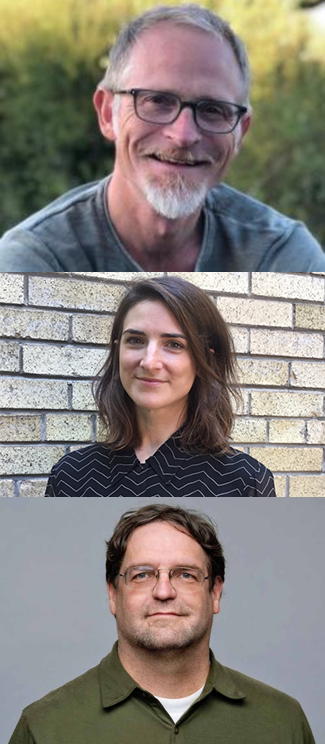
Francey Russell, Columbia University
Troy Jollimore, California State University Chico
Related Blogs
-
February 27, 2025
Get Philosophy Talk

Leave a Reply
You must be logged in to post a comment.