Weird Wants
July 27, 2025
First Aired: August 20, 2023
Listen


Philosophers from Aquinas to Anscombe have claimed that wanting something means seeing the good in it. Even if what you want is bad overall, like procrastinating on important work, you can still desire it for its positive qualities. But don’t we sometimes want things because of their badness, not in spite of it? Isn’t there joy in doing something totally pointless, or even in breaking the rules? And is it really impossible, logically speaking, to want to be bad? Josh and Ray unravel our weird wants with Paul Bloom from the University of Toronto, author of The Sweet Spot: The Pleasures of Suffering and the Search for Meaning.
- Desire
- |
- Good
- |
- Psychology
Josh Landy
Have you ever done something just because it’s bad?
Ray Briggs
Is it irrational to do weird things?
Josh Landy
Wouldn’t life be boring if all your desires were sensible?
Ray Briggs
Welcome to Philosophy Talk, the program that questions everything…
Josh Landy
…except your intelligence. I’m Josh Landy.
Ray Briggs
And I’m Ray Briggs. We’re coming to you from the studios of KALW San Francisco Bay Area.
Josh Landy
Continuing conversations that began at Philosophers Corner on the Stanford campus, where Ray teaches philosophy and I direct the philosophy and literature initiative.
Ray Briggs
Today we’re thinking about Weird Wants.
Josh Landy
You know, Ray, I’m totally fascinated by those weird wants—like all those kids who ate laundry soap as part of a weird challenge. Or like when you deliberately loiter on the steps with the no loitering sign on them. These are strange things to want. What are people getting out of them?
Ray Briggs
Oh, come on. That’s obvious. It’s fun. Don’t you just love jumping into the lake that says no swimming and walking on the lawn that says Keep off the grass. It doesn’t harm anyone. And it gives you a thrill to break the rules.
Josh Landy
Okay, but eating laundry soap does harm someone: it harms you! I just can’t understand why people sometimes go so dramatically against their own interests and for no obvious gain. Seems like all they’re doing is mindlessly following the herd.
Ray Briggs
Yeah, I don’t know. I don’t think all those weird wants can be explained by peer pressure. Aren’t you tempted to disobey those keep off the grass signs, even when nobody else is around? How can your peers be pressuring you when they’re not even there?
Josh Landy
Okay, so maybe it’s something like a misguided sense of rebellion? Maybe maybe people who do these things are trying to stick it to the man. They don’t like authority, and they think they can somehow strike a blow against it by like, trampling on a few blades of grass.
Ray Briggs
Yeah, I don’t really think that’s the reason either.
Josh Landy
Okay, smarty pants, what is the reason?
Ray Briggs
Why does there have to be a reason? Sometimes you just want to do weird things, no further explanation needed.
Josh Landy
This seems like a case where we really do need an explanation. I mean, there you are, eating laundry soap, doing all kinds of untold damage to your internal organs. You must be seeing something good in it. Otherwise, why do it at all?
Ray Briggs
Oh, come on. Joshy really think people always do what they believe is good. What about all those people who buy a membership at the gym and then never go?
Josh Landy
Well, that’s just weakness of will. That’s a case where you know what you want to do? Be just can’t bring yourself to do it, eating laundry. So that’s a totally different category of action. I think those kids would be better off if they had less willpower.
Ray Briggs
Wait, so you’re saying they have a reason to do it?
Josh Landy
Yeah, I mean, I think it’s a bad reason, but still a reason. Either they’re showing off or they’re asserting their independence, or they’re curious what strange things taste like,
Ray Briggs
Even if those explanations were true, eating soap wouldn’t be any less mysterious. Why care more about all those things than you care about not poisoning yourself? It’s just a weird thing to do, no matter what the reason is, shouldn’t we just abandon the search for an explanation?
Josh Landy
I don’t think we should give up before we’ve properly tried. I mean, think about it. There are lots of things people do that may look inexplicable from the outside, but once you take the time to empathize and learn, you come to see they make total sense. Yeah, like what? Well, this is gonna be a little confessional. But for a long time, I was really confused why all my friends seem to be claiming to enjoy foods that tastes disgusting. Then it turned out I’m the weird one. And surprise, surprise, I’ve got a genetic variation that makes cilantro tastes like soap. Once I learned that everything made sense. I had a reason both for their preference, which seemed kind of weird to me. And also from my aversion.
Ray Briggs
Sure that work is first cilantro. It’s okay to like it. It’s okay not to but sometimes people choose Things that they just know are bad. Think of those kids who pull the wings off insects.
Josh Landy
Yeah, but those are kids. Aren’t we supposed to grow out of that kind of thing when we get older?
Ray Briggs
Maybe we’re supposed to but a lot of us don’t think about the midlife crisis. You’ve got full grown adults wasting money on a gas guzzling convertible or blowing up their marriages. What’s the reason for that, Mr. Rationality?
Josh Landy
I got nothing, Ray. But I bet our guest will have something. It’s Paul Bloom, Professor of psychology at the University of Toronto, and author of “The Strange Appeal of Perverse Actions.”
Ray Briggs
But firstm we sent our Roving Philosophical Reporter, Holly J. McDede, to talk to some young people about their weird wants. tbh is a KALW podcast made by, for, and about teenagers. Holly asked the tbh team what they’ve done for no good reason. She files this report.
Meher Indoliya
My name is Meher Indoliya and I’m going to be a freshman at UC Santa Barbara in the fall.
Carolina Cuadros
My name is Carolina Cuadros and I’m also going to be a freshman at UC Berkeley in the fall.
Lauren Tran-Muchowski
My name is Lauren Tran-Muchowski. I’m the production assistant for tbh. I’m going to be a junior at Wesleyan University.
Miriam Reichenberg
My name is Miriam Reichenberg and I’m going to be a junior at Berkeley high school in the fall.
Theodore Nguyen
My name is Theodore Nguyen. I’m going to be a rising junior at Santa Clara high school for so for no reason at all, I go into Google Maps, and just like typing a random location, like one time I was in, like in class, I was trying to search up like a bunch of coordinates. And it took me to this random like island in the middle of nowhere. And all it was just like some decrepit architecture in there. I don’t remember was like deep in like the ocean.
Miriam Reichenberg
There are all these quote unquote secret staircases that lead through different neighborhoods of Berkeley that all like explore and all go from like one staircase to another in different neighborhoods. And I also enjoy just like kind of walking onto UC Berkeley campus you know, pretending I’m a college student kind of seeing what’s up and I think it gives me like a sense of freedom and it makes me feel free and like I’m exploring this new place but again I do it for no reason I just there’s no like objective goal I’m not going somewhere
Carolina Cuadros
I like to like stalk the people that I’m going to be going to school with but like hardcore so like, I will literally go to like their parents LinkedIn. Like I find their house on Yeah. Like I will like figure out what elementary school they went to it find their discord know, the other day, I met someone who had stalked on social media, because it’s the sister of one of my friends. And I was like, oh, yeah, how’s rowing going at college? And she’s like, good. How did you know that? And I was like, Oh, I got caught.
Meher Indoliya
In real life, I don’t stalk people. Exactly. I just like, I do that thing where you make up stories about them, except I literally give them like a whole new name, like I like. And then like, sometimes I imagine like their like childhood house and stuff like that. Because like a lot of times like when I when I’m on public transportation, I’m really bored. And there’s like, no signal. So then I just like kind of sneak glances at someone. And I’m like, Oh, this is your name, Val. And this is what you do. And like, this is why you’re here.
Lauren Tran-Muchowski
I think because I learned how to type really young. I’m constantly all like, to the beat of a song or to the lyrics of a song. I’ll type out a random word and try to like, match the number of letters in a word to like the beats of a song or like a phrase in a song. Like for an example kalw.org That’s a website I see in front of me. If I were listening to a song right now, I would try to match up K LW period, o r g to the phrase or something of a song that I start with. And I always include spaces and capital letters as well. So I account for like having to press Shift, and the spacebar and punctuation even though there’s no keyboard in front of me.
Holly McDede
For Philosophy Talk, I’m Holly J. McDede.
Josh Landy
Thanks for that weird and wonderful report, Holly. I’m Josh Landy, with me is my Stanford colleague Ray Briggs, and today we’re thinking about Weird Wants.
Ray Briggs
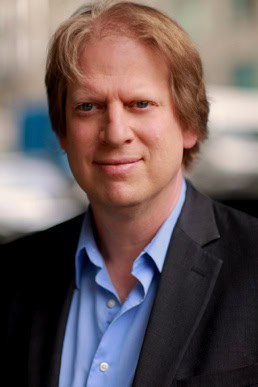
We’re joined now by Paul Bloom, professor of psychology at the University of Toronto, and author of “The Sweet Spot: The Pleasures of Suffering and the Search for Meaning,” and most recently, “Psych: The Story of the Human Mind.” Paul, welcome back to Philosophy Talk.
Paul Bloom
Thank you. It’s great to be here.
Josh Landy
So Paul, I’ve known you a long time and you’ve always struck me as an eminently rational type, but you’ve started writing about people doing some inexplicable things. You’re not going to tell us this anything autobiographical in there, all you do.
Paul Bloom
So, one of the reasons I’m so interested in this weird wants Sardis perverse actions is because I don’t have many myself. And when other people have them, they kind of freak me out and excite me and scare me and so on. I do have one though, during my, my midlife a few years ago, I had to buy a new car. And against all rational guidance, I bought a Mini Cooper, I bought the car that that consumer report says, Oh, my God, don’t buy that car. The controls are all in the wrong place. It breaks down every four days. And I’m six foot one and a half to curl myself into little ball in order to drive it. But I did it in part, maybe because of those things. Because this is a crazy thing to do. And by golly, I’m going to do the crazy thing.
Ray Briggs
So Paul, you’ve got an essay on the strange appeal of perverse actions. And maybe the Mini Cooper accounts is one example of such an action. Do you have another favorite example?
Paul Bloom
So the classic one I go to is from St. Augustine in the Confessions. So he begins about two by saying, I’m going to tell you all about these crazy debauchery sins I committed, and everybody expects he’s going to talk about sex. But instead he talks about when he and his friends walked into an orchard and stole some pears. And this fascinated him because they had nothing against the owner of the orchard. They weren’t hungry. They threw the pears to pigs. And Augustine, Augustine understood his sexual desires. But he didn’t know what to make of this. And finally, he said, I wanted to do it just because it was bad. I love the evil in me. And to me, that’s a sort of a wonderful example of a perverse desire. A perverse desire isn’t just a desire that’s in some way crazy or Agron is when you do in part because you know, what’s wrong?
Ray Briggs
You found these kinds of perverse desires really puzzling or surprising, why is that?
Paul Bloom
They seem to go against the view of humans as as rational beings. You know, we depart from rationality and all sorts of ways we have suffered from weakness of will we make mistakes, we do suffer from cognitive biases. But this is a whole different thing. It’s where it what we want not this is not a sort of weakness, what we what we deliberatively plan violates goes against the good goes against the rational. And then you get into the debate that’s to have you had over over whether or not it’s truly they truly want the bad, or whether there’s some other desire some other itch that he’s perverse action scratch.
Ray Briggs
Yeah, so in the case of Augustine, what kind of other desire might that be? Like, Is he is he trying to impress his friends? Is he trying to stick it to God?
Paul Bloom
So Augustine struggles with us. And he doesn’t actually come to conclusion. Much later in the book, he says, You know, I didn’t do it, because of my friends to impress my friends. But I wouldn’t have done it if I was alone. So I think one part of the story thinkers, I’m a pluralist, here, I think there’s many different answers many different motivations, but one of them is in some way, too, is that it’s a behavior that emerges in groups, maybe whether you know it or not, to show off that you’re the kind of person who really does want to stick it to the man who really does doesn’t really need to abide by the rules. Maybe you want to show off your courage or unconventionality your creativity.
Josh Landy
You’re listening to Philosophy Talk. Today, we’re thinking about weird wants with Paul Bloom from the University of Toronto.
Ray Briggs
Have you ever done something for no good reason? What did you see in it? Have you ever tried talking someone out of their curious choices?
Josh Landy
The wacky, the wicked, and the weird—along with your comments and questions, when Philosophy Talk continues.
The Spice Girls
I’ll tell you what I want, what I really, really want So tell me what you want, what you really, really want I wanna, (ha) I wanna, (ha) I wanna, (ha) I wanna, (ha) I wanna really, really, really wanna zigazig ah
Josh Landy
Don’t tell me what I want what I really, really want. I’m Josh Landy and this is Philosophy Talk, the program that questions everything…
Ray Briggs
…except your intelligence. I’m Ray Briggs, and we’re thinking about weird wants with Paul Bloom and the University of Toronto, author of “The Sweet Spot.”
Josh Landy
Got questions about your weirdest wants? Email us at comments@philosophytalk.org, or comment on our website. And while you’re there, you can also become a subscriber and weird out in our library of more than 500 episodes.
Ray Briggs
So Paul, we’ve been kind of arguing over whether you can act for no reason or for a reason that you yourself, see as bad. Can you give me maybe the best case that everybody has to act for the case of something they think is good?
Paul Bloom
You may be right, Ray that sometimes people act purely for for the desire for the bat. Satan was supposed to be like this. Satan wants you evil for the sake of evil.
Ray Briggs
Right, “Evil be thou my good.”
Paul Bloom
Very nice when someone could quote Milton, you know you’re dealing with a true scholar. But I’m with Josh on this. And it’s not an argument. I don’t have an argument that it has to be this way. But I think as a matter of fact, when you look at people answering, they did it because they wanted to do something wrong. I think we could ask, okay, but why did they want to do something wrong? And I think we can get an answer. So it’s empirical question, it might turn out sometimes it’s just badness for badness sake. But I think there’s usually an answer. So one answer I’m interested in and there’s a few is that we often want to be autonomous. We don’t want to we don’t want to be constrained by other people. We don’t be constrained by rationality, we don’t be constrained by by morality. And so like a hero from Dostoevsky, we do something just because we want to be free.
Josh Landy
That makes sense. I mean, this is a very difficult philosophical puzzle, right? Because it seems intuitively makes sense that you would say to yourself, gee, that is, that’s the wrong thing to do, or that’s a foolish thing to do, or that that’ll be unpleasant to eat those that logic. So that’s why I’m going to do it. And you know, Augustine talks about it. Aristotle talks about all kinds of people talk about it. But it also seems, it seems intuitive to say what you said, which is, well, you must have some reason for doing it. So how do you square that circle? I mean, Joseph Ross has a nice line about this, where he says you you act for reasons that you know, don’t justify the actions. So you have a reason. But it doesn’t really, is that a is that a good way of kind of getting right, sort of right in the middle there?
Paul Bloom
Well, I think it would put a name to some of the reasons. So one thing I put it is autonomy. So Josh, suppose you know me really well. And you say, you know, Paul, let me tell you what your next book should be that you shouldn’t do, you should read on the strip. And and you actually know me better than I know myself during the Neutrogena real world cases in this. But I say lean, I want to choose for myself. And you and then you respond and say, Are you saying I don’t know better? And I say maybe you do know better? And that’s an that’s a factor. I should take into consideration in favor of you of following your advice. But here’s another factor.
Josh Landy
Or I tell you not to buy that Mini Cooper.
Paul Bloom
That’s right. So so I think one reason why I probably bought them any Hooper was that people close to me said, don’t buy the Mini Cooper. That’s insane. Bye, bye, bye, rav4. No, buy something nice and buy, you know, a Toyota product of some sort or another. And, and in part, I think it made me want to buy the Mini Cooper Ola more. And social psychologists have studied this. There’s a field called reactance theory, which is what its name says, it basically is a series of findings that tell people, Hey, you’re drinking too much. And they respond by drinking more.
Ray Briggs
Okay, so I want to take a step back and question whether that’s really doing something that you think is a bad idea, though, because it sounds like it’s doing something that you think other people think is a bad idea. But isn’t the response then? Well, just I don’t think other people are reliable. And the fact that they think it’s a good idea actually makes it suspect. Like if if somebody I really hate recommend something, I shouldn’t do it. But that’s because I want to do what’s good. And I think they’re a bad guy into what’s good.
Paul Bloom
Yeah, there’s sort of, I think, I think one set of cases, what you’re talking about where I want to do what I want to do, because I am the best judge of the best thing to do. And I think that sort of a simple case, and often happens, I’m more interested in kind of more complicated case where I might think that Josh could choose the better book, you could choose the better meal for me. And it really would be make me happier, make me more interested, make me more engaged, it’s the better choice. But and that has some weight. But being able to choose for myself, also has some weight. So I want to choose myself, not because I believe it will lead to an objectively better outcome. But because I just want to choose for myself. And I think this shows up in the midlife crisis, it shows up an adolescent, it shows up in a two year old, insisting let me do it myself. Even though the two year old if you said you surely you would admit that an adult be more competent in this domain. Let me do it myself, man.
Ray Briggs
That part is also a little bit puzzling to me. Because here’s the choice I made for myself. Yesterday, I went to bed at a reasonable hour sober, and I choose to do that. I just thought it was a good idea. Good night, choose the good thing for myself instead of the bad thing like why does it have to be the wrong thing?
Josh Landy
Oh, no, absolutely. I feel that the vast majority of choices by a psychologically healthy and socially normal person are in fact rational and moral. Most of the time you know when somebody says thank you, you say you’re welcome. Most of the time. You walk past the orchard you don’t take the pairs. And and I think that’s great. I think that that’s how we should live our lives. But sometimes these constraints chafe against us and then we we rebel. So So sure, but have you ever gone to bed at an unreasonable hour? Not sober, at least in part, because everybody because you’re supposed to be in bed by 10 having just drunk some warm milk?
Ray Briggs
I mean, can’t say I’ve never done that.
Josh Landy
Yeah, no comment from me.
Paul Bloom
I did something online where I asked people about perverse choices they made. If you ask pretty soon, everybody comes up with at least one
Ray Briggs
Oh, I want to hear some of your favorite answers from this.
Josh Landy
Oh, gosh. So I did this online. And, and one very polite person said that they that they play in a symphony orchestra, and sometimes they succumb to temptation and play a wrong note, just a single wrong note. One that my favorite one was some sort of he was definitely a burro in some way. And he’s, he’s with his other burro. And so it’s the middle of summer, he gets some ice cream, and suddenly, he jams his finger into his friends ice cream. And he just said, I don’t know what he just said, it would really be messed up. I thought if I just jammed my finger, and somebody say to me, although the exact term was not messed up, and and I think any, any user is astonished, and he said, You know, I hope professor, you could explain this.
Ray Briggs
Do you think we could explain it?
Paul Bloom
As good as as well as we’d explain something, I would say, I would say maybe he’s expressing his autonomy. Maybe in a way he didn’t understand himself, he was showing off it or something, particularly if you’re of a certain age, there was something appealing for being a risk taker for showing that you are not the sort of person to always obey the rules you are, you are autonomous. So autonomy is valuable. But often showing yourself as autonomous could be valuable too.
Josh Landy
Right. So you can be, you can be expressing your autonomy like Dostoyevsky’s Underground Man. Right? Who says, yeah, well may choose what is constant contrary to one’s own interests, sometimes when positively ought to express what’s tough, you can be showing off to your friends, you could be sort of indicating that you’re not to be messed with, because who knows what that guy will do next. But what about something you refer to as as hopeful monsters? I mean, so there’s this sort of trying stuff out? Right. I mean, the things that are maybe taboo or risky, they seem like the crossed some line, I think, for example, about surrealism, you know, there’s a Man Ray image of, of baby Jesus being spanked, which is a pretty, you know, controversy, controversial image. But artists are supposed to push the boundaries of taste a little bit, we think it’s perfectly okay for our rockstars to overdo it on alcohol from time to time, even though that might not be the best thing for their health, and we might not want our friends do that, etc, etc, etc. What do you think about that is that, you know, is that one of the reasons that people do things that might be? I don’t know, questionable. interpersonally. And certainly, questionable from a health standpoint.
Paul Bloom
I absolutely think so, though, I admit it gets complicated. So you think of cases like Marcel Duchamp, submitting a urinal to an art competition, or Banksy having a painting that when the gavel comes down at auction, it automatically shreds itself. And at one point, that’s somebody who say, these are crazy, irrational behaviors. On the other hand, and here’s where it gets a bit complicated. These actions made both of these artists famous, in the case of Banksy more famous and made them a lot of money. And so when so many does something bizarre and unpredictable, and irrational, in some way, I’d like to say it could be very perverse, but if they’re doing it with an eye towards this is really going to, this is really gonna get me a lot of a lot of clicks, or this is gonna get me a million dollars, or this is gonna get me a lot of a lot of love and friendship, then it’s just a clever way of doing a rational thing, an unexpected way of doing a rational thing. And in some way becomes a bit less interesting. From my standpoint,
Ray Briggs
You’re listening to Philosophy Talk. Today, we’re thinking about weird wants with Paul Bloom from the University of Toronto. And Paul, I have a question about another way in which it might be kind of useful in a large sense to do irrational things, which is, if you only do rational things, that you only know what happens if you do rational things. So this gets studied by Game Theorists a lot. So they’re sort of game theoretic equilibria, where everybody’s behaving rational in response to everybody else’s behavior. But like, overall, people are doing badly, because nobody is ever being generous to anybody else. Do you think that that’s a motivation for some of these weird wants as well?
Paul Bloom
I think yes. I think a lot of the weird ones show themselves up. When you’re dealing with other people, sometimes cooperatively, in which case, sometimes a perverse act of generosity could get you out of a cycle of distrust and cruelty and really elevate things. Sometimes when you’re competing with somebody in which case perversely can be unpredictable, can be powerful. Sometimes, and this is sort of advice to graduate students in a in an admittedly perverse way, which is, if you’re competing with a lot of very smart people, and there’s and it’s certainly it’s a winner take all, not everyone’s gonna walk home for price, the perverse act could be the smart one. And the example I’m thinking about is that I do play this word game of Wordle. Where when you get to choose a word and how well it matches with, with the word they’ve chosen helps you win. And there’s some really rational words to choose. And my my wife chooses stare every morning. Sta RT, which is a great word. And I choose whatever word occurs to me at a time, and I always lose, except one day I chose ‘puppy’. And the word was ‘guppy’.
Ray Briggs
That’s a terrible word for word for Wordle.
Paul Bloom
Yes, I chose puppy. And it is terrible. But the word was Guppy. And I got it into why am I crazy?
Josh Landy
Like a fox? I mean, exactly.
Paul Bloom
So I said, I’m a genius. And she’s like, you just got lucky. You’re perverse. And but the theory, the moral here is, suppose it was a world world competition. And what you want to do is when you can’t tie, you got to win. The best strategy then is to do something hopelessly erratic, because everyone else has occupied the space of the rational. And to some extent is life advice, which, if you’re competing with 100, smart philosophers, for a single slot, they’re all very, very smart. So being smart, may not be your best move, you may want to sort of go sideways, and see if you could explore a niche that has not been explored. I don’t know.
Josh Landy
But the worry for me here is if it starts looking like the reasons for doing these crazy things are too good, then they stop. Yeah, crazy things. And the puzzle goes away, right? So so Socrates famously thought, we only ever desire things that are good. And if we do bad things, that’s just by mistake. And some other philosophers have thought similar things. But it seems like that can’t quite be right, because of the weakness of will examples we’re talking about before. I mean, I don’t dare let myself around gummi bears because as soon as I’ve eaten one, I’ve eaten the whole packet. And I know, as I’m eating them, I don’t want to eat these things. I want to stop, but I cannot stop. So that’s clearly a case, where I’m doing something that I know is not what I want is what I don’t want. So maybe these weird wants are kind of they’re not the same as weakness of will. But they’re like the active aversive that they’re, they’re deliberate, not just sort of passively getting swept along by my addiction to gummy bears. But a case where you choose something, yes, you choose it. But that doesn’t mean that you think it’s good, you doesn’t even mean you think it’s all things considered good. You have to recognize still that it’s bad. It’s either bad for you or bad for somebody else. You might regret it later. Yeah, your very feeling of freedom depends upon you saying this is a crazy choice. A Mini Cooper is terrible for a significant one human being. So I feel like there has to be a way like that where we on the one hand, we preserve what you’re saying, which is that we can explain what’s going on. But on the other hand, we preserve the fact that it’s kind of weird, and people are acting against either the moral or the conventional or even their own physical interests.
Paul Bloom
I agree. There’s a tension here. And I think you’re you’re putting your finger out very nicely. And here’s another way of expressing my view, which is, if a perverse Act is an Act that you do, because it’s bad, because it’s immoral, because it’s irrational period, then my view is there may be no such thing as perverse acts. There are seemingly perverse acts or somebody’s self destructive, high risk, silly acts. But in the end, if I’m writing this is what I’m sort of exploring in the end will always be a story where someone’s motivations. It’s either an attempt to deceive someone else’s gone awry, a way to impress other people that may or may not work, or an expression of autonomy that an end you may end up regretting. But I think in a strong sense of perversity, perverse acts might not exist, there may be no such thing as as Satan may be impossible.
Ray Briggs
So we’ve got a comment from Daniel on our website, Daniel writes, there’s something very attractive about the view that one cannot do evil voluntarily. And that knowledge of what is moral is a sufficient condition for choosing it. For if Plato was right about this, I think he means Socrates. Morality classes taught by ethicists and moral philosophers should be universally available and paid for by the state. So Paul, what do you think? Can people ever do evil voluntarily or is it always just ignorance?
Paul Bloom
I think I like the spirit of the comment. But there’s plainly cases where we will redo commit evil acts volunteer. I’ve done a few myself. I mean, sometimes, I mean, for the banal reason that I have self interest. So sometimes there’s something I really want, you know, and in order to get it, I have to do something. But I, I’m not even talking about I’m not talking about a horrific accident, not as simple as, as, I don’t want to do something. But I don’t see a way out of it. So I lie. I say I’m not I’m busy that day. I’m really sorry. I’m busy that day. I’m sorry, I’m too busy to blurb your book, even though I may have read the book and decided that I cannot actually put my name and alerter. But, and I think these are bad. I think lying is bad. But but I do it. I do the bad thing. Because we, in other work, I would argue very much we’re moral creatures. But that’s not all we are. We’re also have appetites. And sometimes we self consciously recognize my appetite overrides my morality. Does this make sense to you?
Ray Briggs
Yeah, I mean, like one, one way that I might read what’s going on there is that lying is bad in one way. It’s not a kind thing to do. It’s not respectful of others, but it’s good in a different way, which is that it gets you out of having to blurb that book that you don’t want to blurb. So you’re not doing it because it’s bad. And you’re not doing it even knowing that it’s bad. And always you’re just like, the way that it’s good is so shiny, like that is kind of the—
Josh Landy
We want to dig into cases where you’re doing something bad because it’s bad, right? Either because it’s morally wrong, because it’s bad for you. And you know, Milton, Satan is supposed to be that and Anscombe, the philosopher adds, Kim says, now he doesn’t really want evil. He just wants freedom. To which David velopment other philosopher towards that would be a sappy Satan. And I kind of agree with element, right? It ends up being like Dante’s Satan who’s just doing God’s bidding. And what’s the point of that Satan? Yeah, he’s basically just a flunky. So,
Paul Bloom
If you look closely enough at Satan, you’ll find he sappy. And the idea is, it’s a very cool Satan. And as you know, the cool psychopath wants evil for its own sake. But I think I think that may be an illusion. I think that that may be something which just doesn’t exist.
Josh Landy
Well, I guess we’ll hear more about sappy Satan after a break. You’re listening to Philosophy Talk. Today we’re thinking about weird wants with Paul Bloom from the University of Toronto, author of “Psych: The Story of the Human Mind.”
Ray Briggs
How would you go about making your choices more rational? Do normal people make the world go round? Or are they just boring? Should we all try to be more weird?
Josh Landy
Letting our freak flags fly—plus commentary from Ian Shoales the Sixty-Second Philosopher, when Philosophy Talk continues.
Garbage
Pour your misery down on me / I’m only happy when it rains.
Josh Landy
Does having weird wants mean you’re only happy when it’s complicated. I’m Josh Landy, and this is Philosophy Talk, the program that questions everything…
Ray Briggs
…except your intelligence. I’m Ray Briggs. Our guest is Paul Bloom from the University of Toronto. And we’re thinking about weird wants.
Josh Landy
So Paul, we’ve got a comment from Linda in San Francisco. Linda says, I’ve been collecting cigarette lighter since I was a teenager, even though I’ve never actually smoked, and now have hundreds of lighters, which my friends think is kind of weird. So am I weird? If I only had 20 lighters? Would that still be weird? What about five? Or is it just weird to buy any lighters that I’ll never use?
Paul Bloom
Oh, there’s a weird threshold, it often comes up with cats. You know, at what point is you have too many cats. I think in some way, it’s a typical to collect that many lighters. But we could be good. And there’s a satisfaction to collection. I liked the story because it speaks to kind of a broader issue, which is, at least some psychologists and some philosophers have to narrow our notion of what people want, and what makes us happy. And if it isn’t making us money, or getting us sacks or status deals, what is it? It’s crazy, but I think it was a pleasure to collecting.
Josh Landy
But is there a limit to the kind of thing that we’ve been talking about? So you know, your bro friend, or bro student stuck his finger in his buddy’s ice cream once? And that’s sort of funny or something. But if he did it every single time a friend got food that might cross a threshold into something else. So are there limits like, is there a certain degree of I don’t know what flexibility around norms, that’s psychologically healthy, that allows us to be creative, like to Shaw and to express ourselves and to feel autonomous, but then there’s a kind of limit somewhere.
Paul Bloom
Some some people think you can’t judge how other people value things and prioritize one value over another but not I’m not one of those people. I agree with you, I think sometimes you notice could really be foolish and erratic, a perverse act that causes serious harm to people, people. People, for instance, may refuse to get vaccinated or refuse to take health precautions, just that have a perverse impulse. You can’t tell me what to do. And I think that’s doing the math wrong. Dostoyevsky’s hero says, I insist that two plus two equals five, because I’m going to rebel against it. And I think that, Oh, come on. That’s just immature. That’s, you know, so. So I think perversity works best in the right doses.
Ray Briggs
I might ask for guidance about when it’s okay to be perverse, but I worry that that’s a little self defeating. So if I try to have a norm about when to break my norms, that’s not going to help me is it if I’m trying to like govern my norm breaking behavior?
Paul Bloom
I’ve never thought as I’ve never suggested we should be meta-perverse. So maybe you should be perverse. But but men are rational. And you should dole out your perversity in a proper expected way.
Ray Briggs
Excellent.
Josh Landy
Does that include sort of a percentage of your time spent being perverse? Because I can think of some people who are sort of, you know, indulging these weird wants a great deal of the time. Yeah, as opposed to, you know, people like Augustine, who wants to, you know, once in every so often, we’ll wander into a pear orchard and, and steal a pair. So is that part of it, too? It’s not just sort of the degree of the, of the insanity, right? That you’re actually eating laundry soap or something, but also how much of your life it takes up.
Paul Bloom
That’s right. I think you are not going to prosper in this world, unless you are almost all of the time. Rational. If you use English the way it’s supposed to be used if you put on your pants to go to for a job interview, if you do all sorts of things. And you know, and I have two sons I love very much and I would never say you guys need to be more perverse. They’re plenty of perverse stirs. There’s, I just want to ask you introduce one notion though, which a friend of mine, Talia, we lead introduced to me, which is a bit of micro perversity. And she suggests that often when you’re talking to friends, or just doing everything, so there’s sort of a goofiness like, you know, you’re sitting across somebody and just kind of snatch a french fry from her plate. And no one’s gonna, no one’s gonna you know, St. Augustine is not going to say, Wow, that’s, that’s impressive, but, but it’s kind of a little bit weird and unexpected, and I think makes people more interesting, and more fun, less predictable. And we want that just in the right dosage. I don’t want somebody who’s going to go to, you know, grab my main course and stuffed it in his mouth while I’m doing it. That’s insane. But a french fry, a French fries, kind of cool and charming.
Ray Briggs
Should everybody have the same level of perversity? So one thing that’s kind of appealing to me is to have interactions where one person is kind of the straight man, and another is kind of the cloud and I have friends around the street man and friends Ryan, the clown, is it better to have like a distribution of attitudes toward perversity rather than a single attitude that everybody has?
Paul Bloom
I never thought of that. But I thought about that, but I think that’s a great idea. I think that that’s true. I think that that, that there’s natural pairings, either between different types of people, or these different occasions, where if you’re going to be goofy and perverse, best if we’re hanging out together for me to be the straight man, if we’re both perverse, trying to play off each other, it’s neither one of us gets any pleasure. There’s pleasure to doing perverse and a pleasure to witnessing perversity. But but you don’t want to just to both simultaneously.
Ray Briggs
This is one of the things that I actually like, really dislike about the recent hosts of the Great British Bake Off is that they’re both kind of goofy, and it doesn’t work because they’ve got no foil. And before one of them was goofy, and one of them was doing something else. And that was much better.
Paul Bloom
You need a foil. Like maybe I’ll write a book on perversity then my next book will be about the foil which is this this and this under explored in philosophy and psychology, the straight man.
Josh Landy
I thought you were gonna let us tell you what book to write next.
Paul Bloom
To READ next.
Ray Briggs
Anything but the book on the foil, Paul, anything but that.
Josh Landy
Oh, use reverse psychology on a psychologist!
Paul Bloom
I got a title, too: “Foiled: The Strange Psychology of the Anti-Perverse.”
Josh Landy
nBce, reverse psychology never works. But I want to get back to when it’s a good idea and when it’s less of a good idea to indulge ourselves in these weird wants in the in these deliberately doing something that we know is wrong or against the rules or against our own best interests. Because it seems to me there are two categories here. One is kind of self directed and one is other directed. So if I lick a battery, the only person harmed if there is somebody is me. Whereas if I walk on somebody else’s grass at least there’s minimal harm to them. And certainly if I, you know, I don’t know if I’m a pathological liar, and I just lie for fun to my friends all the time or, you know, I could do something even when I steal their food or or worse things, aren’t there? Wouldn’t there be cases where you’d want to draw the line and say no, that that’s just a thing you should really never do when it’s other directed? And it seems like really, you’re getting some kind of odd pleasure out of harming other people out of making other people suffer? Isn’t that just at this certain point over the line?
Paul Bloom
Absolutely. I think that there’s a set of priorities and principles we want to align with. And there’s a complicated there was a complicated balance. So some acts of perversity, which I talked about are genuinely cruel and horrible and people should be you know, imprisoned for them. Some people score high on a need for chaos scale, which is you know, violated they wish for you know, they want the world to burn as the Joker was said to want and I think that that’s the best way out of that’s way out of whack morally, but but let me qualify that a little bit. Sometimes perverse acts in an artistic sort you talked about before, do make other people uncomfortable. And and I would say, maybe a little bit of that is still okay. Even though you might well cause discomfort This is different from hurting people different from cruelty, but but some level of discomfort might still make the world an interesting, more interesting place and lead to long term benefits.
Josh Landy
Right, that Man Ray image of exactly the Jesus is obviously controversial. Some people won’t like it. Some people be offended, but you know, that’s art and ruffling a few feathers is okay. But I’m thinking about, you know, psychopaths. And it seems like, right, you know, one some, on some definitions of evil, evil is precisely doing something wrong that you know, to be wrong. Yeah. So, I don’t know if it’s something that you think a lot about, but is evil with things that people deny that evil is a thing? does evil exist? And when evil look similar to kinds of things you’re talking about or different?
Paul Bloom
It’s a really interesting question. I think I’m one of the people who think that evil isn’t a thing. People do terrible things to one another. But they do them for reasons. And and they do them because they there’s something they want. They want money or sex or power. It’s because they have weakness of will, it’s because it’s because they think it’s moral. So a lot of my other work is, as I found what a lot of people have argued for, which is that, that a lot of the terrible things in the world are done by people who believe they’re doing the right thing. And sometimes in the case of perverse action, it looks like badness for badness sake, evil for evils sake, but I’m still tempted to think and maybe then I’m wrong and raise is right. But I’m still tempted to think that in the end, there’ll be some other explanation that won’t reduce to pure evil.
Ray Briggs
I want to ask about the value of a certain kind of perverse action, and it’s linked to protest. So it seems like a lot of norms persist after they’ve outlived their usefulness. So I’m thinking about this kind of guerilla art project where some artists swapped the voice boxes of Barbies, and GI Joes that both talked or like maybe some other kind of like feminine doll and GI Joes. And that probably annoyed the parents of the children who bought them. I don’t know if it annoyed the children. But it seems like there’s a value to that, because there’s a value to kind of testing and breaking norms that might or might not be socially useful. Is that perversity? And is that a way in which diversity is good?
Paul Bloom
I think so. I think that’s the case of hopeful monsters in a way, which is that, that doing something which violates the norms and violates the rules, even if the odds are that this is going to be nothing but trouble. The opposite, dare delete the notion in evolutionary biology or macro mutations that almost certainly die, but sometimes spawn a new lineage. And I bet for every Duchamp and Banksy, there’s 100 artists we’ve never heard of, because nobody got it. Nobody liked it. But yeah, I would view that sort of protests and that sort of unconventional violation social rules as a really interesting form of perversity.
Josh Landy
So Paul, what would you leave our listeners with? Should they embrace their weird wants? Should they try to minimize them? What advice do you have for folks?
Paul Bloom
Well, two things. I think one thing is we should recognize perversely and others. I think, for instance, if you want to know why people voted for Donald Trump, or Brexit, or people react to vaccines or whatever, it’s really important knowing that sometimes people don’t want to do what they’re supposed to do. And it is is a very human desire. And then the second thing is, we we talk in the right doses at the right times at the right proportion of of of your life, perverse acts could make your own life more fun, more interesting, more creative.
Josh Landy
Well, I feel like perversely continuing talking to you even though this show is over, but we can’t do that. We’re rational beings. So instead, I’m just gonna thank you very much for joining us today. Thank you. This has been tons of fun. Our guest has been Paul Bloom, Professor of psycho ology at the University of Toronto, and author of the sweet spot the pleasures of suffering and the search for meaning as well as most recently psych the story of the human mind. So Ray, what are you thinking now?
Ray Briggs
Well, I’m thinking about a thing I’ve done this weekend, which is to get a book by an author who’s kind of moralistic who I disapprove of out of a little library, and then make blackout poetry out of it, which I think is my little homage to the perverse.
Josh Landy
That sounds fantastic. I can’t wait to look at that. We’re gonna put links to everything we’ve mentioned today on our website, philosophytalk.org, where you can also become a subscriber and dive into our library of more than 500 episodes.
Ray Briggs
And if you have a question that wasn’t addressed in today’s show, we’d love to hear from you. Send it to us at comments@philosophytalk.org, and we may feature it on the blog.
Josh Landy
Now a man whose speed is not even the weirdest thing about him, it’s Ian Shoales the Sixty-Second Philosopher.
Ian Shoales
Ian Shoales… The first person to eat an oyster, it’s been wondered, what went into that decision? The same with eating snails, I suppose, although melted butter and garlic had a lot to do with the genesis of that desire. There are many tastes which I would think are localized- peanut butter, for example, which looks pretty nasty, really. Sashimi. Durian. My dad hated tuna, so whenever he was not going to be home for dinner, my mother would make tuna casserole, which I loved. There were things I thought I would hate, but when I finally ate them I didn’t, like brussels sprouts. There are unpleasant things that children rather enjoy, like pulling off bandaids, picking scabs, wobbling a loose tooth with the tongue. I also took a perverse enjoyment in procrastination. Having to shovel the walk, for example, would take me a half hour before I even went outside. First I would whine and moan without specificity, ngh, eah, and roll around on the floor where my overshoes were, banging them together and sighing piteously, until my father said, “For Pete’s sake,” which meant, “Get on with it,” to which I would comply for a moment, until I tugged my overshoes on while lying on my back on the floor, rolling around half -heartedly, and singing Johnny Horton’s “The Battle of New Orleans” under my breath, as I clacked my heels together in rhythm, kind of, trying to make the buckles sound like spurs, and not succeeding. . I looked up briefly to see if my parents were annoyed. They probably were, but they were watching Garry Moore, I believe, whom they both liked for some reason, so it was hard to tell. The point is, as my mother would point out to me on many occasions in the future, if I’d spent as much time doing what I was supposed to be doing instead of wasting my time avoiding what I would eventually have to do anyway, I could have had the job done and behind me, and with a whole evening free to read a book, or watch Garry Moore, whom my parents both liked for some reason. The point was, the lollygagging might prove to be my downfall, even though she never used that word. But I loved the lollygagging, I loved that it made my mother worry a little bit. My father was never worried, just irritated, which I suppose I took some pleasure in? For the most part I was an obsequious little sprat, fearful of reprisals, so I took pleasure in disguised procrastination, you might say, avoiding the doing of things, not because I dreaded doing the thing so much, as being a snotty little anarchist, a me whom nobody was the boss of, but of course they all were. Humans take their pleasure in the oddest ways, and of course I’m no exception. But I also don’t take pleasure in things others do, like professional sports for example, which just make me nervous. I used to love wrestling, though, I guess because you always knew who was going to win. And the older I get the more I wonder about other things that supposedly bring us pleasure. Driving, for instance. It costs a lot of money to have a car. Driving is work. It’s supposed to be fun, but you have to pay attention, or you could die at any moment. Internal combustion is a major component in the destruction of the planet. There are things that people apparently believe that baffle me. Trans people are somehow oppressing us. How is that? I hear it all the time that poor people are responsible for their poverty. Well, it’s true that I’m my own worst enemy, but that’s because people who might hate me don’t know me yet. And what about sex? Sure sex feels good, but it often leads to heartache, which leads to sex. Vicious vicious circle. Birth itself it painful, but we don’t know what pain is yet so it’s kind of a wash. So, the truth is, we’re no strangers to pain, but our idea of pain by and large is more of an owie in the great scheme of things. If it’s a fallen world, as some Christians believe, it’s no wonder we embrace suffering. And that sharp pain you feel in your lungs when you take a deep breath outside and it’s hovering around zero if you do that over and over again real fast maybe you’ll get dizzy and fall down and you won’t have to shovel the walk. You’re pretty sure Mom will notice you before you freeze to death on the steps. It’s a risk worth taking. I gotta go.
Josh Landy
Philosophy Talk is a presentation of KALW San Francisco Bay area and the trustees of Leland Stanford Junior University, copyright 2023.
Ray Briggs
Our executive producer is Ben Trefny. The Senior Producer is Devon Strolovitch. Laura Maguire is our Director of Research.
Josh Landy
Thanks also to Jamie Lee Elizabeth zoo, Emily Wang, Merle Kessler, and Angela Johnston.
Ray Briggs
Support for Philosophy Talk comes from various groups at Stanford University, and from the Partners at our online Community of Thinkers.
Josh Landy
And from the members of KALW local public radio San Francisco, where our program originates.
Ray Briggs
The views expressed (or mis-expressed) on this program do not necessarily represent the opinions of Stanford University or of our other funders.
Josh Landy
Not even when they’re true and reasonable. The conversation continues on our website, philosophytalk.org, where you can become a subscriber and gain access to our library of more than 500 episodes. I’m Josh Landy.
Ray Briggs
And I’m Ray Briggs. Thank you for listening.
Josh Landy
And thank you for thinking
Barbie
Come in to my weird house. Hi, I’m weird Barbie. I am in the splits. I have a funky haircut and I smell like basement. Oh my god, I had a weird Barbie! Yeah you did. You make them weird by playing too hard. It’s cool.
Guest
Related Blogs
-
August 18, 2023
Related Resources
Bloom, Paul (2011). How Pleasure Works The New Science of Why We Like What We Like.
Bloom, Paul (2019). “The Strange Appeal of Perverse Actions.”
Bloom, Paul (2022). The Sweet Spot: The Pleasures of Suffering and the Search for Meaning.
Get Philosophy Talk
