A World Without Work
February 9, 2020
First Aired: September 24, 2017
Listen


Work: a lot lot of people do it, and a lot of people don’t seem to like it very much. But as computers and artificial intelligence get increasingly sophisticated, more and more of our workers will lose their jobs to technology. Should we view this inevitability with hope or with despair? Without the order and purpose that meaningful work provides in our lives, would we end up bored and restless? What obligations does government have to deal with these changes? What about providing all citizens with a basic income? The Philosophers work hard with Juliana Bidadanure from Stanford University, Faculty Director of the Stanford Basic Income Lab.
- African-American
- |
- Automation
- |
- Government
- |
- labor
- |
- Sociey
- |
- Tech
- |
- Work
Debra and Ken begin debating whether the rapid growth of robot capabilities is something to look forward to or something to fear. Will robots take our jobs and free us of daily drudgery? Or will they deprive us of one of our major sources of meaning? How far-fetched are any of these futures anyway? Is it just a matter of technological advancement, or can politics and government feasibly regulate how these technologies are implemented?
Stanford Professor Juliana Bidadanure joins the show and begins talking about how her upbringing got her interested in issues of employment and income. Juliana expresses some skepticism that automation will be able to replace all human labor. Still, Juliana acknowledges how much of the workforce is prone to automation. Debra and Ken go back and forth about the role of government in shaping how these technologies will affect society. Could the state play a bigger role in directing technologies to socially important goals? Well perhaps it’s possible, but is that really going to happen?
Ken asks Juliana whether people would struggle to find meaning in life without work. Juliana isn’t convinced that work would ever go away—jobs may be eliminated, but communities and societies will always need work to be done. The conversation turns toward how a universal basic income may provide a necessary social safety net, especially given how demeaning some jobs can be and how many jobs automation could eliminate. A listener calls in and asks about how little democracy and communal decision making goes into what work we want to be seen done. The conversation explores this rich intersection of questions.
Roving Philosophical Report (seek to 3:29): Liza Veale discusses cultural depictions of advanced artificial intelligence and robots doing all of our work. The movies Elysium and Things To Come serve as two examples.
PT Goes to the Movies: Ken and film blogger #FranciscOnFilm (aka Leslie Francis, Professor of Philosophy at the University of Utah) find unconventional heroism in some of the movies of summer 2017.
Ken Taylor
Are we approaching the day when anything a human can do, a robot can do better?
Debra Satz
So are robots gonna steal all our jobs?
Ken Taylor
Why would you want to work for a living if you didn’t have to?
Debra Satz
Welcome to Philosophy Talk the program that questions everything…
Ken Taylor
…except your intelligence. I’m Ken Taylor.
Debra Satz
And I’m Debra Satz.
Ken Taylor
We’re here at the studios of KALW San Francisco.
Debra Satz
Continuing conversations that begin at philosophers corner on the Stanford campus where Ken and I teach philosophy.
Ken Taylor
Debra welcome officially to the host chair.
Debra Satz
Thanks, Ken. I’m delighted to join the team.
Ken Taylor
And we’re delighted to have you. Now today we’re thinking about a world without work.
Debra Satz
Ever since the invention of the wheel, human beings have been coming up with new technologies to reduce or even eliminate certain types of labor.
Ken Taylor
And that’s been a great thing. I mean, apart from saving us time and effort, those inventions have helped to grow our economies living and increase our standard of living worldwide, Debra.
Debra Satz
Yeah, sure. I’m glad I can spend my time thinking about philosophy instead of chopping wood, and fetching water. But we’ve entered a new phase of technology. And it’s not all good.
Ken Taylor
Debra, you sound like a Luddite. Why would you say a thing like that?
Debra Satz
Well, the technology that came before was mainly a way to reduce hard physical labor. But since the invention of the computer, more and more technology is replacing mental labor too.
Ken Taylor
Oh you know, I love mental labor. But I don’t see necessarily why that’s a bad thing. I mean, how would you prefer your taxes be done with a pen and paper crouching over your desk? Or some nifty software that does all the work with greater speed and accuracy?
Debra Satz
Yeah, sure. But think about the big picture. Increasing automation means more and more jobs are being lost to robots who are more efficient and cheaper than we are. Think about the 6 million drivers and cashiers good middle class jobs that are all disappearing.
Ken Taylor
But Debra, how can you sound like a Luddite? That’s the way it’s always been with new technology. Some jobs get replaced. Sure. But then new jobs are introduced, like jobs that no one would have imagined before, like, like software engineers.
Debra Satz
Ken, you’re wearing blinders? You think it’s just the blue collar workers? The Bots are coming for lawyers, for engineers, for doctors, they’re coming for you. Oh, like such a saying that this is inevitable? Do you think we can stop it? That depends on who owns the robots. If the capitalists own the robots, the capitalists don’t care, they’ll drive us out of work. But if the public owns the robots, we can choose when and where to use.
Ken Taylor
Yeah, but but slow down for a second. Ask yourself What’s so good about work anyway, don’t you want more leisure time and less drudgery?
Debra Satz
Leisure time is great when all your basic needs are met. But it’s not so much fun to lose your income when you’re already living paycheck to pay.
Ken Taylor
Let your imagination run wild. Think of all the money we can save all the wealth we could generate. We could just have universal basic income and free ourselves of the need to work.
Debra Satz
In the United States today? Good luck with that. Besides humans need work. It gives our lives purpose, structure, a sense of community a sense of achievement.
Ken Taylor
Oh, God, I don’t need some lousy job to give my life purpose. You know, I love Stanford, but they could take this job and shove it for like, get what I need. What I really need is time, you know, time to paint time to play music. Time to do more philosophy to write more philosophy.
Debra Satz
Oh dream on, Ken. With too much in unstructured time, you’ll have people going quietly mad not becoming artists and philosopher.
Ken Taylor
Oh you know, okay, look, I’m gonna concede that there are two different visions you and I don’t know what the future really holds you. You find this same expression of on one hand yearning, or of dread. You find utopian predictions or dystopian predictions, you find it in literature and film and on the internet culture. So yeah, it’s complicated thing.
Debra Satz
So we sent our Roving Philosophical Reporter, Liza Veale, to peer into the human imagination. She files this report.
Liza Veale
As far as I can tell, the only way to free ourselves of work is to build a world operated by computers and robots. But we humans express a lot of anxiety about robots outsmarting us. One example can be found in the 2013 movie Elysium featuring Matt Damon on a future Planet Earth where the upper class has abandoned to a space colony. robot overlords manage the masses clamoring for life on a resource depleted and economically anarchic.
Elysium
What I’d like to do is—stop talking. Personality matrix suggests a 78.3% chance of progression to old behavior patterns, Grand Theft Auto assault with a deadly weapon resisting arrest. Would you like to talk to a human? No, I am. Okay. Thank you. Are you being sarcastic and or abusive? Negative, it is a federal offense to abuse a parole officer. Understood.
Liza Veale
Definitely dystopian. But Isaac Asimov godfather of science fiction had the insight that instead of doing society, robots could be our liberators. technology could free us from work and competition and maybe even scarcity altogether. Think mass agriculture and 3d printing, you could argue that we already have the technology to provide for everyone. We just have an economic system—capitalism—that hoards and wastes. There’s an internet meme making the rounds these days that celebrates the coming post-work and post-capitalism future.
Liza Veale
They’re saying “fully automated, luxury, gay space communism.” It’s over the top and tongue in cheek but still asserts itself as a real vision of utopia. Let’s break it down. Fully automated, so free from wage labor, luxury, as in we don’t need to just beg for basic human rights. We live in a time of such wealth that we could all live in luxury, good once we’re free from capitalism heteronormativity will become obsolete. In fact, we’ll queer all the hegemonic binary systems that capitalism used like a tool to maintain itself space because this future isn’t where we end it’s the beginning of progress. Finally, we’ll be able to harness the full power of human creativity, communism, if scarcity is over. Communism isn’t a sacrifice, it’s a gift. But maybe you’re uncomfortable with the idea of a world free of work a world that doesn’t demand something of you that doesn’t almost kill you to make you stronger all the time. In the classic film, things to come. When humans lose work, they lose their role in a common project their sense of self. The film is set in a future in which the world is locked in World War that nearly extinguishes society. Luckily, a few surviving engineers band together and make a new world underground. Through technology and design they begin perfecting human society, wage labor and want are eradicated. But eventually this way of life becomes fraught. The masses feel alienated from the world technologists have built. Nostalgia takes hold.
Things to Come
What has this progress, this world civilization done to us? Machines and marvels. They’ve built these great cities of theirs, yes. They’ve prolonged life, yes. They’ve conquered nature, they say, and made a great white world.. Is it any jollier than the world used to be in the good old days when life was short? And what can we do about it? Rebel!
Liza Veale
Rebel! And may the devil take the hindmost—or not take it, however that expression works. And insurgent force mobilizes. And again, humans are at war,
Things to Come
Oh, God is that ever to be the age of happiness? Is the never to be any rest?
Liza Veale
When will the struggle for progress and one technologists as the leader who says it’s mankind’s destiny to fight forward.
Things to Come
You must go on, conquest beyond conquest. First this little planet and its winds and waves, and then all the laws of mind and matter that restrain him, then the planets about it, and at last out across immensity to the stars. And when he has conquered all the deeps of space and all the mysteries of time, still he will be beginning.
Liza Veale
Which I take to mean, sure eliminate work. We’ll find other ways of making ourselves miserable. For Philosophy Talk, I’m Liza Veale.
Ken Taylor
Thanks, Eliza for that bifurcated look into two possible futures. I’m Ken Taylor, with me as my Stanford colleague Deborah Satz, and today we’re thinking about a world without work.
Debra Satz
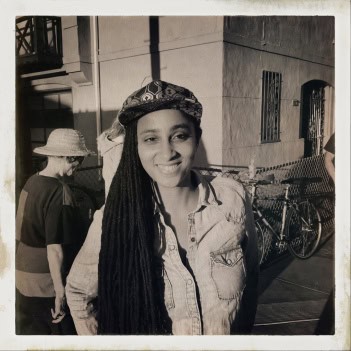
We’re joined now by Juliana Bidadanure, professor of philosophy at Stanford University, where she’s also faculty director of Stanford’s Basic Income lab. Juliana, welcome to Philosophy Talk.
Juliana Bidadanure
Thank you so much for inviting me.
Ken Taylor
So Juliana, you’re a political philosopher, and he’s obviously topics for politics and philosophers. But what got you specifically interested in questions about jobs and income and work and all that?
Juliana Bidadanure
So actually, I grew up in France, on the outskirts of Paris in a very low income community. So unemployment, especially youth unemployment, poverty, lack of investment in public infrastructures was really a reality that we had to face every day. So that got me very interested, of course, in social justice, very worried about inequalities and very concerned to find solutions to this kind of very structural unemployment that people are facing, but also To the stigma that people are facing when they are afflicted by two issues. One is the lack of jobs. And the second one is stigma around them being recipients of public assistance.
Debra Satz
So Ken and I disagreed earlier about whether technology will eventually eliminate human labor. What do you think? What future do you predict? Whose side are you on? Are the machines?
Juliana Bidadanure
Yeah, that’s a really big question. So I really don’t think that technology will eliminate the need for human labor. I do think, though, that it will reduce it, at least for some time. There are several important studies that came out recently on this. And, of course, they disagree on the extent to which jobs are going to be replaced, there’s one that I find particularly helpful, which says that most occupations in the US have at least 30% of the activities that are automatable. So think about it, it means that a lot of the jobs here have a number of tasks within them, that can be very easily automatable. And then the second worry is that that can happen quite fast. Right. So that studies also says that up to 25% of those tasks, in manufacturing, packing, construction, maintenance, and agriculture could be cost effectively automated by 2025.
Debra Satz
So, you know, when you’re thinking about prediction, one of the things I think we have to keep in mind is that technology is not a force of nature, it doesn’t just happen to us. And what we do with it, whether or not it replaces those jobs partly depends on where we direct technological innovation, right now, technological innovations being directed to labor saving rationale, but it doesn’t have to.
Ken Taylor
Well, that’s certainly true, Deborah, I don’t deny that. But in a market driven economy like ours, with very little government regulation, and no holds barred capitalism. I mean, I read something that said along the lines of Giuliana was talking about that listed the top 100 jobs or something like that, and the top 33 out of this 100 lists are ripe for elimination and drastic reduction by automation in the next 10 years. And those jobs employ 45% of all workers. I mean, you know, the capitalists.
Debra Satz
Although the state could play a bigger role in directing technology towards Yeah, socially important purposes, like the environment like aging and health, all of which might be labor intensive.
Ken Taylor
Yeah. But what do you think is going to happen that could happen? What do you where do you think this is going?
Juliana Bidadanure
So I agree, it was Debert. So for me, it’s very hard to predict both because there are so many variables, and we have to take into account so many. And so that’s why we need many, many different predictions. And we need to see what those different scenarios are and prepare for each of those. I think that’s really important. But I agree with every audit. You know, there are many things that we can do to prevent unreadable, the automation, we can decide how much to invest in research and training. So I think we need to prepare for the worst, I really do think that, but of course, we can still do things.
Ken Taylor
So there’s a worst case scenario in the best best case, I think the worst case scenario is really, really bad. But we’ll have to dig into that. And after a short break, you’re listening to a Philosophy Talk. Today we’re thinking about a world without work with Giuliana Bedard from Stanford University.
Debra Satz
In our next segment, we’ll ask what would a world without work look like? Would life lose meaning structure and purpose? Or will human beings always find ways to spend their time productively even without paying jobs?
Ken Taylor
Labor, unemployment and fun employment—plus your calls and emails, when Philosophy Talk it continues.
Bruce Springsteen
I’m a jack of all trades, we’ll be alright.
Ken Taylor
But how will being a jack of all trades help if human labor is no longer needed? I’m Ken Taylor. This is Philosophy Talk, the program that questions everything…
Debra Satz
…except your intelligence. I’m Debra Satz and we’re thinking about a world without work. Our guest is Juliana Bidadanure, faculty director of the basic income Lab at Stanford University where she is also professor of philosophy.
Ken Taylor
So Juliana, I know you and Debra are saying there are differences possible scenarios. Let’s grant that there’s a worst case scenario, the best case scenario, I’m kind of in a dark mood this morning. So I want to what would it be like? If we imagine we live in a world in which there’s no demand or very little demand for human labor? And what would happen to human life? Would it just become empty and meaningless? Are you confident that humans will always find different ways to create meaning and purpose even if it’s detached from work?
Juliana Bidadanure
So we have to keep in mind that even if we are thinking about the worst case scenario, we are talking About a world without jobs, right work will always be there. So it does separate work.
Ken Taylor
From jobs. Yeah, help help us with that.
Juliana Bidadanure
Yeah. So work is very general, you know, applying your focus and your attention some effort to a task. Over time, that takes quite a bit of time overtime. This is work, right. So it seems to me that we always need work, you know, we’ll need people to contribute to the communities around them, we’ll need them to look after their aging parents within them to look after their kids, we’ll need them to contribute politically, to do some volunteering. I mean, there will always be work to do, right. So of course, we still have to worry about jobs disappearing. But it’s really important to keep in mind that the future of the world without jobs, not necessarily the future of the world without work.
Ken Taylor
I like that distinction. I like that distinction. But I mean, and I like I’d like take the phrase, my life’s work, I don’t think of my life work as a job. I think of it as trans job. I mean, I went from this job to that job, but my life work has always been like doing and pursuing philosophy. So I get that distinction. But I can’t do my life’s work without a job that pays me for my life’s work. So I mean, I how do I do work? I mean, if jobs disappear, then it makes it much harder jobs enable work in this meaningful work?
Juliana Bidadanure
Yes, I totally agree. On the other hand, we need to remember that what when you asking the question, how can we have meaning without work? What you’re really asking is, how can we do meaningful work in the future, a lot of the jobs that we currently have in our society are not jobs that allow for meaningful existence, they often dull, repetitive mechanical, they involve pursuing ends that have been set by others. So our lives are meaningful when we do meaningful work.
Debra Satz
So I think you’re overstating the badness of jobs. I agree, there are lots of jobs that are great. But even the jobs that we think of is not that skilled. They take effort, and cognition and planning, and they bring people together from different walks of life. So I actually think in jobs is a lot of what you’re calling work. And what I worry is the image of disappearing of these more institutional public organizations for bringing people together will leave people isolated and adrift.
Juliana Bidadanure
Yeah, so I totally agree that if you are trying to see what it is that we are trying to achieve, I think we are trying to achieve communities where people interact with each other, and we need society where the goods of work are delivered. So that’s a helpful concept to think about what we want the goods for a cow, you know, attend, attaining various types of excellence, building skills and competencies that you can apply to a particular goal, making a social contribution, experiencing community. So those are very important. I do think that jobs are currently a privileged way of doing it. I think that we just shouldn’t shouldn’t fetishize the world of jobs the wait,
Ken Taylor
I get you, but I just want to just slow down on this because I think Deborah’s making a really good point, my father, you know, born a dirt poor sharecropper, in segregated itself and left home when he was 14 got joined the army got a job in a factory after he came out of the Army, back breaking labor, but it gave it gave dignity and meaning and focus and purpose to his life without income, he raised four kids, they all became, they all went to college, he my father is one of the most optimistic people I’ve ever met, because he believes that by the sweat of your brow and determination and focus and work his job, even though it was a back breaking labor helped him achieve that.
Debra Satz
So I, I grant, yeah, and I want to just pursue this a little more, because I know that you’re a, you know, have a great deal of interest in the idea of a basic income as plank in a, you know, a program of, you know, social justice. But I’m wondering, why shouldn’t we have as our central plank job good jobs for all, as our central plank? What’s wrong with thinking that everybody should have access to a good job? Yeah,
Juliana Bidadanure
I don’t think there’s anything wrong with thinking that everyone should have access to good job. But I really think that we need to be extremely aware of the risks that are falling disproportionately on a large proportion of our communities right now. And so I think that raising the floor, making sure that our safety net are much more robust, and less stigmatizing. And much easier to access is a challenge of the future is a challenge of the present, because we have a lot of precarious workers already. We have domestic workers that are invisible. And we have we have a lot of freelance workers that are not making ends meet. So I think the basic income is a challenge of the past challenge of the future. But now of course, it’s not enough, right?
Ken Taylor
Yeah. I just want to focus on that phrase that you use, because in preparing for this show, I came across this phrase a lot. There’s a new buzzword there used to be the proletariat. Now there’s the precariat, right, there’s all these precarious insecure workers who have marginal Connect. But the thing that Deborah said to you, I thought you were gonna say, Well, yeah, that’s fine for the present, we could make that. But technology is going to say, look, it’s not just the poor and the precarious that every they’re coming for as all the demand for human labor is going to go down how much and how severely? That’s a question, but the demand for human labor is going to go down. And it strikes me that, that, that basic income is not just a solution to problems of the past to the present, but possibly a very viable solution to the to the future,
Juliana Bidadanure
I think there’s just the basic income for me is the least we can do, considering the challenges that we are going to face. And considering the challenges we are already facing considering how much poverty there is how much stigma there is around poverty, I think it’s the least we can do. Now, of course, this is not going to solve the problem of, you know, having a society where people feel like they can make a meaningful contribution, I’m really suspicious in general of job guarantee programs simply because of the reality of the way. Job guarantees often work. If we are willing to fight together for good jobs, I think we should do it, we should also give people exit options so that they can say this is not the job I want to do. This doesn’t seem like something that I want to do actually have other plans of my own, that I think will deliver the goods of work better. So I think people still need exit options. And often the way job guarantees are designed. It is such that if you refuse to accept the job, or if you choose the training that goes was it, then you lose your benefits. I think we need to divorce and separate. So the unconditional right to benefit.
Debra Satz
Can we talk about so I’m all for people having exit options. But I wonder at what level do you think a basic income would need to be funded to give people realistic exit options from jobs? And are you worried about incentive effects if you set the basic income too high? And are you worried that there’s no real exit option? If you set it too low?
Juliana Bidadanure
I think you’re entirely right. I mean, if we, if we believe in Basic Income insofar as we want people to have the freedom to say no to abusive jobs, abusive relationship, demeaning jobs, then we have to set it at the level that makes sense if we want basic income, so that workers have increased bargaining power and can demand higher wages demand better work conditions, then we have to set it sufficiently high, of course, then the following question is, of course, how do you fund something like this? Because then it would cost very much. I think, you know, if it is the case that automation will increase productivity, then we have to tax that increasing productivity. We have to tax robots, we have to tax wealth. And and we will find a very easy way that way to fund the basic income.
Ken Taylor
We’d love to have you join this conversation, you can send us email at comments, philosophy talked dot o RG and I believe we have an email now, right?
Debra Satz
Yes, we do have an email. So let me read. Jews have believed for 1000s of years in the concept of the Shabbat, which represents the infinite future where humanity will have eliminated the need for work keeping the Sabbath for Jew is refraining from work in order to understand its purpose. Also, Adam’s original curse for eating from the tree of knowledge was work. But like all concepts of the world to come in Judaism, they’re not attainable. So the question is, do you think a world without work is actually attainable? Or is it just approachable? And we’ll never get there?
Juliana Bidadanure
That’s interesting. I mean, it really depends on what you mean, by work. I mean, to me, and this is coming back to universal basic income, there are so many activities that are not necessarily remunerated in the labor market, even though they enable individuals to make a positive contribution to their community, when caring is the obvious one. Yeah, you know, volunteering is another one.
Debra Satz
So why shouldn’t we pay for those activities? And so there, there are two things I wanted to ask you about. So there’s the basic income, which I asked you about what level to set it up. But there’s also questions about why make this universal? And, you know, there is a question I have about why is it Why do I want rich people getting a basic income? And why do I want people who won’t contribute getting a basic income, whether they’re poor or rich?
Ken Taylor
Yeah, you have an answer? Yeah. You doing?
Juliana Bidadanure
I’m gonna say, I mean, the rich, let’s be very clear. I mean, they are they have a lot of proposals for basic income, but the vast majority of proposals that I find appealing, at least are funded through progressive taxation. So the rich the Edit, but they pay for it. Largely, you know, the other thing is access. I mean, the take a break. So when you make benefits conditional, and when you make them means tested, you wouldn’t believe the how many people actually actually claimed them. So the take a break, they call it this. So the number of people who are eligible actually get those is 40%.
Ken Taylor
I’ve got another kind of question, though. That’s, that’s underlying some of this. Because when we think about the disappearance of work and the disappearance of income for people, well then If it doesn’t disappear totally Well, some people get very rich. But laymen, how can they get very rich unless people buy stuff from them? I just don’t understand how an economy could run. I have no idea how an economy could run with a 40 50% unemployment, which some of these prognosticators say we could have some go even further, you know, how can What would an economy look like? How would they be wealth generated in the first place? So isn’t this just like, back to the unattached ism this this bizarre? We don’t really have an idea of how many economies without human? I mean, how would that work? Do you know?
Juliana Bidadanure
Yeah, well, that’s a that’s a really good question. I mean, I think that’s why, you know, many people who stand to benefit enormously from those changes, do not want people and a large group of people to not have access to an income and to not have it. So even Milton Friedman, when he was proposing a negative income tax, he was interested in the poorest being able to be brought back to a consumption. Right? So you need consumers at least,
Ken Taylor
Chris from San Francisco was on the line. Welcome to philosophy. Talk to us. What’s your comment or question?
Chris
Yeah, I’m excited about it. You guys are onto the topic. But I want you to go a lot deeper, like really the question and first of all, look at the world, we all get up every day and produce this world. Why don’t we get up and produce the world we want to live in? The problem is that we’re not discussing the fact that there’s no democracy at all, around the fundamental decisions about how we make life, how do we produce life? What technologies do we use? What’s our relationship to science? What work is worth doing? We don’t ever talk about it. We just assumed that if somebody offers a job, it’s worth doing. No. I’m way too busy to go to work. I have too many interesting things to do, to address the predicament that we are in as human beings on the planet to bother with the stupidity of wage labor of doing what somebody for money. Really, the fundamental question is, how do we make life done? We go about producing the world, most of the work we do today is a waste of time. And it’s in the way, Chris, we need to get back to the work we need to do.
Ken Taylor
Chris, I couldn’t agree with you more. And I think it’s a great question. And I love your fervor. So Giuliana, how do we answer I do agree with Chris, that the production of the world as he put in I love that phrase, we leave it in the hands of some narrow band of moneyed interest and political power.
Debra Satz
Right, this question of who owns the robots is so important.
Juliana Bidadanure
Yeah, I totally agree. I mean, I think you’re right, right. So we are facing all we are facing all those very deep challenges when labor is not organized, when we are in a weak democracy. So this is why it’s such a different difficult topic to to approach. And as you said, we have no free time. So universal basic income can help in the ladder. But it definitely I mean, we have a lot of challenges to find that for sure.
Ken Taylor
And something else that timber said that I think is really relevant here. We have this attitude toward technology, as if it’s the decider like that technology. Technology only works through humans in through human decisions in a context for as deployed by as imperfect as we are with all the powers away. We never think about this.
Debra Satz
Think of it, it’s just something that happens, right? Like, it’s technology, it’s like it’s the market, it happens outside of us and outside of our structuring of it. And we actually can make a big difference to how technology is deployed.
Ken Taylor
And I think so I don’t want to get on a hobby horse here. But I think that we as educators, because all three of us are educators, and we’re at a university devoted to the education of technologists, a paramount, we owe it to them and to ourselves into our society, to educate these technologists to understand that technology is not just a thing in itself. It’s deployed by humans in a purpose, it can be deployed for ill or what bad and this question, okay, should we deploy technology to just eliminate human labor without understanding what an economy would be? Like? I think it’s a huge question. Do you agree?
Juliana Bidadanure
Yeah. Well, actually, again, I mean, I think the tech are very much aware that they are changing society, but they, they think they are making the world a better place, right. So they also have this idea that this is contributing to a much, much, much better society. And they are imagining this future differently. But of course, Y Combinator, the famous tech incubator is funding a Basic Income pilot right now in Oakland precisely for that reason.
Ken Taylor
Right. Right. So their basic income experiments happening. Tell us a little bit about that. There are basic income experiments as I have, as I understand it, they have happened in the past, but they’re happening more now. Is that right?
Juliana Bidadanure
Yes. So they have happened in the past, more precisely negative income tax experiments. You had the few in the US in the 60s 70s. And in Canada, and now we have actual Basic Income experiment. The Finnish government is testing it. And then in the Netherlands, it’s being tested in the US. It’s a private experiment funded by a foundation right in Auckland. So individuals are going to be given, I think, $2,000 a month in cash, no strings attached, and they will see what they end up doing with it.
Debra Satz
So I’m worried about thinking about this. The problems that we face in an individualistic way where we give everybody a bunch of cash, we don’t think about, you know, the big questions of how do we decide how our economy should be structured? How do we make investment decisions? Who could who has say over investment? And $2,000? You know, it’s not, it’s pretty cheap out, especially in the United States where we have a very weak welfare state. And one worry I have is that people are going to say, we don’t need to strengthen the welfare state, because we’ll give everybody $2,000 a month in cash, and they’ll be happy.
Juliana Bidadanure
Yeah, so you’ll be happy to know that there’s kind of a growing Basic Income movement in the US, there’s now large consensus that the universal basic income needs to be on top of all the benefits that you need to replace nothing we need to find funding that is external to that it can’t come from other existing benefits precisely because there was so meager already and we can’t take the rest of those were worse and worse than they actually are.
Ken Taylor
You’re listening to Philosophy Talk, we’re thinking about a world without work with Juliana Bidadanure from Stanford University.
Speaker 1
In our final segment, we’ll think about what kinds of policies should be implemented to deal with diminishing job prospects. Does the market provide the answer? Can unions protect workers? Do we need some kind of state generated solution? What’s the role for civil society?
Ken Taylor
Life after work—when Philosophy Talk continues.
Phil Ochs
I’m walking a jobless road, and where am I to go? Tell me where am I to go?
Ken Taylor
Is automation taking us down not just a jobless road, but a longer meaningless road? I’m Ken Taylor. And this is Philosophy Talk, the program that questions everything…
Speaker 1
…except your intelligence. I’m Debra Satz, our guest is Juliana Bidadanure from Stanford University. And we’re thinking about a world without work.
Ken Taylor
So Juliana, as our conversations made clear, there’s clearly lots of different forces at play here. And they’re pulling in all kinds of different directions. We got the market and capitalism, we’ve got state, the state politics, we’ve got culture, we’ve got just a human need for it to find meaning and purpose in life. Question, can philosophy really help us resolve all of this?
Juliana Bidadanure
Yes, I do think so. Yeah, I think I think political philosophers that we do, the big question that they ask is, what do we owe each other in different circumstances. And when there isn’t full employment, when the future of jobs is at stake, then we need to think about what it is that we owe each other. We’ve talked a bit about an income, we owe each other at least at the very least, we need to make sure that those who stand to lose their jobs, get some form of income security. That’s the first thing, but there are many, many other things that we owe each other so we can do so.
Ken Taylor
But that’s a really good point. I agree with you. But how do we get bring that home? So I think you have two players here, the capitalist and the political structure, right? The capitalist has commodified everything, right? You might think that a good thing about work, the disappearance of work is the dekap commodification of lots of things, except you got to take the capitalist wealth, and support the de commodified human who cannot sell his or her labor for a wage. Now, what how do you get the capitalist to see that? I mean, because otherwise, they’re gonna try and manipulate government and that data and break up unions and analyze workers. I mean, that’s what capitalism always does. It atomizes the labor it, it tries to take control of government, it goes transnational, it says you can’t regulate me, because I’m all over the world. How do you do that?
Juliana Bidadanure
Wow. So I mean, I would say, I don’t know, this directly answers your your question. But I would say that no one has an interest in a society that is growing increasingly insecure for a large proportion of his population, for reasons you violated earlier, mean, the social unrest that will follow is unbelievable. So no one has an interest, even those were the richest, in a large proportion of the population living in fundamentally frustrated. So at the very least, it’s even in their interest to make sure that people have access to some cash. Now, of course, that’s still now we are still describing an extremely unequal society. So now you’re talking from the perspective of capitalist right, your perspective of democracy, democracy that works from perspective of workers from communities, we need much more than ensuring a floor we need to cap Yeah, we need a cat right.
Ken Taylor
So see, see what I’m worried about? I think, I don’t know if it’s a worry. But what I have been thinking about is this is a point where the incompatibility of like pure untrammeled market, unregulated market and collective political life is starting to like come into huge tension, right, because if we democratize this, we won’t let work disappear, or at least or if we do that work disappeared of me and scheme have massive redistribution to those who benefit from the disapprove visually.
Speaker 1
Yeah. So and, you know, I also think the market, although it’s very rational in some ways, it’s not very good at providing some of what people want, because some of what people really want not just is not just meaningful work, it’s meaningful connection to other people. And so when you have Meals on Wheels delivered by a drone, you know, the person who’s dependent on the person coming to see them and human connection isn’t getting what they really want. But the market is going to be pushing in the direction of replacing the human being, because drones are much cheaper. And it isn’t what we really want.
Juliana Bidadanure
Yeah, I think we need to separate the need for control. And I think that that we agree on this. I mean, I think that the deregulated market, a nightmare. And I think it’s, it’s, we can’t be a good Italian in any way. And think that this is a good idea, of course. But I think we need to separate that from automation, right? If we take control, I’m sure that we are going to want to automate many tasks, right. I mean, just like we know, we can look back at washing machines, and ATMs is something that, you know, limits the, you know, the amount of interaction that we have, I mean, an ATM used to be a person giving you cash. So I mean, I think that they are tests that we might want to free ourselves from, I think it just needs we need to regain democratic control.
Ken Taylor
I get you but I see the thing that I think about a lot is that these kind of micro decisions, do I automate the teller machines? Well, yes, there’s economic benefit. Do I do this? Do I do that each of these are kind of micro decisions local, but then when you aggregate them up, right, and nobody really sees to the aggregation that the aggregated thing is for the human good. And I don’t know that we have systems that see to that the aggregation serves the human good. Is there a system where the aggregation of these micro decisions that are atomized and farmed off to this corporation and that corporation? You know, can say?
Juliana Bidadanure
Yeah, I mean, that’s a really good question. I mean, so on the one hand, you might think that we have to separate like the way things actually are and the way they are going and the way things should be. And we have to find a kind of an in between, because we can’t just plan based on what thing, you know, the way things should be, if we, if a restaurant that’s quite wealthy, decides that they are going to automate untalented, their staff, like is the case in many sushi shops in Japan? Then, of course, that if you do that, then the competition is destroyed. Right. And it’s, it seems like we don’t currently have systems that can prevent that from happening. So I mean, I agree with you. I think currently, I don’t think we don’t make we do. Is it an issue? I think it is.
Speaker 1
So we’ve got a comment from Joanne. And the comment is, there’s talk about AI robots taking over the military, no more alive soldiers in the battlefield. If the bots, lob nuclear bombs and destroy the planet, all this talk about losing work is moot. And I think that raises a really important point, which is there’s some kinds of technologies that maybe we don’t want to develop, and we aren’t very good at, at stopping, there’s tends to be a view that if we can build it, we should build it no matter what, and then let the future take care of itself. So I mean, are there some technologies that are really worrying to you? And and how should we respond to those technologies?
Juliana Bidadanure
Yeah, I mean, I worry about, of course, I, I don’t worry necessarily about the automation of particular tasks, but I worry very much about jobs that we love, and that we feel like define it as define us as humans disappearing. So for example, teachers, I mean, technology that aim to replace teachers, freaking me out, of course, as a teacher, I think it’s something that’s incredibly enjoyable, I think that we do much more than just deliver some content, what we do is build relationships, build self confidence, you know.
Ken Taylor
So be surprised see, the AI people this is because I hang around with a lot of them. The AI people think they really mean this. Now, whether they’re right or wrong. They really mean this. Anything that a human can do. Eventually an artificially intelligent robot will be able to do better, including things like emotional intelligence and creativity. Right? It’s coming. I mean, there is they’ve been saying this since the 1950s. But actually, it is coming.
Juliana Bidadanure
But even if it’s true that they will be able to do it better, that the question is, what do we want to keep for ourselves? That question we need to have I mean, what defines us as human? Think about it, this is the most important question right? Caring. Same that we have Robert, the caretakers, right. So I think we really need to ask ourselves this question. We don’t need to automate everything. Somewhat. Some automation is good. Some automation is not good for us as humans, so we just need to have this question. It cannot just be driven by private forces.
Ken Taylor
I totally agree. Yeah. I think we’re on the same thing. The question is, how do we get there? How do we reform really less? How do we reform Do you have a thought how do we reform our discourse so that just do more Philosophy Talk like?
Juliana Bidadanure
Yeah, I think that’s, I mean, I think that this country has a huge history of, you know, believing in the free market believing in market forces. This is really a social norm. This is really a social construction that we need to we think very much. I mean, when I arrived in this country, from Europe, where the universal basic income was growing, the idea of basic income there was seeing as a as an enhancement of the welfare state here, the idea was never picking up because welfare is such a bad press right? Everyone is there to fend for their own. Now it’s changing because of automation. So as you see, it’s very interesting to see that in this country, as long as it was welfare wasn’t working. Now what that is kind of a form of dividend that’s paid off for everyone as a right to face off automation. Now it’s starting to grow.
Ken Taylor
Juliana, thank you for joining us a bit of fascinating conversation.
Juliana Bidadanure
Thank you so much. It’s a pleasure to be here.
Ken Taylor
Our guest has been Juliana Bidadanure, Professor of Philosophy from Stanford University and faculty director of the Stanford basic income. Now this conversation continues at philosophers corner at our online community of thinkers where our motto was Cogito ergo Blago, I think, therefore, I blog. And if you have a question, as long as you’re not a bot, but a person, if you have a question that wasn’t answered on today’s show, we’d love to hear from you. Send your questions to us at comments@philosophytalk.org, and we might feature it on the blog. No bots need apply though.
Speaker 1
You can also become a partner in the community by visiting our website, philosophytalk.org. And now let’s welcome back our film blogger Leslie Francis, as she and Ken take Philosophy Talk to the movies.
Ken Taylor
So Leslie, this summer was interesting, in terms of heroism in the movies, because I was really impressed by three different movies in this regard. I was impressed by Wonder Woman, because the superhero is a female and Hollywood has not done a lot of female superheroes. And I was impressed by Dunkirk. I think that’s a movie about heroism. But like the collective heroism of the little guy, not the big super guy. And the third movie, I was impressed by the head the kind of heroic theme to it was Planet of the Apes because the central character is non human is actually the enemy of the humans. And he’s a kind of heroic ape. So I don’t know, what do you think?
Leslie Francis
So take Wonder Woman. Think about how Wonder Woman really portrays the woman as hero, does it? Or does it take a male model of heroism, and kind of try to fit it into some of the cool things that some people think a woman might be?
Ken Taylor
So women, so you’re thinking, it sounds like you Think, Wonder Woman fits the archetype of a male superhero in in a woman’s clothing? And that you think that’s a kind of less adventurous, less authentic kind of representation of what a female superhero would be? What a feminist superhero would really be? Is that what you’re saying?
Leslie Francis
That’s part of what I’m saying? I’m also saying that I don’t think it models what full heroism for a woman might be independence, ability to do well, regardless of how you look.
Ken Taylor
So you think he shouldn’t have been so beautiful, but there is that line, the Secretary, I love that line. She doesn’t know what a secretary is right? And a woman describes what a secretary is.
Wonder Woman
Candy. I’m Steve Trevor’s Secretary, what is the Secretary I go when he tells me to go and I DO what He tells me to do. Where I’m where I’m from, that’s called slavery.
Ken Taylor
That’s a brilliant line. That’s a feminist line. But like not, you don’t have to be just an appendage to a man. I mean, isn’t that a feminist motif in there?
Leslie Francis
You’re absolutely right. Part of what is so interesting about Wonder Woman is that it pushes you to think about how they’re dual identities and everyone. What’s Wonder Woman’s dual identity? What’s her Clark can’t self? Yeah, there isn’t one in the movie. She’s just wonder woman right now. Maybe that’s cool. But what it doesn’t do is encourage anyone to see how there’s Wonder Woman in themselves. She’s Wonder Woman, as gorgeous, sexy. She’s not wonder woman as an ordinary woman.
Wonder Woman
Never let your guard down. You expect the battler to be fair—a battle will never be fair.
Ken Taylor
When she’s thrust into this first world war scene, she’s all sex and power and wonder woman who had all the time and No other and not this ambivalence about do I want to be this because in all these other superheroes, there’s this kind of ambivalence. And there’s this duality.
Leslie Francis
Let us let us say one more thing about Wonder Woman, though that I think it really did well, which was the portrayal of the horrors of World War One. The war is just awful. War doesn’t achieve anything.
Ken Taylor
Which raises a question: what would it mean to exercise heroism in the context of this utterly fruitless, brutal war? What would it mean to be a hero in that context? Right? That’s one question that movie Wonder Woman raises and her ideas like to take seriously the idea of ending war a human being don’t really know what they’re doing. But Dunkirk, the movie Dunkirk, which I thought was an amazing movie raises a similar kind of question, in a way, because it’s in the context of war. You don’t see a singular figure, you see many, many figures making their small contributions. But here’s one of the things about Dunkirk is it doesn’t actually really address the horrors of World War Two, they only ever refer to the Germans as the enemy. They kind of contextualize it. And Christopher Nolan, who directed this movie, made that an explicit choice, which some people think was a big mistake. I don’t know what you think about that.
Leslie Francis
I think it’s a very interesting choice. I think the reason he made that choice was specifically not to emphasize the Holocaust, and the general morality of World War Two. I mean, I think everybody agrees, if you’re going to pick a war, that was a moral war, World War Two is a quite good example of such a war.
Dunkirk
We have to go to Dunkirk. Ready on the stern line, are we doing so? Well, we’re going into war, George, I’ll be useful, sir.
Leslie Francis
It does a very interesting job of exploring individual responsibility, individual behavior under pressure, how people can behave in remarkably affirming and charitable ways. So he’s exploring the morality within the war, rather than the morality of the war.
Ken Taylor
I think that’s a good distinction. So I know, I don’t think you’ve seen the Planet of the Apes. I know you’re interested in these themes of heroism, because the Caesar character is very, very compelling. And the Woody Harrelson character who’s like, awful, mostly through the movie, you realize there’s a tragedy happening to the remnant of humanity. And this guy is trying to prevent this tragedy into the remnant of man, but he’s gonna lose Caesar is wise and measured. But he sees that this thing is headed for disaster for both humans and for apes, and he wants to try and do something about it. And he’s caught, he’s pulled this way, in that way. And in the end, there’s a kind of self sacrifice. So he’s a heroic ape, who in some ways is the most human character in the thing, except his non humaneness is like the theme, and that humanity’s lost its way and there’s this. So I think it’s very much worth doing. And I want to urge it to you and I want to urge to our listeners that if they’re interested in the theme of heroism, and variations of a theme that you don’t get much in movies and Hollywood blockbusters, but these are three Hollywood blockbusters, but do try to do variations on the theme of heroism.
Leslie Francis
You’ve convinced me about Planet of the Apes Okay, there you go.
Planet of the Apes
We’ve been searching for you for so long. I did not starve the swarm. I fight only to protect things.
John Perry
Philosophy Talk is a presentation of KALW local public radio San Francisco and the trustees of Leland Stanford Junior University, copyright 2017.
Ken Taylor
Our executive producers are David Demarest and Matt Martin.
John Perry
Our senior producer is Devin Stolovitch. Laura Maguire is our Director of Research. Cindy. Prince Baum is our Director of Marketing.
Ken Taylor
Thanks also to Merle Kessler, Audrey Dilling and Collin Peden.
John Perry
Support for Philosophy Talk comes from various groups at Stanford University, and from the partners at our online community of thinkers.
Ken Taylor
The views expressed (or mis-expressed) in this program do not necessarily represent the opinions of Stanford University or of our other funders, not even when they’re true and reasonable.
John Perry
The conversation continues on our website, philosophytallk.org where you too, can become a partner in our community of thinkers. I’m John Perry.
Ken Taylor
And I’m Ken Taylor. Thank you for listening
John Perry
And thank you for thinking.
Wonder Woman
What the hell is this thing? The lasso Hestia compels you to reveal the truth. But it’s really hot.
Guest
Related Blogs
-
September 23, 2017
Related Resources
Books
- Basic Income: A Radical Proposal for a Free Society and a Sane Economy by Philippe Van Parijs (2017)
- Basic Income: A Guide for the Open-Minded by Guy Standing (2017)
- The Ethics and Economics of the Basic Income Guarantee by Karl Widerquist and Michael Lewis (2017)
Web Resources
- “A Basic Income For All” by Philippe Van Parijs in The Boston Review (2000)
- “Basic Income Convergence” by Juliana Bidadanure in The Boston Review (2017)
- “What Would Happen If We Just Gave People Money?” by Andrew Flowers in FiveThirtyEight (2016)
- “Fuck Work” by James Livingston in Aeon (2016)
- “Humans Need Not Apply” by CGP Grey on YouTube (2014)
- “A World Without Work” by Derek Thompson in The Atlantic (2015)
- “The Meaning of Life in a World Without Work” by Yuval Noah Harari in The Guardian (2017)
Get Philosophy Talk
