Show

William James

Week of: 
November 09, 2008
What is it: 

William James is a great figure, historically important as a philosopher (pragmatism and radical empiricism), a student of religion (author of the monumental Varieties of Religious Experience), and psychology.  Ken and John examine the life and ideas of this towering figure with Russell Goodman, a leading scholar of Pragmatism and author of Wittgenstein and William James.

Listening Notes: 

“William James” is nearly synonymous with radical empiricism and pragmatism. He influenced literary history by developing the stream of consciousness, and became a prolific philosopher and psychologist—teaching both subjects at Stanford University, one might ad. John distinguishes between pragmatism about linguistic meaning and pragmatism about truth. Pragmatism about linguistic meaning looks something like this: a camper is chasing a squirrel around the trunk of a tree. Do we say that he is running around the squirrel or not? It seems like there is no empirical evidence that could go one way or another, so we shouldn’t think that either description is definitively correct. Pragmatism about truth is the stronger claim that, roughly speaking, truth is what works for you.

Russell Goodman joins the discussion, and gives us a brief biographical portrait of James. James, much like the stream of consciousness, wandered around from being an artist, to studying chemistry and physiology, and ending up in philosophy and psychology. He never studied philosophy formally, and sometimes that shows in his loose, uncontrolled writing style.

James’ pragmatism is often seen as a very scientific philosophy, but it was dealt with the limits of science. It treats knowledge as a holistic system, and it’s not always easy to separate science, religion and ethics. John worries about consistency in James’ overall views, and Russell does his best to defend them (mostly). From here the conversation steers towards the question of whether pragmatism ends up being a fancy word for relativism. John, Ken and Russell talk about the relationship between James and other great thinkers, particularly Ludwig Wittgenstein, who was always equivocal about what he thought of pragmatism.

  • Roving Philosophical Reporter: (seek to 5:47) Julie Napolin chats with professors of English literature about William James’ contributions to literature with the introduction of the “stream of consciousness.” The conscious mind, thought James, is not linear or logical. Rather, it stops and goes in sudden bursts like a bird hopping and flying from branch to branch. This layered sense of consciousness left a profound mark in the literary world, perhaps most notably in the case of James Joyce. What can we make of this interior associative monologue? Musicality of all the outliving out ranking out bursting from motifs of have you read any good books recently, the rain sure does wash everything a flow, doesn’t it?
  • Conundrum: (seek to 46:45) A listener from Vancouver Washington asks, “Can someone who never lies really tell the truth? Can we live without lying? Is omission a lie? Is it ever right to lie?” John, Ken and Russell puzzle over these head scratchers, and suggest that in the end, you need to settle these ethical questions on a case-by-case basis.

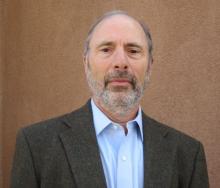
Russell B. Goodman, Regents Professor of Philosophy, University of New Mexico

Related Resources: 
  • “James on the Non-conceptual,” by Russell Goodman, 28 Midwest Studies In Philosophy 1 (September 2004): 137-148 (subscription to IngentaConnect required for online access).

Get Philosophy Talk

Live

Sunday at 10am, PST, KALW, 91.7 FM, Local Public Radio, San Francisco

Streaming

Broadcast live on your iPhone or Android using the Public Radio Player

Podcast

Individual episodes, multipacks and The Complete Philosophy Talk on sale now through Iamplify.   Individual episodes available through Itunes and CD Baby.

Subscribe

Subscribe to our free weekly download service, and our monthly eNewsletter

John Perry and Ken Taylor

Talk to Us

Sidebar Menu

Upcoming Shows

  • May 19 : Faith, Reason, and the Art of Living
    It sounds plausible to require that all our beliefs be based on evidence and sound reasoning. Yet some people's most cherished beliefs, like their...
  • May 26 : Summer Reading List 2013
    Summer is the perfect time to dig in to deep reading. Heidegger's Being and Time may be a bit much to take on vacation, but there are lots of...
  • June 02 : Gay Pride & Prejudice
    The question of gay rights has become a hot button issue, with opposition taking on the air of a moral panic and support taking on the air of a...
  • June 09 : Physics, Philosophy, and Theology
    The world disclosed by the physical sciences can seem depressing. Modern physics, for example, has undermined the religious idea that the universe...
  • June 16 : Educaton and the Culture Wars
    In contemporary democracies, the state is responsible  for providing children with an education. But parents surely have both the right and...

Support Philosophy Talk

DONATE TODAY

Philosophy Talk relies on the support of listeners like you to stay on the air and online. Any contribution, large or small, helps us produce intelligent, reflective radio that questions everything, including our most deeply-held beliefs about science, morality, culture, and the human condition. Make your tax-deductible contribution now through Stanford University's secure online donation page. Thank you for your support, and thank you for thinking!