Why Poetry Matters
April 2, 2023
First Aired: April 10, 2022
Listen


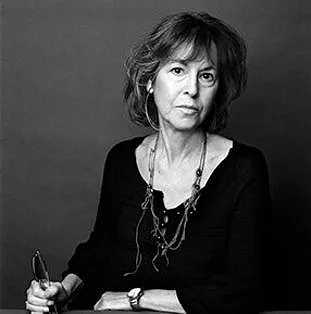
Some people say they find poetry impenetrable. Yet readership is increasing: in a 2017 survey, the National Endowment for the Arts found that nearly 12% of adults in the US had read poetry in the last year. So what explains the enduring appeal of poetry as an art form? Are there any limits to who counts as a poet, or what counts as poetry? And what makes a poem good anyway? Josh and Ray wax lyrical with Nobel Prize-winning poet Louise Glück, author of American Originality: Essays on Poetry.
Is poetry just a fun pastime, or can it change our lives? Can poems help us to think, connect, and feel? Josh begins by arguing that poetry matters enormously, since it is a place to gain genuine wisdom. Ray loves poetry, but they counter by pointing out issues like war, famine, and climate change that seem to matter much more than poetry. Josh and Ray both agree that poetry provides a new vocabulary for talking about shared human experiences, and it helps you experience the mind of another person.
The co-hosts are joined by Louise Glück, winner of the 2020 Nobel Prize in Literature, who believes that poetry reformulates the things we know so that we feel them freshly. She explains that she finds the experience of putting words to feelings consoling because it reaffirms that we are not alone in our experiences. Ray considers poems that are about experiences they haven’t had, while Louise praises poems that have more questions than answers. Josh asks how poems evoke feelings of intimacy in the reader, and Louise describes why she enjoys poems that make her as a reader feel like her presence is required. If great poets invite her into their work, it gives her a sense that she could achieve something similar as an artist herself.
In the last segment of the show, Josh, Ray and Louise discuss what it means for a poem to be successful, the political impact of poetry, and being a poetry teacher. Josh believes that one mark of achievement is that a poem stays in the reader’s thoughts for a long time. Ray asks about the power of political and satirical poetry, and Louise points out that poets have no problem criticizing tyrants because they aren’t directly engaging and negotiating with them. To aspiring poets, Louise gives the advice of cultivating patience, since waiting is a painful but necessary part of the process.
Roving Philosophical Report (Seek to 4:32) → Holly J. McDede checks in with two poets from the San Francisco Bay Area to ask why poetry matters to them.
Sixty-Second Philosopher (Seek to 48:30) → Ian Shoales considers the beginnings of poetry and reinventions of the Iliad.
Josh Landy
Is poetry just a fun pastime?
Ray Briggs
Or can it change our lives?
Josh Landy
Can poems help us to connect, think and feel?
Ray Briggs
Welcome to Philosophy Talk the program that questions everything
Josh Landy
except your intelligence. I’m Josh Landy.
Ray Briggs
And I’m Ray Briggs. We’re coming to you via the studios of KALW San Francisco Bay Area,
Josh Landy
continuing conversations that begin at philosophers corner on the Stanford campus, where Ray teaches philosophy, and I direct the philosophy and literature initiative.
Ray Briggs
Today, we’re thinking about why poetry matters.
Josh Landy
I’m so excited to talk about this Ray. I think poetry matters enormously. And the more we all have in our lives, the better off we are.
Ray Briggs
Ah, I love poetry, but I’m not sure it matters enormously. I’m with Marianne Moore. You know, she was a brilliant poet, but even she admitted that “there are things that are important beyond all this fiddle.” Like there’s war, famine, climate change, and it’s hard to see poetry being that life or death.
Josh Landy
But that’s only half the quote, Ray. The other half is “there is in it after all a place for the genuine” and lots of people see poetry that was a place to gain genuine wisdom.
Ray Briggs
I don’t know about wisdom, Josh, you like Baudelaire, right? And he even says that “truth has nothing to do with song.” Look, I can say anything I want in rhyming couplets. It doesn’t have to be true. Rat a tat tat the earth is flat. See?
Josh Landy
That’s a good example. Yeah, okay. Poems don’t have to be true, but a lot of them are filled with interesting ideas. Like take one of the earliest Greek philosophers Parmenides, he wrote his entire treatise in dactylic hexameter. Okay, it wasn’t the greatest poem ever. But it was still a philosophical one.
Ray Briggs
Yeah, okay. Well, why do you need a poem to do any of that? He could have just written it all in prose, probably would have been a lot clearer too.
Josh Landy
Clearer, sure, but less memorable. Poetry has a way of sticking in your head.
Ray Briggs
I don’t know if that’s such a great thing, though. What if you read a really catchy poem, and it just says something completely false? Maybe it’s gonna stick in people’s heads and actually convince them to believe the wrong thing.
Josh Landy
Yeah, but when poems get it right about the world, they can do things no piece of prose ever could. Take Mary Oliver’s beautiful line. I think this is the prettiest world, so long as you don’t mind a little dying. Isn’t that great? I mean, that’s not just true, it’s important, and the poetry makes you feel that importance.
Ray Briggs
Yeah, it is great. It’s a great line. But it’s not because it tells us anything we didn’t already know. What’s great about it is that it gives us a new vocabulary for talking about shared human experiences. Like knowing that everything dies.
Josh Landy
I totally agree. Poems give us words for the things we think and feel or or half think and half feel. Beautiful words, powerful words so we can finally take possession of them.
Ray Briggs
Exactly. Plus poems can take us into the mind of another person. It’s like you’re right inside their head, thinking their thoughts, feeling their feelings. Simone de Beauvoir says, that’s the miracle of art.
Josh Landy
Yeah, that’s something we could definitely both agree on, Ray.
Ray Briggs
And not only that, but they give us these great experiences. Like think of the joy you get from reading Sappho or Langston Hughes, or Emily Dickinson.
Josh Landy
Okay, there’s definitely a lot of joy in those poems. But what about things like Philip Larkin’s “Aubade,” one of the most devastating poems ever written about human mortality? I mean, when I read that poem, I’m not exactly singing and dancing.
Ray Briggs
Yeah, but poems don’t need to be upbeat to create a valuable experience. A sad poem can make you feel less alone. Because you know that a brilliant mind has felt exactly the same things as you. They can give form to chaos. They can turn inarticulate suffering into beautiful speech, and you know, they can help you feel your feelings, whether those feelings are good feelings or bad ones.
Josh Landy
But here’s what I don’t understand. I mean, if my feelings are painful ones, why would I want to feel them more intensely?
Ray Briggs
Well, because suffering is part of a human life, Mary Oliver was right about that. Instead of pushing our suffering down or running away from it, we just have to feel it. And there’s nothing like poetry for helping us to do that.
Josh Landy
I totally agree. But enough about what we think. I can’t wait to hear what our guest thinks. We have the great honor today of being joined by Louise Gluck, winner of the 2020 Nobel Prize in Literature.
Ray Briggs
And we sent our Roving Philosophical Reporter Holly J. McDede to check in with two poets from the San Francisco Bay Area to ask why poetry matters to them. She files this report.
Josiah Luis Alderete
Hola, my name is Josiah Luis Alderete, Pocho poet and proud Spanglish speaker. As a brown person in these established sonidos, as a brown person living here in San Fransisco, poetry matters because for us, it’s not only a work of art, it’s not only a way to appreciate and express beauty it’s also a way to remember things. Poetry is memoria. Poetry is history. You know, I know that I have personally learned a lot of my Chicano history, my Chicanx history, through poetry through other poets that sort of like, explain Chicanese more than me or explain Latinadad to me, you know, explained what the Mission District used to be, explained what Los Angeles used to be. Poetry for me is like a biological function. So if I didn’t write it, it would, um, I am not exaggerating when I say I would probably die.
The poem isn’t titled, so it’s untitled. The rules for espanol en el carro, or en la casa, the rules for Spanglish near the front door or on certain playgrounds, the rules for English near the Sizzler salad bar, or whenever we talk about history. The rules for nawa did I hear in my dreams, was [unintelligible] you see my accent, it goes way, way back and it was not formed by the neighborhood I grew up in, or the place that Mi Familia is from Naw, you see, my accent has been formed by all those things about ourselves that were not taught to us. By all those things that our ancestors were not allowed to say. You see, my accent has been formed by the forced violent migration of [unintelligible] by the mystical Milagro also migration of [unintelligible].
Jeneé Darden
My name is Jeneé Darden. I’m originally from Oakland, California. And I’m a journalist and a poet. And my book is “When A Purpose Rose Blooms.” Maya Angelou she used to say words are things and words have energy and so words, words are very powerful and and definitely poetry matters, you know, you can really go outside the boundaries. It depends what kind of poet you are. Some poets may say there’s rules, some poets may say there aren’t rules, or there aren’t very many rules. And so you can really be creative and how you express yourself and just the way it reaches people. And it’s not even it doesn’t even have to reach people reach people when it comes to something serious, just pulling out the joy in people and the laughter and yes, poetry makes us laugh. It makes us think, it definitely it definitely matters. It speaks to human spirit. So this is called “Self Esteem.” Maybe leaving her since she entered the world. Her daddy split right after the doctor said it’s a girl. Her first boyfriend left her for Alexis, her second boyfriend left her for Texas. Her third boyfriend left her for Travis. Her fiancee left her for the bottle and the nice girl on 85th with a blonde weave, all she knew about men was they lie they leave. And their hearts had a short attention span for her love. What’s wrong with me? She cried to her friends. What’s wrong with me? Girl they say you just need some self esteem. Huh? Self esteem. Where do you get that? She asked. Is it something you buy off the rack? Do they sell it at Big Lots next to discounted baby fat? Hmm self esteem? Does it come in a lotion bottle or a jar like beauty cream? Has Oprah given away in her favorite things? Can I get at the Slauson swap meet or Durant square? Is it easy to put on like a clip on my hair? Hold up, does it come on my Obamacare? Do I eat it? Do I wear it? Do I hang it on the wall? Is it available? Year round? Winter, spring summer fall? Is it free? Do I have to pay? Don’t play. Does it fall from the sky or grow from the ground? Maybe mine is in some lost and found. It’s something I can hold? Will it make me feel good? Do they make it for rich girls and girls in the hood? Is there a commercial for it a jingle a song? Can I order it from Amazon? Get some self esteem you make it seem easy? She said to her friends. You make it sound like it’s the answer without a doubt. But how is self esteem the key in a world that constantly tries to lock black women out? Now this is where the poem ends? Because we’re looking for self esteem. Where does one begin?
Holly McDede
For Philosophy Talk, I’m Holly J. McDede.
Josh Landy
Those are some beautiful thoughts about poetry and some beautiful poems. Thanks so much for that great report. Holly. I’m Josh Landy, with me as my Stanford colleague Ray Briggs, and today we’re thinking about why poetry matters.
Ray Briggs
We’re joined now by poet Louise Glück. She’s the winner of the 2020 Nobel Prize in literature. And she’s published many collections of poems as well as volumes of essays about poetry, like Proofs and Theories. Louise, welcome to Philosophy Talk.
Louise Glück
Thank you.
Josh Landy
Louise, one of my favorite essays of yours talks about what poetry meant to you as a child. So when did you first start reading poetry, and what was that experience like for you?
Louise Glück
Transforming, obviously. I started reading poetry very early, I read early. And my, I’ve told this story so many times I’m embarrassed. My grandmother who was not a particular reader happened to have in the house, her house, a few anthologies, including one a book of Shakespeare’s songs, and one some sort of anthology in which Blake appeared. And I remember the song from Cymbeline, “fear no more the heat of the sun.” And Blake’s “Little Black Boy,” about which I’ve written recently. And the Shakespeare, I understood none of the words, but I heard the tone even as a small child, and I was stirred. I was stirred.
Ray Briggs
Yeah, that makes me sort of think about the value of poetry. So earlier, Josh was saying it gets at important truths. And I thought there was probably something else that was going on. What do you think?
Louise Glück
Yes, I think it reformulates the things that we know so that we feel them freshly.
Josh Landy
That sounds close to something one sometimes hears about giving words to thoughts and feelings that people might otherwise not have words for.
Louise Glück
Yes, I think that’s true. And I think that the finding of such words is ultimately hugely consoling, and also provocative.
Josh Landy
So why consoling?
Louise Glück
Because it means if you hear it, you’re not alone with it. So it’s like my fantasy of dying in an airplane crash, which always seems to me very congenial as a way to die because you’re not dying alone. So there isn’t that sense that you’ve been chosen for exile, everybody with you is dying. And in a way, everybody with you is dying. But on the airplane, it’s more vigorously true.
Ray Briggs
So this also makes me wonder about like poems that are about particular experiences. So one of the things that I appreciate about poetry sometimes is that it gives me a window into experience I haven’t had. So I was just reading Cameron Awkward-Rich’s poem “After Lucille Clifton,” which is about like the figure of cockroaches and is using the figure of cockroaches to talk about like blackness and black experience, which is not my experience in the US. But I sort of find that really valuable. And I find it a really beautiful poem. And I wonder, like, how you see poetry connecting people with different experiences.
Louise Glück
Well, it does. And it does, because even if you haven’t had, I mean, and this goes back to the definition of truth, which is a word tossed around and not defined, but the experience, the literal, factual experience, you haven’t had, but you the poem gives you a sense of what that experience is analogous to in your experience. So there is a sense of the enlargement of the spirit to include the parallel but a different set of feelings and narrative experience.
Josh Landy
You’re listening to Philosophy Talk. Today we’re talking about poetry with Nobel Prize winner Louise Glück.
Ray Briggs
Are you a fan of poetry? How does it make you think and feel? Does it help you notice things you’d never noticed before?
Josh Landy
Spending your time amid rhythm and rhyme, along with your comments and questions when Philosophy Talk continues.
Are you Team Yates or Team Wilde? I’m Josh Landy, and I’m Team Yeats. This is Philosophy Talk, the program that questions everything
Ray Briggs
except your intelligence. I’m Ray Briggs, and I’m Team Wilde. Today we’re thinking about poetry with Louise Glück, winner of the 2020 Nobel Prize in Literature and author of American Originality.
Josh Landy
We’re pre recording this episode. So unfortunately, we can’t take your phone calls today. But you can always email us comments@philosophytalk.org. Or you can comment on our website. And while you’re there, you can also become a subscriber and gain access to our library of more than 500 episodes.
Ray Briggs
So Louise, in one of your essays, you say that you like poems where questions outnumber answers. Can you tell us more about what that means?
Louise Glück
That’s a good question. Well, it seems a pithy little statement. I, I think, um, I want poems that complicate and question my thought, not that affirm positions. So poems that answer too many questions seem dogmatic and limited. And I want to interact more vigorously. So I like questions.
Ray Briggs
So at the risk of sounding a little self indulgent, I have an anecdote that has really stuck in my head, where I wrote a poem that was just a series of questions. And I showed it to one of my friends. And he wrote back with his answer to each question and asked if he had got it right. And that seemed exactly wrong to me, it wasn’t what I wanted.
Louise Glück
Oh, I don’t blame you.
Josh Landy
So what do you want your reader to do? You know, when, when these questions are posed?
Louise Glück
I don’t care. Ah, I want them to feel something. If they feel nothing, then I’m, that would be either a judgment on the poem or a judgment on the reader. And if you’re the poet, you always feel that it’s the former.
Josh Landy
So that’s interesting, because, because that moves us out of the realm of thought into the realm of feeling. And you’ve written beautifully about the kinds of feelings that poems can evoke in the good cases. Yeah, in readers, including not just what we’re talking about earlier, this, this sense of companionship, where we’re not alone anymore. But also intimacy. Can you tell us a little bit about that? Because you’ve written so wonderfully about certain poets, not all poets, yeah, who create that special bond with us.
Louise Glück
I, my preference, my bias is for poems that seem essentially collaborative with the reader so that they need they require the reader they’re spoken to someone. Let us go then you and I, it’s an invitation. And it’s an invitation spoken to the reader, and I feel my presence required. I like Emily Dickinson. She’s an example of this. And most poets do it to some extent or other, but not all. And this is something I prize the sense of only you and when people talk about the audience for poetry, and “is it diminishing?” and “is poetry endangered?”, seems meaningless to me because the audience for poetry in my imagination is one person. And it can be a sequential person. It doesn’t have to be a stadium full of people. It can be one person, and then 20 years later, another person.
Ray Briggs
I’m curious also about cases where I don’t feel like I’m the central audience for a poem, and I either appreciate it and sort of feel like I’m listening in on something or in some cases, I kind of get like, a little mad at the poet because I think that they’re doing something they shouldn’t be. So I think that like, some poets who have like really sexist stuff to say, like I get mad at Larkin for this reason, sometime where I’m like, You’re not talking to me, and you’re not talking to, like, a viewpoint I want to inhabit and I don’t like that. How do I sort of negotiate with that, is it just like, not every poem is going to speak to every reader?
Louise Glück
Yes. Not every poem is going to speak to every reader. But I, I don’t think poems are necessarily written for a particular audience. They’re, they’re written for who needs to hear them, or, and they’re written as a sort of testament by the writer who is trying to understand his or her experience.
Josh Landy
But maybe we could come back to the kind of poem where you feel we’re in we really invited in, and we’re really, you know, Emily Dickinson is talking to me. Yeah. And Blake’s talking to me and Eliot’s talking to me. And not only are they talking to me, but they somehow the poem needs me. Can you say a little bit more about that experience? And and why you find that so valuable?
Louise Glück
I think I find it valuable because I’ve, in part, because I find it humanly encouraging, but also encouraging to me as an artist: if I’m essential to this great poem, then perhaps I could do something parallel. So there’s a sense that the form is within my reach.
Josh Landy
And is that how it felt to you as a child reading the Shakespeare—that you could just feel the tone?
Louise Glück
Yes, I and I thought, well, I felt ill at ease in the world as a child. And I was growing up in an upper middle class suburb on Long Island. And I, I often thought questions that you could reformulate as, where are my people? And when I read poems, I thought, that’s where they are, these are the people I want to talk to. And my fantasy, when I was writing, from the beginning, was that Yeats would come down from heaven and say, “very well done Louise.” And I still hope for that.
Ray Briggs
The poets who you mentioned, as really speaking to you sometimes through sound, rather than through sense first, seems like they use a lot of meter and rhyme. And I wonder if that’s a way of connecting with another person, even when the sense is not and how you think about sound in your poetry.
Louise Glück
Ah, not that way. And I think we’re talking there about the historical period and the conventions of the time. I like poems that sound like a human being speaking. I think that’s a more accurate way of describing what I respond to. And more often than not, because of the speech to which I’m used, I prefer poems that don’t rhyme because they sound more like a human.
Josh Landy
You’re listening to Philosophy Talk. Today, we’re thinking about why poetry matters, with Nobel laureate Louise Glück. So, Louise, I want to read you a couple of comments that we got from listeners on our website. Tim-
Louise Glück
Already, you have comments?
Josh Landy
You’re a popular guest! So Tim in Seattle says, our mental experience of life is poetry—it’s a beautiful line. And Paul suggests, verse allows us to wander into the abstract recesses of consciousness, but the images are not readily accessible to everyone. That’s interesting. So is that something-
Louise Glück
Are they talking to me, particularly just talking about poetry? They both talk very well.
Josh Landy
I think so too. Um, so that makes me wonder. Do you mind if you you know, if you’re when you’re writing your beautiful and often difficult poems, I mean, that in a good way-
Louise Glück
I took it that way.
Josh Landy
You know, for me, I wouldn’t take Paul’s line the images are not readily accessible to everyone, as in any way a criticism, that might actually be a strength.
Louise Glück
I think if you write an image deliberately to exile the reader, that’s a problem. But if it if the, if the poem isn’t immediately intelligible at its every level, that’s not a problem, as long as the poem haunts, but there’ll be there will be readers who don’t, who aren’t moved by any piece of work, always.
Ray Briggs
How do you judge for yourself when a poem you have written is successful? Is it like, if you get one person coming up to you and telling you that it moved to them? Is that the mark, does it do something internally to you?
Louise Glück
Not that. No. I mean, that’s sometimes moving and touching and humanly, but has nothing to do with the poem, I show my work to people who are demanding readers, and who will make sure that the poem is as good as it can possibly be. And if it never gets to being very good, then that poem will not be visible to the world. I write, I don’t write. I’m not prolific. I’m just, I’ve lived a long time. So I have a lot of work, but not because I write often. But I, I trust these readers. And every once in a while I write something about which I’m immediately and absolutely confident, and my confidence will not be shaken. But often I write something that departs from existing modes, or tones. And I really can’t tell whether it’s terrible or wonderful, and I need my readers for that.
Josh Landy
So as one of your readers, I just want to talk briefly about one of my favorite, you know that this is one of my favorite poems of yours, Ithaca. And one of the things I love about that poem is something we were talking about earlier, the fact that it’s asking questions rather than giving answers and boy, does it stay with you, does it gnaw at you. Right, a poem where it asks this incredible question, whether it’s better to interact with a real life human being or whether to have an image of them in your head. That, to me is a sign of extraordinary success that even today, I don’t know how long it is, since I’ve had this poem with me a long time, a long time. Does that ring true for you that that’s, that’s at least one mark of a successful poem that someone’s still chewing on it and trying to think about this important and difficult question.
Louise Glück
I can’t think of a better, a better ambition for a poem to have.
Josh Landy
Is there something like that for you? Is there a poem or set of poems out there by other people that, that stay with you in that way?
Louise Glück
Oh, Lord, of course. Yeah. And they’re somehow deeply mysterious in ways that seem to be acknowledging a fundamental mystery, unanswerable question. And they haunt, they resonate, I think, not of a poem, but a book, a novel Wuthering Heights, which I’ve read many, many times, and each time I read it, I think the center of the story is a different person. And I think because I think the center is different, humanly, the story becomes different. I, Wuthering Heights has been to me at least four different books at different times in my life. It’s not recent enough for me to expand on that, fortunately for the show.
Ray Briggs
So we have a another comment from our website from Daniel, who writes, poets historically can get away with criticizing tyrants while political opponents can’t. Do you have comments on that?
Louise Glück
Oh, poetry has no trouble criticizing tyrants, but poetry is not an engaged with tyrants, negotiating with tyrants. So it’s, we’re in a different position.
Josh Landy
Right. It makes me wonder, I mean, obviously, there’s poetry that’s directly political, satirical, and so on. But I wonder about things that, that are trying to make change more indirectly. So something like for example, the poetry of Aimé Césaire, who’s a surrealist poet who’s sort of trying to tackle racism in this fascinating, indirect way by by essentially changing the structure of thought. Right. So you take something that I think Dickinson’s doing, and I think you’re doing, by the way, in some of your poems, which is, you know, reach inside the mind of the reader, and productively chip away at people’s confident certainties and categories, so that we can move the pieces around. In the case of someone like Césaire, it seems like there’s a political hope behind that. Does that seem like a reasonable hope? Or does that seem a little fantastical to you?
Louise Glück
You mean, reasonable in the sense that it could have an effect in the world? I imagine it could. Because it could influence someone who lived a more active and involved life.
Ray Briggs
I do have a kind of a cool example of somebody I’m proud to know, we should put references in the show notes. But I have a friend who is actually banned from reading one of his poems out loud in Singapore, of which the first line was, come on straight boy and make gay love with me. Which I feel like that’s a kind of interesting example of both like a very funny poem and also a political poem.
Josh Landy
So Ray, is your thought that that kind of poetry could actually have a political impact?
Ray Briggs
Yeah, I think it I think it had enough of a political impact on like, the Singaporean government that they were scared of it.
Josh Landy
That’s so interesting. Louise, I want to come back to something else as well about about Ray’s thought earlier, getting inside the mind of another person, I mean, it connects to what we’re talking about, but maybe less indirectly. Your poetry very often puts a, an interesting sort of barrier between us and you, in the sense that you often write in the persona of a character. Yeah, sometimes a flower, sometimes a man and so on and so on. Do you think there’s any particular advantage on the one hand to speaking as oneself or on the other hand, to speaking in the guise of a character?
Louise Glück
I’m always speaking as myself.
Josh Landy
So even when you’re a flower?
Louise Glück
Yeah, yeah, the flowers just have human feelings. So the self is not a monolith, the self is a prison, we have lots of selves. And you don’t want to choose one and have it rigidly there dead center of every poem, that will be really tiresome. And your poems will be predictable. And I want my poems to be surprising insofar as it can be managed.
Josh Landy
That’s so interesting that in one of your essays, and maybe it’s unfair for me to quote this at you, but I really liked it. You say, writing is not a decanting of a personality. So is that compatible with this thought? I mean, it’s the thought, well, it’s still the poet speaking, but it’s somehow refracted?
Louise Glück
It’s exactly compatible with the thought. It was thought by the same person. Surprise.
Josh Landy
That could be a different aspect of you.
Louise Glück
That’s right. They agree those two.
Josh Landy
So how does that work? So it’s so it’s, it’s not a decanting of personality, but it’s still an expression of in some way, or an indirect-
Louise Glück
Not personality. Dilemmas. I think, if you read more than one poem, by a poet, and when I say a poet, I mean a poet of some substance and interest, continuous interest, you will begin to get a sense of the personality of that writer and the manners, the various ways the voice can make itself heard. So you, you understand, reading many poems, but you explore a range of approaches ideally.
Josh Landy
You’re listening to Philosophy Talk. Today, we’re thinking about the power of poetry with Nobel laureate Louise Glück.
Ray Briggs
Do you write poetry? What do you want your poetry to do? How would you like people to respond to it?
Josh Landy
Writing a line that sends chills down your spine…
Ray Briggs
writing a line that is finer than wine…
Josh Landy
writing a line that won’t die on the vine. Plus comments from Ian Shoales, the Sixty-Second Philosopher. When Philosophy Talk continues.
If someone hands you a book of 13th century poems, do the words ring true? I’m Josh Landy, and this is Philosophy Talk, the program that questions everything
Ray Briggs
except your intelligence. I’m Ray Briggs, our guest is Nobel Prize winning poet Louise . Glück. And we’re thinking about why poetry matters.
Josh Landy
So Louise, you don’t just write poetry, you also teach it. And I happen to know you do so extremely well. So what’s the what’s the best piece of advice that you have for aspiring writers?
Louise Glück
Cultivate patience.
Josh Landy
Say more.
Louise Glück
I couldn’t say less! I think poets are encouraged, often, in habits of diligence, and application as though will were the way that poems were written. But it seems to me that that is not the case. There’s a certain kind of applied effort that makes sense once a poem has manifested itself. But there’s a lot of waiting for the thing to come right. And there’s a lot of waiting sometimes even to begin. And you have to be able to do that if you want your work to evolve and change, you have to bear with periods of silence or wretched writing. And you have to tell yourself the truth about these things. If the poems are terrible, the poems are terrible. But you have to, you have to wait it out. And that’s very hard. And it continues to be very hard. No matter how experienced a writer you are.
Ray Briggs
Yeah, it’s been a real relief to me in reading your essays to learn that you also have had writer’s block. Is there anything to do besides wait? Because it’s really frustrating.
Louise Glück
I don’t call it writer’s block, because writer’s block assumes that there would be fluency, ongoing fluency. If what you want is epiphany, you don’t get epiphany daily. And if that’s what you wish your poems to achieve, you have to wait. And yes, it’s painful. But then when it ends, it’s euphoric. So I, there may be other ways for other people, I talk about my own habits and my own dilemmas.
Josh Landy
Thinking of euphoria, you say—one of the most beautiful characterizations that I’ve read of the power, of the emotive power of poetry—in one of your essays, you say “preexisting anguish, in being given form, is externalized. And in being externalized, it’s transformed into its opposite—into euphoria.” That’s fantastic. So is, I want to I don’t know if I’m getting you right, is the thought that just the fact of putting sorrow into form—it doesn’t have to be rhyme, of course, but some kind of lyrical form—gives us a sort of control over it? Makes it I don’t know, not necessarily beautiful, but somehow manageable.
Louise Glück
That and it’s also transformed because it’s, it’s made—you take the sneering chaos of misery, you make a shape for it, and you’ve transformed it into something that has meaning. And I think this is invariably true. I think if you can do that thing, you change your feeling about misfortune. It’s happened to me repeatedly.
Josh Landy
Yeah, me too. You know, I sometimes say to my students, you know, you don’t want your life to be a tragedy, but you’d rather a tragedy than just a mess.
Louise Glück
Yeah.
Josh Landy
Just a painful mess. Yeah, at least it’s tragic. At least it has form. You say you talk about rescuing the reader from a darkness without shape. At least you have shape—and of course, companionship. Yeah. So that seems like a wonderful alchemy that poetry can produce.
Louise Glück
But your feeling is also changed about original experiences. I’ll tell a quick anecdote. About 20 years ago, I had a very, very bad whiplash injury and excruciating neck pain that went on for for years, and during that time I was, I managed to teach, but I wrote very little, and my life was just dominated by pain. And then gradually, the pain diminished somewhat enough so that I began to write. And I wrote one of the best books I’ve ever written in a very short period, well, two very short periods separated by two years. And I realized that the book owed everything to the agony of that whiplash, but my attitude toward the pain was changed. Because it had given me this thing that was a triumph. So how could I hate it? Well, if I’d had no pain, I would have had no book. It isn’t always true that pain produces great work, but I now feel a kind of gratitude for that pain because of what came out of it. So that’s, that’s a terrifically useful human thing that making art can do. Rarely, but sometimes.
Josh Landy
It sounds like, you know, Nietzschean wisdom, right? That you can, in certain circumstances in your life, you can do something that essentially changes the narrative. And by changing the narrative, it changes—retroactively changes—the significance of an earlier event. So that whiplash wasn’t just pain, physical suffering, long recuperation. That whiplash now is the origin of these two books of great poetry.
Louise Glück
Well, it was one book separated by two periods of composition, right?
Josh Landy
One great book of poetry!
Louise Glück
It was, it was, it turned out to be a muse. Or it, it, it put me in possession of tones I hadn’t had before. And a kind of amplitude I had had. I was grateful.
Ray Briggs
Yeah. So Louise, I wanted to ask you also about sort of reading and responding to other people’s poetry. So I know that one sort of big poetry teaching tool is like the writing workshop where everybody writes a critique. Do you have thoughts about what makes that useful? Or is it useful? Or when is it useful?
Louise Glück
I think if someone is receptive, it’s always useful to hear an account of what you’ve done by a reader who’s sensitive and not too rigid a reader who’s responsive to multiple approaches and tones. I think if you, if you hear what that person makes, week after week, after week of individual poems, you you begin to understand what it is that you’re doing, and also if that person is able to not simply diagnose and opine, but suggest alternatives, which would allow for revision. So if you enter a poem, and you say, “why don’t you try changing the syntax here, because the poem is getting a little tedious with all these declaratives,” that might be, in a particular poem, a godsend. So you, you’re you’re not just giving mirroring the poem, you’re also offering ideas about strategy.
Josh Landy
And it sounds like for you, there’s not necessarily a right answer about how structured something should be, you know, rhyme could work in some cases, doesn’t have to be there. It needs to have a shape. Does that—but does that imply anything—does it imply anything in syntax, in…?
Louise Glück
No, no. And in fact, the the really exciting work in a class is the work that shows you something about shape that you didn’t understand. Some students will write a brilliant piece of work, and it’s often undergraduates, because they’re, especially undergraduates at schools that collect brilliant minds. They are much more flexible. They’re not grooming themselves for public life. They’re ready to change and they do thrilling things sometimes.
Josh Landy
We were talking earlier about poetry that consoles, but some of my favorite poetry is poetry that devastates—that leaves me crying, and leaves me feeling worse than before, but I don’t hold that against it. I think that’s a wonderful thing that poetry but can do, but why? What’s great about that?
Louise Glück
Catharsis, but also the sense of being reunited with your own strong feelings, so that the dull tedium of the world is transformed to something more dramatic and terrible for you. And then, but at least its importance is dignified.
Ray Briggs
Louise, I’m wondering if you have a favorite poem that you’d like to mention for our listeners and say maybe why it’s your favorite?
Louise Glück
I don’t have a favorite poem. No.
Josh Landy
But do you—is there, among the poets of intimacy that you mentioned, Keats, Eliot, Dickinson, Blake, what would be one, a poem that people could start with, to get them into this mood of intimacy with a poet who’s talking just to you?
Louise Glück
Well, the poem that I would name I’ve gotten in a lot of trouble talking about, because I do not because it’s Blake’s “Little Black Boy,” and I’m not Black. And he wasn’t black. But of course, he was an abolitionist. So but I, I think that poem is a miracle. And as deeply affecting and subtle as any poem I can name. And heartbreaking. And a real attack on racist England. Josh.
Josh Landy
Yes, yeah, I know. Just because I’m English, doesn’t mean I stand behind the actions of my predecessors. Yeah. Thank you, Louise. That’s a lovely note of great hope for the power of poetry to end on. I want to thank you so much for joining us today.
Louise Glück
Thank you.
Josh Landy
Our guest has been Louise Glück, winner of the 2020 Nobel Prize in Literature and author of American Originality: Essays on Poetry.” So Ray, what are you thinking now?
Ray Briggs
So I’m thinking that one silver lining of this pandemic is that it has resulted in a lot more poetry being online, and that I’ve really been enjoying some of that in the last couple of years. So there have always been sort of online poetry magazines for since before the pandemic, like Poetry Magazine has a lot online, Rattle I love living in Australia for a while, so I really enjoy Cordite. But also, there have been sort of more online performances since the start of the pandemic, so Headmistress Press had this great series called The Collectables, which you can still get sort of on YouTube recordings, I think they’ve stopped recording new ones, but you can still get the old ones. And the Queensland Poetry Festival, which I kind of have a personal love for, was all the way online and still has some online events.
Josh Landy
Well, those are great tips. Thanks so much for those and we’re gonna put links to everything we’ve mentioned today on our website, philosophytalk.org, where you can also become a subscriber and gain access to our library of more than 500 episodes.
Ray Briggs
And if you have a question that wasn’t addressed in today’s show, we’d love to hear from you. Send it to us in iambic pentameter at comments@philosophytalk.org, and we may feature it on the blog.
Josh Landy
Now quick as a quatrain, clever as a couplet. It’s Ian Shoales, the Sixty-Second philosopher.
Ian Shoales
Ian Shoales. Poetry began as hymns of praise at funerals or before a battle. It was definitely a manly thing, but tolerated by women who’d maybe changed the tune to a lullaby to get the kids to sleep, all the kids who grew up with glory in their dreams, and that’s how civilization was born. But the Iliad was a poem about an event long gone long before the first telling it was ancient before there was ancient Greece, and did the Trojan War even happen? Bitterness was already baked in. The Iliad has been a big deal for ages centuries after its creation. A famous poet John Keats even wrote a poem about a new translation of the Iliad. That’s how big a deal it was. Looking into Chapman’s Homer no longer has that kick. But Chapman wasn’t alone. Alexander Pope took a stab at it. Dryden brushed up on his Greek and Latin. And Robert Fitzgerald brought some modern lingo into the telling. Do people still read the Iliad? Well, sure, they made a Brad Pitt movie out of it. But what still read Homer, still learn dead languages wrestle with all the forms of poetry sonnets villanelles pantoumes ballads. They study rhetoric, and properie. They have PhDs in history they have field trips to visit ancient documents. Poets used to hope for some duke to ponder history of Satan inverse nowadays is grants through university if you want to master [unintelligible] madrigals. On the other hand, poetry itself has now broken loose from the forms to the past that’s either been tamed or made wilder as it slips in and out of the mainstream in the form of rock and roll free verse performance art, stand up comedy dirty jokes, limericks, group cheers or even some of the hooey we put up the creatives on social media. You could say poetry slams have taking the mickey out of art, but our new culture carries a mickey all its own. We’d like to revisit old culture, seeing if we squeeze out some relevance recent version of the Iliad focused on the love between Patroclus and Achilles. Another focused on the rage of Greece as against Achilles, who killed her husband and made her a slave. There was a famous performance piece made of the Trojan Women back in the 1960s with an internationally diverse cast, invented language, and what we used to call movement, which is what dance becomes when hippies do it. Somewhere in the 20th century, the old verities women are kerflooey we stopped caring about poor Prince Hamlet and more about ourselves. Amid the horrors Modern Times brought us we found the glory of self pity. White Guy culture began bringing minorities into the castle now carved up to make affordable housing. Just as epic poetry about God and heroes gave way to sonnets about love the anonymous voice gave way to the poet’s voice, kind of like the broadcast your voice and video, you could tell who was poet by the self importance, the subject matter, and the total lack of brine. Early poems were performed and probably changed with each telling so the hero could have different outfits and tasty meals that the poet could vamp on before getting to the big showpiece battle, with swords and vindictive gods and fate and all that be the catalogue of all the heroes who were there to the battle how they died, who among the gods hated them enough to get them killed or loved them enough to elevate them to glory? And then kill them? Early poetry bridged the gap between history myths and lies with legend, but the Greek seemed awful enough for it to be true rating and portraying and adulterating and murdering Why would even tell that story? What made you decide to finally write that down? We were horrible. We ground Troy into dust for no good reason. But we know we need those stories and only poets can tell them we can’t keep coasting along and past glory. Pride needs shame for a partner. Otherwise, we’re all just ghosts in a burning house. That’s what poets know. And they should remind us of it from time to time with is trying for pity and terror with a five volume epic poem, or trying to get a laugh at doggerel Sharpie on a bathroom wall the Empires revealed the stories were lies and the gods have been gone a long long time good riddance on one level, but whose fault is it? That’s right: poetry. I gotta go.
Josh Landy
Philosophy Talk is a presentation of KALW San Francisco Bay Area and the trustees of Leland Stanford Junior University copyright 2022.
Ray Briggs
Our executive producer is Ben Trefny. The Senior Producer is Devon Strolovitch. Laura Maguire is our Director of Research.
Josh Landy
Thanks also to Merle Kessler and Angela Johnston.
Ray Briggs
Support for Philosophy Talk comes from various groups at Stanford University, and from subscribers to our online Community of Thinkers.
Josh Landy
The views expressed or mis expressed on this program do not necessarily represent the opinions of Stanford University or of our other funders, not even when they’re true and reasonable. The conversation continues on our website, philosophytalk.org where you can become a subscriber and gain access for our library of more than 500 episodes. I’m Josh Landy,
Ray Briggs
and I’m Ray Briggs. Thank you for listening
Josh Landy
and thank you for thinking.
Journalist
Do you think of yourself primarily as a singer or as a poet?
Bob Dylan
I think of myself more as a song & dance man.
Guest
Related Blogs
-
April 8, 2022
Related Resources
Alderete, Josiah Luís (2022). Baby Axolotls & Old Pochos.
Brontё, Emily (1847). Wuthering Heights.
Darden, Jeneé (2018). When A Purple Rose Blooms.
Glück, Louise (2013). Poems: 1962-2012.
Glück, Louise (2017). American Originality: Essays on Poetry.
Get Philosophy Talk
