Hacking the Brain: Beyond the Five Senses
January 23, 2022
First Aired: April 14, 2019
Listen


Humans evolved to have a variety of senses—smell, sight, touch, etc.—that provide information about the world around us. Our brains use this sensory information to construct a particular picture of reality. But what if it were technologically possible to hack our brains and create new senses for humans, such as echolocation or magnetoception? How would our brains integrate this new kind of information? What would it be like to perceive the world using these strange new senses? And how would these novel senses change our view of reality? Josh and Ken sense they’ll talk to neuroscientist David Eagleman, author of The Brain: The Story of You.
- Neuroscience
- |
- Perception
- |
- Present
- |
- Race
Josh Landy
Are humans limited to the senses were born with?
Ken Taylor
Or is it possible to hack the brain and create new senses?
Josh Landy
Even if we could, would we want more sensors than we already have?
Ken Taylor
This is Philosophy Talk, the program that questions everything…
Josh Landy
…except your intelligence. I’m Josh Landy.
Ken Taylor
And I’m Ken Taylor. We’re coming to you from the Marsh Theatre in San Francisco.
Josh Landy
Continuing conversations that begin at Philosophers corner on the Stanford University campus, where Ken teaches philosophy and I direct the philosophy and literature initiative.
Ken Taylor
Welcome, everyone to Philosophy Talk.
Today, we’re hacking the brain. We’re thinking about the possibility of perception beyond the ordinary five senses.
Josh Landy
hacking the brain cannon, that sounds a little scary.
Ken Taylor
It’s not scary at all. It’s really exciting. I mean, imagine being able to add novel human senses at will, you know, like, we could have the ability to perceive magnetic fields like like birds already do. I mean, come on. Wouldn’t that be like awesomely mind-blowing? Come on!
Josh Landy
Maybe, but what are we actually talking about here? Are you talking about something like you know, putting on night vision goggles? Or is it more like a brain implant?
Ken Taylor
No, Josh, that’s so science fiction. I’m talking about actually think of something really simple, really simple. The most simple technology imaginable for helping someone with impaired senses, like canes that blind people use to see.
Josh Landy
Wait aminute, bind people don’t use canes to see. I mean, how the cane helps them to navigate, but they’re not actually seeing something.
Ken Taylor
Okay. Okay. They don’t see what the cane but the cane is actually a lot more than a navigation tool. It’s, you know, the phenomenologist. Merleau Ponty says about the cane, it gets incorporated into the blind person’s body. I mean, come on, it’s an extension of her hand. So maybe she can’t see the ground with her cane. But you know what, she can literally feel the ground with something as simple as a cane literally, don’t get hung up on a word come on. The point is, the blind person’s brain has been in a sense, hacked, and without any brain implant without any tinkering with their sensory apparatus. All we needed to do was give her a simple cane.
Josh Landy
I mean, look, it’s fantastic that it works like that. But how does it count as hacking the brain?
Ken Taylor
Come on, think about it. What does the brain do with the cane? It takes in information from the cane? And then what does it do with that information, it integrated seamlessly into our experience so seamlessly, that the cane now starts to feel like a part of the body like a part of the perceptual system. And that’s really cool. And that’s all it takes to hack the brain.
Josh Landy
Yeah. Okay. Look, if that’s all you mean, by hacking the brain, then, alright, it’s not scary. But I mean, isn’t that exciting? I’m not gonna accuse you of reinventing the wheel, but you reinventing the stick.
Ken Taylor
You’re a literary guy, right? Uh, huh. Use your imagination. If something as simple as technologically simple as a cane can be a way into the brain. Imagine what new and exciting things we could do to hack the brain with sophisticated modern technology. I mean, did you know this? I mean, there were these smart vest, that not only do they allow blind people to see, but they also allow Deaf people to hear. And they do it using vibrations in the skin. Isn’t that amazing?
Josh Landy
Yeah, but you’re playing fast and loose with language again, Ken. I mean, look, a blind person with a cane can’t actually see and I think a blind person with a vest couldn’t see anything either.
Ken Taylor
No, no, no, no, no, no, you’re just missing the point. I mean, first of all, I don’t, I can’t see what the cable can feel with the cane. But still, the vest and the cane is really different. And it’s important just because think of what the vest does. The vest takes in lots of visual information from the environment. It translate that visual information into vibrations, it translate those vibrations and translate it to the brain. The brain does all these complicated computation and structures a complex picture of the environment. And lo and behold, you’re seeing.
Josh Landy
So wait, okay, you’re saying that the vast is like a whole new sensory organ?
Ken Taylor
That’s it, Josh, you got it! And it’s not just about enhancing senses we already had. Just imagine the possibilities.
Josh Landy
Well alright, I mean, I gotta admit Ken, between you me ever since I read Thomas Nagel, I kind of have had a hankering to know what it’s like to be a bat. So, can I have some echolocation?
Ken Taylor
Oh, we can do that.
Josh Landy
And maybe a little X ray vision like Professor Xavier?
Ken Taylor
Yeah, why not? You’re getting it. And you know what these new developments are going to change our very sense of what it means to be a human being. So we sent our Roving Philosophical Reporter, Holly J. McDede, to find out how new sensory technologies can make us think about who we are, in whole new ways. She files this report.
Holly McDede
When I first interviewed Kristin Neidlinger, she tells me how I’m feeling. She says it looks like you’re mooding.
Kristin Neidlinger
It’s pretty aesthetic, like, pretty blissful.
Holly McDede
I’m wearing a device she invented called a mood sweater. It’s actually more like a soft scarf. The device translates electrical properties on my skin in two colors.
Kristin Neidlinger
We have blue, which is like focused, red is nervous in love, and then a warm white, which is ecstatic.
Holly McDede
When I tried on this mood sweater, I was nervous about what Kristen might see. I’m pretty sure I have some kind of deep rooted anger. Maybe I’m even a little vengeful, but I don’t want her to know that. Kristin is pushing beyond our human abilities and human instincts to communicate our feelings.
Kristin Neidlinger
I think there’s so much power in being vulnerable. It’s so healthy because you can’t bottle everything in.
Holly McDede
This mood sweater is not the only technology designed to push the limits of human senses.
Kara Platoni
I start to think we were truly beginning to make ourselves into cyborgs by putting all of this technology onto our bodies.
Holly McDede
Kara Platoni wrote a book titled “We Have the Technology” about transhumanist bio-hackers, perfumers, picklers and others trying to do just that.
Kara Platoni
It was almost a way to make ourselves superhuman and to kind of bypass the limits of slow, boring, clunky evolution by engineering ourselves better bodies.
Holly McDede
At one point, she even turned into a cow. That is, she put on a virtual reality device that made her believe she was a cow.
Kara Platoni
Even though I had only been a cow in this virtual world for maybe 10 minutes, I really identified with this cow.
Holly McDede
So there she was, a cow roaming in a happy meadow, when all of a sudden she heard a voice.
Kara Platoni
We want you to turn around and go back to where you started, because you’re being sent to the slaughterhouse. And at that very moment, the ground started to shake and there was the sound of a truck backing up. And it was incredibly scary.
Holly McDede
The idea is that if you spend some time being a cow, you might empathize more with animals. Like the mood sweater, virtual reality experiments like that one are meant to hack our perception of who we are. But there are also people studying what happens when our sense of self comes apart.
Anil Ananthaswamy
Normally, if I were to ask you, do you exist, you would consider that a pretty silly question. I mean, of course you exist. And that’s something we take for granted.
Holly McDede
Anil Ananthaswamy is the author of “The Man Who Wasn’t There.” He spoke with people who suffer from Cotard’s syndrome and who are convinced they no longer exist.
Anil Ananthaswamy
Someone who’s suffering from courtyards, unfortunately, will have this perception of being dead or not existing. And it’s very, very hard for someone who’s not in that state to even understand what that means.
Holly McDede
People with Cotard’s syndrome can’t rationalize themselves out of this new reality. It’s a cruel and rare illness. But it’s also a reminder that our sense of self is vulnerable.
Anil Ananthaswamy
If everything is working, okay, then that’s fine. But then these things can come apart. We are all kind of sitting on a knife edge in terms of feeling whole and complete.
Holly McDede
It’s a scary idea. And a lot of hackers and scientists are already frustrated by the limits of human perception, we can expand our sense of who we are by for instance, putting on a mood sweater or wearing a virtual reality headset. But it’s also possible to lose our sense of reality completely. And no matter how hard we try, turning into a cow won’t bring it back. For Philosophy Talk, I’m Holly J. McDeded.
Ken Taylor
Thanks for that mind-bending tour of the gateways of perception Holly,.I’m Ken Taylor, along with my Stanford colleague Joshua Landy, and we’re coming to you from the Marsh Theatre in San Francisco.
Josh Landy
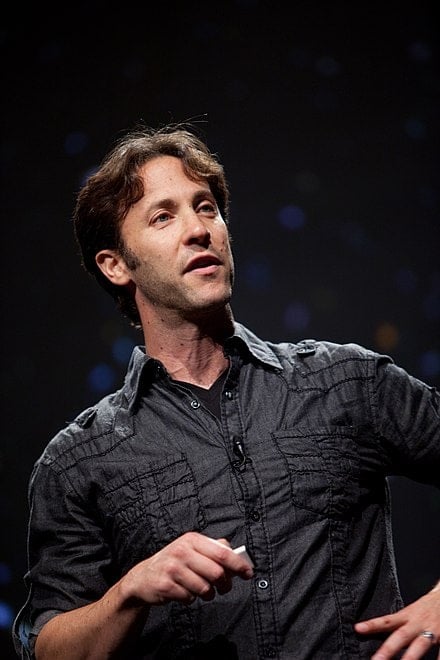
Our guest today is a neuroscientist at Stanford University. He’s author of “The Brain: The Story of You,” and host of the PBS TV series it’s based on it. Please welcome to the Philosophy Talk stage, David Eagleman.
Ken Taylor
So David, as a neuroscientist, there’s many aspects of the brain you could be studying. You used to think a lot about freedom and justice and the law in neuroscience. So what in particular got you interested in science and sense perception of the neuroscience era?
David Eagleman
I’ve always been fascinated by the fact that your brain is locked in silence and darkness inside your skull. And yet it’s constructing all of this. Everybody hear the sounds, all that stuff. And yet when you look inside the brain, it’s all just electrical spikes. That’s all we see there. So they got really interested in trying to understand how we create senses from that material.
Josh Landy
And what do you think about what we were arguing about earlier canon may, you know, he was, he was being all naive and gung ho about, you know, how great it’s gonna be, we’re gonna create these new ways of perceiving the world that was that’s trying to be sensible and skeptical suggest why is that? Is that really a new sense? What do you think is as an actual neural?
David Eagleman
Oh, yeah, yeah, we can build senses, because it’s all about just what the peripheral detectors are. So you pick up photons with your eyes, you pick up air compression waves with your ears, molecules with your nose, and you have these qualia, this internal experience going on there. And so I think it’s absolutely the case that we can build new peripheral detectors and plug them in.
Ken Taylor
So wait a minute. That means I wasn’t being gung-ho and naive.
David Eagleman
Right, quite right.
Josh Landy
Okay, but let’s talk about let’s talk about the quality because I think that’s really interesting. It’s, I mean, I love the I, you know, ignoring my earlier skepticism, I love the idea of all these new devices. What I’m curious about is, will they actually will the quality be different? And there’s something it’s like to smell something that’s different from what it’s like to taste something? Or what it’s like to see something? Yeah. So will it feel there’ll be a different experience?
Ken Taylor
Especially because all I’ve read about this so far, is mostly what we do is exploit new pathways for old information. It’s not like we give ourselves bread, I mean, the vibrations, the brain centers vibrate, yo. So it’s not like something new, but it takes light and turn it into a vibration. So why I believe that there gonna be new qualia?
David Eagleman
Well, I think qualia is just an informational issue, which is to say, the reason smell feels a different than sound and touch and vision that you would never confuse us. You’d never smell something. Oh, I just saw something great that. And so I think it has to do with the structure of the data coming in. And if you feed data in with a different kind of structure, the data is different than you’re going to have a different qualia.
Ken Taylor
Wait a minute, wait. So down. So if I use, okay, take some light translated into vibrations on the skin. Okay, so the light’s not going through my optic nerve and all that it’s, it’s going through this best, that’s your best, right? Yeah, yeah. And then the vibrate making vibrations is going to the brain. Are you telling me that the light caused vibrations and vibrations from the rumbling? Sound that impacts my body? Are they gonna be received differently from my brain? I mean, does the brain know what got the vibrations there? Does it care? What got them there?
David Eagleman
It does know, because it figures it out. So every all that your brain is trying to sense informational sources from the world, something that’s useful. So whether that’s, you know, sounds or sights or whatever it figures out. In the case of translating sight or sound, I have a suspicion that the quality will be the same as if you saw it or heard it. Where it gets interesting is when we feed in completely new kinds of information streams, whether that’s stock market or Twitter.
Ken Taylor
Tell them about your stock market thing.
David Eagleman
Oh, yeah, well, it’s easy. So we’ve built this vast with the vibratory motors, which can mention and yeah, we can feed in, for example, stock market data. So you’re feeling you know, 32 different stocks, and you can tell what’s going on.
Ken Taylor
And if you do this really, right, you don’t have to go to the NSF anymore.
David Eagleman
Oh, yeah. And be done writing grants. So. So it turns out when we’re feeding in something totally new like that, that’s where you have the chance of developing a new qualia. And I assume we’re going to talk more about that after the break.
Ken Taylor
We will. This is Philosophy Talk, coming to you for the Marsh Theatre in San Francisco. Our guest is neuroscientist David Eagleman.
Josh Landy
Philosopher Thomas Nagel famously asked what it’s like to be a bat. Are we now in a position to find out? Would you want to wear a vest that feeds echolocation data to your brain? What do you think it would be like to perceive the world in that way?
Ken Taylor
Perceptions, sensations and new information—along with questions from our sensational live audience, when Philosophy Talk continues.
Tiffany Austin
Get ready for a news sensation, a new sensation right now.
Josh Landy
Thanks to our musical guests, the Tiffany Austin Quartet. This is Philosophy Talk. I’m Josh Landy.
Ken Taylor
And I’m Ken Taylor. Our guest is neuroscientist David Eagleman, and we’re thinking about hacking the brain.
Josh Landy
Would you want to augment your natural born senses with newfangled technologically produced senses? What senses? Would you choose? Join the discussion by stepping up to the microphone in front of the stage.
Ken Taylor
So David, okay, you’ve actually I take it, I’ve experienced some of this novel perceiving of the world, yourself through your, through some of the technology that you and your team have created. So let’s, I mean, there’s a lot of philosophical and technical questions I have for you. But can you start by telling us what it’s like to have these new sensory experiences?
David Eagleman
Yeah, so we’ve done this in various ways. So just as an example, we can tell what’s going on in the world around you and put that on to the vest. So let’s say I’m blind, and you’re walking up, I feel that you’re on my left and Josh, on my right, let’s see walk behind me, I can feel exactly where you are. And it turns out that it is there’s zero learning curve with this. It’s just unbelievably easy to get it because it’s some sort of sense of space.
Josh Landy
And I assume I mean, if I understand correctly, the difference between somebody telling you there’s somebody on your left and somebody on your right, versus this experience is, what is the right thing? If it’s a it’s immediacy, that you know, without having to think about it?
David Eagleman
Exactly, right. It’s a direct perceptual experience without any need for translation.
Ken Taylor
But there’s no, you said, there’s no learning curve, I was looking at some, there’s some app, I forget what it’s called, that you can use into your browser or your cell phone. And it’s for blind people by the voice. Yeah, exactly. And I played with that last night. And they showed this video of I think, a blind person picking out objects on the basis of being acclimated. I mean, I couldn’t make any sense of what was going on. But for that thing, it seemed to, they seem to suggest I read some of the literature, that there is a kind of, kind of like training thing that you have to do like a neural net or something.
David Eagleman
Yeah, exactly. You have to train up on that, because that’s taking vision and turning it to sound. And you can’t just plug that directly in and have the brain understand. So people have to learn by interacting with the world and figuring out what’s out there. Exactly. What’s different about the sense of space is that that’s sort of a fundamental sense that we have coming into the world. And so it’s very easy to do that. And we’ve done various things—
Ken Taylor
Is that because all of our sensory modality, except maybe smell except I guess for dogs, though, but for humans, most of our sensory modality have a kind of spatial mapping?
David Eagleman
Exactly. So space is what we call meta modal media. It lives on top of vision and hearing and so on. Yeah, exactly. So one of the things I did with this actually, I’m a scientific advisor for the show “Westworld.” And so—
Ken Taylor
Oh, really? Oh my god.
Josh Landy
Isn’t there moment when people are wearing vests in?
David Eagleman
Yeah, that’s my vest. Yeah.
Ken Taylor
I want your job.
David Eagleman
We’ll talk after. So so we had, you know, for those of you know, the show the robots go bad and private military contractors to take care of this. Yeah. boiler and they’re wearing they’re wearing the vest. And, and in this case, the vest is telling them where the where the androids are, so they can feel in the dark, and when they’re on the other side of the wall, and so on where they are.
Ken Taylor
So let me ask you a question about space. You said it’s the perception of space. You said it’s multimodal? Because here’s one of the things I wonder about. It may seem like a naive question, but I wonder because you talked about new senses. And I think, Well, what exactly is a sense? How do I read something by philosopher friend of mine, it says, we’re wrong to count five senses. Lots of people say that, because they mean proprioception. But he means more than that. He means like, like 20 senses, I say, Well, what makes a sense, right? So I don’t know if there’s is there like formal answer, because then I want to know, what’s the what’s the difference between repurposing an old sense for new purpose and giving us a new sense?
David Eagleman
So okay, so there’s two separate questions there. So so one is Yeah, what do we count as a sense, essentially, any information source from the world, so whether that’s proprioception or vibration, or temperature, whatever, your any thing that you can get info from and act on it that we can count?
Ken Taylor
So is that duration versus like pressure? Is that a different sense?
David Eagleman
Different, yeah, exactly, right. And in fact, in your skin, it’s this incredible computational material, you’ve got a whole zoo of receptors in there for stretch, itch, pain, temperature, all kinds of things. So that’s how you can sort of straightforwardly define a sense, but your question then is about, can you repurpose a sense, right? Can you feed a different kind of information? And I certainly think so because, for example, with our vest, you’ve got you got 32 different motors on the torso. And what you’re picking up let’s say for deaf people learning language, is this the pattern of it across your whole torso and that’s something you’ve never had before. And that emerges as a different Kknd of qualia.
Josh Landy
I see. Okay. I mean, I totally buy that. And obviously there, I understand that there are cases of people with an impairment in one sense, gaining greater skills in another sense. But don’t we bump up at a certain point against limits in processing capacity? I mean, you know, isn’t that a zero sum game? Could you really add a sense without taking away real estate from another?
David Eagleman
Great, great question, the brain is extraordinarily good at sharing real estate in ways that we’d only we don’t totally understand how it’s so good if we know that it is. So you can plug in all kinds of new things, and the brain will just figure out how to share the territory. Now, does this mean we can create a sixth sense? Certainly seventh? Yes. Eighth, maybe. So I don’t know what the limit, we won’t ask me again, in five years, I’ll be able to have a better answer about what your limit is.
Ken Taylor
I think I read so people who are blind, so the visual cortex, right? People who are blind, the visual cortex doesn’t just lay there inactive, it starts helping process other bits of information that’s recruited, right. So it gets recruited, how the brain does that? That’s a really interesting question. You know, if I were a young man I starting over, I could either be a biologist or a neuroscientist or something, but and then do philosophy. But how is that right? The different parts of the brain get recurrent.
David Eagleman
The brain doesn’t let anything lie fallow. So it takes forever. In fact, what we now know is that it’s unbelievably rapid. So if I take you into the lab and blindfold you, within 90 minutes, we can see activity in your visual cortex from touch from sound from other things like that. starts ticking over rapidly.
Ken Taylor
Yeah, you’re listening to Philosophy Talk, we’re talking about hacking the brain and creating senses beyond the common five, in front of a live audience at the Marsh Theatre in San Francisco. And we’ve got some questions from that live audience. Welcome to philosophy Talk, sir, what’s your comment?
Richard
Thank you, my name is Richard. I’m from England by live in San Francisco. I can see how this would help people with severe disabilities. But we’re already suffering a chronic, dreadful problem in society because of our so called smart devices. People are not recognizing facial expressions, they’re not holding doors. I see people here today videoing you, while they’re actually watching the program, presumably, so they can go bore their friends later. Wouldn’t this just put the tin lid on it?
Ken Taylor
Good question. What do you think, David?
David Eagleman
Well, I happen to be a real cyber optimist. I don’t share your view. Yeah. I mean, just generally, just, I mean, look, take what kids I mean, we all grew up. You know, it was being stuck with our homeroom teacher. Now I run into 12 year olds all the time you say stuff really smart? I say how do you know that? They said, I saw on a TED Talk. They have access to the entirety of humankind’s knowledge at their fingertips all the time, I think the next generation we will see is going to be much smarter than we are. So I I’m actually quite a fan of where things are going technologically.
Ken Taylor
It’s because you believe in the singularity. They’re going to merge artificial and human.
David Eagleman
That’s a separate issue, which I’m happy to talk about. But no, I just I just think in terms of the educational opportunities that kids have available. It’s really remarkable.
Josh Landy
I mean, there’s certainly opportunities, but don’t you also see some negative consequences?
David Eagleman
Here’s what I think this show might not be the right time to talk about this. But but generally on par, I think that kids are going to be much better off than we are. And it’s not like we didn’t waste tons of time, we are going up doing really stupid stuff.
Ken Taylor
But yourself. But here’s the thing. So. But there, we ask everybody turn their cell phones off. But if you turn your cell phone on, there’s all kinds of informations this room is awash in information that you can’t detect with without unaided, right, it’s just a wash in it. And and if we never had these devices, we were this is a counterpoint. If we never had these devices, we would be we wouldn’t be blind, deaf and dumb. But we’d be we there was so much that we wouldn’t know. I mean, you couldn’t go to the doctor and get an x ray, or an MRI. And so we make these devices that in effect, extend our sensory apparatus.
David Eagleman
Yeah. And by the way, I don’t think I don’t think this puts that my device is put the lid on this. I think this is just the next device. Exactly.
Ken Taylor
Because wouldn’t it be good? What would be wrong? If evolution was given time, it would probably design us to pick up more of the information in the world, because how is less information better than more information?
David Eagleman
Quite right. I totally agree. And I think we’ve got the room to store it and build this in and this is what we’re good at. And so this is what the coming decade is going to show us, I think. So as you know, I’ve spun off a company called Neo sensory that’s building these devices. And I think we’re going to really get to see what it is when people are having a direct perceptual experience of other things. Just as one example I recently hooked up drone pilots. So they’re feeling the pitch, yaw, roll orientation and heading of their drone while they’re flying it. It is Like extending your skin up to the drone, it’s like you become one with the drone. And you can feel what’s going on.
Ken Taylor
So there’s an argument in Descartes’ Meditations, in Meditation 6 for why the mind and above all, he says the mind and the body are metaphysically distinct. But he says, I am joined to my body in an intimate way, I’m not in my attached to my body, like a pilot in a ship. And what he means by that is a pilot ship just reads the dials. It doesn’t have any kind of direct awareness of the body. But we have this kind of direct awareness through our sensation of pain and all this other stuff of our body. And basically, you’re telling me, if they cards right, then the world is our body can become our body, or a lot, lot more of the world can become as it were a part of it.
David Eagleman
Oh, exactly. And of course, we’re already used to it. And I drove up here in my truck, and when I’m in the driver’s seat, I feel like the vehicle is mine. And if I hit a bump with the right drivers tire, then it feels like it’s something I’d hit something cane to your body. Exactly. Of course, I can get on a bicycle, I get on skis, like, you know, and these all become extensions of the body.
Ken Taylor
So I can imagine—you write fiction.
David Eagleman
I do
Ken Taylor
And you study fiction.
Josh Landy
I do. I’m tied to the world.
Ken Taylor
Yeah. But I can imagine some poet poet someday, who’s had David’s sensory experience. You know, I think there’s a line in the in the Bible or something. I was blind. But now I see. Well, there’ll be all these senses of which we could say I lacked x, but now I have it. And there’ll be all this poetry, that cut comes for me.
David Eagleman
But here’s the interesting part. So. Okay, so So imagine a new color. Take a moment to imagine new color. Okay, okay. It’s totally impossible, right? You just can’t do it. Yeah. Okay. Imagine a new qualia. Imagine what have you like, not just if you had sense of smell and hearing and touch, but something else. And it’s just that you can’t do it. And so what I think is going to happen is when I wear the vest and take in drone data, and you get Twitter data, and you get stock, marketing, and so on, we won’t be able to communicate with each other what it actually feels like, oh, like, and we can try, we can try it, we can pretend to understand, but we won’t understand. In the same way, if you try to explain vision to a blind person, right? She can’t get it. She can pretend she has what you can’t.
Josh Landy
But that sounds like the kind of downside we were talking about earlier. Right. I mean, we had a great question about how they’re going to possibly be dancing. That I mean, sounds like you’re talking about increased mutual isolation, everyone’s gonna have their own sixth or seventh or 20th sense the question, we won’t be able to be, you know, harder for school.
Ken Taylor
We’re kind of already in that.
David Eagleman
That’s exactly right. Right. People have very different cultures, different childhoods, different capacities, they care about different stuff. If you really love swimming, and competitive swimming, and I love something else. I mean, like, our world is so different already.
Ken Taylor
Yeah. Let’s take some more questions from our live audience. Welcome to Philosophy Talk.
Esmeralda
Thank you. My name is Esmeralda and I’m from San Francisco. And is it not possible that the human body is an inanimate object that’s merely informed by consciousness? And the second part of my question is, Has any of you ever taken LSD?
Ken Taylor
I’m not gonna answer that on the radio. Do you have that second one? Don’t answer in the radio?
David Eagleman
I can answer because my answer is no. But I’m fascinated in general by what we learn from that stuff from the neuroscience point of view and my interest. Look, I mean, a lot of people say, look, I tapped into a cosmic XYZ, I think what it demonstrates is we know how binds receptors and what happens, it knocks the processing of the brain off by 3%, in some weird direction. And what it demonstrates to me is how fragile reality is and consciousness is, all you need is just a stick some chemical in there, and suddenly you’re talking to silver leprechauns, and whatever.
Josh Landy
But to bring it back to the question of these new senses, I mean, seems like the the point in common we’re talking about here is, to what extent is our sense of the world impoverished current? Great, right? Or to put it another way? To what extent would our sense of the world be enhanced and, and transformed? If we were wearing the vest? If we were, you know, all the other possible devices that might come in the future? Do you think it would just be Well, now I can now I know what my stocks are doing? Or would it be more like a transformation of the way in which we experience everything?
David Eagleman
Yeah, it really is. Transformation is the part I’m interested in just as one example, you know, we see a very, very narrow spectrum of the electromagnetic radiation. And we call that visible light, right? But so I built a wristband to be able to pick up on ultraviolet and infrared light and it’s quite extraordinary. Just as you know, the first night I was wearing it, I suddenly felt a lot of infrared it was in the dark. I didn’t know what was going on. I followed it. And it was an infrared camera with infrared LED lights, which is normally invisible.
Ken Taylor
Okay, let me ask you another question. Now, on the other side of this Like, okay, I’m gonna tinker with the human everything, possibly tinker with human societies, gender, with tinker, tinker with everything. But you know, evolution, which is slow and laborious and discards failures and moves on is not done. That is, so evolution has said, oh, yeah, this animal is gonna forage at night. So it needs it needs to be able to see in the infrared range those animals are gonna put, right. So other than just like we can do it. So let’s do it. I mean, is there? What’s the imperative to do that? I mean, again, we don’t we have X rays machine. So why do I need to have X ray vision? Right? I mean, they’re useful, but would it be would x ray vision be useful? But all these people want me to do have X ray vision? like, Ooh, you’re? So what’s other than the fact that we can?
David Eagleman
Okay, I got it. So let me ask you this. If, if you really knew about evolution, would you get rid of your car and your washing machine and all of the things?
Ken Taylor
Sometimes I think, yeah, because hey, the reason I think, yes, sometimes I don’t think it always the reason sometimes I think yeah, it’s because evolution gave human beings a trick. Don’t take the environment as given. Exactly. You’ve exploited blah, blah, blah. And that trick is really good. Except now that trick has global disastrous implications. This trick, though, because the Industrial Revolution, the global warming, all that stuff is a result of this trick.
David Eagleman
Okay. I know we’ve only got one minute left on this section. But the issue is that when you look at any new invention, whether that be take books and literature, someone could say exactly, they’re like, look, we shouldn’t make books, we shouldn’t have the printing press, because maybe somebody will write something bad or evil. Yes, exactly. And then and so maybe what we should do is not knock each other because evolution hadn’t given us books. And so we shouldn’t create—
Ken Taylor
I’m not endorsing that argument as a consideration. On the other side, you’re listening to Philosophy Talk. We’re hacking the brain and thinking about perception beyond the five senses with renowned neuroscientist, advisor to “Westworld,” and soon to be billionaire, David Eagleman.
Josh Landy
Would you want to add a bunch of new senses to your current repertoire? Are you happy with the senses that God or Darwin gave you? Will people in the future all have augmented senses?
Ken Taylor
We’re coming to you for the Marsh Theatre in San Francisco. We’ll take more questions from our very sensible live audience when Philosophy Talk continues.
Tiffany Austin
Trying to taste the difference between lemon and lime, pain and pleasure, and the church bells softly chime.
Josh Landy
Thanks again to our live musical guests, the Tiffany Austin Quartet—they are brilliant. I’m Josh Landy. And this is Philosophy Talk, the program that questions everything…
Ken Taylor
…except your intelligence. I’m Ken Taylor. We’re hacking the brain and thinking about the senses beyond the ordinary five. We’ve got questions from our audience. Welcome to Philosophy Talk.
Speaker 10
So my question is, have you hooked two people up to the same fester? Each have a vest so that we since we’re all in our own realities, we can start to experience other people’s realities to connect us?
David Eagleman
Yeah,it’s a great question. Yeah, that’s exactly one of the things that we’re working on now. Yeah. For example, if I can feel my wife’s pulse and galvanic skin response, and all sorts of things, will I will I understand exactly how she’s feeling and shimmy? So when I’m traveling, when I’m doing a radio show, and she’s at home, can I suddenly feel like oh, she’s she’s feeling stressed out, I should call and check what’s going on there. Somebody recently suggested to me that I should put this to the place of work where everyone feels everyone. I think that’s a terrible idea. Because I’m stressed out enough as it is. Yeah, exactly. And a lot of language and other things that we do at work is actually about deception. And so you know, when Bob gets up to give the PowerPoint presentation, he doesn’t want everyone to know exactly what his physiology is. But I think the one on one thing is very interesting. So that’s something we’re pursuing.
Ken Taylor
Right, there’s a lot of technology that threatens the human, right. But one could imagine an a new kind of equality demand, not just equality of income and equality of opportunity, but equality of opportunities for sensing and feeling the world. Right, that would be a new reality, right quality of experience.
David Eagleman
Yeah. I mean, I don’t really think that’s any different than the kind of books that are available to you or movies or anything like that. We all you know, some of us have access to watching Westworld on HBO and others can afford the $10 a month to watch it.
Josh Landy
Okay, right. So I want to take this anymore Pollyanna ish direction. Okay? Because remember what Holly was saying about, imagine the virtual reality expense of being a cow. And how terrifying that was? Do you think it might, there might be a time when we could deploy this kind of technology to get people to experience what homelessness is not as like, and that this could actually have beneficial social consequences?
David Eagleman
I don’t think so for many reasons. First of all, this we’re just feeding in sensation. And so in a sense, it’s no different than what you could do from reading a book about being homeless. So if you get either that way. The other thing is, so a better approach is something like VR, and some of our colleagues at Stanford are using VR to put people in that situation. The fact is, someone who already has a lot of empathy and cares about homelessness will go and do that VR experience and others who don’t have empathy and don’t care about that won’t so vicious circle. Yeah, exactly. So I don’t know, is that useful?
Ken Taylor
Welcome to Philosophy Talk.
Jodi
Hi, my name is Jodi. And this is a question that came up when you were talking about the vest and about spatial awareness. And I come from a dance background. And I spent many, many years growing and understanding spatial awareness through a lot of practice. And to give somebody the experience of spatial awareness verse training, and really grasping that with some depth, I see that happening a lot is just you’re giving people an experience, but the depth is missing with that connection. So I just like for you to talk a little bit about that. And what you see happening since we’re maybe not, we’re given the experience right away, but we’re not going to process with it so much.
David Eagleman
I don’t think the process part is the part that matters that much, if you can actually learn something better, because you have extra senses to be able to take it on, there’s no reason why you can’t actually be more expert in it. So for example, if you wore the vest and had a sense of exactly where everyone was moving around, and so on, you would just be better at what you’re doing. It’s it’s not a zero-sum tradeoff.
Ken Taylor
I’m wanna ask you, so I see another kind of question about the neural hardware. And, and how that constrains the possibility talked a little bit about this, but I want to focus on a little bit more, sometimes I think, okay, there are all these animals with all these cool senses that humans don’t share, I think, Wow, that’s amazing. I once thought, Well, why is it but that this goes back to the question, what differentiates one sense or another, I thought, well, they just have different kind of peripheral pathways that pick up different kinds of information. That’s part of it, but then their brain is evolved to do something with that information. And then I thought, well, maybe they have a special brain modules, you know, as it were. But then I said, well, the evolution doesn’t really reinvent it just repurposing old stuff. And I’m thinking, well, their brains probably work somewhat like ours in the sensory way. So if we could hook our brains up to that, I’m trying to figure out what’s the limit? Is it Yeah, pathways the limit? Or is it the computation of sensors, just getting the data in there?
David Eagleman
So my view on this is that the brain is a general purpose compute device, and whatever data it receives, it just figures out what to do with it and how to use it. And and all of our evidence so far, indicates that that is the case.
Ken Taylor
So if I could find new ways of get so then I was thinking, okay, so dogs apparently can smell was I don’t remember what the number is, but a lot more than us? Yes, I assume. I don’t know. I don’t really know this, but I never asked my dog. But I assume, since she delights in smelling things she explores the world by smelling, I assume that there are different quality of space, a lot richer quality of space for her than than four, I assume the same, right? So I’m thinking is our brain capable? We it’s not just that we don’t have the best is AI brain capable?
David Eagleman
More so. So look, we have a certain number of smell receptors, receptors in our inner nose, and the dog has a big giant set with many more types in there. And there’s no reason to think that if we had access to more peripheral detectors, that we wouldn’t have a much richer qualia. So that’s one of the projects we’re doing right now. We’re building an artificial molecular detector that feeds its data into for example, the vest. So imagine a drug agent not needing to have the dog with him because he can feel all the smells in the sense.
Ken Taylor
Wow, that’s amazing. So we can actually expand our qualitative awareness of the world radically just by exactly what I said. So this is why it’s not brain implant just tinkering with the peripheral sources of information.
David Eagleman
Oh, yes, it’s much easier to do it that way. Because the brain is locked inside the skull Mother Nature put this armored bunker planing around around the brain. It’s very hard to get in there, but you can all this is the way it is up there.
Ken Taylor
Welcome to Philosophy Talk, sir.
Sebastian
My name is Sebastian, I’m from San Francisco. It’s a great venue where philosophy meets science, shake hands and talk about it, especially with somebody that is involved with Westworld, which has a philosophy bent to it. Question is more from a process standpoint, as you go and explore these new things, from a philosophical standpoint, is there a morality to it? As in? You know, maybe I shouldn’t go in that direction. Do you ever encounter those type of, you know, questions for yourself?
David Eagleman
And if so what would it be one? Yeah, sure. I mean, I think one of the really important things in science is always make sure that we’re not moving ahead of our moral compass. So I think about that question a lot. In this case, I actually have not been able to generate a compelling reason, though, why there’s anything we’re doing that’s different than building, you know, a book or a television or other things where it’s just a matter of a new way of getting data in there. But it was, it would be like if I invented the audio book, and you said, Well, wait, what are the moral issues with audio? Well, you can write bad things in audio book, you write good that you know, so I don’t think it’s really any different.
Ken Taylor
Yeah. Welcome to Philosophy Talks, what’s your comment or question?
Speaker 2
I am Spencer and live in the East Bay. And what I’m interested in is focus if you want to be a cow, but you’re just adding that sensory ability to all of our other abilities, you’re not going to have the quality of being a cow, you’re going to be a cow on top of a person. And the question is, when you cut out the senses, it’s very primitive. You blindfold the person to cut out their sight. You put earplugs over them to cut out their ears, but yet you’re trying to be very sophisticated for adding senses. Is there any way other than an anesthetic to cut out the senses so we could get closer to the actual being of some more primitive or different kind of creature?
David Eagleman
Yeah, it’s a great question. I’ve written I’ve written fiction about this particular question, I think that you’re closer. So if you wanted to become a cow, you’d have to change, modify some senses, add other senses, you’d have to do some of both. To the degree that you could become a cow and really be a cow, you would forget what it is to be a human asking the question what it is to be a cow. If you actually got there, you would no longer remember what the original question.
Ken Taylor
That does not sound like fun.
David Eagleman
You might be stuck there is the problem.
Ken Taylor
David, this is this has been a sensation, and I’m gonna thank you so much for joining.
David Eagleman
Great, thanks so much.
Ken Taylor
Our guest has been David Eagleman. He’s a world renowned neuroscientist from Stanford University. He’s author of “The Brain: The Story of You.” And he’s also a host of the PBS TV series based on that book. So Josh, what do you what are you sensing? What is your sense of the future?
Josh Landy
I say, hook me up. Can I want all this stuff I want to location, I want to know what it’s like to be a bad guy. I mean, look, we should be cautious. We shouldn’t end up in a two tier society or even more of a two tier society. We should be careful. But but I you know, I think they’re incredible prospects for changing our world. I can’t wait to read the new poetry or smell the new poetry or whatever it is going to be.
Ken Taylor
No, I agree with you. I don’t see any downside. I mean, and the human being has been trying to enhance, we have been trying to enhance our ways of gathering information about the world. Since we were around. I mean, we have telescopes and microscopes, and, and, you know, television and radio, all that is like new sensation. I mean, it’s new. We use tools to do it. Right. But the fact that we could just add some tools to our body, and then and that our wonderful, highly plastic brain could go crazy and say, Oh, I know how to do that. Why don’t you Why don’t you put me in on that earlier? Well, well, it’s amazing. So I kind of agree with that. I was trying to press it to see what the downsides might be. But I don’t see any Yeah, me neither. Yeah, hook me up. This conversation continues that philosophers corner at our online community of fingers where our motto is Cogito Ergo Blogo, I think, therefore I blogged we’re sorry, descargue you can become a partner in that community by visiting our website, philosophytalk.org.
Josh Landy
And if you have a question that wasn’t addressed in today’s show, either here or if you’re listening on the radio, we love to hear from you. Email it to us at comments@philosophytalk.org and we may feature it on our blog. Now let’s hear from someone who always talks past all five senses: it’s Ian Shoales the Sixty-Second Philosopher.
Ian Shoales
Ian Shoales… As hopes for new technology get vaster by the minute, we turn some attention to the theoretical possibility of creating a new sense or senses, like pre-cognition, telepathy, telekinesis, or are those superpowers, I dunno. I read that echo-location and magneto-ception are considered new senses, though they seem like old senses in a new bag to me. This may be just more of the disruption game we have not yet grown tired of playing. Come on, there’s new life yet in the senses we have. True, we overshot the mark a few times. Quadraphonic sound, for instance. We only have two ears, so anything more than stereo is a waste of vibrations. Some even believe, and I am one of them, that pop music sounded the best when it was played mono on a car speaker on a hot August Sunday afternoon parked lakeside somewhere in Central Minnesota 1967. Three D is another thing. It failed when I was a kid. Put on special glasses at the movies and somebody would bap a paddle ball at your face, or shoot an arrow at you, and you’d go home with a slight headache. Works great now. But it doesn’t hold interest for me. I don’t go to movies for realism. I’m looking for swell outfits and fight scenes. Black and white is fine with me, silent works too. More dimensions do not always add to the experience. Sometimes a simple tickle works better than a slap in the face. By and large, movies were better when they were smaller. I liked Panavision as much as the next western fan. But remember Cinerama? Large boring movies with a screen so wide you got whiplash, you had to watch them in special domelike cathedrals. Now we either have just normal movies, which are getting to be pretty good again, or giant crappy 3D movies with robots from the future throwing trucks at your head. In the fifties they also tried to overload our senses by wiring the seats, or adding smell o vision to the mix. All to compete with television, which boxed up old movies in the privacy of our home. And now television is trying to compete with the computer, which can give us any thing we crave on a screen the size of a postage stamp or as big as your living room wall. Sensual entertainment innovations focus on the eye and ear portions of our sensing apparatus. Touch is not an entertainment option, unless we’re having sex or playing an instrument or making a sculpture. The epitome for smell evocation is perfume. The epitome for taste is a fine meal. And now we’re working on immersive artificial environments, Virtual Reality, that you walk around in, virtually, with dinosaurs and sex workers and rayguns and roller coasters that you turn off with a switch. But it’s all just variations and combinations of the same old senses. It seems to me if we do come up with a new sense, in order for it to catch on, it would have be something simple, like sight, sound, touch, flavor, smell, so we know what it is immediately. Flarming, let’s call it. We’ve discovered the sense of flarming. Once we know we have it, we’ll flarm for a while, until the novelty wears off. I mean after the age of three you don’t exercise touch by poking the couch to see if your finger works. You want things that reward the senses big time, that’s how we roll. So we’ll come up with Flarm o Rama, which lets you flarm much longer, with a measurable increase in flarmability. Old movies will be re-released, and colorized, with flarm added. Critics will be outraged. Audiences quickly bored as that novelty too wears off. Nostalgia will rear its ugly head. Remember when you could flarm the flarmorooney without all the bells and whistles? Just good old flarming. I dunno. I still think we haven’t used the full potential of the senses we have. Nothing can put you in a mood like a smell. Popcorn. Newly-mown grass. Grandma going to church. You can even smell a thunderstorm before it hits. If you’re in the back seat of a car on an August afternoon in Central Minnesota listening to the radio in 1967, say. You can smell the lake, sure. But something else. Before you see it coming across the lake, you can smell it in the air, like a cold new penny, a storm is coming. So start the car and get out before it hits. Once it hits, no amount of flarming will save you. I gotta go.
Ken Taylor
Philosophy Talk is a presentation of KALW Local Public Radio San Francisco, and the Trustees of Leland Stanford Junior University, copyright 2019.
Josh Landy
Our Executive Producers are David Demarest and Tina Pamintuan. Special thanks to Merle Kessler, Micah Cash, Conchita Perales, Lauren Burgat, and Rachel Cusing.
Ken Taylor
Thanks also to our musical guests – Matt Clark on piano, David Ewell on bass, Sly Randolph on drums, and Tiffany Austin on vocals.
Josh Landy
The Senior Producer of Philosophy Talk is Devon Strolovitch. Laura Maguire is our Director of Research. Our Marketing Director is Cindy Prince Baum. Dan Brandon is the Technical Director.
Ken Taylor
Support for Philosophy Talk comes from Stanford University, and the Partners at our online Community of Thinkers.
Josh Landy
The views expressed or mis-expressed on this program do not necessarily represent the opinions of Stanford University or our other funders…
Ken Taylor
…not even when they’re true and reasonable.
Josh Landy
The conversation continues on our website — philosophy talk dot O-R-G, where you too can become a Partner in our Community of Thinkers. I’m Josh Landy.
Ken Taylor
And I’m Ken taylor. Thank you for listening.
Josh Landy
And thank you for thinking.
Guest
Related Blogs
-
April 11, 2019
Related Resources
Ananthaswamy, Anil (2016). The Man Who Wasn’t There Tales from the Edge of the Self.
Eagleman, David (2017). The Brain: The Story of You.
Kristin Neidlinger’s mood sweater
Platoni, Kara (2015). We Have the Technology: How Biohackers, Foodies, Physicians, and Scientists Are Transforming Human Perception, One Sense at a Time.
Get Philosophy Talk
