Foreign Aid – or Injury?
July 18, 2021
First Aired: December 16, 2018
Listen


Many of us might think that developed nations should lead the effort to end global poverty. But decades of foreign aid—from governments and non-governmental organizations—have failed to produce sustainable growth in the developing world. How can we empower local actors to become self-sufficient rather than dependent on foreign aid? Is there a way to help those in the developing world without inadvertently giving more power to corrupt dictators? Do developed nations have an obligation to fight global poverty the right way? Debra and Ken enlist the aid of Dartmouth economist John Welborn.
- Development
- |
- Economics
- |
- Innovation
- |
- International
- |
- Military
- |
- Necessity
- |
- Objectivity
- |
- Politics
Ken Taylor
Do we have a duty to help developing nations escape poverty?
Debra Satz
Doesn’t foreign aid do more harm than good?
Ken Taylor
Well, is there a better way to end poverty around the world?
Debra Satz
Welcome to Philosophy Talk, the program that questions everything…
Ken Taylor
…except your intelligence. I’m Ken Taylor.
Debra Satz
And I’m Debra Satz, and we’re here in the studios of KALW, in San Francisco.
Ken Taylor
Continuing conversations that begin at Philosophers Corner on the Stanford campus, where I teach philosophy and where Debra has recently become Stanford’s Dean of Humanities and Sciences. Congratulations on your promotion, Debra.
Debra Satz
Thank you. So today, we’re going to be thinking about the ethics of foreign aid.
Ken Taylor
Well, you know, I really don’t like that term foreign aid. Because, you know, it makes it sound like we’re given freeloading countries undeserved handouts are something sort of like the international version of welfare payments. But you know, it’s not a matter of charity. It’s a matter of justice, we owe it to developing countries to help them escape poverty.
Debra Satz
Why do you say that?
Ken Taylor
Well, because just look at what we’ve done to the world debris, we’ve just boiled the planet, we’ve stolen natural resources, like oil and gas, right out from under the noses of many foreign nations, we propped up corrupt oppressive regimes funded dictators and warlords around the globe. And why did we do that? Not at all for our own economic gain.
Debra Satz
Wait, hold on a second. Surely you can place all the blame for the world’s ills on the United States?
Ken Taylor
No, I actually I don’t you’re right there. Well, there’s the UK. They were at it long before we were in France and even little Belgium and look, all the world’s colonial powers are complicit do and you know, what? We all collectively owe the developing world foreign aid, as people call it because of what we’ve done to this.
Debra Satz
So you see foreign aid as a matter of compensatory justice, Ken? That’s absurd.
Ken Taylor
No, no. Why? Why? Because the dominant powers, you know, the ones that have usurped all the world’s wealth, will never own up to their crimes is that it?
Debra Satz
First of all, your view of who owes foreign aid to whom is inaccurate. Not all of today’s rich countries were colonized.
Ken Taylor
But the colonizers among the rich countries should pay the lion’s share of the burden. You can’t deny that.
Debra Satz
Why shouldn’t any country with more than it needs provide aid to people in desperate circumstances?
Ken Taylor
If they’re not complicit in all this poverty, then why should they have to pay?
Debra Satz
Because there’s a duty to rescue?. Because we have humanitarian obligations? And besides, can you’re just overestimating the responsibility of the rich countries for poverty?
Ken Taylor
Oh, it sounds like you want to deny the history of colonialism and imperialism.
Debra Satz
No, I’m not denying the history of colonialism and imperialism. But I’m also not assuming that colonialism and imperialism are responsible for poverty everywhere. I mean, you’re just assuming that because it fits your obsession with the ills of the developed world. But you know, we don’t know, what causes poverty around the world. What if a country is poor? Because of their own mistakes or mismanagement?
Ken Taylor
Look, I’m not willing to let the Imperial colonial powers off the hook, but I’ll play along. So what if they are? What if the country’s like that so what?
Debra Satz
Look, it follows from your view, that we don’t have an obligation to help countries that have made mistakes? And that’s absurd.
Ken Taylor
Wait a minute, wait a minute, you calling my view absurd? You’re the one who was implying that every country with a surplus should give it to countries indeed. Now, I think a lot of people find that absurd.
Debra Satz
Look, if you think simple humanitarianism is too demanding. Well, here’s an alternative. Let’s give aid on the basis of enlightened self interest. It’s both in our economic interest to alleviate poverty around the globe, and it’s a matter of national security.
Ken Taylor
That’s really your answer? Enlightened self-interest?
Debra Satz
Sure, where they’re places with no opportunities with economic insecurity, war, instability, hunger, hopelessness, that’s a natural breeding ground for terrorism. So one of the best ways to tackle global terrorism and improve our security is to lift people out of poverty.
Ken Taylor
And look, look at the consequences of that. You just criticized me in my obsession with imperialism for being indifferent to some poor countries. What about countries that it’s not in your our enlightened self interest to as you can imagine such countries? Do we just ignore their plight, then?
Debra Satz
Look, maybe we’ve hit an impasse here. Humanitarian Aid falls on everyone, but it might not lead to development anyway. And neither enlightened self interest nor compensatory justice seem to be doing demanding enough.
Ken Taylor
Well, I agree with you here, we have reached an impasse. And to help us understand the sources of this impasse, we sent our Roving Philosophical Reporter, Liza Veale, to examine the shifting meanings and motives of foreign aid over time. She files this report.
Liza Veale
Starting from the top: foreign aid begins with colonialism. Colonists put money into their colonies for one simple reason.
Rosalind Eyben
It was their countries, don’t forget.
Liza Veale
Rosalind Eyben is from the University of Sussex. She’s worked in international development policy and practice around the world.
Rosalind Eyben
They were spending money on countries that they owned.
Liza Veale
Simple. So fast-forward to when colonized countries start gaining their independence. Many of them demand redistribution of global resources as retribution for their exploitation. To them foreign aid
Rosalind Eyben
was a right, not a gift.
Liza Veale
This is the Cold War. So the Soviet bloc and the Western nations are each trying to get all the developing countries on their side.
Speaker 5
our hand or friendship is stretched out to all one friendship does not come in the way of another.
Liza Veale
This led to a boom in development with donor countries trying to buy support.
Rosalind Eyben
The 1960s was called officially by the United Nations “The Development Decade.”
Liza Veale
Eyben remembers when the first major highway was built from the coast to the capital in Sudan.
Rosalind Eyben
As you drove along this lovely new tarmac road, people said, “Oh now we on the Yugoslav section. Oh, now we’re on the Italian bit. Aha, now it’s the Chinese.” And so if you were clever, you got as much money in support as possible from every country that was prepared to fund it.
Liza Veale
Aid during this time is almost by definition infrastructure and spending projects designed to stimulate the economy. The idea was get more money flowing, open up global markets, and everyone will be better off.
Rosalind Eyben
But what people were noticing is that trickle-down wasn’t working, and that therefore aid should switch specifically to funding programs that targeted poor people.
Liza Veale
So, 1970s—new era. Meet the needs of the neediest: provide food, shelter, medicine, water. And this isn’t politically motivated economic development. It’s thinking about not just the potential foreign business partner, but his wife and child. The UN officially calls this the International Women’s decade.
Speaker 7
We women will no longer tolerate paternalism. It deprives us of our selfhood.
Liza Veale
Some donor countries try to act out of
Rosalind Eyben
a moral commitment, a sense of solidarity with poorer countries—a belief that global inequity requires redistribution of resources.
Liza Veale
But then comes the 80s. There’s a massive global recession, developing countries go into serious debt with donor countries, and everyone gets stingy with aid money.
Ronald Reagan
We cannot continue any longer our wasteful ways at the expense of the workers of this land.
Liza Veale
Instead, donors make a new deal: they say we will relieve your debt if you impose a new austerity budget—only been the bare essentials, that is, only fund the things we say you should.
Rosalind Eyben
Now move to the 1990s when the Cold War came to an end at the start. And at that moment, there was only one player in town—it was the West.
Liza Veale
And the West is now on a mission to help strengthen democracies in developing countries, which even when you mean well, political engineering is a dicey prospect. Pause for an example. When Eyben ran the British Aid Office in Bolivia in the 90s, she discovered that many poor people in Bolivia didn’t have ID cards and couldn’t vote, particularly indigenous people who spoke languages other than Spanish. So she wanted to fund a campaign to get everyone ID cards. But the Bolivian government said that’s not our program. That’s not our priority.
Rosalind Eyben
I mean, the government was right. Foreign aid shouldn’t come in and throw their weight around. On the other hand, the logic is that you could fund people to help them get a vote, and then they might vote for a more equitable, socially adjust government policies.
Liza Veale
Which is actually what happened in the end, Evo Morales, an indigenous man, got elected in 2005, in part because of greater access to the vote. But clearly on the whole, Rosalyn Eyben agrees that foreign aid has a checkered success record at best. And today, the West is not the only player in town. Countries like Brazil, China, India, Indonesia, Turkey, have all become donor countries. And according to Eyben
Rosalind Eyben
They realized that many of the governments they were talking to wanted to go back to the good old infrastructure projects. And so we got back to supporting infrastructure for economic growth without worrying too much about the equity outcome of that.
Liza Veale
Why do governments of developing countries prefer economic growth to social spending? What government doesn’t? For Philosophy Talk, I’m Liza Veale.
Ken Taylor
Thanks for that fascinating tour of the history of foreign aid, from colonial times down to the present, Liza. I’m Ken Taylor, with me is my Stanford colleague Debra Satz and today, we’re thinking about foreign aid or foreign injury.
Debra Satz
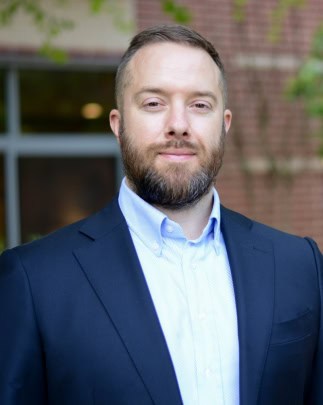
We’re joined now by John Wellborn, who teaches economics at Dartmouth College, and is the author of a forthcoming piece on the role of blockchain in developing markets. Welcome to Philosophy Talk, John.
John Welborn
Thank you for having me.
Ken Taylor
So John, as an economist, all kinds of things that economists study, what got you interested in foreign aid specifically?
John Welborn
I actually became interested in foreign aid as Chinese a student in China years ago, I was an undergraduate living in Beijing. And I double majored in economics and Chinese and I became fascinated. I was in China in 1999, which was the 10 year anniversary of the Tiananmen event, and looking at how China was emerging from this era of extreme poverty into one of tremendous economic growth. And my first job out of college is at a think tank in Washington, DC, where I did nothing but study foreign aid for a full year before went off to PhD.
Debra Satz
That’s a great story. So John, earlier, Ken and I were debating whether and why there might be an obligation to give foreign aid of some kind to developing countries and to places with lots of poor people. So what’s your view? Do you think we have a duty to give aid?
John Welborn
I think that are first, I think that we should approach the issue of aid like a doctor. And doctors motto is do no harm. And similarly with aid, our guiding principle should be do no harm. And while we can all talk about our our moral obligation to help those in need, the the tragedy of aid is that there are all kinds of unintended consequences that come along with writing checks and giving loans that have really left the developing world worse off than before the aid boom began in the 60s and 70s.
Ken Taylor
So the left this and me, okay, I’m I’m many things some days the left is some days it’s centrist. Some days, I think, the heck with it all. But part of me says to that, that sounds a little bit like something I said in the beginning, you know, people used to say welfare payments, make the poor worse off, right? Because it robs them of dignity and self respect, and all that sort of stuff. That sounds kind of I mean, I hear a little bit of that, that somehow by giving them assistance that is there, do we do something bad to them? How could that be?
John Welborn
Well, William Easterly at NYU has done a great amount of research on this one things he shows that in from 1970 to 2000, a trillion dollars were transferred from the developed world, the developing world. But after that process occurred, GDP per capita was lower in 2010, it was in 1970. Not only that, the largest recipients of aid are often the most corrupt countries, the great tragedy of aid is that funds are fungible, what that means is every dollar that you loan or you grant to recipient country is $1, that a recipient government does not have to is not accountable for to its own voters. And that goes in and is then used in Monument building and kickbacks. And when we I heard you both talking about dictators, and corruption in the developing world, all of those dictators were lavish recipients of these aid funds.
Debra Satz
So you’ve given us a kind of aggregate in the aggregate, right? We don’t see aid working, but obviously it works in some places. I mean, there has been development, there have been governments who have used aid responsibly and built infrastructure. Right. You know, I mean, a doctor who was saw a sick patient and did nothing would also not be, you know, performing well, in I agree with you. We don’t want to do harm. But on the other hand, doing nothing is also in some circumstances, not a satisfactory.
Ken Taylor
Why don’t you respond to that briefly, John, and then we have to take a break.
John Welborn
Right? Well, I just say they’re all different kinds of aid the and giving money is only one form. There’s also something called targeted aid, which specifically addresses health crises, the AIDS crisis at malaria epidemics, and those programs have a lot more success than just writing a check or making a loan.
Ken Taylor
Yes, you’re listening to Philosophy Talk. Today, we’re thinking about foreign aid or injury with John Welborne. from Dartmouth College.
Debra Satz
What’s the best way to alleviate global poverty? Should our government been giving development aid to foreign countries? And if so, what kind of age should it be giving? Or should we do something else?
Ken Taylor
Global poverty, foreign aid, and economic development—plus your calls and emails when Philosophy Talk continues.
USA For Africa
There’s a choice we’re making, we’re saving our own lives. It’s true we make a better day, just you and me.
Ken Taylor
is helping to alleviate poverty in the developing world like saving our own lives, I’m Ken Taylor. This is Philosophy Talk, the program that questions everything…
Debra Satz
…except your intelligence. I’m Debra Satz and today’s topic is foreign aid. Our guest is John Welborn from Dartmouth College.
Ken Taylor
So John, I get that you, you seem not to think that foreign aid is like the the main or even a significant answer to the problem of global poverty. But I want you, I assume you have lots of different objections. But I want you to encapsulate for me, your main problem about foreign aid your what’s your main hesitation about foreign aid?
John Welborn
Sure, the main problem of foreign aid is that it tends to fuel it most development aid, what they call it official development assistance, which is about $150 billion a year globally, 50 billion of that is from the US tends to go directly to governments in these recipient countries. And then it feeds bureaucracies it feeds, as I call it, monument building. And it feeds large infrastructure projects that don’t have any necessarily organic need for and what it completely misses is the the real elements needed for growth are good institutions. Economic Freedom, rule of law, property rights, an independent judiciary. And if you look at the data, so many developing poor developing countries in the world are some of the least free places in the world to live and be. It’s very hard to start a business. They’re tremendously high tariffs free high regulations. And that’s the process by which an economy grows.
Debra Satz
So what kind of aid would you give them? Or how would you target a in a better way?
John Welborn
Well, that’s a wonderful question. I would say, you know, China provides an interesting model for this, because it used to be so much of the aid debate has focused on whether or not we should be giving loans, or we should be focusing on, you know, colonialism or these other things. But China lifted hundreds of millions of people out of poverty in the 1980s and 90s, simply by ending economic planning. So fundamental flaw of aid is that it’s predicated on the idea that we can plan our way out of poverty.
Debra Satz
China’s a great example. And it’s a kind of an example that you can draw lots of different lessons from, but one of the things about, about China is that it doesn’t conform to just the standard program, because for example, it doesn’t have, you know, rule of law, democratic institutions of free press. As you know, you were saying that here are these other countries, and they don’t have that. And that’s part of the problem. Of course, China doesn’t have that. And yet, as you’ve just alluded to, it’s lifted, you know, billion people out of poverty.
John Welborn
Right. Well, that’s and that’s a wonderful point. And there’s actually a fantastic book about that, that I’m by Professor Jung went on at University of Michigan. But what China does have and what did what dung shopping, recognize in the 80s? Is that for China to grow, needed to end economic planning, and needed to open itself up to trade with the West. And what what developing countries need what poverty countries need is trade, not a. China lowered its trade barriers. And it’s also and this is another point that is worth making. China’s tremendously competitive. It’s not like the Soviet Union, the Maoist model is very different from the Stalinist model. China has 22 provinces competing with each other, all for Western investment. And that has really fueled that growth.
Ken Taylor
Look, I I’m going to grant you that China is in in many ways a success story. I think that’s a really complicated issue. Because I, I we saw, I think people thought that the 20th century had settled, whether sort of top down, you know, authoritarian societies, would find the optimal solution to social problems are the democracies wood and all that stuff, and market economies. And I think China shows us that the jury is still out on what’s the sort of optimal system is, I think that’s a complicated question, but I want to go back to something. Sure. Okay. A lot of these places have weak governance of some kinda rather not democratic institutions, all that sort of stuff. But that’s like saying to a patient, I’m going back to the doctor analogy who comes into the emergency room. Well, look, you got to improve your diet, you got to start exercising more, you got to get some sleep. But the patients on the on the in the emergency room right here right now, aren’t some of these countries like the equivalent of a patient who walks into the emergency room? And sure, we got to do all these long term fixes, but we can’t just say, I’m sending you away.
John Welborn
Well, that’s a great point. And that would go back to what I was saying earlier, how there are different kinds of assistance you can provide. Targeted aid, which is the popular new program focuses specifically on addressing health crises. For example, Bill Gates, the Gates Foundation, is focused on really bounties for new technologies that will help the developing world I think he’s focused now on a toilet system that’s sanitary and easy to implement. PEPFAR, one of the George W. Bush President George W. Bush is very proud of the program, PEPFAR, which focused on AIDS treatment and remediation in African countries much tremendously successful.
Debra Satz
Let me push you a little on this. I’m myself pretty sympathetic to the idea of sometimes giving inkind aid as opposed to cash aid. But one objection to inkind aid, like bed nets or toilets is that it’s paternalistic, that you’re deciding how the aid ought to be best deployed, rather than letting themselves people themselves figure out how the age should be deployed. It’s like the kinds of objections you hear to food stamps. So I’m just wondering, you know, you’re an economist, economists tend not to like, you know, in kind distribution. So how do you think about that?
John Welborn
Well, I would have two things to say that first, I completely agree. And the difficulty, and this is a fundamental criticism of aid is it’s built upon this hubris that we, the West that predominantly white West know what’s better for the benighted parts of the world. And that’s something we’ll immediately wrote about in his latest book, very eloquently about how all these encode transfer in mosquito nets are a great example of this. We have we have distributed mosquito nets throughout Sub Saharan Africa to develop to address malaria. But most of those mosquito nets get used for fishing, and end up in the oceans polluting the oceans with plastics. The other fundamental flaw about you know, this, this hubris part is that in going back to the medical analogy, I’m sorry, I should take one step back, USA ID, which is the primary us Development Agency was built to transfer food aid to developing countries and USA ID sacks of grain are known throughout Sub Saharan Africa, particularly Somalia. But Michael Martin wrote a wonderful book in the 80s very tragic book, who was a USA ID. Young man, you’re sad about how those sacks of grain fueled the Somalian Civil War, right. Basically, all in kind transfers are fungible. And what would happen is that—
Debra Satz
Less fungible than cash.
Ken Taylor
But I want to emphasize something that you said, because I was struck when digging into this, as struck me as a more more powerful thoughts. And I realize that there’s a lot of people in the West who think that they can kind of rebuild these societies from their, from their academic political purchase. And there’s, and it’s a kind of flipside of the old imperialism, like we are the technocratic elite, we’re going to tell the societies what they need to do, how they need to do it. And that kind of short circuits, that kind of political social development on the ground. I had never thought that. But there seems to be something something to that thought, I don’t know how much but something.
John Welborn
Ken, that is a very—you are very wise, Ken. That’s a great point in Washington, we call them the development set. And the truth is, and this is a rather cynical point of view, the biggest proponents of aids are those in the West, who, who directly benefit from its continued deployment in developing world and driving around and White ran Range Rovers throughout Africa for a couple years. Sounds like a lot of fun sitting in an office in Washington, an awful lot of economist and I’m one of them looking for jobs, and development agencies hire them. And what do they do they sit in offices thinking about planning their way out of an economu.
Debra Satz
So isn’t isn’t one lesson to learn from this, that there isn’t one our priori model for development that we have to be pragmatic, you know, in. So you know, if I think about China, I don’t think that China is just a free market model. It’s a pragmatic model, where the state played some role in directing the market, but it also unleashed, you know, much more competition.
John Welborn
And that’s a wonderful, absolutely there. But in the end that the key here is no one model fits every country experimentation. What China did so well. And this is part of the interesting backstory to Xi Jinping is his father, I believe was one of the key people who founded the city of Shenzhen who said, we’re going to build this charter city here, Shenzhen, which is going to play by the West’s rules, and we’re not going to interfere in it. And there were these charter cities built in China that became really factories for all of your your iPhones are built in Schengen, and Paul Romer, who recently won the Nobel Prize in Economics. This is an idea that he is advocating strongly for the developing world of charter cities, places where laboratories of experimentation with different things can be tried.
Debra Satz
I think Deng famously said, “What mattered was not the color of the cat but whether the cat catches the mice.”
Ken Taylor
You’re listening to Philosophy Talk, we’re talking about foreign aid or injury. We’d love to have you join this conversation and give us some aid. And Lisa from San Francisco is on the line. Welcome to Philosophy Talk. Lisa, what’s your comment or question?
Lisa
Yeah, well, my comments. I’m a Chilean American. And so Chile had a very, very important lesson for a lot of people in Latin America, because your guest mentioned USAID has been involved in destabilizing governments that have tried to gain independence from the West, and from dictatorships that have been placed there by the US government, by the CIA. And what he calls economic freedom really means impoverishment for the majority of the of the people of these new developing countries like Nicaragua, for example. And, in reality, many of these governments have been hit by the so called aid that they provide has had blackmail type coercion to very severe austerity policies. What comes to mind is the Confessions of an economic hitman about how the aid and how the credit system has been set up by these major economic powers of the world, to really continue to subjugate the rest of the majority of the poor people in the world.
Ken Taylor
Lisa, that’s a that’s a mouthful. That’s a lot. I’m gonna give a give John a chance to respond. John, what do you want to respond?
John Welborn
Lisa, Iactually agree with with 98% of what you said, I’ve read that excellent book Confessions of an economic hitman, everybody should read that book. And it is simply a fact a tragedy that no matter what our intentions are, as voters, eight is a tool of the political process, and it will always be that way. You John Bolton recently gave a speech at the Hoover Institution saying that developing countries have to choose between the US and China. They can either be they can either receive loans from the World Bank or the US or USA ID or can they receive them from China, but they can’t be both?
Ken Taylor
That goes back to one of the justifications Debra and I ran through these possible justifications, right? Compensatory justice, duty to rescue countries, nations are driven by what they perceive as their national interests. So it’s pretty hard to get a complicated national elite like we have in the United States, they think, well, we’re just doing this for humanitarian reasons. We’re just doing this for compensatory justice, reason, and wanted about a night and self interest. It’s a complicated stew of things, wouldn’t you agree?
John Welborn
Indeed, and in fact, the top, the top recipients of us development assistance are really political allies, Pakistan, Israel, Egypt, other countries in Middle East are that’s really how the decision is made. I should add one thing, though, even those sums are large that we give you those countries. But it doesn’t take much to undermine the natural process of a country evolving. So even though an aid to a specific recipient country may seem small, the problem a fundamental problem with aid, is it the government receiving that those funds in the form of loans, that’s there now the partner of the donor country, they’re not the partner of voters in that country. They’re not responsible to voters. And this is what Angus Deaton, who won the Nobel Prize 2014 wrote about so eloquently, is that the the fundamental problem with aid Is it is it messes with that natural democratic process, that process of discovery interferes between the relationship between—
Debra Satz
Ofcourse in some countries, we don’t have democracy. So you know, it’s so we always have to think about, you know, what can we do in the context of non democratic societies where the people don’t have a voice in the direction of their country?
Ken Taylor
So we got one more caller onthe line before the break. Rahman from Menlo Park. Welcome to Philosophy Talk, Rahman.
Rahman
Yeah, I don’t necessarily well phrase, but I’m just wondering if it would be more helpful, you know, the aid would be better targeted, if there was, if people in the countries that are providing the ad would have more fun interaction with the people that are that are in need of theories. In other words, more, more information must be the people who asked for money, just say we need this money, but you don’t really know who you’re giving it to. It’s for.
Ken Taylor
Yeah, good question. Rahman. What do you think of that, John?
John Welborn
Great question. And the difficulty is that, you know, in economics, you can have two systems, you can have a price system, we can have a non price system, which is a bureaucracy, and to distribute aid, you need a bureaucracy. And the problem is you don’t have prices, giving you information about scarcity, and value and in the recipient part of the world. You’re absolutely right. That would be a lot easier if the donors had more connect with the folks on the ground. And, you know, World Bank would argue, oh, we do have people in those countries providing information, but it’s very difficult. Having this chain of command through this complex bureaucracy, there’s almost no solution to that.
Debra Satz
So let me let me push back here for a second because, you know, it does seem to me that China is up ending a lot of our conventional wisdom about growth. Because as I say, when you look closely at China, you see a vibrant, amazing machine of development tied to a very large, bureaucratic authoritarian society. And you know that that’s a you could take that as a kind of experiment. And it’s an experiment that at least I’m not saying that growth is the only thing we should care about, but on like, what produces growth, it’s showing us a different model.
Ken Taylor
I think I’m just going to agree with Debra, John, and I’m going to ask you to hold your breath if you got a big thought. Hold it. If you got a brief thought, let us hear it.
John Welborn
I have a big thought. So let’s hold.
Ken Taylor
Okay, so this is a big, big question. You’re listening to Philosophy Talk. We’re thinking about foreign aid with John Welborne. from Dartmouth College.
Debra Satz
Should foreign aid be more about more than transferring cash? What about eliminating corruption and strengthening the rule of law?
Ken Taylor
Combating poverty around the world—when Philosophy Talk continues.
Band Aid
Do they know it’s Christmastime at all?
Ken Taylor
Do developing nations have a duty to feed the world. I’m Ken Taylor and this is Philosophy Talk, the program that questions everything…
Debra Satz
…except your intelligence. I’m Debra Satz and our guest is John Welburn, and we’re talking about foreign aid.
Ken Taylor
So John, I want to give you a chance to give us your big thoughts on China, Deborah said, and I think she’s right. China is like threatening to up in everything we thought we learned about economy and development and democracy and all that stuff. In the 20th century, our colleague Fukuyama wrote this book, The End of History. But obviously, history didn’t end.
John Welborn
Well, my favorite Fukuyama book is actually the Book Trust, if you’ve read that, yeah, she’s all about how the key to success in an economies is parties trusting each other. And the extent that you can engender trust, you will have prosperity. The China lesson is hard for us to accept in the West, but it’s really this is that democracy is not a precondition for growth, for poverty reduction. You don’t have to have democracy, you have to have political freedom for people to get better off. And in fact, one of the great, I think, missteps of foreign aid in developing world is by putting democracy first and then expecting growth to follow. And the truth is that in the Chinese process, local governments and provincial governments have competed for these these investment with the West that has what has disciplined them not to be too corrupt, and to sort of function in a mode where they’re promoting prosperity. But China has lifted hundreds of millions of people out of poverty merely by embracing market forces by ending economic planning. Many of you know about the famines and China 1950s and 1960s, the Great Leap Forward, those were all terrible tragedies of economic planning and through the capricious hand of Maoism by ending that in 1978, when done took power, China decided, listen, we’re not the party is not going to surrender control, we’re going to remain an autocracy with a single party, but we are going to embrace market forces, we’re gonna embrace a price system, we’re not going to have political freedom or democracy, but we are going to make it our goal we recognize the fact that—
Debra Satz
But on the other hand, you know, China did protect state enterprises it, you know, tried to correct you know, it has corrected market failures. It’s tried to help infant industries learn, you know, how to manage better. So it’s not just a story of free markets. It’s a story of, you know, as I said, kind of a combined, you know, beyond economics 101, some free markets, some state, you know, guidance and regulation, and no freedom, no free press.
Ken Taylor
Look, look, that’s a depressing. That’s a depressing tale. I know, you’re trying to say, well, there’s a it’s not just free markets, and the apostles of free markets, you know, can’t just turn to China, but that’s what the press because look, the total package of mark a mixed economy plus political liberalism, democratic accountability. I mean, I want to believe that that’s a humanly superior total package. And you’re telling me well, you know, how much is that freedom thing really worth when, when you can’t? I mean, capitalism apparently has failed to spread the wealth, right? It’s failed to eliminate rapid inequality. Democracy all over the world is under some kind of pressure because of the rise of populist and all this sort of stuff. You guys are telling me that? Gosh, I may I should not be So sanguine about the triumph of Demick. The combination of mixed economies, I’m not going to say pure market economies, but some mixed economies plus political liberalism. I shouldn’t be so sanguine about that. Is that what you’re telling me?
John Welborn
I’m not sure that’s necessarily the case. I think that we have to be honest about where China is today. Yes, tremendous wealth has been created. You know, wealth is something that that is created. It’s not merely transferred around in this zero sum game. But there is tremendous inequality in China, the eastern coastal cities are wealthy. But if you go inland, you’ll have to find you’ll encounter grinding poverty, virtually no quality public services, lots of civil unrest, the further west you go, really. And so it is not a paragon of necessarily how to run a country.
Debra Satz
No, no, but but the but the dramatic decrease in you know, absolute poverty around the world, you you can’t tell that story without telling the story of China. Yeah, you know, that that’s the you know, it’s a both an optimistic story in one way, which is, you know, billion people being lifted out of, you know, absolute poverty. And at the same time, there is a cautionary note of it, which is, you get that growth with authoritarian government.
John Welborn
And I should add a point there that thinks worth mentioning that, that the party recognized early on that to get rich, as glorious, as they say, and to be a member of the of the Communist Party is to be basically have the keys to a very exclusive group of very rich people. And the party has gotten tremendously rich. And so the party has recognized that, that this is their path to maintain power and Xi Jinping, China’s becoming much less politically free. Now, there was this hope, I think, in early 2000s, among a lot of economists like myself that China was going to continue on this path. And eventually, you know, toy with political freedom, right, and the opposite is occurring.
Ken Taylor
Let’s let a caller in here—Anna from Oakland, welcome to Philosophy Talk.
Anna
Hi, I’m just wondering, what models of foreign aid is the US looking at currently to make it more effective?
Ken Taylor
Thanks for the question. Is the US foreign aid trying to make itself more effective? Are they reflective about these practices these days?
John Welborn
Well, you know, it’s there. There’s always this debate in Washington and in the truth is the debate was really settled in the last decade. But it’s gonna keep happening. The Washington has accepted that this will keep happening, we will keep spending about 50 billion a year in the developing world, whether it’s effective or not. And nowadays, the argument is we have to do it for China, I should just add, there is a prominent economist at Princeton, Esther Duflo. She argues—
Debra Satz
She’s at MIT.
John Welborn
At MIT, I apologize. She went to Princeton, but she’s at MIT, she argues in favor of something called experimentation, right? And the idea that we should try controlled experiments in different countries, and use the results of those controlled experiments to determine how we allocate funds and what works in silico. Senegal, for example, may not necessarily work in Somalia.
Debra Satz
Right, so obviously, I was just gonna ask you about that. And that goes back to your medical analogy that, you know, a lot of economists now have become much more experimental, and are looking at things like random controlled trials to see if you give people bed nets, or you give them you know, if you charge them 25 cents for a bed net, does that make a difference, as opposed to giving them a free bed net? So I think that’s an interesting turn. There’s always the question at how much can you generalize from these small scale experiments.
Ken Taylor
Which is what I’m actually going to invite you to do sort of, I’m going to make you the czar of the world. You are you are in charge of alleviating global poverty around the world. And you get you have plenary powers you can dictate to the world like the Chinese Communist Party, what’s going to happen? What’s the first thing you’re going to do with your with your plenary powers? And you’re going to alleviate this problem of global poverty?
John Welborn
Great question. So I would do three things. The first thing that I would do was would be eliminate virtually all trade barriers. What the developing world needs is trade, not aid. Every country every person in every country in economics, we have this principle of specialization. Adam Smith wrote about this very well. Every country does something well. And but they’re not all the same. And but the key challenge in Europe is just as bad as us about this. We have tremendously high trade barriers with the developing world. Huge tariffs protecting domestic industries and European countries. And that really hits African and Middle Eastern countries and Asian countries very hard the fact that they can’t sell export their goods things they’re good at growing.
Ken Taylor
Okay first thing, trade not aid. Next thing?
John Welborn
Trade not aid. The second thing is and this is what the other Nobel Prize this year is dressed for Paul Samuelson is about climate change. The world is really moving into a very scary place with global carbon levels reaching levels not seen since the dinosaurs. And what the world needs is a global carbon tax. And as an economist, I’ve used this something called the Pigouvian tax syntax. But it is really the only effective way to reduce atmospheric carbon is a global tax.
Ken Taylor
And the third? Trade not aid, global carbon tax, and the third.?
John Welborn
The third thing is is very exciting new technology called blockchain. And that’s something that I’m writing about recently. Blockchain is really a think of an accounting ledger. A blockchain is a ledger that we all share copies of. And we can all write to that ledger. And the ledger gets confirmed updated, but nobody can change. It’s encrypted, and it becomes immutable.
Debra Satz
So can I just, I want to just push on one thing, and then where we have so many callers, which is great, which is, you know, so you’re, rightly, I think, skeptical of, you know, Washington Consensus, our priority views that there’s one solution, one model fits everywhere. But you’ve just given us one model that you think fits everywhere. And so I’m just wondering, you know, is that the blockchain model? Oh, three, the trade not aid? Is that a kind of hubris? Could there be countries in which, you know, there were countries that developed, for example, by nurturing their domestic industries and having trade barriers, that, you know, the so called Asian tigers.
John Welborn
There have been some examples of that. But there, there are far more examples of countries to to protecting domestic industries and taxing themselves to death. And really the the way China grew is by opening itself up to the west, to become the manufacturing center of the world. And I think it’d be you’d be very hard pressed to find a good argument. Okay, that high trade barriers, and I should say, this was something that development, said did argue in favor of 1970s and 80s, that you needed high trade barriers to protect domestic industries.
Ken Taylor
So I’m gonna let one last caller in here. Greg, from Seattle, all the way from Seattle—you must be listening to us online, Greg. Welcome to Philosophy Talk. What’s your comment a question?
Greg
I am. Thank you. My question was around corruption and graft and whether there’s just an accepted level, that’s just part of doing business in the aid world or if there’s some level that’s just not tenable or if that’s track.
Ken Taylor
So a good question. But do you think, John?
John Welborn
Well, I used to have, it’s funny that I used to have a friend who was the Inspector General of the IMF. And he told me once that we can’t imagine the levels of corruption that occur when these when these monies were transferred abroad. And I think it just is in Washington accepted that you’re when you’re sending pallets of money, when you’re sending loans that you’re going to have to write some amount of it off. And that’s the tragic thing. I should add something else that if you’re loaning money to the government of a developing country, there’s no guarantee that that government’s going to be allowed to pay it off, be around to pay it off in 10 years, or 20 years. So very often you have recipient country over borrow, spend a lot of that money on infrastructure projects, it doesn’t need with kickbacks to friendly industries. And then those guys are gone. And the money’s in Swiss bank accounts. And the people are left paying back.
Ken Taylor
So John, on that uplifting note that corruption is everywhere, I gotta thank you for joining us. You’ve aided my thoughts, and I hope to greatly so thanks for joining us.
John Welborn
Thank you for having me.
Ken Taylor
Our guest has been John Welborne. He’s an economist from Dartmouth College. Debra, you got one final thought here?
Debra Satz
This is not an uplifting story. I mean, there’s, it’s, I think aid is a complex topic, that no soundbite can fully capture both the complexity of what works and our the nature of our obligation.
Ken Taylor
I think you’re right. And I think actually one of the last couple of things that John said, especially about global warming, because the way these two things interact, if somebody didn’t touch this, here’s one of the things that about that is about to happen if we don’t tackle global warming, huge swaths of the earth are going to have to be depopulated. People are going to move all over the world and it’s going to change the economies and politics of communities on an unimaginable scale.
Debra Satz
So we got some we got some political problems, and we’ve got some empirical problems. There’s a lot more we have to learn.
Ken Taylor
Yeah. So this conversation continues at philosophers corner at our online community of thinkers where our motto is—get this—Cogito Ergo Blogo, I think, therefore I blog (we’re sorry, Descartes). You can also become a partner in that community by visiting our website, philosophytalk.org.
Debra Satz
And if you have a question that wasn’t addressed in today’s show, we’d love to hear from you. Send it to us at comments@philosophytalk.org and we might feature it on the blog. And now for someone who requires no aid, foreign or domestic—it’s Ian Shoales the Sixty-Second Philosopher.
Ian Shoales
Ian Shoales… Looking at the Sunday morning chat shows, the dwindling editorial pages of America, the output of think tanks, white papers, the indexes of memoirs by former secretaries of state, defense, and treasury… you will find many mixed emotions around American aid to foreign countries. Responses are usually very critical, which is to be expected. After all, what nation has been proven to prosper just because we gave them money. The opposite is generally true. You’re helping people rebuild a home, fight a war, put out a fire. When goals are fuzzy, allocation gets fuzzy, outcomes uncertain, and grifters grift, the skimmers skim, the beggars beg, forelocks get tugged, and before you know it, the media are calling Africa “hopeless” again. Just once I would like to see Africa call us “hopeless.” See how WE like it. Not as funny when the shoe’s on the other foot. If they even HAVE shoes. Probably spent all our aid money on big screen teevees and fripperies. The fact is though, if there has been a decline in malaria, tuberculosis, AIDS, and stunted growth, that still doesn’t give us bragging rights. Policy wise, strategically, we want a country to have parades and tall buildings with great jobs and theme parks and mighty freeways and big cars. But instead we give money for stuff that makes everybody gloomy, no matter how you cut it. Not as many people are dying in the swamp as they used to! Okay hooray. Another problem with foreign aid is that we’re awfully judgey. Do these countries deserve this money? And we’re also judgey about who GIVES the money. Multilateral givers may have a sinister globalist agenda. On the other hand, an individual NGO may have a sinister left leaning or fascist agenda. All leading to the discussion of who should what and when and what does that mean in REAL dollars. On top of all that, there’s our attitude towards money itself. We love it when rich people get it. We give them tax breaks so they can buy another yacht and register it in the Caymans so they don’t pay taxes on that either. But we HATE it when poor people get money. Because they’ll just spend it on big screen teevees and fripperies. That’s why we give them food stamps instead, but not for food they might like, like peanut brittle or smoked salmon. Plain peanut butter and Wonder bread. That’s it. If there’s a problem, we are reluctant to throw money at it, even if the problem is not enough money. This leads to what is called “moral hazards,” frippery-generating behavior. President Trump threatened to stop aid to Guatamala because of the so-called caravan, about to either invade or knock at the door of our southern border. Many in that caravan are from Guatamala, fleeing because of conditions there, which will probably be worse if the U.S. stops giving aid. Ironic! Strangely, any poor conditions in Guatamala are partly caused by drug cartels, who have gotten rich selling drugs to Americans. So another kind of foreign aid, providing big screen teevees to central American drug lords. This wealth, apparently, does not trickle down. What about remittances? Many foreigners come to the US in search of jobs, and send money back to where they came from. Does that count as foreign aid? Apparently, remittances don’t have a huge effect on the local economies, mainly used to pay for food, shelter, and other basic expenses. Houses, cars, couches and other fripperies remain on wishlists. Also, critics say the remitted don’t even look for jobs because Cousin Ernie in America is sending them all the money they need. There’s your moral hazzrd right there! Here’s an idea. Why don’t we just throw open our borders to Guatamala, for example, for two years. All the Guatamalans, except for bank tellers, come here, take all the jobs, and send most of the money back to the banks in Guatamala. Since there’s nobody there to frippery the money away, it will build up interest, and save the banks. Then, at the end of the period, all the Guatamalans will return home to nice fat bank accounts, and enough money to make a down payment on a house, which we will gladly sell them, though an Foreign Direct Investment or two, and then foreclose when they miss a payment, the IMF will step in, and Goldman Sachs will just take over the country. Win win win. Why aren’t I running the world? I have no idea. Is there a remittance for that? Who pays? I gotta go.
Ken Taylor
Philosophy Talk is a presentation of KALW local public radio San Francisco and the trustees of Leland Stanford Junior University, copyright 2018.
Josh Landy
Our executive producers are David Demarest and Tina Pamintuan.
Ken Taylor
The senior producer is Devon Strolovitch. Laura Maguire is our Director of Research. Cindy Prince Baum is our Director of Marketing.
Josh Landy
Thanks also to Merle Kessler, Angela Johnston, and Lauren Schecter.
Ken Taylor
Support for Philosophy Talk comes from Stanford University and from the partners at our online community of thinkers.
Josh Landy
The views expressed or mis-expressed on this program do not necessarily represent the opinions of Stanford University or other funders.
Ken Taylor
Not even when they’re true and reasonable.
Josh Landy
The conversation continues on our website, philosophytalk.org, where you too can become a partner in our community of thinkers. I’m Josh Landy.
Ken Taylor
and I’m Ken Taylor. Thank you for listening
Josh Landy
And thank you for thinking.
Duck Soup
Now how about lending this country $20 million, you old skinflint? $20 million is a lot of money, I shall have to take that up with my minister of finance. Well, in the meantime, could you let me have $12 until payday? $12? Don’t be scared, you’ll get it back. I’ll give you my personal note for 90 days; if isn’t paid by then you can keep the note.
Guest
Related Blogs
-
December 15, 2018
Related Resources
Eyben, Rosalind (2014). International Aid and the Making of a Better World.
Get Philosophy Talk
