Faith and Humility
December 20, 2020
First Aired: May 6, 2018
Listen


Some would argue that faith requires that one blindly—rather than rationally— believe. Faith in one ‘true’ religion often entails rejection of all others. Given this, can there ever be humility when it comes to religious faith? How unwavering should the faithful be when it comes to their religious convictions, attitudes, and actions? Should we encourage religious humility, or would it taint the very concept of faith? Can religious faith and intellectual humility ever be reconciled? The Philosophers humbly believe in talking to Joshua Hook from the University of North Texas, co-author of Cultural Humility: Engaging Diverse Identities in Therapy.
Part of a six-part series on Intellectual Humility.
- Beauty
- |
- Belief
- |
- Computers
- |
- Intellectual Humility
- |
- Reason
- |
- Religion
- |
- Summer Reading
- |
- Video Games
Ken and Debra begin the show by debating whether there is an inherent conflict between faith and humility. Ken brings up Soren Kierkegaard’s understanding of the Biblical story of Abraham and Isaac, and how Kierkegaard saw this story as exemplative of the distinction between genuine faith and fake faith. Debra cautions that the standard that Kierkegaard held faith to can be disastrous for other people and their rights.
Guest Joshua Hook, professor of psychology at the University of North Texas, joins the show. He maintains that although humans have an inherent desire to believe in things that they believe to be true, atheists and theists alike can still maintain humility with respect to their own and others’ beliefs. The philosophers and Joshua discuss this topic among other things — including Abraham Lincoln’s convictions around slavery, whether believers ought to become less dogmatic for theists and atheists to get along better, and whether skepticism of every belief that one has and humility are one and the same. Joshua provides a helpful distinction between two kinds of humility: personal and relational humility.
One caller reminds the philosophers that we can view science and religion alike as witnesses to phenomena, just as Jesus is a “witness to humanity” and science is a witness to natural phenomena. Similarly, Joshua emphasizes the importance of getting in the habit of maintaining self-awareness and practicing engaging in conversations with people who have opposing views for atheists and theists alike. Debra asks Joshua if he believes that people can engage in these conversations yet reject humility all the same, and the philosophers conclude the show by discussing other ways in which mutual humility between people of differing persuasions can be achieved.
Roving Philosophical Report (seek to 7:04) → Liza Veale interviews former Evangelical and now atheist Chris Stedman, who works toward facilitating interfaith dialogue between theists and atheists. A member of the LGBTQ community as well, Stedman reflects on how he found support for his identity unexpectedly through a progressive Christian church.
Sixty-Second Philosopher (seek to 45:35) → Ian Shoales wonders if the 2016 election was a backlash to humility and distinguishes between humility and false modesty through the example of Columbo, a fictional TV homicide detective who gets criminals to confess their crimes with his unassuming demeanor.
Ken Taylor
Does faith require humility before God?
Debra Satz
Isn’t a blind dogmatic faith that kind of arrogance?
Ken Taylor
Or is it atheists who reject Faith and deny God who are really the arrogant ones?
Debra Satz
Welcome to Philosophy Talk the program that questions everything…
Ken Taylor
…except your intelligence. I’m Ken Taylor.
Debra Satz
And I’m Debra Satz, and we’re here at the studios of KALW in San Francisco.
Ken Taylor
Continuing conversations that begin that philosophers corner on the Stanford campus where Deborah and I teach philosophy.
Debra Satz
Today we probe the relationship between faith and humility. This is another episode in our ongoing series on intellectual humility.
Ken Taylor
You know, Debra, some people, especially non believers think that there’s an inherent conflict between faith and humility. But you know, I don’t think that’s right. I mean, Faith sees itself as a form of humility, humility before God.
Debra Satz
Well, that’s what the faithful like to tell themselves, but you know, what they can be stubbornly dogmatic. And dogmatism is not humility,
Ken Taylor
yeah. But it’s the faithful who say back, that that it’s those who reject me then put themselves above God, who are really the prideful arrogant ones, and they see that as a sin.
Debra Satz
Wait, wait, hold on. It’s believers who claim a direct pipeline to God, What can be more arrogant than that? And you know, where such arrogance has led in history to the Crusades, inquisitions to jihad? Well,
Ken Taylor
look, look, look, I’m not going to defend all aspects of religion, like all things human religion has its dark side, I grant you that.
Debra Satz
Amen to that.
Ken Taylor
But still, let’s not be so quick to dismiss faith entirely, Deborah, at least not genuine faith.
Debra Satz
Well, how exactly do you propose to distinguish genuine faith from what fake faith?
Ken Taylor
Yeah, I think some faith is fake. I mean, think Kierkegaard he says that genuine faith and I think he’s right is not the kind of thing you get by you know, going to church on Sunday mouthing a few prayers nodding in agreement with the stern sermon. You don’t really have faith, the real thing until you can complete a journey like that of Abraham,
Debra Satz
that’s a really high standard Gabs, true. God promises Abraham and his wife, Sarah son, when they’re, you know, like 100 years old in their dotage, and it’s a miracle he gives them a son, but then what does he go and do?
Ken Taylor
turns around and he commands Abraham? I mean, this takes the gig to take his son up the mountain and sacrifice that is kill him. Yeah.
Debra Satz
So so what’s the point here? You have to be willing to kill your child in order to have faith? No,
Ken Taylor
it’s not about that. I mean, after all, the ANGEL SAVES that Isaac and Abraham doesn’t have to kill Isaac. But it the point is about Abraham’s journey. That’s what Kierkegaard wants you to focus on. I mean, think of what that journey must have been like, I mean, try to put yourself in Abraham shoes. You think the pain, the anguish, the doubt and hesitation, the fear and trembling is, is keycard calls it that you’d have to go through.
Debra Satz
I can’t even imagine what it would be like to be Abraham.
Ken Taylor
That’s precisely Kierkegaard point, despite the fact that we can’t imagine it, that it would be awful. Abraham obeys. He straightway obeys. And that’s what genuine faith is. And that’s not the synthetic process faith substitute that most believers app. And it’s and it’s not at all arrogant, to ever it’s a torturous willingness to submit to the unfathomable will of God. It’s amazing.
Debra Satz
That’s very poetic sounding can but not only doesn’t it not help with our original problem, and it actually makes things worse, come on house. Well, supposing you come across someone today, dragging his poor son up a mountain, and he tells you that his plan is to follow Abraham, wouldn’t you try to stop him? But I would. And if he says, Move aside, can I do his God commands? Would you just accept it? Oh,
Ken Taylor
no way I’d treat him like a murderous lunatic. I think,
Debra Satz
well, my point is a faith like Abraham’s however moving can also be disastrous for other people and for their rights.
Ken Taylor
Okay. Okay. So look, look, you got me here. I mean, you because you’re saying the Crusades are just looking around the corner? So maybe the answer is a faith that’s not so dogmatic. I mean, and you know, once faith is humble, not simply before God, but also before the rest of us. Once faith listens to every voice arising from God’s creation, there may be reason wouldn’t feel the need to be hostile souls to faith so so here’s my advice. To the faithful forget Abraham and his advancable faith be like the Unitarian Universalist or something. So now
Debra Satz
you want to come by our movement you want to faith that’s wishy washy.
Ken Taylor
Thanks to you when you convince me that maybe that’s the only possible way for the faithful in the faithless to humble coexists you endeavor.
Debra Satz
Well, I like winning. But try telling this to those of genuine faith that you began talking about what you want to bring them back into this because to them that your solution leads to things like cafeteria style Catholicism where you just pick and choose which doctrines of the church to accept based on your own preferences or the fans of the moment. And then we’re back to Faith in name. Oh, my
Ken Taylor
gosh, your whip showing me Deborah, this is really hard stuff. Look, I don’t think you and I are going to settle this year, but maybe a roving philosophical reporter Liza veal can help. We set her out to talk to someone who’s lived on both sides of the faith divide. She files this report.
Joshua Hook
When author and atheist leader Chris Stedman fell out of faith, he was a teenager trying to make sense of how cruel human history has been. He found little reassurance and Christian ideas.
Chris Stedman
I just couldn’t believe that the only people who had sort of figured this out and gotten this right were Christians.
Joshua Hook
Stevan became a sort of agnostic non believer, a secular humanist. Today, he works to build the kind of spiritual community among secular people that he found so nourishing and faith spaces. As an atheist. He’s a public figure appearing on programs like the Bill O’Reilly show,
Chris Stedman
you know, I want to hear from atheists. What do we believe in? What do we stand for what are our highest values,
Bill O’Reilly
right, rather than alienating 82% of the population, which sees you guys as cheap shotting them,
Joshua Hook
but when he took on this role and subjected himself to an audience, he learned something about atheists. Some of them were as controlling and intolerant as the most doctrinaire Christians he’d encountered over the internet. They criticized his message, they felt he was soft on religion, and they harassed him about personal things. After his appearance on O’Reilly. He says the majority
Chris Stedman
of the negative feedback that I got both from Fox viewers and even from some atheists, was either overtly sort of homophobic or had homophobic undertones.
Joshua Hook
The experience drove him to take a step back. And Stedman is not alone in drawing the ire of online atheists. It turns out that the atheism subreddit an open forum on the website, Reddit is ranked the third most bigoted and toxic of all the websites forums, behind one that’s dedicated to sexual strategy, and another about a racist radio show. Someone created the 10 commandments of the atheism subreddit and they don’t scream humility,
God
thou shalt remember thy sense of superiority and keep it holy, thou shalt be relentlessly offended and confused by the very concept of religion, thou shalt conflate religion and extremism because it’s less complicated that way thou shalt spread the joyous gospel of weird creepy Christians getting caught with child porn and other fun stuff,
Joshua Hook
and it goes on. In this light, it can be easier to see what religious people mean when they insist faith is the ultimate act of humility. Peter Wehner is a Christian and an opinion contributor for the New York Times. He writes, quote, at the core of Christian doctrine is the belief that we have fallen short, that our loves are disordered and our lives sometimes a mess, and therefore we are in need of grace. The mark of genuine humility is not self abasement, as much as self forgetting, which in turn allows us to take an intense interest in the lives of others. Comparing that to this,
Christopher Hitchens
examiner’s is claiming to know more than a primate can possibly know. And he’s showing that he knows much less than most primates probably should.
Joshua Hook
For me, it recasts Chris Steadman story of deconversion. So then when you were challenging your religiousness and kind of coming to this identity, was that it humility? Or was that the opposite?
Chris Stedman
It was probably some of both. I mean, certainty is seductive. I think that there was a part of me when I was younger, and going through a lot of big transitions and challenges in life around my family, and my sexual orientation.
Joshua Hook
His parents were getting divorced, and he was realizing he wasn’t straight.
Chris Stedman
I wanted some feeling of security in that. And I found that in these very sort of rigid answers that I got in an evangelical Christian space.
Joshua Hook
Stedman is evangelical ties didn’t last too long, in large part because of his sexuality. But counter intuitively, maybe it was a religious institution that helped him come out as queer. He found an LGBT community in a Lutheran church,
Chris Stedman
those progressive Christian churches, were kind of the place where I could go to find sort of radical acceptance.
Joshua Hook
And in grad school when he came to terms with his non belief, it was his Lutheran professors that supported him,
Chris Stedman
and actually really sort of pushed me to you know, what they wanted was for me to have an honest reckoning with what I believed and to pursue my questions, my doubts, my inquiries.
Joshua Hook
All of this is just to say that humility and openness and their opposites they have found in religious and secular spaces alike. For Steadman, his circumstances of fear and insecurity. They made him defensive about disagreement.
Chris Stedman
I sort of felt like I needed to really prove to someone why my beliefs were right. And in order to do that I needed to prove why their beliefs were wrong.
Joshua Hook
As he’s emerged from that insecurity, it’s made it possible to disagree without being disagreeable. So counter intuitively, humility was made possible by a kind of assurance. For Philosophy Talk, I’m Liza veal.
Ken Taylor
Thanks for that to whip shine journey through to hold an arrogance to humility. Liza. I’m Ken Taylor, with me is my Stanford colleague, Deborah SATs. And today we’re thinking about faith and humility.
Debra Satz
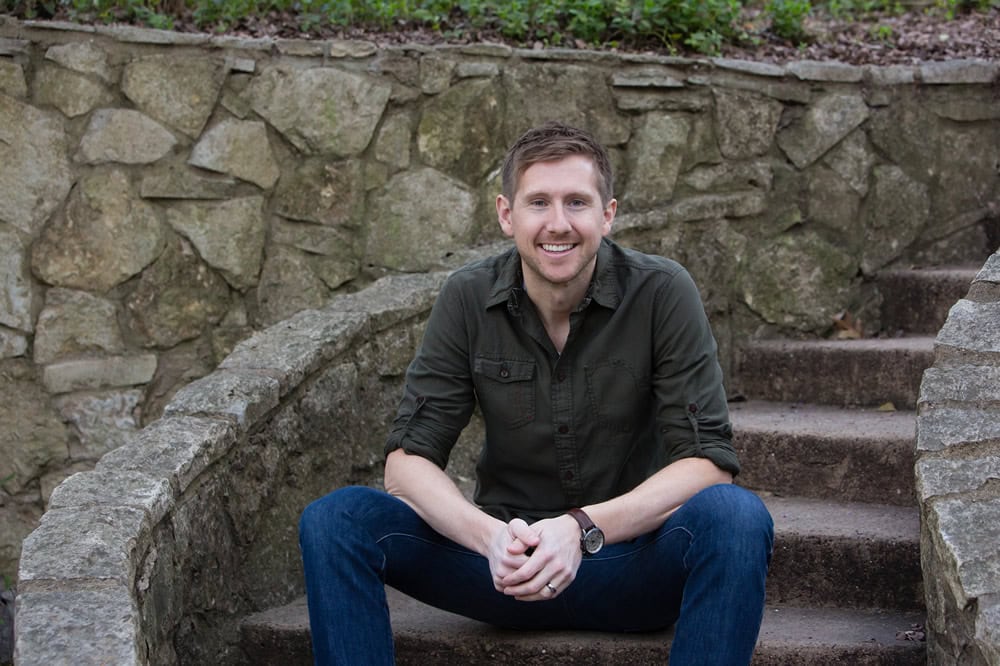
We’re joined now by Joshua hook. He’s professor of psychology at the University of North Texas, and co author of cultural humility, engaging diverse identities and therapy. Joshua, welcome to Philosophy Talk.
Joshua Hook
Thanks for having me. It’s great to be here.
Ken Taylor
So Joshua, What first got you interested in this kind of question about faith and humility, your very own crisis of faith, a journey like that of our subject and the Roving Reporter What?
Joshua Hook
Yeah, you know, you know, for me, this, my interest in this area is, is both professional and personal. I grew up in an evangelical Christian home and went to evangelical Christian churches, my entire upbringing and throughout college. And when I went to graduate school, in psychology, I started to develop, you know, values that were that some were counter to the ones I had grown up with. And earlier, I was very certain about what I what I believed was true and right. And then I kind of had this period of time where I was struggling in navigating these two identities. And sometimes, I felt like I had to either ditch the psychologist identity or ditch the Christian identity, and pursuing integration really required humility and rethinking of some of my earlier convictions that I’ve been taught.
Debra Satz
So Josh, I mean, both from your own experience, and listening to the roving report, it seems that both believers and non believers have a tendency to regard themselves as humble and just dismiss the other as arrogant. So what’s going on here? Can they both be right? Well, I,
Joshua Hook
I think we we do have an inherent desire to be sure that what we believe is true. And, you know, if we thought something different was true, we would change your mind and do something else or believe something else. So I think humility, is has less to do with the specific content of whether you believe in God or not, but more to do with how you hold those beliefs, whether you’re aware of and own the limitations of your own particular persona,
Ken Taylor
wait a minute, wait a minute, then. So how can both the you know the atheists apostle of reason? And the the believing apostle of faith? How can they both claim humility, then? Because these are conflicting ways of holding belief? And it seems like one undermines the other and the other undermines so how can they both claim humility?
Joshua Hook
Yeah, I mean, I think at some broad level, we can say that, you know, you know, probably there is a God or there isn’t a god. But we all come to the table with a certain lens with which we see the world that’s based on our family or cultural or religious upbringing. And we don’t have the corner of the truth we all see. See through a lens, and we all we all have limitations in our own perspective. So I think being in tune with that, you can do that as both an atheist and a religious believer.
Debra Satz
But does that mean you have to be skeptical? I mean, what if you think there’s some things that are just true?
Joshua Hook
Yeah, so I That’s a really tough question. And something that we I don’t think we’ve we figured out as a field and that that uneasy relationship with strong convictions and humility. And I think it’s possible to have both, I think you believe what you believe you’re also open to new information and discrepant information if it comes your way. And you’re also respectful and open to engaging with other people who believe differently.
Ken Taylor
So this will need to probe this much more deeply. I mean, this is the central question I think of whether humility requires like skepticism, but you’ll we’ll get back to this you’re listening to Philosophy Talk. Today we’re thinking about the relationship between faith and humility. With Joshua hook from the University of North Texas
Debra Satz
can there be understanding between believers and non believers? Can we engage with each other with shared attitudes of humility and mutual respect? are we doomed only to angry recriminations and an inevitable Parting of the Ways
Ken Taylor
toward fruitful encounters between the faithful and the faithless? Plus your calls and emails whether humble or arrogant, when philosophy talking continues?
annex Beto asking the Lord to hear him intellectual humility or the height of arrogance. I’m Ken Taylor. This is Philosophy Talk the program that questions everything
Debra Satz
except your intelligence. I’m Deborah SATs and we’re probing the relationship between faith and humility. Our guest is Joshua hook from the University of North Texas, the co author of cultural humility.
Ken Taylor
So Joshua, I’m convinced that I can think of at least one way for believers and non believers to communicate with each other better and to accept each other better. But the way I think of it, the burdens on religion, religion has to become less dogmatic, more all embracing, kind of like the Unitarian Universalist, or even the Buddhist now, but it’s not the only way or am I demanding too much of religion?
Joshua Hook
Well, I mean, I definitely think religion could do a better job of being open to differences in more loving and more accepting, but I think what you suggest, like everyone becoming Universalist, probably, on one hand isn’t necessarily isn’t really practical. And also, I, I do think you lose something when you try to flatten out differences. There’s something beautiful about diversity of religious perspectives and beliefs. And I think if you if you try to do away with that, you lose something important. You know, engaging with differences is messy, it’s uncomfortable. But I think that’s something we have to do if we’re going to move forward in this discussion.
Debra Satz
So I, you know, applaud the kind of celebration of the diversity of perspectives and your desire not to flatten out things, but aren’t some views, whether religious or atheistic, incompatible with humility?
Joshua Hook
Yeah, you know, there are there are certain things about specific religious perspectives that make humility, difficult. I’ll get, I’ll just give you one example. When I was growing up, we thought about the idea of faith as being certain that what you believed was true kind of this idea, like if you have enough faith, you can pray and you can move this mountain and it’ll, it’ll go to a different place or things like that. And I do think, a faith that doesn’t embrace questioning and doubt, and things like that makes it difficult to be humble. There’s some other reasons too, I think, why why faith can be humility can be difficult in regard to faith, but but that’s just one of them.
Ken Taylor
But see, but that goes to the fundamental. I don’t know if Abraham is the right example. But it’s taking take Abraham is taken by Judaism and Christianity, I don’t know, the Islam bullet as the exemplar of faith, the many interpretations of the of the Abraham journey, many different ones. But Kierkegaard is really bracing, just because it seems to entail that Abraham had to surrender his will to God and then could not explain that surrender to to anybody else. This is the teleological suspension of the ego and all that stuff. But you cannot explain that surrender to reason, indeed, you have to quiet reason. And If faith is like that, that’s deeply problematic. It can coexist. It cannot, is I mean, okay, so do you think that is the right understanding of Christian faith? Or is it or is that just something deeply wrong about that understanding of what Abraham as the exemplar of faith as opposed to show?
Joshua Hook
Well, I think when you use that, that example, it’s a little bit different. And I think this comes up in daily life, too. So I think it’s important to talk about this idea for many religious folks, humility is kind of maybe subjecting our will to the will of God. Right? But but really how that plays out a little bit is, is it’s almost like subjecting my will to to what I think the will of God is or what my denomination thinks the will of God is. And there’s, there’s a lot of differences there. So I think we run into trouble where we think we’ve we’ve figured out our theology, and we know exactly what God is, I think there has to be a little bit of uncertainty there.
Debra Satz
So I want to push back a little bit, as I said earlier about the kind of skepticism that this leads would lead you to embrace. I mean, there’s a quote of Abraham Lincoln’s I’ve always loved, which is if slavery isn’t wrong, nothing is wrong. And that, I think, suggests he’s not going to change his mind about slavery. He’s not open to changing his mind about slavery. It’s just the raw, you know, here, I stand there can do no other. And I think there’s something right in that attitude. So if you, you know, is that attitude compatible with humility? And do we have to be a skeptic to be humble?
Joshua Hook
Well, I think it depends how you define humility. If you define humility as being open to differences and change, you might say a statement like that isn’t necessarily humble. But I think that, you know, humility is is one particular virtue. I don’t know that it’s always the virtue that’s called for in every situation. So you know, maybe a virtue of courage or something like that might be the better version.
Ken Taylor
I want to get ready for it. I want to give Abraham Lincoln not Abraham of the Bible. But Abraham Lincoln is do as humble i do i get i grant Deborah’s point, right that there’s no ounce of skepticism here. But I don’t I don’t think that Abraham Lincoln did not have a preparedness to argue the point with all comers, right? So you’re going to give me an argument from divine revelation or something in supportive slavery, I’m going to argue back, and I’m going to argue back from principles about the quality of humans and all that sort of stuff. And so I’m prepared. Come on, bring it on. Right? That’s not inconsistent with humility, is it? I mean, humility would be that if there was no possibility, I could not even conceive of the possibility of a trumping argument. Yeah, I can conceive of the possibility, but you got to bring it on, and I’m gonna stay here I stand. What about that as a? Deborah doesn’t like that.
Debra Satz
Yeah, I don’t think that is the attitude that’s being expressed here as like, you know, I’m waiting for the better argument. Give me a better argument. I think it’s really like, you know, it’s so fundamental to the way I see the world that I can’t imagine abandoning this thesis.
Ken Taylor
But But I can be imagining you trying and failing on the hope you try.
Debra Satz
Well, I could still be respectful to you, even if I hold this view. So what I’m trying to say is not Do not you know, not being skeptical about some things is compatible with being respectful to other people who disagree with you, even if you’re sure.
Ken Taylor
But that means not being. But is that humility or not?
Debra Satz
Well, that’s the question. So Right.
Ken Taylor
I think this place is under religious. Joshua. I mean, if Abraham Lincoln view that seems a little Abrahamic to me, right here I stand. No, you can not shake me. That seems a little bit like Abraham. Right. And is that okay? I mean, one time, Deborah said that lead to the Crusades. Now she’s saying that’s rational. What do you think?
Joshua Hook
Well, I think there’s probably two aspects of humility that we’re talking about. And maybe conflating one is an individual or an intra personal aspect of humility, which I think involves awareness of limitations and openness to different perspectives. But I also think there’s a relational piece to humility, that involves being respectful of another person’s point of view and being able to be in relationship even with someone who has a different opinion on something so.
Ken Taylor
But that, but let’s follow up on Deborah, though, because I’m gonna press you from her point of view again, because that that means though, well, okay, humility, humility, I am not going to be in relation with the southern slave owners there is just going to be a parting of the ways and a clashing of blows, sometimes the course away from humility. But again, I worry, how do we judge that right? Because on the one hand, it could lead to the abolitionist movement, which I applaud. On the other hand, it could lead to the Crusades, which I don’t applaud. So how do you manage that thing?
Joshua Hook
It is a difficult that I feel like we’re dealing with that with our society today, we’re not really trying to understand, like, politically, for example, we’re not really trying to understand the other other side or the other perspective, but we’re just trying to win. And then we celebrate for a little bit, and then the other side wins. And then we’re, we’re frustrated. So I do think we need to move forward in a different way.
Debra Satz
So I’m curious, whether it’s psychology has any insight because you’re, because you’re a psychologist, we’re, you know, just philosophers spinning out, you know, our theories, but I’m interested in, you know, what, you know, from psychology about the attitude of humility, and have respect for others.
Joshua Hook
Yeah, so it is a little bit like I was saying before, we define humility, using two parts that in individual part, which being means being aware and open of limitations, and then an interpersonal piece, which involves being respectful and open to relationship. And we do find a lot of benefits to humility in regard to engaging with people who are different and developing positive relationships with people who are different. There are some negatives, though, to especially when we talk about religious humility. You know, there is something that feels good and provides you provides many people with meaning and a certain sense of well being to be sure that what they believe is true. So it’s a little bit of a mixed bag in terms of,
Debra Satz
do the two parts have to go the two aspects of humility have to go together? So couldn’t I not be open but still engage with people on a, you know, on grounds of respect, like, I think you’re wrong, but I’m gonna respect you as a free and equal member of my society.
Joshua Hook
Yeah, for sure. I think I think you can, you can, you can be sure of what you believe, and then also engage with other people in a positive way.
Ken Taylor
But you can be but I’m going to ask you another question that, you know, philosophers don’t know the answer to I don’t know if psychologists do our people naturally dispo. I mean, if you just find certain people’s natural dispositions as it were, or even their enculturated dispositions, right, do we find them practice? Sing your melody, do we find them practicing one aspect of this more than the other? I mean, is there? Is it easy to do both of these things? Or what for people?
Joshua Hook
You know, I honestly, I don’t think it’s easy. And that’s and that’s part of the reason why this is a difficult topic. I think our natural tendency as human beings is to think that we are right, and that we’ve got it down. And we tend also to surround ourselves with people who are like minded. And there’s a little bit of a consensual validation that happens. If all these people believe the same thing as me, I’m more certain that I’m right. So I think that’s our, our maybe more Mo, and we have to counteract that if we want to be humble and engage with people who are different, right?
Ken Taylor
You’re listening to Philosophy Talk, we’re telling you, we’re probing the relationship between faith and humility. And we’d love to know what you think whether you’re humble or arrogant. We welcome both. And Bill from San Francisco is on the line. Welcome to Philosophy Talk, Bill, what’s your comment or question?
Speaker 1
Well, I was told by someone who knew my father, who was the son of a Rabb that he was having an argument with some, some gentlemen. And his final remark was, you think you wisdoms in your beard? And I think that there’s there’s a, there’s got to be the spirituality along with the beliefs. I believe that some parts of scriptures, and one of the few pieces that I know is do justice, love, mercy, and walk humbly with God. And there are some parts that are more important than others. Well, I mean, you know, that that some people want to see other people killed because of their sexuality. They don’t say, Oh, gee, how do they practice? How do they? How do they deal with their neighbor? How do they deal with their loved ones? How did you know? So So clearly, you know, for me, you know, to believe for people to believe that they know everything is arrogance.
Ken Taylor
Yeah, Bill. Thanks for the Thanks for the comment. I take your point. But there’s two sides of this coin. Joshua, and I just, I’m not sure about religion, and I think religions divide about this to a certain degree. There is there is the bill point, you know, and I think Bill’s making a deep point there is God reveals Himself in all kinds of ways through the suffering of the lowliest human being and, and their strands of Catholicism that says, revelation comes from every corner of the creation. And then there are others who think, well, revelation comes through the sacred scriptures, and the sacred scriptures lay it down. And they don’t Brook any disagreement, because they think, Well, that leads to kind of Catholicism, like Conservative Catholics say, well, that’s this cafeteria style Catholicism, which like responds to the moral fads of the moment, but we the church are the guardians of a long tradition of Revelation. So religion seems to divide itself on this on this thing. When we think about that, I mean, am I right?
Joshua Hook
There is a little bit of a difficult thing, I think, with religion, that there’s like, what are the major points that that are important? And then what are more minors that we can disagree on? You know, some people, you know, dancing is wrong, and that’s a really major thing, or drinking alcohol is wrong, or, or, you know, you can go on and go, and so forth. But I think, I think we could probably stand, it could help us if we narrow down what are the majors that that are the non negotiables of a religious faith, and let more stuff be okay to disagree about
Ken Taylor
and that humility in the face of humankind can help with that, I think, right? Because it can help you see that you have to interpret the scriptures so that it makes sense of the whole of the human world and human experience. And so that dancing thing, which gives many people joy does scripture really forbid that?
Joshua Hook
You know, this the idea of the of interpreting the scriptures is a huge topic that we probably don’t have time to get into fully today. But a lot of people don’t, don’t really acknowledge the lens which with which they they put on Scripture. They, you know, a lot of people might pick out a certain passage and think it applies directly to today, when really there’s a cultural context and that that needs to be acknowledged and thought through in a in a deep and serious way, right.
Debra Satz
Scarlett is on the line from San Francisco. Welcome to Philosophy Talk Scarlet
Ken Taylor
with your comment or question. Hi,
Speaker 1
I have a very important point to make. I don’t know what’s so much an issue of humility as a clash between right wing and left wing. Just like in politics, we have the right wing conservative, the moderate mainstream and the left wing liberal, the same thing in religion and just about every religion. And so within Christianity, the right wing is called evangelical or the more extreme fundamentalist, they have their own way of interpreting the Bible very literally. What they They call it biblical visibility olive tree literalism and their own tone and their own emphasis. And so they always will clash just like in politics, the right wingers will always clash with the left wingers. And I think it’s the same thing in politics as religion and, and there used to be a group called fundamentalist, anonymous, I think they still exist. I once went to them, although I’ve never was a fundamentalist Christian. And it seemed like there should have been a distinction between those, those fundamentalist Christians who didn’t want to be Christian at all anymore. And those who wanted to remain a Christian but not be a right wing Christian. So that’s
Ken Taylor
a really good point. You’re making really good point. I’ll give Josh a brief chance to respond. And then we have to go to a break. But thanks a lot for the calls garlicky, you made lots of points. Can you respond briefly to that, Joshua?
Joshua Hook
Yeah, no, I think that’s a great point. I think sometimes, you know, for myself, who probably I would define myself as more liberal to moderate Christian, I find more common ground with other liberal or moderate religious folks or secular, secular humanists than I do with more fundamentalist Christians in who we share a same faith. So I think that that is a good point. And we do see those divides in in pretty much every religion that we have.
Ken Taylor
You’re listening to Philosophy Talk, we’re asking about faith and humility. Our guest is Joshua hook from the University of North Texas.
Debra Satz
In our final segment, we’ll look for some practical advice for how to humbly navigate the disputes between religious and secular citizens
Ken Taylor
achieving our humility when philosophy talked to continues.
Unknown Speaker
godson stone
Ken Taylor
How would it intellectually humble believer react when God fails to come through? I’m Ken Taylor. And this is philosophy, talk to program that questions everything except
Debra Satz
your intelligence. I’m Deborah SATs. Our guest is Joshua hook from the University of North Texas. And we’re probing the compatibility of faith and humility.
Ken Taylor
So Josh, you know, I think I know the answer to this. I think religion has to become more liberal and open and embracing and less dogmatic, but I don’t think realistically, this highly sectarian and divisive approaches to religion are going away anytime soon. And despite my best my wishes, were not going to become one big happy Unitarian, Universalist, Buddhist, whatever family, okay, given that reality, how do we actually realistically achieve a kind of mutual humility? You got any advice for us?
Joshua Hook
Yeah, so I’ll offer two thoughts. One has to do with becoming, doing some work to become more aware of your own limitations around your religious perspective. So for example, as a Christian, you know, one thing I’ve meditated on and thought a lot about is how could Christians have used the Bible to support slavery in the past? And when you read the actual passages, it actually isn’t that hard to come to understand that because the Bible doesn’t explicitly condemn slavery. And so then the the where that takes us is, well, if we were wrong about that, in the past, what are we wrong about today? Maybe, you know, we’re wrong about LGBT issues, maybe we’re wrong about, you know, advising different roles for women and men in the church and in the home, things like that. So,
Debra Satz
again, I’m worried about this, because this suggests we have to be skeptical to all of our beliefs. And I don’t think the answer the way of making this company or everything, you know, crumble and compatible is to get people to be skeptical. It’s to get people to accept that there’s reasonable pluralism about these views, even though they fundamentally hold these views. No, wait
Ken Taylor
a minute, wait a minute. I don’t think I agree with you that this is the Joshua’s recommending skepticism or that that down that path, light skepticism, I think down that path lies what I said that the scriptures have to be interpreted in light of all of revelation from all corners of creation, that is the yearning of these people to be free. Right. And what we do to them as human beings when so we have to take that okay, there is this yearning. Right and that that yearning, and when I say it’s part if I’m religious, I think that that’s that’s creation welling up from that’s a revelation from creation welling up. So what it means is you just have to have a broader view of the sources. Is
Debra Satz
there a romantic view here? Creation welling up? What about we live in a democratic society? People who disagree
Ken Taylor
No, that there’s that but I’m talking about from the religious perspective how to understand this. Anyway, Joshua, we should let you
Joshua Hook
and I think not that not that you would necessarily go through that process and be forced to change your mind about something. But just that you get in this habit of realizing that you do have limitations as a religious person, and you come to the table with a specific lens. One other One other just brief point that I think might help is when we’re having, you know, a lot of times we talk with people who are just believe the same things as us. And I think we need to practice getting into conversations. Absolutely.
Debra Satz
Good boy. And I think very good point.
Ken Taylor
We’re all on the same page. I’m just trying to give a religious spin to this thing that will be acceptable to the religious but you know, we’ve got another caller on the line, Larry, from San Francisco. Welcome to Philosophy Talk, Larry,
Speaker 1
from Berkeley. Yes. My name’s Larry. And I think that in honesty, which is what I can bring to conversation, as far as I can say, witness is right relationship. And let me show you that there’s much agreement about that, I would suggest, and that’s the whole idea of religion, as Christ is a Christ is a witness a witness to humanity, of what is beyond humanity’s ability to get together about or to understand or to know enough to know to understand that there’s something beyond humanity. Science says much the same thing. Science is a witness to the natural world. As astronomy, the natural world is the ocean of biology, and so on and so on in government, too, as a witness, we take these things to be self evident. So the beginning of our relationship is that we witness was your wife wants speaking as a husband? She wants a good witness.
Debra Satz
So thank you for your question. So Larry is pointing out that there, you know, we want a perspective on the world that also recognizes that there are things beyond the world that we can’t fundamentally understand were witnesses to the world, but also the limits of the world. Josh, is there you have any response to that? Yeah, I
Joshua Hook
mean, I think one thing I like to think about is the fact or the my opinion anyways, that all truth is God’s truth. So I think we do see truth through the person of Jesus, we see truth through the Scriptures, also through scientific evidence and reason and through our own experiences.
Ken Taylor
So So let’s see. So again, I don’t judge, I think you and I are kind of ganging up on Deborah in a way, but I don’t really, I’m not sure there’s a deep disagreement in the end about what the ultimate thing should be. Because I say, Well, unless there’s an openness to all voices in this pluralistic world, right, and a kind of humility with respect to all voices, then we’re going to have a problem. Now I think, the religious person, here’s where I, maybe I disagree with Deborah about this. And maybe you and I are on the same side, I think the religious person, the deeply religious person, once a religious justification for that openness, and a non religious person is going to give a secular justification for that openness. But as long as like there’s a there’s a justification for each side, we’re okay. And the justification from the religious side, I think pushes you in the direction of liberal theology, right?
Debra Satz
that not everybody reads religion that way.
Ken Taylor
So that’s gonna leave out. That’s our problem in the beginning, when you said, What about those true believers? They’re going to be left out, that’s okay. That’s their problem.
Debra Satz
But why did they need to be left out? If they can accept, you know, for political purposes, that their fundamental faith? Can’t? God, you know, isn’t can dictate the behavior of other people? I guess?
Joshua Hook
Yeah, I think. Yeah. So I think sometimes, like, I don’t have a need personally for a conservative religious person to change his or her mind. I think the difficulty comes in with is when that that religious belief is put into power and negatively impacts someone else or hurt someone else. So I think that’s maybe where we, where it comes into, you know, how do we live in a pluralistic society, and respect everyone’s beliefs? So that might be the rub.
Ken Taylor
So Karen from San Francisco gonna be our last caller? Welcome to philosophy care.
Speaker 1
Well, it just strikes me that your your view of things is mainly really heavily weighted on Judeo Christian religions,
Ken Taylor
the you that you’re referring to all of us?
Speaker 1
Well, I, you know, I don’t really, I’m not really one of the fundamentalist Christians anyway. So I can’t say that, but what I mean is, yeah, in general, it seems like you’re emphasizing Christianity, to the exclusion of some things which don’t even don’t well purport not to have a judgmental attitude towards everything we do. However, there are many that do but go ahead.
Ken Taylor
Karen, actually, I explicitly mentioned Buddhism, and Unitarian Universalism which embraces all forms of things. So I actually think the way out is away from dogmatic Christianity or dogmatic anything that’s what I think is the way forward for religion. So But Joshua, I don’t know what you think. Is there a is there room for a conservative fundamentalist Christianity in a pluralistic society where people treat each other with mutual respect and humility and all that, and an absence of dogma?
Joshua Hook
Yeah, I would hope so I think the I think the the difficulty would be if the conservative Christian or conservative religious person feels like they need to enforce a certain way of being on other people who believe differently. So I think that’s where it gets into a little bit of a difficult situation. But I think the caller made a good point. And I think we do have to keep that in mind. I know I probably speak mostly from the Christian tradition, because that’s my own tradition. And that’s what I know the best, but we do have to keep in mind that other people may believe differently, right?
Ken Taylor
Again, I’m really I’m not hostile to religion or faith or any of that. But I really do insist that if the thing I could get myself back into being religious, again, is if it were an all embracing religion that says science is part of Revelation, like the yearnings of the individual human is a part of Revelation.
Debra Satz
Yeah, back to this wishy washy.
Ken Taylor
Because I think that’s I really believe that’s ultimately
Debra Satz
the so I’m, you know, I’m I guess I’m, and get judged, this goes back to your two ways, two senses of humility, is whether those two senses have to go together. So to what extent and, you know, respectful, engaging with people who are different, requires us to take an attitude towards our own beliefs where we think, well, I might be wrong about this, like slavery, maybe I’m wrong. And if you if those things can, can, you know, be pushed apart? Maybe there’s a place for the person who’s an absolutist at this, who respects the diversity and opinions about
Ken Taylor
this will be your last, give us your last parting shot here? Because then we’re at the bottom of the hour.
Joshua Hook
Yeah, I think I think it’s possible to separate those two, I think there is a correlation or an association between the two where if you are more open to questioning your own beliefs, you’re more likely to be more respectful of other people. But I but I do think it’s possible to to firmly believe and to be respectful. You just don’t I would hope for our world that right, right ever
Ken Taylor
just doesn’t want to throw out the bathwater affirm conviction with the baby of whatever, something like that. Right. Exactly. Yeah. But on that note, I mean, thank you for joining us. This has been a humbling but not humiliating, it’s been a thrilling conversation.
Joshua Hook
Thanks so much for having me,
Ken Taylor
I guess, has been Joshua hook. He’s a professor of psychology at the University of North Texas. He’s co author of cultural humility, engaging diverse identities in therapy. So Deborah, you got some last thoughts humbler otherwise for us. So
Debra Satz
going back to the Abraham story, you know, which I have such trouble understanding Abraham, but I think there’s something that to the idea that we have to hold two things together at the same time, we have to hold a I’m one person among many, together with, I am the center of all things. And my perspective is, you know, my I own it and, and it’s very hard to hold those two things together.
Ken Taylor
That’s why so this is a little late to give you a big to give our listeners a big lesson in the history of philosophy but Kierkegaard first we’re talking Kierkegaard versus Hegel Hegel, thought, religion, faith and reason could ultimately be reconciled. And it would reconcile these two perspective. And Kierkegaard came along and said, Heck, no, that ain’t never gonna happen. So that’s a big divide. But you know what this conversation continues at philosophers corner, at our online community of thinkers where our motto is, get this, with apologies to Descartes Cogito ergo Blago, I think, therefore, I blog, and YouTube can become a partner in our community tests by visiting our website, Philosophy Talk dot o RG.
Debra Satz
And if you have a question that wasn’t addressed in today’s show, we’d love to hear from you. Send it to us at comments at Philosophy Talk. org and we may feature it on our blog. And now, to be truly humbled by the unfathomable speed of eon shows the 62nd philosopher
Ian Shoales
in shows President Trump’s MRU something of a prideful man not giving to thinking twice, many like Emperor’s braggadocio. Others might like him more if you would burst into tears for no reason or give somebody else credit for anything really, or apologize for claiming as Florida Resort is a White House, these things will not happen, you might consider his election to be a backlash against humanity. Many were angry at President Obama for what was called his apology tour and when she went around the world apologizing for America, I don’t remember this tour myself. But apparently it was a thing in the minds of Trump supporters, hence the mixed feelings. On the other hand now, social media loves to make people apologize for sexism, racism and getting too big for their britches in this new mediated world though Mr. Trump has held his own by mediating you before you mediate him. Lock her up. She’s wonder did it not mean? Trump aside we have mixed feelings about prideful displays, but we don’t Embrace Humility is a virtue, so much as we do false modesty. That’s a small example. England gave us Sherlock Holmes who certainly does not hide his light under a bushel. We have Colombo a ruffled oh gosh oh golly sort of fellow a man who doesn’t know what about nothing and absorbs the scorn of the criminal until he springs the trap. We’d like the country bumpkin who comes to the city to take down the smart talking City Slickers. Like Jimmy Stewart in the anatomy of a murder just a country lawyer wants to go fishing outsmarts big city prosecutor George Scott. We like our preachers to look like they have a little dirt on their souls. We love confession of sin, which is not the same thing as an apology. Sure I did wrong but if God can forgive me, why can’t you aren’t you a Christian? You’re an atheist, aren’t you? A judgmental believer in situational ethics leaves send to the professionals buddy. And there’s John 14 in the Bible. I am the Way the Truth and Life no one can come to the Father except through me. Get it? That’s why we have so many TV preachers with mega churches and private jets and helicopters and McMansions their glory reflects God’s glory, but it’s okay in comparison to heaven streets of gold has nothing really it is as dust. This weird inversion of unity has led to strange situations like one person’s birth control not being covered by her insurance because another person covered doesn’t believe in birth control who’s being oppressed here. It’s our rails. There was another indicator of how far off at our rate has gone. pro football player Colin Kaepernick went down on one knee instead of standing for the national anthem was a protest against police brutality in the states attention was paid not to police brutality, but to Colin Kaepernick. It’s like when you plant something for a dog and it just looks at your finger. This action became known as taking the knee we used to call it kneeling. Remember, President Trump went out of his way to call kneeling during the national anthem. total disrespect on my planet kneeling used to be a sign of humidity. You know before the king you’re gonna need to get that obey Queen you kneel upon the shore to give thanks to the Lord after a dangerous voyage to a strange new land that wasn’t playing the anthem in a sporting event itself disrespectful to the national anthem were so humble. Why are we starting to our feet to give voice to a difficult thing battle song and a football game in the first place? American exceptionalism includes humble bragging about how modest we are much more than any other nation before or since. So get off your knees and get out of the way. Yes, we are hiding our light under a bushel. We’re a nation of swaggering bushels with nearly a light in sight. I gotta go.
Ken Taylor
Philosophy Talk is a presentation of K L W local public radio San Francisco and the trustees of Leland Stanford Junior University, copyright 2018.
Debra Satz
Our executive producers are David Demarest and Matt Martin, the senior producer
Ken Taylor
is Devin Stroh. Laura McGuire is our Director of Research. Sandy Prince Baum is our Director of Marketing
Debra Satz
thanks also to Merle Kessler Corolla Cripe Meyer, Angela Johnston, and Collin Peterson.
Ken Taylor
Support for Philosophy Talk comes from various groups at Stanford University, and from the partners in our online community of thinkers. Support for this episode comes from the Templeton Foundation.
Debra Satz
The views expressed or mis expressed on the program don’t necessarily represent the opinions of Stanford University or any of
Ken Taylor
our other funders, not even when they’re true and reasonable.
Debra Satz
The conversation continues on our website, Philosophy Talk dot o RG where you too can become a partner in our community of thinkers. I’m Deborah SATs
Ken Taylor
and I’m Ken Taylor. Thank you for listening. And thank you
Debra Satz
for thinking.
Speaker 2
You’re not known to be a humble man. But I wonder I think I am actually humble I think a much more humble than you would understand.
Guest
Related Blogs
-
May 6, 2018
Related Resources
Online Education:
- OpenMind is a free, online interactive program designed to foster intellectual humility and teach skills for constructive disagreement. When you set up an account, enter access code: PhilosophyTalk2018
Books:
- Kvanvig, Jonathan (2018). Faith and Humility.
- Hook, Joshua, Don Davis, and Jesse Owens. (2017). Cultural Humility: Engaging Diverse Identities in Therapy.
- Stedman, Chris (2002). Faitheist: How an Atheist Found Common Ground with the Religious.
Web Resources:
- Bishop, John (2016). “Faith.” Stanford Encyclopedia of Philosophy
- Hook, Joshua et al (2014). “Intellectual Humility: Scale Development and Theoretical Elaborations in the Context of Religious Leadership.” Journal of Psychology & Theology
- King, Nathan (2008). “Religious Diversity and its Challenges to Religious Belief.” Philosophy Compass
Get Philosophy Talk
