Disinformation and the Future of Democracy
October 1, 2023
First Aired: May 9, 2021
Listen


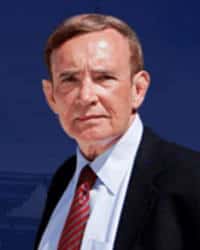
The 2020 election and startling events that followed show that the US is as polarized as ever. Not only is there fundamental disagreement over values and goals, but people can’t seem to agree on the most basic, easily verifiable facts, like who actually won. With so many seemingly living in an alternative reality, how do we continue the business of democracy together? Should we adopt paternalistic policies towards fellow citizens who are so profoundly divorced from truth? And does our current plight suggest that the project of liberal democracy is failing? Ray and guest co-host (emeritus) John Perry stay informed about their guest, attorney and political analyst Dean Johnson, co-host of KALW’s Your Legal Rights.
In a world of disinformation, can anyone make informed political decisions? How can we come together as a nation if we can’t even agree on the truth? John thinks that democracy is hopeless unless we do a better job of cracking down on disinformation, but Ray protests that free speech cannot be taken away by silencing people. John responds that people should be more careful about fact-checking articles and making sure sources of information are credible, but Ray argues that not everyone has a philosophy education or an education equipped to make those decisions.
The philosophers welcome Dean Johnson, a political analyst and criminal defense attorney, to the show. In response to Ray’s request for current sources of disinformation that are especially worrying, Dean describes how the depth and breadth of propaganda makes it more concerning than in the past. Plus, disinformation is promoted through social media and new technologies which are growing more and more prolific. John wonders if this new form of propaganda makes it more threatening to democracy, and Dean explains that the peril comes from the increased frequency of information consumption. Not only are people consuming more fake information, but their interpretation of facts is also affected by existing ideologies.
In the last segment of the show, John, Ray, and Dean discuss confirmation bias and the place of the private sector in democracy. Ray asks about personal responsibilities as consumers of news versus viewing disinformation as a structural problem, and John suggests ways to make a difference as an individual, such as through fact-checking our friends. When confronted with an undermining of truth, he believes that providing demonstrable facts is the strongest defense.
Roving Philosophical Report (Seek to 4:25) → Holly J. McDede looks at the effects of a controversial website that filled the news and information void in Stockton, California.
Sixty-Second Philosopher (Seek to 45:25) → Ian Shoales looks at the end of the Trump era, wokeness, and conservatism.
Ray Briggs
In a world of disinformation, can anyone make informed political decisions?
John Perry
Anti-vaxxers, Q-Anon devotees, 911 truthers — how out of touch can America get?
Ray Briggs
How can we come together as a nation if we can’t even agree on what’s true?
John Perry
Welcome to Philosophy Talk, the program that questions everything
Ray Briggs
except your intelligence. I’m Ray Briggs.
John Perry
And I’m John Perry, sitting in for Josh Landy, we’re coming to you from our respective living room via the studios of KALW San Francisco,
Ray Briggs
continuing conversations that begin at philosophers corner on the Stanford campus where I teach philosophy, and John did for 50 years. Thanks for coming back to co-host with me today, John.
John Perry
Oh, honored to do it. Nothing but pleasure. Today, we’re
Ray Briggs
Today, we’re thinking about disinformation and the future of democracy.
John Perry
It looks to me that until we do a better job cracking down on disinformation, democracy is pretty hopeless.
Ray Briggs
No, come on, John. Democracy just means that everybody gets a vote. What does that even have to do with disinformation?
John Perry
Well, yeah, democracy is not just about voting though, it won’t work unless the voting is intelligent, based on meaningful decisions about who runs things and how. You can’t make a meaningful decision if you don’t know what’s going on.
Ray Briggs
Okay, fine. I hate dishonesty as much as the next person, but you can’t just silence people. I mean, that’s against free speech.
John Perry
Yeah, unfortunately, free speech means you can say whatever you want, but no one has to circulate it. No one has to broadcast it, no one has to pin it to their bulletin board. And you can be held responsible for the effects of what your speech does to people when they hear it. These days, social media companies just let people lie with impunity, somebody might do something.
Ray Briggs
Oh, I mean, who do you want to do something, the government? I mean, do you really want politicians to have power over what people say in the public square?
John Perry
No, not the government. That’s what the First Amendment says, the government can’t do it. But if I have a grocery store with a bulletin board, and somebody puts a Nazi insignia on there, or something like that, I have the right to take it down. And the same goes for the social media platforms. They have a responsibility and a right to take down blatant lies and misinformation. And they have, it’s not illegal for them to do it.
Ray Briggs
Yeah, but but like, do they know the difference? And even if they know, do you think they care? I mean, their whole purpose is just to reinforce things that people already believe. They just want more eyeballs, more clicks, more advertising revenue.
John Perry
Well, maybe social media platforms don’t care. But they should, I think some of them do. If they don’t, then we should create one that does.
Ray Briggs
Well, yeah, but who’s gonna make them care?
John Perry
Well, universities that educated them in the first place. It’s a democracy. So ultimately, the people have to make them care.
Ray Briggs
But the people are living in a disinformation bubble, and how can they do anything if they’re misinformed?
John Perry
Well, a lot of the time, they do know that they’re misinformed. And they willfully ignore it. If you only read things you already believe, and then share those articles without fact checking them, that’s your fault. And you need to do better.
Ray Briggs
Yes, but not everybody has a philosophy education, John, I mean, you’re just expecting too much of people.
John Perry
People aren’t going to get educated if we don’t have a functioning democracy. And we don’t have a functioning democracy unless we have educated citizens to make it work. That’s why I said a while ago, it seems pretty hopeless unless we can do something about this information.
Ray Briggs
Well, look, maybe our guest has some ideas. Dean Johnson, an attorney and a political analyst, who’s also the founder of The Pundit Network. We talked to him last year on “Your Legal Rights,” the weekly show he co-hosts on KALW. And this time, he’s joining us on Philosophy Talk.
John Perry
But first, we sent our Roving Philosophical Reporter Holly J. McDede to find out what happened in one California city when a controversial website filled a news and information void. She files this report.
Holly McDede
If you’re a mayor promising to give residents free money, there is a chance a filmmaker will want to make a documentary about you.
Michael Tubbs
The Stockton story is this idea of intention. Taking what was bad and trying to make it good. People get it, they’re so excited. They’ve never had a mayor like this.
Holly McDede
The film “Stockton On My Mind” is about the city’s former Mayor Michael Tubbs. In 2016. When he was just 26 he was elected by over 70% of the vote. He became Stockton’s youngest and first African American mayor. And he got a lot of attention for pushing for universal basic income.
Michael Tubbs
The issue with trying to solve mainly valley crime, poverty, and housing and homelessness, is it’s gonna take more creativity and more collaboration, and also more of a willingness to take some risks.
Holly McDede
Stockton is one of the most racially diverse cities in the country, a quarter of people who live there also live in poverty. Under the Universal Basic Income program, 125 Stockton residents were given $500 a month with no strings attached.
Rich Ibarra
These are programs that didn’t cost a dime for the city.
Holly McDede
Rich Ibarra is a correspondent with Capital Public Radio in Sacramento. He says some people were still critical about universal basic income.
Rich Ibarra
There was maybe a mistrust of people maybe giving a handout instead of a hand-up.
Tucker Carlson
The guaranteed income idea has its opponents, conservatives against government handouts and labor unions who want well paid jobs, not small payments with no opportunity for advancement.
Holly McDede
And local news was struggling. Stockton’s newspaper The Record had been decimated by layoffs and declining subscriptions
Rich Ibarra
What you might call a skeleton crew. And in that respect too, their deadline is like three o’clock in the afternoon. So often if something happens in the evening, you won’t see it until two days later.
Holly McDede
Enter 209 Times, an online news blog launched by a local activist who ran against Tubbs.
Rich Ibarra
Even the publisher at the blog said he was out to get Michael Tubbs.
Holly McDede
At one point the site posted a meme depicting Tubbs as a crack addict and another he’s drinking a martini. One story said he had a secret plan to run a regional homeless hub. It also spread misinformation that he was misspending $60 million meant to address homelessness.
Rich Ibarra
Stockton never got $60 million, it got 6 million but not 60 million.
Holly McDede
By the time Tubbs ran for reelection in 2020, 209 Tiemes had nearly 100,000 followers on Facebook, and 120,000 on Instagram. He lost the race and believes the misinformation spread by the site is a big reason why, but Rich Ibarra says Tubbs also didn’t do much to respond to the misinformation as it spread.
As to much he would have been able to correct anyway without his own blog or Internet situation, it’s hard to say.
And the 209 Times blog now has some competition in late 2020, a local historian decided he’d like to start a new site too. So he did. It’s called Stocktonia. And once again, readers must decide who to trust.
Tucker Carlson
One person’s fake news is another person’s news.
Holly McDede
For Philosophy Talk. I’m Holly J. McDede.
Ray Briggs
Thanks for that informative report. Holly. I’m Ray Briggs. And with me today is my Stanford colleague and host emeritus John Perry. We’re thinking about disinformation and the future of democracy.
John Perry
We’re joined now by Dean Johnson. He’s a criminal defense attorney in the San Francisco Bay Area. He’s an Emmy nominated legal and political analyst. And he’s co-host of your legal rights on KALW. Dean, welcome to Philosophy Talk.
Dean Johnson
Thank you. Pleasure to be here.
John Perry
Dean, you’ve been a criminal attorney for decades. But in the last few years, you become really interested in First Amendment issues. How did that happen?
Dean Johnson
Well, my interest in First Amendment goes back a long way. I’m 70 years old right now, when I was 16, I started marching in civil rights demonstrations in the segregated south. I’ve written extensively on First Amendment issues throughout graduate school and law school. And in the last 15 years, in addition to practicing law, I’ve also been a working journalist. So I learned that side of free speech, the freedom of the press side, I’ve learned how to invoke the reporter shield law, how to litigate my right to get into courtrooms, and also how to protect confidential sources. So it’s, it’s been a lifelong pursuit for me.
John Perry
You know, we may have met in the march on the Pentagon around 1968. Were you there?
Dean Johnson
Um, you know, I believe I was.
John Perry
Yeah, we might’ve run into each other. I drove all the way down from Ithaca and tried hard to get arrested so I wouldn’t have to drive back the same day, but I couldn’t get it.
Ray Briggs
So Dean, the spread of disinformation. Now, that’s not exactly a new phenomenon. But right now, there are some sources of disinformation that seem really worrying. Will you tell us about some of those?
Dean Johnson
Sure if disinformation has been around for a long time, the old fashioned term we used for it is propaganda. But what’s concerning now is the depth and breadth of disinformation aided and abetted by media, and by new technology, and particularly by social media, what we find is that social media has been set up in such a way so that anyone can get access and can publish on social media ideas that used to be outliers and ideas of extremists that were confined to people who were living in their mother’s basement, are now posted to millions of people. And social media, probably not deliberately was set up so that its algorithms work to reinforce and amplify people’s confirmation bias. If you hear something or see something on social media that you really like, you get more and more and more of that information. And what this has led to is a kind of what I call cognitive tribalism, that people are now living in separate silos where they hear only the kind of information that they want to hear, and only the kind of information that confirms their own preconceived notions of how the world works. And a lot of times they get hooked into listening to and watching things that simply aren’t true. Or getting their information from sources that don’t have their best interest at heart. And that is a huge problem, as we all learned in very dramatic fashion on January 6.
Ray Briggs
So social media wasn’t really designed to be a news source, but it seems to be functioning that way for a lot of people. Like how do we understand this like co-option of social media as a place where people get their news?
Dean Johnson
It’s a huge problem. It used to be you know, back in the day, when when I was marching in civil rights movements, there were very limited news sources that everybody watched the six o’clock news and the reports on all three networks are about the same. Now, if anything, there’s a problem of too much access. A news source can be something that’s reputable, or something that’s totally disreputable. Or something that even has evil intention. And people who listen really haven’t been armed with the kind of critical faculties and judgment tools that they need to evaluate, know what’s true, and what’s false. And they get hooked into things that count is news that really aren’t news. And the net result is that we have people who now live in what some some of us describe as an alternative universe, they believe in the timeline that’s never really happened. They see and interpret events in ways that are counterfactual. And the unfortunate part of that is that the kind of cognitive tribalism we’re seeing now overlaps with political views with religious views even with geographical location, with red state, blue state with urban and, and rural and so on and so forth. And it creates divisions, lines of division that overlap. And it’s it’s almost a perfect storm for social division. And so ultimately, social chaos.
Ray Briggs
You’re listening to Philosophy Talk. Today, we’re thinking about disinformation and democracy with attorney and political analyst Dean Johnson.
John Perry
What happens when our media environment makes it hard to tell the difference between truth and lies? How can we keep our integrity as thinkers and citizens? Can a free society survive an onslaught of fake news?
Ray Briggs
Clickbait, bullcrap and outright lies, but also your comments and questions when Philosophy Talk continues.
How can democracy function with so many people spinning so much disinformation? I’m Ray Briggs. This is Philosophy Talk, the program that questions everything
John Perry
except your intelligence. I’m John Perry, sitting in for Josh Landy. And we’re thinking about disinformation and the future of democracy with attorney and legal analyst, Dean Johnson.
Ray Briggs
We’ve had good information on the pandemic. So we’re pre recording this episode from the safety of our respective homes and we can’t take your phone calls. But you can always email us at comments@philosophytalk.org, or you can comment on our website where you can also become a subscriber and gain access to our library of more than 500 episodes.
John Perry
So, Dean, you’ve told us what you think are the most worrying kinds of disinformation, do these new sources of disinformation pose greater threats to democracy than they have in the past?
Dean Johnson
Oh, there’s no question about it. Um, what we were concerned about in the old days was that, for their own interest, people in power might distort the occasional fact might provide funding to elect a certain candidate. But what we see now is that this information is is produced and consumed, not just on a daily basis, or an hourly basis, but on a second by second basis. If you look at, say, social media, and you have any friends who are from red states, who are part of the, what’s come to be called the Trump base, you will see post after post after post minute after minute of things that are simply untrue, or more importantly, things that distort a worldview. And it’s not so much misrepresentation of facts. It’s this pervasive effort to change the way that people see and interpret and evaluate facts and the meaning that they attach to facts. One of the the iconic examples for me, were the pictures that were circulated around Inauguration Day. And they were pictures that were taken through a chain link fence of the United States Capitol. And of course, those chain link fences were there to prevent another January 6 insurrection. And that’s the way I saw it. And that’s the way many other people saw it. But people out there in the red states, saw it very differently. And they posted caption saying, this is what a dictator does, he has to put a fence and armed guards around his own inauguration. And that’s the way they saw it because of course, the way in their world, Joe Biden had staged a coup d’etat, had stolen the democratic election and was an illegitimate president. So it becomes a day to day, hour by hour, minute by minute worldview where people interpret not only get information that’s contrafactual, but they interpret facts in a way that is framed by an ideology that simply isn’t true.
Ray Briggs
So I agree that like this is really worrisome, both the alternative facts that are false, and the alternative interpretations of true facts. Earlier, you linked that to social media. And I was wondering how that connects to like, I think that I think is good about social media, but also recently linked to disinformation. So social media, you mentioned makes it so that anybody can have a voice. Like you don’t have to be one of three news outlets, right? And you might think that’s like, great and democratizing and has amazing potential. But its potential is not getting used, like is it worrisome precisely because it’s democratizing? Or is the problem orthogonal to like the centrality versus non centrality?
Dean Johnson
Well, you know, if you go back and look at the very beginnings of social media, those of us who were advocates for free speech thought that this was a tremendous opportunity for democracy. And in some ways, social media has fulfilled that prophecy. If we look back at Arab Spring, for example, the demonstrations to protest against dictatorships throughout the Middle East were fueled by social media. But the internet and social media are like our tools and they’re like anything else they can be used for good purposes or for bad purposes. And what we haven’t realized the uninformed what we didn’t realize the unintended consequence of social media and unlimited access is that those people with bad intentions or people who are simply misguided also, instead of being dismissed as outliers and extremists, now, rapidly gain audiences. And that’s the problem that we as a society have to deal with and we haven’t dealt with it yet. I actually developed a prototype social media called Pundit Network, which is still online, and what we learned, I developed it as part of an undergraduate class in media, politics and society. And what we learned from that is that social media actually can be modeled in such a way that it fulfills that democratic process. There’s a thing called the wisdom of the crowds, and social media, by definition reaches a crowd. If you can use your social media utility to tap into that wisdom of the crowds, and social media becomes an instrument for generating truth and one of the things that we know about people who participate in that particular kind of social media is that they become more informed, better informed, they learn to look at multiple perspectives, and critically evaluate those perspectives. And they become more engaged as citizens of a democracy. So it is possible. But right now, they can’t do it.
Ray Briggs
So this thing is helpful on kind of partly the consumption side. I also am curious about the production side and how much of that is less democratic than it appears. There was that kind of Cambridge Analytica scandal. And I think part of that was just like all these sort of people who were, who were being paid to sort of write clickbaity articles where truth was usually irrelevant. So it seems like if you have a society of people who are all kind of exercising their due diligence in producing news, and like, I don’t know, like, trying to do journalism on Twitter, which I know a lot of people do, then you can have a really truth tracking society. But then if you have some people who are getting money from somebody who doesn’t particularly care about anybody having true beliefs, and just has orthogonal desires to that, or even at odds desires to that, is my question making sense. I?
Dean Johnson
Yeah, no, no, no, I understand totally what, what you’re saying, in fact, I sometimes monitor contacts that I have from, from my youth growing up in the South, people who are still in the red states, still part of the Trump base, and I look at what they look at and what they post. And you can see trends. Following the the Biden inauguration, I saw an immediate trend in those people getting posts that support the oil industry, and opposed, say, shutting down Keystone XL, talking about how Joe Biden’s policies would raise the price of oil and so on. And you can understand given Biden’s articulated policies against or in favor of regulations that would would prevent climate change in favor of alternative energies, you can understand how certain corporate powers would have an interest in, in steering, all of that commentary towards things that are of interest to save the oil industry. I don’t know that there’s anything that one can do about it. I mean, the Citizens United ruling is is a huge problem. And I don’t know that you can tell corporations that they don’t have first amendment rights. But what you can do is provide alternative outlets for people who don’t want to hear that and who want to look at a social media network that devotes itself to evidence based reliable forecasting and information that has a search engine that doesn’t select based on ideology, but searches for all points of view. Pundit Network was, was our attempt to do that, and it worked. I don’t suggest that that’s a global solution. But that’s a small part of the solution.
Ray Briggs
You’re listening to Philosophy Talk. Today, we’re thinking about disinformation and democracy with attorney and political analyst Dean Johnson.
John Perry
You know, I’ve been a member of the ACLU since, I don’t know, I could talk. And for a long time, you know, you’d be an extremist about freedom of speech. But the Constitution protects freedom of speech from the government, the federal government originally and then the states after Civil War [unintelligible]. It doesn’t protect you from the consequences of your freedom of speech, and it doesn’t protect people who publish it and distribute it from the consequences of distributing misinformation and slander. At least it didn’t until a law passed a little while ago by the Congress who somebody here probably remembers the name of that does kind of insulate Facebook and Twitter from being sued or held legally responsible for the bad effects of, of passing on misinformation. And I think that’s that’s something that those of us who are lifelong freedom of speech advocates and didn’t really worry that that could lead any harm need need to take account, we have to have a more subtle understanding or not necessarily all that subtle about exactly who it prevents from doing what. And it certainly doesn’t prevent me from tearing down a swastika that somebody has put on a tree in my front yard. And I don’t think it prevents Mark Zuckerberg from exercising some standards based on his understanding of the world with Facebook, in my humble opinion.
Dean Johnson
Yeah, John, you know that that raises a number of issues. So what what we’re talking about is section 230 of the Computer Decency Act, which was one of the first legislative responses to the whole phenomenon of social media. And what underlies section 230 is a kind of a naive notion about social media that they’re simply a neutral conduit for information and that all of us can observe social media, and observe information through this conduit and evaluate information for ourselves. But as Marshall McLuhan said, back in the 60s, the medium is sometimes the message. And that’s particularly true with social media in that social media operates on algorithms that select what you what you see in here. And that’s a problem. And what’s going on now is that the law legislatures are beginning to reconceptualize social media, and see that that social media are not just neutral conduits, but they take an active role in deciding what sort of content you see. And the solution that’s been suggested is that we allow the people who operate social media, the Mark Zuckerberg of the world to decide actively, what goes through their social media, I’m not comfortable with that. I’m not any more comfortable with having Mark Zuckerberg decide what I see in here than I am with having the government decide. And one of the great dangers is, if Mark Zuckerberg or Facebook or any of the big social media companies become the decision makers about what gets transmitted to other people, they run the risk of having their actions be deemed state action, that in effect, we could see a legal precedent that says, okay, social media is the modern public square, it’s performing a government function.
John Perry
So maybe that’s a possibility. But people should make sure it doesn’t happen. I mean, Life magazine, Look magazine, The Saturday Evening Post, they had the duty to decide what to publish on their pages. And no one thought that they didn’t have the responsibility for doing that. That is they didn’t have to pay the price. Whatever it might form it might take if they did a crappy job that and and we’re not going to make it so that even if we multiply the number of social media companies, that people own them and operate them will be decide. But the worst thing is to have them decide and then say up, what, you’re not responsible for the effects of your decisions.
Ray Briggs
So the one area where social media companies are now legally liable for what is published on them, has not gone great, I would say. So they are legally liable now for things that could be construed as sex trafficking, which is not very well or clearly defined. I’m [inintelligible] here and you can correct me if you think I’m overstepping. And so how this works in practice is that a lot of social media companies, like I think Tumblr is a good example have just suppressed all speech that relates to sex, whether it’s like educational, or whether it’s like sex workers sharing information to stay safe, as though it were sex trafficking. So I don’t, I don’t really trust I’m making social media companies liable for what’s published on them necessarily as a solution unless you’ve got a better idea of what kind of harm they’re supposed to be liable for.
Dean Johnson
Yeah, it becomes the you know, it becomes extremely problematic to have somebody make judgments about the content of speech, the traditional free speech jurisprudence is that where where content is concerned, we don’t allow the government to make judgments. And we don’t really allow anybody else to make judgments. I think the consequences of speech are difficult to predict. And you cannot regulate speech and regulate it in order to prevent adverse consequences without making value judgments as opposed to scientific judgments about the content of speech.
John Perry
So there’s non sequitur there, you say, so, we don’t allow the government to inhibit free speech, right? And then you say, and so nobody else should either. Well, you know, the Catholic Church shouldn’t inhibit free speech and it’s Marino Newsletter. I mean, if I’m running a social media company, and there’s a law passed, that means I’ll be in serious trouble if I publicize you know, child molestation videos and instructions for how to do it. I may decide, well, okay, that’s probably a good law, but I just don’t want to deal with it. So I’m not going to put any sex on my thing. That’s free enterprise. That’s reasonable.
Ray Briggs
You’re listening to Philosophy Talk. Today, we’re thinking about disinformation in the future of democracy with criminal defense attorney and co-host of KALW’s “Legal Rights” Dean Johnson.
John Perry
Does disinformation have to spell the end of democracy? Or can we stem the tide of fake news? What will it take to repair our social institutions?
Ray Briggs
Dealing with disinformation, plus commentary from Ian Shoale, the Sixty-Second Philosopher, when Philosophy Talk continues.
We’re pretty sure the problem of disinformation is more than just a problem of too much information. I’m Ray Briggs, and this is Philosophy Talk, the program that questions everything
John Perry
except your intelligence. I’m John Perry. Our guest is attorney and political analyst, Dean Johnson. And we’re thinking about this information and the future of democracy.
Ray Briggs
So Dean, we’ve got an email from Rafael in Berkeley. Raphael writes, most people are not just passive consumers of information. But instead they come to the news with preconceived biases. To what extent are misinformation campaigns aided by an audience that wants to be misinformed, or at least that wants to have its views confirmed?
Dean Johnson
Well, there’s always confirmation bias, and you know, disinformation would not be such a huge problem if it hadn’t found really fertile ground in millions, possibly tens of millions of people who are looking for a different explanation for their own situations. We find that there are a lot of people who are in red states who are responsive to Donald Trump’s message, who are responsive to Fox News’s message and to that sort of worldview. They’re responsive to that because of the situations they find themselves in, they have considered themselves to be part of an entitled demographic that’s losing its grasp on power. And a lot of what said by somebody like Donald Trump, somebody, or people like Fox News, strikes a resonating chord with them. And social media not only strikes that chord, but it reinforces that chord. There’s a phenomenon called confirmation bias, where people only listen to and believe that which confirms their own preconceived notions. In social media, there’s an algorithm that simply sends you stuff that does confirm your preconceived notions. So social media is almost like an amplifier or a reinforcer of what people already want to believe. And it just makes those those preconceived notions more stronger and more pervasive.
Ray Briggs
So this brings me to a kind of big philosophical worry that I have about this stuff, which is so on the one hand, I want to insist on personal responsibility of news consumers not just to believe whatever is put in front of them. And on the other hand, that seems like a completely inadequate answer to a structural problem. It’s not just about any one individual, like, where should we start?
Dean Johnson
I think it depends upon who your audience is. You know, I, as I mentioned, I still correspond with and have close relations with people that I left in my high school days who never moved out of red states who became part of the Trump base. And it really depends on where they’re at. A lot of people are still open to factual arguments. And if you can produce good facts, you can crack that conceptual framework. Unfortunately, there are also people who’ve, who’ve evolved to the point where they are so locked into that worldview, that it becomes non falsifiable. If you indicate okay, you just said something that is factually untrue. Here are the real facts, the response will be oh, well, that’s exactly what somebody out on the left in California would say, or your sources must be all fake news. So it simply becomes impossible to falsify their worldview or to crack through that conceptual framework. And what I’ve found in dealing with people like that, is that a useful thing to do is to get into their own conceptual framework and start pointing out contradictions in their own worldview, for example, I like to suggest that, you know, there are people like this are generally opposed to universal health care, but also opposed to reproductive freedom, and, and in favor of what they would refer to as a right to life. And I point out that universal healthcare, countries that have universal health care, generally have, in fact infallibly have lower infant mortality rates. So to the extent that you are supporting, you’re opposing universal health care, you’re also supporting the death of children, to the tune of hundreds and 1000s of kids.
Ray Briggs
So Dan in Portland, Oregon has a worry that speaks to this, I think. So Dan is worried that rich people use alternative facts as a distraction from policies that would otherwise be really popular, like not letting people be plunged into debt by medical expenses, which kind of directly relates to your universal health care point. And so Dan asks, why not cut the private sector elites out of the equation altogether, so that democratic power moves into the workplace and political power is replaced by labor?
Dean Johnson
I, I have to say I’m sympathetic with with the, with the idea, but I don’t see it as a workable solution anywhere in the near future.
John Perry
I think we agree on that.
Ray Briggs
So what about sort of our responsibilities as consumers of news? So one thing that I I like to do me because I’m a little bit pedantic, is when my friends are sending around articles on social media that seems badly substantiated, to complain, and to say, like this, this doesn’t seem true, and to just hold others accountable, like at an individual level.
Dean Johnson
Well, that’s become sort of a hobby of mine. Um, I think we just need to keep the dialogue going. If there are people that you disagree with, if there are people out there that have a worldview that’s different from yours, fact check them, one of the things that I remember most is that one of my colleagues who is from a very red state, and very, very deeply into the whole Trump base, and that sort of ideology produced, posted a picture of a Nazi prison guard on on social media and said, This is what George Soros was doing during World War Two. And I did about a five second fact check and pointed out that the picture was actually the picture of a a Nazi storm trooper who served as a as a guard at Auschwitz and his name is well known. He was tried at Nuremberg, and then it could not be George Soros for the following reasons. First of all, George Soros is Jewish, he would not have been admitted into the Nazi Party.
Ray Briggs
People’s problem with him was that he was Jewish.
Dean Johnson
His family fled his native Hungary to escape Nazism. And he was 13 years old at the time. And then I went on to point out that George Soros has been one of the great forces for a democratic revolution, particularly in the former Soviet Union, and not a fourth and a, both a student of Karl Popper, who was one of the great critics of totalitarianism and Nazism and himself a critic of authoritarianism. I don’t know if that made a dent or not, but you just keep trying.
Ray Briggs
So, Dean, I have one more quick question. Which is, so some, some disinformation proceeds by claiming things that aren’t true, but other disinformation sort of proceed by undermining. So like, is it possible that Democrats are maybe kidnapping children? So those kinds of like just asking questions. Is there a special way to address the undermining kind of disinformation?
Dean Johnson
Yeah, I address it with facts. I actually had a client who believed that whole Hillary Clinton is running a child molesting ring out of the basement of the Comet Pizza restaurant in Washington, DC. And so he actually tried to kidnap his own children and take them away. He was separated from his wife and she had custody wound up in a wild car chase with the police. And I pointed out to him when he came into custody and told me about pizza gate, that it was impossible for Hillary Clinton to be running a child molestation ring out of the basement of the comet pizza restaurant, because the comet pizza restaurant does not have a basement. A fact that was later confirmed by a gentleman who drove carrying automatic weapons North Carolina to Washington DC, walked into the comet pizza restaurant and demanded to see the basement and was told there was no basement and said okay, nevermind. As it as it turns out, my client wasn’t crazy. He was just ahead of his time. But yeah, the the way, the way to deal with that is to respond with facts. It’s an old journalist trick and an old politician’s trick to ask those questions and leave somebody to have to respond to the questions. But that’s the only way to deal with it is with with demonstratable facts.
Ray Briggs
I think that’s a good note to go out on, just just leaning on demonstrable facts. So Dean, thank you so much for joining us.
Dean Johnson
My pleasure.
Ray Briggs
Our guest has been Dean Johnson, who’s a criminal defense attorney in the San Francisco Bay Area, and co-host of “Your Lega Rights,” which you can hear Wednesday evenings at 6pm on KALW. So John, what are you thinking now?
John Perry
What am I thinking now? Actually, It all brings me back to a long time ago, in the 70s or early 80s when I was a Resident Fellow in Stanford dorms and we had a lot of racial stuff. People putting stuff up on bulletin boards, stuff on people’s doors. And even when Black kids would show up at orientation, calling them names. I just thought it was terrible. And I happened to be chairman of a committee that looked over Stanford’s adherence to Senator Stanford’s rules, which was that every Stanford student should conduct themselves as a gentleman or gentlewoman on or off campus, period. That’s it. That’s the Honor Code. That’s all there is. And we thought that given that it made sense to discipline people who did these, but the official university response was no, that would be inhibiting freedom of speech. And I made the case that well, yes, that would be the university inhibiting freedom of speech, it wouldn’t be any government inhibiting freedom to speech. And I ended up in a debate at law school with some intelligent guy probably would have been on the Supreme Court except the Democrats didn’t get back in office. He said Professor Perry should worry about philosophy and leave the law to us. And I’ve never gotten over the feeling that I was right. It doesn’t make sense for Stanford University to not at least take people out of their dorm and put them in a less nice dorm if they scroll the N-word on some Black students door. That has nothing to do with what we’ve been talking about, but I feel better getting it off my chest.
Ray Briggs
We’ll put links to everything we’ve mentioned today on our website, philosophytalk.org where you can also become a subscriber and gain access to our library of more than 500 episodes.
John Perry
If you have a question that wasn’t addressed in today’s show, we’d love to hear from you. Send it to us at comments@philosophytalk.org, and we may feature it on the blog.
Ray Briggs
Now a man who can talk faster than disinformation spreads, it’s Ian Shoales, the Sixty-Second Philosopher.
Ian Shoales
Ian Shoales. Boy that Trump era ended quick now things are moving forward to be torn down immediately because Mitch McConnell or the cancel culture says no, as the same old new normal only more fraught conservatives want to go back to a golden time when what was what and we knew it. Of course, that’s always been as the woke say problematic. The role of Jews and Black people in creating our popular culture is either celebrated or feared or the Scandinavians in our midst, cling to their bleak mysteries and hope that that and sound is well keep them in the viability column of the West culture wise. What is that culture, white supremacy, democracy, both? Conservatives say they have no culture to be a part of. Well ballet opera Shakespeare and Broadway theater, symphony ballroom dancing reality television, professional sports hunting, fishing, horse racing, yacht racing, country Ferris de Paris, car races, zoos, guns, casinos, fabrics, plays and more. They all seem to be squarely in the province of conservative values. Still, opera buffs are old and fading the young have no interest in us except with bugs and Elmer Fudd. Plus, there’s a sudden aversion to spending money on anything except wellness, and true a superset of plutocrat approach to news is gone the hippies at CVS ruined it we have Fox because Pat Buchanan hates Stan [unintelligible] and what happened to that Buchanan? All under siege from woke political correctness. So now comes the anti woke cancel culture of the canceled culture. Finally, after years of Pat Buchanan, they finally got Trump in there and they got so tickled with the libs, they forgot what they wanted. They got the media running in so many circles nobody could think straight. All the things people have been voting for 30 years began to be loudly slurred, drunkenly chaotic backyard barbecues and before you know it Q Anon, which is what happens when Japanese tentacle porn hooks up with a young Republican allegedly. Kiss that crew cut goodbye is all I’m saying it is not coming back. That’s why woke canceled Pepe LePew buy a couple of Dr. Seuss books won’t be reprinted. My Potatohead has lost their manhood. We’re betting the crew cut America. If we ever have Easter parades again, you can bet fabulous transvestites will be hurling flaming batons at it. That’s the hope. That’s the fear. On the other hand, Antifa has proven to be a grave disappointment to the Elders of Zion and when it comes to power, who has the weapons, who stormed the Capitol? Not very woke was it? One of the big things around which angry opinion swirl is transgender world the new alternative reality in which we all dwell. Caitlyn Jenner and Elliot Paige have done their part to normalize transgender recently by having photographs taken of them Caitlyn looks like a Republican senator’s second wife very classy. Elliot it looks like the guy your sister would swoon over at year 12. Then you would make fun of her by kissing his picture then feel kind of funny weigh down on your tummy seek therapy pray so in other words things are getting back to new normal in Smallville toward a desire is the new normalized at shot to I’m COVID free now thanks America for the long lockdown punctuated by Trumpy jabbering then a long line and a cold day in the rain at the end of it all a shot in the arm can we agree not to go through this again? Oh by which I mean can conservatives shutter pie holes and go on with something for a damn minute? I know it’s hard. I feel the same way myself but put on the mask on your gut get the damn shot. Kiss the pipeline goodbye. Keep those cattle off Mount Rushmore not too much math, quit whining. Either take government money and shut up or not take it and also shut up, set the rumors straight, the Biden dog did not kill anybody. The situation at the border is just a false flag disguised as the pinata smash it at your peril. Hunter Biden is a painter now. And because he’s been in seclusion against the onslaught of conservative slings and arrows, he’s become quite good. A major showing’s in the works which will knock the art world on its ears, something has worked for record prices, greater even than people’s. And if you don’t know what that means, how can you even call yourself a conservative? How can you even call yourself woke? You wouldn’t know a culture war if it bit you. I gotta go.
Josh Landy
Philosophy Talk is a presentation of KALW local public radio San Francisco and the trustees of Leland Stanford Junior University. Copyright 2021.
Ray Briggs
Our executive producer is Tina Pamintuan.
Josh Landy
The senior producer is Devon Strolovitch. Laura Maguire is our Director of Research and Cindy Prince Baum’s our Director of Marketing,
Ray Briggs
Thanks also to Merle Kessler and Angela Johnston.
Josh Landy
Support for Philosophy Talk comes from various groups at Stanford University, and from the partners at our online community of thinkers.
Ray Briggs
The views expressed or mis expressed on this program do not necessarily represent the opinions of Stanford University or of our other funders,
Josh Landy
not even when they’re true and reasonable. The conversation continues on our website philosophytalk.org where you can subscribe to our library of more than 500 episodes. I’m Josh Landy,
Ray Briggs
and I’m Ray Briggs. Thank you for listening,
Josh Landy
and thank you for thinking.
Guest
Related Blogs
-
May 14, 2021
Related Resources
Web Resources
Contreras, Russell (2020). “‘Stockton on My Mind’ shows mayor’s dreams for hurting city.” The Washington Post.
Get Philosophy Talk
