Authority and Resistance
September 12, 2021
First Aired: April 21, 2019
Listen


Authority can refer to people or institutions that have the political power to make decisions, give orders, and enforce rules. It can also refer to a certain kind of expertise or knowledge that we might defer to. Sometimes we respect authority, and sometimes we resist it or even revolt against it. But where exactly does authority come from, and when, if ever, ought we defer to it? How do we challenge authority? What makes an authority figure authoritarian? And can there be anarchist forms of authority? Josh and Ken authorize a conversation with James Martel from San Francisco State University, author of Subverting the Leviathan: Reading Thomas Hobbes as a Radical Democrat.
Josh and Ken begin the show by discussing the perceived erosion of top-down authority structures in today’s society. Josh views this as a positive phenomenon, claiming that less hierarchy results in more freedom for individuals. Ken argues that without the clear authority provided by such structures, there can only be confusion and chaos.
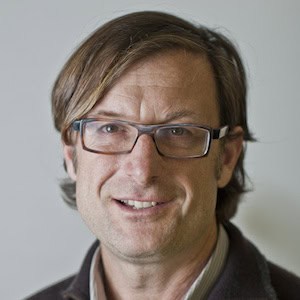
The hosts are joined by guest James Martel, political scientist at San Francisco State University and author of Subverting the Leviathan: Reading Thomas Hobbes as a Radical Democrat. James posits that there are two types of authority: vertical authority, which is top-down and hierarchical, and horizontal authority, which is collective. He believes that we often rely too much on vertical authority to affect change and that anarchy is desirable because it only relies on collective authority which, in turn, can accomplish everything that members of a society might need. Josh and Ken push back on this, naming Brexit as an example where collective action led to an unfavorable outcome and raising the concern that collective action breeds conformity, respectively. James grants that there can be better or worse forms of collective authority but neverthless argues that good implementations of collective action are more desirable than good forms of vertical action.
In the final segment, the philosophers discuss the merits of a mixed form of politics in which the governing body recruits both regular citizens and those with expertise to be involved. James believes that the fact that some have better developed political skills than others merely reflects the lopsided nature of our current political system — something we can and should change such that everyone is equally competent at “doing” politics. He ends with the optimistic sentiment that although engaging in the political process may seem difficult at first, people generally enjoy it after taking part.
Roving Philosophical Report (seek to 6:17) → Holly J. McDede explores how authority structures play out in schools. She reflects on her time at the Manhattan Free School (now known as the Agile Learning Center), which attempted to create an environment in which students had authority over their own education.
Sixty-Second Philosopher (seek to 45:46) → Ian Shoales takes a look at what our current presidential administration reveals about the relationships between authority, secrecy, and truth.
Josh Landy
Does the collapse of top down authority mean the rise of anarchy and chaos?
Ken Taylor
Or can there be authority without hierarchy?
Josh Landy
Who needs authority anyway?
Ken Taylor
This is Philosophy Talk, the program that questions everything…
Josh Landy
…except your intelligence. I’m Josh Landy.
Ken Taylor
And I’m Ken Taylor, we’re coming to you from the Marsh Theater in San Francisco.
Josh Landy
Continuing conversations that begin at Philosophers Corner on the Stanford University campus, where Ken teaches philosophy and I direct the philosophy and literature initiative.
Ken Taylor
Welcome, everyone, to Philosophy Talk. Today, we’re thinking about authority and resistance.
Josh Landy
You know, these are exciting times can I mean all those top down authority structures that once had everything in their vise like grip, they’re they’re starting to collapse. You know, it’s happening in politics in the media and medicine, even in education.
Ken Taylor
And that’s a good thing?
Josh Landy
Well, less hierarchy, more choice, more freedom. What’s not to like?
Ken Taylor
I don’t know, let’s see. How about the explosion in untrustworthy new sources, and the implosion of the old trustworthy ones, or the sprouting of self declared self financed demagogues of every stripe and the withering away of candidates vetted and tested by thriving political parties. And that’s just for starters of what not to like.
Josh Landy
You sound so nostalgic, Ken.
Ken Taylor
I plead guilty. Because whatever else you can say about those old top down authority structures that you think are such such terrible things, you know, they actually serve the people.
Josh Landy
They serve themselves and the elitist cronies. That’s why people resisted them. And that’s why they’re crashing down even as we speak.
Ken Taylor
Yeah, right, leaving us with chaos in the wake of their collapse.
Josh Landy
Not chaos, Ken—democracy. More voices having a say.
Ken Taylor
Too many voices, and no good way to decide which ones to eat? And which ones to ignore, Josh? That’s not democracy—that’s a cacaphony!
Josh Landy
Okay, democracy can get a little noisy, but that noise is the sound of good things emerging. When all ideas get a hearing. That’s when truth happens, when each of us is free to voice our dreams and fears. That’s when Justice happens.
Ken Taylor
Such a pretty picture. But some noise is just noise and not music at all, not the music of democracy at all, especially when it’s produced by people, you know, who flood the social world with discredited ideas, distorting propaganda, dangerous drugs, all kinds of stuff. And, again, that’s precisely what the old authorities promised to protect us from, isn’t it?
Josh Landy
They promised a good theory. But what about in practice, who was actually silenced in practice? Not the snake oil salesman. It was the marginalized masks, they were told to shut up and do as they were told Jeff, come on by oh, by the military industrial complex, the bureaucratic Education Complex, the corporate medical, pharmacological insurance complex.
Ken Taylor
Look, look, look, I’m not naive. I’m not going to deny that your gaggle of hegemonic complexes unique. I’m not gonna know that sometimes. They had—okay, their hidden agendas.
Josh Landy
You bet they did, Ken—that’s precisely why people were right to resist them.
Ken Taylor
But even so I’m still not convinced that our current chaos represents an improvement. Because Josh, it’s just it’s just not true that all voices deserve an equal hearing, as you seem to think that’s not true.
Josh Landy
I didn’t say all voices have an equal hearing. My point is, nobody’s automatically entitled to authority over somebody else. Authority has got to be earned if it’s going to be legitimate. And those ossified authority structures you’re so nostalgic for, Ken. They didn’t earn their authority—they usurped it.
Ken Taylor
I wouldn’t go that far. But look, but look, even if what you say is true. How do you think one can earn authority rather than you serving it? Especially when we face such a plethora of competing voices? Isn’t that the million dollar question for you? Oh, Mr. Oh-so-disruption?
Josh Landy
Yeah. All right. Fair enough. That is the million dollar question. And to help us think more about it, we sent our Roving Philosophical Reporter, Holly J. McDede, to tell us about a classic case of old authority—the school—getting disrupted, and the students, rather than teachers, calling the shots. She files this report.
Pi video
Like a lot of kids, Bart Simpson hates school
The Simpsons
Tonight’s homework assignment is—oh man, is it hot in here? I better take off my sweater. Down… with… homework? Don’t look at it, children. The shirt makes a good point! I’m with the shirt—homework rots!
Pi video
But we all know the kids who love school—like Bart’s sister, Lisa.
The Simpsons
Grade me, look at me, evaluate and rank me, oh I’m good good good and oh so smart!
Holly McDede
Teachers use grades to enforce authority. And that system worked on Lisa Simpson. It also worked on me. I remember staying up late at night trying to memorize the first 100 numbers of pi for an extra credit assignment.
Pi video
314159 this is pi followed by 2653589 circumference over diameter.
My math teacher ended up giving me extra credit for baking a pie instead. Social critic Noam Chomsky says pointless assignments like that one are just another form of control.
Noam Chomsky
If you can guarantee lots of stupidity in the educational system, you know, like stupid assignments and things like that. You know that the only people who make it through are people like me, and like most of you, I guess, who are willing to do it no matter how stupid it is.
Pi video
When I was a senior in high school, I dated an anarchist. He went to school called the Manhattan Free School, where there were no grades. He told me to follow him there, or else I would turn into a mindless robot. I told him my parents wouldn’t let me he told me parents were a form of social control. So that was that and off I went. Pat Werner trusted me to make this choice. She found the the Manhattan Free School because she believes that young people should have authority over their own education.
Pat Werner
I’d watched three children grow up from infancy. And that gave me the confidence to trust that all children come with gifts and capacities. And basically, we need to get out of their way.
Pi video
At the Manhattan Free School there were no grade levels. And 5 year olds and 18 year old shared the same space,
Leila Holmes
There were always like interesting collection of human beings trying to make a really weird system work.
Pi video
Leila Holmes also attended the school. Kids—and a few adults—vote on what rules to pass during democratic meetings. Of course, there was one big rule called the stop rule.
Leila Holmes
That was like the one non negotiable one. If someone says stop, you have to.
Pi video
Meetings often turned into philosophical debates about the pros and cons of profanity and playing video games all day. If you had a complaint about someone, you’d write it down on a piece of paper and send it to the Complaint Committee, which was also made up of kids
Leila Holmes
Decisions had to be made about our day to day lives that we cared about and that like directly affected you in like a very real way. And there wasn’t like an authority above you to make that decision for you.
Pi video
But while I was at the Manhattan Free School, Lisa Simpson was still in me. All I wanted to do was read write and study for AP exams, and I finally had the time to do that. But anytime I complained about the chaos at the school, my anarchist boyfriend would shout at me telling me I needed to participate more in the school’s democracy if I wanted to be truly liberated.
Thomas Parker
I definitely have a lot of memories, some more traumatic than others.
Pi video
Thomas Parker was one of the few adults in Manhattan Free School. He says anyone pushing the school in a particular direction was viewed as a threat to the group’s commitment to democracy.
Thomas Parker
There’s a lot of clarity around what we were leaving and what we were saying no to in the world, but not a whole lot of clarity on what we were going to create in its place.
Pi video
What happened to the free school after I left depends on who you ask. Some former students say there was a hostile corporate takeover. Thomas says it was rebooted into school with more identity. Now it’s called the Agile Learning Center. He says authority doesn’t have to be a bad thing.
Thomas Parker
Children naturally look to adults for signal for clarity, for understanding. We have authority or we have power that we can either use over people, or that we can use with people.
Pi video
What I learned from my time in Manhattan Free School is that resistance can look like a lot of different things. The next time an anarchist tells me to quit my job or quit my life and run away, I’m going to be defiant. I’m going to say no, I’m just fine right here. There’s power in going to school and there’s power and staying home. And there’s power and deciding to resist the resistance. For Philosophy Talk, I’m Holly J. McDede.
Ken Taylor
Thanks for that amazing and self-revealing report, Holly. I’m Ken Taylor, along with my Stanford colleague, Josh Landy was not an anarchist, I don’t think and we’re coming to you from the Marsh Theater in San Francisco.
Josh Landy
Our guest today is a Professor of Political Science at San Francisco State University. He’s the author of “Subverting the Leviathan: Reading Thomas Hobbes as a Radical Democrat,” and more recently, “The Misinterpreted Subject.” Please welcome to the Philosophy Talk stage, James Martel.
Ken Taylor
So James, how did you first get interested in these questions of authority and resistance to authority? Did you spend your youth like only on the frontlines of some, like resistance movement for something?
James Martel
That story does sound a little familiar, but one of my earliest memories is a Che Guevara poster on my parents refrigerator. So I think I just have it in my blood.
Josh Landy
You’re dead red diaper, baby.
James Martel
Yeah, maybe since I’m an anarchist, a black paper baby.
Josh Landy
So your’re a self-proclaimed anarchist? And so I have a question about, does that mean that you reject all authority in every domain? Or is it more about political authority is the thing you were contesting?
James Martel
So I think authority is a good thing, actually. And I think one of the unfortunate stereotypes of anarchists is that it’s just chaotic, and you’re stabbing people in, you know, bonfires in the street. I think authority is really important. But I think there’s two different kinds of authority, there’s what I would call vertical authority, which I like to call archaism, which is top down hierarchical authority, which we’re all very used to. And then there’s horizontal authority, which I like to call anarchism, which is collective, kind of like the Manhattan free school. But it happens all the time, in all sorts of ways that we don’t recognize, because we give all the credit to the vertical forms of authority.
Ken Taylor
Wait, we give all the credit to the vertical authorities, I mean, hierarchical authority. That sounds good in theory, that’s kind of like we’re all equals and right. But vertical authority is some people have authority over others, right. And in virtue of the having authority over others, what I say goes, and that, I mean, some people argue the fact that I’m an authority, the fact that the expert is an epistemic authority, gives me reason to believe what he says, just he’s saying or saying, Give me reasonably, okay, but in what sense is horizontal authority authority if I don’t have authority over you? And if I can’t make it, so just by my saying itself? In what sense? Is that horizontal? That sounds a little oxymoronic to me. That’s what I’m wondering,
James Martel
I think vertical forms of authority are kind of stealing from existing forms of authority that they don’t recognize. So the reason that you listen to somebody that you obey what they say is because they come out, they don’t. They’re like the tip of an iceberg. They come out of this vast kind of network have horizontal decisions and negotiations and thoughts. And then they kind of come in at the last minute, and they sit as if they just made it up, you know, right then and there.
Josh Landy
So is that true in every case? I mean, I certainly see some cases. I mean, I think science would be good example. Science is not just one great mind. It’s a huge network of people all working together in this common project. But, you know, what about charismatic leaders, you know, people like Martin Luther King or Gandhi figures. Without him, it’s really hard to imagine those movements being as successful as they were, I mean, surely they aren’t getting all of their authority from the horizontal.
James Martel
I think they are actually and in fact, I think charisma, you know, which Vabre talked about, which is this kind of special gift that the leader has, is actually just the name for all of the authority that he stole, or she stole from everybody else.
Josh Landy
So if that’s, that’s the case, why aren’t all leaders equally charismatic?
James Martel
Some are better thieves than others.
Ken Taylor
So it sounds like you think there could not possibly be legitimate vertical authority, right? That all would be vertical authority is somehow stolen or usurped. Is that right?
James Martel
I think that’s right. Because I think that why would you need to listen to somebody if you’d already made all the decisions together. Like what’s, what’s the other person? What do they bring except for loudness and violence and scariness.
Ken Taylor
So we’re gonna have to dig into this more deeply. This is Philosophy Talk. We’re coming to you from the Marsh Theatre in San Francisco. Our guest is San Francisco State political scientist, James Martel.
Josh Landy
How do we distinguish between legitimate and illegitimate authority and authority ever be earned? Or can it only ever be stolen? And does political authority have a different dynamic from for example, scientific authority?
Ken Taylor
How to earn legitimate authority—along with questions from our highly-authoritative, live audience, when Philosophy Talk continues.
Tiffany Austin
You gotta have freedom, freedom.
Josh Landy
Thanks to our phenomenal musical guests, the Tiffany Austin Quartet. This is Philosophy Talk. I’m Josh Landy.
Ken Taylor
And I’m Ken Taylor. Our guest is James Martel from San Francisco State University, and we’re thinking about authority and resistance.
Josh Landy
In a world full of competing claims to authority, how do we decide which ones to embrace and which to ignore? Join the discussion by stepping up to the microphone on either side of the stage.
Ken Taylor
So, James, okay, I want to go back to Josh’s idea about earned authority, you know, that can’t possibly be kind of like a one size fits all recipe for earning authority in different domains. Oh, authority in politics works one way, authority inside, hey, let’s take a vote on whether the evolution is true theory of evolution. That doesn’t seem right. So am I right or wrong, you got to earn it in different ways in different domains.
James Martel
Now, I think there’s there’s something to that, like, I would not want to have a pizza delivery person do brain surgery on me. But I also wouldn’t want to have a Nobel Laureate in physics do brain surgery on me, I think each person gets experience in different ways through different things in their life. And in that sense, they earn something. But I think politics is maybe unique in that it is something that we can all be experts in and we actually all should be experts in. And there’s no virtue in having more experience over somebody else.
Josh Landy
So this is something I don’t quite understand that you think about think about a scientist, you know, she’s gonna know things. That’s one thing, but she also knows how to know things. And she might have a track record, she’s made predictions, those predictions come true, you know, the rubber meets the road, you try something out, it works. And then you’re going to say, well, you know what, that’s the person I’m going to go to that’s, she’s going to be the surgeon for me, right? Why shouldn’t we say the same thing in politics? You know, here’s a person who not only knows some things, they’ve been out there for a while they got experience, but they also know how to know they know to find out new things. They’ve got a good track record, they’ve made things, you know, Barack Obama was a great community organizer, I’m gonna go behind him. Why shouldn’t it?
Ken Taylor
And you know, you’re a professor of political science. And Josh knows this. Plato said that a long time ago. But he thought democracy was the worst form of government, the second worst form of government, only, only better off than tyranny. And the best form of government is well, when the philosophers rule, but people are basically people who have a love of wisdom, people who want to know things and know how to nothing. We don’t give equal hearing to the person in medicine, there’s a technique as he called it in medicine. And so in governing the city, what’s wrong with that platonic idea?
James Martel
Well, I just think it’s sort of it’s sort of unfair, actually, from his in his period of time, it was a little bit different than the way we do things today. But it’s sort of unfair not to let anyone get any political experience except a small handful of people and then use that fact to prove that people aren’t good at politics. You know, it’s the right, it just seems like we have to, we have to,
Josh Landy
Do you think it’s a recipe for sort of complacency on the part of the rest of us?
James Martel
Exactly. It doesn’t prove that we’re not we don’t have any, we do not have any political experience, because we’ve been excluded from politics our entire lives. So how can you expect us to be good at it? And furthermore, it doesn’t necessarily mean that the people that do have a lot of experience of politics are doing a particularly good job. I mean, look at the way things are.
Ken Taylor
Well, there is that, okay, but there’s on the other side. So on the one hand, there’s the Plato’s kind of defense of aristocracy, right, the best should rule. And then there’s anarchy, which you’re a proponent of. But there’s John Stuart Mill. I wonder what you think about that, because sometimes John Stuart Mill, I hear echoes Stewart, John Stuart Mill, and what you said, John Stuart Mill says, when it comes to a person’s own life, he or she is an expert, when it comes to their own good, not because it’s best necessarily, but because it’s their life. So my life belongs to me. And I should have a kind of dominion over it. Right? And that seems right. That’s kind of like at the foundation of liberal democracy. But you seem to want to go further than that, right? I mean, I mean, because the million argument doesn’t lead to anarchy, right? It doesn’t lead to only this horizontal. So what what what gets you I mean, it sounds like UML started at similar point, my life, I’m not subjected to the whims of this person, or that person, or even the whims of customers, it’s my life, what I decide is best, because it’s mine. What does that not lead to?
James Martel
Well, where I disagree with mill is I don’t think of everyone as a single isolated monad, who’s just an expert on their own small life. I think, like, as a collectivity, we also know our own good, and we also know what’s best for us. So we should be allowed to express that in actual political ways. That’s really where I differ from him, right? Where I personally am not really a liberal.
Josh Landy
So do you? I mean, you know, I’m a Brit. And, you know, so I, you know, I’m suffering from a double trauma of living here currently, and my country busy destroying it. So, are you gonna sit there and tell me that we really know what’s best for us. They had a rally where they were brilliant. They had a referendum. In Britain, they called upon the wisdom of the population as a whole and they exercise what you’re talking about right there. Great. wisdom about politics? Is that the right way to do it? I mean, if you think about Brexit, to think to decide yes or no, whether it’s a good idea, you have to know about your complex trade arrangements, you have to know about Ireland, you have to know about the history of Europe. And was that the right move? Or shouldn’t they maybe you’ve decided, you know, we kind of need some experts to help us.
James Martel
I mean, my answer to there’s a version of what I said earlier, when you completely exclude people from politics, and then you give them a chance to make a decision, yes or no, that’s not really I mean, they don’t know, they don’t know anything, because they haven’t been involved in all the, but if they had been involved all the way along, then they would have made a great decision.
Ken Taylor
But wait a minute. Okay, this is the thought I have, given what you just said. My thought is that just as a, we don’t really let people do cutting edge science, unless they acquire certain tools, right? They have to go to be an undergraduate science major, then go to graduate school and get a postdoc, and then they get the fancy grant and get get to be the PI, the principal investigator, there’s a long apprenticeship that’s involved. Okay, shouldn’t there be why not in all domains of life, a period of apprenticeship, such that through this period of apprenticeship, you earn the right to a kind of authority. So that back to Josh’s thing, authority has to be earned is not anything goes it’s not all voices count equally, right? Couldn’t and then could not get us back to those top down authorities that you guys both hate, because they paid the price, they went and they did the thing they paid, they did the apprenticeship, and now we’re reaping the benefit of that.
James Martel
I think the beauty of politics is is one thing that maybe it’s exceptional, I don’t know that you get better at it just by doing it. So I don’t think I think the apprenticeship is the doing of it. So I think as people are allowed to participate in their own political life, they get better and better and better.
Josh Landy
I mean, yeah, you know, better getting power, or wiser and more just,
James Martel
I’m not sure either of those things. Just just more attuned to how it works, how to make collective decisions, how to work together with other people, all that kind of stuff, which is, which is an eye similar point is I think we engage in horizontal forms of authority making all the time we just don’t recognize it. And we give all the credit to the vertical forms. So we don’t recognize the way we are already apprentices at politics, we’re already pretty good at it. All the times we don’t stab each other. When we walk by each other in the street. There’s no necessarily police officers making sure we don’t do that. We’re working to you know, we’re working it out.
Ken Taylor
Oh, that’s a that’s an important point. But that’s something about authority, genuine authority, but the authority of the law. What does the rule of law mean? The law, the law is just a big stick. If the law is just a stick waiting to club you, and without the stick, you would you might steal the thing? That’s not really the law. It’s just force, right? The law supposed to command respect. And, and it commands respect, because it has some kind of like authority of our will. Right? So I don’t know if that’s pro a kind of horizontal authority or anti attack. But there are kinds of things that command respect and legitimate authority should command respect, just like the well trained doctor who cares about his or her patients. The doctor’s opinion commands respect, not just because if he or she forces you, I mean, what do you think about that?
James Martel
Well, I one thing I love to teach my students is the story by Machiavelli about Numa, the second king of Rome, he thought the Romans were totally uncivilized. So what he did is he lied, and he pretended that this goddess gave him these laws. And he told people, you better follow these, you’ll get killed by the gods, and he turned the Romans into civilized people. So they got the respect of the law. My question is, why do you have to do that? Why do you have to pretend and lie about an authority that you’re actually creating yourself in generating yourself within your community? Like, why do you need that externality just in order to be able to trust and believe in what that means?
Ken Taylor
If it’s a true, I think you’re right, if it’s a pure externality, then it doesn’t command respect and commands here, right? But if it’s from us, then it commands respect, but I think we should let them we’re listening to philosophy, you’re listening to Philosophy Talk. We’re talking about authority and resistance about I don’t know if they’re resisting, though, or authoritative audience, maybe a little bit at the mark theatre, and we got questions about live audience. Welcome to philosophy dogs, or what’s your comment or question?
Jay
Hi, I’m Jay from Mountain View. And I’m interested in the practical issues of the fact that we seem to be losing authorities of the kind you mentioned in the introduction, the arbiters of news, trustworthiness, you know, what is in fact, real and what isn’t. And I worry about everybody having an equal participation, this for two reasons. One is laziness. And the other is confirmation bias. Do we have in all of us the energy to do the work to figure out what we need to know in order to make decisions or to figure out who we should trust? And are we willing to confront the fact that we all have come from formation bias. And we have to fight against that in order to get to that truth.
Ken Taylor
Good question, Jay, from James, cuz you said, the more we participate in it, the better we get, but we got to come to it with certain dispositions and not the ones you mentioned. Because if we come with a disposition of laziness, we don’t like hard work, and we got confirmation bias, we’re never going to that apprenticeship isn’t going to do as any good.
James Martel
So I’ll say two things. First, the fact that we have this horrible president and everything is exactly the problem with vertical authority. If you’re lucky, and you get a good leader, things are okay. If you’re not lucky, you get horrible leaders, and sooner or later, you’re going to have a horrible leader. So but and then in terms of our own laziness and confirmation bias, I think that this is something that we can overcome, only collectively, like in other words, we check each other we it’s kind of a messy process. But you know, there’s nothing but confirmation bias with our current leaders. Right? They just talk to each other. There’s just a very small camp.
Ken Taylor
I think you’re optimistic. I think you’re busy. That is because I want to go back to mill I want to go back to mill Toronto just because he wants to get on YouTube. I think you’re optimistic mill says, look, here’s here’s the problem. First, he talks about the despotism of custom. That’s collectivity. Right? And which grinding down the individual. And he says, Look, most people live their lives, they don’t take control of their lives. And those people only need what he calls the ape, he who loves the world, or, or his portion of the world chooses life for him has no need of anything except the ape like capacity for imitation. Right? And that’s not really human life. And the temptation not to live a fully human life not to own your life, when you’re embedded in a collectivity is really powerful. And that’s what the collectivity wants of you. So what I don’t get why you think, Oh, get us all together. And what we’re not going to do is enforce conformity and all this sort of stuff. I don’t know. I mean, humbly, school was a mess. But it was trying not to enforce conformity, because it’s easy to enforce conformity in a group. So why be so optimistic about groups?
James Martel
Well, I think first of all, we are in groups all the time, and they are working like this is the thing that we don’t give ourselves enough credit for, I guess, when we speak, when we talk to each other when we make any kind of plan. We’re always dealing with groups. And and yes, it’s not perfect, of course, but it’s no worse than the vertical forms of authority. And the other thing I think that’s really important to keep point out is collectively we already know everything. The leaders are only know what they’re told, or what they believe or what they think are iceberg. That’s my iceberg. Exactly. So the collectivity already has all the information and all the talent that it needs, amongst itself. So it’s a matter of getting that figuring out how to do that.
Josh Landy
I don’t want to gang up on you and I and there’s a part of me, that’s very taken by all this, but but I have the same kind of worry or similar worries about whether we’re being a little too optimistic about human nature. I mean, I think, you know, I’m a literature person. So I think of The Brothers Karamazov, and Yvonne saying, Do people really want their freedom, you know, so Nigel Farage and Britain said, don’t listen to those experts. And everyone said, You are the expert. follow you. You know, and a similar thing happened in this country. It so in other words, if we actually don’t, isn’t there just something in our psychological makeup that makes us want to follow a leader? And if we take aim at expertise, isn’t that just a recipe for people following bad leaders rather than people having no leaders?
Ken Taylor
Spoken like David Brooks 2012.
James Martel
Them’s fighting words! Well, the first thing is in my classes, I always teach my students to not ever talk about human nature, because it’s such a unknown thing. And it’s such a it’s such a weapon. And I don’t think there’s necessarily is such a thing as human nature. I think we we respond to our environment, and we create environments that work better or worse. So they’re there. Of course, there’s there are bad forms of collective action, but there but I think the good forms of collective action are way better than the good act forms of vertical action, I guess that would be my main answer to you.
Ken Taylor
Welcome to Philosophy Talk. What’s your comment or question?
Beckett
Hi, my name is Beckett from San Mateo. I like this idea of horizontal authority that you’re describing, but I’m worried that it just can’t win. I see a lot of ineffective horizontal authority, like the Occupy movement. And I also believe in the sort of Darwin idea of like, the strongest ideas when and without somebody leading them, I don’t know if they’re gonna survive. So what do you say to that? How can horizontal philosophy one?
James Martel
That’s that’s a really good question. I think we horizontal forms of authority can when when we stop by not believing in it. In other words, like we have all the power already, it’s just that we keep giving it away. So all we have to do is not do that anymore. And you’re right, in the sense that every time any kind of horizontal authority has tried to express yourself openly without recourse to vertical authority. It’s been attacked very violently. Right. And that’s that’s an ongoing problem.
Josh Landy
But it wasn’t just that Occupy was attacked. It also had real problems articulating its platform. And that was precisely you know, there was a trade off right didn’t more voices is more Freedom of participation, but it’s less coherency and kind of potency. And so it wasn’t just the attacks from the outside, I was having a real hard time articulating what I’m standing for.
Ken Taylor
You sound like you think it’s an either or. But okay, I’m going to play Pollyanna, okay? A both and Pollyanna, right? So horizontal authority granting structure in which all voices get to be heard and have a take. And there’s some reconciliation. So an equal vote in in for the office of the presidency, which we don’t have here. But an equal vote for an office would be a horizontal citizen to sit us and deliberating, deliberating deliberate, deliberate as long as you like, but then take a vote, and endow somebody with with vertical authority, their vertical authority, because they have certain powers to do things that others can’t do their vertiv vertical authority rest on our horizontal horizontal foundation. I mean, why not like that?
James Martel
I think that I will repeat an earlier point that I don’t think the vertical authority figure brings anything that we don’t already have. So that’s why I think they’re just stealing that authority rather than sort of benefiting from it. I really think when we vote, we’re just giving away our political power to somebody else. So if we deliberate forever and ever, that’s the good part. Once we vote and then we step back, that’s the bad part like then we’re given up and let somebody else do it. make all the decisions.
Ken Taylor
You’re listening to Philosophy Talk. We’re thinking about authority and resistance with James Martel from San Francisco State University.
Josh Landy
When we are tyrannized by illegitimate authority, is resistance futile as the Borg would have it, or are there effective ways of fighting back?
Ken Taylor
We’re coming to you from the Marsh Theatre in San Francisco. We’ll take more questions from a very lively, authoritative, resisting (sometimes) audience, when Philosophy Talk it continues.
Tiffany Austin
I fought the law and the law won.
Josh Landy
thanks once again to our live musical guests, the incredible Tiffany Austin Quartet. I’m Josh Landy, this is Philosophy Talk, the program that questions everything…
Ken Taylor
…except your intelligence. I’m Ken Taylor. We’re thinking about authority and resistance. So we got lots of questions here. Welcome to Philosophy Talk.
Martha
Thanks. I’m Martha from Oakland. And I wanted to get your comment on a model that I’d heard about which is the establishment of a citizen board alongside an elected government. And the citizens are vetted, but they have a similar voice that offsets that of the elected officials. And this is in place. And unfortunately, I can’t remember where but in a couple of jurisdictions, and I just thought it was a an interesting model.
James Martel
We think I’m all for that kind of stuff. I think that’s just allowing people to have more of a political say in their lives and more control. The only thing I would say is that’s not a replacement for the kind of widespread horizontal forms of authority that I prefer. But it’s definitely better than nothing.
Josh Landy
What about why not have a mixed form of, of politics, where we try to get the best of both. So you try to recruit regular citizens, so to speak, to get involved in the, in the political process? So as he rightly points out, we can, that’s a way of learning about what’s actually going on what makes it different. But we also get to recruit people who have a particular expertise, you know, maybe they’ve had more experience in that particular area. Or maybe they’re just better, you know, their mind works in that particular way. And if someone is a great musician, somebody else has a kind of flair for politics. Why shouldn’t we recruit people into those leadership positions? Were really good at that, even as we participate to the extent that we can.
James Martel
I still, I still think that the those kinds of people, those kinds of skills, that they have only a reflection of the kind of lopsidedness of our current political structure, they just do politics.
Josh Landy
You’re separating off politics, you’re willing to agree that the pizza person shouldn’t be your brain? Yes. Why is it different? You know, the brain surgeon has particular skills and particular expertise and a particular background going through a particular training. What’s the what’s the big what’s the big metaphysical difference between neurosurgery and politics.
James Martel
There is a difference. I think, we don’t all have to do brain surgery and we don’t all have to deliver pizzas but we all have to be political subjects. So politics is something that is we all experienced and it affects us so that’s a reason why we should all take charge of I think it is Actually metaphysically different than these other fields.
Ken Taylor
Let’s get some more questions. Welcome to Philosophy Talk, sir.
Evan
Hi, I’m Evan born and raised in San Francisco. Recently, the, arguably the largest example of a horizontal power structure is social media and the internet.
Josh Landy
How’s that going?
Ken Taylor
That’s the one I hate and Josh loves, right.
Evan
So, um, my question is, recently, we have been seeing self stratification within the internet and people resorting to their own echo chambers, which develops a sense of populism that would lend itself to create the kind of linear power structure that you are so against. So what is to stop people from manipulating a horizontal power structure to create their own a self empowering vertical power structure?
Ken Taylor
That’s an excellent question. I just want to remind you, that goes back to our first question from Jay, from Mountain View, I think it was. But it’s a similar question, given confirmation bias, information clustering, right. And our desire for authority. Yeah, you don’t believe? I think I think I think we’ve got a nice book. These are very powerful questions, and very of this moment in our international landscape.
James Martel
Well, I mean, the first thing I’ll say is, or maybe repeat myself is that given the fact that we have a very strong vertical authority structure right now, obviously, that has not stopped this thing that you’re afraid of from happening. And I would say, in general, at this, that the internet and social media is is kind of the booby prize for not having a political life. So people turn to that. And it’s not it’s not a structured, it’s not it is like chaotic and crazy and doesn’t make any, it’s not itself a political forum. So I think I wouldn’t say what happens there is what would happen if we actually were political subjects and responsible for online.
Josh Landy
So that maybe this hasn’t been the right way to start the revolution, so to speak, or to resist? What would you if you were writing a book, you know, for budding resistance fighters, you know, in various domains, right, what would be the single most of the first thing you would tell people, the one most important tool they’re gonna need.
James Martel
I would tell them that the power of the state is absolutely nothing without our giving our power over to it. And I would just have them remember that because the state’s whole role is it is very terrifying, and it’s spectacular. And it does all this stuff to make sure that we don’t ever think that we could live without it. And it really is nothing in and of itself. And that’s that’s my main point, everything that the state has it takes from us.
Ken Taylor
So I still want to broaden this out. Suppose I’m a Christian fundamentalist, not to become Christian fundamentalists. And I think a top down authority of science is to be resisted. Right? I think me can tailor that, you know, you are to surrender to the top down, and I’m going to help you surrender to the top down authority of Western science. What have I gotten wrong there? Why is the top down authority of science, not like the top down authority of the state? You say the state is always you’ve served its authority as science, you served epistemic authority from, you know, the Christian non believer the shamanistic culture? The you know, I mean, there’s the science What did the judge call it? The he didn’t say this, but the science technical, something complex. Is that just as hegemonic as…
James Martel
Definitely, I definitely think it is, I think, I think it may be symptomatic of the way that our political lives are kind of empty, and we don’t participate in it that therefore, we allow other kinds of forms of expertise to dominate a similarly because as modeled on that original domination,
Ken Taylor
So you would say to the Christian resistance and fundamentalist resistance, or whoever is resisting modernity, you would say the same thing that you would say—
Josh Landy
Resist those climate conspirators!
Ken Taylor
Resist those—see that sounds, I don’t know, I don’t, I don’t think I want to follow you. They’re more comfortable with you saying that to the state, and far less comfortable you saying that to science. And I wonder why can you help me understand? Am I just being crazy to see it disappear?
Josh Landy
It gets back to James’s point earlier about, you know, the fact that well, we don’t all have to do science. But you know, politics is something we’re all collectively responsible.
Ken Taylor
We all have to live with the results of science. It’s everywhere. Come on, its consequences, not just science, technology, the whole scientific, technological, bureaucratic industrial, military complex, as you would put there, it’s everywhere. It’s pervasive, it’s ruining the planet. It’s up ending human life in every No, it’s there. It’s pervasive, it’s as pervasive as the state.
James Martel
I think if science was sort of left in its own box, and then you could have, you know, expertise within that based on your somatic whatever you’ve done. I think collectivities could consult with scientists and see how much that aligns with their political interest and stuff. I think this current thing about climate change. It’s kind of crazy to even talk about what people believe and don’t believe there’s all these flat earthers now, I think all of that is reflection of being having no political life and people turn to crazy stuff on it. I’m not saying that they would all pick things that you and I would like if they were actually politically empowered. I’m just saying it wouldn’t. What we’re seeing today is no indication of what that would be like. Welcome to Philosophy Talk.
Katherine
Hi, my name is Katherine. And I’m from Berkeley. And it seems that what I’m hearing a lot about are sort of these lines drawn between things like science and economics and politics. But our ability to imagine what we could shape and how we could think and how we could be is shaped by our access to the political process, our access to knowledge. And so are the lines really so clear, or it seems that they’re really all the same thing?
Ken Taylor
So I think you’re under suffering. I have this notion of what I call transformative democracy. But it’s back to to these questions. I think, any kind of structure that leaves human beings, as we currently are with our confirmation bias, our laziness or disengagement, blah, blah, blah, is a disaster. I don’t think human beings as they are, but the question is, can there be structures that transform our imagination and get us to receive possibilities? I don’t think those would be top down. I don’t think it’d be vertical. I think it’ll be complicated. I don’t know. Why do you think?
James Martel
I think I mean, maybe you call me an optimist before? And I think I am. Because I think that when people actually get a taste of engaging in politics, they love it. People think it’s going to be really hard. It’s going to be really boring. It’s going to be too many nights and taken and all that kind of stuff was outlined by Oscar Wilde the problem of socialism is one doesn’t have enough free evenings. I think once you once you actually crossed that threshold, I found in my own personal life, that every time I get more involved in politics and actually come to those meetings, it’s it’s more exciting, and it’s just something that we don’t get to experience enough. So I think it’s really a shame that human beings are excluded.
Ken Taylor
Well, James, you are an optimist, and that’s good. And I like you know, in my advancing age, I get less and less optimistic, like outwardly, but it’s good. On that note, though, I gotta thank you for joining us. It’s been an authoritative conversation to which I feel no resistance.
Our guest has been James Martel, Professor of Political Science at San Francisco State University, author of “The Misinterpreted Subject.” So Josh, are you feeling my authority now?
Josh Landy
You know, like the great philosopher Eric Cartman said two important things: “Respect my authoritah!” and ski gay, me and him. You know, if you don’t respect me, I look I mean, James could be right. And there’s a Parliament’s really optimistic if we created radical new systems, then maybe Indeed, our we can’t even imagine what it would be like then. And maybe there would be a different kind of human nature. But given the way human beings are and have been for a very long time, I’m not sure that the attack on authority and expertise has really done.
Ken Taylor
Look, I agree with him. In a certain sense. If you go back to the Pleistocene, where we evolved, we have you know, the your average hunter gatherer so maybe 36 persons over the course of an entire lifetime. They saw them face to face, they deliberated about what they had very on hierarchical structures. It wasn’t until agriculture and then industry that might decide to go Oh, yes, that’s it got really hierarchical and more and more and more and more and more hierarchical. So we’re not involved in this and they try and imagine our way out of these large hegemonic structures in a life affirming way. It’s so hard. But you know what, how things are worth doing. And this conversation continues at philosophers corner at our online community of thinkers where our motto is, with apologies to Descartes, Cogito ergo Blogo, I think, therefore I blog and you to become can become a partner in our community, just by visiting our website, philosophytalk.org.
Josh Landy
And if you have a question that wasn’t addressed in today’s show, either here or on the radio, we’d love to hear from you. Email it to us at comments@philosophytalk.org, and we may feature it on our blog. Now, only one guy’s got the authority to philosophize this fast—it’s Ian Shoales the Sixty-Second Philosopher.
Ian Shoales
Ian Shoales… To get out of Poland in 1957, Jarosław Kaczynski ccreated a fake foundation, and forged letters from communist authorities, to grant him passage to America. The trope of people not being who they pretend to be was a major theme in his work, most famously in BEING THERE, about a blank person on whom people project gnomic wisdom. A controversial figure himself authenticity-wise, Kosinski used to tell how he commissioned a fancy uniform that looked like the uniform a general might wear to a formal occasion. Supposedly, this gained him entry into all sorts of events, jumping the line at opera funding galas, getting out of speeding tickets, getting respect from dignitaries. Authority is easy to imitate, is his point. This is the essence of many confidence games, and much satire. How many true crime stories involve a man who is always off on mysterious errands that he can’t tell his lover about. He’s with the CIA, or the FBI, on a top secret mission. By the time she’s learned the truth – he’s really just a thief with narcissistic personality disorder, and she’s lucky he didn’t kill her- all the money has been drained from her account, he’s changed his name and moved on to his next victim. The con game depends not on disinformation, but lack of information. The less you know the more convinced you are. Where do you go for weeks at a time? I can’t tell you. It’s top secret. It makes him seem glamorous and important, and aren’t you the silly fool for doubting him? The secrecy is an aspect of his authority. There seem to be a checklist of aspects right now for authority to present. Red tie. Blue suit. Stern visage. Save the smiles for the grandchildren, don’t waste them on the American public. Snappy salutes. Stillness. Avoid big gestures. Point with thumb and fingers joined at the tips. Don’t overthink authoritarian pronouncements. Don’t make it a fence or an obstruction or a hedge or an impediment, even if those are what it turns out to be. It’s a wall. Call it that. Confusing and maybe wrong, yes, but simple. Easily grasped. The President’s tweets seem to both enhance and undermine his status. They enhance it by being bold simple proclamations, distributed freely to the world. They diminish it by being Tweets, ephemeral blurts blatted out at random by any damn fool with a smartphone. Also, it has become common to note that what the President tweets does not always reflect what we once called truth. This has also been seen as an enhancement of the President’s power. Truth is what he makes it, it’s fungible. He often points out “fake news,” but he seldom points to any specific lie on the media’s part, but more to general widespread journalistic irresponsibility, colored by unwarranted rancor towards him. Why couldn’t that be true? His administration keeps shrinking, which also enhances his authority. Less in the frame means more focus on him. The flurry of recent books about White House chaos also helps. The chaos swirls around him, the calm at the center, watching television, tweeting, golfing, somehow keeping the balls of the Republic in the air, without having the least idea how to juggle. That’s a leader. This has led to mixed feelings, and new notions about what authority is any more. Some of the President’s more imaginative followers follow a fellow called Q Anon, a deep throat guy in the deep state, releasing online messages that the President is about to make his move any minute against globalist lackeys, led by Hillary Clinton somehow. The President right now does not have full authority, because sinister forces are thwarting him. Strangely enough, the President himself seems to doubt his own authority, taking the word of people he saw on television over the real life advice given by military and intelligence advisers. He’s like a con man pretending to be President so he can put one over on somebody to make a score, only he really IS President, which makes it hard for him to empty his wife’s bank account, change his name, and head for the Bahamas. The point being, I think, that authority is a two way street. Whether you end up as a statue in the square or having your head stuffed on a pike by the side of the road could just be an accident of history. Or wearing the right uniform at the right time to the right party. I gotta go.
Ken Taylor
Philosophy Talk is a presentation of KALW Local Public Radio San Francisco, and the Trustees of Leland Stanford Junior University, copyright 2019.
Josh Landy
Our Executive Producers are David Demarest and Tina Pamintuan. Special thanks to Merle Kessler, Lisa Wang, Conchita Perales, Lauren Burgat, and Aaron Aguilar.
Ken Taylor
Thanks also to our musical guests – Matt Clark on piano, David Ewell on bass, Sly Randolph on drums, and Tiffany Austin on vocals.
Josh Landy
The Senior Producer of Philosophy Talk is Devon Strolovitch. Laura Maguire is our Director of Research. Our Marketing Director is Cindy Prince Baum. Dan Brandon is the Technical Director.
Ken Taylor
Support for Philosophy Talk comes from Stanford University, and the Partners at our online Community of Thinkers.
Josh Landy
The views expressed or mis-expressed on this program do not necessarily represent the opinions of Stanford University or our other funders…
Ken Taylor
…not even when they’re true and reasonable.
Josh Landy
The conversation continues on our website — philosophy talk dot O-R-G, where you too can become a Partner in our Community of Thinkers. I’m Josh Lanfy
Ken Taylor
And I’m Ken Taylor. Thank you for listening.
Josh Landy
And thank you for thinking.
Guest
Related Blogs
-
April 22, 2019
Related Resources
Books
Martel, James (2007). Subverting the Leviathan: Reading Thomas Hobbes as a Radical Democrat.
Chomsky, Noam (2005). On Anarchism.
Kosinski, Jerzy (1970). Being There.
Web Resources
Kerl, Eric. “Contemporary anarchism.” International Socialist Review.
Epstein, Barbara (2001). “Anarchism and the Anti-Globalization Movement.” Monthly Review.
Jenkins, Gavin (2018). “The Anarchist Who Wants To Abolish Government…By Joining It.” The Outline.
Long, Roderick T. (2004). “Libertarian Anarchism: Responses to Ten Objections.”
Lansberg-Rodriguez, Daniel (2014). “Should Citizens Have a Right to Rebel?” The Atlantic.
Get Philosophy Talk
