Akan Philosophy and Personhood
May 19, 2024
First Aired: October 24, 2021
Listen


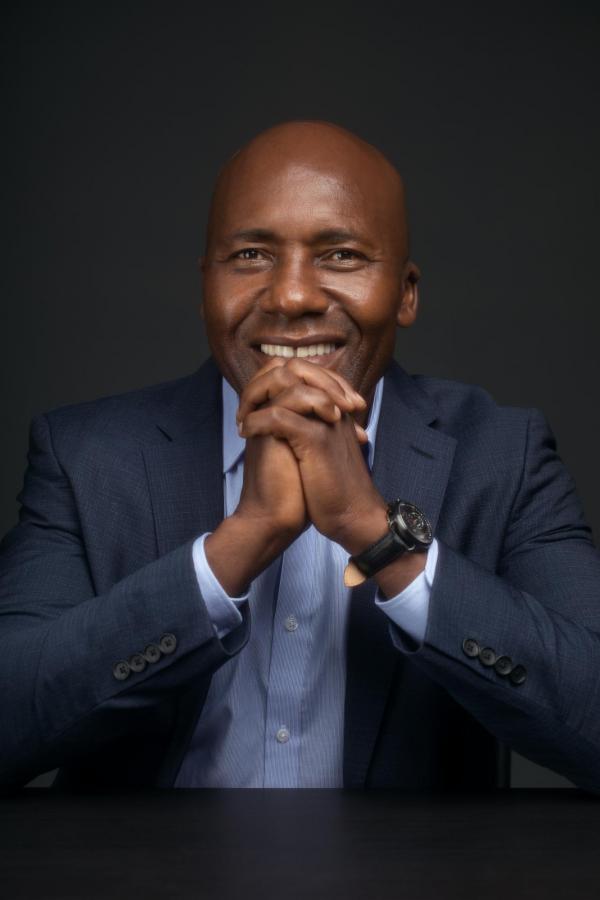
The Akan people of West Africa have developed a system of metaphysics, epistemology, and moral philosophy with a special focus on personhood. For the Akan, their conception of a person is not just a matter of theoretical interest—it has far reaching practical implications for their social institutions and communal practices. So what exactly is the Akan notion of personhood, and how is it rooted in Akan traditional culture? How does the Akan emphasis on the social nature of personhood promote trust, cooperation, and a sense of responsibility to the community? And can this communal perspective help restore cultural identity in a postcolonial Africa? Josh and Ray get personal with Ajume Wingo from the University of Colorado Boulder, author of Veil Politics in Liberal Democratic States.
- Community
- |
- Epistemology
- |
- Metaphysics
- |
- Morality
- |
- person
- |
- Self
- |
- West Africa
Should your identity be defined by your community? What can West African philosophy tell us about the self? Josh provides the Akan definition of personhood as one who contributes to their family and community, but Ray brings up a variety of potential problems in response. They ask about those who disagree with their community, as well as people who can’t contribute due to a lack of education or having disabilities. They discuss whether accounting for individual levels of opportunity is enough to counteract these problems, or if our inner lives are just as critical as our communities.
The hosts welcome Ajume Wingo, Professor of Philosophy at the University of Colorado Boulder, to the show. Ajume talks about the metaphysical background of Akan philosophy and the idea that everyone has an irreducible dignity. Ray asks how achieving personhood and having a pre-existing universal equality fit together, and Ajume describes his own position on whether contributing to the community is necessary. Josh wonders about the types of contributions in Akan philosophy. Ajume provides examples that include having children, doing public work, and successfully criticizing the community.
In the last segment of the show, Josh, Ray, and Ajume discuss if non-humans can achieve personhood and the differences between Western and Akan conceptions of the soul. Ray agrees with the ideals of Akan philosophy of person, but they are more cautious about the actuality of living them out. Josh asks about what the rest of the world, including the United States, can learn from Akan philosophy. Ajume suggests that the importance of community is a critical concept, along with the dual emphasis on human rights and meritocracy.
Roving Philosophical Report (Seek to 3:44) → Holly J. McDede learns about the cultural context of Akan philosophy, including how the Akan musical tradition differs from its European counterpart.
Josh Landy
Coming up on Philosophy Talk…
Kwasi Ampene
In my culture, if you are a composer you compose for the community. You don’t put your name on it.
Ray Briggs
Akan Philosophy and Personhood.
Josh Landy
What makes you the person you are? Is it something inside your head? Or is it a relationship to your community?
Arthur Hughes
You have a strong communal identity. You fit in the society. You know your place in the community.
Ray Briggs
How does a Akan philosophy think about the self?
Ajume Wingo
The idea of thinking deeply and reflecting on one’s life and their lives of other people is part of being a person.
Josh Landy
Our guest is Ajume Wingo from the University of Colorado at Boulder.
Ajume Wingo
It’s not society as an aggregate—one plus one plus one plus one plus one. It is the community that gives meaning to individual lives.
Ray Briggs
The Akan idea of personhood
Josh Landy
…coming up on Philosophy Talk.
Josh Landy
Is your inner life what makes you YOU?
Ray Briggs
Or is your identity about connecting to your community?
Josh Landy
How can West African philosophy help us think about the self?
Ray Briggs
Welcome to Philosophy Talk, the program that questions everything
Josh Landy
except your intelligence. I’m Josh Landy.
Ray Briggs
And I’m Ray Briggs. We’re coming to you via the studios of KALW, San Francisco Bay Area,
Josh Landy
continuing conversations that begin at philosophers corner on the Stanford campus where Ray teaches philosophy, and I direct the Philosophy and Literature initiative.
Ray Briggs
Today, we’re thinking about Akan philosophy, specifically, its conception of personhood.
Josh Landy
You know, Ray, Akan philosophy is really cool. There’s this centuries old tradition in West Africa of discussing big topics, like the meaning of freedom, the most ethical way to live, what it means to be a person.
Ray Briggs
So what does it mean to be a person in Akan philosophy?
Josh Landy
Well, this is philosophy we’re talking about. So you’re not going to get everybody to agree on one definition. But I think broadly, being a person means contributing to your family and community, participating in local rituals, doing important work, getting married, having children.
Ray Briggs
Wait, so you have to get married and have children or you don’t count as a person? So if I’m single, I’m not even a real member of the community?
Josh Landy
Well, you’re not a member of a traditional West African community. I mean, if you wanted to translate Akan values into an American cultural context, you probably have to think about what family and community mean over here.
Ray Briggs
Okay, wise guy. Wha do they mean?
Josh Landy
Well, they could mean lots of things. I mean, you don’t have to have kids, there are plenty of ways to contribute to your community around here. You, could take your nephews and nieces to a ballgame. You could work in a soup kitchen on weekends, you could even teach the next generation.
Ray Briggs
Whew, at least I’m doing something right. But look, I’m still not sure we should be defining ourselves in terms of our communities. Sure, that seems great when you’re living in harmony with the people around you. But what happens when you try to disagree or criticize them? Could your personhood get taken away?
Josh Landy
I don’t think Akan philosophers have to say that. I mean, critics and dissenters are not always popular. But they’re certainly still contributing. Wouldn’t it be worse if the community did morally questionable things without reflecting on itself? So a critic definitely still counts as a person, maybe even a really cool person.
Ray Briggs
Okay, what about somebody who can’t contribute? Like, maybe they’re disabled? Or maybe they never got a proper education? Did they count as less of a person?
Josh Landy
Well, actually, there’s already been some philosophical discussion about that. One Akan philosopher, Kwasi Wiredu says, you have to adjust for people’s level of opportunity. So, you know, if you overcome obstacles and make even a small contribution to society, you’re gonna end up being more of a person than someone who made a big contribution, but, you know, started out on third base, they started out with every privilege.
Ray Briggs
I don’t know, I still think it’s important to talk about people’s inner lives, you know, not just their contribution to society.
Josh Landy
Yeah, okay, fair enough. But you know, the Akan people also have a lot to say about people’s inner lives. Traditionally, they believe that each of us is composed of three parts, the okra, or soul, the sunsum, or spirit and the honam, or body.
Ray Briggs
Yeah, that sounds kind of like Plato and Freud. They also thought that human beings could be divided into three parts. Or maybe it’s like Descartes, he thought we had two parts, a body and a mind.
Josh Landy
Those are some really cool analogies. Ray, I wonder if they hold up?
Ray Briggs
Well, maybe our guest can tell us. Ajume Wingo from the University of Colorado Boulder.
Josh Landy
And maybe we’ll hear more from our Roving Philosophical Peporter. She was able to find out about the cultural context of a Akanphilosophy. Holly J. McDede files this report.
Kwasi Ampene
I tell my students all the time, no culture is perfect. My Akan culture is not perfect. American culture is not perfect, but we can learn from each other.
Holly McDede
Kwasi Ampene is a professor at the University of Michigan. He specializes in the musical traditions of the Akan people. He’s also Akan and growing up, music was everywhere.
Kwasi Ampene
I mean, music is never separate or odd at all. It is part and parcel.
Holly McDede
Kwasi he was born several years after Ghana gained independence from Britain. But when he went to school, he kept reading about European music and how wonderful Beethoven is.
Kwasi Ampene
And I kept asking myself, what about this music that I grew up with? What about this?
Holly McDede
He decided he wanted to bring the music from his village to the rest of the world
Kwasi Ampene
So that the world can read about my village.
Holly McDede
When he began his studies, he saw how music was often not considered to be a composition unless it was written down. European music is often traced to famous composers, but in the Akan tradition, people don’t put their names on everything.
Kwasi Ampene
We have songs. We have all this grand music, we have music for xylophones, we have- they didn’t just fall from heaven. Individuals created them. But they have to understand that in this culture is a commonwealth based culture when you do something for the community.
Holly McDede
Everyone is expected to add something to the music and people aren’t judged. To show what that can look like, Kwasi began leading groups like the University of Colorado Boulder Highlife Ensemble.
There is no line drawn between the performers and the audience. In European music, the ending is often fixed. Take the Hallelujah chorus for example.
Kwasi Ampene
The chord that is projecting finality is there in European culture.
Holly McDede
In Akan music, Kwasi says, the music is more circular.
Kwasi Ampene
I think another example also in African America is when they do their song, you know they do *demonstrates with clapping.* Then, they start again. Because they couldn’t end it. And then they start again and again. And then they started the same song. If you’re not careful, you’ll be doing that song for two hours.
Holly McDede
The emphasis around community not only shows up in music, but also in language.
Arthur Hughes
It’s basically a philosophy about life.
Holly McDede
Arthur Hughes is Akan but grew up reading Latin American romance and travel novels. Now he’s the director of Latin American Studies at Ohio University where Akan is taught. Hugh says in his culture, you’re not considered an adult until you have a proverb to back up every thought you have.
Arthur Hughes
You do everything because of what somebody has already said, or thought or decided.
Holly McDede
For example, this proverb, you do not point with your left finger to your family house.
Arthur Hughes
And the reason behind this is that the left fingers was to show contempt. And you do not do things that disgrace your family or bring your family’s honor down.
Holly McDede
From Ohio, Hughes stays connected on WhatsApp. The chat with family and friends in West Africa are constant. On two occasions, he’s had to take himself off the platform because it’s too much. They talk about everything from politics to religion to football.
Arthur Hughes
There’s no specific agenda. Yeah, I don’t- don’t tell me why Arsenal is better than Manchester United. I don’t need to know that.
Holly McDede
In this culture, there’s a family elder who keeps these connections going. His sister recently got the task. She’s just 63 and head of the family now
Arthur Hughes
She holds a position, she has to be consulted on matters relating to the family, births, deaths, funerals, whatever. And with technology, she has also become the keeper of the Birthday Calendar. So she sends out messages on everybody’s birthday.
Holly McDede
And thanks to proverbs and WhatsApp, the Akan community stays connected and the traditions keep spreading. For Philosophy Talk, I’m Holly J. McDede.
Josh Landy
If you want something done properly, give it to Holly J. McDede, that’s my proverb for the day. I’m Josh Landy, with me as my Stanford colleague Ray Briggs and today we’re thinking about Akan philosophy.
Ray Briggs
We’re joined now by Ajume Wingo. He’s Professor of Philosophy at the University of Colorado Boulder, and author of “Veil Politics and Liberal Democratic States.” Ajume, welcome to Philosophy Talk.
Ajume Wingo
Thank you.
Josh Landy
So Ajume, you’ve written a lot about subjects like human rights, democracy and freedom. What got you interested in questions of selfhood?
Ajume Wingo
A lot. Let me start by sharing an image. If you go into the Akan community, you will- you’re going to see a motif of two crocodiles, shared in one stomach with their head locked in combat over the mastication of food. And the caption is “scumbag makes up crocodile.” When they eat they fight even though the food is going to end in the same stomach. When many people see this motif, most of the time, they say to themselves, oh foolish crocodiles. Why fight when the food is going to end up in the same stomach? The real interpretation is that mastication of food or eating ice cream is as important as the food itself, if not more important, and that everyone deserves that aesthetic aspect of life. So what got me motivated was coming to the west, and seeing the system of morality that is more or less top down, or command obedient morality, going back to Plato, who had this idea of the avenging God, or punishment, and reward after death. And so that caused me to look back into my own culture. And in looking back, I came across Kwasi Wiredu’s piece on the subject. And that led me into philosophy of personhood.
Ray Briggs
That’s really cool. Like the being able to link two philosophical traditions. We’re gonna be talking more about selfhood in a bit. But before we get into that, could you tell us something about Akan philosophy more generally?
Ajume Wingo
Yes, the Akan ethnic group, dates back to before the 18th century. And like any long standing culture, they develop a system of philosophy, including metaphysics, all the kind of branches of philosophy that we know of, that have more interest to me is the philosophy of personhood, which I find really unique, and uniquely African, in so many different ways.
Josh Landy
If I understand correctly, within selfhood, at least, there’s first of all, a division between the physical part and the non physical part. So you’ve got the body or honam, and then you’ve got the non physical part. And then that subdivides again, if I understand correctly, into a sunsum, and an okra, and sunsum is sometimes rendered spirit and okra soul, is that about right? And so what is the- what are these two non-physical parts?
Ajume Wingo
Yes, this [unintelligible], a human being, you have this tripartite constitution of the human being, or three parts, constitution of a human being the okra, the sunsum and the honam. The honam is basically the body, the physical body. And the okra could be rendered roughly and I mean, very roughly, into English as the soul. And the sunsum could also be rendered roughly as a spirit maybe. And the reason why I say roughly because they do not correct upon to the Cartesian rendition of the soul and the mind which took to the Akan extensions. For the Akan, the okra and the sunsum are paraphysical, not totally physical, or not totally not physical.
Ray Briggs
So your okra and your sunsum are located where your body is, sort of?
Ajume Wingo
Yes, they are located in your body. And that is where the idea of the para-physical comes in, because we [unintelligible] the idea of how does the physical interact with the non physical? That has been an expanding question in Western philosophy since Descartes even going back to Plato, but for the Akan the answer is very clear. You cannot have the physical and the non physical interacting unless the two has some sort of direct relationship. And in this direct relationship, they have the physical aspect of it. And that’s why Kwasi Wiredu call it para-physical.
Josh Landy
You’re listening to Philosophy Talk. Today we’re thinking about Akan conceptions of personhood with Ajume Wingo from the University of Colorado Boulder.
Ray Briggs
Can you be a person all by yourself? How do work, rituals, and family connections support you in being who you are? What happens when you’re out of step with the ideals of your society?
Josh Landy
Individuals, communities and conversations across cultures, along with your comments and questions when Philosophy Talk continues.
Renowned Ghanaian singer Alex Kwabena Konadu, and one of his Highlife songs whose title translates as, “The Death of One’s Child Disturbs Another.” We’re thinking about the Akan of Ghana and their views on personhood. I’m Josh Landy, this is Philosophy Talk, the program that questions everything
Ray Briggs
except your intelligence. I’m Ray Briggs, and our guest is Ajume Wingo, from the University of Colorado Boulder, author of “Veil Politics and Liberal Democratic States.”
Josh Landy
We’re pre-recording this episode. And unfortunately, we can’t take your phone calls today. But you can always email us at comments@philosophytalk.org. Or you can comment on our website where you can also become a subscriber and get access to our library of more than 500 episodes.
Ray Briggs
So Ajume, Josh and I were arguing earlier at the top of the show about whether you can be a person if you don’t contribute to your community. Do Akan philosophers have a consensus about that?
Ajume Wingo
Yes, the Akan philosophers I mean, like every other philsophers, there are going to be differences. And that’s what it means to be a philosopher. It is a general consensus around the area of, of a graduated system of personhood. You can be a person at different levels, and there’s no upper limit you can call a person. And the way that that work is through your contribution to the- to your community, to your particular community, and to the community of human being. For example, the fifth way that an individual will score in personhood, is through proper behavior in their public. The appearance in the property, you should be [unintelligible], you should behave well you shouldn’t defecate on the street, you shouldn’t more or less, as Americans will say toad or fart in the public. If anyone who doesn’t comply with this, with core negativity in the appellation, that search and search is not a person.
Ray Briggs
I see. So if I dribbled my lunch down my shirt, that’s a mark against my personhood. But it sounds like that’s not all I can do to be a person. So if I succeed in presenting myself nicely in public, what’s next?
Ajume Wingo
Yes, the next thing is that when a young person grew up, you should build ahead for yourself under this limited demand for a big house, because you are just entering into a personhood where and you should get married and have children. And having children alone is not enough, the children should be fat, and fat, fat translates as healthy, if you want to translate, it literally means healthy. And your home should be the children should not, they should not only be fat, your house should be a magnet of children from lineage families. And if you happen to have a child or children that are not slightly related, you score very high. And also, if you have a disabled child, or a child with problems, in fact, you will score extremely, very high, because there is a saying, among the Akan of Ghana. And then so of Cameroon, that a good household is one in which no matter what music you play, there is someone who dances. So in a good household, all the kids shouldn’t just be go getter. There are some that doesn’t know ways into the different ways coming up some disabled kids. And it is that combination of household that make up a good family. But that is not all. There is also of many, many occasions for scoring in personhood. Occasions like marriage, like child death, like death celebration, require people to contribute. And someone who contribute handsomely or beautifully score very high. And someone who dragged their feet during such occasion is going to score low or negatively, also, defending your community, like the people’s army, when you call it a militia, that is also very important, as well as contributing to the governing of one’s community.
Josh Landy
So it sounds like there’s a sort of a series of expanding circles, presenting yourself properly to start with and then caring for your immediate family and then caring for people who you’re taking care of but aren’t directly descended from you, for example, and then caring for your community. I want to ask you a specific question. I remember coming across the idea that in a marriage in the ideal marriage, it should be an equal partnership. Is that right?
Ajume Wingo
Yes, that is right. The house should be jointly administered by the two spouses. And that is important, is [unintelligible] who terrorizes over another with score negatively, indeed.
Ray Briggs
So I’m noticing a lot of differences from the American values I was brought up with, some of which I really like, like the idea that that you should have dancing as well as, you know, hard work all the time. And like the lack of fat shaming and disability shaming, it’s really refreshing.
Josh Landy
And the notion of equal partnership, and you know, no tyranny within the household.
Ray Briggs
Yeah, that all seems very refreshing. And then there are other parts where I just sort of struggled to think how I would translate it to my own cultural setting. So like, the idea of building a hut, I guess, is sort of similar to the idea of like, not living with your parents anymore. But you know, there are a lot of cultures where children do live with their parents for longer. Does it make sense to try to translate like, the Akan conception of personhood to a different culture in the first place?
Ajume Wingo
Absolutely. There are, in fact, these are, there is a catalogue of ways of scoring positively or negatively. And if you go to other cultures, it may just be something as important as recognition of children. Let me give one example here. I was hiking on a on a train here [unintelligible]. And right on top of the mountain, I saw a little girl, who well dressed more like what do you call it, princess? Princess is here. And as I’m passing, you have this group of hikers, group of men and women, they just fling pass this girl. No one said anything. I stood by and I say, wow, they said, little girl, you are the youngest hiker I’ve seen here today. You can see the smile, they give beam and I say you don’t even look tired. And again, the girl went on running up the mountain. And when I left, the parents said, this is the best thing that you’ve done for our [unintelligible], that she was already tired that once you told her this, she went on running up the trail, this is wonderful, they thank me. This in other words, if you translate this into the Akan, that that will have been a very good score for me. And it will have a negative score for the for other people. So something as simple as that as this is very important. And this is because, as I said, the morality, the Akan morality, as well as many system conceptions of morality, they are not this command obey. This has passion, network connecting individuals to their communities, particular communities, and then to the communities of human beings. In this way, everybody is a participant in the making of the moral rules by which they live.
Josh Landy
You’re listening to Philosophy Talk. Today, we’re thinking about Akan philosophy and personhood with Ajume Wingo from the University of Colorado Boulder. And we have a comment on our website from Daniel. Daniel asks about the concept of personhood in general. Can an animal be a person? What about a robot or a corporation? Or can only a human being be a person?
Ajume Wingo
Yes, there is a distinction here, between animals and human beings. For person, every person is a human being. They’re not every human being is a person.
Josh Landy
I mean, that’s intriguing. Can you explain that?
Ajume Wingo
Yes, in which you have possession of the okra, the okra is a divine is a divine spark or speck, in every person, in virtue of the possession of the okra, you are either a human being or you are not. And if you have the okra which every human being possess, then irrespective of whether you are a man or a woman, or irrespective of sexual orientation, or of your race, everyone is a human being. But there’s a distinction here. In different animals, they do not have the okra. Animals, they have a different thing called sasa, which is more like a soul-like kind of thing, but that doesn’t make them human being. Personhood only applies to human beings and not to animals. This is not a call for a animals because among the Akan, someone who has domestic animals, let’s say you have Fluffy the cat in the house, and then Fluffy the cat is seen stealing from people’s homes, or wandering about. That will lead to moral condemnation or opprobrium on the owner of the cat. And for that reason, it is the case that is not any call for abuse at all. Because among the Akan, animals are wonderful. Even though they are not part of the human race, they are just wonderful and [unintelligible] taking care of these animals, the way that you take care of yourself.
Ray Briggs
I would guess that if not every human being as a person, that not being a person is also not an excuse for abusing a human being. Is that also right?
Ajume Wingo
Absolutely. Because in this system, graduated system of morality of scoring for personhood, as I said, there’s no upper limit to how high one can go, there is the lower limit to how far one can fall, you fall to the level where you are a human being. And as a human being, you are, you are entitled, and I call this entitled, in this strong sense, to introduce you to a dignity march with certain rights, like the negative rights, not to be abused, or not to be killed wantonly, and the positive right to be given what is necessary to sustain life.
Josh Landy
So it sounds a little bit like Immanuel Kant’s idea that look, we all human beings have the capacity for reason. And that grants everybody a certain basic dignity, it grants everybody certain rights, as we would say now, a moral standing, it forbids other people from maltreating us, treating us as mere objects, right as mere means to an end. And so that’s sort of the ground, the basic starting point. And then on top of that, we are called upon to layer contributions to our community so that we can go up the scale of personhood. Does that sound right? And would you would you think there is a kind of kinship there with Immanuel Kant?
Ajume Wingo
Well, to an extent, there is a kinship with Immanuel Kant, but this sort of minimal conception of a human being, that we’re all rational beings, we may be more than rational being all, this can be misleading, because just merely having the potential to be a human being doesn’t make you a person. And, in fact, when someone condemned someone that they are not a person in Akan, it is in recognition of that rationality. Now, one of the thing about Kant that I will point out too, is that at the end of the day, Kant also appeal to this command obedience, and to Plato’s view about punishment and reward after death. But again, this minimalist approach, make one in the western world that is just who you are, that is it. But the maximal approach, whereby you have to be more than this potential for rationality, you have to actualize this potentiality it is just a actualization of the potentiality. That goes on, to make up this conception of personhood. And Kant does not recognize that in ways that the African does because the person become what come after this potential. That is where community come in. As a member of the community, the community then come up with the moral ideas with the way that we should live our lives. So with Kant the idea is that an individual is antecedent to the community but with the Akan, the community is antecedent to the individual. And that goes on with [unintelligible] saying that, I am, because we are, and since we are, therefore, I am.
Ray Briggs
So I want to ask more about the community. Because I really like the idea that community is important to who we are as individuals, but I worry about cases where something has gone wrong with the community. So what if my community has like, really sexist values? Or is cruel to outsiders? And I want to challenge that, like, does that, does that interfere with my ability to be a person? If I’m at odds with my community, like how do I sort of both live up to the idea that I should be a person and try to make my community better?
Ajume Wingo
In fact, there is the, the, one of the reward for scoring is that you end a ticket to the ancestral work, which is more than that, like the destiny of human being, so to speak. Now, among the Akan, someone who doesn’t just behave erratically or irrationally, but someone who out of the consideration of the of the moral precepts, by which their community leaves or someone who has actually gone away, left the community goes away and come back, when you come back, you score very high. Now, such a person who come out, and, and realize some of the demerits, or some of the immoral practices that his society actually has, and not through violence. That too, would happen [uintelligible], if you Grammatik sort of position where you give all these products and and bring people to bear and the person is able to change or credit the sensors in this society, and then build a consensus on certain moral precepts, such a person become a pantiome, and when they when such a person died, they say that the person is not yet dead yet. They said when someone died, they are not yet dead. We record that life in depth, such a person continue to live on and guide their community of the living, and the person will live on for a very, very long time indeed. In fact, those are called immortals. And those would be people like Nelson Mandela who challenged.
Josh Landy
You’re listening to Philosophy Talk. Today we’re thinking about Akan philosophy with Ajume Wingo from the University of Colorado Boulder.
Ray Briggs
What does Akan philosophy mean to contemporary Africans? What can it teach the rest of the world? How will the long standing philosophical tradition adapt to meet new challenges?
Josh Landy
Akan philosophy and a changing world when Philosophy Talk continues.
That’s Ghanaian rapper and songwriter Sarkodie, and a track selected by our guest Ajume Wingo, from the University of Colorado Boulder. I’m Josh Landy. And this is Philosophy Talk the program that questions everything
Ray Briggs
except your intelligence. I’m Ray Briggs, and we’re thinking about Akan philosophy and personhood.
Josh Landy
Ajume we have an email from Tim in Portland, Oregon. Tim says, How does the Akan language present the verb to be? And how does that inform the Akan sense of personhood?
Ajume Wingo
Yes, the verb to be is to do in the Akan, now where to be is to do in fact, the way to look at it is to look at it in terms of responsibility. Most of the time there is determinism this responsibility, there’s a question of freewill and responsibility, so to speak, which in their in the western world, some of the time they are in Western philosophy. In the Western philosophical tradition, they are looked upon as two different things that among the Akan, this is just two sides of the same coin because to be free, is to be responsible is to do. Let me give one example here. Imagine a young man who is probably about 21 years old and just hung around. He is physically fit intellectually presents himself prima facie as intellectually alright. And he just hung around the street corners. Such a person would bring upon them civic condemnation that such and such is not a person and if this is [unintelligible] hearing of the of the person the person might change, but if the person doesn’t change, then this not will be accentuated by the, by the family by the extended family because among the Akan, if something has gone wrong with family members, it has gone wrong with the entire family. And so what will happen is that if this goes on, then the person may be called upon by the funder, and they will tell the person this is not the way we behave out here, they’ll give him some lessons about how we behave. Imagine that the person doesn’t change, then at that moment, they will seek the help of experts like psychiatries, you know, like Akan experts of sunsum and they will seek their help. And they will examine the person through a long sort of examination. And at some point, they will bring the person out to the community, they come to gather this sphere of influence where this person’s activity touch every other person, they will bring the person in, and then they will, they will touch his head and say it’s not his head, then to say it’s not her eyes, it’s not her leg, when they say like that, they are changing irresponsibility to non responsibility. And at that moment, this person is not free. And therefore the person is not responsible at that moment, the business taking care of by the community, and then why they’re commanded to watch [intelligible] the idea of to be is really to do.
Ray Briggs
Well, that’s a that’s a great reason to be a person. Yeah, cuz one of the things that I’ve been wondering is, you know, what are the differences between like, somebody who’s more of a person and somebody who’s less of a person in terms of how we should treat them, because like, we shouldn’t, we shouldn’t be cruel to anybody. Like, that’s not it’s not the line between who, who we can be cruel to and who we can’t just can’t be cruel to any human or animals. But it seems like there’s some like different practical difference, and like, what what we should do based on whether somebody is a person or how much.
Ajume Wingo
Yes, and we got back from a person, for someone that has scored engatively, so low like this, such a person is entitled, you know, and the Kantian says now to look at the sort of affiliate to contain their entitle to irreducible dignity. You know, as I said, much with rights, among which are the negative right, not to abuse the person and the person right to give what is necessary to sustain the person and such a being or a human being, if this is good, if they are peace, if they if they have some modicum of rational appreciation, or they have some modicum of potential for rationality, then such such a being will, will always be condemned, but someone who has basically in sin, or who has big psychological problem, such a person should never ever be condemned in any form. Now, the person who score very high as I said to you, this person not only enjoy what we call life, in life, they enjoy life in depth, and immortality. In fact, one of the one of the agonizing moments in their life when they have Akan is to be caught up in irrational behavior to the point of asking, am I ever going to be a person? You know, am I ever going to be a person because that’s signal what they say not among the Akan, that not death, that death in life is what we regret. Because such a person is dead, they will say that this is what we call death in life. That is what we regret, it’s not biological, biological death is normal. But a walking cadaver. Such a person that walking say, look at that person is a walking cadaver.
Josh Landy
So it seems like this way of thinking about personhood, is going to support very pro social, communal values, right? It’s going to generate cooperation, it’s going to solve the free rider problem people who just take without giving, while at the same time retaining the moral value of the least productive of people who through no fault of their own or are unable to, to contribute. All of that sounds really great. I mean, is there something that other cultures can learn from the Akan theory of personhood?
Ajume Wingo
Yes, I think there are other cultures around, well, one thing that they can learn from the Akan conception of personhood is that we don’t have to have some supernatural entities or this top down kind of life where you have some people up there deciding this command obedient, whether it is coming from some supernatural being from the all high, or we don’t have to have all the superstition around the way we should live our life to live where. In the Akan, it is all transparent, we are all here on our own. And everyone is an active participant in the making, not only of life, that of the good life, it seems to me that this is one of the when you see African protesting all over all over Africa, and with coup d’etat everywhere. Many people, they, they, they, when they look at that, they say what a bunch of barbarians. No, they are doing something very, very important. Because one of the most agonizing thing in life is not to be a participant in the making of the rules by which you should be governed. And many people regret this. That’s why I started with the cuckoo dies with two with sharing one stomach with their head locked in combat over the mastication of food. And many people say hey, is cuckoo die? Why shouldn’t just sit back let the other one eat the food, it would end up in the same stomach anyway. And and the retort is that no. Someone who says that there’s a norm the aesthetic of life, the idea of see and be seen the idea of participating in the moral wear in the public wear and some of the attendees has come up in the western world here when I’ve been hit. When from the sometime it go when homosexuals if people were being too and this then they said well do what you can do as long as you are doing it in, in the dark or in the closet. The Akan says no. Everybody has the pension to see and be seen. Everybody want to contribute in their personhood. And the idea of asking someone to sit back like to crocodiles with their head knocked up in combat asking one head don’t. You are foolish. Why fight? No, it is important. In fact, the case the beauty of ice cream is in the palate. You know, the wine is in the palate after that, so that you need to worry about the calories. But it is in the palate. That aesthetic aspect is very important. I think that there is of the world can then this in fact, even in democracy, the idea how do we democratize the world? How do we reach a point where it’s not some dictator, some god or some commanding avenging god or somebody somewhere telling us what to do? They Akan conception of personhood can begin to give us a transparent, a very clear way by which we human beings can manage our affairs. And if African yield to this, in fact, Africa will be a very transformed place indeed.
Josh Landy
That’s a beautiful note on which to end Ajume, thank you so much for joining us today.
Ajume Wingo
Thank you so much.
Josh Landy
Our guest today has been Ajume Wingo, professor of philosophy at the University of Colorado Boulder, and author of “Veil Politics in Liberal Democratic States. So Ray, what are you thinking now?
Ray Briggs
Well, I’m feeling really inspired about the value of Akan philosophy for the world. I am remembering the first time I encountered Akan philosophy was actually when I read about Kwasi Wiredu’s theory of truth, where he criticizes the correspondence theory of truth, and I’m a huge nerd and loved that. Actually, Wiredu just passed away, but I’m really glad for his contribution, and kind of optimistic about what Akan philosophy can teach us in general.
Josh Landy
We’re gonna put links to everything we’ve mentioned today on our website, philosophytalk.org, where you can also become a subscriber and gain access to our library of more than 500 episodes.
Ray Briggs
And if you have a question that wasn’t addressed in today’s show, We’d love to hear from you. Send it to us at comments@philosophytalk.org and we may feature it on the blog.
Josh Landy
Now, if only personhood were scored on speed. It’s Ian Shoales, the Sixty-Second Philosopher.
Ian Shoales
Ian Shoales. In the Akan philosophy as I understand it, full personhood is something attained in increments. Full persons are generally mature members of society including all kinds of people, lawyers, actors, thrill seekers, politicians, snipers, plastic surgeons, a wide cultural net built by consensus, it seems based on public virtues, perceived glories, fame, reputation, ethics, manners, all kinds of things. But the other half of this belief is that humans are persons before they have personality traits. At our core is an innate personhood, not what is God but that which gets this concept of innate personhood leads by some to infer selective reincarnation kinda like evolution, selected for personality traits to be acquired later, it almost seems like I think as we grow arms, we can grab the low hanging fruit only in reverse. We’re not grabbing through the past but preparing to grab the fruit of tomorrow. This is heady stuff, and my unexplained human fascination with fortune telling, astrology, the Tarot deck, etc. Shuffle the ingredients of chance and personality without ever really changing the terms. Western culture is also full of gods we’re stand-ins for virtue that leads to glory or ruin. If we carry all these sins and virtues within we are as toddlers and Plato’s cave giving ourselves into life. But America is strange. We are diverse but band together and cults communities building blocks. We have an incredibly wide range of cultural icons from Abraham Lincoln to Jesse James Marilyn Monroe to Hillary Clinton. a zillion dreams to uphold little stories from body. Following your dream also means learning to play like Jimi Hendrix playing the soldier like Audie Murphy to dance like Fred Astaire, learn to solve crimes like Sherlock or Batman, or on the flip side, learning how to be the next master criminal well of America glued to the news if he ever gets caught. Could these pads all be locked inside each and every one of us? I just saw a miniseries about a guy with multiple personalities, allegedly, who committed a crime while in the thrall of one which none of the other personalities even knew about. Why punish his inner multitudes was the defense, when only one version was guilty. He was found not guilty by reason of insanity, then sent to an institution landing a book deal not to mention sex with fellow inmates even got a car so you can take supervised forays into the real world meet with a ghostwriter and various experts. He became a political football for law and order mongering politicians who coddle their base by thundering against coddling mentally ill criminals. And there’s another American binary right there to punish or cure, mask or no mask, bring it down or fund it, take your corners and come out fighting or just sit there grumbling that too is American. This too, is in our genes. There’s a great deal of pushback against a diagnosis of multiple dissociative identity disorder. Maybe the criminal was faking, maybe got the idea from watching three faces of Eve or psycho, which would make him just another wily psycho writing a con. Multiples are beloved by actors who love to play dramatically broken people and by writers who like to make popular entertainments about troubled people in trouble. These are recognizable persons in America, the writers actors serial killers, they make America tick. So this notion of a multiple personality disorder could be an original wrinkle in mental disorder in keeping with these disordered times, but it could also be an evolutionary step forward into a future where we each have a bag full of personalities. And we just grabbed the one that best suits the task at hand kind of like renting a tux for your brother’s wedding, or buying a gun on the street instead of taking a trip to Walmart. So I don’t know. We’re already coming out shaving heads growing beards swapping genders dyeing hair, leaping into conspiracy theories disorder minor characters in a James Bond movie. With James Bond nowhere in sight used to be have your fortune read as a special treat at the boardwalk now with the internet, and computers that can throw out 1000 Hands of Tarot per millisecond. Turning up the last of the coal we can be whatever we want to be from moment to moment, using the blockchain and NFT’s we could slice our personalities up like Bitcoin bits and bring Twitter crashing to a halt. On the bright side, it does seem that even in our division, we are all united as a culture a third of its con in a third of its victims, a third of this wise to the con and all of us switching roles at each roll of the dice. So what is a legacy? We were all just dropping clues for forensic detectives in the true crime shows of the future planning evidence for crimes that hadn’t been committed yet. I don’t know. Ain’t no Plato’s cave. That’s all I got to say. I gotta go.
Josh Landy
Philosophy Talk is a presentation of KALW San Francisco Bay Area and the trustees of Leland Stanford Junior University, copyright 2022.
Ray Briggs
Our executive producer is Ben Trefny, the senior producer is Devon Strolovitch. Laura Maguire is our Director of Research.
Josh Landy
Thanks also to Merle Kessler and Angela Johnston.
Ray Briggs
Support for Philosophy Talk comes from various groups at Stanford University, and from subscribers to our online community of thinkers.
Josh Landy
The views expressed or mis expressed on this program do not necessarily represent the opinions of Stanford University or of our other funders,
Ray Briggs
not even when they’re true and reasonable.
Josh Landy
The conversation continues on our website, philosophytalk.org where you can become a subscriber and gain access to our library of more than 500 episodes. I’m Josh Landy and I’m Ray Briggs,
Thank you for listening and thank you for thinking.
T’Challa
We must find a way to look after one another. As if we were one single tribe.
Guest
Related Blogs
-
October 25, 2021
Related Resources
Books
Wingo, Ajume (2003). Veil Politics in Liberal Democratic States.
Web Resources
“West African Highlife Ensemble.” CU Presents.
Get Philosophy Talk
