The 2023 Dionysus Awards
July 30, 2023
First Aired: March 5, 2023
Listen


What movies of the past year challenged your assumptions and made you think about things in new ways? Josh and guest co-host Jeremy Sabol present our annual Dionysus Awards for the most thought-provoking movies of 2022, including:
- Meatiest Meditation on Mortality and Meaning (in the British Isles)
- Coolest Contemplation of Complicated Comeuppances
- The Combo Cup for Greatest Genrepalooza
Josh Landy
Welcome to Philosophy Talk, the program that questions everything…
Jeremy Sabol
…except your intelligence. I’m Jeremy Sabol, sitting in for Ray Briggs.
Josh Landy
And I’m Josh Landy. We’re coming to you from the studios of KALW San Francisco Bay Area.
Jeremy Sabol
Continuing conversations that begin at Philosophers Corner on the Stanford campus, where Josh directs the Philosophy and Literature Initiative, and I teach in Stanford’s Structured Liberal Education program.
Josh Landy
Jeremy is back as a special co-host for our annual celebration of some of our favorite most philosophically-compelling movies of the past year—it’s the Dionysus Awards!
Jeremy Sabol
So Josh, I think it’s been a fascinating year at the movies. One thing I’ve noticed is there tons of films about billionaires: “Glass Onion,” “The Menu,” “Triangle of Sadness.” It’s like billionaires are like the new Greek gods.
Josh Landy
Yeah, I see your point. Like they’re massively powerful, they basically can’t be harmed, and they don’t have to work unless they want to. And so they get bored, and out of their boredom, what do they do they come and mess with the lives of mere mortals like you and me, just for the lolz. We’re actually going to be talking about one of the movies you mentioned, “Triangle of Sadness,” later in the show. It’s going to be competing for the award of Coolest Contemplation of Complicated Comeuppances.
Jeremy Sabol
And we’re also going to consider nominees in the category of Meatiest Meditation on Mortality and Meaning (in the British Isles), along with a pair of movies vying for the Combo Cup for Greatest Genrepalooza.
Josh Landy
And of course, we’ll take nominations from listeners like you who’ve written in with thought -rovoking, Dionysus-worthy films.
Jeremy Sabol
Yeah, people are still making great films. But sadly, the state of the movie theater is looking rather grim right now.
Josh Landy
So we sent our Roving Philosophical Reporter, Holly J. McDede, to find out what it could take for cinemas to survive. She files this report.
Holly McDede
The movies that did best at the domestic box office in 2022 all had one thing in common.
Top Gun: Maverick
What do we have here? Here I thought we were special.
Holly McDede
They were all franchises. “Top Gun: Maverick” was the biggest hit last year followed by “Black Panther: Wakanda Forever.”
Black Panther: Wakanda Forever
The Black Panther is gone.
Holly McDede
“Dr. Strange and the Multiverse of Madness”
Dr. Strange and the Multiverse of Madness
Giant monsters I can clearly handle. But what bothers me is that last night you were in my dream.
Holly McDede
Sequels are a reliable way to bring already hooked audiences back in. And threatened by Netflix and the pandemic, theaters really need those audiences.
Ky Boyd
Television was going to kill the movie theaters. HBO was going to kill movie theaters. Home video was going to kill movie theaters. DVD was gonna kill movie theaters. We’ve been through this narrative so many times.
Holly McDede
Ky Boyd is the owner of Rialto Cinemas Elmwood in Berkeley, California. That independent movie theater has been through a lot. The building opened in 1919 than closed during WWII before reopening in 1947.
Ky Boyd
Then there was a fire, which was started by the business next door—accidentally. That building caught fire embers got into the theater and part of the theater went up.
Holly McDede
The site was going to be sold and redeveloped. But then in a late night city council meeting, the city of Berkeley declared the movie theater a landmark.
Ky Boyd
Then in 2005, there was a flood in that close the theater for a while.
Holly McDede
Boyd says Berkeley once had 20 movie screens and the Elmwood theater was like David among Goliaths. Now, surprisingly, Rialto Cinemas Elmwood is the last cinema standing in Berkeley. He says city leaders should have done more to protect its movie theaters.
Ky Boyd
The pandemic harmed our business. But the reason the theaters in downtown Berkeley closed has everything to do with real estate developmen, and the fact that communities like Berkeley are not valuing the contribution to culture that movie theaters create.
Holly McDede
So Boyd and other theater owners must get creative. During the pandemic lockdown to the theater recommended films to watch at home and sold popcorn to passers by. They started a GoFundMe campaign and raised over $125,000.
Ky Boyd
We’re not quite profitable yet. And we have to get back to being at least break-even and hopefully a little bit profitable.
Holly McDede
Showing blockbuster hits is one way to bring in money. But the Elmwood theater offers something different. You can watch documentaries on artists, British theatre, even a dog and cat film festival.
Ky Boyd
We need diverse storytelling. We need storytelling for kids. We need storytelling for young adults. What I think Hollywood has really started to learn in the last year or so is that if you make it and if you put it in movie theaters, people will come.
Holly McDede
Boyd still remembers falling in love with movies as a kid, when his mom took him and his brother to see Walt Disney’s “The Aristocats”—a film with no sequel, no prequel or remake.
The Aristocats
Which pets’ address is the finest in Paris? Which pets possess the longest pedigree Which pets get to sleep on velvet mats? Naturellement, the Aristocats!
Holly McDede
Now Boyd wants more people to experience that same joy. The theater is even offering a free movie series to bring people back. Streaming options are endless—but there’s nothing quite like becoming an audience with a group of strangers in a darkened room. For Philosophy Talk, I’m Holly J. McDede.
Josh Landy
Thanks, Holly for that great report—I really hope cinemas can survive. I’m Josh Landy, with me is my Stanford colleague and guest co-host Jeremy Sabol, and it’s our annual Dionysus Awards for the most philosophically-compelling movies of the past year.
Jeremy Sabol
So Josh, let’s get right to it. For our first award, we’ve got two movies competing for the Combo Cup for Greatest Genrepalooza: “Everything Everywhere All at Once” and “Marcel the Shell with Shoes On.” Both of these movies are fascinating mashups—it’s like each of them is many movies in one.
Josh Landy
“Everything Everywhere All at Once,” of course, got a lot of press and maybe our listeners have seen it. But if you haven’t seen it, it’s a little hard to summarize, but the main character Evelyn play by Michelle Yeoh is in trouble with the IRS, with her husband, with her daughter. Meanwhile, the multiverse is under threat from a supervillain. Evelyn has to solve everything at once—I mean, everything everywhere, all at once.
Everything Everywhere All at Once
Also, there is a Chinese New Year party tonight. Open to all the customers in the community. Please come and enjoy the good food and nice music, okay? I get you an invite—moment, please.
Jeremy Sabol
It’s a coming-of-age film. It’s a martial arts action flick. It’s a Marvel multiverse send-up. It’s a remarriage rom-com. So it’s just got a lot of genres that make the movie kind of frenetic and crazy and loony and delightful to watch.
Josh Landy
And there’s a couple of things in there that are honestly my favorite bits of cinema of 2022. There’s an incredible scene involving characters with sausage fingers, and another incredible scene in which characters turn into a pair of rocks on a hillside in an imaginary universe where human life did not evolve,
Everything Everywhere All at Once
She appears to be in a universe where everyone has hot dogs instead of fingers. An evolutionary branch in the anatomy of the human race?
Jeremy Sabol
What I find philosophically interesting about this film is that it uses the kind of genre of the multiverse movie to get at some interesting philosophical questions. If we think about kind of, from the classic existentialist position that we are confronted by choices that we have to choose our own projects. And our destinies this plays out in the movie is each of these choices kind of represents a whole parallel universe. So we can kind of see the range of all the possible choices we can make. And also the specter of nihilism and just as all these parallel universes are existing in real time, maybe our choices don’t really matter—that one choice instead of another, nothing really matters.
Josh Landy
So that’s kind of fascinating. I have to issue a spoiler alert about the ending here. But there’s a parallel universe within the movie in which Evelyn instead of marrying women and becoming the owner of a laundromat embarks on this incredibly successful martial arts movie career. And the brilliant conceit here is, of course, Michelle Yeoh did exactly that. Right. She is one of the most world famous and brilliant martial arts, stars, and of course, stars in every other respect. But what the movie invites us to believe at the end is, in fact, she made the right choice in marrying women, and living this life instead of Michelle’s life. And I find you know, they get that, but I also find it a little hard to buy.
Jeremy Sabol
Yeah, so this is where I think the greatest strength of the film, this kind of use of the multiverse is also kind of its greatest weakness that the film allows us to imagine and kind of objectively see all of our choices in this garden of forking paths. But in reality, we make one choice and we suffer its consequences and that’s the world we live in. And this movie begs the question a little bit of the consequences of our choices that in fact we do. The way around nihilism or the way through nihilism is to accept the consequences of the choices that we in fact do make just once
Everything Everywhere All at Once
You have no idea what you’ve done. You’re stuck like this forever. No. I’m coming back with my Joy, to my family, with my life—a happy life. Okay… good luck with that.
Jeremy Sabol
Now, tell me a little bit about Marcel the Shell.
Josh Landy
This is a mockumentary about a one-inch talking shell written by Dean Fleischer-Xamp and Jenny Slate and Nick Paley and Jenny Slate does the voice of Marcel and it’s cute and adorable and funny, but also tragic. And so this film is this brilliant, unstable amalgam of absurdist comedy, and real pathos, real melancholy. It’s just bittersweet all the way through.
Marcel the Shell with Shoes On
My name is Marcel, and I’m partially a shell, as you can see on my body, but I also have shoes and a face. So I like that about myself. And I like myself, and I have a lot of other great qualities as well.
Josh Landy
It’s like one of the great challenges that a set of moviemakers have set themselves—and one of the great achievements— that they really can get you to care in this very deep way. I mean, the very first question that the interviewer asks, Dean, within this mockumentary is, has it been hard for you?
Marcel the Shell with Shoes On
Not in the way that I think you would think it would be. But it’s pretty much common knowledge that it takes at least 20 shells to have a community.
Josh Landy
But it’s always going back and forth. There’s rhis is fantastic bit where Marcel is being mentored by Leslie Stahl for 60 minutes. And Lesley Stahl says, How long has it been since you’ve seen your family?
Marcel the Shell with Shoes On
I couldn’t tell you, but the space in my heart gets bigger and louder every day. Dean, do you know how long? That’s two years. Two years? Yeah. Oh, that’s nice to know.
Josh Landy
He’s all delighted. It’s a nice fact that he can carry away. It’s just bouncing backwards and forwards from happy to sad to happy to sad, bitter to sweet. It never leaves you any moment of emotional stability.
Jeremy Sabol
There’s something very basic and naive and unmediated about Marcel himself. And this is partly why we have access to his inner life so much and why we are allowed to feel so much is that he somehow is offering himself up very naively and simply about basic things about how we should feel about others, our relationship to nature. The film end with Marcel’s kind of German idealism, you know, being one with nature and feeling at home in nature, I kind of want to make a “Marcel the Schelling” joke.
Marcel the Shell with Shoes On
It connected me, I felt like, to everything. Because if I wasn’t there, the sound never would exist. And I felt like everything was in pieces. And then I stood there and suddenly we were one large instrument.
Jeremy Sabol
The film kind of raises the question where we—the 60 Minutes audience, the internet audience of Marcel—we’re all fascinated by Marcel and his commitments to others and his spontaneous directness. But are we learning how to do that from birth? I mean, it seems like we’re failing. You know, Dean and Jenny are failing at it, the couple in whose home Marcel begins, their marriage failed. So there’s this kind of poverty of human relations that sits at the periphery of the film.
Josh Landy
Maybe that’s just a part of the wistfulness of this film. It has a certain lightness to it has a lot of sweetness to it, it has some hope to it. But there’s always an undercurrent of melancholy. There’s always an undercurrent of tragedy, there’s always an undercurrent of insufficiency, and that I think, is what makes it such an totally unusual and deeply strange and brilliant work of art. Which brings me to an important question—if I haven’t stacked the deck excessively. Which of these two films, “Marcel the Shell with Shoes On” and “Everything Everywhere All at Once” wins this year’s award?
Jeremy Sabol
Well, this is tough, Josh, but I think the 2023 Dionysus Combo Cup for Greatest Genrepalooza goes to…
Josh Landy
Marcel the Shell with Shoes On!
Marcel the Shell with Shoes On
You know, my cousin fell asleep in a pocket. And that’s why I don’t like the saying “everything comes out of the wash,” because sometimes it doesn’t—or sometimes it does, and they’re just, like, a completely different person.
Jeremy Sabol
You’re listening to Philosophy Talk. It’s our annual Dionysus Awards, honoring the most thought-provoking movies of the past year.
Josh Landy
Coming up: we’ll consider nominees in the categories of Coolest Contemplation of Complicated Comeuppances and Meatiest Meditation on Mortality and Meaning (in the British Isles).
Jeremy Sabol
Movies about living and learning—along with nominations from you, our listeners, when Philosophy Talk continues.
Josh Landy
Welcome back. Its Philosophy Talk’s annual Dionysus Awards show. I’m Josh Landy.
Jeremy Sabol
And I’m Jeremy Sabol, sitting in for Ray Briggs. We’re thinking about movies from the past year that challenged our assumptions and made us think about things in new ways
Josh Landy
Two films that made me think about things in new ways last year were “The Banshees of Inisherin” and “Living. “Living”— that’s the remake of Kurosawa’s brilliant film “Ikiru.” It’s, it’s about a man who gets a troubling diagnosis and sets about changing his life amid a world of stiff upper lips.
Jeremy Sabol
“The Banshees of Inisherin” is also a great film. It’s two friends on an island off the coast of Ireland, and one of them suddenly decides to stop being friends. And that sets in motion a whole train of events.
Josh Landy
To find out which of these films offers the meatier meditation on mortality and meaning (set in the British Isles), we spoke to our old friend Stanford philosopher Jorah Dannenberg, we asked him how he thought these two films go together.
Jorah Dannenberg
On the one hand, there’s some superficial similarities about these movies. They’re both set in the British Isles in the 20th century, they both involve a main character who’s struggling with finding meaning or purpose in a way that is brought on by a confrontation with one’s own mortality. And they both in a way end up taking what you could describe, at least relative to their lives up to this point, as a kind of radical step, or make a kind of dramatic choice in order to try to navigate this kind of existential crisis that they face.
Jeremy Sabol
So let’s start with living, what’s the radical choice and why does it matter?
Jorah Dannenberg
So in “Living,” the main character, Mr. Williams, receives a terminal diagnosis—you know, a kind of very understandable event that would bring about a kind of facing down of one’s own mortality. And without spoiling too much of the film, what he ends up deciding to do after trying a couple of other strategies is to find a project for himself—find a project that he can use to devote the remaining time of his life to, that he thinks will, in a way provide a sense of meaning and purpose in in his final days, and in a way for the entirety of his life.
Living
Mr. Williams, the doctor will see you now. The results have come back. It’s never easy, this. Quite.
Josh Landy
And that’s something that’s interesting about this film, is the sequence of choice, right? Because he doesn’t immediately think, “I know what I need to do—I need to do the Jean-Paul Sartre thing and find a project.”
Jorah Dannenberg
No, if anything, he starts by doing the Camus of carousing. I mean, the first thing he—well, actually, the first thing he considers his suicide, he decides against suicide, and then tries to, you know, kind of live it up in his final days, meets a friend decides to kind of go out on the town and, and drink and sing songs. And, you know, that kind of doesn’t work either. And so he kind of has to work his way up to finding the Sartrean solution in the form of this project.
Jeremy Sabol
Yeah, and even before, you know, there’s kind of a long stretch, which has collapsed in the film, where he’s kind of sitting in the park and watching young people go by. And I felt like this was a kind of a weird intermediary step that Aristotle’s ethics doesn’t describe as a possible option, which is a kind of parasitic—just look at the beauty of youth. And he kind of thinks that’s gonna do it for longer time, right? Carousing less than one night, but it seems like this enjoyment of youth lasts kind of like a month or two.
Jorah Dannenberg
Yeah, that’s right, that does seem to be part of it, as well. And in fact, the kind of main relationship at the core of this film is his relationship with his young former co-worker, Mrs. Harrison, and that in a way has this quality too, that he’s enjoying her vitality and that’s going to kind of be a complement to his own mortality, that he can sort of see life in her and so his own passing away is less scary to him or something like that.
Living
Mr Williams, I’m disappointed. Miss Harris, I’m disappointed to find you well into your third week here still working as a waitress. It was an assistant managers post you accepted. Yes. And I hope to be given greater responsibilities in good time. If you wish to speak with your supervisor. No that won’t be necessary, thank you.
Josh Landy
So this is a film about human mortality. And it’s not just about the fact that each of us is going to die. It’s also about the fact that those around us die. I mean, because this is a character who’s bereaved. He’s a widower, his wife has died quite a while ago. He’s never fully recovered. It’s also set in the immediate background of WWII and there’s a lovely moment we kind of linger over a memorial to the war dead a little longer than is totally necessary. And there’s that beautiful song that the main character is sings, “The Rowan Tree, which is about loss. And presumably it’s inviting us to think well, hey, you know, you may not have a terminal diagnosis, but you’re only around for so long, right? What are you going to do? Are you going to leave something behind? Are you living?
Living
This man who until yesterday was living a shell of an existence! And I so very much do not wish to do.
Jorah Dannenberg
I don’t think of it as telling us what to do. But I think we’re invited to kind of agree with both Mr. Williams’s own assessment and the assessment of those around him that in a way he has succeeded in finding meaning, finding purpose, being somebody who faces his own death with resolve and heroism. And he sort of shows us one model for being alive even in the terrifying face of his own mortality.
Jeremy Sabol
Yeah, you know I think, like, Jean-Paul Sartre’s rolling in his grave right now, because he doesn’t want facing mortality to be so reassuring and so wonderful. But in fact, it is. It’s like, this movie leaves you feeling like what is more sane and fulfilling than adopting a project? Like what could be wrong with having a project?
Jorah Dannenberg
Well, the other film of the pair, “Banshees of Inisherin,” gives the answer to your rhetorical question there—talk about things going wrong. I mean, so “LivingL is about one character relating to himself, really, whereas “Banshees of Inisherin” is about a relationship between these two friends, Colm and Padraic. And the crisis that is at the heart of the film, which is Colm’s confrontation with his mortality—we never really find out what brings it about. We know that he’s kind of a little bit of a depressive. And we learned some other things about his personality, but in a way for every other character in the film, including his best friend Padraic, this comes out of the blue.
The Banshees of Inisherin
If I’ve done something to you, just tell me what I’ve done here. And if I said something to you, maybe I said something when I was drunk and forgotten it—but I don’t think I said something when I was drunk and I forgotten it—but if I did, then tell me what it was and I’ll I say sorry for that too, Colm—with all my heart, I’ll say sorry. Just stop running away from me like some fool of a moody school child!
Jorah Dannenberg
He’s having this crisis. And he feels the need to find some sense of meaning in his life. And he doesn’t think that his best friend park can be a part of that project. In fact, he’s going to be an obstacle to it because Padraic is boring.
The Banshees of Inisherin
I just have this tremendous sense of time slipping away, Padraic. nd I think I need to spend the time I have left thinking and composing—just trying not to listen to any more that dull things that you have to say for yourself. But I’m sorry about it, I am like.
Josh Landy
So what’s wrong with him doing what he does? Right, like “Living,” he recognizes his mortality and the mortality those around him. He engages in a project project of making music. What’s the problem?
Jorah Dannenberg
Well, for one thing, he makes some rather disturbing decisions about how to manage his erstwhile friendship with Padraic. . There’s a kind of absurdist quality in a way to his own understanding both of his predicament and of his solution to—I mean, he seems like he’s a good musician. But the idea that somehow his music is going to live on forever in a way that his being a nice guy, if he had chosen to be a nice guy or his friendship or being remembered by the people who you interacted with, as the individual that he was, is somehow going to be more meaningful. And then of course, there’s the deeper philosophical point often made in the context of these discussions, you know, if being remembered for five minutes is not enough, why is being remembered for 200 years enough? After all, eventually, Mozart’s going to be forgotten too.
Josh Landy
It’s actually a point that’s made in “Living.” One of the characters says, “Well, will this playground be around forever?” It’s a deep worry.
The Banshees of Inisherin
Do you know who we’ll remember for how nice they was in the 17th century? Who? Absolutely no one Yet we all remember the music at that time. Everyone to a man knows Mozart’s name. Well I don’t, so there goes that theory.
Josh Landy
In a way these are very Proustian questions—I mean, I would say that. But is art more important than friendship? Are you more worthy person just because you’re a composer? You know, how important is art and what should one sacrifice?
Jeremy Sabol
So note that Colm does not eschew friendship in general. In fact, he starts adopting these university buddies right in the bar. So it’s not that he doesn’t want friends. It’s he wants maybe better friends.
Jorah Dannenberg
But he has a point. I mean, Padraic is boring. He’s a kind of dolt in some ways. In other ways, he’s a profound guy. I mean, he has deep emotional connections to the animals that he takes care of. He seems to be good at being a friend to other characters in the film, including Dominic, you know, he’s a he’s a kind-hearted person who’s not completely lacking in depth. But we know that he can go on for hours at a time talking about the waste of his donkey.
Josh Landy
So it’s kind of ultimately I think, kind of a tragic setup. I mean, so both Hegel and Schopenhauer say basically, you know, good tragedy involves a conflict of equally justified positions— or equally good, equally bad. You can see both sides: you can see Padraic’s kindness, you could see Padraic’s desperate need for a friend on this lonely island. But you can also see Colm’s understandable impatience. But this is also the tragic irony. Each of them ultimately seems to work against their own interests: Colm’s actions hamper his own musical career, Padraic’s actions compromise his goodness that almost defines him.
The Banshees of Inisherin
Suppose me house makes us quits. If you’d stayed in your house, that would have made us quits. But you didn’t, did you? So it doesn’t.
Jorah Dannenberg
You could read it as, this is the what not to do, to be contrasted with Mr. Williams, as this is what to do. But in a way, I think that’s boring and too simplistic. In fact, I think what each of these movies does is invite us into a recognizable philosophical sensibility—one, in the case of “Living,” a much more optimistic philosophical sensibility that yes, this is a serious challenge that every human being has to face. But it’s a challenge that can be ultimately navigated successfully and gracefully, with a little bit of luck and a little bit of determination to find meaning it’s there to be found. And then a much more absurdist, much more cynical, much more pessimistic perspective, which is really the perspective of Mcdonagh’s film, which is like, this is a problem, it’s a real problem. But it’s not just that there aren’t any easy solutions, it’s not clear that there are already solutions. And so in some ways, the choices that Colm makes are no better or worse than anybody else’s chances at navigating their way out of it. You know, maybe the best you could do is just let the animals into your house and kind of engage in good old fashioned interesting chatting, and try to ignore the problem, which is, in a way, Padraic’s solution. But that doesn’t seem satisfying either. And so in a way, I’m interested in the kind of contrast of philosophical and in some ways emotional and existential sensibilities that these two films invite us to take up in watching them and identifying with their characters.
Jeremy Sabol
Jorah has really put his finger on, I think, what these two films share, but also how deeply different they are. And whether or not we adopt a kind of existentialist project when we face our mortality, THat choice has real consequences for us and for others around us. And I think that’s really palpable in both films, but most particularly in “Banshees.”
Josh Landy
So the 2023 Dionysus award for Meatiest Meditation on Mortality and Meaning (in the British Isles) goes to…
Jeremy Sabol
The Banshees of Inisherin!
The Banshees of Inisherin
Haven’t had any rifle fire from the mainland in a day or two. You think they’re coming to the end of it? They’ll be at it again soon enough, aren’t you. Some things there’s no moving on from. And I think that’s a good thing.
Josh Landy
Jorah, thanks so much for joining us again. It’s been amazing.
Jorah Dannenberg
It was a pleasure. Thank you, Josh.
Josh Landy
Our old friend, Jorah Dannenberg, from Stanford University. You’re listening to Philosophy Talk’s annual Dionysus Award. I’m Josh Landy, here with my Stanford colleague, Jeremy Sabol.
Jeremy Sabol
Josh, it’s time to take a nomination from the floor. Kim from Palo Alto, welcome to Philosophy Talk.
Kim
Great to be here.
Josh Landy
So Kim, you got a nomination for us—What is it?
Kim
Yes, I would love to nominate “Women Talking,” which is a film written and directed by Sarah Polley. And it’s based on a 2018 novel of the same name by MiriamTtoews. And it’s a story about women in an isolated religious colony who struggle to reconcile their faith with a series of sexual assaults committed by the colony’s men. It’s actually based on a true story. And the women in most of the film are meeting to decide whether to forgive them, to stay and fight, or to leave.
Women Talking
Is this really how we are to decide the fate of all the women in this colony? Just another vote, where we put an X next to our position? I thought we were here to do more than that. You mean, talk more about forgiving the men and doing nothing. Everything else is insane.
Kim
Most of the movie takes place in a barn, and it kind of feels “12 Angry Men”-ish a little bit in terms of their interactions with each other
Josh Landy
It reminded me both of “12 Angry Men” and of “God on Trial,” which is a movie about a debate in a concentration camp about whether God could possibly be good. Does this question show up for you in “Women Talking?”
Kim
Oh, absolutely. I think broadly, one of the most philosophical questions that’s pondered is this concept of a religious colony and how one can believe in God and make sense of the systematic evil and oppression that they’re enduring there. Um, you know, their decision on whether to leave is difficult because many of them think that if they leave, they will not have an afterlife. And those that feel that maybe they should leave I think are beginning to think that God would never have created this evil and that it’s up to them to figure out how to move toward a world with less evil.
Women Talking
It is a part of our faith to forgive. We have always forgiven those who have wronged us—why not now? Because now we know better. We will be excommunicated, forced to leave the colony in disgrace if we do not forgive these men. And if we are excommunicated, we forfeit our place in heaven.
Jeremy Sabol
You could imagine this same debate happening in a completely secular context, right, that this decision would need to be made by a group of women. But the kind of addition that they seem to be trying to do right by God or doing what God wants seems to burden the decision making process on every side.
Josh Landy
To me at least it’s fascinating that they want to make a change—but within the religion. Why isn’t there more questioning of the, of the underpinnings of the religion itself?
Kim
That’s a good question. I mean, they’ve clearly been indoctrinated in it. And I don’t know that they actually can imagine a world outside of a religious world, whether they accept the one they’ve been given or they create a new one.
Jeremy Sabol
I feel like there’s kind of a larger existential layer to this, which has nothing to do with the religious framework at all, which is, how do we confront evil in the world, particularly evil that we are likely to be complicit in, in some ways like that. That feels not secular, but it feels universal. It feels like—I don’t think these women are naive in any way about the ways in which they have to confront these evils.
Kim
No, I agree. And I think while this film is clearly about sexual assault, as I was watching it, I thought a lot about racism as well, right? In this case, they have a choice to leave—whether they choose to or not, we won’t give up the ending. But with underrepresented groups in many countries around the world that are subject to racism, they don’t always have that choice. And so how do you change an institution from within?
Jeremy Sabol
So Josh—”Women talking.” Does this film deserve a Dionysus Award?
Josh Landy
Without question. This was, for me, one of the most searing (in a good way) cinematic experiences of the whole of 2022 Plus kin of a brilliant and really deep and difficult meditation on the problem of evil.
Jeremy Sabol
Okay, so the 2023 Dionysus Award for Best Movie about the Problem of Evil set in a Barn goes to…
Josh Landy
Women Talking!
Women Talking
Is forgiveness that’s forced upon us true forgiveness? Keep nonsense like that yourself, please.
Josh Landy
Kim, thanks so much for joining us today for nominating this fantastic film.
Kim
Thanks for having me. It’s great to talk to you guys.
Jeremy Sabol
You’re listening to Philosophy Talk, and we’re honoring the most philosophically-compelling movies of 2022 for our annual Dionysus Awards.
Josh Landy
In our next segment, we’ll hear from my regular co-host Ray Briggs, who’s got two nominations in the category of Coolest Contemplation of Complicated Comeuppances.
Jeremy Sabol
More Dionysus winners—when Philosophy Talk continues.
Josh Landy
It’s the annual Dionysus Awards. I’m Josh Landy, and this is Philosophy Talk the program that questions everything…
Jeremy Sabol
…except your intelligence. I’m Jeremy Sabol, sitting in for Ray Briggs, and we’re talking about the most philosophically compelling movies of the past year.
Josh Landy
Next up, two nominees for Coolest Contemplation of Complicated Comeuppances: “Triangle of Sadness” and “Tár.”
Jeremy Sabol
“Tár” is a film about a conductor Lydia Tár, played by Cate Blanchett, who is a genius in her work, but not an entirely nice person in her life.
Josh Landy
And “Triangle of Sadness” is about a boatload of rich and beautiful people who get into increasingly sticky situations.
Jeremy Sabol
We asked Josh’s regular co-host Ray about how these two movies go together.
Ray Briggs
Well, they’re both kind of comeuppance stories. Both of them are about some character or characters who start if not at the top of the social hierarchy, then close to it and then get kind of taken down a peg. So tar is about this conductor and she is the chief conductor of the Berlin Philharmonic, the first woman in this position, and she’s kind of shown stomping on the people below her and fascinating ways. And eventually, she actually gets in trouble for it. And then triangle of sadness is about these ultra rich characters who are on a cruise and they are kind of shown stomping on the crew and the employees on the crews and then they get in trouble for it or at least they get in trouble and you’d think that they kind of deserved it, because they treated people below them.
Josh Landy
I want to come to what I think is maybe a central theme in the movie, which is that of equality versus hierarchy. I mean, already in the, you know, in the early part of the movie, it’s like hierarchy all the way. And there’s even that bitterly funny scene where one of the ultra-rich people on the ship orders the staff to have a good time.
Triangle of Sadness
Yeah, but you know, there might be problem for me… Yeah, well, you know, I have my clothes on… Shut up now! I command you: enjoy the moment!
Jeremy Sabol
What I find fascinating is, like, the middle third of this movie, the central part is extended chaos and upset that there’s this kind of topsy-turviness, that’s not quite yet the cmeuppanc, it’s more just like the world gone mad.
Ray Briggs
Yeah, I mean, I think that when the ship gets attacked by pirates, the social hierarchy gets taken away, and people kind of don’t know who they are anymore. And they have to figure out who they are like in a new social position. Like, I think that this is especially true of the head of staff, Paula, whose job it has been make the guests happy at all costs. And she tries to just translate this to a scenario where they’re all washed up in this island wilderness. And it’s kind of not working, because she can’t be the person she was in the old social hierarchy.
Argentina, 1985
I think you’re forgetting that you and I are employees of a big shipping company. Remember, in the end, I’m responsible for the safety of the guests, you have to do what I say. We worked on a yacht, you are a toilet manager. You don’t know how to handle that yet.
Josh Landy
It is fascinating, isn’t it, that the hierarchy sort of continued for a while, like a chicken with its head cut off, you know, and as though it’s the people in the middle of the hierarchy, who are the most deceived about it. i mean, plutocrats know the score, they know what’s going on, because they’re working the system. And the people at the bottom, they also know the score, because they’re the people who are being the most disadvantaged by it. But it seems like the people in the middle are the most confused and sort of the most somehow reluctant to to adjust when you reality is not the way it seems to you as well.
Ray Briggs
Yeah, I do want to talk about the person at the bottom of the hierarchy who gets to ascend, because she’s extremely interesting. And also, I kind of liked that she gets her day in the sun, even though she also turns out to be just as unpleasant as everybody else.
Triangle of Sadness
What am I? Who are you? Who am I? You’re the toilet manager. No. On the yacht, toilet manager here, captain,—who am I? You’re the captain. Yes.
Jeremy Sabol
And so let’s now turn to Tár. And to my mind, it seems like, at least superficially, the hierarchy that—well, the principal hierarchy we see in the orchestra setting is one that’s based on something substantial. There’s some ideas about musical talent and authority that seemed to undergird these authorities.
Ray Briggs
That’s certainly what the protagonist wants to think. But people don’t succeed just based on talent. So she makes a point of holding auditions for the cello part, because there is a cellist who she’s attracted to who she wants to get the cello part. And she insists on holding a blind audition, and then she kind of rigs it so that her favorite candidate will get in.
Tár
And we have a problem. She has not officially been invited to become a member of the orchestra. Well, she wouldn’t need to be to solo for us. I believe the criteria for the audition was all section members. Then her audition gets thrown out. Francesca, please ask Martin to come back in so we can give him the news. Wait, let’s talk.
Josh Landy
So this is another film very much like “Triangle of Sadness” which is about a failure of egalitarianism—a failure, I guess, of meritocracy. The best cellist is to suppose to succeed but they don’t because of someone who secures power and the power corrupts her and and that’s what explains all the sort of privileging of her favorites and the casual cruelty and bullying and all the other things. What do you think, Ray?
Ray Briggs
So one of the effects of her behavior is that talented people are getting pushed out of the industry that she’s in because she’s mistreating them, or people are getting pushed out and we don’t even know whether they could have been talented or who they could have been. So one of the big, mostly off -creen presences in this movie is this character Krista, who is a victim of Lydia Tár’s bad behavior toward underlyings. It’s kind of heavily implied that tar had a sexual relationship with her student Krista, and then just kind of dropped Krista when Krista became inconvenient, and sort of sabotaged her chances at jobs through writing really negative recommendation letters.
Tár
That email she sent too, it felt like she was ready to… Delete it. And the rest. There’s no reason to get caught up in any intrigue.
Ray Briggs
So shortly after the film starts, Krista kills herself and Lydia gets the news.
Tár
There’s nothing we could have done to stop her. She wasn’t one of us.
Ray Briggs
And I think it’s a real tragedy that we just don’t ever get to know who Krista was. And that that’s kind of an accurate portrayal of a lot of the victims of this kind of abuse.
Jeremy Sabol
What I find intriguing, but also a little disturbing about the film is that there’s a little chicken and egg problem about the abuse and her talent. So Lydia thinks that she has dropped Krista because she has essentially doesn’t have talent and that talent reigns supreme. And the reason she’s privileging this new cellist and giving her an unfair advantage is not because she’s attractive, but because she is great. And in fact, the movie’s soaring soundtrack even leans us a little bit towards Lydia’s way of conflating her abuse and her own creative insight. And I find that disturbing that the movie is not letting us separate as I want to her abusive behavior and her creative talent.
Josh Landy
It’s totally fascinating the way in which the film keeps playing us Mahler, right—even though you know, one of the characters is pointed out that Mahler wasn’t a great guy to his wife, Alma. But we keep hearing the music and so it almost feels like the movie is sort of on both sides. It’s pointing out the awfulness of awful creative people when they’re awful. But at the same time, it’s playing a smaller and it’s beautiful.
Tár
You know, what about Beethoven, you into him? Because for me as a U-Haul lesbian, I’m not too sure about old Ludwig. But then I face him. And I find myself nose to nose with his magnitude and inevitability.
Ray Briggs
I don’t think the movie really ends up endorsing her perspective. And one of the uncanny things is it kind of invites you in, and then it invites you to feel horrified at how much you’ve empathized with her. There’s an annoying noise that happens in her apartment. And there’s an annoying person who knocks on her door and is like, did you get my mother’s magazine subscriptions while she was trying to work, and when this annoying person walked knocks on her door, I get annoyed with them. I’m like, let us get on with the plot. And there’s this kind of annoying two tones that keep happening and she turns it into a music piece.
It turns out that the annoying person is this disabled woman who has been shoved by her family into the role of caring for her elderly mother. And that the noise ends up being the sound of the mother’s medical alert. And when you realize that you realize how many times the medical alert has gone off and nobody has helped these people and nobody has cared about them. And that’s just chilling. And you’re like, I empathized with somebody who thought these people were an annoyance to be kicked aside.
Josh Landy
Okay, Jeremy, we have two fascinating films competing for Coolest Contemplation of Complicated Comeuppances. And so we’ve got “Tár” and we’ve got “Triangle of Sadness.” Which one’s going to get the award?
Jeremy Sabol
I gotta say, when we were talking about “Triangle of Sadness,” I was sure that we should give the award to that film and I know that’s how you feel. But Ray’s last comments about Tár have changed my mind and I think we should give it to “Tár.”
Josh Landy
So the 2023 Dionysus Award for Coolest Contemplation of Complicated Comeuppances” goes to…
Tár
Tár!
Schopenhauer measured amount of intelligence against his sensitivity to noise. Didn’t he once also throw a woman down a flight of stairs who later sued him? Yes, though it was unclear that this private and personal failing was at all relevant to his work.
Jeremy Sabol
Thanks so much for joining us, Ray. It was really fun to talk with you.
Ray Briggs
Thanks for having me. It’s great to talk about movies.
Josh Landy
Ray Briggs, Stanford philosopher and cool contemplator. Let’s get another nomination from the floor. Theresa, all the way from Buenos Aires, Argentina—welcome to Philosophy Talk.
Theresa
Thank you for inviting me.
Jeremy Sabol
What film would you like to nominate for a Dionysus award, Theresa?
Theresa
Argentina 1985.
Jeremy Sabol
Wonderful. Can you tell us what this movie is about?
Theresa
Well, there was a terrible military government in Argentina from 1976 Onward. There was a kind of guerrilla also, but the crimes committed, especially by the military were unheard of in this country. We’d never had anything like that. And many people were killed in the most dreadful ways. Eventually, we had elections and so on. And some of the people in one of the parties wanted to sort of forgive and forget, get all about it. But there was another precedent called trowel unforeseen, who said no way the military must be submitted to try and
Argentina, 1985
think of SS represented forever contract with the government. I mean, they don’t do that. And he said the travel ban was hardly self militaries, yogi’s have not appeared on us, we wish your hoster
Theresa
That was really courageous, because many military were still very active and they were quite prepared to overthrow any government that turned up.
Jeremy Sabol
So Theresa, the philosophical interest of this movie is the kind of courage or fortitude that it takes to stand up to a situation like this, given the atrocities committed by the military. Is that right?
Unknown Speaker
Yes. And that was very important for us. Because sometimes many people feel that, well, we just can’t, we are hopeless. There’s no way. And this was particularly the moment when it came was important, when many people are discouraged. They feel that things are that the best thing you can do is leave the country and that kind of thing. And the film said, No, we can do it. We did it. So we can go on, we can do something like that, too. And the second point about it was the civil responsibility, because many people pretended nothing was going on. And I don’t think you can just walk by as if nothing happens.
Jeremy Sabol
There’s a little bit of interesting creative tension here. On the one hand, it sounds like if we’re watching the film, and we’re Argentinian, we’re thinking No, it’s encouraging. It gives us courage that we can fight back that there’s hope. But on the other hand, it sounds like also as audience members, we also feel complicit in these events that we feel some collective responsibility. Is that what the film is doing?
Unknown Speaker
Well, some people who have watched the film, people over 50, who said, Oh, but I didn’t know this was going on. Now, how could you not know? And that’s why I mentioned responsibility for vulnerability that Robert Gooding insists on
Josh Landy
Can you tell us very briefly what Robert Gidding’s theory is?
Unknown Speaker
He says—he has a book called “Responsibility for Vulnerability.” And Gooding says alright, we know that we are responsible for our family, our children are a husband or wife, parents, that’s fine. But it’s not only that, it’s also a people who are vulnerable to quoting things we do. Or things that we just ignore, like, for example, clothes that are made in poor or underdeveloped countries—when you buy those clothes, and this is what Gooding insists, you are, in a way responsible for the people who are vulnerable to our actions or omissions. You just can’t pretend that doesn’t happen.
Jeremy Sabol
So Josh, I’m convinced this movie is a great one. Do we have a category for this film?
Josh Landy
Well, yes. That 2023 Dionysus Award for Best Film about Taking Responsibility for the Vulnerable and Staying to Fight for Justice goes to…
Jeremy Sabol
Argentina, 1985.
Josh Landy
Theresa, thank you for calling all the way from Buenos Aires.
Theresa
Well, thank you. I hope you do watch it.
Jeremy Sabol
If you’ve got a thought-provoking movie from the past year that wasn’t discussed on today’s show, we’d love to hear from you. Send an email to comments@philosophytalk.org and we may feature it on the blog.
Josh Landy
Philosophy Talk is a presentation of KALW local public radio San Francisco Bay Area, and the trustees of Leland Stanford Junior University, copyright 2023.
Jeremy Sabol
Our executive producer is Ben Trefny. The senior producer is Devon Strolovitch. Laura McGuire is our Director of Research.
Josh Landy
Thanks also to Jaime Lee Elizabeth Zhu Emily Huang, Merle Kessler and Angela Johnston.
Jeremy Sabol
Support for Philosophy Talk comes from various groups at Stanford University and from subscribers to our online Community of Thinkers.
Josh Landy
And from the members of KALW San Francisco where our program originates,
Jeremy Sabol
The views expressed (or mis-expressed) on this program do not necessarily represent the opinions of Stanford University or of our other funders.
Josh Landy
Not even when they’re true and reasonable! The conversation continues on our website, philosophytalk.org, where you can become a subscriber and gain access to our library of more than 500 episodes. I’m Josh Landy.
Jeremy Sabol
And I’m Jeremy Sabol. Thank you for listening.
Josh Landy
And thank you for thinking.
Guest
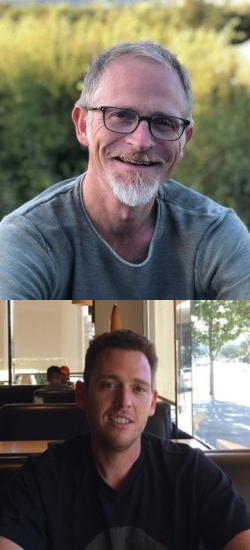
Jorah Dannenberg, Professor of Philosophy, Stanford University
Related Blogs
-
March 8, 2023
Get Philosophy Talk
