
The Puzzle of the Unconscious
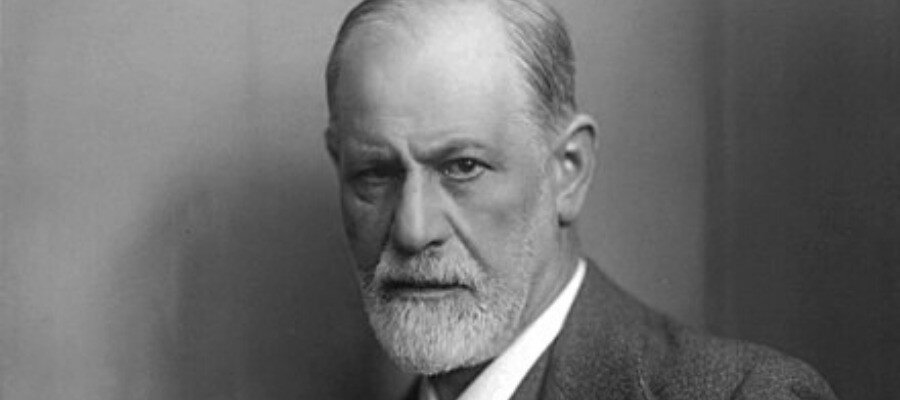
Most of Freud’s contemporaries believed that the human mind was all conscious. Historians of ideas who write about the development of psychology often get Freud’s original contribution wrong because they don’t attend carefully enough to what was meant by terms like “subconscious mind” and “unconscious states.”
Last month, I described how ideas inspired by the work of the 17th century philosopher René Descartes cast a long shadow over the sciences of the mind. One aspect of his influence concerned beliefs about the relationship between the human mind and the human brain. In the late nineteenth and early twentieth centuries, most scientists of the mind were dualists. They believed that although the brain is a physical organ, the mind is a non-physical thing that’s distinct from it.
Another aspect of the Cartesian influence had to do with the mind’s relation to itself. Most of Freud’s contemporaries believed that the human mind is automatically aware of its own contents. In a nutshell, they held that the human mind is all conscious.
The notions that the mind is not the brain and that the mind is all conscious are closely connected to each other. Think of it this way: it seems obvious that we don’t have access to the processes going on inside our own brains. For instance, try as you might, you can’t tell me which of your neurons are firing as you read this sentence. But you can easily access the mental state that you’re in while you’re reading it. This might lead you to conclude—just as the 19th century scientists of the mind did—that mental states have got to be distinct from brain states, so mind ≠ brain.
That’s all good and well, but the scientists and philosophers who endorsed the view that mental states are always conscious had to find a way to make sense of observations that didn’t seem to fit into this picture. Some of these came from experiments in hypnosis. A hypnotic subject could be given a post-hypnotic suggestion, say, to jump up and down when the hypnotist snaps his fingers. After coming out of trance, the person—let’s call him Ludwig—starts jumping up and down when the hypnotist snaps his fingers.
Now here’s the most important bit: when Ludwig is asked why he’s jumping up and down he either confabulates—for instance, by saying he that wants to get some exercise—or else he just says something like “I don’t know, I’m just doing it.” But it seems right to say that Ludwig’s behavior was brought about by a mental state of which he, the bearer of that state, was unaware. The dude literally didn’t know what was on his mind.
We don’t have to go to hypnosis to find examples with the same significance. Freud was particularly impressed with the uncanny phenomenon unconscious problem solving. Most people have experienced this sort of thing. You’re struggling unsuccessfully to work out the solution to a problem. Eventually, you set it aside and go to bed. The next morning, you wake up with the answer right there in your head. In fact, you don’t even have to go to sleep for this to happen. Sometimes all you’ve got to do is shelve a problem and then the solution pops into your head, seemingly out of the blue.
You weren’t aware of working on the problem while you were asleep—at least consciously. During the night you spent some of your time in deep dreamless sleep, when your consciousness was completely turned off, and the rest of your time having weird and irrelevant dreams. But solving the problem clearly required cognitive work, so all this cognitive processing must have been going on unconsciously.
There are loads of examples of this sort of thing in the history of science. I’ll share just one. The great German mathematician Carl Friedrich Gauss had been working on a proof for two years, without success, when suddenly the solution popped into his head. He wrote in a letter, “Finally, two days ago, I succeeded not on account of my painful efforts, but by the grace of God. Like a sudden flash of lightning, the riddle happened to be solved.” The next sentence of his letter is important: “I myself cannot say what was the concluding thread which connected what I previously knew with what made my success possible.” In other words, Gauss didn’t have a clue about how he worked out the proof.
Facts about posthypnotic suggestion and unconscious problem-solving are hard to square with the claim that the mind is all conscious. You’d think that the obvious conclusion to draw from examples like these is that mental processes can occur unconsciously. That’s an easy move to make in a post-Freudian world. But people were not living in a post-Freudian world back then. For most of them, the idea that mental states are conscious (and that conscious states are mental) was axiomatic. It was treated as what philosophers call an analytic truth—a statement that’s true by definition, like “one plus one equals two” or “triangles have three sides.” To deny such claims saddles you with a contradiction. The definition of a triangle states that it’s a three-sided geometrical figure, so saying that a triangle doesn’t have three sides boils down to saying that something that’s a triangle isn’t a triangle! That Freud’s philosophical contemporaries thought that consciousness was part of the very concept of mentality explains why he often complained that philosophers criticized his views by saying that the very idea of unconscious mental activity is self-contradictory.
To fit these awkward facts into the theory that all mental states are conscious states, you’ve got to find some way of denying that unconscious mental activity played a role. There were two options on the table. The first was to argue that the problematic states are unconscious, but not really mental. The second was to argue that they’re mental, but not really unconscious.
Advocates of the first option argued that seemingly unconscious mental states are really just mindless brain states with the power to elicit thoughts and produce behavior. As the great 19th-century neuroscientist Gustav Fechner put it:
Sensations, ideas, have, of course ceased to actually exist in the state of unconsciousness, insofar as we consider them apart from their substructure. Nevertheless, something persists within us, i.e., the psychophysical activity of which they are a function.
This isn’t very plausible. To buy it, you’ve got to swallow the claim that Ludwig’s performance wasn’t caused by anything going on in his mind. But Ludwig’s strange behavior is inexplicable unless we accept that the hypnotist implanted the idea of jumping up and down in his head, and that it was this idea is what made him jump. Ideas are mental.
The example of sleeping on a problem is even harder to accommodate. Problem solving is mental work, so a person who unconsciously solves a problem must be doing unconscious mental work. That conclusion seems avoidable.
Advocates of the second option claimed that a single consciousness can be split into two or more independent consciousnesses, and that that’s what explains the Ludwig and Gauss cases. As the philosopher and psychologist William James put the idea in his 1890 book The Principles of Psychology, the “Total possible consciousness may be split into parts which coexist but mutually ignore each other, and share the objects of knowledge between them.” The term “subconscious” was specifically associated with this thesis, which is why Freud avoided it and used the term “unconscious” instead.
If this is right, then it wasn’t Ludwig’s main consciousness that had the intention of jumping—it was a split-off portion of his consciousness—a sort of mini-Ludwig stationed inside his mind. And the same sort of explanation goes for Gauss’ mathematical deductions.
This way of making sense of the examples is pretty weird. One reason it’s weird is that the divided consciousness approach pictures consciousness as something that can be divided into pieces without losing its integrity. It pictures consciousness as something that’s simple and homogeneous—like ice cream. You can spoon ice cream out of a tub into three bowls without it ceasing to be ice cream, but you can’t divide complex systems up like this without wrecking them. If I chop my washing machine into three parts, I don’t get three small washing machines. I get three pieces of junk.
So, to accept the sub-consciousness theory, it looks like you’ve also got to embrace the view that the mind is more like a tub of ice cream than it’s like a washing machine. The idea that the mind is simple and homogeneous rather than complex and organized doesn’t make much sense when you really think about it. How could something like that figure out a complicated mathematical proof? It makes a lot more sense to think of the mind as highly complex and exquisitely organized—but then, if you also claim that the mind can be divided, you end up with the washing machine problem.
Early in his career, Freud accepted the mainstream view, and wavered between the two positions I’ve just described. But before long he trashed both of them. He rejected the split consciousness theory because (as he put it in a 1915 paper) it’s odd-going-on-incoherent to suppose that there could be “a consciousness of which its own possessor knows nothing” and baulked at the fact that it licenses “the existence not only of a second consciousness, but of a third, fourth, perhaps of an unlimited number of states of consciousness, all unknown to us and to one another.”
In my next essay on Freud’s philosophy, I’ll unpack Freud’s rejection of Cartesianism, focusing on his argument not only that there are truly unconscious, truly mental events, but also that all mental events are brain events—that minds don’t interact with brains because minds are brains.
Listen to the Episode
No related shows found.