
The Military: What is it Good for?
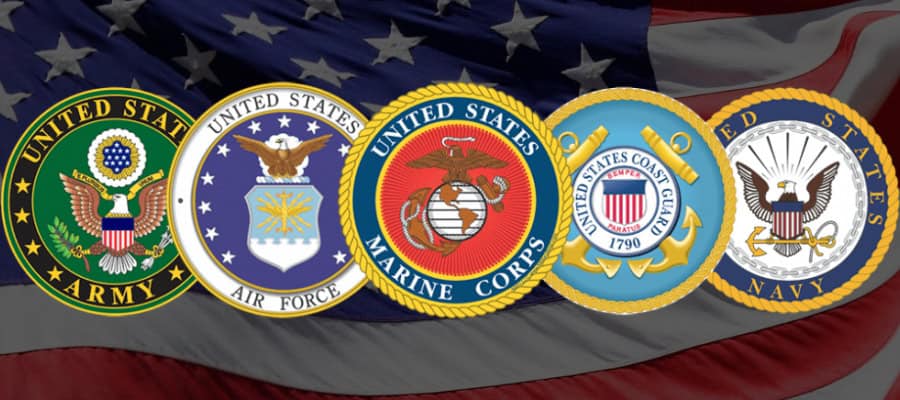
Though a few of my most left-leaning friends think we could do entirely without any sort of military, there has never been and will never be a vast and populous nation like ours without armed services. But even if we take it as a given that any nation, especially a nation that wants to be a significant player on the world stage, is going to have a military of some sort, that still leaves lots of questions open.
Our topic this week is the military. And we’re asking “What is it good for?” Let me start out by granting the obvious. Though a few of my most left-leaning friends think we could do entirely without any sort of military, there has never been and will never be a vast and populous nation like ours without armed services. But even if we take it as a given that any nation, especially a nation that wants to be a significant player on the world stage, is going to have a military of some sort, that still leaves lots of questions open. Here are just a few of them. Exactly what sort of military should we have — a compact military, adequate for homeland defense and little else or a large and robust force, capable of projecting power around the globe? Who should serve in the military? Should all able-bodied citizens be compelled to serve? Or should the burdens of service be left to volunteers? To whom should the military be accountable, and how, exactly, can it be held to account? And do we civilians owe our military leaders a high degree of deference?
It seems to me that we face something of a Goldilocks problem. If the military is too big and powerful, if civilian authorities show it too much respect, then there’s a real danger of militarism. But if the military is too small, if it has too little influence over decision making by civilian leaders, that too can lead to disaster. We need a military that’s not too big and influential, not too small and voiceless, but one that’s just the right size. That strikes just the right balance between deference and accountability
Now striking that delicate balance is no doubt a job some wise policy-maker. And you may wonder what a couple of philosophers like John and I are doing worrying about the military and its role in public life. Even Plato, who was a fan of philosopher kings, never advocated that philosophers should be come generals. All kidding aside thought, the answer is that we citizens, collectively, whether were philosophers or non-philosophers, need to be the ones to decide about the proper role, size, composition and degree of accountability of the armed services goes to the very heart of our democracy. Are we going to be a society where the military functions as an instrument of will of the people at large or a society where the it functions as a special class unto itself, with its own agenda, answering to no one except perhaps a narrow civilian elite? If we are to remain a true a democracy, we can’t afford to leave these questions to the military, nor even just to our elected leaders. We all have a vital stake in them. And as philosophers, it’s our job to dig deep and uncover the fundamental issues and assumptions which inform, or ought to inform, our collective decisions about the nature and role of the military.
Here’s a provocative idea that we’ll get into on the show, no doubt. One way to make people fully own up to the stake we all have in this issue might be to bring back the draft. That’s because if military service were compulsory and universal the general population might certainly feel a more visceral personal stake in deciding what use the military is put to. That alone might make it a lot harder for politicians and generals to persuade us to spend our treasure and spill our blood on fool’s errands in the first place. That’s part of what drove Nixon to end the draft. He ended the draft not because he was a liberal do-gooder, but because he wanted a freer hand to conduct the war in Vietnam as he pleased. He cynically realized that if it’s potentially my blood, or the blood of my loved ones that’s going to be spilled, then I’m going to stand up and make my voice heard, if I think it’s being spilled in vain. But if it’s only the blood of the already-willing that’s being spilled, there’s bound to be less hue and cry against it. You see something like the same dynamic in the contemporary military and its relation to the public. As this interesting New York Times article points out, we’ve been at war for ten years, but the people at large feel almost no stake in what’s happening, because of the ever increasing gulf between the military and the general public.
I suspect that the idea of bringing back the draft is probably a non-starter in contemporary America. And one might think that, Nixon’s self-interested political calculations aside, having an army of the willing seems like a good thing, not a bad thing. For example, sometimes a nation may legitimately have to wage a war of morally ambiguous character, in which a clean and decisive outcome is far from assured. Why should we force unwilling conscripts to fight and die in such a war, one might reasonably ask.
My answer is to that challenge turns on the notion of shared burdens. Sometime you have to share in the burdens of nationhood, even if you don’t want to. Nobody likes to pay taxes, but we don’t say “tax only the willing.” Same with military service. Plus, sometimes the willing aren’t really so willing after all. You don’t see all that many wealthy or upper-middle-class kids, with elite educations and great jobs, willing to be on active duty.
I freely admit that I haven’t said close to the last word on the matter. There are host of complicated issues to talk about here. And to make our discussions more fruitful, we’re joined by Pulitzer prize-winning historian, David Kennedy, author of Freedom from Fear: The American People in Depression and War. David brings a broad historical perspective to the discussion.