
Dave Täht and the Ethics of a Shared Internet
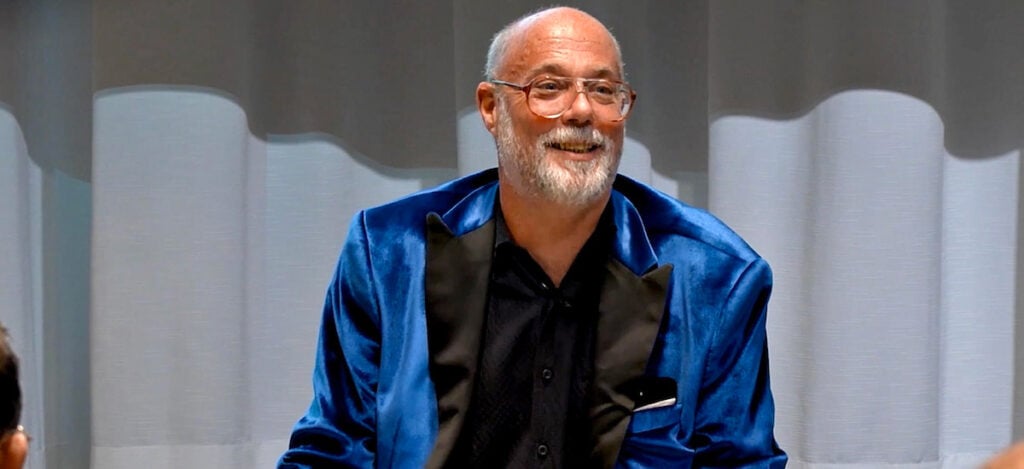
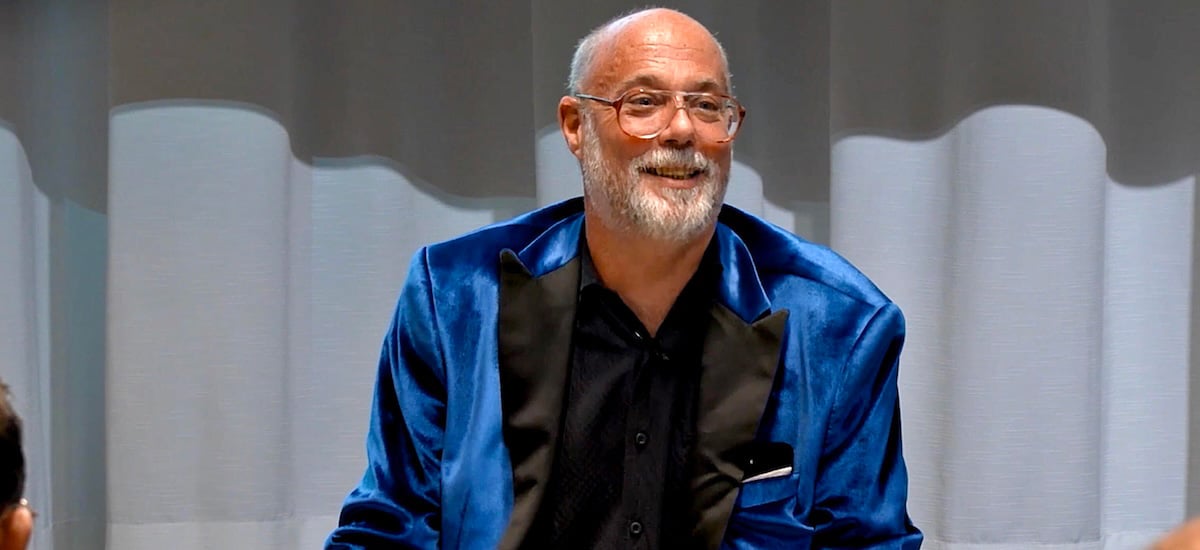
For our episode on Maurice Merleau-Ponty, Roving Philosophical Reporter Sarah Lai Stirland described her experience with the digital avatar of a recently-deceased friend. That friend, engineer Dave Täht, was just honored with a posthumous award from the Internet Society. Sarah offers this appreciation.
Last Spring, after my friend Dave Täht died, I tried to memorialize him by building an AI persona I could talk to. It taught me something I should have known going in: the persona could not be Dave. At most it was a kind of creepy remembrance—closer to an Uncanny Valley technological ghost than anything else. What the experiment couldn’t capture was what made Dave Dave. He showed up for people, in the open, with no expectation of being paid or thanked. This Wednesday, November 18th, the Internet Society honored him with the Jonathan B. Postel Service Award, recognizing his technical contributions and, as I’d put it, his spiritual ones.
His work to improve our ability to connect
Dave’s friend and colleague Frank Borsik said Dave could speak with everyone, and that rings true to me. Dave brought his guitar everywhere with him. His irreverence lived in a sticker on it that said: “This machine kills Vogons.” And he wrote key bits of internet code while living at the Lupin Lodge, a nudist colony in Los Gatos. He also often wore a t-shirt that declared: “Bandwidth is a lie.” It was a nerd joke: Most of us think internet quality means speed. But there’s a second measure. It’s called latency. That’s the delay between sending something and seeing a result. It’s the half-second on a video call where you and the other person both start talking, then both stop. Dave argued that latency, more than raw bandwidth (speed,) determines how long we wait online. He spent years fighting its main cause, which another internet engineer called “buffer bloat.” And it was Dave’s dogged attention to solving the issue that the Internet Society recognized.
The ethics of a standard
The internet works because strangers agree on how their machines will interact with each other. Those agreements are written in the open through the Internet Engineering Task Force, and the award given out this week is named for Jon Postel, who helped shape that culture. These engineers’ ideas end up in the equipment we all use. So if your video call is smoother than it was a decade ago, you’re benefiting from their work whether or not you know their names. We usually imagine value as something owned and traded. Dave’s work was a gift to a commons, and the people who benefit most will never know whom to thank.
The unsung hero
The Internet Society says he worked to expand connectivity in community hubs in Nicaragua, where he would often visit with his BMW motorbike from the SF Bay Area. He’s also often credited with helping the satellite internet service provider Starlink solve its performence problems. And yet Dave lived on a humble sailboat in Half Moon Bay, a boat that often needed work, while others made fortunes in the mansions of Silicon Valley. He embodied the community-minded spirit of the early internet, which is nearly the opposite of the grab-what-you-can culture the Valley is now known for.
Dave embodied the internet society I believe in
My AI experiment showed me the limits of simulation. Software can repeat what Dave said, but it can’t do what he did. The AI persona may be like a photograph of Dave. But the the open internet that’s vanishing is a more vital and important memorial to his living work. It’s a shared resource, maintained by strangers, and open to whoever comes next. And it’s been the source of so much shared wealth and innovation. Next time you make a video call that doesn’t freeze while someone else in the house is playing Grand Theft Auto, think of Dave.
To read the Internet Society’s tribute to Dave and learn more about the Postel Award, visit their blog. And if you have a Dave of your own, someone whose behind-the-scenes work makes your life run more smoothly, this might be a good week to tell them.
Sources: Internet Society, “Postel Awardee Dave Täht Made Every Millisecond Count”; Larry Press, “Remembering Dave Täht,” CircleID; the FLOSS Weekly #638 and Cloudflare’s Tom Strix.