Author: Truman Chen

  • The Best of Analytic and Continental Philosophy

    In a recent interview in What is It Like to be a Philosopher, Tina Fernandes Botts answered the age-old question of whether analytic and continental philosophy are really all that different in the final analysis. Although Botts tries to bridge the “divide,” she somehow manages to duplicate the very same debilitating stereotypes of these two fields at the same time.

  • Is James Franco Rescuing Philosophy?

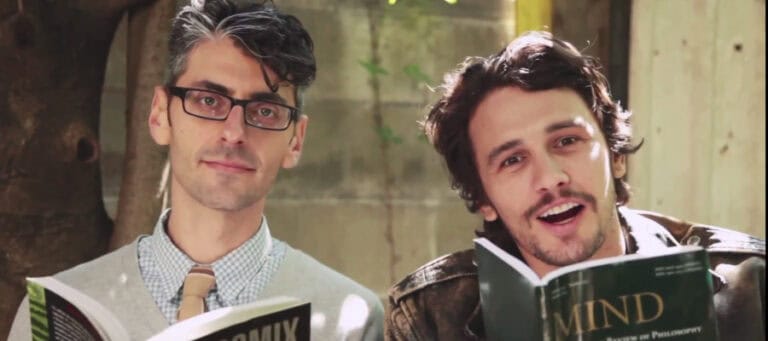
    You might not have expected it, but the actor James Franco is promoting analytic philosophy in his new YouTube series, Philosophy Time. In relatively short videos, Franco chats back and forth with prominent philosophers on issues ranging from metaphor to abortion. Could these videos be the answer to the “crisis” in philosophy and the humanities?

  • The Offensive Peter Singer

    In a recent interview, the controversial philosopher Peter Singer states that “Philosophy always causes offense—perhaps it should cause offense.” But not everyone agrees that offensive philosophical views are necessarily a good thing, especially when reasonable critiques are ignored.

  • Conceptual Penises and Failed Hoaxes

    Recently, an assistant professor of philosophy at Portland State University named Peter Boghossian and a PhD in math named James Lindsay attempted to reinvent the Sokal Hoax in an effort to discredit an entire field of academic study. Turns out the joke’s on them…

  • Nietzsche, Schmitt, and the Alt-Right

    Journalist Graeme Wood recently interviewed Richard Spencer, one of the leaders of the alt-right and a noted fascist. Spencer draws inspiration from philosophers Friedrich Nietzsche and Carl Schmitt. But is his interpretation of those philosophers fair?

  • Watered-down Philosophy for Tech Bros

    So-called “practical” philosophy is gaining popularity in Silicon Valley among tech executives who want to eliminate “bullshit” in their business lives. But is this trend doing more harm than good for the discipline? Does the notion that there is a “practical” philosophy imply that any philosophy not catering to the tech bro is therefore “impractical”?

  • Defense of Transracialism Goes Awry

    In a recent article titled “In Defense of Transracialism” for the feminist philosophy journal Hypatia, philosopher Rebecca Tuvel penned a defense of “transracialism” through an argument that the logic which supports transgender individuals also should lead one to support transracial individuals in their decision to “change” races.

  • Slower Reading for Better Philosophy

    A new book by Michelle Boulous Walker, Slow Philosophy: Reading Against the Institution, critiques the rapid tempos that adversely affect our relation to the world. Boulous Walker’s focus is how something is lost for philosophy, both as an activity and a discipline, when it has to meet a certain pace of reading and production.

  • Tricks for Political Persuasion

    In these polarized times, it’s hard to convince anyone of anything that they didn’t already believe in. This consistent inability to reach any real mutual understanding can lead some to “agree to disagree,” but when it comes to serious moral questions where lives are at stake, we need better tools of persuasion.

  • A Virtual Walden’s Pond

    You might not have thought it was possible, but there is now a computer game version of Walden by Henry David Thoreau designed to help foster a philosophical experience and learn to “live deliberately.” It was released just in time for the 200th anniversary of Thoreau’s birth.

  • Cruelty in American Politics

    How should we respond to the suffering of those who vote against their own best interests? Is unadulterated cruelty a good political strategy? Or does a just social order depend upon our ability to empathize with all human beings?

  • [VIDEO] What is Neoliberalism?

    “Neoliberalism” is one of those terms tossed around by both those who know what they’re talking about and those who have absolutely no idea what they’re talking about. But like any other complex concept, the definition of neoliberalism is often in contestation.

  • Why Is Analytic Philosophy Dominant?

    How did analytic philosophy come to dominate Anglo-American philosophy departments? If you think it’s because analytic philosophy is just superior, that might be your bias showing. Some seemingly important developments in the history of thought are determined by rather uninspiring and unglamorous contingencies like rivalries or personal idiosyncracies.

  • The Responsibility of Intellectuals

    In these times, in which truth and lies are nearly indistinguishable, do all intellectuals have a responsibility to devote their efforts toward directly speaking truth to power and mobilizing for social justice? Or are some exempt from this responsibility to pursue their interests wholeheartedly, regardless of whether it directly helps the people or not?

  • The Emperor Has No Philosophy

    In a recent article from the New Statesman, prompted by the death of philosopher Derek Parfit,…

  • Stanley Cavell and Public Philosophy

    In this article, Mark Greif, the essayist and founding editor of n+1, an intellecutal publication, wrote a tribute to his former mentor, the philosopher Stanley Cavell. Using Cavell as a model, and Cavell’s own intellectual inspirations, Emerson and Thoreau, Greif asks, what makes a good public philosopher?