
Author: Serena Wong

  • The Ethics of Homeschooling

    It’s no secret that black children in American receive a subpar education compared to their white peers: underfunded schools, higher rates of suspension, and largely teachers that are not like them. To address this, some black parents are turning to homeschooling their children.

  • Distortion in Philosophy

    There are more women and people of color in academic philosophy now, but when most of the authors we read are white and male, some aspects of the subject matter get distorted, and it’s hard to tell where the essential stuff ends and the accidental stuff begins.

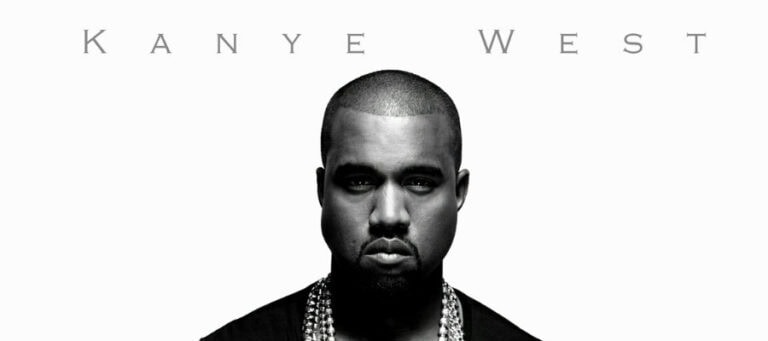
  • Is Kanye a Philosopher?

    Kanye West, best known for his music career, is now expanding into philosophy, as revealed in an interview with his interior designer. But the ‘book’ Kanye has in mind will find its medium not in printed pages, but in real-time tweets.

  • The Morality of Big Business

    “Big business” for many has largely immoral associations: corrupt, profit-driven at the expense of human wellbeing or the environment, threatening to mom-and-pop shops everywhere. But this wasn’t always the case—big businesses used to be viewed positively by the public.

  • May the Fourth Be With You

    In honor of 5/4, Star Wars Day, we’re taking a deeper look at the paradox of Force in Star Wars. Eduardo Perez, an Assistant Professor of English, examines the paradox of the Force in George Lucas’ Star Wars universe.

  • The Not-So-Goodness of Liberalism?

    Is liberalism really the “unmitigated good” many of us Westerners believe it is? Is more freedom always a good thing? Shadi Hamid explores these questions, questioning whether liberalism truly is ideologically neutral.

  • Technology Ethics

    “Move fast and break things” is well known as Facebook’s former motto, but it may well be the motto of all of Silicon Valley. Put another way, the Valley builds first, and deals with the consequences later. But this approach is creating bigger and bigger problems.

  • Is Every Idea Worth Engaging?

    Is every idea worth responding to, or are some ideas so harmful that we should not engage at all? Philosopher Elizabeth Barnes explores this question in a recent article, arguing that it is sometimes worth it to engage with harmful ideas.

  • Is Alexa a Setback for Feminism?

    Voice-activated personal assistants like Alexa and Siri are becoming increasingly popular. While the assistants each try to differentiate themselves in someway, there is one inescapable commonality: they are all female.

  • Is Killmonger to Blame?

    Marvel’s newest superhero movie, Black Panther, has been setting records left and right since its release. In many ways, it is a classic superhero movie, with a clearly defined and often one-dimensional super villain that eventually loses to our hero. But many are questioning who is to truly blame in Black Panther.

  • Robot Rights?

    Saudi Arabia, a country not known for progressive women’s rights, recently granted the female robot Sophia citizenship. The company behind Sophia has capitalized on this opportunity, as Sophia has become an advocate for women’s rights.

  • Is There a Case for Bullshit?

    In Harry Frankfurt’s famous paper “On Bullshit” he argues that because bullshit is “indifference to the truth,” silence is better than bullshit. Stefano Zorzi challenges this view arguing that bullshit can actually help us reach the truth.

  • The Urbanist Delusion

    In a polemical critque, author Nikil Saval argues that Amazon has bankrupted “the ideology of urbanism.” So what was this ideology? And how has Amazon’s search for new urban headquarters revealed “the urbanist delusion”?

  • What props up morality?

    Is morality like a leaning tower, with virtue increasing as the floors increase? If so, how would the tower be supported, especially considering self-sacrficing altruistic behavior, a type of behavior at the very top?