Author: Ray Briggs

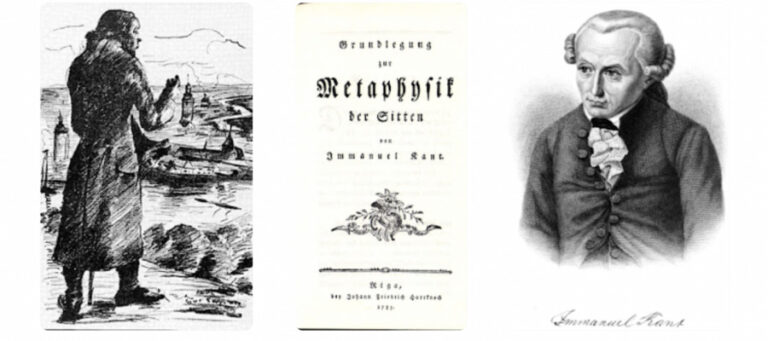
  • Kant’s Guide to Morality

    Can you reason your way into being a good person? Or are your feelings a better guide for doing the right thing? This week we’re thinking about German enlightenment philosopher Immanuel Kant and his view of a universal morality based on reason.

  • Tackling Sexual Violence

    How do we achieve justice for victims of sexual assault? Can we change the legal system to make it more effective? Or should we turn to social media instead? This week, we’re thinking about the #MeToo movement and the criminal justice system.

  • The Value of Anger

    Shouldn’t we get angry at injustice? Don’t some things deserve our rage? Or will rage just beget more rage? These are some of the questions we’re thinking about on this week’s show, “Righteous Rage.”

  • Digital Persons?

    Could robots ever have feelings that we could hurt? Should we hold them responsible for their actions? Or would that just be a way to let humans off the hook? This week, we’re asking “Could Robots Be Persons?”

  • A Question of Frege

    Frege believed that math is analytic, meaning that the definitions of mathematical terms like “2” and “4” guarantee the truth of sentences like “2+2=4”. Frege’s theory explains how we know about math; as long as we can understand what we mean by mathematical terms, and can reason logically, our mathematical knowledge is guaranteed. But in order to work, the theory has to rely on Frege’s definition of a number.

  • Persons, Community, and the Akan

    Is your inner life what makes you, you? Or is your identity about connecting to your community? How can West African philosophy help us think about the self? This week, we’ll be thinking about Akan Philosophy, specifically its conception of personhood.

  • Why Is Math So Useful?

    Math is obviously good for many things: we use it for everything from building bridges to designing lasers to predicting the motions of planets to explaining why snowflakes have that odd six-pointed shape. But why is it good for so many things?

  • The Slow Miracles of Thought

    How can the human mind think about objects outside itself? How is it possible to talk about things that don’t even exist? This week, we’re thinking about reference—specifically, an “opinionated” theory of reference by our dear departed friend, longtime Philosophy Talk host Ken Taylor.

  • The Philosophy of the Vienna Circle

    Is metaphysics just a bunch of nonsense? Is it okay to believe something you could never prove? Could logic be a solution to the world’s problems? This week on Philosophy Talk, we’re thinking about the Vienna Circle, a group of Austrian philosophers from the 1920s who debated these questions.

  • Cracking Down on Disinformation

    In a world of fake news and disinformation, how can anyone make informed political decisions? Is it possible for us all to come together as a nation if we can’t even agree on what’s true? This week, we’re thinking about Disinformation and the Future of Democracy.

  • What Makes A Man?

    Does masculinity need a makeover for the 21st century? Should your gender matter to who you are as a person? Why think there’s just one thing it means to be a man? This week on Philosophy Talk, we’re discussing masculinity and what makes a man.

  • The Mathematics of Democracy

    Shouldn’t everybody have an equal vote? Isn’t majority rule just an excuse to keep minorities down? Is a truly fair democracy even possible? And how do we decide what counts as fair in the first place? This week on Philosophy Talk, we’ll explore answers to these questions!

  • Whose Fault Is It Anyway?

    Who’s to blame for big problems like racism, factory farming, or climate change? Isn’t it time we held governments and corporations accountable? Or would that just let individuals off the hook? This week we’re talking about collective responsibility.

  • Skepticism and Trust in Science

    Why do so many people believe in conspiracy theories? Do we need to evaluate the evidence for ourselves, or should we just trust the experts? This week on Philosophy Talk, we’re discussing science and skepticism, and the role that trust plays in deciding what’s true.

  • Who Gets to be a Citizen?

    How should we decide who gets to be a citizen? Should your political rights really depend on where you were born? Would it be better to live in a world without borders? This week, we’re talking about citizenship, political rights, and justice.

  • Does Meritocracy Have Merit?

    Should people be rewarded for their talent and effort? Or should society treat us all the same? Is meritocracy just a smokescreen for a system that’s rigged? These are some of the questions we’re asking on this week’s show on “The Merits of Meritocracy.”