Author: Laura Maguire

  • Camus and Absurdity

    What would be the point of living if you thought that life was absurd, that it could never have meaning? This is precisely the question that Camus asks in his famous work, The Myth of Sisyphus. He says, “There is only one really serious philosophical problem, and that is suicide.” He was haunted by this question of whether suicide could be the only rational response to the absurdity of life.


  • Food Justice

    An astounding one in eight people on the planet are undernourished, over three million children…

  • Is Anarchy Possible?

    Before we can say whether an anarchist future is possible, we should start by saying…

  • Gut Feelings

    Sometimes we make decisions that we think long and hard about, but often we make decisions simply because it feels right. Call it a hunch, an intuition, or an instinct—what they all have in common is that we don’t know why we feel the way we do, yet the feeling can be so compelling, it moves us to act. The question is, when should we listen to our gut feelings and make decisions based on something we can’t explain? And when should we stop to think?

  • The Moral Costs of Climate Change

    The topic of climate change is timely and important, but it’s also one that’s difficult to talk about. We’re making such a mess of this planet—chopping down forests and burning carbon-based fossil fuels, polluting our air, soil, and water, causing polar ice caps to melt and sea levels to rise. We’re already beginning to see the devastating effects of climate change around the globe, and it’s only going to get worse—especially if we pass the 2 degrees celsius tipping point, which seems inevitable at this point.

  • Machiavelli

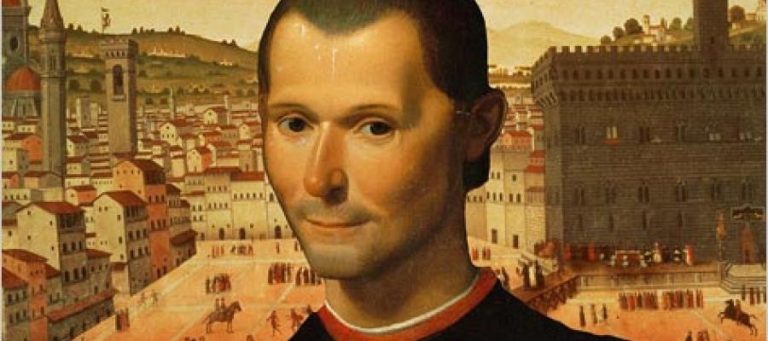
    The Italian political philosopher Niccolò Machiavelli is revered by some for being an astute thinker, a pragmatic visionary, and a champion of republican liberty. He is reviled by others for writing a manual for unscrupulous leaders everywhere, teaching them to do whatever it takes to defeat their enemies and stay in power, no matter how cruel or ruthless their actions might be.

  • Conspiracy Theories

    What’s your first association with the title of this week’s show? Do you think of conspiracy theories as the kind of theories that paranoid nutjobs relentlessly like to spout? Considering some of the wild theories out there—like a secret group of elites (which may or may not be Jews, Freemasons, and/or shape-shifting lizard aliens) control and manipulate the global economy—you’d be forgiven for that association. But before you judge all conspiracy theories in a single stroke, you should consider that there are conspiracy theories that you probably believe. And with good reason.

  • Science, Philosophy, and Theology

    There’s a saying: as science advances, religion retreats. These days, the boundary between science and religion is clear. They’re considered completely separate domains, even if philosophers sometimes think about both. Granted, there are exceptions, but for the most part religion, these days, is not in the business of making claims about the nature of the cosmos or the origins of life. In the 90s, Pope John Paul II even declared that evolution was a scientific fact Catholics should wholeheartedly embrace. I take that as a real mark of progress.

  • Turbo-charging the Mind

      With all the rapid advances in computer technology, are we humans moving toward a…

  • What Is (This Thing Called) Love?

    Many of us have been in love, and there have been countless great poems and popular songs written about it. So you’d think we’d all know what it is. Yet a lot of what has been written points to a deep mystery. So—as Cole Porter famously asked—what is this thing called love?

  • Poetry As a Way of Knowing

    If the title of this week’s show sounds strange, it may be because we don’t normally think of poetry as being in the business of producing knowledge. Poetry, we might think, is about capturing impressions and expressing feelings. The goal of poetry is not to describe the world. That’s, after all, what we have science for.

  • Pantheism

    Pantheism is the view that the world is either identical to God, or an expression of God’s nature. It comes from ‘pan’ meaning all, and ‘theism,’ which means belief in God. So according to pantheism, “God is everything and everything is God.”