Author: Kenneth Taylor

  • Why I am not a Stoic!

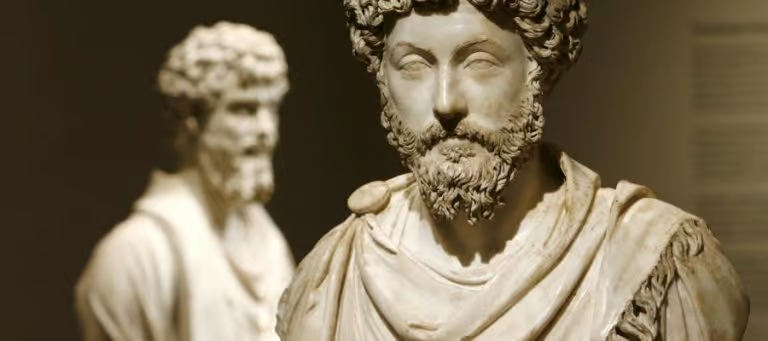
    I don’t profess to fully understand stoicism. I never read much stoic philosophy before now. I did read the Enchiridion by Epictetus as an ndergraduate, but frankly, it left me pretty cold at the time. I couldn’t relate to it at all. Maybe that’s because as a young man, I was pretty non-stoical.


  • Odds and Ends

    Our limited forray into podcasting via the Stanford Itunes experiment has been a great success. …

  • What the Imagination is For

    The imagination is a pretty cool thing, but also in some ways puzzling. On the one hand, it seems sometimes to give us cognitive acquaintance with real possibilities. A kid from Hope Arkansas imagines growing up to be president of the United States. And lo and behold that kid does grow up to be president. So some of the things that we merely imagine are really possible. And it’s arguable that the imagination teaches us that they are possible.

  • Does Truth Matter?

    Let me say a few things about the value of truth to get today’s conversation started. First, it seems to me that truth is a very good thing. We think science is grand because it reveals deeper and deeper truths about nature. We typically would much prefer to know and be told the truth than to be told a lie. We hardly ever say to ourselves, “I know that false, but I choose to believe it anyway.” To believe something is to believe it’s true.

  • Legislating Values: A Reprise

    I don’t think the legislature is morally or rationally obligated to advance legislation only on the basis of public reasons. One can, though, read the non-establishment clause of the constitution as requiring legislation to have a basis in public reason. But whatever the precise legalities, I think there are very strong practical reasons for the legislature to refrain from adopting any narrowly sectarian rationale for its laws.

  • Science: The Big Kahuna

    I have to admit that I mostly applaud the scientific overthrow of cultutral formations based on illusion, superstition, error, authority and the like. Still, I think that the “destructive” side of science is too often overlooked or greeted with a shrug by those like me who fully and completely endorse the canons of scientific rationality. It is not obvious to me that our ability to reform our culture and society can keep pace with the ability to undermine archaic forms.

  • God had a Technical Difficulty

    We had a really great show on Tuesday. Unfortunately, due to technical difficulties, no one will ever be able to hear it again. Because of a series of miscommunications, the show didn’t get recorded. We are terribly, terribly sorry about this. We apologize to our affiliates and to those who listen to the show via the internet.

  • Why Believe (or Disbelieve) in God?

    I gather, from our research team’s pre-interview with Walter, that he is a die-hard atheist. He thinks that there is ample reason to doubt God’s existence and no good reason to affirm god’s existence — at least if one means the all powerful, all loving, all knowing god, existing outside of space and time. Since it’s a season of religious, and quasi-religious holidays, we thought it might be fun to actually reflect on the rationality, or lack thereof, of the religious beliefs that lie behind the celebration of such holidays.

  • The Dark Allure of Idealism

    On our now not so recent episode about Berkeley, with David Hilbert, I said in passing that idealism, in some form or other, is permanently tempting. Don’t get me wrong, I don’t believe in idealism. I consider myself a realist and a physicalist. Not only do I think that the world is (largely) independent of mind. I also think that the mind is ultimately just a part of that mind-independent world. That is, the mind is ultimately built out of and reducible to stuff that is not yet mind. Or so I would argue. So I don’t come here to defend idealism.

  • Fiction and Imaginative Resistance

    I recall saying during our on-air conversation that we are inclined to go along and imagine whatever the author of a well-constructed fiction invites us to imagine. Without the slightest resistance, we accept invitations to imagine scenarios that contradict the known laws of nature or that rewrite some large or small fragment of the history of the world. We have no resistance to imagining scenarios that, on one way of measuring, might be seen as altogether metaphysically impossible.

  • The Language of Politics

    George Lakoff has recently been arguing that the main reason that Democrats lose elections is that Republicans have been masters at framing the issues, while Democrats have not been. We didn’t get very deeply into this idea on the air. Too bad, because Nunberg has some pretty interesting things to say both about Lakoff’s claims about framing in general and about Lakoff’s particular suggestions about how certain issues might best be framed by the democrats.

  • Saints, Heroes, and Schmucks Like Me

    There is more to living well than slavishly and single-mindedly devoting oneself to moral perfection — either of oneself or of the world. I want a life filled with goods of all sorts — many of them non-moral. I want moments in which I contemplate beauty, even if by such contemplation I achieve nothing for the world at large and merely elevate myself above the mundane demands of the everyday.

  • Beyond the Cartesian Moment?

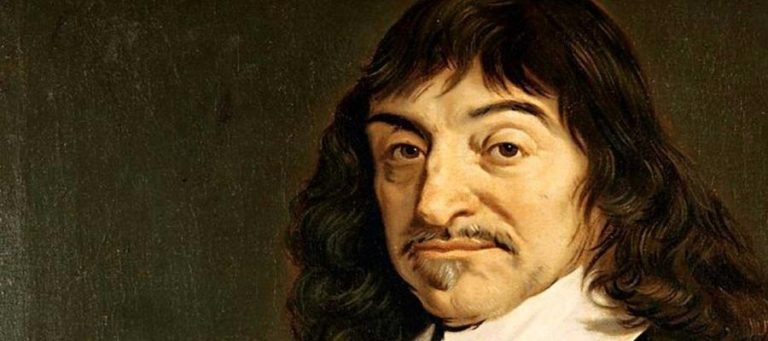
    By the Cartesian moment, I mean that moment in Western philosophy when the individual knowing subject and the contents of the subject’s own mind were elevated into the first and most secure objects of knowledge. At that moment, knowledge of everything outside of the thinking subject — god, other minds, the physical world — came to be problematic.

  • Emotions, Judgments, and Mattering

    I am still not fully convinced that emotions are nothing but judgments. Certainly emotions are tied up with judgments, sometimes quite closely. But it just seems wrong to say that an emotion is nothing but a judgment. Judgments can be true or false. Any given judgment, even a judgment concerning my own flourishing, can be made with or without an accompanying emotion.

  • Greetings from Down Under!

    You may have noticed that neither John nor I  nor our on-air guests have been…

  • Improving the World vs Improving my Country

    I’m pretty sure that Singer is right that both reasonably well off individuals in the developed and developing world and the governments of the developed world could and should do a lot more to help ameliorate global poverty. I’m not sure that I agree that well off individuals in the developed world directly owe it to individuals in the less developed world to donate money to various charitable organizations. Being a good thing to do and being obligatory or a matter of duty are two different things.