The Examined Year: 2024
December 29, 2024
Listen


What happened over the past year that challenged our assumptions and made us think about things in new ways? Josh and Ray talk to philosophers and more about the events and ideas that shaped the last twelve months:
- The Year in Philosophy with Justin Weinberg, creator and editor of the Daily Nous
- The Year in Unjust Deserts with Elie Honig, author of Untouchable: How Powerful People Get Away With It
- The Year in Electoral Futility with Alex Guerrero, author Lottocracy: Democracy Without Elections
Ray Briggs
What’s the deal with powerful people “getting away with it?”
Josh Landy
Could the key to saving democracy be moving beyond elections?
Ray Briggs
Did anything cool happen in philosophy this year?
Josh Landy
Welcome to Philosophy Talk, the program that questions everything…
Ray Briggs
…except your intelligence. I’m Ray Briggs.
Josh Landy
And I’m Josh Landy. We’re coming to you via the studios of KALW San Francisco Bay Area.
Ray Briggs
Continuing conversations that begin at Philosophers Corner on the Stanford campus, where Josh teaches philosophy.
Josh Landy
And at the University of Chicago, where Ray teaches philosophy.
Ray Briggs
Today, it’s the examined year 2024—our annual look back at the ideas and events that shaped the last 12 months.
Josh Landy
Because the un-examined year is not worth reviewing!
Ray Briggs
So I hear there was an election this year?
Josh Landy
Yeah, I heard about that too. Ray, how did it turn out?
Ray Briggs
No comment.
Josh Landy
Anyway, last December, you and I were talking about what the results of this election could mean for our nation. As Ben Franklin memorably said, The United States is a republic, if you can keep it. But what if the way to keep it isn’t representative democracy?
Ray Briggs
Later in the program, we’ll talk to Alex Guerrero from Rutgers University about his new book, “Lottocracy: Democracy Without Elections.” He’s got some fascinating ideas about how to avoid political corruption.
Josh Landy
Another takeaway from November’s election is the end of court cases targeting the former president, and he’s far from the only powerful person this year to avoid the consequences of alleged misdeeds.
Ray Briggs
Which is why we’ll also be talking to Ellie Honig, author of “Untouchable: Why Powerful People Get Away With It.” We’ll ask him why it’s so hard to prosecute rich and powerful people and why it’s recently gotten even harder.
Josh Landy
But looking beyond politics, there have been some bright spots this year.
Ray Briggs
Yeah, things have been really cooking in philosophy. In just a bit, we’ll hear about some of those bright spots from Justin Weinberg, creator and editor of the Daily Nous(that’s n-o-u-s), the leading online source for philosophy news.
Josh Landy
But first, let’s hear from Ian Shaoles, the Sixty-Second Philosopher. He’s going to help us remember Ben Manilla, the original producer of Philosophy Talk who sadly left us earlier this year.
Ian Shoales
Ian Shoales… Popping into this look at what the past year brought us and what it took away to note that superstar radio producer Ben Manilla passed away in September. He was the guy who took the idea of two Philosophy Professors from Stanford University, John Perry, and Ken Taylor and helped it become the public radio powerhouse the world calls Philosophy Talk. It took a while to gel, but a new kind of talk show eventually made its home on KALW, where the subtleties of existentialism could do war with Socrates, Marxism do battle with John Locke, and nary a drop of blood be shed, not even during a pledge drive. I suspect Ben was responsible for non-host elements of the show, namely the Roving Philosophical Reporter, there to show how the topic, or philosopher, or school of thought for the day has an impact in this, our real world. And also for the addition of me to the mix, as a kind of Andy Rooney I guess, a button at the end, an after dinner cocktail, as it were, a bit of teen appeal, if you will. I would never question Ben Manilla’s judgement when it comes to radio. It was his calling. As a teen, he was a wrestling champion, but declined an athletic scholarship at NYU, and instead went into drama, and ended up, of course, being a campus disc jockey. From there he hit the ground running in the 1970’s as a producer for News Blimps, an alternative radio news service. He came on board as production director and DJ, at WLIR, the feisty radio station that made its mark by introducing new wave music to America. He made his own mark in NYC, producing his own features and documentaries, before relocating to San Francisco in the 1990’s. Ben Manilla Productions made itself known for the next twenty years. The House of Blues Radio Hour, later renamed The Bluesmobile, a long time feature with Dan Aykroyd hosting as Elwood Blues. Martin Scorcese and the Experience Music Project helped lead a year-long, nation-wide multimedia event, “The Blues.” This included BMP’s thirteen-hour radio documentary, The Blues with Keb’ Mo’, the most widely distributed special in the history of Public Radio International. There were other projects as well, The Loose Leaf Book Company, about children’s authors, with Tom Bodett, and historical series like Inside the National Recording Registry with the Library of Congress. Along the way, he took on a job teaching journalism, from a radio perspective, at the University of Berkeley. And of course, Philosophy Talk. The year before his passing was spent shepherding The Bluesmobile to the archives of the Library of Congress, all the shows, and the entire catalogue of raw interviews with most of the great blues players of our time. He was an innovator, an archiver, broadcaster, an all around radio guy. Marconi said, “In the New era, thought itself will be transmitted by radio.” We’re getting close. The thoughts on Philosophy Talk are transmitted via the miracle of radio. Radio never dies. Check out Ben’s obituary on Legacy. com. Dozens of people came by to pay their respects, most of them people who still remember him fondly from when he was a disc jockey in New York, forty years ago. And we remember him here. Right now. I gotta go. gotta go.
Josh Landy
Thanks so much, Ian, and thanks to Ben for taking John and Ken’s idea for philosophy on the radio and turning it into something people wanted to listen to.
Ray Briggs
Thanks to the three of them, we’re still here two decades later, talking about philosophy. Thinking of which, what were the philosophy highlights of 2024?
Josh Landy
For that we turn to Justin Weinberg, professor of philosophy at the University of South Carolina. He’s also creator and editor of the philosophy news site the Daily Nous. For Justin. The “good nous” starts with the increased profile of public philosophy.
Justin Weinberg
One of the National Book Award finalists in the non fiction category was authored by a philosopher, Kate Manne. Her book “Unshrinking” on fat phobia, it made it all the way to the short list, and that was pretty exciting.
Ray Briggs
She has had some big accolades before too her book down girl, I believe, was a New York Times best seller days ago.
Justin Weinberg
She’s very talented at bringing philosophy at a pretty high level to a lot of people. I think it’s a combination of her writing style, which sometimes brings together the personal and the philosophical. Also a good choice of topics that seem really of interest to lots of people.
Ray Briggs
Tell us about more things that are happening and getting recognition in public philosophy.
Justin Weinberg
Well, earlier in the year, the BBC came out with a list of new generation thinkers. They do this every year. It’s just 10 people they pick from the entire UK, and two of them were philosophers, Jack Symes of Durham University and Jonathan Egid of Kings College London. That was pretty cool. And then just last month, Vox pretty popular online magazine published its future perfect 50 list. It’s a list of 50 people whose ideas and works seem to be particularly influential or important for our future. And four of those 50 were philosophers. Jonathan Burch at the London School of Economics, who’s done work on consciousness. Teen Yuen at the University of Utah, who’s done all sorts of interesting stuff on games and metrics and scoring. Jeff SIBO, New York University has done a lot of work on animal welfare, animal minds. And Shannon valor at University of Edinburgh, who works a lot on AI technology, technology and the virtues, moral navigation of this future world of ours.
Josh Landy
We’ve had some of those folks on the show. We had Tina Wynn talking about games. We’ve had Kate Mann on the show. This is a very exciting moment for philosophy. Can you tell us why you think it’s happening? Why? Why is public philosophy having a bit of a moment right now?
Justin Weinberg
Well, I think with the rise of the Internet, philosophy has had a real significant role, and it’s just been growing and growing and growing. So if you look at early on the philosophy blogosphere, people doing philosophy in an informal online context with others, that’s been active since the late 90s. You’ve had people on YouTube developing various philosophical shows. There are at least 100 philosophy podcasts that I’m aware of. I’m not sure it’s a brand new thing having all of all this public philosophy, but it does seem like a kind of golden age for philosophy. People who are interested in philosophy can find it online. That’s one of the advantages of our highly segmented media culture. People can produce lots of things, and there seems to be an audience for it. Perhaps philosophy is just an opportunity to take a break from some other elements of our culture and reflect a little bit. And maybe the difference of that from our usual lives is what’s appealing.
Ray Briggs
Also, several of the authors you mentioned are dealing with really practical issues that I think do speak to personal lives, like Jeff ziba’s work on animal rights, for instance, is, you know, every person has probably interacted with at least one animal. A lot of us have eaten animals, whether that’s good or bad. So I like the idea of escape, but I also think that there’s like a kind of real, practical relevance to philosophy.
Justin Weinberg
You’re probably right to note that I think a lot of the changes that we’re seeing in society, with technology, with communication, raise philosophical problems that people are aware of, also social developments. Uh, exposure to new people, new ways of life, is something that has not stopped happening. Despite our globalized world and lots of dilemmas and problems, people are worried about AI, people are worried about various political issues, people worried about the election, and there is a fair amount of philosophy that speaks to all of those things and more.
Josh Landy
What have philosophers been saying in 2024 about LLMs, large language models and artificial intelligence more generally?
Justin Weinberg
I think one role that philosophers can have here is just clarifying what’s going on. Way back in 2020 there was a nice little group article at my website, daily news by a bunch of people on the early versions of GPT, GPT three way back then. And there’s a lot of loose talk regarding intelligence, regarding consciousness, and with understanding how llms tend. To work, and other forms of generative AI tend to work. It gives an impression that might be misleading, I think, and so philosophers can be guides to some conceptual clarity here about what’s really happening.
Ray Briggs
So another thing that strikes me about llms is how people are using them for all sorts of things, both in publishing and in the philosophy classroom, where you might think they’re not appropriate or questionably appropriate.
Justin Weinberg
Yes, it’s, I think education is one of the domains that’s significantly impacted by the development of llms. There’s been some studies recently that suggest that professors are, for the most part, not detecting when llms are being used, and to some extent, sometimes even preferring the work that’s produced by llms. Students want to know why they should be putting in the effort to write and to study when they can just ask a computer to do the work for them. And if we say, well, if you do that, you’re not going to learn how to do this stuff, they might follow with, well, why will I ever need to do this kind of stuff?
Josh Landy
I mean, that does seem to be the most urgent thing for us educators with regard to artificial intelligence, depriving yourself of the opportunity to train your brain, which is what really, what these exercises that we said are all about, we we’re not really as interested in a particular theory about Plato’s Republic as we are in the exercise of coming to grips with a really interesting text and figuring it out for yourself. And that’s good for you. That’s good for a person. But how do we get that across in an age of such ease of access of these new tools?
Justin Weinberg
I wish I had an answer to that question. Sometimes I’m just amazed that students are doing any work at all. I mean, I don’t have a magic bullet for convincing students that self cultivation, self development, the exercise of their skills, is great for them. I think we have to maybe come up with something more inspiring, and maybe that will change how we teach.
Ray Briggs
Speaking of education, philosophy in public high schools is a thing that you published some blog posts on in 2024 .Can you tell us what’s happening with philosophy in high schools?
Justin Weinberg
Sure, that’s a great question. When students come out of high school and go to college, they’ll have heard of English, they’ll have heard of math, they’ll have heard of physics, and then some things which they might not have done in high school, like maybe engineering or computer science or journalism. They know enough about what those things are that they’re familiar. But philosophy, it’s kind of not obvious at all what philosophy is, and so what this means is that many students might be shying away from taking philosophy classes out of an unawareness what philosophy has to offer. Offering students philosophy in high school can be a way of getting them familiar with some of the richness and appeal of philosophy to help them take more philosophy in college. That’s good for them, also good for philosophy departments at many places which face increased threats of budget cuts, program cuts and things like that.
Josh Landy
Yeah, and I think I can say this, since I’m technically not in a philosophy department, I mean Comparative Literature, doing a major in philosophy turns out to be measurably beneficial for undergrads. As far as I understand, is that something that you’ve learned more about this year in 2024.
Justin Weinberg
Well, yes, philosophy departments have long advertised things like if you take philosophy classes or major in philosophy, you’ll do well on the GRE is for graduate school, or the LSATs for law school, or the gmats even for business school, all these standardized tests, or you’ll become a better critical thinker. And we’re confident in this because we love philosophy. We do philosophy and we see its effects close up. But nonetheless, there’s a rejoinder, which is, how do we know that philosophy is actually having those effects? It’s that it’s not just correlation, or that people who are naturally good with this stuff are then choosing to do philosophy because they’re they like it because they’re good at it.
Ray Briggs
So just to clarify, there’s prior data on this before 2024 that says philosophy students tend to do well at these things, but then you don’t know why that is, and if the philosophy is what’s helping?
Justin Weinberg
Yes, and so what’s nice about what’s happening over the last year or two has been an increased attention to trying to make the empirical case for these claims about philosophy. There was a little study done at the end of last year that suggested that the evidence is kind of indeterminate, and those two philosophers who worked on that, Michael prinzing at Baylor and Michael Vasquez at UNC, they found that, though there are still some selection effects, there is at least some modest difference and generally more growth in areas such as open mindedness, curiosity. The intellectual rigor, reflectiveness from students in philosophy classes than non philosophy students.
Josh Landy
Justin, what are you looking forward to in 2025 in the world of philosophy?
Justin Weinberg
I think the answer is just the continuation of certain kinds of trends. So one is an increased welcomeness towards non traditional forms of philosophy. And non traditional forms of philosophy is kind of a broad tent that speaks to things that can be have more practical application, for example, or philosophy that’s done from the perspectives of people that are traditionally underrepresented in philosophy, different approaches to philosophy. It would just be a remarkable coincidence if the best way to do philosophy was happened upon during, I don’t know, the last 50 to 70 years or so, like that would just we’d be so lucky, like we were the ones who figured it out how to do philosophy the best, given that that seems just so unlikely. I think epistemically, it’s responsible for us to just be more welcoming, to create a variety of approaches, and the more welcoming to that and to the welcoming of different kinds of people having opportunities to do philosophy, I think philosophy will continue to improve, be more interesting.
Josh Landy
Well, here’s to that. Here’s to a great year in philosophy in 2025 thank you so much for joining us today.
Justin Weinberg
Thanks for having me. It’s been a great talk.
Ray Briggs
Justin Weinberg, creator and editor of the philosophy news site, the The Daily Nous(that’s n-o-u-s), telling us about the year in philosophy.
Josh Landy
You’re listening to Philosophy Talk, and we’re taking a look back at events and ideas that shaped the last 12 months. It’s the Examined Year: 2024.
Ray Briggs
Coming up: Is it just former presidents who avoid consequences for their actions, or does America have a bigger problem with powerful people getting away with it?
Josh Landy
It’s the Year in Unjust Deserts—when Philosophy Talk continues.
Welcome back to Philosophy Talk. It’s the Examined YearL 2024 .I’m Josh Landy.
Ray Briggs
And I’m Ray Briggs. We’re taking a philosophical look at some of the big ideas and events of the past 12 months.
Josh Landy
Because the unexamined year is not worth reviewing.
Ray Briggs
It’s hard to look back on 2024 without talking about the US legal system. The former president was found liable in a civil case this year, but he avoided facing any real consequences for the other charges against him?
Josh Landy
Yeah. I mean, we like to say no one is above the law in the United States, but how true is that in reality? I mean, what happens if the Supreme Court seems to be kind of on your side? What happens if you can afford a team of lawyers smart enough to exploit every loophole and delay cases essentially indefinitely?
Ray Briggs
Ellie Honig is executive director of the Rutgers Institute for Secure Communities. He’s also a Senior Legal Analyst at CNN and the author of “Untouchable: Why Powerful People Get Away With It.” We asked him why it seems harder to prosecute powerful people.
Elie Honig
Bosses naturally have insulation around them, right? I mean, if you take the example of a mob boss, which I went up against a lot, a lot of times, their sole involvement in a crime was just a quick word, a quick sentence, yeah, do it, yep. You know, approving that kind of thing. And it’s really hard to prove that. You know, you’re not going to have physical evidence like you would at the scene of a crime. You’re not going to have DNA, you’re not going to have bullets and shell casings, you’re not going to have fingerprints, you’re not gonna have audio recordings for the most part. So powerful people, and that goes for the mob, or it goes for powerful politicians or CEOs. They are insulated. Um, we all know that smart, powerful people can pay for these sort of legal dream teams, quote, unquote, although I don’t always think they’re so effective, but what real savvy bosses do is they will pay for lawyers for the people around them to prevent those people from flipping on them. There have been changes in the law over the years which have narrowed the scope of certain laws that we can use to prosecute people. I’ll give you one example. There have been way fewer federal public corruption prosecutions over the last 10 years or so because of a series of Supreme Court cases, non ideological, by the way, unanimous Supreme Court decisions crossing liberal and conservative lines that have steadily narrowed the scope of what counts as bribery, what counts as federal extortion, what counts under other corruption laws. So there’s a whole bunch of factors. But the point I that I try to make in the book is that it’s a lot easier said than done, and there could be instances where you just know someone had to be involved, but knowing it and proving it as a prosecutor, being able to prove it beyond a reasonable doubt are often two different things.
Josh Landy
Yeah. I mean, so Snyder versus United States is quite shocking decision, at least to an outsider like me that came out this year, where basically you can bribe someone, as long as you pay them after they help you. What? So, so you have these new law these new legal decisions. You’ve got DOJ rules, you’ve got jurisdiction rules, you’ve got statutes limitation, you’ve got evidentiary rules. What? It’s the first thing you would change about this system if you had the power to do so.
Elie Honig
I guess it depends who we’re focused on. There are definitely things that can be done differently if we’re talking about going after powerful politicians and presidents in particular, right? The presidents are whether Donald Trump or others, are protected by all sorts of special rules. For example, DOJ has long had a policy in place going back to Watergate 1973 saying we do not believe we are constitutionally permitted to prosecute, try and imprison the sitting president. Now, by the way, I think that’s correct, just as a practical matter. I mean, let’s be realistic, we’re not going to have a system where the commander in chief is on criminal trial or behind bars, but that is one rule that if changed, would make it far easier. Look, we just got the immunity ruling from the Supreme Court in July of this year, which didn’t quite say the president can do anything he wants and get away with it. It’s sort of glibly described that way sometimes, but that’s not really accurate. What it did do, though, was set very broad protections for anything a president would do that is either a core constitutional duty, so vetoes and appointments and that kind of thing, or a peripheral constitutional duty more on the outskirts of the presidential job. It was not a surprise to me that the Supreme Court recognized some form of criminal immunity. What was a surprise was the breadth of the decision, and this was in a Trump case, and they drew the parameters a very broadly, but B, very vaguely as well. So presidents have a lot of coverage, and I think with respect to people beyond presidents, I think the Supreme Court has been overly solicitous of them. I mean, you mentioned that recent bribery case, there was another case about a decade ago involving the former governor of Virginia, where the supreme court basically said if a public official takes outright gifts or bribes, it doesn’t count as bribery unless there’s a quote, unquote official act on the other end, and things like giving access and setting up meetings and making recommendations to policymakers, they Don’t count. So that really sort of opens the gates to any type of of conduct that I think normal people would consider to be corrupt.
Josh Landy
Yeah, and that’s even before you get to potential malfeasance by certain defendants, like, for example, intimidation of of juries or intimidation of witnesses. And that’s not even getting into things like systemic bias, which is another thing you you talk about in your book, where some defendants get treated differently from other defendants. How do you think about differential treatment within the US Justice system that some folks who made concerted efforts to undermine a democratic election never really saw consequences, whereas this case, recently, poor person who merely tried to vote thinking she was eligible, paid a very high price.
Speaker 1
So the key concept here is prosecutorial discretion. And one thing that people may not realize is prosecutors are not robots, and we’re not supposed to be robots. It’s not supposed to be as simple as conduct equals crime. Hence we charge you have to have conduct that you can prove beyond a reasonable doubt that does satisfy the specific statutory legal elements of the crime. But that’s a starting point. If you don’t have that, you’re done obviously. But once you have that, then you have to ask the sort of softer questions about the periphery. Is this fair? Is it necessary? Is it a good use of our resources? Is there better ways we could be spending our time and our money? Do we need to make a public deterrence point here or not? And I think when prosecutor, we entrust an awful lot to the individual judgment of prosecutors. And yes, there are guardrails in place. Prosecutors are always going to have some sort of internal vetting and approval system. But I think back to when I started as a prosecutor. I was 29 years old, so 20 years ago, and it gives me a little bit of a nervous chill, because I don’t I know that at the time, I did not have the maturity and judgment and experience to make these life altering decisions for others. I mean, again, I had very good chiefs and colleagues, so I was reined in. But there were decisions that I made in those first few years that I would have made differently, usually on the side of leniency as I got older and more experienced and later in my career, when I was hiring young prosecutors. By this point, I’m in my low 40s, let’s say, and I’m hiring 27 year olds, 28 year olds. And it was terrifying. I mean, the one thing I was looking for when these young men and women came in and sat down, is this a decent person with decent judgment, or is this some sort of Yahoo cowboy who’s going to want to rack up convictions just for their own ego or their resume or whatever. So one thing that I think people may not understand about our system is we really entrust a lot to the individual human judgment of our prosecutors.
Ray Briggs
Do other countries do this similarly, like one way to think about how to do it better and maybe resolve some of the biases, if that’s even possible, is to look outside the US. Do you think there are lessons we can take from doing that?
Speaker 1
So to some extent, I mean, on the question of bringing our most powerful people to accountability, a lot of other countries have done that successfully. You know, one of the fears or prognostications around these prosecutions of Donald Trump as well, they would bring the country to its knees. They would cause chaos or disorder, if you look at other countries, Israel, Sweden, Scotland, South Africa, I’m blanking on some I’m sure Italy, France, have all prosecuted prime ministers, former prime ministers, or, you know, the equivalent, and have been just fine. Have not descended into chaos or disruption. So look, the Trump cases, as you alluded to before, never ended up getting off the ground. I think there’s a lot of blame to go around for that. I have been very critical of the state level prosecutions brought by Alvin Bragg, who, I should say, is a friend and former colleague of mine. He was a federal prosecutor with me, but he’s the elected democratic da of Manhattan, which is overwhelmingly democratic. Whoever wins the primary there is going to become the DA and faune Willis in Georgia, same thing, elected democratic da in a heavily blue area. And I think when you have elected partisan prosecutors, or maybe to an extent, judges, all of your self interested incentives are to pile on a charge against an unpopular figure of the other party. And I actually think that was part of the overkill in the prosecutions of Donald Trump, and I think that ended up redounding to his benefit. They piled on charges that had already been brought by the feds. There was no reason for Fauci Willis to pile on except that she made herself famous, she gave herself 100% name recognition, and she badly undermined the effort to bring Donald Trump to accountability.
Ray Briggs
You’re listening to Philosophy Talk. It’s the examined year 2024, and we’re talking to Ellie Honig, author of “Untouchable: Why Powerful People Get Away With It.”
Josh Landy
Let’s broaden things out slightly. Here, your book talks about a certain former and future president, but also talks about the Harvey Weinstein case. Cyrus Vance declined to prosecute. You also talk about Jeffrey Epstein, where Alexander Acosta made this deal, where all he got was low level state charges and no federal charges. So you’ve put before us a large number of situations where somebody who’s rich and or famous and or powerful seems to get away either with not much prosecution or no prosecution. What do you see as the consequences for society of having a legal system that seems so vulnerable like this.
Speaker 1
Yeah, the Jeffrey Epstein case, the Harvey Weinstein case, the Bill Cosby case, all three of those cases follow a sort of similar arc, which is this, when the cases first came to the attention of the respective prosecutors, they all backed off. All of them had makeable cases. I mean, Jeffrey Epstein was was dead to rights. They had Harvey Weinstein on tape saying to a woman who wore a wire, essentially, oh, I do this. I grope women all the time. I usually get away with it. Bill Cosby, they had all sorts of victims, and in each of those cases, the first thing was to basically give them a pass, either an altogether pass, or a ridiculously lenient plea deal. Then Phase two is these cases come back into public prominence, either because journalism sometimes in the Epstein case, we had a very good journalist down in Florida who sort of blew the cover off this case, Julie Brown, or because the person rises to prominence, the Jeffrey Epstein prosecutor Alexander Acosta then became Donald Trump’s one of his Cabinet nominees in his first term. And then when that happens, there’s sort of a public uproar, and then what you see is the prosecutors doubling back and saying, Actually, we’re going to reopen this. Actually, we’re going to take a new look at this. Actually we have some new evidence, and then bringing charges which lead to sort of a mixed bag of results. I mean, Jeffrey Epstein ultimately was facing very serious charges from the Southern District of New York when he died in prison, when he killed himself in prison, but both Bill Cosby and Harvey Weinstein had their cases ultimately thrown out. Harvey Weinstein one of multiple cases, so he’s not out of prison, but Bill Cosby is out of prison now, but thrown out by courts of appeals, because prosecutors, you know, each one was a separate story, but because of essentially prosecutorial misconduct, because prosecutors went back on prior promises they had made and overreach. So maybe there’s a commonality here, as I say it out loud with with Fauci Willis and with Alvin Bragg, which is when prosecutors see a big target, a glitzy name target, their eyes get big, and their judgment perhaps gets a bit compromised, and so that’s a phenomenon that we’ve seen put aside Donald Trump time and again when it comes to famous, rich, powerful people.
Josh Landy
Okay, so prosecutorial misconduct is part of it. That makes perfect sense. But you also. To talk in the book about a number of ways in which life is just difficult for for prosecutors. One example you give is evidentiary rules. So you you know it’s not allowed to bring in large amounts of information about a defendant’s prior crimes even in the same area as the crime that’s being charged. Now there’s that famous line, I think it’s William Blackstone, it’s better that 10 guilty persons escape than that one innocent suffer. And that’s that’s why the system is designed the way it is. It’s designed to give a fair, and perhaps even more than fair, opportunity for a defendant to mount their own defense. But has it gone too far in that direction? Has it made it almost impossible to bring certain high profile defendants to justice?
Speaker 1
You know, when you talk about the rules of evidence, I haven’t thought about this in a long time, but when I was selecting a jury one time in one of my criminal cases, we had a potential juror, and each one would be sort of interviewed by the judge and the parties briefly. And one of the standard questions is, would you be able to put faith in the evidence as you see it presented to you here in the courtroom? And this juror, out of nowhere, said something to the effect of, no, not really, because I understand that what happens here in the courtroom is not actual truth. It is a highly filtered form of truth. And we all sort of had our jaws on the floor like, wow, that’s exactly right. We have rules of evidence. It’s not a free for all. It’s not the way you could argue something with your family at the holidays or on talk radio or anything goes and let the good arguments prevail and let the irrelevant or inflammatory arguments be disregarded. Instead, we highly curate what facts, what evidence can be shown to a jury. Now, there’s very good reasons for that we’re trying to protect, you know, the Liberty interests of the person who stands to be separated from his or her family and locked up, but one of those rules that you alluded to limits the amount of what we would call other bad acts information. So Harvey Weinstein is a good example of that. Harvey Weinstein was charged with three separate, essentially, sexual assaults. But what prosecutors did is they tried to prove those three sexual assaults, plus six or seven others that were uncharged. And the judge reviewed them all and said, Well, those are all fine too, because they go to a larger plan and his MO his modus operandi. And the appeals court ultimately said that was too much, that was a pile on that was prejudicial to Harvey Weinstein, and you went too far in what other acts evidence. And by the way, there’s a reason for that. There’s a self interested reason for that. If you’re a judge and you’re thinking, well, I need to protect my record for appeal here, you’re much safer ruling on the defendant’s side than on the prosecutor’s side. So yes, the rules of evidence do impact all of this.
Josh Landy
But are you—is there nothing you’d be militating to change about the way that the US justice system is currently structured that does seem to make it? Yes. Of course, prosecutors often make mistakes. But even leaving that aside, the system does seem to make it, I don’t know, a little bit easier than it should be for high profile malefactors to get away with things.
Speaker 1
A lot of what I argue in the book is is it just comes down to prosecutors doing the case, first of all, fearlessly. I mean, a big part of the reason that some of those other cases we talked about, Epstein and Weinstein and Bill Cosby were originally given soft passes was, frankly, the prosecutors were just intimidated. I mean, I found a quote from one of the prosecutors who was in the office that originally gave Jeffrey Epstein a pass, and she was urging the state’s attorney at the time, Alexander Acosta, to bring more serious charges. And she wrote, ultimately, she said, I think he just didn’t have the spine. I don’t I think he didn’t want to take on this super aggressive dream team of lawyers that Jeffrey Epstein had put together. It was Alan Dershowitz and Kenneth Starr and all these big name defense lawyers. And if you look at Cy Vance, the Manhattan DA who a declined to charge Harvey Weinstein and B declined to bring charges against Ivanka and Donald Trump Jr, way back before, years before Donald Trump became president, I think he just didn’t have the guts for it. I think he was, I know, I mean, it was reported, and I repeat it in my book, that he was taking donations from the Trump family, that he gave them favorable treatment after he met with Donald Trump’s lawyer, who had been a big donor to him. So prosecutor, a lot of this is on prosecutors. Prosecutors have to do their jobs fearlessly. Prosecutors can’t back down from from there’s a Goldilocks problem here, right? I guess, on the one hand, I don’t want prosecutors who are too timid. On the other hand, I don’t want prosecutors who are overly aggressive and overly opportunistic, as we talked about earlier. There’s a sweet spot in the middle.
Josh Landy
Well, Elie, I really hope that things are gonna start going a little better in the world of the justice system of the US. Thanks so much for the fantastic book, and thanks so much for talking with us today.
Elie Honig
Thank you both, it was pleasure. Appreciate it.
Ray Briggs
Ellie Honig, senior analyst at CNN, and author of “Untouchable: How Powerful People Get Away With It.”
Josh Landy
It you’re listening to Philosophy Talk. It’s The Examined Year: 2024, our annual look at events and ideas that shaped the last 12 months.
Ray Briggs
Coming up: after the fraught election we’ve just endured, is it worth thinking about a new paradigm for collective decision making?
Josh Landy
It’s the Year in Democracy—without elections? When Philosophy Talk continues.
Ray Briggs
Welcome back. I’m Ray Briggs, and this is Philosophy Talk, a program that questions everything…
Josh Landy
…except your intelligence. I’m Josh Landy, and we’re taking a philosophical look at the past 12 months. It’s The Examined Year: 2024.
Ray Briggs
So regardless of who they voted for, Americans generally think that representative democracy is important. You know, they think we should elect people to represent our views, and those representatives should enact policies. But how important are elections really when it comes to running a democracy?
Josh Landy
Alex Guerrero is professor of philosophy at Rutgers University and author of the brand new book, “Lottocracy: Democracy Without Elections.” We asked him what’s so bad about representative democracy.
Alex Guerrero
One big problem I think, you know, we want to all see the political institutions as helping us work together to solve urgent problems that we face and that we face together. But I think more and more elections, rather than helping us in that way, have actually put us at each other’s throats and created division and discord where none need exist. So concentrating our attention on the things that most divide us rather than on issues where we might find more common cause, and also making it so that we don’t trust each other, and also we don’t think well of each other. So we vilify the people on the other side, and we basically see ourselves as in moral danger on each side, of being oppressed and dominated by the other side every two or four years, depending on how the election goes, and I think that’s that’s no way to live. So that’s a big central concern that animates my thinking. Well, maybe we should consider something other than elections.
Ray Briggs
So I agree that this is a big problem, but then the natural next question is, well, what’s the alternative? We don’t want kings and queens ruling us. So what should we do?
Alex Guerrero
I think one of the difficulties has been getting past the kind of Churchillian shrug, this famous Winston Churchill quote, that it’s the worst form of government, except for all the others. And I think that really works with us on a deep level. One of the things I try to argue for in the book and elsewhere is that we should take seriously the history of democracy really was one that began with use of sortition, use of lottery, selection of political representatives, and election was sort of seen as a way of having a kind of oligarchic structure. And that really drops out in the 18th and 19th century in particular, and now we think of democracy as tied to elections, but lottery selection of people to serve as political representatives is an old component of democracy, and I think there’s many ways of incorporating randomly selected people that really might make things better.
Josh Landy
Right, in ancient Athens that’s how they selected their magistrates. They were chosen by lot, and it’s super interesting to think that that’s a possibility even clearly it worked okay, but how well would it work here? Would every single elected position, member of Congress, Governor, President? Would every position be chosen by lottery rather than by election?
Alex Guerrero
Well, there’s many different ways right of doing this. You bringing randomly selected people into political life. Right now, all around the world, there have been citizens assemblies used for a wide variety of things, reforming election law, thinking about, you know, constitutional reform in Iceland and Ireland, thinking about climate change and France. The way those bodies have worked, randomly selected people have been brought together to focus on one particular issue, and their role has been, usually, to come up with an idea or a proposal, but then that proposal gets turned over to other people. So in particular, it might get turned over to a legislature that’s been elected and they could think about it, or it might get turned over to a direct referendum of citizens voting directly on the proposal as crafted by these randomly selected citizens. So I like elements of that, but I think it doesn’t go far enough. One worry is that I think with elections, we bring in a lot of background ignorance. People don’t know enough about the particular issues they haven’t had a chance to study or learn about them. It makes it easy for people to be manipulated for kind of media capture and elite influence to really drive the outcomes. And so what I argue for is a kind of broad systemic reform which would remove something. Like a central generalist legislature, and replace it with a network of something like 20 different single issue legislative bodies, each one selected randomly throughout the political community. People might come to serve on these bodies. And so part of the question is, how would the random selection work? And another big issue is, sort of, how would the single issue focus and legislative structure work, but I think that model promises both to do better by way of performance and to do well by general considerations of things like equality and participation and responsiveness.
Ray Briggs
People kind of vary in what they know anything about and what they care about. So these single issue legislatures like, do you put your name in to sort of be potentially selected on an issue that you know and care about, or is just everybody up for election? How does the pool of people get chosen?
Alex Guerrero
So I mean, one of the fun things thinking about this is there’s so many choice points. So one option would be for people to you know of the 20 different areas you might care a lot about, housing and education and agriculture, let’s say, and so then you might put your name in and be in the pool of people who might be chosen to work on those areas. Now that would make it so that the people chosen might be more likely to be knowledgeable and invested, but it also brings along the worry about skew in terms of who might be putting their names in those particular hats. And so the version of it that I argue for would have true random selection across the population for each of these categories. And so then the natural question, how would people know enough about these issues, and that’s where a core part of the system is really this learning phase and deliberation phase that would also be part of the process if you’ve been randomly selected to serve on one of these bodies. And so I think a lot of the details there are going to matter in terms of affecting how well individuals who might know nothing about the topic, could actually perform in these roles.
Josh Landy
So I like this idea quite a bit. I mean, you know, I imagine that the people selected would be pretty representative of the population. That’s good. I met, you know, they wouldn’t be, presumably, quite as susceptible to the vast amounts of money in the political system that go into these election campaigns, that’s good. They didn’t run for office. That’s good. Sort of reminds me of Plato’s Republic. The last person you want in office, someone who wanted it. But what do you say about how long it takes? I mean, isn’t one advantage of the current system that someone can be in the office for quite some time, and that gives them the opportunity to get up to speed on a lot of different topics, so that they’re competent to respond when situations arise. How can we approximate that under your system?
Alex Guerrero
Yes, well, that’s one of the reasons. I think a key alteration of the system is that rather than being selected to serve on a generalist legislature where you’d need to learn about every policy domain or potentially vote on things in every policy domain, instead you’d only be responsible for one topic. And that, I think, combined with people surveying, say, three year terms, and also having it structured so that if there are 450 people serving in the agriculture single issue legislature, 150 new people would come each year. So you’d have some people who would have a year or two of experience already under their belt. And so that, you know, narrowing of the domain of policy combined with several years in the role, I think, would enable people to become substantially well informed. Now, one of the things that I think would be vital, and this is true for any policy issue in the modern world, everything is highly complicated, very hard to know what would make for a good legislative enactment or policy reform. So I think we’re going to need to rely on experts, and that’s where the learning phase, the structure of the learning phase people would be brought in as experts or advocates or stakeholders to provide background and context and arguments about what we ought to do with respect to topics within this domain. Also, it’s always a comparative question with the elected representatives, many of whom spend almost no time actually learning about any of these issues in any detail. I think what we see in elected legislatures is a lot of policy making by special interests who essentially write the legislation. Lobby powerfully for people who are in elected office to do what they want, policy wise, and then they sell it back to us, the general public, as something that will be good for us. But in fact, it’s been largely written and designed by the people who stand to benefit the most economically, from the very top in terms of getting this legislation or getting. This policy or this regulation in place.
Ray Briggs
So I agree with you about the problems of elected representatives, often not knowing enough and just caving to special interest lobbyists. But why would we think that selecting people by a lottery would improve things at all? So I mean elected officials like they, they worked to be there. How do you get people to take their lottery selected position seriously?
Alex Guerrero
Yeah, it’s one of the things sometimes talking to people about this, it becomes clear I’m kind of an optimist about people. I think people generally do care about these issues, and they care about their community. In many of these cases, people randomly chosen would, I think, realize that they could do something that might really help address some of the underlying problems that their community faces. And I think looking at Citizens assemblies, the people participating overwhelmingly do a really remarkable job paying attention, being involved in the discussions taking the job seriously, if they see that these are institutions given some substantial power and actually able to do things that would make the lives of people they care about better. Furthermore, you could really do a lot to reduce corruption and undo influence of various kinds. So you could pay people well for their service, but then condition that payment on them not taking outside money from special interests. They don’t have to run for re election. So they don’t have those kind of perverse incentives influencing their decision making, and they can think in a kind of more pure way about what would actually be good for people in like them from their community.
Josh Landy
Okay, so I’m not quite as much of an optimist, but I wonder whether in specifically the United States context, this is actually a great idea. Because you know, if you think about both systems, that is to say the current system and your proposed system, as having strengths and weaknesses, and it being really a comparison between the two in the United States, it’s kind of a catastrophe, right? The Electoral College systematically disadvantages one policy for the presidency, same with allocation of senators in the house, there’s rampant gerrymandering. Everything is awash in oligarch dollars thanks to Citizens United. So a lottery based system surely is better than that. Does that generalize to other OECD countries, or is the United States really a special case, right where, boy, the democracy in this country has some significant flaws that you really don’t find to the same degree in other democracies.
Alex Guerrero
Yeah, it’s a great question. So I think when we evaluate and assess political institutions and think about whether they’d be good, we always, I think have to bring in the context where, where would it be good? Would it be good here? Would it be good there? And those are separate inquiries that require us to think about, well, what are the particular problems that are being encountered in these different places. So I by no means think that lottocratic systems or some kind of silver bullet needed everywhere to address every kind of problem. I think there’s a lot of places in which they wouldn’t be a good idea, because people don’t trust the political actors to run something like a fair lottery, and they would be maybe quite reasonably suspicious that it wouldn’t be a genuine, fair lottery. I think there’s other places where maybe elections are working just fine, perhaps places with less background socio economic inequality, maybe places where there’s less incentive for people to try to capture the political institutions. So a lot of the policy and regulation that gets set, say, in the United States, has a huge effect on various corporate interests. They care a lot about what US law and US policy is. They might care a lot less about some other jurisdiction where it makes less pressure than on those institutions in terms of lobbying and attempts to capture. They might also do better by public financing of campaigns, by general public education, making it so genuinely anybody could run from any community. And so all of those things could be better and different in other places, making it sort of less urgent to switch to something as radical as this.
Josh Landy
Well. Alex, I have to say, you’ve kind of talked me around. Count me in. Not only do I want this system, but I want to be chosen. I want to get on one of these committees. Thanks so much for joining us today.
Alex Guerrero
No, my pleasure. Thanks so much for having me.
Leonard Cohen
It’s coming through a hole in the air
Ray Briggs
Alex Guerrero from Rutgers University, author of “Lottocracy: Democracy Without Elections.”
Josh Landy
You can listen to extended versions of all of today’s conversations at our website, philosophytalk.org. And while you’re there, you can also become a subscriber and examine 21 years of philosophy talks in our library with more than 600 episodes.
Leonard Cohen
Democracy is coming to the U.S.A.
Ray Briggs
Philosophy Talk is a presentation of KALW San Francisco Bay area and the trustees of Leland Stanford Junior University, opyright 2024.
Josh Landy
Our executive producer is James Kass. The senior producer is Devon Strolovitch. Laura Maguire is our director of research.
Ray Briggs
Thanks also to Pedro Jimenez, Merle Kessler, and Angela Johnston.
Josh Landy
Support for Philosophy Talk comes from various groups at Stanford University and from the members of KALW local public radio San Francisco, where our program originates.
Ray Briggs
The views expressed (or mis-expressed) on this program do not necessarily represent the opinions of Stanford University or of our other funders.
Josh Landy
Not even when they’re true and reasonable. The conversation continues on our website, philosophytalk.org,where you can become a subscriber and question everything in our library of more than 600 episodes. I’m Josh Landy.
Ray Briggs
And I’m Ray Briggs. Thank you for listening.
Josh Landy
And thank you for thinking.
Guest
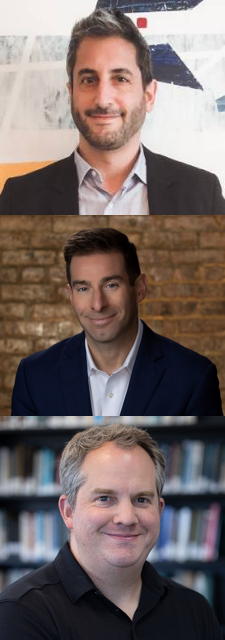
Elie Honig, Executive Director, Rutgers Institute for Secure Communities
Alex Guerrero, Professor of Philosophy, Rutgers University
Related Resources
Birch, Jonathan (2024). The Edge of Sentience Risk and Precaution in Humans, Other Animals, and AI.
Egid, Jonathan, Lea Cantor, and Fasil Merawi, eds. (2024). In Search of Zär’a Ya‛ǝqob: On the Authenticity and Authorship of the Ḥatäta Zär’a Ya‛ǝqob & the Ḥatäta Walda Heywat.
Manne, Kate (2024). Unshrinking: How to Face Fatphobia.
Nguyen, C. Thi (2020). Games: Agency as Art.
Sebo, Jeff (2022). Saving Animals, Saving Ourselves Why Animals Matter for Pandemics, Climate Change, and Other Catastrophes.
Symes, J. (2024). Defeating the Evil-God Challenge: In Defence of God’s Goodness.
Valor, Shannon (2024). The AI Mirror How to Reclaim Our Humanity in an Age of Machine Thinking.
Get Philosophy Talk
