Tenth Anniversary Special
December 22, 2013
First Aired: September 1, 2013
Listen


Philosophy Talk debuted on KALW 91.7 FM in San Francisco in August 2003, with regular broadcasts beginning in early 2004. Over the course of a decade the Philosophers, their guests, and their listeners have discussed and debated everything from the meaning of life to pre-emptive military strikes and baseball. To celebrate ten years on the air, John and Ken listen back to some of their favorite conversations with the writers and thinkers who have joined them on the program, and they look ahead to the ongoing challenges of thinking hard on the radio.
- Anniversary
- |
- Audio
- |
- Conundrums
- |
- Media
- |
- Thinking
- |
- Video
Ken Taylor
Welcome to Philosophy Talk, the program that questions everything…
John Perry
…except your intelligence. I’m John Perry.
Ken Taylor
And I’m Ken Taylor. We’re in San Francisco coming to you from the studios of KALW.
John Perry
Continuing conversations that begin on the Stanford campus at philosophers corner. That’s where Ken and I teach philosophy.
Ken Taylor
But we spent part of the past decade right here with you doing philosophy on the radio, and we thought it would be fun, a lot of fun to take a look back at some of the highlights of the past 10 years.
John Perry
10 years of philosophical radio, over 300 episodes. That’s amazing, Ken.
Ken Taylor
Yeah, it’s been so long. I can only remember where this all got started.
John Perry
Well, let me take you back. It was really, before you got involved. I used to listen to Car Talk. And then I used to listen to something called money talk, and probably several other things called talk. And they talked about boring things like cars and money. And I thought, How about talking about something interesting, like philosophy? Why can’t there be a Philosophy Talk? So I took this idea to my friend, David Israel, and he said, it was the stupidest idea I’ve ever heard. So I just shut up about it. And then you came along. And I said to you, how about philosophy, talk on the radio, and you were enthusiastic. You actually went out, got some money from Stanford, we made a pilot, we found Ben Manila, who was a really good producer. And that’s how we got started.
Ken Taylor
You know, it turns out that it actually takes a village, as a great woman once said, to make a radio show like this work.
John Perry
Well, maybe not a whole village, but definitely a few good producers, researchers and roving reporters.
Ken Taylor
So roving philosophical reporter, that’s an interesting concept.
John Perry
Yeah, it’s about where the rubber meets the road. That moment of truth when the abstract arguments come to an end and you’re confronted with concrete choices.
Ken Taylor
Well, let’s listen and see if we can actually hear the rubber meeting the road as our Roving Philosophical Reporters file these reports.
Caitlin Esch
If you look closely, you can see the prisoner’s dilemma playing out in our lives every day. In business partnerships, romantic relationships, and spectacularly in game shows.
Golden Balls
This is serious, life changing money. Your jackpot today is 100,000 pounds.
Caitlin Esch
There’s a British game show that’s no longer on the air called Golden balls, players compete to win a pool of money. Then in the final round, with only two contestants left, each has to decide…
Golden Balls
Split or steal?
April Dembosky
There’s a Hollywood version of falling in love.
A Fish Called Wanda
I’ve loved you ever since the first second I saw you.
Taxi
A man waits all his life for a woman like that.
The Simpsons
I love you for the rest of my life.
April Dembosky
And then there’s real life.
Alicia
There always seems to be something that’s wrong with the person.
April Dembosky
Alicia is 36 and lives in San Francisco. She’s been dating since she was 15.
Alicia
Every person that’s sort of like, this drives me nuts or I don’t feel at ease as I should.I think there’s a lot of shoulds in dating.
Zoe Corneli
Think about something a really long time from now. No longer than that. I’m talking your grandchildren’s, grandchildren’s grandchildren are long dead. That’s the kind of timeframe Alexander Rose and the Long Now Foundation are trying to get people to think about.
Alexander Rose
The 12-hour dial do you see in most clocks is not very relevant for our type of clock.
Zoe Corneli
They’re building a millennium clock designed to last 10,000 years. That’s as long as human civilization has existed.
Anissa Tanksley
When I walk down the street, I’m a black person. I’m not a bi-racial person.
Julie Napolin
Anissa Tanksley is a 16 year old student at Brannen High School in San Jose, California. She says she’s always had trouble finding our place in the world because of her biracial identity.
Anissa Tanksley
My mother is Irish, and my father is African American. My parents were divorced when I was younger. And I’m not in connection with my father at this point.
Angela Kilduff
What are thoughts? And where did they come from?
Speaker 1
Gosh, that’s a tough one.
Angela Kilduff
To find out, I asked people in downtown San Francisco.
Speaker 2
Basically, I guess that’s it’s what we process what we see smell, you know, our senses. So whatever we sense it’s just how we process it. And that’s, I think that’s where thoughts come from.
Speaker 3
I don’t have an answer. If the thing to think about what thought is yeah.
Caitlin Esch
These days, Eric lives in Sebring, Florida with his wife and two kids. He works in construction. He says he finds himself imagining what could have been if he taken steroids like so many of his teammates and added some speed to his fastball.
Eric Knott
You know, if I did who knows, maybe I’d blow out my elbow sooner. Or maybe I do go and play four or five years. in the big leagues and have that, you know, that cushion of financial security that I wish I had known.
Caitlin Esch
But for better or for worse, Eric feels he made the right decision. For Philosophy Talk, I’m Caitlin Esch.
John Perry
Thanks to Caitlin and to all who rode before her. I’m John Perry along with Ken Taylor, my fellow Stanford philosopher.
Ken Taylor
Today we’re celebrating 10 years of doing philosophy on the radio. Now, John, let me ask you, what would you say it actually means to do philosophy?
John Perry
Well, that’s something that modern philosophers like to say. But it also goes back to the most ancient of philosophers. Socrates and his pals. Their idea of philosophy was dialogue, conversation. Obviously, that wasn’t all there was to it. Because both Plato and Aristotle were voluminous writers. The point was, they both focused on philosophy as an activity as opposed to, to a product or a body of results. Lots of times when you’re at a cocktail party, or you meet somebody, you know, and you say, You’re a philosopher, they say, well, hmm, whom do you teach? Or who do you teach? The idea that, well, philosophy is just this body of work by dead guys, like Plato, and Aristotle, and Kant, and Hume. And if you’re a philosopher, you must teach that. And so we like to emphasize now philosophy is, is an ongoing activity.
Ken Taylor
Right, it’s a kind of thinking, it’s a kind of thinking about, you know, you take an idea, or you take a belief, and you ask, Well, what justifies me in having this belief? Why do I have this belief? Should I have this belief? And and you, you say, well, here’s some reasons why I should believe this. Oh, here’s some reasons why I don’t believe that I shouldn’t believe this. And then you weigh the reasons, pro and con. And it’s that weighing the reasons, pro and con, that is, you know, characteristic of one characteristic of philosophy. It’s not just that you think there are there are ways that the world is, like, in certain times, women were subordinate to men. Blacks were subordinate to whites. That’s the way the world is. Philosophy takes the way the world isn’t asked, Should the world be that way? And then it tries to imagine other ways the world could be. And then it tries to imagine, well, how might we get from the way the world is to the way the world ought to be? That’s philosophizing and you know, most interesting philosophical questions. There are at least two sides to them, there’s at least, yes, it should be this way. And there’s a no, no, no, it shouldn’t be this way. Or, Yes, it is this way, or no, it isn’t that way. And there are powerful considerations on each side. And again, the part of the activity of philosophizing is trying to decide which weight what weight goes with what consideration Proconsul. That’s a lot of what we do on the air, you know, we ask our guests, we always tell our guests, why should we give weight to that? Why should we? Why should why shouldn’t we be this way? What about this? Have you thought about this? And that makes Philosophy Talk a different from a lot of, of radio, a lot of reporting? I mean, we’re not reporters, we’re not your typical host, because your typical host, ask questions and let the guests answer them. As often as not, the guest turns around and asks us a question. Challenge is something we say, because we’re doing philosophy, with our guests, and with our audience, and when you’re doing philosophy, nobody really has a privileged position. We’re all on equal footing, arguing back and forth giving reasons pro and con, I say, these are the reasons pro, you say no, those aren’t good reasons. I say, yes, they are you say? Right. So that’s what we do?
John Perry
Well, you know, most Americans engage in something that’s really part of philosophy, which is politics. I mean, or at least a better part of politics and politics, either in the sense of you’re trying to convince somebody to vote for someone and just, you know, it’s rational discussion. And nobody thinks that we’re going to reach a solution. And you know, it’s going to be like a physics problem that eventually somebody will do an experiment. And oh, now we know that, you know, conservatism is a bad idea. And liberalism is a good idea. It’s just, we got to work things out. So there’s a certain amount of tail chasing. But on the other hand, there is a real sense of progress in philosophy, at least I think there is, for example, you went went back to St. Augustine this time. I mean, read his confessions, one thing he thinks philosophically about is why did the stars form patterns in the sky? You know, it seems amazing that it’s not there to provide some meaning. On the other hand, you know, there are reasons that he had even back then to see that well, no, it really, that’s really not so obvious and so forth. But he didn’t have any way to approach it really, except philosophically. And then, then a little bit empirically, because some of the, some of the theories of the meanings of stars provided turned out not To be true. Now, you know, that’s settled. That’s not part of philosophy anymore. That’s part of scientific knowledge that the patterns that the stars make, from the point of view of Earth have no no meaning for human behavior, and were put there for a purpose. So you don’t call that part of philosophy anymore. You don’t call, you know, physics part of philosophy anymore. So yeah, philosophy gets the leftovers. And so one thing about leftovers is they’re leftover. Once they’re settled. They’re not leftovers anymore. There are the knowledge.
Ken Taylor
We don’t philosophize about settled things. Right. I mean, there’s no point in philosophizing about settled things. But there is this, some of the things that we take to be settled, don’t deserve to be settled. That’s true. And so there’s always that’s why our saga is we question everything except your intelligence, we question things that some people might take to be settled, some people take it to be settled, that gays ought not to have the right to marry. Right. There were times when people took it to be settled that I don’t know. Kings had a divine right to, to rule. Well, yeah. So you took that to be settled. But is it really settled? And so one of the things that we do is, we try to bring to bear this, you might call it an adolescent attitude. There’s this adolescent attitude of like, who says, right, who said, Who are you to say that I that I have to go to bed now? Well, who are you to say that this is settled? Because I’m going to unsettle it. I’m going to unsettle it.
John Perry
Our colleague Michael Bratman once said, Well, philosophy comes down to two questions. What do you mean? And how do you know? And you just kind of keep pushing them, and pretty soon you’ll be a famous philosopher, I may be embellishing a little on what he said.
Ken Taylor
You’re listening to Philosophy Talk. For 10 years and counting, we’ve been questioning everything except your intelligence.
John Perry
We don’t question your intelligence because we rely on your intelligence. And we also rely on your sense of wonder, as Aristotle noted long ago, it is owing to their wonder that people now begin and at first began to philosophize, we wondered about all sorts of things together over the past 10 years. And in our next segment, we’ll revisit some of them.
Ken Taylor
Some of our favorite objects of wonder—when Philosophy Talk continues.
John Perry
Welcome back to Philosophy Talk. I’m John Perry.
Ken Taylor
And I’m Ken Taylor. We’re celebrating 10 years of doing philosophy on the radio.
John Perry
Ken, we’ve produced more than 300 programs over the past decade, we’ve talked about everything from the meaning of life to pre emptive military strikes to baseball,
Ken Taylor
You know, people might think that there’s not much to philosophize here about baseball, John, but you know, they’d be wrong. Baseball is an amazing thing. And one thing amazing thing about it is that each moment is pregnant with possibilities.
John Perry
That’s one of the things that makes baseball so unique, two minutes to go in a basketball game and one team is up by a huge margin, that game is over, you know, nothing will happen to dramatically change the score, because nothing could happen to dramatically change the score. But in baseball, giants up 10 runs ninth inning, they still could lose a comeback is always possible.
Ken Taylor
That actually raises a deep question, John, what exactly are we saying? When we say that something that didn’t happen, nonetheless might have happened?
John Perry
Well, we put that question to Laurie Pau, from UNC Chapel Hill, in one of our all time favorite episodes, “What Might Have Been.”
Laurie Paul
I think it’s really important to think clearly about what might have been. And I think it’s important to think clearly, even just for personal reasons, for example, if I want to think carefully about the kind of person I want to become, or the kinds of things that I want to make happen in the world, who I should vote for, how to learn from my mistakes. So for example, if I do something and something happens, as a result of that, I might think back and say, well, what could I have done differently? And what would have been the result if I had acted differently? And that’s the way I learned from my mistake.
John Perry
What a lot of people might think that Well, yeah, we do engage in such reasoning. But this is all if not quite fantasy and fiction. It’s all just the imagination. It’s unconstrained by the facts. Do you agree or do you think they’re really some facts cold, hard objective about what might be must be in can’t be?
Laurie Paul
I do think there are cold, hard, objective facts about what might be what might have happened. And that’s why I’m so interested in trying to figure out partly what those might be and partly how we’re supposed to try to discover them.
Ken Taylor
But the thing that John said in the opening it makes it intriguing. I mean, the facts about you know, my being a philosopher, I know what sort of constitutes those facts, you know, I say oh, he went To graduate school in Chicago, he got a degree he got hired, he writes philosophy articles, those are concrete things that I actually do concrete properties that I actually have. But you know, I think Quine was worried about these facts, because he couldn’t figure out how they could fit into the world. I mean, how can facts about what might be fit into the world, which is a, you know, a totality of actual things?
Laurie Paul
Well, here’s one way that I like to think about what might have been, you start with some rules, which I think of as kind of regularities or rules about what happens like in a game, and then you consider different possible scenes or scenarios or different possible initial conditions. And that’s where you have to do a little bit of imagining, because you have to think about, well, there’s what actually happened. And then there’s the imagined thing that I could plug in instead, and then apply the rules, the actual rules. To see what you get out of that.
John Perry
Well, let me give you an example are, let’s just take our example. So Ken, could have been a lawyer. I say what Ken obviously could have been a lawyer, he had the L L Zatz. In his hand, and he decided to rip them up and not take the exam, he decided differently, he would have gone to law school, He’s a talented, intelligent guy, if he’d gone to law school, he would have become a lawyer. Clearly, Ken could have gone to law school, but somebody else might say, No, can clearly couldn’t have gone to law school, somebody who’s so interested in philosophy as he was, and so taken up with it, there’s no possibility. Even if he’d taken the LSAT, at some point along the line, he would have opted for philosophy. So we got two seemingly good arguments. How do we know which the fact the cold heart objective fact about the possibility can go into law school? Which side does it come down on?
Laurie Paul
Okay, so this is why sometimes philosophy is interesting, because things get tricky. And what the metaphysician like me is going to say is, well, maybe both of those are right, it just depends on which rules you’re taking to govern what you’re going to get once you stick your input conditions in. So you’re each picking out different actual rules or regularities, and then reasoning to different conclusions.
Ken Taylor
This seems true, I could have become a lawyer. And there’s something else that seems true. If I had become a lawyer, I might have been more had more money than I have now. But I wouldn’t have been happier than I am now. So I want to just focus for a minute on what exactly are we saying, when we say something like that? Tell me what the statement like that just means.
Laurie Paul
Okay, so I like the last example, I’m going to focus on a different example, how I met my husband. And let’s just say I met my husband when I went into the local coffee house, ordered a giant coffee, and you know, our eyes locked over the barista couch. So romantic. So romantic, yes, and
John Perry
Starbucks or pizza.
Laurie Paul
It was nice. It was pizza. But when we realized that we had a commitment over the coffee. Now, if I had never gone in to the coffee shop that morning, I would have never have met my future husband. And I think that’s a safe assumption to make. I think there’s a fact about that. And what I’m keeping fixed, is that well, what I’m assuming is that I would have gone straight and would never have gone to the coffee house and that I never would have met him in any other way. So there’s a kind of regularity there.
Ken Taylor
Yeah, my son though he, my teenage son, he sometimes gets fascinated by counterfactual thinking. And he says, you know, the problem is that if you change one thing, like I didn’t go into the coffee shop, a lot of other things might change, too. And he also says, very perceptively, well, to get it not to go into the coffee shop, but a lot of the things that lead up to it have to change. So how do you know what’s going to change if you don’t go to the coffee shop? And how do you know what you have to change in order to get you not to go into the coffee shop? And isn’t it just sort of like you I mean, so other answers to my 15 year old son?
Laurie Paul
I guess I want to say that there’s something right about what your son is saying, which is that there are a lot of different ways to think about what could have happened. But just because there’s a whole bunch of different answers we can come up with, doesn’t mean there aren’t a whole bunch of different clear, careful ways we can come up with those answers.
John Perry
Laurie Paul from the University of North Carolina Chapel Hill, helping Ken and I think about the world as it might have been, this is Philosophy Talk, and it’s our 10th anniversary special. We’re listening back to some of our favorite episodes.
Ken Taylor
And one of our favorites was an episode we did recently on unconditional love.
John Perry
You know, I really liked that program because like a lot of our programs our guests was a scientist and it’s interesting to see how philosophy and science can mesh. They don’t always but sometimes they do in this episode, you And I made a lot of distinctions, or I should say I was very skeptical about unconditional love. And that forced you to make a lot of good distinctions. But then when our scientists came on Lynn Underwood, she picked right up on the complexity of the philosophical aspects, and showed how those fit into the research she had been doing, about unconditional love.
Lynn Underwood
I entered into the whole idea of Science of Love as an epidemiologist, because like it was really fascinated with measurement. I’ve been measuring things all my life, and I like measuring soft things, and like social support and stress and things that are really hard to measure. And I’ve developed a measure called the daily spiritual experience scale that was looking at the transcendent features of life, how people interact with the transcendent. And one aspect of that four of the 16 questions on that scale, were about unconditional love to others.
John Perry
Let me ask you then about unconditional love, and exactly what I mean by it. I mean, it sounds like it involves a great deal of blindness, don’t people want to be loved for who they are and what they are and how lovable they are, instead of being loved blindly, unconditionally? Or what exactly is your definition of unconditional love?
Lynn Underwood
Well, it’s the kind of a selfless caring for others, a love centered on the good of the other, sort of loving people through thick and thin, the whole idea of self giving other centered love, one that is designed to enable the other person to flourish in whatever way they can. And it’s centered on the good of the other rather than on ourselves.
Ken Taylor
What role does, do I play in this unto myself play? Do I am I supposed to just negate myself? Am I equal to the other and this unconditional love? I mean, a totally on self regarding?
Lynn Underwood
Yeah, well, when I developed this, it was a, I was trying to think about a balanced system. So when I did research to kind of look into this, I thought about the whole idea that we can’t, we have to have a balanced attitude to love, we have to balance giving and receiving, we have to balance Care for Self and care for the other, that the you were mentioned earlier in the program, the issue of a battered wife. And I think those sorts of situations somewhere, the person needs to value themselves and put the safety mask on themselves, so that they can help others. And I think we need to balance a kind of a Care for Self with, with this kind of self giving love for others.
John Perry
Lynn, of course we’re philosophers. We don’t want to get bogged down in facts, you know, we just like argue, but you’ve done a lot of empirical work on this. So what’s the most surprising thing you found about unconditional love in your testing, and surveying and measuring?
Lynn Underwood
There are a couple of things that I might highlight. One was a study that Ben Carney did on married newlyweds, who studied newlyweds at the beginning of their relationship, and then looked at how it predicted longevity of the marriage. And the thing that was most predictive of longevity was everybody of course, when they were newlyweds, or most of them anyway, were in love with the other person. But some of them really were very aware of the nature of the feelings of their spouse early on. And it was kind of the combination of this, you know, abiding, generous love for the other person and thinking they were wonderful, combined with an awareness of their failings that predicted the longevity in those newlywed their marriage for those newlyweds.
Ken Taylor
But so okay, i It seems to me plausible, lots of people have argued that parental love is a form of selfless love. But you might even wonder there because the child is connected to the parents in a certain way. So it’s loved for a person connected to yourself in a certain way. Romantic love between marriage partners. It’s not it, you might think of it as selfless. But there’s a kind of reciprocal reciprocity there. And without the reciprocity, it’s hard to see how a marriage could be sustained. So I mean, are those really forms? I mean, would you really call either of those things selfless? Because, you know, on the one case, we have a reciprocal relation. And then the other case, we have our own offspring. I mean, if we love other people’s children’s as much as we love our own, that might be selfless. But do you know what I mean?
Lynn Underwood
I see what you mean. Yeah. But I mean, there have been studies of adoption. I mean, why do people adopt children from different groups, for example, and that kind of brings out this notion that we can care for those that are different from ourselves or not our children? And I think too, there’s cost in parenting, even though they’re their own children. There have been some brain imaging studies that look at kind of mothers imagining, you know, looking at faces of their own babies, and of course, areas of their brain lights up and it’s all positive typically. But there also have been studies that have looked at the mother imagining getting up in the middle of the night being really tired, the baby crying, and there in those situations, the two air two areas of the brain lit up. One the more affiliative area that They kind of one that lit up when they looked at the rabies picture. But also there was kind of an immoral area of the brain moral engagement, that lit up as well. So this sort of challenge of anybody who’s had maybe a teenage child, you know, you are, you’re stretching beyond the sort of natural affiliation that might happen when you have a smiling baby. And I think those kinds of things that encourage the social affiliation with others, could be thought of as an evolutionary drive toward altruistic behavior toward others, a kind of a cooperation in a situation in a group.
John Perry
Lynne Underwood from Cleveland State University, showing how philosophical concepts have informed research on unconditional love.
Ken Taylor
This is philosophy time, it’s our 10th anniversary, and we’re celebrating by revisiting some of our favorite moments.
John Perry
Well, you know, can a lot of our programs have to do with making abstract problems vivid, but we also love programs that challenge common sense assumptions that we might otherwise never have thought twice about.
Ken Taylor
John, I’m gonna test your common sense. Here’s a question for you. Who owns your body?
John Perry
Well, at one time, I would have certainly said me.
Ken Taylor
That’s right. And that’s I think what most people would say, it’s obvious, right? It’s so obvious that you own your body. But we had a guest on an episode called regulating bodies, our guess was Cécile Fabre from Oxford University. And she argued, get this, that you do not own. At least you do not own exclusively, your own body. I went into this episode thinking, Oh, come on, you have got to be kidding me. And I do remember, we push there really hard. But in the end, she gave a pretty convincing case, that in fact, you do not fully own your own body.
Cécile Fabre
Suppose you know, you walk down the street, and there is a puddle of water and a baby’s drowning in that puddle of water. The only way to save the life of the baby is to lift the baby out of the puddle. You’re the only person who can do it. Now, do you think you are morally obliged to do that?
Ken Taylor
Well, I think it would be a done callous thing not to do it. And I think I should do it. Maybe I am morally obliged. But why does that show the baby? That doesn’t show that the baby body does it?
Cécile Fabre
No, it shows that the baby has a claim that you use your arm in a particular way, at that particular point in order to save his life. So if you believe that, then you don’t believe that you own your body?
Ken Taylor
Let’s be clear here. So you said to say that somebody owns my body and your parts of my body, in your vocabulary is really to say they have a claim on the use of my body? Not not just I have a claim on the use of money. That’s right. That’s right. Well, isn’t that a funny sense of ownership? I mean, I mean, somebody might have a claim to use my car. You know why? Because suppose it’s the only way that we can get somebody to the hospital and all that they have a temporary claim on the use of my car. But that doesn’t mean they own my car, after they use it to get this person to the hospital, it goes back to me its rightful and so owner,
Cécile Fabre
So I agree. And the same with your arm, once the baby is rescued, you regain a claim to the use of your arm. So that it’s in that one sense that you don’t fully own your arm, you can’t do with your arm, whatever you want, at any time.
John Perry
So in a way, though, you’re saying the ownership of our body is like the ownership of other things, at least in in, in most states. It has limits. I mean, the US Constitution protects us from unreasonable searches and seizures, but doesn’t protect us from reasonable seizures. And I’m sorry, car can be seized for emergency. Yeah, so in the same way our body could be seized for emergencies in that way.
Cécile Fabre
What we’ll think about military conscription, you know, to say you have to fight, you know, in that war is to say, well, we have we the community have a claim on your person on your body to fight in that war.
Ken Taylor
Okay, Cécile. Yeah, it’s clear that you believe that a person can actually have the right the right to expect or demand part of somebody else’s body or somebody else’s bodily services, where would your right come from?
Cécile Fabre
Well, I think we have a right in general within certain limits to receive help when we need it, you know, particularly as a matter of life and death. So the welfare state which is funded through taxation is one way in which we as a society Horner, this right and just think that it can be the argument can be extended, you know, again, within limits to parts of the body.
Ken Taylor
Okay, the welfare state, it redistributes wealth. It takes some from money from some spends it for the general good. It sometimes even transfers money from X to Y. Right? That yeah, but money is not like intimately connected with my person and my being money. Now I can have an excess of money, that’s far more than necessary for my flourishing you know, but arms, legs, eyes.
Cécile Fabre
Well, two arms, legs, eyes, I agree are different. But I mean, I have an excess of blood, I don’t need all the blood that there is in my body. Now, to continue to function. I don’t need all the bone marrow that I have to continue to function, I don’t need all the liver cells that I have in order to continue to function. So what’s the difference with money?
John Perry
Well, I mean, that’s a rhetorical question.
Ken Taylor
No, I think that’s a real question.
Cécile Fabre
So really quite a request.
Ken Taylor
You mean the analogy with taxation? quite seriously? I’m not even sure you mean it as an analogy. I mean, the argument that support tax schemes, you think that very argument supports asset or redistribution of excess bodily parts? Is that right?
Cécile Fabre
Yeah, that’s right. And that’s because I simply don’t see what is different, in a morally relevant way between money on the one hand, and the parts of you know, our bodies such as blood and so on, on the other hand, but also seeing to be even more controversial, that after death, we simply do not own our body. So after death, I must make my kidneys available, my liver, my heart, my lungs, my corneas, and so on, so forth.
John Perry
So I just want to draw an analogy between your view and what I understand to be iron rands view, right? Because you both see this strong analogy between our ownership of our own body and our ownership of the wealth that we come by. But where you do a modus ponens, she does a modus. That is, you say justice, just as our wealth really belongs partly to the state and is for the use of others. So is our body and she to oversimplify no doubt is what is a subtle body of work. Just as nobody has a right to my body or any my bodily parts, they don’t have a right to my wealth and the things I accumulate.
Cécile Fabre
Yeah, that’s very interesting. So I agree with her that you know, they are analogous, but I do very firmly believe in taxation. I’m not prepared to give up on that. So my view is given that I do believe in taxation, then I have to accept limited rights over the body.
Ken Taylor
Cécile Fabrefrom University, arguing that our bodies are not only our own, you’re listening to Philosophy Talk, we’re celebrating our 10th anniversary by combing the archives for great philosophy on the radio.
John Perry
We’ve had some terrific guests join us over the past decade, Ken, but you know, there’s one guest you and I especially look forward to hearing from on every program and that your listeners is you.
Ken Taylor
The listener speaks—when Philosophy Talk continues.
John Perry
Welcome back, I’m John Perry. This is Philosophy Talk, the program that questions everything…
Ken Taylor
…except your intelligence. I’m Ken Taylor, and we’re revisiting some of our favorite moments, celebrating 10 years of doing philosophy on the radio.
John Perry
Our next clip is from our show on biracial identities and it exemplifies a lot of things I really like about Philosophy Talk, of course, we had a great guest Michele Elam. We were able to talk I think quite casually and frankly about something that some people find upsetting to talk about. Whether you know, Obama is a white man like me or black man like you or something new and important in between, we had listeners call in we had a lot of good calls, who took all kinds of positions on this, often very heartfelt. And finally, we had great music because who doesn’t like to hear Cher singing “Half-Breed?”
Ken Taylor
Welcome to Philosophy Talk, Mary Jane, what’s your comment or question?
Mary Jane
Well, I am from a mixed race. Parents and my parents were born in 1929. When they were married, their parents wanted to put them in insane asylums because they couldn’t. They were in such a shock. And when we went out any place everybody would stare at us as if we were part of a circuit because we as a family, mixed race family were stared at constantly. I remember in the 1950 senses. I was asked to pick a color. They asked me what color my mother was. And I just never thought of my mother as being a color or race. Or we only my mother And when it came to me, they asked me what color was. And I said, I will refuse to pick one or the other. And it was that when I realized that society would try to make you into one race or another, and the war came along, I was beat up all the time, because I was Japanese and Pennsylvania. And then I went to Japan. And I realized I wasn’t Japanese. I was American. So the emphasis should be on cultural identity, I think and more discussion should be on that.
Ken Taylor
Okay. Thanks for the comment. Mary Jane. Michele, what are you what are you?
Michele Elam
Well, I think that’s a really moving account, actually. And one of the things that it reminds us of is that historically, being mixed race was often made you the subject of division of legal penalties, of course, into the loving decision in 1967. It was illegal in many states to intermarry. And so one of the things that’s curious is that now in the contemporary moment, you have this glamorous SNESs associated with mixed race, even though the actual stories of people suggests that still there’s discrimination. So that’s one of the things that’s fascinating for me, which is, how is it that you can have this popularization of mixed race at the same that does absolutely overcome some historical discriminations, and yet, and yet, we still have racial inequity in this country.
Ken Taylor
That’s a that’s an important point. I want to go back a second to a question I asked for an explanation. And you gave me one, but I still want to press it a little bit. I think there’s a deeper reason why mixed race people are not free to identify with the socially unmarked race, right? Because the mark race is is often oppressed, right? An act of identification with him as an act of solidarity. Absolutely. And an act of dis identification with them is an act of apostasy is something some kind of betrayal or some kind of separation and people and because we’re invested because the unmarked folks are invested in maintaining their privilege, and the mark folks are invested in overcoming their oppression. Those two pizzetta people have some kind of stake in it. I think you’re absolutely right. We’ve gotten a ton of callers, we’ve seem to have a pinched nerve here. Beth in San Francisco is on the line. Welcome to Philosophy Talk, Beth.
Beth
Thank you. This sort of goes against what the last caller said, I look completely white. But I am mixed race. Both my parents appeared white, but my grandmother was what was referred to at the time as mulatto, I’m 46 years old. And I remember in the 60s, when I would go out with my grandmother, she often was treated very poorly. And when I would say to people don’t treat my grandmother that way, they would say, Oh, this isn’t your grandmother, it’s just your housekeeper. He was very insensitive. So but I was never treated that way. I got to see it because there was my grandmother, but I had blond hair, my brother had blond hair, or two little blond haired white kids walking around for all those people cared. So I think a lot of our identity is formed by people perception or visual perception of us. However, I did have cousins in South Carolina that referred to my brother and I by using the N word.
Ken Taylor
Beth, thank you for the interesting story you got any quick?
Michele Elam
I think it’s a great comment. It’s useful when because a lot of mixed race people do struggle with the fact that they may not visually registered to certain people as of color. But that doesn’t mean that they haven’t had experiences themselves or with family members or friends, where they see discriminatory practices. And that I think is very useful for mixed race people to think about both light skinned privilege because the fact that you perhaps didn’t experience the same discrimination, but we’re bearing witness to it means that you do understand the way your particular position as a mixed race person is continuous with civil rights and social justice issues,
Ken Taylor
Tim in Alameda. Welcome to Philosophy Talk, Tim.
Tim
Hi, how you doing? Tour kind of a Schroeter years cat experience here? Okay, I’ve got these two philosophers in a yellow box in my kitchen. And after looking well, I never knew which one of you was I didn’t figure either one of you was black. But then I saw your website, and I figured one of you was, but I didn’t know which one. So I said, Well, it’s probably the guy with the lower voice. But now today, I found out the other way around. Okay, well, if I got two philosophers in a yellow box in my living room, is either one of them actually any race at all?
Ken Taylor
Well, yeah, I’m black and Johns. Why is there a deep boy behind this question? I mean, are you wondering about the reality of racial categories?
John Perry
I think he’s making a deep point. I mean, the idea is the cat either, I don’t know gets chopped in half or not, depending on some quantum thing. But that doesn’t really happen until the observer looks and maybe races like that. It is it’s it’s a I know, it’s a quantum phenomenon. But it’s really very much in the idea of the observer. There’s kind of a collapse of racial identities when you get out in the crowd.
Ken Taylor
Race only exists when beheld.
Unknown Speaker
But actually, that’s not always true. It’s really interesting, especially with some mixed race people, not all is that racism always writ clearly on the body. And that was what a lot of the early legislation in the 19th century was about is how what do you do if you cannot see and legislate black people, black people, and I think that goes to your early thing. What happens when it’s not clear if somebody’s black or white, and some of that changes over time? Like a lot of the early NAACP, Walter White and Diane Nash, other people who are civil rights activists are blond and blue eyed, but identified as black. But the the often if you’re trying to legislate race, people feel very uncomfortable with racial ambiguity if they can’t tell what you are. And so actually, and in this case, the caller couldn’t tell it you are by some presupposition about what a black person sounded like, right?
John Perry
Michelle Elam from Stanford University, along with a host of callers who joined our conversation on biracial identities. This is philosophy talking, we’re celebrating 10 years on the air.
Ken Taylor
John, we’ve talked about our favorite topics, and good guests, but there’s a guest that no matter what the topic I always look forward to. That’s Alison Gopnik. Allison is by trade, a psychologist, a developmental psychologist, he studies babies, but she studies them in such a philosophically lively and interesting way. I mean, she’s interested in the big philosophical questions, as he’s trying to answer these big philosophical questions by the methods of psychology, and studying in particular babies. I mean, it’s really cool. And if you listen to her, you can just be mesmerized by the breadth and depth of her knowledge of all these different fields in cognitive science, psychology, philosophy, computer science, artificial intelligence, they all just run together smoothly. In her really powerful brain.
John Perry
You’re surely right about Alison, she’s great. Our most recent program with her was recorded live at the Marsh Theatre in San Francisco. Let’s listen as she tells us a bit about what we can all learn from the minds of babies. One of
Alison Gopnik
The deepest questions in philosophy has always been how can we find out the truth about the world? After all, it comes to us from the world or photons hitting the back of our retina and little disturbances of air at our ears. And yet all of us live in a world of chairs and tables and people and corks and photons and distant planets. How do we ever get and we think that’s true. How do we ever get there from here? Well, what we’ve started to discover really just even in the past 10 years is that babies have extremely powerful learning mechanisms, very powerful capacities for things like probabilistic induction, the sort of things that philosophers of science have talked about very sophisticated scientists doing. Now babies do all this unconsciously not consciously. But they can use some of the same kinds of techniques for looking at patterns of probability in the world and inferring the way the world works that we see in science. And we see in very sophisticated machine learning, let me give you a practical example. Well, maybe an impractical example. This is work that my colleague Faye Chu at Berkeley has done. So what she did was she showed babies a box full of ping pong balls. This is the classic philosophical urn in philosophy, it’s always an urn, so she showed them on an urn full of ping pong balls, 80%, white 20% read. And then this was with nine month old baby, she showed them an experimenter who either took four white and one red bowl out of the box, or took four red and one white ball out of the box. Now, if the baby’s thinking like a philosopher, then she should think that that second sequence for red and one white, although it’s possible, it’s very improbable, given the statistical nature of the urn. And sure enough, that’s exactly what nine month olds thought nine month olds looked much longer at the possible but improbable event than at the more likely one, right? So these tiny babies already implicitly, we’re using principles about randomness about selection, the kinds of things that we would use if we were very sophisticated.
Ken Taylor
You have another book of the scientists in the crib. And I mean, this is I think this is a deeply important point. Because go back to what we said about language and how rapidly and effortlessly kids seem to acquire language that convinced people like Chomsky, that it was already all in there, and there wasn’t really much of a learning problem, because if it were a learning problem, given the meager data they had to work on, it would be impossible exact, he thought statistical regularities couldn’t possibly do it. But this new kind of work you’re talking about, I think it’s really eye opening. It’s it’s it’s deeply eye opening, because it gives you you don’t have to be a full bull or Chomsky native, so you don’t have to be a naive empiricist. The baby’s minds are really complicated learning machines.
Alison Gopnik
Exactly. So I think we’re we’re getting to a place which isn’t just a sort of, you know, wishy washy compromise between nativism and empiricism. What we’re actually starting to say is, here’s what babies start out knowing, here’s the learning mechanisms that they’re born with. And the amazing thing is that you put those two things together, and you can Learn the incredible range of things that human beings can learn.
John Perry
So let’s go to a somewhat different realm morality. My favorite philosopher David Hume says, there’s an inborn benevolence in human beings. It’s not terribly strong, it can be easily destroyed. But but in the right thing, it can be nurtured. Do you find that there’s an inborn benevolence in babies and toddlers?
Alison Gopnik
Well, not only do we find that that’s true, but actually Hume, who is also my favorite philosopher, I think got it right in an even deeper sense, because what you said, and he was sort of alone among moral philosophers and saying this was that the origin of that benevolence came in our emotions in our feelings, not just in what we think. And when we look at even very young babies, we see that even young babies are already empathic, they already can recognize and take on the feelings of others. And by the time they’re 15 months old, they’re not only empathic, but altruistic.
Ken Taylor
You’ve got some nice experiments about this, that illustrate this.
Alison Gopnik
That’s right. So this is a an experiment that actually was done by Felix Warren Akin. And what he did was he took 14 month olds, and they saw an experimenter either drop a pencil on the ground, and then look as if he was reaching for it, or throw the pencil to the ground, because if you wanted it on the ground, now it was on the ground, the baby could get to it, the experimenter couldn’t. And the babies had to actually crawl over a bunch of cushions to get to the pencil. Well, if the experimenter dropped the pencil and then looked like he wanted it, the babies would climb all the way across the room to pick up the pencil and give it to him. But if he threw it to the ground, so it looked like he didn’t want it, they wouldn’t. So these very little babies already seem to be able to read, here’s what he wants, here’s his desire. And if that’s what he wants, then I’ll help him get it.
John Perry
Alison Gopnik from UC Berkeley, talking about just some of what the rest of us can learn from the minds of babies.
Ken Taylor
We’ve been listening back to some of our favorite Philosophy Talk moments, celebrating our 10th anniversary on the air. And John, there’s one more aspect of the program we have to talk about, if I were to ask you to describe in shows the 62nd philosopher, but somebody who’d never heard the program, what would you tell him?
John Perry
I would say Ian is where philosophy meets the funnybone. He’s got a droll sense of humor, he draws on personal experience and news of the day to take our philosophical theme, and make us laugh about it. But you know, more often than not, at the same time, he also makes us think, at a new level. And he does this all if not always quite in 60 seconds, pretty darn fast.
Ken Taylor
So without further ado, Ian Shoales the Sixty-Second Philosopher.
Ian Shoales
Ian Shoales… It’s hard to believe that Philosophy Talk has been on the air for ten years now. As a matter of fact, it’s a little bit impossible to believe. Maybe it’s because I’ve been hanging out with philosophers for the past ten years, but I find myself questioning the very notion of an anniversary. Ten years on the air — that’s not really true, is it? On the air, every minute, for ten years? On the air once a week for an hour for ten years is closer to the truth, but that doesn’t have the same panache, does it? That would be, what, fifty two weeks times ten… the 520th anniversary. 520th sounds both more and less impressive than 10th. And that’s not really right either. In San Francisco, for instance, the show is on twice a week. So that would make this the one thousand forty-ieth anniversary. Young for a dragon, old for a radio show. And do you count repeats? So this anniversary thing quickly becomes problematic, especially if you believe that time is an illusion, and especially in these times, when everybody is on a quest for the authentic. Or at least, everybody who’s authentic is on a quest. I think that’s true, and if it’s true, it’s either ironic or begs the question. Maybe both. See what this show has done to me? Despite waves of self-doubt, self-loathing, and severe epistemological shortcomings, I did a Google search, and discovered that the gift for a tenth anniversary is traditionally tin or aluminum. So putting in ten years proves how flexible and durable you can get without being broken. The tenth year anniversary jewel, on the other hand, is the diamond. And there’s the modern economy right there. Put in your ten years, and the poor get a can of beer, the rich get bling. The poor have to learn how to bend, and the rich are so hard nothing can crush them but Superman’s hands. The only people who make money in this scheme of things are lawyers and lobbyists. The rich already have theirs, and the poor don’t have a prayer of getting it. Of course, philosophers fall somewhere in the middle there. They’re not rich, but most of them are employed at an institute of higher learning, so they aren’t poor either. There aren’t any homeless Diogenes out there in the agora these days, living in barrels and mouthing off to Alexander the Great. More’s the pity. On the other hand, if time is an illusion, there might just be an alternative universe where philosophers make fools of would be world conquerors on a daily basis, from a barrel purchased at IKEA, which theoretical physicists agree, now has a branch in every alternative universe. On the other hand, even if time is an illusion, those birthdays and anniversaries start to pile up, and alternative realities can only offer cold comfort. I just hope I get a piece of cake out of this anniversary deal, otherwise, what’s the point of living? You’d think after ten years with this program, I’d have an answer to that question. But all I have is piles of empty cold ones and either a pathological fear of eschatology or an eschatological dread of pathology. Either way, it’s not good. And I need cake. Pronto. Q.E.D. I gotta go.
John Perry
Philosophy Talk is a presentation of Ben Manilla Productions and the trustees of Leland Stanford Jr. University, copyright 2013.
Ken Taylor
Our executive producer is David Demarest.
John Perry
The program is produced by Devin Strolovitch. Laura Maguire is our Director of Research.
Ken Taylor
Thanks also to Chris Hoff, Merle Kessler, Dave Millar, Jimmy Tobin, Ai Tran, Karola Kreitmair, and Mark Stone
John Perry
Support for Philosophy Talk come from various groups at Stanford University, the Friends of Philosophy Talk…
Ken Taylor
and the members of KALW San Francisco, where our program originates.
John Perry
The views expressed (or mis-expressed_ on this program do not necessarily represent the opinions of Stanford University or of our other funders now.
Ken Taylor
Not even when they’re true and reasonable. The conversation continues on our website, philosophytalk.org.
John Perry
I’m John Perry.
Ken Taylor
And I’m Ken Taylor. Thank you for listening
John Perry
And thank you for thinking
The Simpsons
10 years on the same job, for the same salary.
Guest
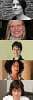
Laurie Paul, UNC Chapel Hill
Lynn Underwood, Cleveland State University
Cécile Fabre, University of Oxford
Michele Elam, Stanford University
Alison Gopnik, UC Berkeley
Get Philosophy Talk

Leave a Reply
You must be logged in to post a comment.