Im Yunjidang
December 7, 2025
First Aired: February 25, 2024
Listen


18th-century Korean philosopher Im Yunjidang was the first Confucian to argue for women’s equality in matters of morality and to claim that women, just like men, can be sages. She also argued that it isn’t just what you do that matters morally—it’s also how you decide. So what does it mean to be a sage and how does someone become one? How did Im Yunjidang use traditional Confucian texts to argue for women’s spiritual equality? And what did she think was important when it comes to making difficult moral choices? Josh and Ray explore her life and thought with Hwa Yeong Wang from Duke Kunshan University, editor of Korean Women Philosophers and the Ideal of a Female Sage: The Essential of Writings of Im Yungjidang and Gang Jeongildang.
Part of our series Wise Women, supported by a grant from the National Endowment for the Humanities.
Josh Landy
How do you argue for spiritual equality in a patriarchal society?
Ray Briggs
What does it mean to be a sage?
Josh Landy
What really matters: the things you do or the way you do them?
Ray Briggs
Welcome to Philosophy Talk, the program that questions everything…
Josh Landy
…except your intelligence. I’m Josh Landy.
Ray Briggs
And I’m Ray Briggs. We’re coming to you from the studios of KALW San Francisco Bay Area.
Josh Landy
Continuing conversations that began at philosophers’ corner on the Stanford campus, where Ray teaches philosophy, and I direct the Philosophy and Literature initiative.
Ray Briggs
Today, it’s the next episode in our “Wise Women” series, generously supported by a grant from the National Endowment for the Humanities. We’re talking about the life and thought of Im Yunjidang.
Josh Landy
Im Yunjidang was an 18th century philosopher from Korea and considered the first woman philosopher in the Confucian tradition. She was an early proponent of egalitarianism.
Ray Briggs
Yeah, she thought all human beings have the same nature that men and women aren’t really that different from each other at a deep level. So, anybody can achieve spiritual perfection if they just work hard enough.
Josh Landy
Yeah. And that was a pretty radical idea. At the time, even very few women were even taught to read. If they got married, they were allowed to leave the home during the day they couldn’t inherit property. Things are pretty unequal back then.
Ray Briggs
Yeah. But Im Yunjidang’s brother taught her to read, and she became an expert on classical Confucian texts. She really admired the sages that she was reading about, she even wanted to be one herself.
Josh Landy
Right, and she made this brilliant move at rather than saying, oh, we need to check out all those old writings produced by men, she realized she could actually draw on them to make her point. Those earlier thinkers gave her everything she needed to show. Women can become sages too.
Ray Briggs
Right. So, Mencius said we’re all born with the ingredients that we need to become really good people and then we just have to build on them in the right way. The sages, Yao and Shun—they were pretty much universally admired. But Mencius said everyone can become a Yao or a Shun.
Josh Landy
Everyone, Ray? What about thieves and bandits, thieves and bandits they devote their entire lives to like stealing other people’s stuff. They practice being bad every single day—would Im Yunjidang really say they’re on their way to being sages?
Ray Briggs
Okay, they’re not currently on their way. But they couldt be if they tried. They have the same fundamental nature as everyone else, they just committed themselves to the wrong path.
Josh Landy
So if they just stopped stealing stuff, they’d be paragons of virtue?
Ray Briggs
That’d be a start. But virtue isn’t just a matter of how you act, you got to reform yourself from within, you’ve got to take those sprouts of virtue in your heart, and you’ve got to help them flourish. That can be the work of a lifetime.
Josh Landy
But surely it has to be partly a matter of the actions you take. And it can’t just be about purity of heart. There are some things you can’t do like stealing, for example.
Ray Briggs
Well, that’s true, but it’s not enough to just do the right things. You have to do them for the right reasons.
Josh Landy
Oh right, like that guy, On Gyo. On Gyo got told. You got to go over there to that remote area as an envoy, being a good Confucian. He sets off at a sprint, but his mother is heartbroken, and she and she grabs his coat to try to stop him. He just rips that coat and dashes off. Many Confucians thought, that’s the right way to behave, what an admirable guy. But Im Yunjidang disagreed.
Ray Briggs
Right. She agreed that going on the mission was going to be the right call, but he didn’t do it in the right way. He should have explained to his mother why it was his duty, and he should have reassured her that he’d be careful. Could he really not spend five minutes to set his poor mother’s mind at ease?
Josh Landy
To be fair to us in a slightly sticky situation, right. I mean, he had a duty to his mother filial piety, but he also had a duty to his superior officer loyalty.
Ray Briggs
Yeah, but Im thinks that a are real sage would know how to balance those obligations and give each of them its due. If you take time to think about what’s important, then you can really grow those little sprouts of virtue in your heart. And then you’ll end up in a position to do the right thing and in the right way, and that’s what it takes to become a sage.
Josh Landy
You can totally see why Im Yungjidang, invited everybody to try to be a sage. Why shouldn’t women be able to be virtuous as well as men? And why wouldn’t we want them to?
Ray Briggs
We’re going to hear more about all of this from Hwa Yeong Wang, a philosopher who’s edited some of the writings of Im Yunjidang. She’ll be joining us all the way from China.
Josh Landy
But first, how do people in Korea today think about Im Yunjidang? We sent our Roving Philosophical Reporter Holly J. McDede, to find out. She files this report.
Holly McDede
In 2018, the #MeToo movement arrived in South Korea. Then came the backlash. In 2022 women there took to the streets ahead of a presidential election some called an election of misogyny. Candidates pledged to change or abolish the Ministry for Gender Equality. The term “femi” became an accusation.
Newscast
Conservative Yoon Suk Yeol weaponize sexist backlash against feminism, winning the race by just over 263,000 votes. The new president has suggested feminism is to blame for falling birth rates.
Holly McDede
South Korea already has the world’s lowest fertility rate and one of the lowest rates of labor force participation for women.
Heisook Kim
Korean culture has been strongly traditionally Confucian and a patriarchal society.
Holly McDede
Heisook Kim is a philosophy professor at Ewha Women’s University in South Korea, one of the largest women’s universities in the world. She wanted to approach this traditional belief a little differently. So, she went searching for female intellectuals.
Heisook Kim
Because I had to teach—the students I taught were all women.
Holly McDede
One philosopher and writer, Im Yunjidang, stood out. Many women intellectuals devoted themselves to poems or paintings, but Im was interested in Confucian texts. Despite the overwhelming patriarchal beliefs of her time, Im said women can become sages.
Heisook Kim
She was actually the first confusion woman philosopher in our history, I think.
Holly McDede
Im Yunjidang was born in 1721. Her father died when she was young, and the family had to move to a mountain village. Her brother was a famous Confucian scholar and taught her poems of biographies of historical figures. She married young and had a child but her husband and child both died. So, she took care of her in laws and even adopted her nephew.
Heisook Kim
But he also died earlier than the mother. So, it’s kind of unfortunate and unhappy situation that she lived.
Holly McDede
So she cared for a lot of family members in her life in some pretty miserable conditions. Women were meant to occupy the within; men occupied the outside.
Heisook Kim
Women were not free to go outside of the house and they should stay within their own spaces.
Holly McDede
In her writing, Im Yunjidang carved a way within those confines to express women’s desire to be in the public world. She writes,
Im Yunjidang
“Though I am woman, the nature I originally received was no different from that of a man. Though I am unable to study what Yan Yuan studied, I’m completely earnest and sharing his aspiration to become a sage.”
Heisook Kim
Im Yunjidang represents women’s efforts to express themselves and the desire to be with in the world, the public world.
Holly McDede
That might seem kind of out there for the time, but she stayed within the bounds of Confucian society, where all people and things are endowed with the Great Ultimate.
Heisook Kim
They can perfect men and perfect woman, human beings by devoting themselves to self-cultivation.
Holly McDede
Im Yunjidang died in 1793. But her idea that women can be equal to men in matters of morality is still relevant and debated today. The step-by-step process of becoming a sage is no small feat. For Philosophy Talk, I’m Holly McDede
Josh Landy
No small feat is right Holly—thanks for that great report. I’m Josh Landy, with me is my Stanford colleague Ray Briggs and today we’re thinking about Im Yunjidang.
Ray Briggs
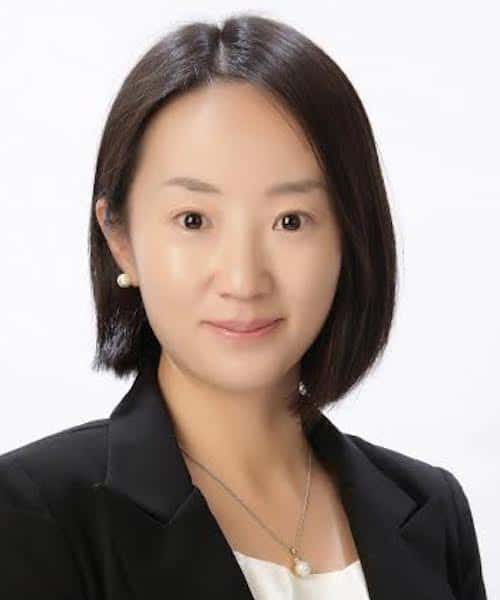
We’re joined now by Hwa Yeong Wang. She’s professor of philosophy at Duke Kunshan University and editor of the Korean Women Philosophers and the Ideal of a Female Sage: Essential Writings of Im Yungjidang and Gang Jeongildang. Hwa Yong, welcome to Philosophy Talk.
Hwa Yeong Wang
Hello, Josh and Ray, it’s a great pleasure to be here. Thank you for inviting me.
Josh Landy
It’s fantastic to have you here. Now You’re an expert on Confucian women philosophers like Im Yunjidang. But what first drew you to her work?
Hwa Yeong Wang
I’m from South Korea, which is arguably the most Confucian modern society. And when I entered it on college, and I started to study Confucian philosophy, and my university was the, actually the place that Confucianism and feminist activities had clashed while I was wandering campus. So since then, I began to pursue the question about the compatibility between Confucianism and feminism.
Ray Briggs
So Hwa Yeong, this is a conflict that goes back aways and 18th century Korea wasn’t especially receptive to female thinkers. So how did Im Yunjidang manage to succeed in spite of that?
Hwa Yeong Wang
That’s a very interesting question. And good question that there are several reasons, but there was accumulated achievement by all women in Confucian tradition. And also, she was also benefited from the education from the Neo Confucian ideals and some historical backgrounds too.
Josh Landy
So she was able to get some education thanks to her brother, I take it. And what’s what was she able to read?
Hwa Yeong Wang
She was able to read many books for women, but also, she read other Confucian Canons which were dominantly read by male scholars, so The book of history and also all the Confucian classics.
Josh Landy
So she’s reading Confucius, she’s reading Mencius. Is she also reading the Neo Confucians?
Hwa Yeong Wang
Yes, and in Neo-Confucianism was also this idea of the time, and she was one of the near completion.
Ray Briggs
So I understand that the Neo Confucians had this debate about the four beginnings and the seven feelings. Can you tell us what that was all about?
Hwa Yeong Wang
That can be very complex. Yeah, that is one of the four seven debates, it is called. And one of the most well-known is the Korean debate, Confucian debate. And so, it actually asked what is, what are the bases of the human emotions and those emotions, and moral status. So false pride was mentioned in the Mencius, and these four emotions show humans inherent good, the goodness, while the seven feelings are just neutral emotions, you know, healthy and angry. And then what are the moral status of these seven emotions? So, there was a huge, a long debate about this.
Ray Briggs
So the idea is that the four sprouts are like the beginnings of virtue, and they’re only good, but then if I’m happy or angry, that might be good or bad, depending on whether it’s appropriate or inappropriate to the situation. So yeah, that is puzzling. Why can I have bad emotions? If my beginnings are all good?
Hwa Yeong Wang
Well, that’s a great question. So that’s actually exactly the debate that in the 16th and later century, the Korean Neo-Confucian debated, and there are two different schools Toe gye and Yul gok. They have different ideas, but about just the one thing, the later part where you’re confused that, that’s, for example, you will go to say, Well, no. Evil emotions can be bad. What makes it bad is the situations. So, for example, okay, if you are, you don’t get angry. When someone does something bad, right? Then that’s the bad thing, right? So the emotion itself, is not necessarily the bad thing, bad or good. What makes them is the directions and the situations and many others.
Josh Landy
You’re listening to Philosophy Talk today we’re thinking about Im Yunjidang with Hwa Yeong Wang from Duke Kunshan University.
Ray Briggs
Can women be Confucian sages? What kind of effort would they need to put in? Who do you look to for wisdom?
Josh Landy
Women, wisdom, and willpower—along with your comments and questions, when Philosophy Talk continues.
Fun Boy Three
‘It ain’t what you do it’s the place that you do it, and that’s what gets results.’
Josh Landy
If you become a Confucian sage, are you going to get the right results? I’m Josh Landy and this is Philosophy Talk, the program that questions everything…
Ray Briggs
…except your intelligence. I’m Ray Briggs, and we’re thinking about Im Yunjidang with Hwa Yeong Wang, editor of Korean Women Philosophers and the Ideal of a Female Sage. It’s the latest episode in our “Wise Women” series, which is supported by a grant from the National Endowment for the Humanities. You can find all the episodes in the series at philosophytalk.org/wise-women.
Josh Landy
Got questions about the first Confucian feminist? email us at comments@philosophytalk.org, or comment on our website. And while you’re there, you can also become a subscriber and question everything in our library of nearly 600 episodes.
Ray Briggs
So Hwa Yeong, Im Yunjidang argued that Confucian sages don’t have to be men, women can be sages too. So, what is a sage?
Hwa Yeong Wang
Simply speaking in Confucianism, Sage is the ultimate ideal of human moral perfection. So, every Confucian will aim to become a sage. That’s their ultimate goal.
Ray Briggs
And so this was a revolutionary idea that women could become sages. Why didn’t people notice that this was a possibility before Im Yunjidang?
Hwa Yeong Wang
Actually, the statement in the Confucian canons is that everyone can become a sage. But in reality, we know in most patriarchal societies where it was actually only on the face value, so even though Confucius and other ancient Confucians they also agreed that everyone can become a sage. But in fact, women and others were excluded. So actually the 18th century Im Yungjidang, she, as a woman, voiced and restated that everyone can become a sage.
Josh Landy
It’s so interesting, right? It’s such a brilliant move that she’s making. She’s just she’s basically saying, look, this is very text that you venerate, are agreeing with me, right? If you just saw what’s actually in them, you’d understand? Well, look, it’s saying everyone can do it. And she’s pointing to a particular part of the theory, if I’m not mistaken, right, about the part having to do with this universal pattern. Can you say, can you tell us a little bit about the difference? In Neo-Confucianism are these combinations that each of us has, have, on the one hand a universal pattern that’s shared among all humanity, and on the other hand, qi which is differentiated from person to person?
Hwa Yeong Wang
Yes, that’s very important part to understand the later development of Confucianism, which is called Neo Confucianism. What Neo Confucians did is that they developed more like metaphysics. So, they developed an idea about the universal pattern and physical qi materials like so, in order to explain what are the universally applied to every human being. But why we have who we are, differentiated as individual right, every human being has you know, we occupy one individual space body and then everything. So, that is the explained as qi, but will underlying or the patterns is called a universal pattern.
Ray Briggs
So, is it just humans who have the universal pattern? Or is it like animals or is it everything?
Hwa Yeong Wang
Everything. Everything. So, it starts from the Tai Chi if you have heard, like nothingness, and then becomes in Jung, then five consonants and then all creators mirror the creatures.
Ray Briggs
Does that mean that only humans can be sages? Why can only humans be sages if that’s true?
Josh Landy
I think Ray wants Blossom, Ray’s dog, to become a sage.
Ray Briggs
I do.
Hwa Yeong Wang
That is actually one of the hot topics nowadays because people also discuss what also was a debate in Korean Neo Confucianism, that is the nature of human beings and nonhumans, are same or not. So, I think that’s a very good question. But orthodox Neo Confucian views, they would say that humans have done all everything perfectly. That other creatures miss some part. Let me say just simply that’s like that.
Josh Landy
Okay. But if we stay within human beings, on the one hand, we’ve got immune engineering, saying, basically, when it comes down to the really fundamental thing, to the most important thing, there’s no real difference between men and women. As she puts it, the nature I originally received contained no distinction between male and female. On the other hand, she says this weird thing, or at least seems weird in the context of that she says the way of a man is being strong, the way of a woman is being submissive. So from a 21st century standpoint, that seems like a tension right seems like if you thought that there was no fundamental difference between men and women, you wouldn’t all So think that each of them has a different kind of life that they should lead, how do we how do we resolve that?
Hwa Yeong Wang
I think we should approach, you know, in the reverse way, that the time period that she lived in was one when the most dominant ideas that gender for many differences, right the classes and also gender differences. So, I think actually we have that was very different from what we think, that we are actually a little more than a contemporary people. We think we begin from the everyone is the unique same equal, and then we discuss the differences. But I think that that was the difference in Im Yunjidang’s case. So, she was living in a very patriarchal society, and everyone was blindly following the traditional ways of lives as a woman. So, I think that’s the what makes her more revolutionary at that time.
Ray Briggs
I see the point about pushing back against received ideas and how that can be really hard to do, especially if you don’t have a lot of other models. There’s also kind of a puzzle for me about so everybody is the same in some ways, and different in other ways. And like the fact that we all have the same pattern, but different she suggests that, how do you figure out which ways are the ones where we have commonalities and which ways are the ones where we have differences?
Hwa Yeong Wang
Probably, I can explain a little bit about the near completion theory. So, all the I mentioned that ancient Confucians, they argued that everyone can become a sage, right? What Neo-Confucians later, they further develop the idea and argued that anyone can have the ability to become a sage, then what we must develop is the commitment to use our ability. So actually, the Im Yunjidang received these new ideas that okay, let’s, I didn’t say much about that these ideas were explained by their universal pattern which provides the oneness for everyone, then the qi, qi, the differentiating ideas.
Josh Landy
That makes sense, right? But the thing that confuses me a little bit is the chronology because if I understand correctly, the rise of Neo Confucianism and Korea coincided with a decline in the rights of women, right, that they, they actually had a little better prior to that, and then, you know, the Josey on era, which is roughly 15 to 19 centuries. All of a sudden, they can’t receive an education for the most part, they can’t leave the home if they’re married, and so on. So why, why did this Neo Confucianism, which really is as Im Yunjidang points out seems to license egalitarianism, why did it coincide with a really patriarchal society?
Hwa Yeong Wang
That’s a really great point too. So well, they have got you egalitarian ideas, but in practice, what are the recommended practices in Neo-Confucianism, basically gender, it was gendered. So yes, so the Joseon dynasty was very odd in terms of women’s rights, compared to their previous dynasty actually declined. But by the time they image down or leave the 18th century, that already more than three century passed, and then Neo-Confucian ideas and role, gendered roles, and patriarchal practices became dominant in the society.
Ray Briggs
You’re listening to Philosophy Talk. Today we’re thinking about the 18th century Korean philosopher Im Yunjidang with Hwa Yeong Wang from Duke Kunshan University. So, Hwa Yeong, I want to ask about what it takes concretely to become this paragon of virtue that is a sage. How would you do it if you wanted to?
Hwa Yeong Wang
That’s the study, intellectual pursuit, and then also in the practices. So, in the example with of Im Yunjidang, that’s what makes her actually the revolutionary figure. Yes, she had to do the double duty like many of us, many women like us at this point. So, she had to fulfill the gender roles which was perceived as their ideal. The gendered roles in practice everyday life, that shows you that you are doing, you’re living your life fully. Then she says, oh, although I’m a woman, I share the commitment to become a sage. So, I, in distinction. There is no distinction in this pursuit towards to become a sage.
Josh Landy
So that yeah, that’s a powerful thought. And clearly, it clearly represented a big shift away from the way in which society be operating up into her time. And it raises an interesting question for me about revolution versus evolution. Because she’s, she’s not saying, okay, let’s throw out this entire tradition, this entire tradition has been a dead end, look where it’s led us, we have to start afresh, let’s embrace Taoism, or let’s embrace something completely new or something like that. Instead, she’s saying, let’s just let’s re understand our own tradition in a new and better way. And that’s a raises an interesting question for me, I’d love to hear from you what you think it is, is that a more effective strategy for change? Because it’s only asking people to move a little bit? Or is it a less effective strategy for change, because you’re leaving a lot of things in place?
Hwa Yeong Wang
I think that she because she was the first woman philosopher who she was the pioneer. So, I think there was a some limit, probably from our perspective now. But watch, that was the way actually she was living in the very predominantly Neo-Confucian social ideals, then she also wanted to become or to want to become a sage. Then she realized, oh, wait, actually, there are gender differences. That does not make sense. So that was the approach she was taking. So, I think maybe what Joshua mentioned is probably the later part of possibly the later part of the development, but not it was too early for image that is the first woman.
Ray Briggs
So Im Yunjidang inspired another philosopher, Gang Jeongildang. Can you say more about her?
Hwa Yeong Wang
Yes, so Im Yungjidang’s case, she was successful. And then she what also makes her very distinguishing as a woman philosophy is she decided, for the first time that, I will record what I thought. She wrote in Journals, which were actually prohibited to women. Then she made the decision, I will write my record, and leave it behind me. So, before her, no women did it, because it was not womanly things. So now, there were corpus of image writings, then there was the live, you know, it was 60 inherited later by the later generation. And people like, you know, second generation like Gang Jeongildang, she could get her writings, include a study and started to use her as her new moral Paragon for women.
Josh Landy
if I understand correctly, Gang Jeongildang is thinking in part about the three ways right, the theory, or I should the social norm that before marriage, a woman is supposed to follow her father, in marriage, she’s supposed to follow her husband, and in old age she’s supposed to follow her son. And Gang Jeongildang is saying you maybe it doesn’t have to be a relation of deference and subservience? Maybe there can be more mutuality. Is that about the right way of thinking of that?
Hwa Yeong Wang
Yes, it’s true. Yeah. And it’s also partially also, based on a misunderstanding of Confucianism, the spousal relationship, even though there was a distinction between them, in this relationship, the more core virtue of this link between spouses is mutual respect. So, in a sense, she was actually emphasizing the traditional spousal virtue too.
Ray Briggs
Yeah, I like this idea that tradition has sort of multiple readings, where some are really oppressive, and some are really liberatory. How do you get to the point of finding that liberation in a tradition that sort of tells women to stay at home and follow their husbands on one reading or like tells you a bunch of examples of men sages, and then no examples of women sages? How do people get to that point?
Hwa Yeong Wang
That’s a good question, but also tough question, because after the Kanji tan time. And then now the 19th century, that because of the history of Korea, that we kind of the lineage of women or Neo-Confucian are kind of disconnected. So, we couldn’t, there was no much more development. So as of now 21st century Neo Confucian philosopher and feminist, I think that is the way one of the important project to find and then theorize how I can liberate women issues, while preserving the core good, essential Confucian ideals.
Josh Landy
I really like Ray’s thought also about exemplars, right examples of great women from history. And I wonder if that’s maybe part of what Im Yungjidang gang is doing in referring to a story about a widow and a daughter who seek revenge for the murder of their late husband and father. Do you think that’s kind of one of the moves that immunogenetic is making is to go through the tradition and to look for these striking female characters who behaved virtuously under the Confucian understanding?
Hwa Yeong Wang
Absolutely, thank you for bringing that point. Yes, I think that that is what our image. So she provides a new examples, the one is the one you mentioned the revenge by the wife and daughter, but also another example is On Gyo’s mother’s case. So, if you read the On Gyo’s story in more detail, there you probably if you are familiar with the Western philosophy, probably through work some similar example from Satre. So, what was started brought up hypothetical scenario, a young man drove by and has a dilemma, should I stay and then help my aged mother or go and fight for against the Nazis, but actually, her story shows a very different line of argument. And actually, in the end, she also argues that there was way you could fulfill satisfied, both from the start. But one another thing was the what was most very striking for me was she provided mother’s perspective, and which I will never seen in other condition writings.
Josh Landy
You’re listening to Philosophy Talk. Today we’re thinking about the life and thought of Im Yunjidang with Hwa Yeong Wang, editor of Korean Women Philosophers and the Ideal of a Female Sage.
Ray Briggs
Why isn’t Im Yunjidang a household name? How did leader Korean history affect her legacy? What can we learn by reading her today?
Josh Landy
Contemporary Korean Confucianism—plus commentary from Ian Shoales the Sixty-Second Philosopher, when Philosophy Talk continues.
Harry Belafonte
‘That’s right, the woman is smarter—that’s right!’
Josh Landy
Do women need to be smarter than men in order to be considered sages? I’m Josh Landy and this is Philosophy Talk, the program that questions everything…
Ray Briggs
…except your intelligence. I’m Ray Briggs. Our guest is Hwa Yeong Wang from Duke Kunshan University. And we’re thinking about 18th century Korean philosopher Im Yunjidang as part of our series “Wise Women,” supported by a grant from the National Endowment for the Humanities.
Josh Landy
So Hwa Yeong before the break, you were saying some really fascinating things about the story of the guy who obeys his commander, and so loyally that he rushes off in spite of his mother begging him to stay, you’re making a connection to Sartre. Can you say a little bit more about that?
Hwa Yeong Wang
Yeah, sure. Actually, I wanted to provide two ideas where when Im Yungjidang dealt with this story, she also differed from the traditional male perspective. That was before they only praised him. But she actually was more critical. Then now, when we compare with the Sartre story, I think that you can see the same different approaches. In Satre’s story, my entire interest is very simply speaking, it’s the actually a matter of choice. Do I stay and or go and the fight, and then the choice makes you, right? But Im Yungjidang’s case, the whole story, she says, No, it’s not true. We really need to see the ally in the process of argument and thinking, and she has a lot of nuance and subtlety. So maybe what was the true motivation of the man who chose making decisions. So, sometimes though your own motives can be unknown to even oneself, so she actually asked a lot of, you know, small questions. And also one question she asked was why he did not stay and then explained just a little bit, if he explained the situations, the reason he must go there, maybe his mother could understood and then even let him go, then that is very mother’s perspective, we have never seen in the previous male confessions writings, then, if he has done so, he could achieve both filial piety and loyalty from the very start. So that is very, I think that’s what distinguishes Im Yungjidang’s writings.
Ray Briggs
So one thing I noticed about Im Yungjidang’s treatment of this story, in contrast to a lot of philosophers I encounter now is that she’s not willing to take just two options as the only two options. So, it’s not like either you take care of your mother or you take care of your responsibilities to your commanding officer. She’s kind of creative about thinking what the other options might be. I just think that’s so cool.
Josh Landy
It reminds me a little bit of the Abraham story. God tells Abraham to kill his own child, and he says absolutely, right away, sir. And Immanuel Kant and Martin Buber both say, you know, maybe he wasn’t passing the test. He was failing the test; he should have said what you’re talking about. And I feel like Im Yungjidang is kind of doing the same thing. She’s saying, look, all of these commentators are saying what a great thing on goaded by dashing off, and you know, leaving his poor mum crying, and she’s thinking creatively about it. Which brings me to a question with all these brilliant thoughts, and brilliant readings of the tradition. Why is it that immune Im Yungjidang isn’t better known these days, both in Korea and in other parts of the world?
Hwa Yeong Wang
That’s a great question. One of the biggest reason is the history of modern Korea. So, then Korea was annexed by the Japan in the 20th century. So, during that time, very few people into male intellectuals, they made the record of this woman. And nowadays in Korean society, these two women are better known as literary, maybe in the literature or history, but many people, they don’t find philosophical significance in these women’s writings. So, what me and my co-translator Philip J. Ivanhoe wanted to do, is we wanted to really bring out the philosophical implications.
Josh Landy
Hwa Yeong, if you could pick one philosophical idea from Im Yungjidang that you’d like to be better known. What would you pick as your one favorite?
Hwa Yeong Wang
I will say she was the first woman in Korea Confucian tradition who explicitly declared women’s moral equality. So, she said that though I am a woman, the original nature I received, there is no distinction between male and females. So, I think that’s a very significant, empowering declaration by a woman.
Josh Landy
I agree. I mean, that that’s clearly you know, the central brilliant move that Im Yungjidang does, arguing from within their tradition against the way in which tradition has been understood. I also think that her emphasis on the way in which things are done, and not just what actions are performed is fantastic. And there’s a third thing that leaps out to me and I wanted to ask you about it. She has this statement; one cannot simply stick to a single inflexible rule. And one of the examples is, is how exactly should one take revenge? What under what circumstances were revenge justified within the Confucian tradition? There’s two different cases. There’s the case of children hungry mentioned earlier, which she thinks is a virtuous case of revenge, the widow and the daughter, they’re doing the right thing. But she also mentioned Xia Yang, another person who sought revenge, she says, know that he wasn’t doing it, right. So, she seems to be thinking very subtly about the moral realm, that, that you can’t just have one single rule that applies to every relevant contexts. For example, here’s, here’s revenge. There’s one rule about it. Rather, it seems like the situation’s make a difference contracts make it makes a difference. Does that seem right to you?
Hwa Yeong Wang
Yes, overall, I think that’s your right reading. So, of course, there are some important virtues in Confucian philosophy too, obviously, but it’s still you’re right Josh, that they are definitely virtuous or important, like a reward the actions, like do you take revenge for someone, but what context? But also, what is your motive and even the motive sometimes your motivate can be hidden unconsciously by yourself to even to yourself. So, what is your motif? And what is your role? And what is the virtues for these roles? So, there are other aspects you need to consider
Josh Landy
Right, exactly. So, it’s not that there aren’t any virtues, there are virtues, but there’s virtues plus motivation, plus sensitivity plus context. Plus, sorting out the many different competing claims, you know, your loyalty versus your filial piety. So, she’s really thinking in a very sophisticated way. And the other thing she’s doing, you know, I’m a literature guy. So, I’m particularly intrigued by the fact that she’s not just writing treatises. She’s writing dialogues, she’s writing poetry, she’s writing inscription. Do you have any thoughts about what the kind of value for her is of these other genres? Like the fact that there are dialogues, the fact that sometimes she’ll use metaphors, these kind of really striking metaphors of the mirror or the sword. What, what’s that sort of literary aspect of her writing doing?
Hwa Yeong Wang
Thanks so much for asking that question. I wanted to also mention, that’s really important about Im Yungjidang. One thing is the fact that she wrote in the traditionally standard for a Confucian philosophy, and which looks like dispositions. So that actually showed and demonstrated her ability as a scholar and philosopher; but at the same time, she also leaves other literary works. And those are honestly speaking also is many confusion philosophers, it’s included in their collected writings too. So, in a sense, it is also standard practice within Confucian tradition, but at the same time, we now we can see we can say that, these aren’t like poor poetry, right, our inscriptions, those are genre were allowed for women. And now as a feminist philosopher, we can recover we discover the values within this nontraditional philosophy written by women.
Ray Briggs
So Hwa Yeong I know, there’s a little bit of a debate about whether to call Im Yunjidang a Korean feminist, or whether that kind of imposes like a current idea of what feminism is into a cultural context where doesn’t quite fit and to me, the idea that women have value seems like the fundamental idea of feminism. What do you think?
Hwa Yeong Wang
I agree with you Rey. Many now, even now, there are many feminist especially feminist who asked, did she argue, was there any social movement? Was she arguing for any women’s rights? I think that’s that only one standard when we discuss about feminism, but in this case, Im Yungjidang doesn’t argue, no, she shows the consciousness as a woman in the patriarchal society. And I think the least we can say, that is a kind of feminist consciousness was arising.
Josh Landy
Hwa Yeong, thanks so much for joining us today all the way from China. We really appreciate it.
Hwa Yeong Wang
Thank you so much. I really enjoyed it.
Josh Landy
Our guest has been Hwa Yeong Wang, professor of philosophy at Duke Kunshan University and editor of Korean Women Philosophers and the Ideal of a Female Sage: The Essential of Writings of Im Yunjidang and Gang Jeongildang. So Ray, what do are you thinking now?
I’ve just really enjoyed getting to like sit with the ideas of Im Yunjidang for an hour and think about all these like thoughtful takes on particular stories that she has. It’s wonderful.
Yeah, and, and all these different genres. She’s an extraordinary figure. I mean, not just for her time, but even for now. We’ll put links to everything we’ve mentioned today on our website, philosophytalk.org, where you can also become a subscriber and dive into our library of nearly 600 episodes.
And be sure to check out all the episodes in our wise women series at philosophytalk.org/wise-women. Now… faster than a speeding sage, it’s Ian Shoales the Sixty-Second Philosopher.
Ian Shoales
Ian Shoales… Centuries ago, Korea got a brand-new dynasty, replacing the previous dynasty’s Buddhism with Confucianism, imported from China, an older and vaster empire. More of a guide for proper behavior than a proper religion, Confucianism had worked just fine for millions, by the simple expedient of having adherent scholars everywhere, imposing agreed upon cultural imperatives over vast distances, all subject to thoughtful and gradual change by these same scholars, who also managed the education system. One might almost call it indoctrination, were it not subject to constant interrogation, within the confines of textual teachings and rituals, insisting on individual paths to sagehood. The whole shebang was under the eye of the emperor and assorted governors. Confucianism provided the principles and personnel for a massive bureaucracy. For centuries. Not to put too fine a point on it. Korea adapted what had become neo-Confucianism, which was a bit more strict in its social norms. Over the next few hundreds of years, Korea was invaded a lot by China, and by Japan, leaving the country a bit insular, a bit hermitlike. The basics remained that the scholarly officials’ caste, or yangban, sent their male offspring to test in all the skills and knowledge the nation and Confucianism possessed, including calligraphy, poetry, classical texts, Confucian rites. Commoners could apply for these royal exams, but family background was foregrounded, as we say. So Yangban had privilege. But if they flunked the exam, or messed up their employment, they and their entire clan could get kicked off the social scale. And never rise up to sagehood. Im Yunjidang was born into this 18th century Korean yangban milieu, her father being a “scholar official.” However, women were not only not allowed to take the exam, they were not even taught to read. Yangban women were completely segregated from the outside world, and even peasant houses had separate rooms for the sexes. But Im Yungjidang, a smart girl, was secretly taught to read by her brother, using Confucian classics, like The Analects, also a book called Biographies of Exemplary Women, a Chinese anthology from 18 BCE, including many women who committed suicide when their husbands died, rather than remarry. Kind of like a book of martyrs, which though Christian, was kind of Confucian in spirit, martyrs being saints for the most part, who are the bureaucrats of heaven, interceding when you pray to Jesus. You have to go through channels, children. Jesus is a busy man. Im Yungjidang learned the 3 obediences for women, of course, to father, husband, then sons, and followed them. She later wrote about the Four Beginnings, and the Seven Emotions. Time here does not permit further explication. She surely must have noted the four professions available to the women of Korea, which were palace women, shamans, physicians, and courtesans, called kisaeng. These were legal entertainers, made of offspring of slaves, or of disgraced jongban, rather like geishas, I suppose, trained from a young age to serve upper class men, with poetry, song, nursing, needlework. And sex. Not to put too fine a point on it. I assume that youth and beauty were state-sanctioned factors, because they generally were mustered out of service in their early twenties, after which many of them became tavern keepers. Despite their low class, they were generally respected for their skill sets, and perhaps because of their low class apparently could share public spaces with men. Their art and writing were often admired, though not preserved. In this world, it is somewhat ironic that Im Yunjidang’s life as a writer and thinker came about because her father, husband, and son had all died, leaving her in middle age broke, with no man to obey. Her Confucian knowledge database was extensive, and she mused about becoming a sage herself. A woman sage? That’s crazy! But she did not denounce or challenge the tenets of Confucianism in her philosophizing. Which says that our natures, moral and physical, are innate. But to become a sage one must unleash one’s inner nature, so to speak, rising above the appetites and desires of the physical. So one’s gender, in the end, doesn’t matter. Women can be sages QED. Elegantly argued! There was no place for a woman to publish in those times, so Yungjidang’s musings were confined to her own eyes and what remained of her family. Recognizing her genius, however, her family, did save all her writing, which would eventually make her a feminist icon, and the first Confucian feminist. The notions she discussed (in a pretty lively prose style), prove that she was already pretty nervy, relatively, considering the times. And, in repressive times, it’s the kind of topic that goes over big in coffee houses, or in saloons, over beers. She must have been strapped for money. Since becoming a sage probably wasn’t going to work out in her lifetime, I wonder if she considered picking up money slinging flagons with the former courtesans down at the alehouse. Must be tons of thirsty fallen Jangban out there who washed out of the space program, so to speak, but knew a lot, and loved to talk. And to a woman! What an exotic treat! Plus the tavernkeepers were among the most educated people in Korea. Seems like it would have been a fun job. Fun people. Any men who came round would probably want no more from an obedient woman than a cold one now and then. Who knows? Might have been a different Korea today. I gotta go.
Josh Landy
Philosophy Talk is a presentation of KALW San Francisco Bay Area and the trustees of Leland Stanford Junior University, copyright 2024.
Ray Briggs
Our executive producer is Ben Trefny. The senior producer is Devon Strolovitch. Laura Maguire is our Director of Research.
Josh Landy
Thanks also to Pedro Jimenez, Merle Kessler, and Angela Johnston.
Ray Briggs
Support for Philosophy Talk comes from various groups at Stanford University and from subscribers to our online community of thinkers.
Josh Landy
And from the members of KALW local public radio San Francisco, where our program originates. Support for this episode, and all the episodes in our “Wise Women” series comes from the National Endowment for the Humanities.
Ray Briggs
The views expressed (or mis-expressed) on this program do not necessarily represent the opinions of Stanford University or of our other funders.
Josh Landy
Not even when they’re true and reasonable. The conversation continues on our website, philosophytalk.org, where you can become a subscriber and question everything in our library of nearly 600 episodes. I’m Josh Landy.
Ray Briggs
And I’m Ray Briggs. Thank you for listening.
Josh Landy
And thank you for thinking
Guest
Related Blogs
-
February 22, 2024
Get Philosophy Talk
